
Reviewed · HISTORICAL TOURS
Kyoto UNESCO World Heritage Sites 1d Tour from Osaka/Kyoto
Gold reflections and 1,001 statues in one day. I like this Kyoto UNESCO route because the Kinkaku-ji Mirror Pond reflection is pure wow and the Sanjusangendo 1,001 golden Kannon statues give you that rare, slow-to-process feeling. The possible drawback is timing, it is a long day and each site is only allotted a short visit window.
I also like that the day runs with an air-conditioned vehicle and an English or Chinese-speaking guide, and one verified booking specifically praised a guide named Kaytu for clear historical context. For your comfort, that matters because Kyoto days can go from pleasant to exhausting fast.
One more reason this is an appealing value pick: the route adds Kyoto classics beyond the headline temples, including Arashiyama’s bamboo area and Higashiyama’s Ninenzaka and Sannenzaka shopping streets. If you want the A5 Kobe Beef lunch option, that can be a fun splurge to anchor the middle of the day.
In This Review
- Key highlights that make this day trip work
- A full Kyoto UNESCO classic day, built for short stops
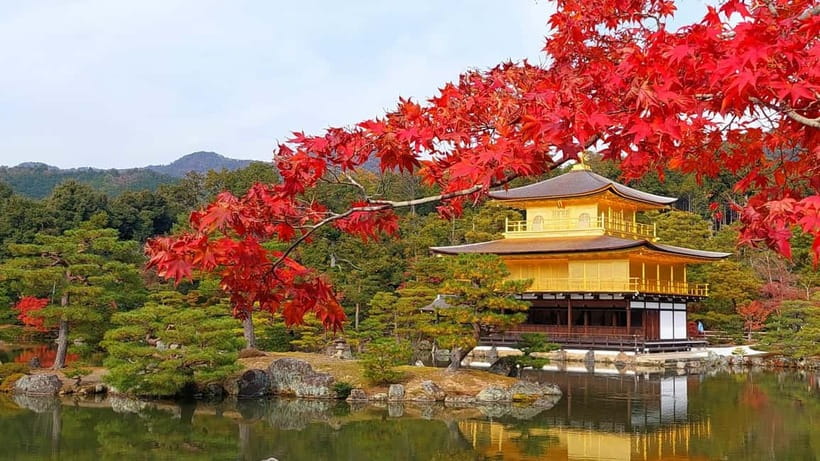
- Kinkaku-ji Golden Pavilion: gold leaf and Mirror Pond symmetry
- Arashiyama bamboo and Togetsukyo Bridge: a calm break in the middle
- Tenryuji and the small add-ons that keep it Kyoto
- Optional Kobe Beef lunch: when the splurge makes sense
- Sanjusangendo: 1,001 golden Kannon statues in Japan’s longest wooden hall
- Kiyomizudera: the wooden stage and skyline views from pure-water temple
- Koyasunoto Pagoda, then back onto the Higashiyama walking streets
- Price and value: what $59 gets you for a 9 to 10 hour run
- Who should book this tour
- Should you book Kyoto UNESCO World Heritage Sites 1d Tour?
- FAQ
- How long is the Kyoto UNESCO World Heritage Sites 1d Tour?
- Where do I meet and where does the tour end?
- Which languages are the guides?
- Is Kobe Beef lunch included in the price?
- Are tickets included for all temples?
- Is this tour a large group?
- What happens if weather or traffic is bad?
Key highlights that make this day trip work
- Kinkaku-ji Golden Pavilion with Mirror Pond reflections and gold leaf drama
- Arashiyama bamboo plus the iconic Togetsukyo Bridge mountain view
- Sanjusangendo inside Japan’s longest wooden hall, featuring 1,001 Kannon statues
- Kiyomizudera with a large wooden stage and panoramic Kyoto skyline views
- Otowa Waterfall stop at Kiyomizudera for a tradition-backed drink
- Optional A5 Kobe Beef lunch if you want a luxury break mid-route
A full Kyoto UNESCO classic day, built for short stops
This is a 9 to 10 hour tour built around major Kyoto sites that most first-time visitors put on their list. You get two starting points, VIPヴィラなんば (VIP Villa Namba) and 京都VIPラウンジ (Kyoto VIP Lounge), and you return to the same two options at the end. That saves time versus figuring out separate transport connections.
The group is described as small, but there is a practical note: depending on how many people book, English-speaking and Chinese-speaking guests may share the same bus. Translation: expect a bus-day rhythm, not a private driver-only experience.
You should also plan around movement rules. The tour departs regardless of weather and traffic unless the local operator notifies changes. And the operator notes they do not accommodate delays or wait for anyone. So if your train is even a bit late, buffer that gap before you go. I’d rather show up early and sit than race and miss your chance.
Kinkaku-ji Golden Pavilion: gold leaf and Mirror Pond symmetry
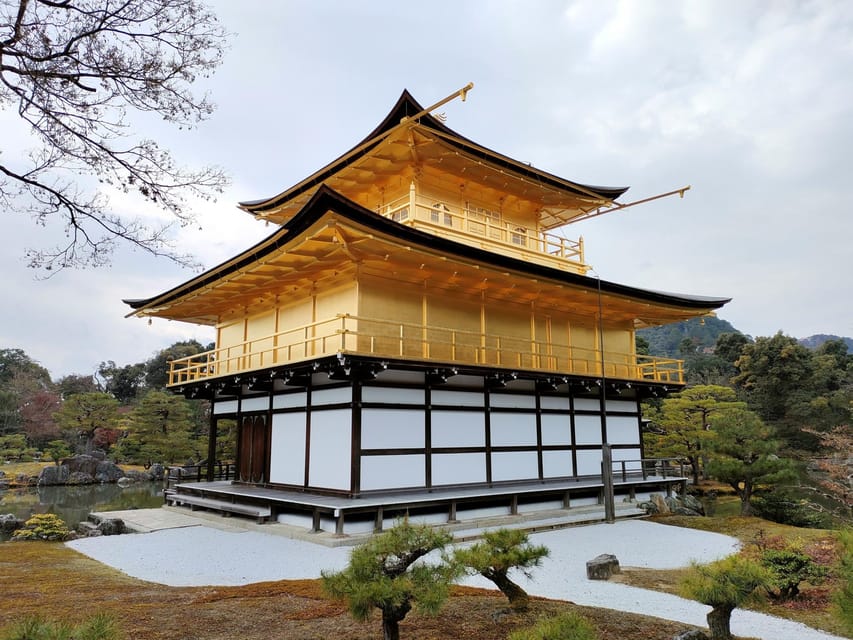
Kinkaku-ji is usually the stop people talk about first, and for a good reason. You will visit the Golden Pavilion for about 40 minutes. The temple’s defining look comes from the top floors covered in shimmering gold leaf, plus its reflection in the Mirror Pond. Even if you only stay for one good photo moment and one calm walk, you still get the main effect.
Here’s how to make the most of your time. First, treat the pavilion and the pond as one scene. The appeal is the balance: gold architecture and water reflection working together. Second, slow down for a quick look at details near the edges. From a distance it is spectacle, up close it becomes craftsmanship.
This is also a good spot for orientation. After seeing Kinkaku-ji, you quickly understand the visual language of Kyoto temples: clean lines, intentional space, and a sense that the setting matters as much as the building itself. The ticket for Kinkakuji is included, which helps keep the day smooth.
More of Kyoto's centuries, explained
- Kyoto Gion: 2-Hour Geisha Culture & History Walking Tour
★ 5.0 · 1,186 reviews - Kyoto Gion Historical Walking Tour
★ 5.0 · 188 reviews - Historical Kyoto E-Bike Tour
★ 5.0 · 181 reviews - Kyoto: Nijo Castle World Heritage Guided Tour with Admission
★ 5.0 · 128 reviews
Arashiyama bamboo and Togetsukyo Bridge: a calm break in the middle
After Kinkaku-ji, the route heads to Arashiyama in western Kyoto. This is where the day turns from temple-gold to nature texture. You get a mix of time that includes a photo stop, sightseeing, and free time. You’ll also have a dedicated stop at Togetsukyo Bridge, plus time in the broader Arashiyama area for walking and shopping.
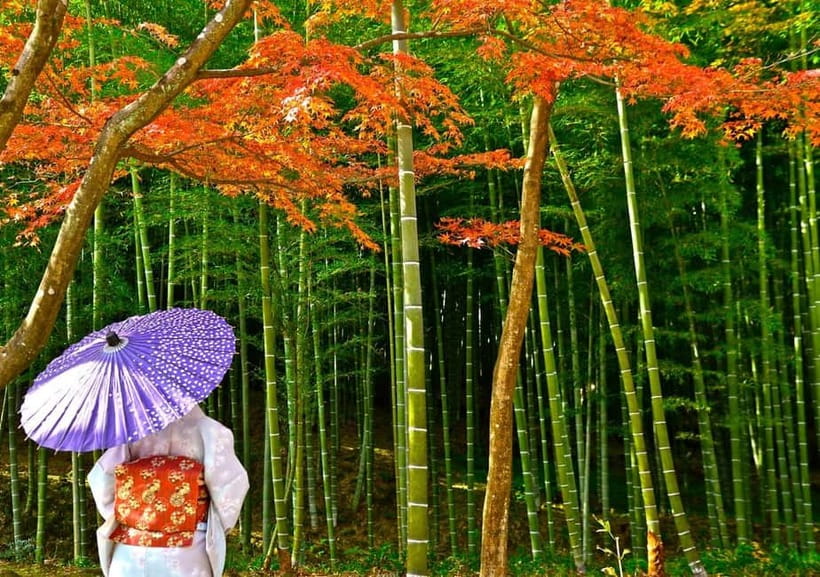
The star here is the bamboo grove. When you enter the bamboo area, it feels like a green corridor. You’ll be surrounded by tall stalks that narrow the sky into a soft rhythm of light and shadow. It’s the kind of place where even quick walking feels different because your senses shift from temples to the sound of wind through leaves.
Next comes Togetsukyo Bridge, often called Moon Crossing Bridge. The main payoff is the panoramic viewpoint over the Katsura River and the mountain backdrop. You do not need a long stay to appreciate the view, but if you stand for a few minutes and let your eyes adjust, the scene gets deeper.
Tenryuji and the small add-ons that keep it Kyoto
This Arashiyama stretch includes Tenryuji Temple, plus another quick photo stop area called Kimono Forest. Tenryuji gives you a second “style” of Arashiyama, where gardens and temple atmosphere mix. Kimono Forest is shorter and more photo-focused, so treat it as a quick scene stop, not a main attraction.
The practical takeaway: Arashiyama is a good mid-day reset. You get movement, air, and a different mood than the north temple district.
Optional Kobe Beef lunch: when the splurge makes sense
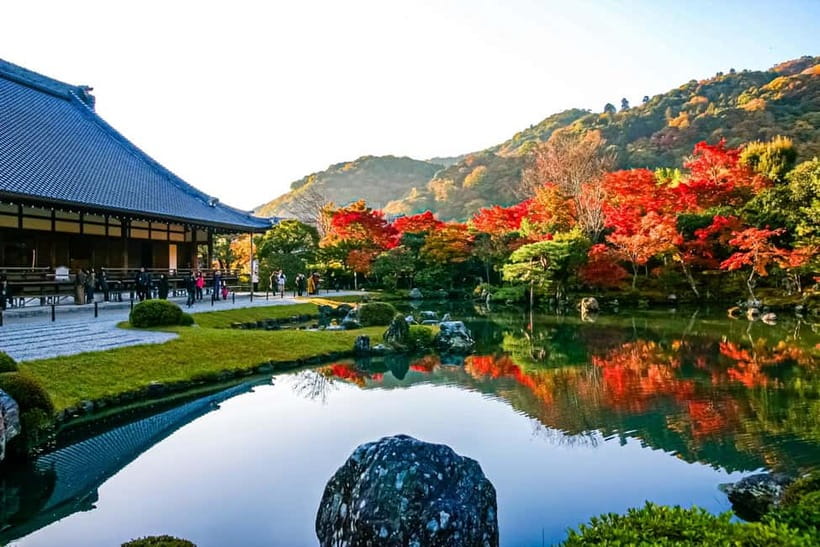
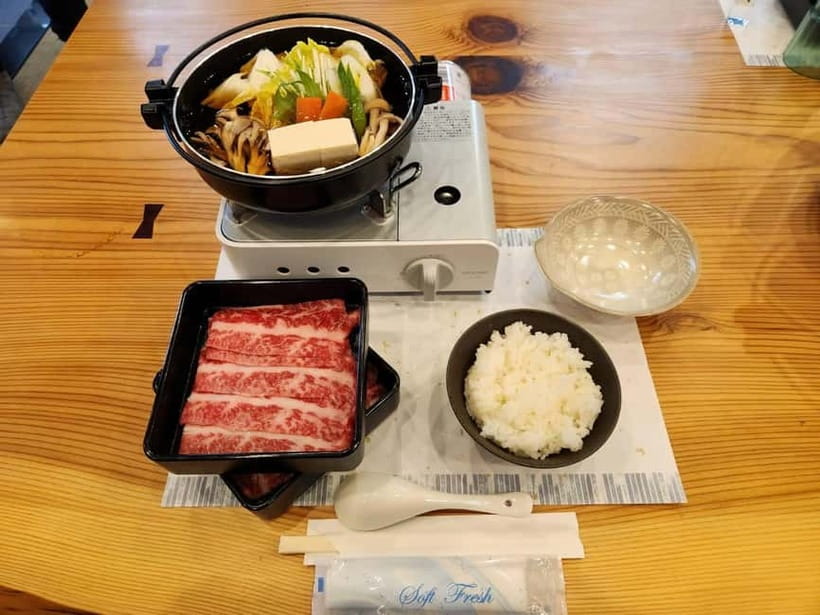
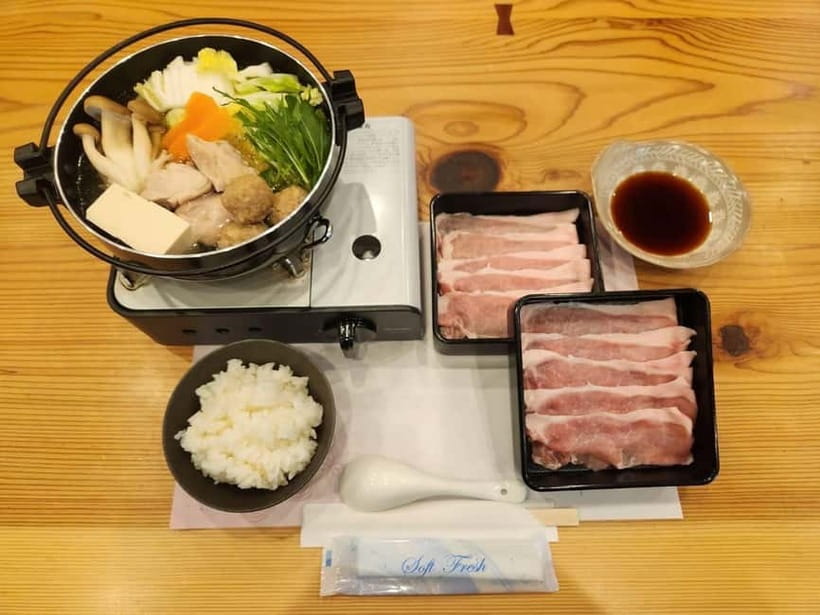
Lunch is one of the few parts of the itinerary that gives you choice. An A5-ranked Kobe Beef lunch is offered as an option, and it is included only if you select it. If you like food as part of travel culture, this is a compelling place to spend extra money because the day already focuses on big historic sights. A high-end lunch can feel like a reward that fits the itinerary’s theme of “Kyoto excellence.”
Also, timing wise, lunch sits in the middle of your schedule, after Kinkaku-ji and before the later temple-heavy stops. That placement matters. If you eat well now, you will enjoy the next sites more, because energy and stamina are real factors when you’re moving for 9 to 10 hours.
My advice is simple. If you are an easygoing museum-and-temple person, choose the lunch option only if it will feel memorable to you. If you’d rather keep costs down, plan to use the free time around Arashiyama and Higashiyama for regular Kyoto snacks and meals.
Sanjusangendo: 1,001 golden Kannon statues in Japan’s longest wooden hall
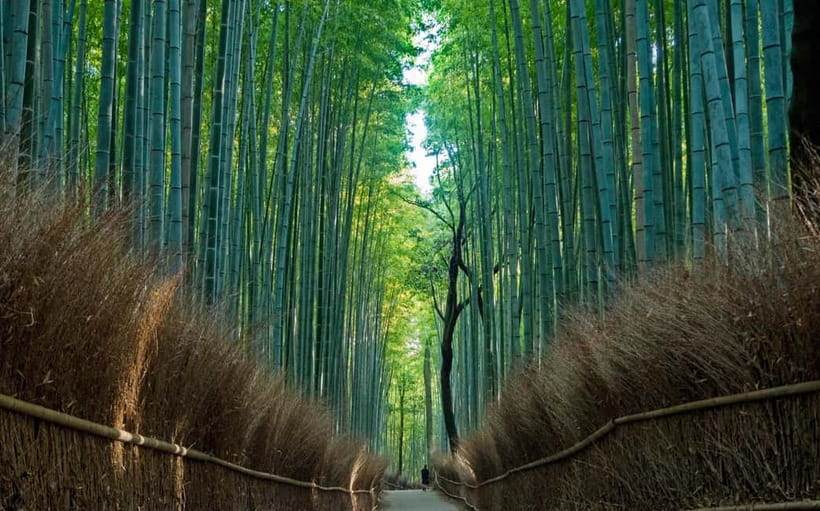
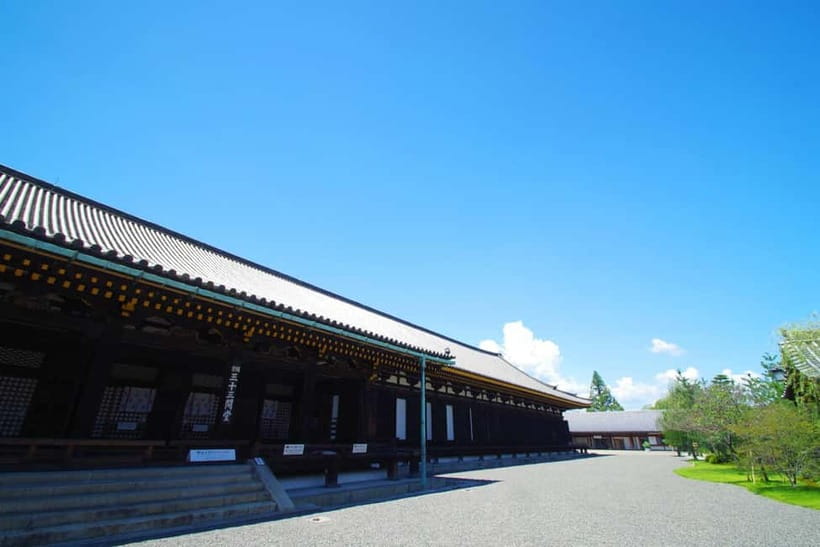
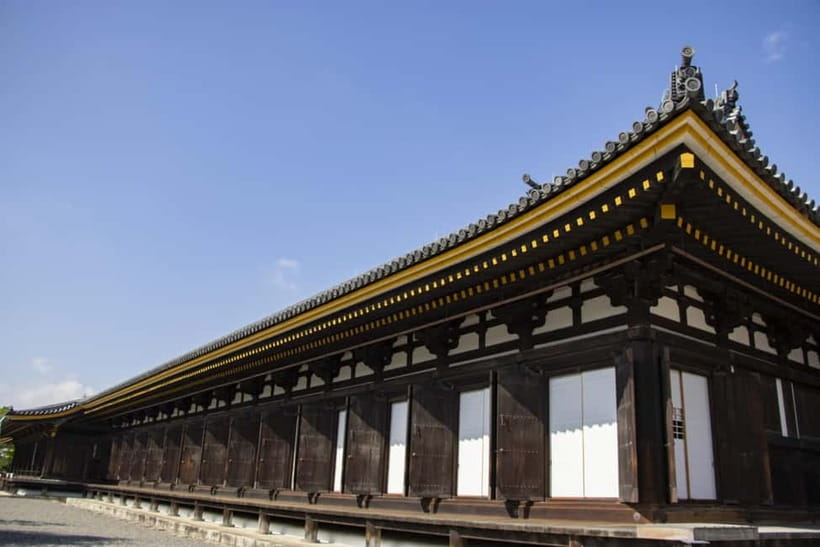
Sanjusangendo is the most unusual “wow” stop in the whole route, and it is also one of the most interesting values for your ticket time. You’ll have about 40 minutes here, and the ticket is included.
Inside Japan’s longest historic sanjusangen-do hall, you see 1,001 life-sized statues of Kannon, the Goddess of Mercy. The statues are described as golden and life-sized, with each statue uniquely carved. That combination matters. From afar, it looks like a wall of gold. Up close, it becomes a repetition with small differences, which is the kind of effect you cannot fully get from a quick photo.
There’s also a well-known story tied to the setting. It is said that among the thousand faces, you may find one that resembles someone you love. Even if you treat the story as tradition and not a literal promise, it changes how you move. You stop rushing. You look longer. You let the place work on you.
Practical tip for your time: give yourself a quick scan first, then pick one smaller section and focus. That way you still see the scale, and you also get the human-level details.
A quieter way to spend a day in Kyoto
Kiyomizudera: the wooden stage and skyline views from pure-water temple
Kiyomizudera is a bigger emotional peak for many visitors because the sightlines and the structure feel dramatic. You’ll spend about 80 minutes at Kiyomizudera, and then you’ll also visit the Koyasunoto Pagoda.
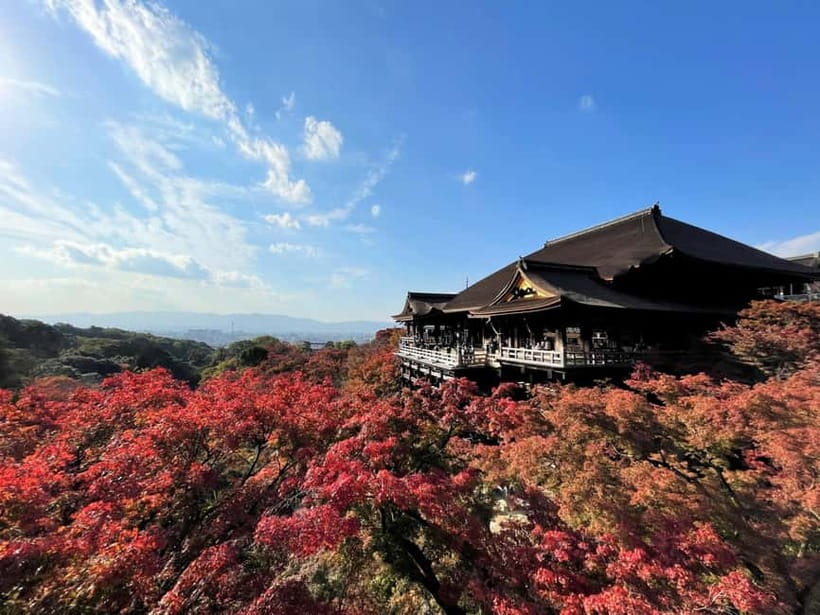
Kiyomizudera is known as the Temple of Pure Water. The description you will hear is specific and memorable: the temple’s massive wooden stage was built without a single nail. That detail gives you something concrete to picture while you look around, like you are seeing a building technique from a different era.
From the stage, the idea is panoramic views over Kyoto. The tour notes seasonal frames too, with cherry blossoms or fiery maple leaves. Even when the season is not peak for photos, the staging and the elevated position still make you feel like you are looking out from the edge of the city.
Before you leave, you can visit the Otowa Waterfall. The tradition here is that drinking the sacred waters brings health, longevity, and success. Whether you take it as ritual or just enjoy the symbolism, it helps you add a personal moment to a very famous stop.
Koyasunoto Pagoda, then back onto the Higashiyama walking streets
After Kiyomizudera, the schedule includes Kiyomizudera Koyasunoto Pagoda as its own visit. The route then transitions into Ninenzaka and Sannenzaka, with time for shopping.
This is where Kyoto feels most like a lived city. These lanes are pedestrian-focused and designed for strolling, with snack stops and small shops along the way. The tour marks them as visit and shopping time, so you’ll have room to slow down after temple time and pick up small souvenirs that actually match the setting.
The practical trick here is to pace your shopping. Don’t spend your whole free time hunting at one shop. Walk the lane first, get a sense of what you like, then return only if something really fits. Otherwise, you’ll end up with lots of small items and no space in your bag.
Price and value: what $59 gets you for a 9 to 10 hour run
At $59 per person, the best value argument is what’s included. You get an air-conditioned vehicle, an English or Chinese-speaking guide, and tickets called out as included for Kinkakuji Temple and Sanjusangendo Temple. If you’ve done Kyoto independently, you know that tickets and time spent figuring out routes can add up.
You also get a route that covers four headline UNESCO-type experiences in one day: Kinkaku-ji, Arashiyama bamboo and Togetsukyo Bridge, Sanjusangendo, and Kiyomizudera. For people who want a “greatest hits” day without planning a bus or train timetable, that is a real convenience.
What to keep in mind is that not every portion is equal in how “ticketed” it feels. The included ticket list explicitly names Kinkakuji and Sanjusangendo. For the other areas, you are getting visits, photo stops, and free time, and the day is structured so you still get the big visuals even if you are not buying every optional add-on.
The other value factor is guide quality. One verified booking highlighted Kaytu for knowledge of history. Even if your guide differs, the tour’s structure depends on narration and context to make these sites land beyond photo snapshots. When the guide can explain what you’re seeing, the day feels shorter.
Who should book this tour
This tour fits best if you want a well-paced overview of Kyoto’s most iconic religious and cultural scenes without building a route from scratch.
It’s also a good match for:
- First-timers who want Kinkaku-ji and Kiyomizudera done efficiently
- People who like photo stops mixed with calm walking time
- Food-minded visitors who may want the optional A5 Kobe Beef lunch
If you prefer slow museum-style pacing, long temple meditation time, and zero schedule pressure, you might find this day runs too fast. Your best move then is to treat it as a “high points” day and plan one extra return day for your favorite neighborhood.
Should you book Kyoto UNESCO World Heritage Sites 1d Tour?
I think it’s a solid choice if you like efficient sightseeing that still hits the main emotional beats of Kyoto. The big winners for me are the Golden Pavilion reflection moment and the 1,001 Kannon “scale shock” of Sanjusangendo. Add Arashiyama bamboo and Togetsukyo Bridge, then close with Kiyomizudera’s wooden stage views, and you get a day that feels like four different chapters of Kyoto.
Book it if you want value, tickets handled for key temples, and a guide to connect the dots. Skip it only if you know you hate tight schedules or you want more time per site than a short visit allows.
FAQ
How long is the Kyoto UNESCO World Heritage Sites 1d Tour?
The duration is about 9 to 10 hours, depending on the day’s timing and conditions like traffic.
Where do I meet and where does the tour end?
There are two starting location options, VIPヴィラなんば (VIP Villa Namba) and 京都VIPラウンジ (Kyoto VIP Lounge). The tour also uses those same two options for drop-off.
Which languages are the guides?
The tour includes a live guide who speaks English and Chinese.
Is Kobe Beef lunch included in the price?
Lunch is included only if you select the option. The tour offers an optional A5 ranked Kobe Beef lunch upgrade.
Are tickets included for all temples?
The included tickets are specifically listed for Kinkakuji Temple and Sanjusangendo Temple. Other stops are described as visits, photo stops, and sightseeing.
Is this tour a large group?
It is described as a small group, but the operator notes that depending on participants, English and Chinese-speaking guests may share the same bus.
What happens if weather or traffic is bad?
The tour departs regardless of weather or traffic conditions unless you are notified otherwise. In severe traffic due to holidays or adverse weather, some planned attractions may be reduced with no refund.
New This Season
- Koyasan Day Trip by Private Car from Kyoto
- Old Port Town and Ultimate Sake Tasting Private Tour From Kyoto
- Kyoto’s Timeless Charm: 3hr Exploration of History and Peace
- Kyoto: 5 Types of Sushi Making
- Sacred Peak & Ancient Paths: Kurama-Kibune Hiking Experience
- Kyoto: Exclusive ZEN practice at Manpukuji temple in Uji
- Kyoto: Private Seasonal Aroma Yoga Class
- Traversing Kyoto’s Scenic West – Arashiyama to Kinkakuji
Historical Tours, compared.
Kyoto Gion: 2-Hour Geisha Culture & History Walking Tour
Read our review →
Nijo Castle World Heritage Guided Tour with Admission
Read our review →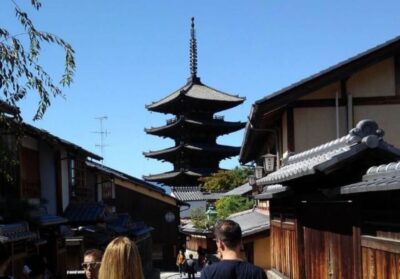
Nara History Guided Half Day Bus Tour with Lunch
Read our review →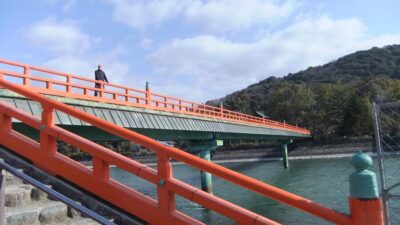
Private car tour Let’s uncover secrets of majestic Kyoto history
Read our review →Also filed under