
Reviewed · WALKING TOURS
Kyoto: Private 2.5 Hour Historical Walking Tour
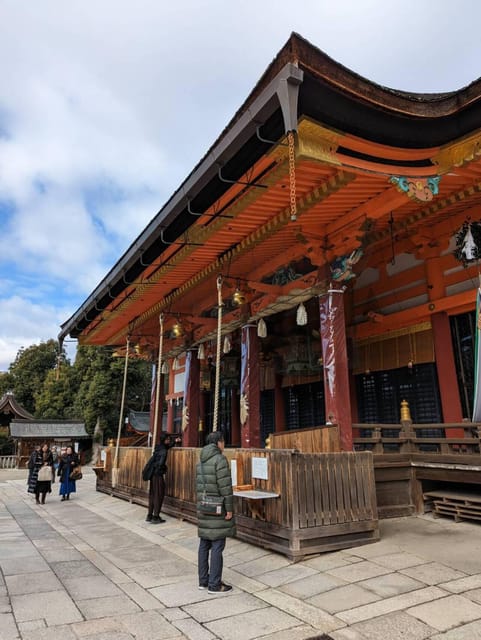
Kyoto can feel like a blur of temples, but this walk gives it a storyline. I love how the tour turns Yasaka Shrine worship into something you can actually do and understand, and I also love the pause at the Zen dry-garden stop where the noise drops away. One thing to consider, you will walk and you will be on uneven stone and temple steps, so comfy shoes are not optional.
This is a private, English-guided route in the Gion and eastern hills area, starting at the famous red gate at Yasaka Shrine. You get a simple map orientation and clear context as you go, so you are not just ticking off landmarks. When you want to ask questions, the guide can answer and even tailor the pace a bit, which is a big deal on a city trip.
At $80 per group up to 5 people for about two hours (often described as a 2.5-hour tour), the value is best for small groups that want a guided filter through the crowds. You will likely still pay separate temple admission fees, since those are not included.
In This Review
- Key Highlights You Shouldn’t Miss
- Entering Kyoto With a Story, Not a Checklist
- Meeting at Yasaka Shrine Nishiromon Gate (Red Gate)
- Yasaka Shrine Etiquette and Kyoto’s Big Picture in Small Pieces
- Maruyama Park to Nene-no-michi, Where a Name Means a Person
- Entoku-in Zen Temple: Dry Garden Calm and Sliding Door Art
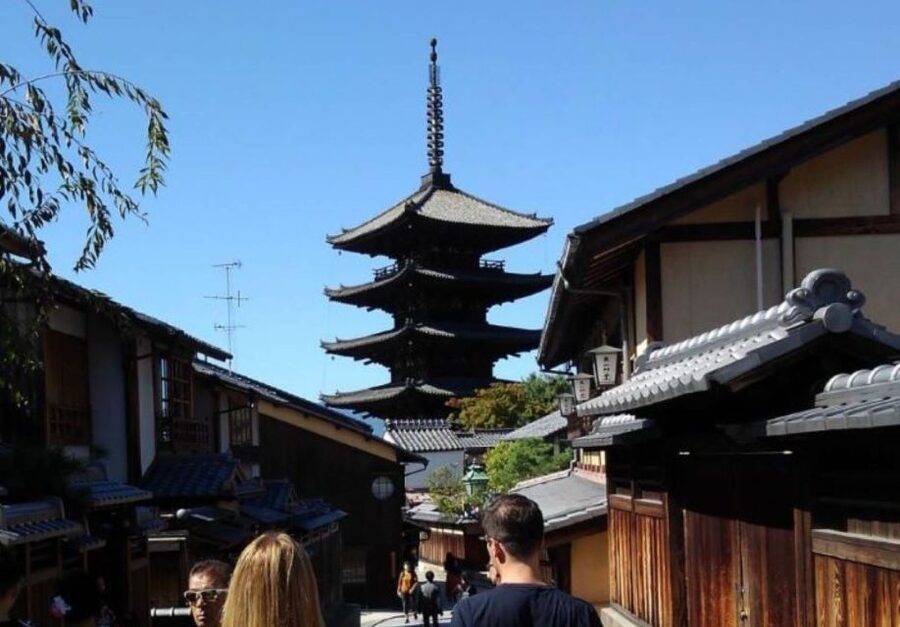
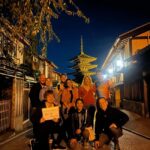
- Yasaka Koshindo Area and the Five-Storied Pagoda Photo Spot
- Kiyomizu-dera: Kannon Worship and the Nail-less Stage
- Kiyomizu Water, the Iron Stick, and the Matchmaking Shrine Tease
- Price and Logistics, Including What You Should Budget For
- Who This Tour Fits Best, and Who Might Want Something Different
- Should You Book This Kyoto Private Historical Walking Tour?
- FAQ
- Where is the meeting point?
- How long is the tour?
- Is this tour private?
- What is included in the price?
- Are temple admission fees included?
- What should I bring?
- How do I get to the meeting point by train or bus?
Key Highlights You Shouldn’t Miss
- Yasaka Shrine, explained in practical terms, including how to worship properly
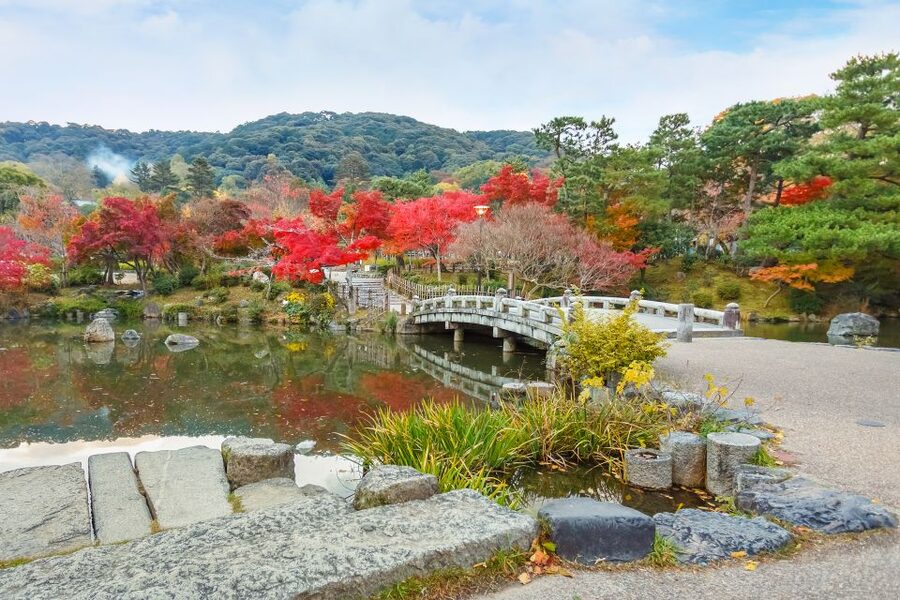
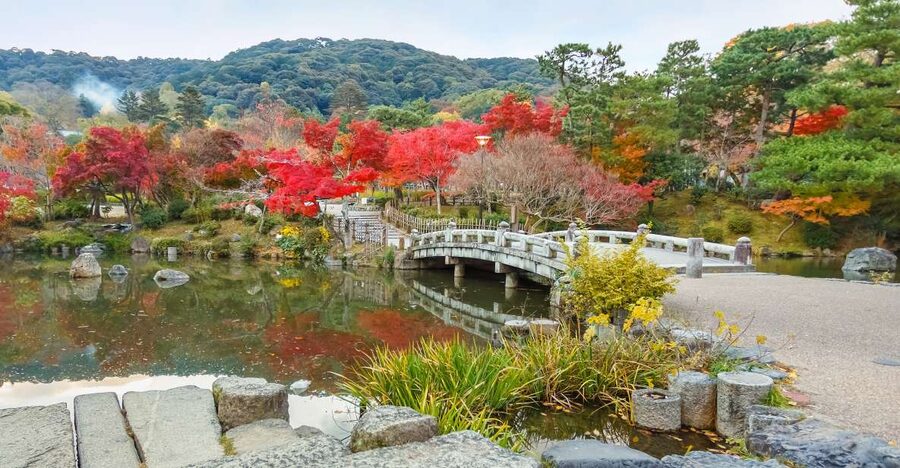
- Nene-no-michi and Maruyama Park, with the story connection to Nene and Toyotomi Hideyoshi
- Entoku-in Zen temple, with a calm setting and dry rock-and-sand garden views
- A five-storied pagoda photo stop, including the classic roadside sight near Koshindo
- Kiyomizu-dera stage views, from the nail-less wooden platform looking toward a smaller pagoda
- Kiyomizu water ritual, plus the heavy iron stick and iron clogs you can learn about
Entering Kyoto With a Story, Not a Checklist
This tour feels built for people who are tired of reading a sign and moving on. Instead of treating Kyoto like a museum of points on a map, you get the “why” behind what you are seeing. That matters in a place like Kyoto, where shrines and temples can look similar until someone gives you the lens.
I like that it is not just about the biggest famous name. You start at Yasaka Shrine in the heart of Gion, then you move into calmer pockets as you go. The end point, Kiyomizu-dera, is still a headline temple, but the route makes it feel earned rather than rushed.
You also get a guide who uses real teaching tools. Several guides named in past bookings, like Hisako and Hiroko, are described as bringing their own hand-drawn notes, maps, and visuals. That turns the walk into something you can remember, not just something you photograph.
Meeting at Yasaka Shrine Nishiromon Gate (Red Gate)
Your starting point is the west gate of Yasaka Shrine, the Nishiromon Gate, known as the red gate. If you are arriving by train, the guidance is to get off at Gion Shijo Station on the Keihan Line, or Kawaramachi Station on the Hankyu Line, then walk east along Shijo Street to the top of the steps. By bus, the simplest tip is to get off at the Gion stop and follow the stone steps to the red gate.
I like meeting at a single landmark gate like this because it reduces the classic Kyoto stress of wandering the wrong lane. You should also plan to be on time, because once the route starts, you are walking into shrine and temple areas where pauses are short.
A practical tip from how the tour is described: look for your guide at the gate, and when in doubt, match the meeting point instruction exactly. In past bookings, guests have mentioned finding a guide holding a sign with their name, which is a handy way to confirm you have the right person.
More of Kyoto's centuries, explained
- Kyoto Gion: 2-Hour Geisha Culture & History Walking Tour
★ 5.0 · 1,186 reviews - Kyoto Gion Historical Walking Tour
★ 5.0 · 188 reviews - Historical Kyoto E-Bike Tour
★ 5.0 · 181 reviews - Kyoto: Nijo Castle World Heritage Guided Tour with Admission
★ 5.0 · 128 reviews
Yasaka Shrine Etiquette and Kyoto’s Big Picture in Small Pieces
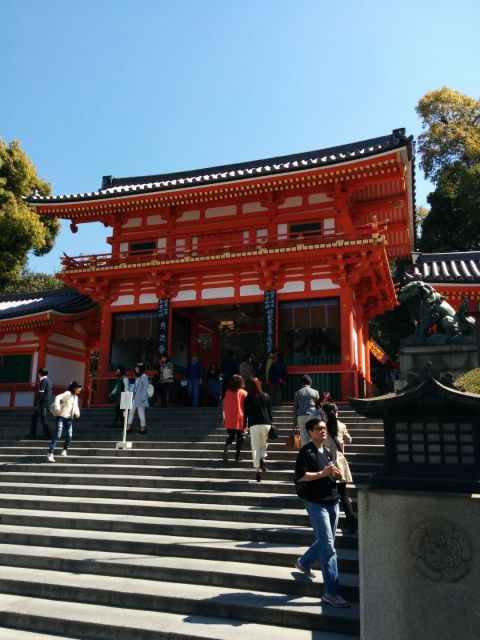
Right away, the guide sets the scene with a map of Kyoto and a history overview. Then you get into Yasaka Shrine itself, including how to worship there. This is one of those parts that sounds simple, but it changes how you experience the place.
Instead of watching people from the outside, you learn what the rituals are for and what you are supposed to do. That gives you a smoother moment when you are surrounded by devotees and tourists doing their best imitation.
You will also hear stories that connect the shrine era to the wider political shifts in Japan. The tour leans into the links between religion, leadership, and everyday practice, so you are not just learning temple names. If you like context that makes the city click, you will probably feel it within the first stop.
Maruyama Park to Nene-no-michi, Where a Name Means a Person
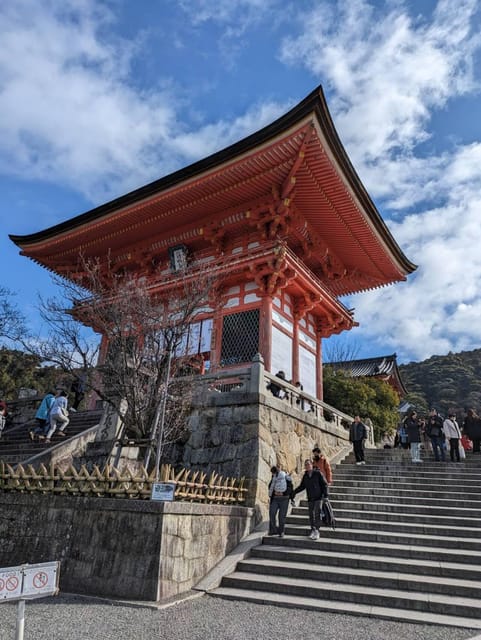
After Yasaka Shrine, you walk through Maruyama Park, next to the shrine area. Then you hit a street named Nene-no-michi, tied directly to Nene, the wife of Toyotomi Hideyoshi in the late 16th century.
This part works well because it uses a street name as a shortcut into history. You get a concrete connection, not a vague timeline. And since the route is still in the Gion orbit, you can sense the blend of old Kyoto and modern visitor life happening right there.
Entoku-in is connected to Nene as well, and the guide uses that link to tee up the Zen stop ahead. In other words, you are walking with purpose, not just strolling for exercise.
Entoku-in Zen Temple: Dry Garden Calm and Sliding Door Art
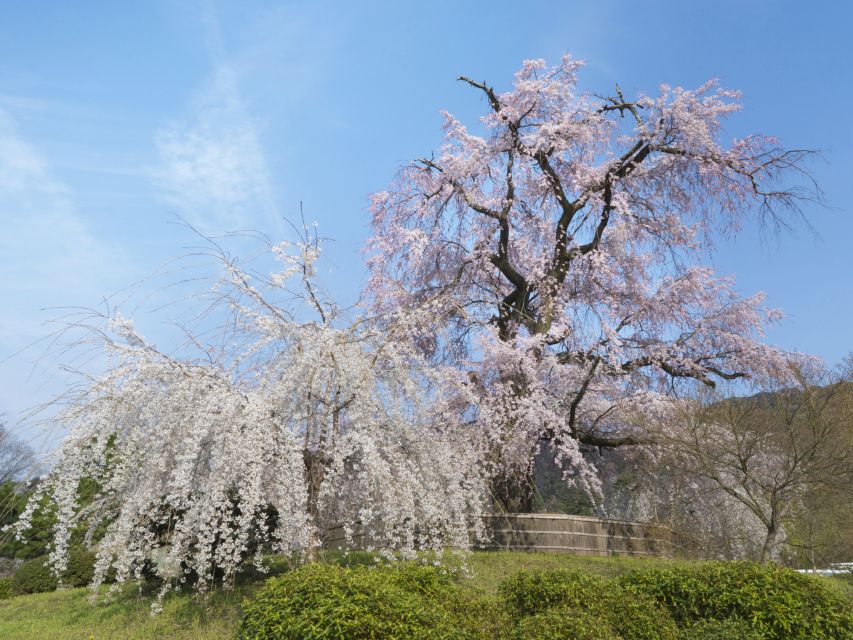
Your next major visit is Entoku-in, a Zen temple associated with Nene. Expect about 40 minutes here, which is long enough to slow your pace without feeling stranded.
The standout is the serenity. The tour focuses on the visual design of a Zen dry rock-and-sand garden, plus you can see traditional Japanese rooms. There is also mention of famous imagery displayed on sliding doors in the temple rooms, so you are not only staring at garden rock. It is a full sensory pause, the kind that makes you feel like you stepped out of the busy streets for a moment.
One detail I really appreciate: this stop is not just “look at the garden.” The guide ties it back to what Zen teaches about stillness and perception. That makes it feel like an experience, not a snapshot.
If you want souvenirs that are not trinkets, this is where you may get extra learning moments. Some previous guests have highlighted a calligraphy experience connected to the Zen visit, which fits the artistic and meditative vibe of the place.
Yasaka Koshindo Area and the Five-Storied Pagoda Photo Spot
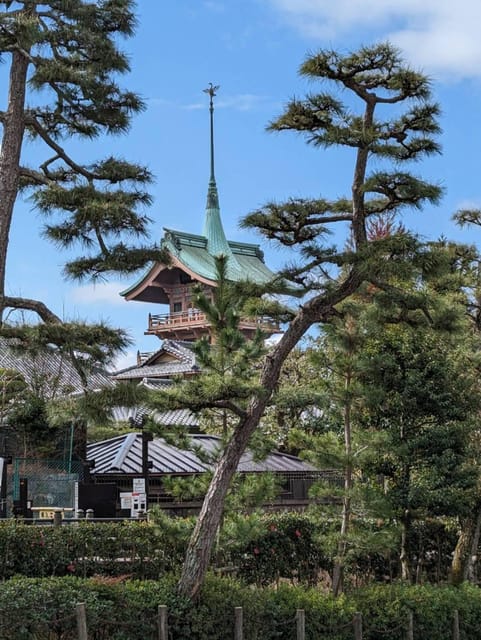
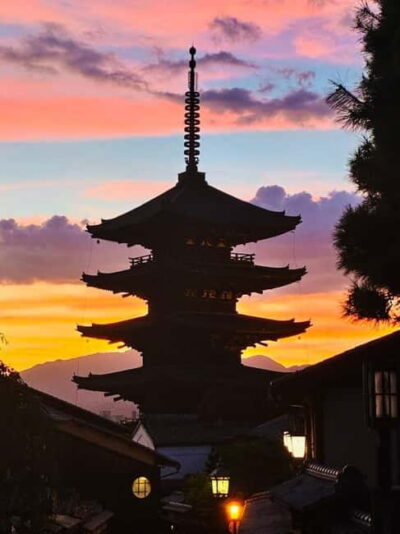
After Entoku-in, you move toward Yasaka Kōshin-dō Temple and a view stop that includes the famous pagoda nearby. This five-storied pagoda is commonly called Yasaka-no-to, and it is located close to Koshindo.
Important expectation: you mostly view the pagoda from outside, and the tour gives you a short, focused window to take it in. There is also a famous photo spot on the street near this area, so it is designed for that classic Kyoto shot.
You will likely feel the contrast here. The pagoda area pulls you back into visual Kyoto, while the earlier Zen stop trained your eyes to see details slowly. That rhythm is exactly what makes this tour more satisfying than doing Kiyomizu-dera cold, without a warm-up.
A quieter way to spend a day in Kyoto

Kiyomizu-dera: Kannon Worship and the Nail-less Stage
The final destination is Kiyomizu-dera, one of Kyoto’s most popular temples. It was originally built in the 8th century, and it draws enormous crowds, with about five million visitors per year.
The tour frames it around its main object of worship: Kannon Bodhisattva. You will see Buddhist statues including Kannon, which helps you understand why so many people come, not just because it is photogenic.
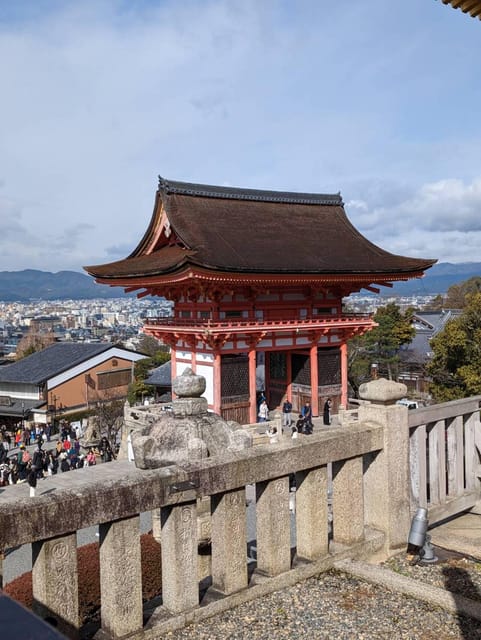
A highlight here is the wooden stage attached to the main hall. The stage is built without the use of nails, and from that platform you get a magnificent view. From the stage you can see a three-storied pagoda called Koyasu Pagoda, sometimes described as a pagoda for easy birth.
That easy-birth theme matters because you are not just looking at architecture. You are watching people perform a prayer with a specific hope, which gives the place a different energy.
Kiyomizu Water, the Iron Stick, and the Matchmaking Shrine Tease
Once you step away from the main hall, the tour ends, but not before the guide adds key context. Kiyomizu literally means pure water, and the stream of water running down from the mountain behind the temple has never been dried up. You will see visitors lined up to drink the water, and that line makes sense once you understand the symbolism.
There are also iron donations in the precincts, including an iron stick and iron clogs. The iron stick is heavy, and the tour’s suggestion is simple: try to lift it, even if you only manage part of the effort. It is a fun way to participate, not just watch.
Finally, the guide explains Jishu Shrine, a shrine for match making. That tip is useful because it gives you a reason to notice nearby relationships between sites, and it gives you something to ask about if you end up returning to the area on your own.
Price and Logistics, Including What You Should Budget For
This tour is $80 per group, up to 5 people. For a private walking tour, that can be good value if you have a small group who wants a guided route and will actually use the explanation time. If you are traveling solo, it is still workable, but you are paying for the experience of a private guide rather than splitting a cost across strangers.
The duration is listed as 2 hours, and the title calls it a 2.5-hour historical walk. In practice, both signals matter. Expect something close to two hours on foot, with your actual pace influenced by photo stops, temple entry time, and how many questions you ask.
One more practical item: admission fees to temples are not included. So budget a bit extra depending on exactly where you enter and what the current fees are on the day you go. Transportation to and from the meeting point is also not included, but the meeting point directions are clear enough that you can plan your own way in.
Who This Tour Fits Best, and Who Might Want Something Different
This tour is ideal if you want Kyoto to make sense fast. It is a strong choice for first-timers who are already thinking about shrines and temples but feel they do not know what they are looking at. It is also a nice fit for small families or pairs because it is private, and you can keep the pace comfortable.
If you only want the easiest postcard route with no explanation, this may feel like more “learning time” than you wanted. But if you like understanding shrine worship, Zen calm, and why Kiyomizu-dera matters beyond the crowds, you will probably love the structure.
Should You Book This Kyoto Private Historical Walking Tour?
Book it if you want more than photos. The route is well chosen, starting at Yasaka Shrine and ending at Kiyomizu-dera, with the Entoku-in Zen stop acting like a mental reset. You also get teaching support, including guide-created visuals and a focus on practical knowledge like how to worship at a shrine.
Skip it if your main goal is to move as fast as possible, without stopping for explanation or questions. Also, if you are not comfortable with stone steps and walking in temple areas, keep that in mind and plan your day around this as your active segment.
If you can do a short walking tour in decent shoes and you enjoy context, this is a smart way to get your Kyoto bearings fast.
FAQ
Where is the meeting point?
You meet at the west gate, the red gate, of Yasaka Shrine (Yasaka-Jinja Nishiromon Gate).
How long is the tour?
The duration is listed as 2 hours.
Is this tour private?
Yes. It is a private group tour, priced for groups up to 5 people.
What is included in the price?
A live English guide is included.
Are temple admission fees included?
No. Temple admission fees are not included.
What should I bring?
Bring comfortable shoes, since the route includes walking and steps.
How do I get to the meeting point by train or bus?
By train, get off at Gion Shijo Station (Keihan Line) or Kawaramachi Station (Hankyu Line), then walk to Yasaka Shrine and go up the stone steps to the red gate. By bus, get off at the Gion bus stop and follow the stone steps to the red gate.
New This Season
- Koyasan Day Trip by Private Car from Kyoto
- Old Port Town and Ultimate Sake Tasting Private Tour From Kyoto
- Kyoto’s Timeless Charm: 3hr Exploration of History and Peace
- Kyoto: 5 Types of Sushi Making
- Sacred Peak & Ancient Paths: Kurama-Kibune Hiking Experience
- Kyoto: Exclusive ZEN practice at Manpukuji temple in Uji
- Traversing Kyoto’s Scenic West – Arashiyama to Kinkakuji
- Kyoto: Private Seasonal Aroma Yoga Class
Walking Tours, compared.
Kyoto Geisha Walking Tour: Gion District & Hidden Gems
Read our review →
Gion Magical Night Walking Tour with Geisha Trivia
Read our review →
Gion Geisha District Walking Tour – Stories of Geisha
Read our review →
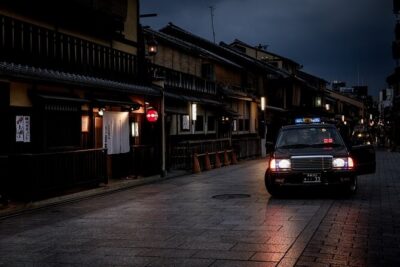
Kyoto Gion Geisha District Walking Tour – The Stories of Geisha
Read our review →
Nishiki Market Brunch Walking Tour (7 Tastings + Brunch)
Read our review →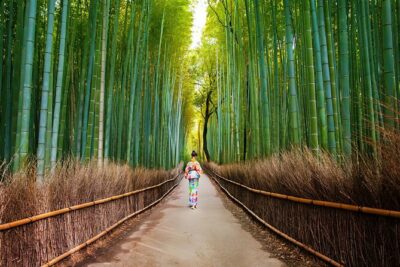
Kyoto Arashiyama Walking Tour: Bamboo, Monkeys, Gardens & Secrets
Read our review →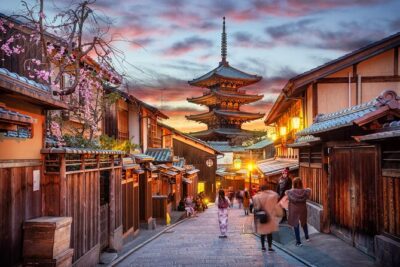
Kyoto Gion: 2-Hour Geisha Culture & History Walking Tour
Read our review →Also filed under