
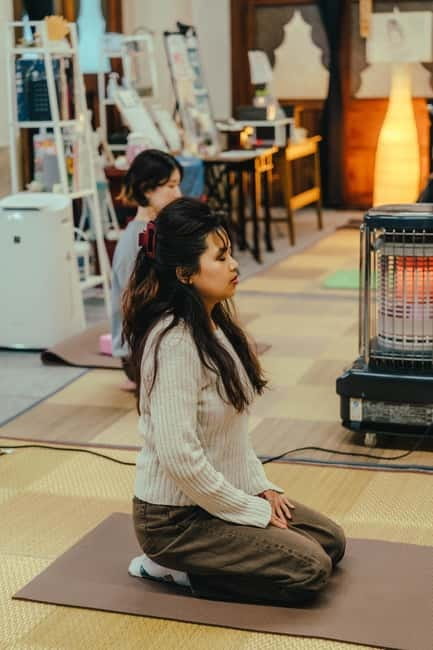
Reviewed · TEMPLE & SHRINE VISITS
Kyoto: Yoga Session in a Japanese Temple with a Meal
Yoga in a real temple changes your pace. This Kyoto experience blends temple yoga with Japanese philosophy, then builds in time to talk with locals in English.
I like the way the class feels like more than stretching. You get two 60-minute yoga lessons in English, with a local guide, plus a chance to practice conversation rather than just sightseeing.
One thing to consider: it is not suitable for everyone. People with back problems, wheelchair users, and those over 65 should skip it, and you will need to remove shoes inside the temple.
In This Review
- Temple Yoga and Japanese Philosophy, Not Just a Workout
- What Makes This Class Different in Kyoto
- Key Things to Know Before You Go
- Where You Meet the Temple, and How to Enter Respectfully
- The Two 60-Minute Yoga Sessions in English
- Japanese Philosophy, Explained Through Practice
- A Local Guide, Plus Real English Practice Time
- Shoes Off, Phones Down: Temple Etiquette That Actually Matters
- Post-Yoga Meal: Organic Food, Community Time
- Price and Value: Is $38 Worth It in Kyoto?
- Who This Kyoto Temple Yoga Class Fits Best
- A Simple Plan for Your Day
- Should You Book This Temple Yoga Session in Kyoto?
- FAQ
- What is included in the Kyoto temple yoga experience?
- Where do I meet for the class?
- Are meals included after yoga?
- What should I bring and wear?
- What are the rules once I arrive at the temple?
- Who is this experience not suitable for?
- What is the cancellation policy?
Temple Yoga and Japanese Philosophy, Not Just a Workout
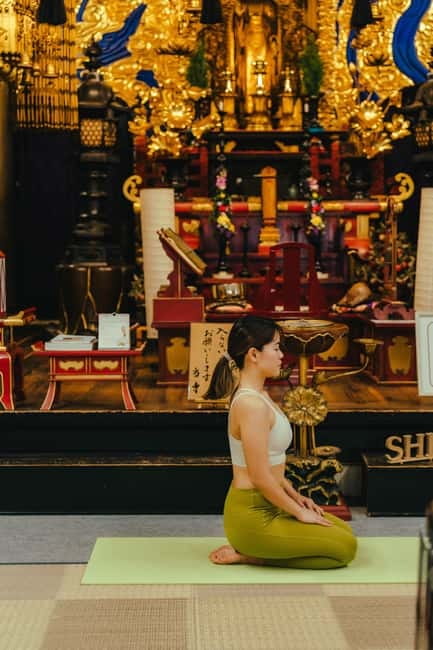
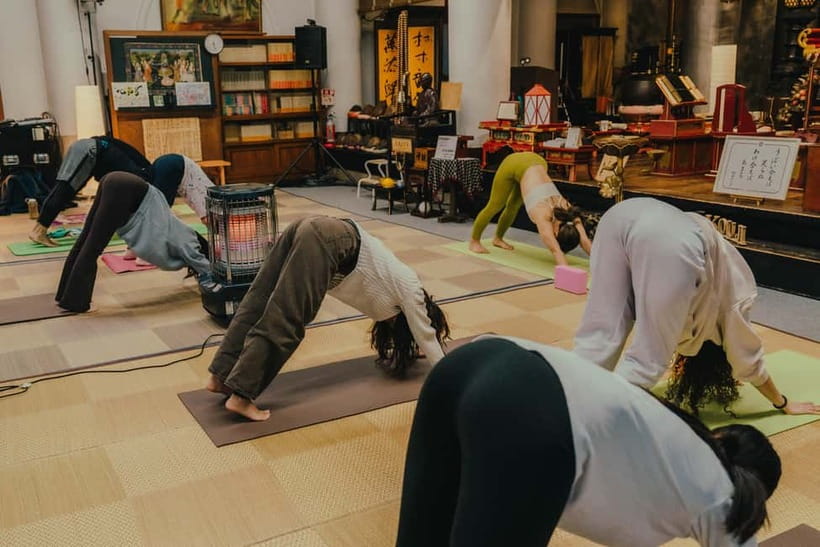
This is the kind of activity that makes you stop and listen. Instead of doing yoga in a studio or hotel room, you practice in a Japanese temple setting, where the atmosphere is quiet and the rules matter. That shift alone makes the class feel more thoughtful and less hurried.
I also like that the philosophy part is not treated like a side lecture. It is built into the experience, so you get a bridge between what you are doing with your body and what you are learning about Japanese culture and mindset.
What Makes This Class Different in Kyoto
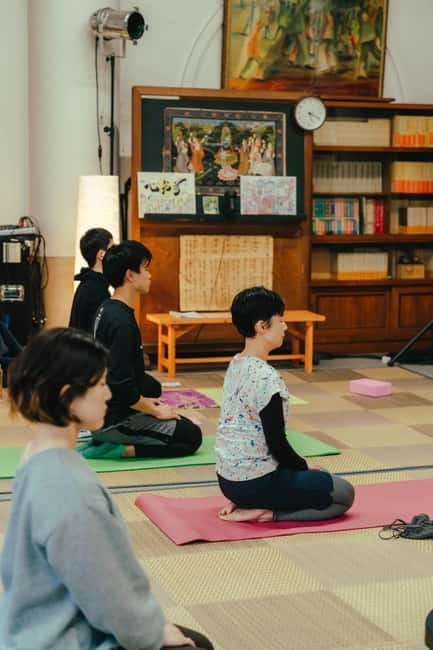
Here is what you are really signing up for: you are using yoga as a shared language.
The experience is designed to connect two groups. Overseas visitors want a meaningful way to meet locals. Locals who want to practice speaking English get a friendly setting to do it. That means you are not just attending a class, you are joining a small social rhythm that includes conversation.
And yes, you still get a real yoga practice. The mat is included, the sessions are led in English, and you are guided through two lessons that each last 60 minutes.
If you want something active and human, this fits.
Key Things to Know Before You Go
- Yoga in a Japanese temple with a quiet, sacred atmosphere and shoe removal rules.
- Two 60-minute lessons led in English, with a local guide.
- Japanese philosophy plus yoga, so the meaning is part of the practice.
- English chat time with locals, built for conversation and connection.
- Organic meal option after yoga, with a restaurant arranged for post-class nourishment.
- A portion donated to temple preservation, turning your fee into support.
More rooftops worth a detour
- Kyoto: Tea Ceremony Ju-An at Jotokuji Temple
★ 4.9 · 3,207 reviews - Arashiyama Bamboo, Temple, Monkeys, or Secret Sake Brewery
★ 4.8 · 886 reviews - Kyoto: Arashiyama Bamboo Forest, Monkeys, Matcha & Temple Tour
★ 5.0 · 759 reviews - Osaka/Kyoto: Arashiyama, Nara & Fushimi Inari Shrine w/Lunch
★ 4.4 · 754 reviews
Where You Meet the Temple, and How to Enter Respectfully
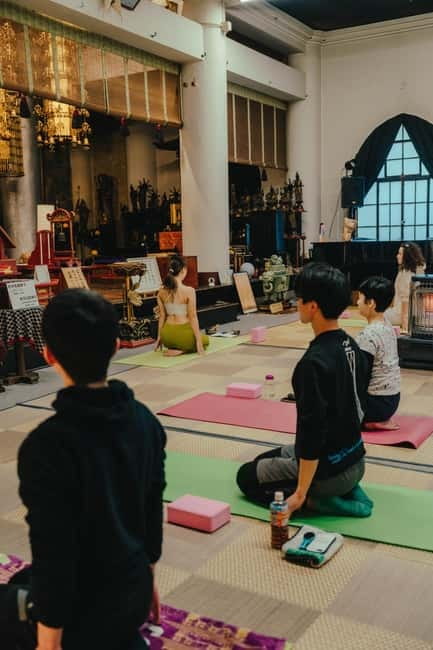
You start at the temple itself. Do not plan to wander in late. Come directly to the temple 10 minutes before your class starts. That early arrival helps you settle in, meet your guide, and transition into temple mode without rushing.
Before you enter, you will need to remove shoes. That is normal in Japanese temples, and it also sets the tone: you slow down because the space asks for it. I suggest wearing socks you are comfortable walking around in for a short time, especially if the grounds have cool or uneven spots.
Once inside, the rules are straightforward. No smoking, no alcohol, and no drugs. Keep your voice low and your pace calm. Even if you are used to loud travel days, this is the moment to shift gears.
The Two 60-Minute Yoga Sessions in English
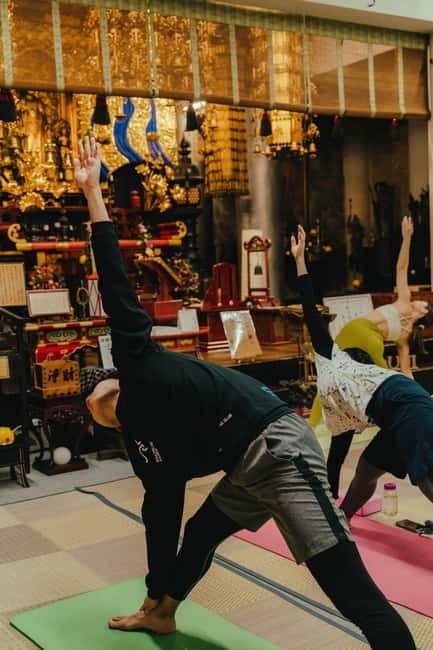
The heart of the experience is the yoga practice: 60 minutes of yoga, repeated twice. You get a local guide, and you also get instruction in English. That matters because it helps you focus on alignment and breathing rather than guessing what is coming next.
Yoga clothes are not included, so plan to wear something that moves with you. Comfortable clothes suited for yoga are ideal, especially because you will spend time transitioning before and after practice.
Also, bring your own water. Hydration is simple but easy to forget when you are moving and focused on learning. Having your own bottle means you are not stuck waiting or searching.
What I like about two lessons instead of one is that your body has time to settle. You can start the first session getting used to the space and pace, then continue into a second block with less mental effort.
Japanese Philosophy, Explained Through Practice
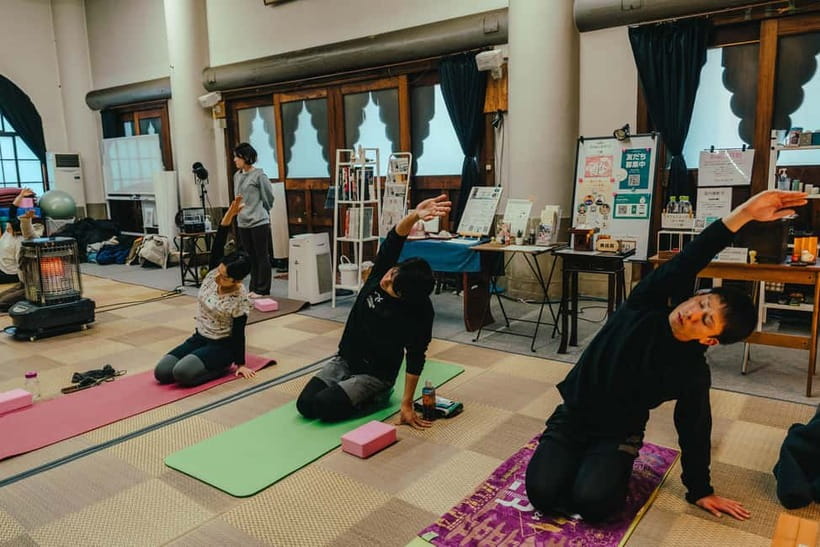
This experience is not just yoga plus a few cultural facts. Japanese philosophy is woven into the session, and that is the main reason it feels different from a standard class.
Think of it like this: you are learning how the culture approaches balance, respect, and attention, then you practice it with your body. In a temple setting, even simple poses and breathing exercises feel more grounded. You are not separating mind and body. The space encourages you to treat the session like something with meaning, not only movement.
If you enjoy culture that is practical, not just decorative, you will like this format. It gives you a chance to understand the ideas behind the quiet rituals you see elsewhere in Kyoto.
A Local Guide, Plus Real English Practice Time
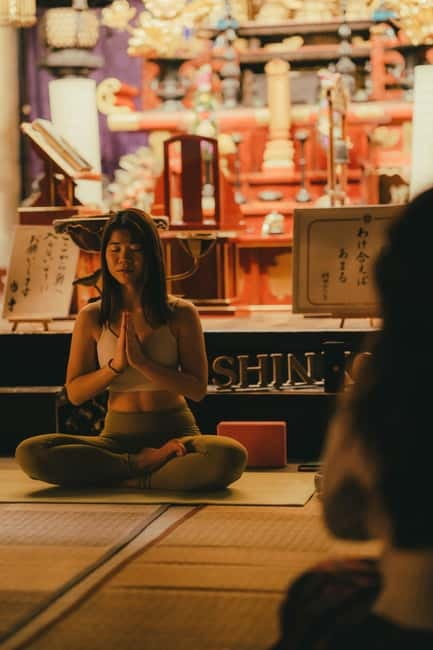
One of the smartest parts of the design is the social structure. There is time for chat with locals who want to learn English. That is the bridge: you practice conversation in a respectful setting, and they practice speaking in a way that feels natural.
You can share travel stories, mention where you have been in Japan, and ask for local recommendations. That turns the conversation from small talk into something useful.
In particular, one participant, Nur Sabrina binti, described how the experience included a yoga class and then a picnic afterward to connect with other members. That detail matches the overall purpose: you leave with stories, not just stretches.
Tip for English conversation: have one simple story ready, something short and specific, like a day trip you loved or a food you were nervous to try. Those work well because they do not require a perfect vocabulary to share.
A day of temples goes further with something to break it up.
Shoes Off, Phones Down: Temple Etiquette That Actually Matters
If you have done temple visits in Japan, you already know the basics, but this experience makes them real.
- You will remove your shoes before entering.
- The temple environment is quiet and sacred, so keep your behavior calm.
- Smoking, alcohol, and drugs are not allowed.
Phones are not explicitly covered in the info, but the temple atmosphere strongly suggests you should use common sense. Keep audio off. Step outside for calls if you must. Treat the space like a place of worship, not a photo studio.
This matters for two reasons. First, you will get more out of the experience if you are not distracted. Second, you avoid awkward moments with staff or other participants.
Post-Yoga Meal: Organic Food, Community Time
The included yoga is one part. The human connection is the other part.
After the yoga sessions, you are invited to gather for lunch or dinner. The host arranges an organic restaurant with high-quality organic food, meant to be a good fit after yoga.
Food and drinks are not included, so you should expect to pay for your meal separately. Still, having a plan is valuable. Kyoto can be overwhelming when you are hungry and tired, and this removes the decision fatigue.
One more detail: the same participant who praised the yoga experience also mentioned a picnic afterward. That tells me the gathering component can feel relaxed and friendly, not formal.
Best approach for you: go hungry but not stressed. Bring your own water before class, and then treat the meal time as recovery. The point is to relax and keep talking, not rush back into a full day of sightseeing.
Price and Value: Is $38 Worth It in Kyoto?
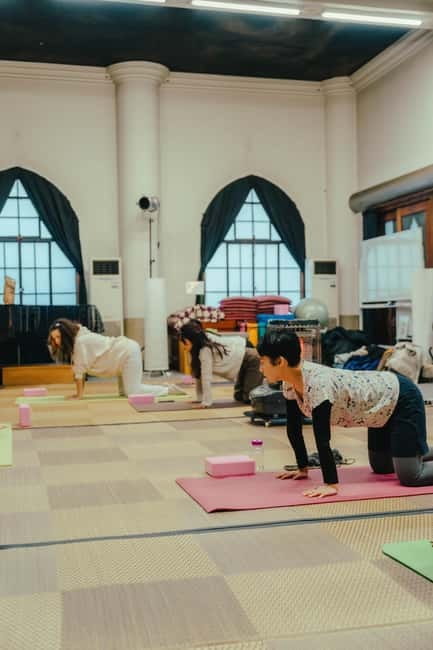
At $38 per person, you are not paying only for yoga. You are paying for a bundle:
- A local guide
- Yoga mat included
- Two 60-minute English-led yoga lessons
- Chat time with locals who want to practice English
- A Japanese crafted gift as a token
- A portion of the fee donated to temple preservation
When you look at it this way, $38 feels more like paying for guided cultural access, community time, and instruction, rather than paying for a generic class. The temple donation component also matters if you care about how tourism money supports the place you are using.
Could it cost more elsewhere? Sure. Could you find a free or cheaper yoga class in Kyoto? Probably. But if your priority is temple setting plus cultural learning plus conversation with locals, this price is easier to justify.
You should also consider the constraints. Since it is not suitable for certain ages and conditions, your personal fit affects the value. If you meet the guidelines, the experience likely feels worth the cost because it is designed that way.
Who This Kyoto Temple Yoga Class Fits Best
This works well if you want a slower, more meaningful morning or afternoon in Kyoto. It is ideal for people who:
- Like structured yoga with English guidance
- Enjoy cultural learning that connects to real daily life
- Want to meet locals without forcing conversation in a busy tourist setting
- Prefer small, respectful experiences over crowded events
It may not be a great match if:
- You have mobility limits or require wheelchair access
- You have back problems
- You are traveling with children under 12
- You are over 65, since it is listed as not suitable
Also, you should be comfortable following temple rules, especially shoe removal and quiet behavior.
A Simple Plan for Your Day
Here is how I would plan around it.
First, treat the temple practice as your reset. Plan lighter activities before or after so you are not exhausted by the time you start. Traveling can wear you down, and the experience is meant to release tension, not compete with a full day.
Second, wear comfortable clothes and bring water. Yoga clothes are not provided, so you need to bring your own outfit that allows movement.
Third, keep room for the meal gathering after class. Even if you do not eat immediately, you will likely want to connect with others and unwind.
Should You Book This Temple Yoga Session in Kyoto?
I would book it if you want yoga with context. The temple setting plus Japanese philosophy makes it feel more than a routine class, and the English conversation time gives you a chance to meet locals in a low-pressure way.
Skip it if you fall into the listed not suitable categories, or if you dislike instruction that includes cultural and philosophical discussion. This is not just a sweat session. It is a practice shaped by a sacred space and shared learning.
If you do book, you can take advantage of the reserve and pay later option, so you do not have to lock your plans today. Just make sure you arrive early at the temple, come ready to remove shoes, and treat the quiet rules as part of the experience, not an inconvenience.
FAQ
What is included in the Kyoto temple yoga experience?
The experience includes a local guide, a yoga mat, two 60-minute yoga lessons, yoga instruction in English, chat time with locals who want to practice English, and a Japanese crafted gift. Food and drinks are not included.
Where do I meet for the class?
Please come to the temple directly 10 minutes before your class starts. The activity ends back at the meeting point.
Are meals included after yoga?
Food and drinks are not included. After yoga, you can gather for lunch or dinner, and an organic restaurant with high-quality organic food is arranged for post-yoga nourishment.
What should I bring and wear?
Bring water and wear comfortable clothes suitable for yoga. Yoga clothes are not included.
What are the rules once I arrive at the temple?
Smoking is not allowed. Alcohol and drugs are not allowed. You should also be prepared to remove shoes before entering and respect the quiet, sacred atmosphere.
Who is this experience not suitable for?
It is not suitable for children under 12, people with back problems, wheelchair users, and people over 65.
What is the cancellation policy?
You can cancel up to 24 hours in advance for a full refund.
New This Season
- Koyasan Day Trip by Private Car from Kyoto
- Old Port Town and Ultimate Sake Tasting Private Tour From Kyoto
- Kyoto’s Timeless Charm: 3hr Exploration of History and Peace
- Kyoto: 5 Types of Sushi Making
- Sacred Peak & Ancient Paths: Kurama-Kibune Hiking Experience
- Kyoto: Exclusive ZEN practice at Manpukuji temple in Uji
- Kyoto: Private Seasonal Aroma Yoga Class
- Traversing Kyoto’s Scenic West – Arashiyama to Kinkakuji
Temple & Shrine Visits, compared.
Arashiyama Bamboo, Temple, Monkeys, or Secret Sake Brewery
Read our review →
Arashiyama Bamboo Forest, Monkeys, Matcha & Temple Tour
Read our review →
Arashiyama, Nara & Fushimi Inari Shrine w/Lunch
Read our review →
Kyoto Zen Meditation & Garden Tour at a Zen Temple with Lunch
Read our review →
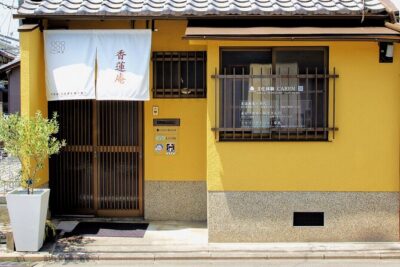
KYOTO Tea Ceremony with kimono near by Imamiya Jinjya Shrine
Read our review →Arashiyama Bamboo, Matcha, Monkeys & Temple Tour
Read our review →Also filed under