
Reviewed · ARASHIYAMA BAMBOO FOREST WALKS
Kyoto:Quiet Arashiyama and Sagano Temples
A calm corner of Kyoto that feels personal and meaningful. This 3-hour guided walk pairs serene Arashiyama nature with temple stories that hit you in the gut, especially at Adashino Nenbutsu-ji and Giou-ji. I love that it is story-led, not just sightseeing, and that the guide (Masa) makes room for you to do a short prayer or meditation practice. One drawback to plan for: it is still a walking tour with a lot of steps, so you will want comfortable shoes and a steady pace.
You start at JR Saga-Arashiyama Station and spend the afternoon moving through quiet temple grounds, a preserved old street scene, and famous Arashiyama-Sagano sights like the bamboo grove and Tenryuji. If you are the type who likes your Kyoto with context, quiet, and a guide who explains why these places mattered to real people, this is a very strong fit.
In This Review
- Key highlights you will feel on this walk
- Why Arashiyama and Sagano feel different on a quieter guided loop
- Meeting at JR Saga-Arashiyama Station and getting your bearings fast
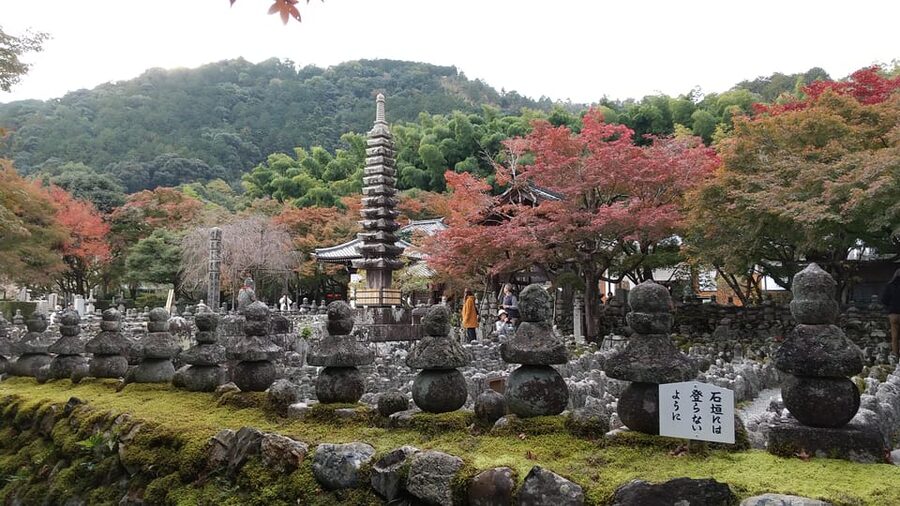
- Adashino Nenbutsu-ji: the heartless field story and 8,000 stone Buddhas
- Saga Toriimoto preserved street: farmhouses, machiya, and a slower kind of Kyoto
- Giou-ji Temple and the women’s sorrows story in the Heian world
- Sagano Bamboo Grove views and Tenryuji’s guided slow time
- Hands-on prayer and meditation practice that makes the stories real
- Price and value for a 3-hour Arashiyama and Sagano temple walk
- Who this tour suits best, and who should consider something else
- Should you book this Arashiyama and Sagano temple tour?
- FAQ
- How long is the Kyoto Quiet Arashiyama and Sagano Temples tour?
- Is this tour guided in English?
- What is included in the price?
- Where do I meet the guide?
- Do I need to pay temple admission separately?
- What should I bring?
- Is the tour suitable for wheelchair users or people with mobility impairments?
- Can I cancel for a full refund?
Key highlights you will feel on this walk
- Crowd-smart timing and a quieter Arashiyama feel, guided end to end
- Adashino Nenbutsu-ji’s tragedy story, including heartless field origins and huge numbers of Buddha statues
- Giou-ji’s women’s sorrows history, centered on Giou and Taira no Kiyomori
- A preserved old street scene with farmhouses and machiya houses near Saga Toriimoto
- Tenryuji time with a guide plus scenic stop-offs around Sagano and the bamboo grove
- Hands-on temple practice where Masa may invite you into prayer or meditation traditions
Why Arashiyama and Sagano feel different on a quieter guided loop
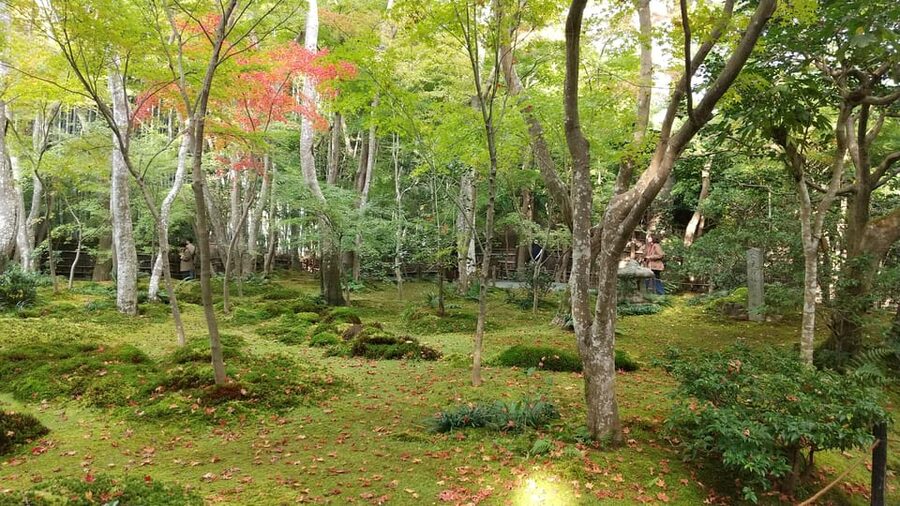
Arashiyama and Sagano can feel like two separate worlds depending on when and how you see them. On this tour, the pace and focus are built around quiet moments in temple spaces, with nature-rich calm forming the backdrop. That is a big deal because the area has a reputation for crowds, and you are paying for a route and narration that helps you slow down.
What I like most is that this is not “look, take a photo, move on.” The guide’s job is to help you read the atmosphere with your own senses. You hear the stories, but you also stand where those stories lived, and that changes how you experience the place. It turns the trip into a kind of bridge between past and present, with you doing the connecting.
The other practical plus: the group is private, so you are not stuck in a herd. You can ask questions, and the guide can explain at the pace of your group. The only thing to keep in mind is that “private” does not mean “no walking.” This is still a 3-hour stroll with temple-to-temple movement.
Meeting at JR Saga-Arashiyama Station and getting your bearings fast
Start point matters more than most people think, especially in Kyoto where stations and nearby stops can be confusing. You meet at JR Saga-Arashiyama Station, not Hankyu or Randen Arashiyama Station. The guide will be holding a sign with your name just outside the station ticket gates.
If you want this to feel smooth, arrive about 15 minutes early. That buffer lets you find the right entrance quickly and get moving before the group does. Once you are underway, the structure is simple: walk to a temple first, then layer in old-town streets and another temple highlight, and finish with the bamboo grove and Tenryuji.
What to expect from the walking itself is also straightforward. The tour is set up for people who can handle a good amount of walking. Bring comfortable shoes, and if your body runs hot in the sun, bring a hat and sunscreen. Water is provided as a practical recommendation for a reason.
More rooftops worth a detour
- Kyoto: Tea Ceremony Ju-An at Jotokuji Temple
★ 4.9 · 3,207 reviews - Arashiyama Bamboo, Temple, Monkeys, or Secret Sake Brewery
★ 4.8 · 886 reviews - Kyoto: Arashiyama Bamboo Forest, Monkeys, Matcha & Temple Tour
★ 5.0 · 759 reviews - Osaka/Kyoto: Arashiyama, Nara & Fushimi Inari Shrine w/Lunch
★ 4.4 · 754 reviews
Adashino Nenbutsu-ji: the heartless field story and 8,000 stone Buddhas
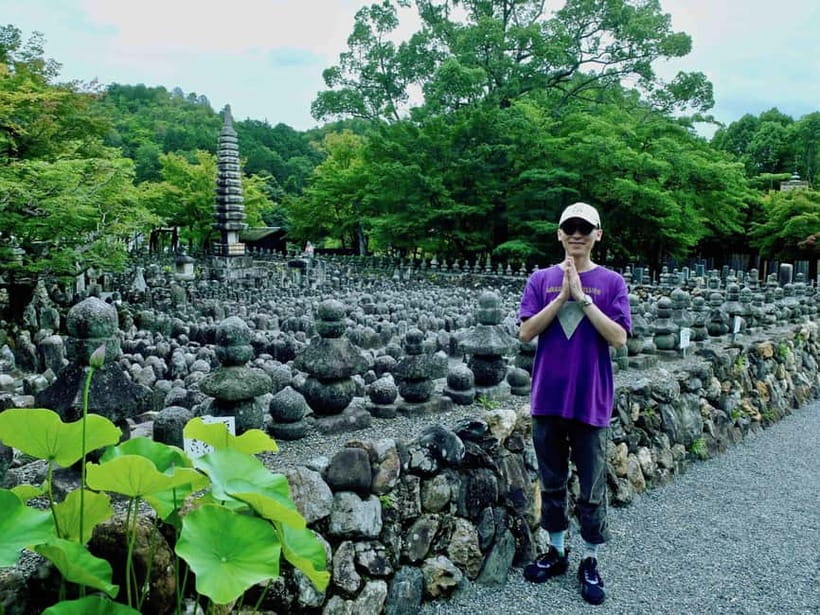
This is the stop where the tour most clearly earns its emotional weight. Adashino Nenbutsu-ji is tied to the Kamakura period and the meaning behind its name, which points to a place that once carried abandonment in its very description. In plain terms, the area was associated with discarded bodies, and that grim origin is part of why the temple matters so much.
The guide’s narrative connects the dots through the founder figure, Honen (1133 to 1212). Honen taught nenbutsu, meaning people chant the sutra. You are not just told a doctrine. You get the feeling of a practice meant to keep hope alive even when society wanted to shut the door.
Then comes the part that makes this temple stand out in a very concrete way: Muen Botoke, described as the dead and their spirits with no relatives to pray for. That idea shapes why the temple gathers and enshrines these kinds of figures.
The scale also does something to your brain. The temple is said to have almost 8,000 stone statues of Buddha, and they were collected after being dug up. Even if you do not know the deeper reasons behind that history, the number gives you a sense of how human loss can become part of a long-term religious response.
There is one more detail that I think helps you understand the temple’s living rhythm: Sentou Kuyo in August, when thousands of candles are lit with flower offerings. Even if you are not in Kyoto that month, having that image in your head changes how you view the calm today. It reframes quiet as something that can hold memory.
Saga Toriimoto preserved street: farmhouses, machiya, and a slower kind of Kyoto
After the emotional intensity of Adashino, the tour gives you a breather with the Saga Toriimoto preserved street section. This is not a long sit-down stop, but the pass-by views matter. You get an old street scene where farmhouses and machiya houses mix together.
What makes this part useful is timing. You are absorbing temple meaning, then you are moving into everyday architecture from the area’s past. It helps you shift perspective from religious structures back to daily life: the homes, the street scale, and the sense that people lived here long before modern tourism patterns set in.
This part also gives you a practical advantage. When you later stand in bigger Kyoto sights, you will have a better sense of what “local” housing looked like around Rakugai, the suburbs of Kyoto. You start spotting textures and layouts instead of only chasing famous landmarks.
Giou-ji Temple and the women’s sorrows story in the Heian world
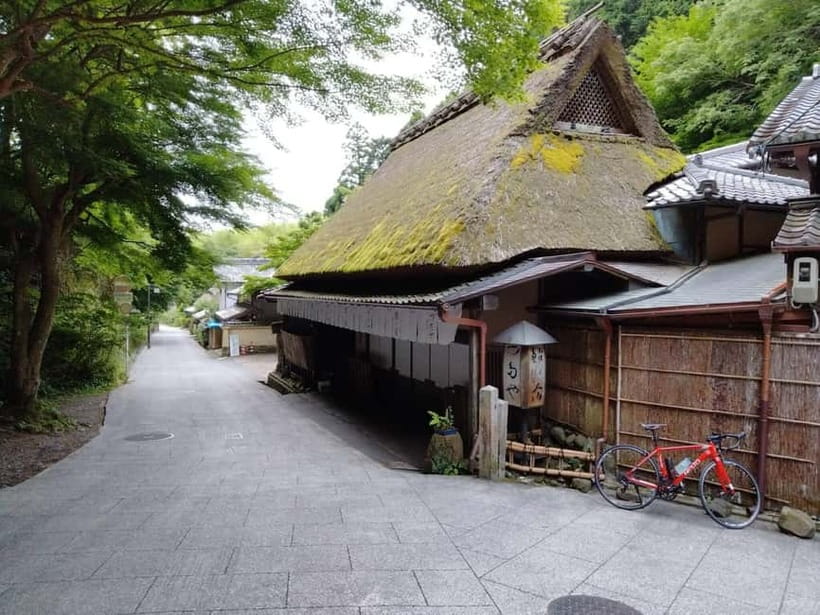
Giou-ji Temple is built in the 12th century during the Heian period. The name has a very specific meaning: Giou is a woman’s name, and the temple is known as the stage of women’s sorrows. If you like historical storytelling, this stop is a standout because it is centered on people, not just monuments.
At the core is Giou, described as a dancer in this period. She was favored by Taira no Kiyomori, the powerful Taira leader in the Heian court era, dated 1118 to 1181. The story turns on the shift in favor. Kiyomori loved Giou at first, then moved his heart to another woman, Butsugozen. Giou is driven away.
The tragedy does not stop at rejection. Giou later becomes a nun, living here in her rest life with her sister and mother. The narrative also brings in Butsugozen, the rival woman who was thrown away as well and became a nun too. They are described as living together in the same house, and then four women practice Buddhism here.
This is the kind of history that stays with you because it is not abstract. You are hearing about how relationships and power could re-route a life, then watching how that memory became a place for worship and reflection. You are not asked to like the story. You are asked to recognize how suffering gets carried, then transformed into something ritual.
Practically, the tour timing gives you enough time to listen without rushing. You get a guided visit with sightseeing time, so you can take in the temple atmosphere after the story lands.
Sagano Bamboo Grove views and Tenryuji’s guided slow time
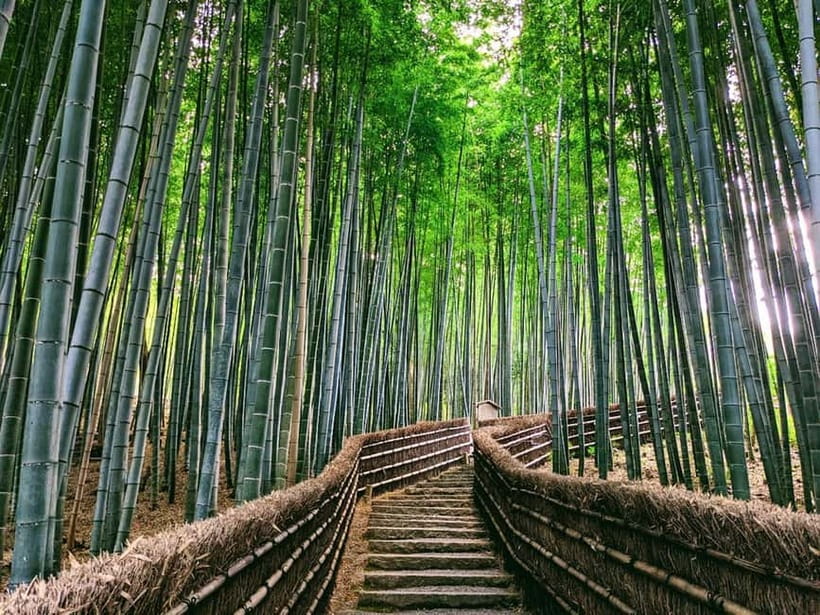
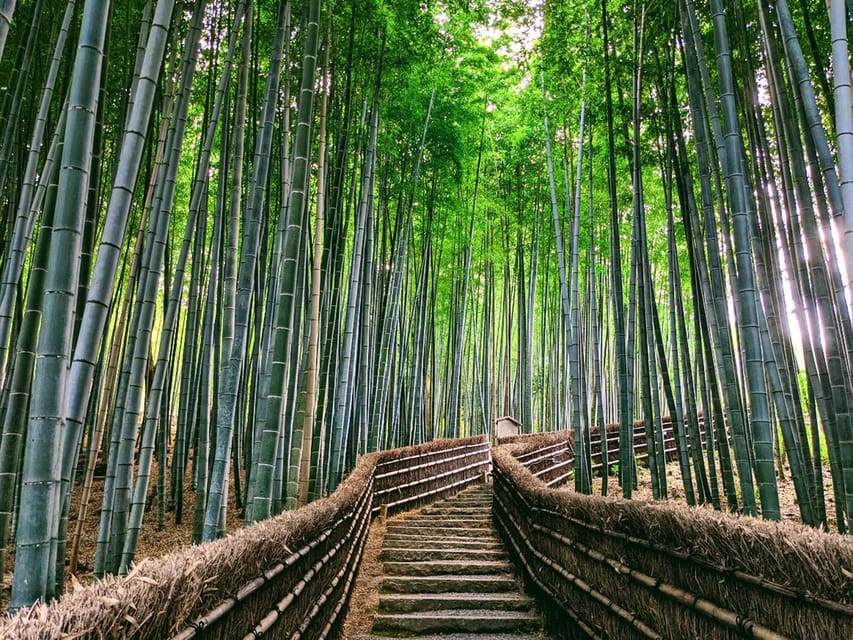
The bamboo grove stop is designed as scenic time, with views on the way and a set chunk to see it properly. You do not need a lecture to enjoy bamboo, but the guide’s broader context helps. You are not standing there thinking only about photos. You are standing there while the tour has already trained you to read mood and meaning.
Next comes Tenryuji Temple, where the tour sets aside about 1.5 hours for a guided visit. That longer block is one of the reasons this tour works for people who dislike museum-style rushing. You have time to slow down, hear the guide’s explanations, and sit with the temple environment instead of sprinting between checkmarks.
Because Tenryuji time is guided, you also get more than “what to look at.” You get the temple’s atmosphere framed through faith and culture, with the guide pointing out how to see the place the way locals would have experienced it.
If you are used to doing temples as quick photo stops, this is a good corrective. If you are already a temple person, you will probably appreciate how the tour gives you actual time in one of Kyoto’s bigger temple experiences.
Green light through a bamboo grove
Hands-on prayer and meditation practice that makes the stories real
One of the most praised parts of this tour is the way Masa connects narration to action. At select temples, you get hands-on experiences tied to prayer or meditation traditions. The guide may demonstrate and invite you to practice, so the tour does not stay purely intellectual.
That matters because temples like these are not only about viewing objects. They are about participating in a belief system, even briefly. When you handle a ritual element yourself, you start to understand why people built these places and why they returned.
It also makes the experience feel personal. In a private group, you are not trapped behind someone else’s head or forced into awkward quiet. If you want to ask what something means before you do it, this format supports that.
Practical tip: if you are shy, you can still observe and participate in whatever feels comfortable. The value here is that the guide explains what is happening, so you are not stuck guessing. And if you are curious, this is the kind of moment that gives you a story you will remember long after the bamboo photos.
Price and value for a 3-hour Arashiyama and Sagano temple walk
The price is $38 per person for a 3-hour guided tour, and it includes admission to all temples visited plus the guided narrative and hands-on experiences at select temples. On paper, that sounds simple. In practice, it can be a good deal because Kyoto temple entry fees can add up fast once you stack multiple sites.
The bigger value is the guide itself. You are paying for someone to translate meaning into a route you can follow, with stories tied to each stop. It is not the cheapest way to do Arashiyama, but it is also not trying to be some fancy, all-day extravaganza. If you want a focused half-day that feels thoughtful, the pricing makes sense.
One caution on value: because the tour is only 3 hours, you will not get unlimited wandering time. If you like to linger for long periods, you might wish there were a bit more slack. The trade-off is that you leave with a stronger emotional arc across multiple temples instead of only seeing one place deeply.
Who this tour suits best, and who should consider something else
This is a good match if you want:
- Temple-focused Kyoto with story and context, not only landmark hunting
- A calmer Arashiyama and Sagano route that helps you avoid feeling overwhelmed
- A guide who can explain faith traditions and may invite you into a short practice
- Time-efficient sightseeing, since it packs several meaningful stops into 3 hours
It is probably not the right match if:
- You need step-free routes or you use a wheelchair, because the tour is not suitable for wheelchair users or people with mobility impairments
- You want to sit most of the time. This is a walking tour and you should plan for that
If you are traveling solo, this private-group style can feel especially nice, because you still get a real guide and a more flexible feel. If you are traveling with a partner who loves history and a bit of spiritual context, this format can satisfy both of you.
Should you book this Arashiyama and Sagano temple tour?
I would book it if you want Kyoto that feels quieter and more human, with temples that come with names, dates, and tragedy, not just postcard views. The combination of Adashino Nenbutsu-ji’s grave origin story and Giou-ji’s women’s sorrows history gives the tour emotional momentum. Add hands-on prayer or meditation moments, and you get more than surface-level temple browsing.
I would pass or choose a different style if you can only do minimal walking or you need a very slow pace with lots of free time inside each site. This tour has structure, and that is exactly what makes it work for many people, but it can feel tight if you hate time limits.
If you are deciding in one sentence: book it for meaningful temple storytelling in a quieter Arashiyama-Sagano loop, and bring comfortable shoes so you can enjoy it without rushing.
FAQ
How long is the Kyoto Quiet Arashiyama and Sagano Temples tour?
It is about 3 hours long.
Is this tour guided in English?
Yes. It is a live tour with an English-speaking guide.
What is included in the price?
The tour includes the guided tour, admission to all temples visited, and hands-on experiences at select temples.
Where do I meet the guide?
Meet at JR Saga-Arashiyama Station. The guide will be just outside the station ticket gates holding a sign with your name. It is not Hankyu or Randen Arashiyama Station.
Do I need to pay temple admission separately?
No. Admission to all temples visited is included.
What should I bring?
Bring comfortable shoes, a hat, camera, sunscreen, and water.
Is the tour suitable for wheelchair users or people with mobility impairments?
No. It is not suitable for people with mobility impairments or wheelchair users.
Can I cancel for a full refund?
Yes. Free cancellation is available up to 24 hours in advance for a full refund.
New This Season
- Koyasan Day Trip by Private Car from Kyoto
- Old Port Town and Ultimate Sake Tasting Private Tour From Kyoto
- Kyoto’s Timeless Charm: 3hr Exploration of History and Peace
- Kyoto: 5 Types of Sushi Making
- Sacred Peak & Ancient Paths: Kurama-Kibune Hiking Experience
- Kyoto: Exclusive ZEN practice at Manpukuji temple in Uji
- Kyoto: Private Seasonal Aroma Yoga Class
- Traversing Kyoto’s Scenic West – Arashiyama to Kinkakuji
Arashiyama Bamboo Forest Walks, compared.
Fushimi Inari, Kinkakuji, Bamboo Grove 1 Day Bus Tour
Read our review →
Kinkakuji,Arashiyama,FushimiInariShrine,NaraPark
Read our review →
Nara, Fushimi Inari Taisha, Arashiyama Bus Tour
Read our review →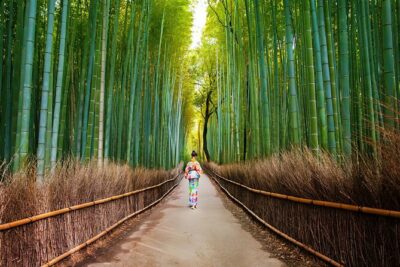
Kyoto Arashiyama Walking Tour: Bamboo, Monkeys, Gardens & Secrets
Read our review →
Arashiyama Bamboo, Temple, Monkeys, or Secret Sake Brewery
Read our review →
Arashiyama Bamboo Forest, Monkeys, Matcha & Temple Tour
Read our review →
Arashiyama, Nara & Fushimi Inari Shrine w/Lunch
Read our review →
Nijo, Kinkaku-ji, Arashiyama, Kiyomizu & Fushimi Inari
Read our review →Also filed under