
Reviewed · TEMPLE & SHRINE VISITS
Sacred Temple Yoga Experience in Japan
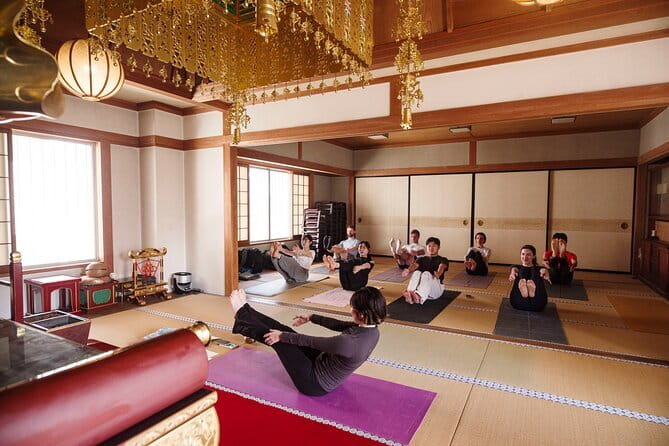
Yoga inside a Kyoto temple feels different. In Kyoto, you practice in a sacred temple atmosphere that invites you to slow down and reset, and you also get to meet people from Japan and overseas. I love how the setup makes English conversation feel natural, not forced.
I also love the two-part rhythm, Vinyasa Flow first and Relax Yoga after, so you can move and then come down gently. One drawback to consider: if you prefer a totally quiet, no-chat experience, the local interaction and English exchange may feel a bit social.
In This Review
- Key highlights at a glance
- Sacred Temple Yoga in Kyoto, where the day feels slower
- Your 3 hours in two parts, Vinyasa Flow then Relax Yoga
- Class 1: Vinyasa Flow
- Class 2: Relax Yoga
- What makes this pair work for travelers
- A temple class that doubles as an English conversation bridge
- How to make the most of the chat, without overthinking it
- Japanese principles you might notice during the session
- Where you meet in Kyoto, and how to plan your morning
- Timing tip
- What to bring
- Post-yoga organic food, and how to keep the day social
- Price and value: why $56.76 can make sense for Kyoto
- Who should book Sacred Temple Yoga in Kyoto
- A few considerations before you go
- Should you book this temple yoga experience?
- FAQ
- FAQ
- Where is the Sacred Temple Yoga experience meeting point in Kyoto?
- What time does the experience start?
- How long is the yoga experience?
- What yoga styles are included?
- How many people are in the group?
- Is this suitable for yoga beginners and English beginners?
- Does any of the fee support the temple?
- What is the cancellation policy?
Key highlights at a glance
- Small group, max 10 travelers, so you actually have time to talk
- Vinyasa Flow then Relax Yoga, an energy up and a calm down
- Temple setting in Kyoto with a peaceful, sacred tone
- English practice bridge between locals and overseas visitors
- Japanese principles shared during the session for added meaning
- Part of your fee supports temple preservation
Sacred Temple Yoga in Kyoto, where the day feels slower
Kyoto can be fast, crowded, and mentally loud. This experience is designed to do the opposite. You step into a temple environment where everything shifts toward stillness, and that matters because yoga works best when your brain stops multitasking.
What I like about the concept is that it is not just a yoga class dropped into a pretty location. The temple setting is the main ingredient. That sacred atmosphere gives your body permission to soften, and it gives your mind a reason to pay attention to the present moment instead of your next train, your next shrine photo, or the long list of places you still want to see.
This is also where the experience becomes practical for real travelers. After a few days of sightseeing, your body often feels tense even when you think you are doing fine. A 3-hour reset, in a place that encourages calm, is a smart use of limited trip time. You go in tight. You come out less tight, and you usually feel clearer about the rest of your day.
Your 3 hours in two parts, Vinyasa Flow then Relax Yoga
The session is about 3 hours total, and it is split into two different yoga styles. That pacing is a big deal for beginners, because you get a sense of progress without being pushed through only one intensity level.
More rooftops worth a detour
- Kyoto: Tea Ceremony Ju-An at Jotokuji Temple
★ 4.9 · 3,207 reviews - Arashiyama Bamboo, Temple, Monkeys, or Secret Sake Brewery
★ 4.8 · 886 reviews - Kyoto: Arashiyama Bamboo Forest, Monkeys, Matcha & Temple Tour
★ 5.0 · 759 reviews - Osaka/Kyoto: Arashiyama, Nara & Fushimi Inari Shrine w/Lunch
★ 4.4 · 754 reviews
Class 1: Vinyasa Flow
Vinyasa Flow is the more active part. It typically means you move through a sequence with breath guiding motion. Here’s the practical value: you warm up your body, you loosen stiff joints, and you find your rhythm. For English beginners, this is also a good start because the movement carries you. You do not have to understand every word to stay engaged.
Since the experience welcomes yoga beginners, you should expect a class tone that does not treat beginners like they are behind. Still, vinyasa has a momentum to it. If you have limited mobility or you are recovering from a lot of walking, focus on comfort first. Move slowly, take breaks when you need them, and treat the breath as your guide.
Class 2: Relax Yoga
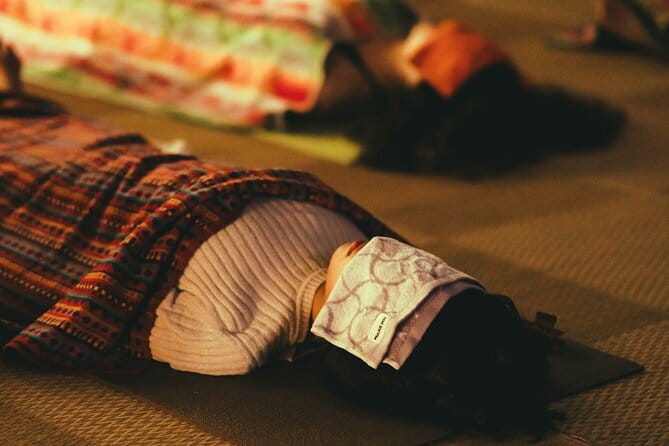
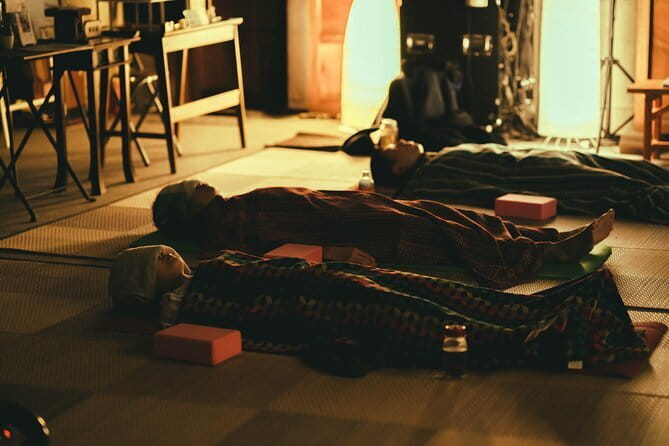
Then the pace drops. Relax Yoga is the part that helps you digest the day you have been carrying around. This is where the temple atmosphere can really work on you. When you slow down, the sacred calm becomes more than a feeling. It becomes a physical experience, less tension in the shoulders, a quieter mind, and better body awareness.
If you are the kind of person who leaves regular yoga classes feeling like you did a workout but not much else, Relax Yoga is where you get the bigger payoff. The contrast between the two classes is the plan: move, then release.
What makes this pair work for travelers
Many people in Japan want something culturally meaningful but not complicated. This format is both. You get a full yoga arc, rather than a short token session, and the temple setting gives it a deeper reason to exist beyond stretching.
A temple class that doubles as an English conversation bridge
One of the most interesting parts is how the teacher frames the experience. You are not only doing yoga. You are also connecting, chatting, and learning about Japanese culture in a relaxed way.
The experience is set up as a bridge for two groups:
- Overseas guests who want to connect with locals
- Japanese people who want to practice speaking English
That structure changes the feel of the class. It is less like a one-way lesson and more like a shared moment. You might interact during the session, and the overall tone includes chatting about Japanese culture. The guide also plans to share Japanese principles, which ties the cultural part directly to the mindfulness of yoga.
A day of temples goes further with something to break it up.
How to make the most of the chat, without overthinking it
If your Japanese is limited, you are already the target audience. Keep it simple. Ask where someone is from, what they like about Japan, or what they recommend in Kyoto or nearby areas. The group size helps here, since a max group of 10 means you are not swallowed by a crowd.
Also, think of conversation as optional enrichment, not a test. Yoga is still the main event. If you talk less, you still get the temple reset.
Japanese principles you might notice during the session
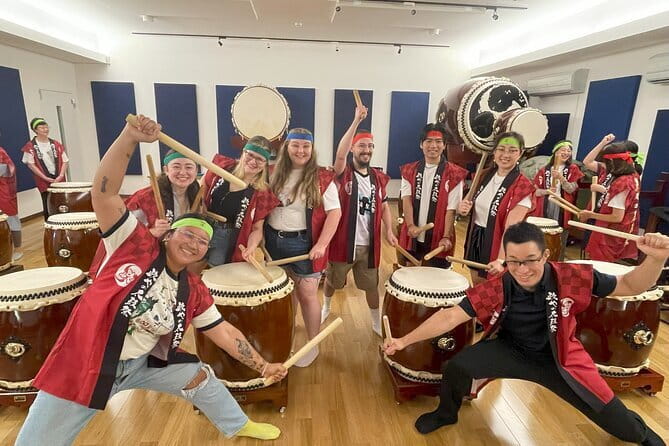
The host says Japanese principles will be shared during the session. The good news is you do not need special background. Yoga is naturally reflective, and Japanese cultural ideas often pair well with mindfulness, attention, and daily-life awareness.
In practical terms, this can mean you hear a few guiding themes that help you focus your movement and your breathing. It can also make the experience feel more intentional, especially if you are the kind of traveler who wants meaning, not only photos.
If you tend to enjoy cultural context while you travel, this will land well. If you want purely physical yoga, you can still follow your breath and your body. The cultural part is additive, not disruptive.
Where you meet in Kyoto, and how to plan your morning
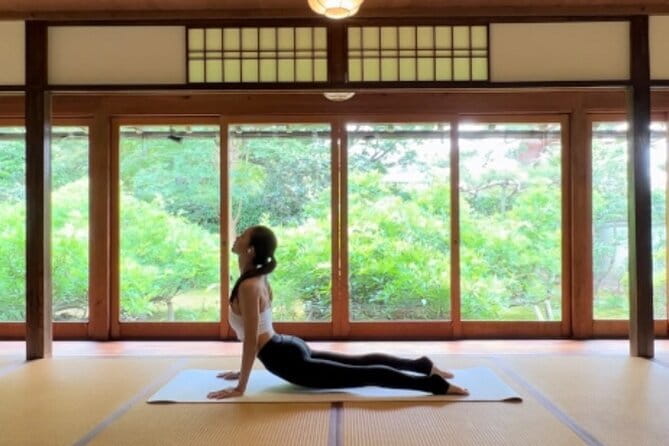
You meet at 316 Rokkakuaburanokōjichō, Nakagyo Ward, Kyoto, 604-8245, Japan. The session starts at 10:30 am, and it ends back at the meeting point.
That end point detail is more useful than it sounds. After yoga, you have a clean exit. You do not need to figure out a last-minute transit puzzle while you are still feeling calm and slightly slower than when you arrived.
Also, the location is described as near public transportation. That matters if you are stacking a morning itinerary in Kyoto. You can get there without building in a lot of extra buffer time.
Timing tip
Since it is about 3 hours long, plan a follow-on meal and maybe one lighter activity after. You do not want to schedule something that requires high concentration immediately after. Use the post-yoga calm like a gift, not a race.
What to bring
The tour data does not list gear requirements. Still, you will want the usual yoga basics: comfortable clothes you can move in, water, and a small layer if the morning air feels cool. Keep your phone accessible, since you will have a mobile ticket.
Post-yoga organic food, and how to keep the day social
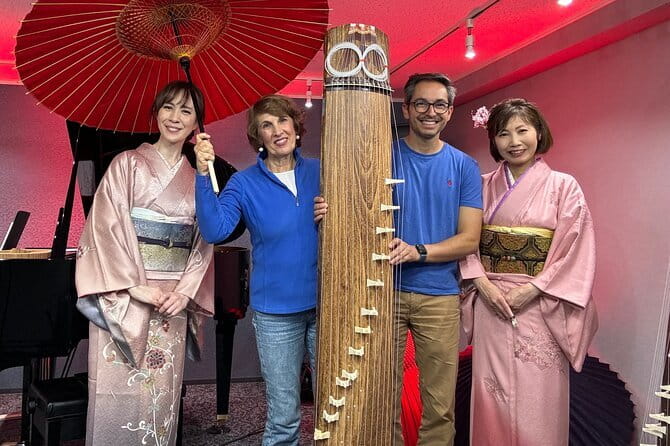
After yoga, the experience is designed to keep the mood going. You can gather for lunch or dinner, relax, and connect with others. The plan also includes sharing travel experiences, plus local recommendations based on where you have been in Japan.
The host will arrange an organic restaurant with high-quality organic food for post-yoga nourishment. This is a smart match for the whole day. Yoga helps you feel better in your body, and a lighter, higher-quality meal helps you sustain that feeling instead of immediately undoing it with heavy food.
If you like travel people, the social side is usually the best part to lean into. With a max group of 10, you are likely to talk with several people, not just one. And if you are traveling solo, that matters. Solo travelers often want conversation, but not a forced group tour vibe. This can feel like a small community moment.
One practical note: the tour does not explicitly say that meals are included in the price. So treat the restaurant plan as a ready option, and budget for food if you plan to sit down together.
Price and value: why $56.76 can make sense for Kyoto
The price is $56.76 per person for about 3 hours, with a mobile ticket and a small group cap. On paper, yoga prices vary wildly by studio, location, and what is included. Here, the value comes from more than movement.
You are paying for:
- Two styles of yoga across the session, Vinyasa Flow and Relax Yoga
- A temple setting in Kyoto, which changes the whole tone of the class
- An English conversation bridge between overseas visitors and Japanese locals
- Japanese principles shared during the session
- A portion of your fee donated to support temple preservation
That last point can matter emotionally. Knowing part of what you pay supports the temple’s upkeep makes the experience feel less like consumption and more like participation.
So the value question is not only cost per hour. It is cost per experience type. If you want yoga plus cultural connection in one block of time, this is priced in a way that can feel fair.
Who should book Sacred Temple Yoga in Kyoto
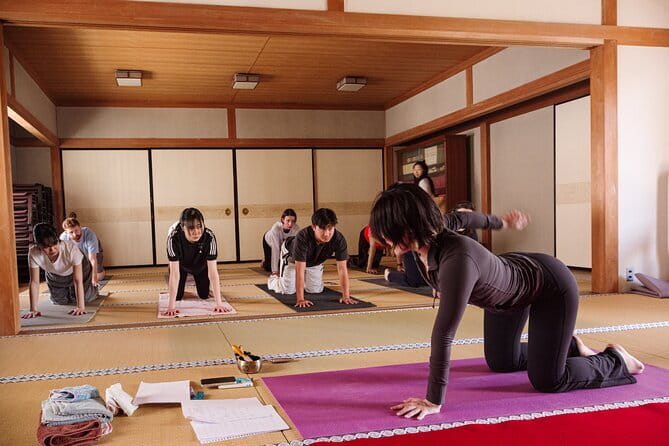
This experience is explicitly welcoming to:
- Solo participants
- English beginners
- Yoga beginners
- People who want to practice speaking and connecting through casual conversation
That is a rare combination. Many classes are beginner-friendly physically but not beginner-friendly socially. Here, the structure aims to include you even if your comfort with Japanese language is limited.
It also suits travelers who:
- Want something calmer than a typical shrine and market day
- Prefer a guided experience rather than wandering on your own for an entire afternoon
- Like meeting people from different countries and sharing Japan recommendations
If you are traveling with friends, you can enjoy it together and also loosen up the group dynamic through conversation. If you are traveling alone, you likely will not feel stranded, because the class is built to mix people.
A few considerations before you go
Think about these points and you will set yourself up well.
1) It is a two-style yoga session
Vinyasa Flow is more active than Relax Yoga. Even if you are a beginner, you might feel a little more heat or effort during the first half.
2) The social part is part of the design
The experience includes interaction that supports English conversation with locals. If you prefer quiet the entire time, plan to keep your social energy gentle. You can still focus on your yoga and participate at your comfort level.
3) Plan for food after
You will have an organic restaurant option arranged for lunch or dinner. Meals may not be included in the tour price, so keep that in mind if you are working with a tight budget.
Should you book this temple yoga experience?
If you want a Kyoto yoga class that feels like a cultural reset, this is a strong choice. The temple setting is the foundation, and the two-part Vinyasa Flow plus Relax Yoga structure gives you a complete experience, not a rushed workout.
Book it if you like the idea of meeting locals through simple English conversation and leaving with more than sore legs. The small group size and beginner-friendly approach make it realistic for solo travelers and people with limited language confidence.
Skip it if you truly want a silent, solo, no-social yoga hour. This experience is designed to connect people, and that energy is part of the value.
FAQ
FAQ
Where is the Sacred Temple Yoga experience meeting point in Kyoto?
You meet at 316 Rokkakuaburanokōjichō, Nakagyo Ward, Kyoto, 604-8245, Japan.
What time does the experience start?
The start time is 10:30 am.
How long is the yoga experience?
It lasts about 3 hours.
What yoga styles are included?
The session includes Vinyasa Flow as the first class and Relax Yoga as the second class.
How many people are in the group?
The group has a maximum of 10 travelers.
Is this suitable for yoga beginners and English beginners?
Yes. The experience welcomes yoga beginners and English beginners.
Does any of the fee support the temple?
Yes. A portion of the fee is donated to the temple to support its preservation.
What is the cancellation policy?
You can cancel for free up to 24 hours in advance of the experience for a full refund. If you cancel less than 24 hours before the start time, the amount paid is not refunded.
New This Season
- Koyasan Day Trip by Private Car from Kyoto
- Old Port Town and Ultimate Sake Tasting Private Tour From Kyoto
- Kyoto’s Timeless Charm: 3hr Exploration of History and Peace
- Kyoto: 5 Types of Sushi Making
- Sacred Peak & Ancient Paths: Kurama-Kibune Hiking Experience
- Kyoto: Exclusive ZEN practice at Manpukuji temple in Uji
- Kyoto: Private Seasonal Aroma Yoga Class
- Traversing Kyoto’s Scenic West – Arashiyama to Kinkakuji
Temple & Shrine Visits, compared.
Arashiyama Bamboo, Temple, Monkeys, or Secret Sake Brewery
Read our review →
Arashiyama Bamboo Forest, Monkeys, Matcha & Temple Tour
Read our review →
Arashiyama, Nara & Fushimi Inari Shrine w/Lunch
Read our review →
Kyoto Zen Meditation & Garden Tour at a Zen Temple with Lunch
Read our review →
KYOTO Tea Ceremony with kimono near by Imamiya Jinjya Shrine
Read our review →Arashiyama Bamboo, Matcha, Monkeys & Temple Tour
Read our review →Also filed under