
Reviewed · KYOTO
Shamisen Discovery in Kyoto 【Group】
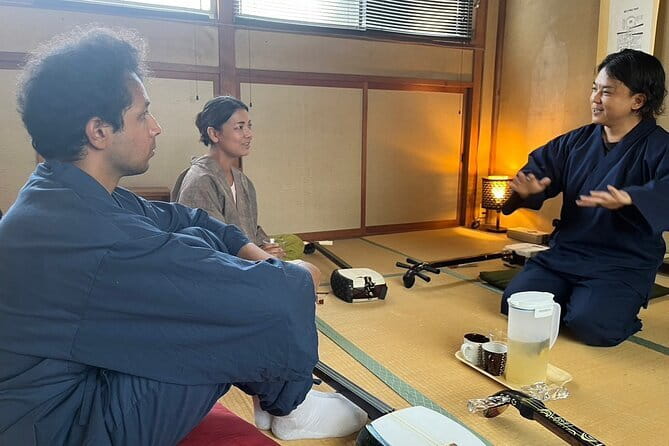
Kyoto sounds different when you hold a shamisen. This small-group 60-minute class in a Kyoto dojo gives you hands-on technique plus a photo session with the instrument. The one drawback to know up front: you leave with a starter foundation, not a full, long-form course.
At $65.89 per person, the value comes from what is included, not what you might add later. You rent a shamisen on site, get instruction from Jack (20+ years of experience), take photos, and finish with a jam, with a coffee or tea break built in.
In This Review
- Key things I’d zero in on
- Meeting the Shamisen in Kyoto, at Murasakino (Dojo time)
- Jack’s 20+ Year Teaching Plan: History, types, and proper form
- The photo session with your own shamisen: a souvenir that feels real
- Your first scale and technique: where beginners actually make progress
- Coffee and tea break, then hands-on time you control
- Jam session with accompaniment: making melodies, not only mimicking
- Price and logistics: why $65.89 feels fair here
- Who should book (and who might want a longer lesson)
- Should you book Shamisen Discovery in Kyoto?
- FAQ
- How long is the shamisen class?
- What is included in the lesson?
- Is a shamisen provided, or do I need to bring one?
- Is coffee or tea included?
- Can left-handed players participate?
- What is the group size?
- Where does the activity start and end?
Key things I’d zero in on
- Max 5 travelers means real coaching, not just watching and hoping
- Rent a shamisen during the lesson, so you do not need to figure out instrument logistics
- A photo session where the instructor takes pictures, so you get a usable memory, not a selfie gamble
- Beginner-friendly structure (basic history, one scale, then free playing)
- Jam session with accompaniment, where you create melodies instead of only practicing
- Lefty shamisen available, a rare practical detail that makes the class easier
Meeting the Shamisen in Kyoto, at Murasakino (Dojo time)
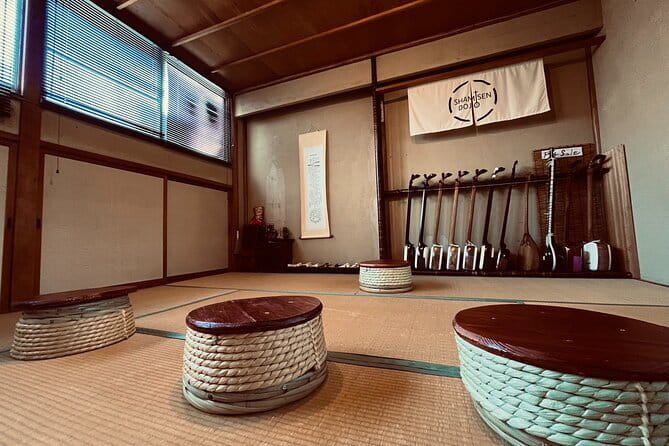
The experience starts back at the meeting point in Murasakino Nakakashiwanocho, Kita Ward, Kyoto (603-8312). It is in a part of Kyoto where you can actually picture daily life, not just tourist corridors. The location is noted as near public transportation, which matters here because you want to arrive relaxed and ready to play, not hustling after a long transit scramble.
You will receive a mobile ticket, which you can show on your phone. That small thing helps in Japan, where quick check-in keeps the whole session moving. Since the group is limited to 5 travelers, the timing feels intentional. You get to settle in, choose a shamisen (more on that next), and then start learning without losing the thread while a big group files in.
If you are the type who likes activities that feel “local,” this one hits the right note: you are learning an instrument in a dojo setting. That setting also makes it more comfortable to ask questions about something as physical as holding a shamisen and playing with the bachi.
Jack’s 20+ Year Teaching Plan: History, types, and proper form
A major reason this class gets such strong marks is the teaching style. The instructor, Jack, brings over 20 years of experience and uses a step-by-step approach that keeps beginners from getting lost.
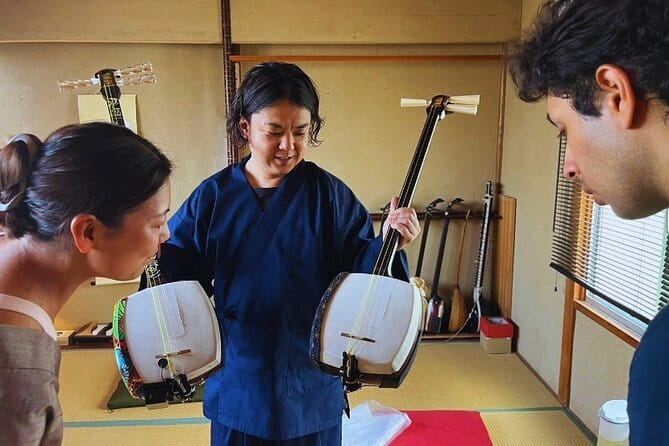
You start with basic shamisen background, including types and history. That matters even if you are not an instrument nerd, because it gives context for what you are about to hear and copy. Then the focus shifts quickly into physical fundamentals: how to hold the shamisen and how to use the bachi (the playing plectrum).
One detail I really appreciate is that the class is built to make technique approachable fast. You are not just given theory. You get hands-on guidance on the basics of playing techniques and how to position yourself and the instrument so the sound makes sense.
There is also a practical inclusion that helps left-handed players: a lefty shamisen is available. If you are left-handed, that can be the difference between enjoying the lesson and spending the hour fighting your setup.
Kyoto rewards patience — the quieter half of the city sits just off the main path.
- PERFECT KYOTO 1-Day Bus Tour
★ 5.0 · 13,518 reviews - Kyoto: Fushimi Inari, Kinkakuji, Bamboo Grove 1 Day Bus Tour
★ 4.8 · 4,316 reviews - Kyoto: Tea Ceremony in a Traditional Tea House in Kiyomizu
★ 4.9 · 3,519 reviews - Kyoto Geisha Walking Tour: Gion District & Hidden Gems
★ 4.7 · 3,273 reviews
The photo session with your own shamisen: a souvenir that feels real
Most music experiences in travel are either performance-only or workshop-only. This one mixes both in a smart way by building in a photo session with the shamisen you like.
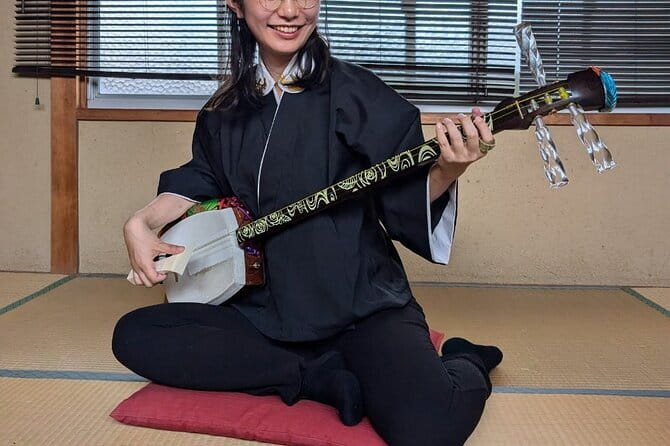
Because a rental instrument is part of the deal, you do not need to bring anything. You can focus on choosing the instrument that feels good in your hands. Then Jack takes the photos while you hold the shamisen, which means you are not juggling camera angle and your grip at the same time.
I like this approach because it turns a learning activity into something you can actually remember. If you have ever walked out of a cultural class with only blurry selfies, this directly solves that. Plus, photos work well here because the shamisen is such a distinct-looking instrument, and you want proof that you were up close with it, not only listening from the doorway.
Your first scale and technique: where beginners actually make progress
You get structured instruction, starting with basic technique and then moving to one shamisen scale. That is a key point for value. A lot of “try it” experiences stop at sound output. Here, you learn something concrete you can practice after you leave.
As the hour moves along, expect coaching on:
- How to hold the shamisen
- How to use the bachi
- How the scale fits into playing style
You also get time for free playing, which is not just downtime. It is when your brain turns “instructions” into “movement.” Without that free practice segment, beginners often walk away feeling like they learned concepts but cannot reproduce them. Here, the session explicitly gives you room to try things on your own with the instructor nearby.
This part is also where small-group size matters. With a group of up to 5 travelers, you are more likely to get quick corrections. Even a tiny fix, like adjusting a hand position or changing how the bachi hits the strings, can make the difference between a shaky noise and a recognizable shamisen tone.
Coffee and tea break, then hands-on time you control
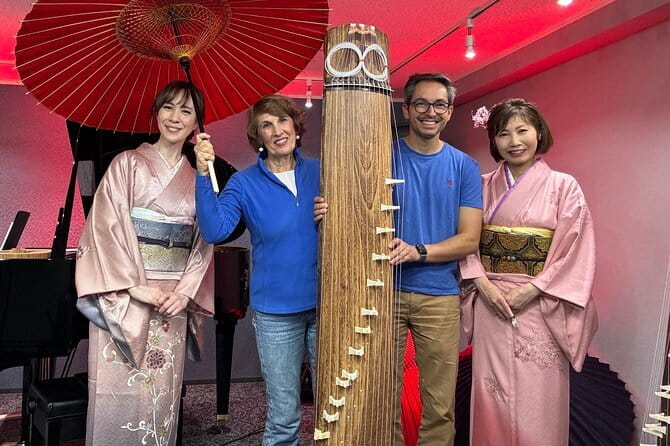
The class includes a coffee or tea break, with green tea specifically mentioned. I am a fan of this in arts classes because it keeps you from burning through your energy on an empty stomach. It also gives your hands a short reset, which is useful when you are learning something physical.
After the guided instruction and the short tech focus, you also get free time to play the shamisen freely. That matters because a beginner’s best learning often comes from repetition with room to experiment. You can test what you just practiced, notice what feels comfortable, and try adjusting one thing at a time.
You can also bring that “play” mindset into the session even if you are not a musician. The goal is not perfection. The goal is understanding how the instrument responds to your touch and timing.
If you are traveling with friends or family, this break and free time is a natural moment to bond. You learn, you take a breather, and then you get to keep moving together into the jam segment.
Jam session with accompaniment: making melodies, not only mimicking
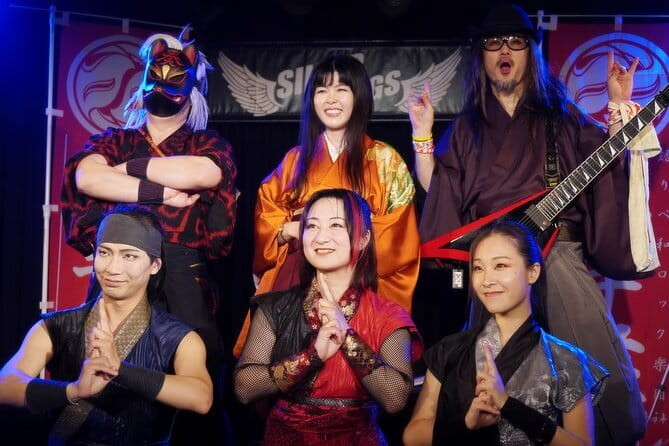
The finale is the part many people remember most: a jam session where the instructor provides accompaniment and you can freely create melodies. This is where the lesson shifts from teacher-led technique into participant-led music.
You are also given the chance to session with the five signature sounds of Japan. That is a great way to frame the playing. Instead of learning random notes, you practice a set of sounds that connect your playing to recognizable Japanese music patterns.
In the jam, the instructor supports you, so you are not stranded if your timing is still settling. And because you have already learned basic techniques and had time for free playing, you arrive at the jam with enough skill to contribute, even if you feel like a total beginner.
From a value perspective, this is smart design. You leave with a real performance moment, even if it is informal. That is usually what makes a short class feel long in a good way.
A day of temples goes further with something to break it up.
Price and logistics: why $65.89 feels fair here
$65.89 for a 1-hour class sounds straightforward, but the better question is what you are getting for it. In this case, the included value adds up quickly:
- Rental shamisen
- Intro lesson covering basic information and technique
- One shamisen scale
- Photo session
- Coffee or tea (green tea)
- Jam session with accompaniment
So you are not paying for a lecture with no instrument time. You are paying for an experience that gives you the instrument, the coaching, and the fun part where you actually play.
One more practical detail: this kind of class tends to book ahead. The average booking window is about 25 days in advance, so if your Kyoto days are fixed, I would plan sooner rather than later. This is especially true if you want a day around other must-dos like temples and gardens.
Who should book (and who might want a longer lesson)
This is best for:
- Beginners who want a real hands-on introduction, not just watching a performance
- People interested in Japanese traditional music who want to touch the instrument and understand it
- Travelers who like small-group, instruction-heavy experiences
- Anyone who values a memory with photos taken by the instructor
- Left-handed players, because a lefty shamisen is available
You might want a different option if:
- You are hoping for long, deep practice time. The session is about 1 hour, and the structure is designed for starter skills.
- You want an advanced repertoire. You will learn basics plus one scale, then jam, not a multi-week style breakdown.
Still, for many visitors, that is exactly the sweet spot. You get an authentic Kyoto activity that is interactive, structured, and fun, without needing to commit to a longer course.
Should you book Shamisen Discovery in Kyoto?
Yes, if you want a short Kyoto experience where you leave having played. I like that this class builds from history and technique into something creative, and it does it in a max 5 traveler format that supports questions and adjustments.
I would book if you care about:
- Hands-on coaching with a real musician, Jack
- Instrument access through rental, so you show up ready
- A photo souvenir with the shamisen
- A jam moment where you make simple melodies with accompaniment
If you are already strong on instruments and want advanced material, you might feel the time is brief. But for most people, the combination of technique, one scale, free play, and a jam makes this a very efficient way to experience shamisen culture in Kyoto.
FAQ
How long is the shamisen class?
It is about 1 hour.
What is included in the lesson?
You get an introduction to shamisen basics (types and history), a photo session, basic playing techniques, an introduction to one scale, free playing time, and a jam session with instructor accompaniment. A rental shamisen is included.
Is a shamisen provided, or do I need to bring one?
A rental shamisen is provided. You can also do a photo session with the shamisen you like.
Is coffee or tea included?
Yes. A coffee and/or tea break is included, with green tea mentioned.
Can left-handed players participate?
Yes. The class notes that lefty shamisen are available for left-handed players.
What is the group size?
The class has a maximum of 5 travelers, and it is described as a small-group experience.
Where does the activity start and end?
It starts at Murasakino Nakakashiwanocho, Kita Ward, Kyoto (603-8312) and ends back at the same meeting point.
New This Season
- Koyasan Day Trip by Private Car from Kyoto
- Old Port Town and Ultimate Sake Tasting Private Tour From Kyoto
- Kyoto’s Timeless Charm: 3hr Exploration of History and Peace
- Kyoto: 5 Types of Sushi Making
- Sacred Peak & Ancient Paths: Kurama-Kibune Hiking Experience
- Kyoto: Exclusive ZEN practice at Manpukuji temple in Uji
- Kyoto: Private Seasonal Aroma Yoga Class
- Traversing Kyoto’s Scenic West – Arashiyama to Kinkakuji