
Reviewed · TEMPLE & SHRINE VISITS
Silver Pavilion the Zen Side of Kyoto
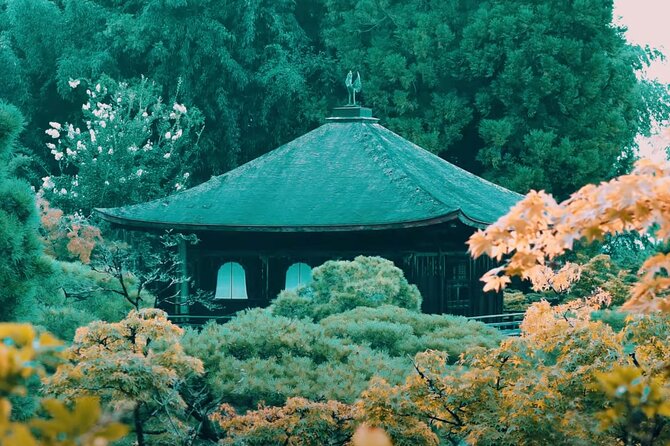
Silver calm beats the Kyoto afternoon crowds. On this 3.5-hour Zen walk, Ginkakuji turns simple design into a meditation lesson, and the dry-sand garden gives you something quiet to stare at. I also like the way the guide explains Zen ideas as you walk, not as a lecture. One real consideration: temple entry fees and extra walking on wet or slick paths can add a bit.
You start at Kyoto Station at 2:00 pm and finish back where you began, with a small group of up to 12 people. You get an English or Italian speaking storyteller, and the mobile ticket makes day-of check-in easier if you are moving fast through Kyoto.
In This Review
- Quick highlights you will feel immediately
- Kyoto Zen, timed for an easy afternoon pace
- Price and what 78.49 buys you in practice
- Meeting at Kyoto Station: start point, end point, and pacing
- Stop 1: Ginkakuji and the calm logic of the Silver Pavilion
- Stop 2: Philosopher’s Walk along the canal for real reflection
- Stop 3: Chion-in, the mind-shaped Kokoro pond view
- Rain, shoes, and how weather changes Zen gardens
- English or Italian storytelling: how the guide changes what you notice
- Who should book this Silver Pavilion Zen walk
- Should you book this tour?
- FAQ
- What temples are included on this tour?
- How long is the Silver Pavilion the Zen Side of Kyoto tour?
- How much does the tour cost?
- What language is the guide/storyteller?
- Where do we meet for the tour?
- What time does the tour start?
- Is public transportation included?
- Are entrance fees included?
- How is the ticket delivered?
- Does the tour run in bad weather?
- What is the cancellation policy?
Quick highlights you will feel immediately
- Ginkakuji (Silver Pavilion): Zen architecture and gardens where detail matters
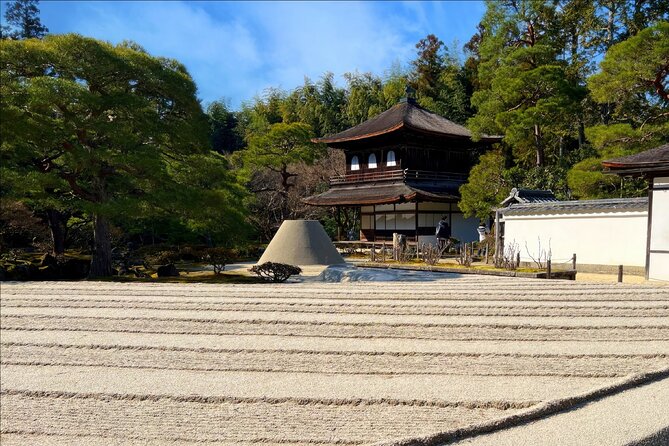
- Dry-sand garden at Ginkakuji: a calming, unusual texture to watch closely
- Philosopher’s Walk: a long, reflective avenue near the canal
- Chion-in and the Kokoro pond shape: mind/heart symbolism you can point out as you see it
- Rain, shine, or a bit of both: a tour built for real weather, not perfect postcards
Kyoto Zen, timed for an easy afternoon pace
Kyoto can hit you all at once, with crowds, scooters, and the sprint from one famous gate to the next. This tour is different because it slows the whole day down. You are not just “seeing temples,” you are walking a Zen mindset, with pauses that help you notice what your eyes normally skip.
The timing is also friendly. A 2:00 pm start means you avoid the earliest rush, and you get plenty of daylight to move between places. The overall rhythm is about calm walking, short time at each key spot, and a storyteller who keeps the meaning attached to what you are looking at.
You will likely appreciate that the group stays small, capped at 12. That size helps the guide manage pace and answer questions without everyone feeling shuffled along like cargo. If you like your Kyoto tours human-sized, this fits.
Price and what 78.49 buys you in practice
The tour price is $78.49 per person for about 3 hours 30 minutes, with a mobile ticket. That cost covers the guided walk and the storyteller in English or Italian.
What is not included is also important. You should budget for:
- Public transportation, about 500 JPY
- Entrance fees, about 1,100 JPY
In other words, this is not a “no extra spending” temple pass. But it can still be good value if you would otherwise pay admissions and you want a guide to explain what you are seeing. The real benefit here is the translation of Zen ideas into garden and architecture details, so you get more from each stop than a quick self-guided look.
One more practical note: because you are paying only for the guide service upfront, you have more control over your pace and questions. If you tend to travel by doing your own thing, the structure still gives you a path through the main Zen sights.
More rooftops worth a detour
- Kyoto: Tea Ceremony Ju-An at Jotokuji Temple
★ 4.9 · 3,207 reviews - Arashiyama Bamboo, Temple, Monkeys, or Secret Sake Brewery
★ 4.8 · 886 reviews - Kyoto: Arashiyama Bamboo Forest, Monkeys, Matcha & Temple Tour
★ 5.0 · 759 reviews - Osaka/Kyoto: Arashiyama, Nara & Fushimi Inari Shrine w/Lunch
★ 4.4 · 754 reviews
Meeting at Kyoto Station: start point, end point, and pacing
Your meeting point is Kyoto Station Building, 901 Higashishiokōjichō, Shimogyo Ward, Kyoto, 600-8216. The tour starts at 2:00 pm and ends back at the meeting point, so you do not need to worry about figuring out your finish.
The itinerary is built around three temple-area stops:
- Ginkakuji Temple (about 45 minutes)
- Philosopher’s Walk (about 30 minutes)
- Chion-in Temple (about 45 minutes)
That schedule is a sweet spot for most people. You get enough time at each place to slow down, but not so much that you feel stuck in one garden while the rest of Kyoto moves on.
You are also set up for the reality of moving around Kyoto. Transportation is not included, and the estimate of about 500 JPY tells you to expect some transit between areas. If you are planning ahead, keep that in mind so you do not end up surprised mid-tour.
Stop 1: Ginkakuji and the calm logic of the Silver Pavilion
Ginkakuji is the emotional center of this tour. Even if you only know it by name, it has that visual power that makes people pause at the gate. You are looking at a Zen temple where simplicity is the point, not decoration.
At Ginkakuji, you focus on two big things:
- The Silver Pavilion itself and its architectural restraint
- The temple gardens, including the dry sand areas
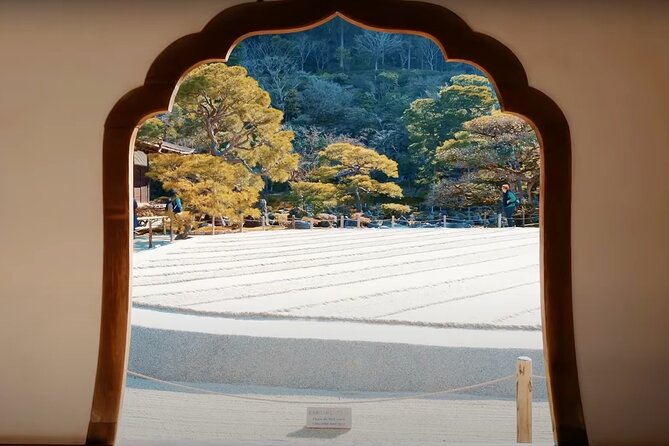
The dry-sand garden is the kind of feature that sounds simple until you stand there. The effect comes from texture, spacing, and the way your eyes track lines as the light changes. It is not just “a garden to walk through.” It is meant to be looked at, the way you might look at a thought and let it settle.
There is also a Zen story tied to this place as a meditation site for Japanese Zen masters. That context matters because it changes how you read the whole scene. Instead of rushing to the most photogenic angles, you start asking yourself what the design is trying to help you notice.
A detail worth keeping in your head: there is temple lore connected to moonlight, specifically the idea of how light affects the pavilion. Even if you see it in daytime, that kind of background makes you more observant about reflections and how the structure sits in its setting.
What could slow you down here? Time and patience. This stop gives you about 45 minutes. If you are someone who likes to linger for longer, you may feel the schedule is a little tight. The upside is that the garden pairs well with a guided explanation, so you are not just standing around guessing what you should care about.
Stop 2: Philosopher’s Walk along the canal for real reflection
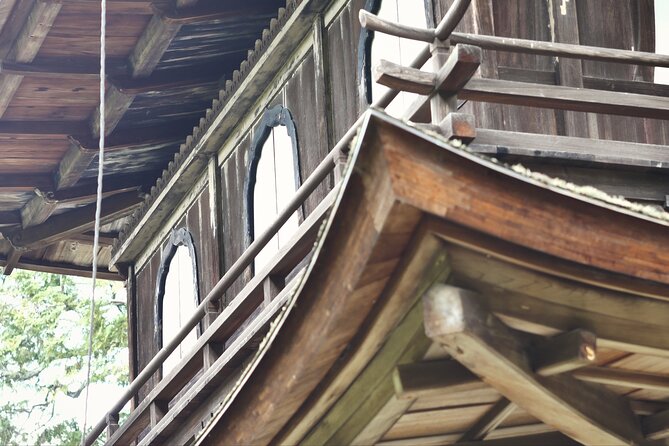
After Ginkakuji, you head to the Philosopher’s Walk, a long avenue near the canal. This stretch is named for a university professor of philosophy who used to take reflective, meditative walks there. That name is not just a marketing label. It is a clue about how you should move: slowly enough to notice.
The canal matters. Water gives you a moving line to follow, and it keeps your attention from bouncing to every new building. The path’s seasonal beauty is also the reason it has inspired poets and philosophers for centuries. Even if you visit in a season you do not love, the guide’s framing helps you notice what is working right now.
This is also the stop where weather can change your experience the most. If it is rainy, you might find the gardens and temple grounds feel quieter. One visitor described rainy conditions making the gardens look greener and more beautiful, with a calmer mood. It is easy to believe. Wet surfaces absorb noise, and the air feels cooler and less crowded.
Practical tip for this stretch: wear shoes that handle slick pavement. It is a walking path, and rain can make Kyoto steps and edges a bit treacherous.
Stop 3: Chion-in, the mind-shaped Kokoro pond view
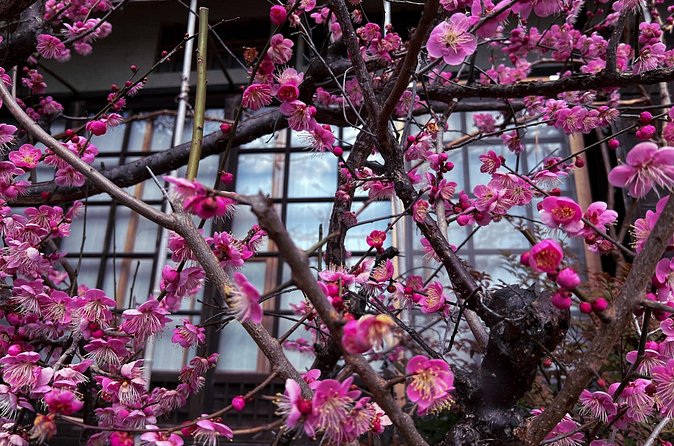
Chion-in is your final temple stop, and it brings a different mood than Ginkakuji. While Ginkakuji is all about restrained beauty, Chion-in gives you meaning in the layout and symbolism.
This temple is called Chion-in because it overlooks the southern part of the Hojo, the abbot’s great hall, which is considered a national treasure. That big-picture relationship helps you understand why certain sightlines matter. It is not random. The temple structures are positioned so you see and frame important spaces.
The feature I would not skip here is the internal pond. Its shape resembles the Japanese kanji Kokoro, which means mind or heart. That is a symbolic touch you can actually point out as you look around. It turns the experience from scenery into interpretation.
Even if you are not a Zen scholar, you can use that one detail to anchor your visit. When you know the pond is meant to represent Kokoro, you start scanning the pond with more patience. Instead of looking for the prettiest angle, you try to connect shape to meaning.
This stop runs about 45 minutes, which is just enough time to take in the layout and absorb the symbolism without rushing. If you are tired by then, you can still get value by focusing on the Kokoro pond idea. Let that be your payoff.
A day of temples goes further with something to break it up.

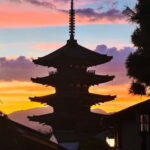
Rain, shoes, and how weather changes Zen gardens
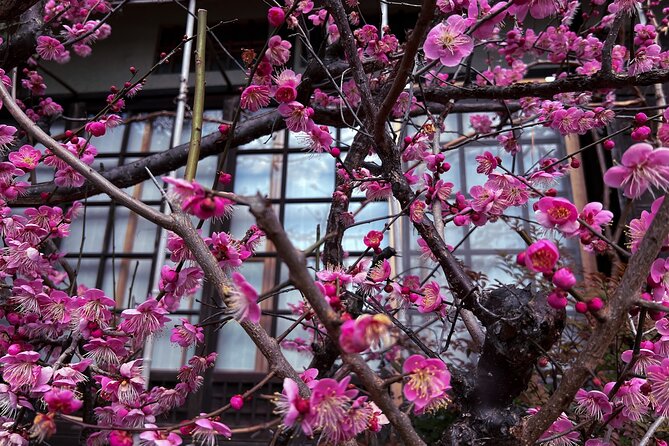
One of the best things about this tour is the attitude: rain, shine, or a bit of both, the walking tour still goes on. Kyoto weather can flip fast, and a lot of tours fall apart when the forecast looks uncertain.
Here, the tour is built to keep going. That does not mean you will enjoy slipping around. You still need the basics:
- Comfortable shoes with grip
- A small umbrella or rain jacket (and something to protect your phone for photos)
- A mindset that the gardens might look different, not worse
If it rains, you may actually like what you see. At least one person said the rain made the gardens quieter, greener, and more beautiful, and that it became their favorite temple. You might not get the exact same result, but wet light and softened contrast can make Zen spaces feel calmer.
This is a good tour choice if you hate wasting money on “weather-dependent” sightseeing. You are not chasing perfect skies. You are learning to see the temple spaces as they are.
English or Italian storytelling: how the guide changes what you notice
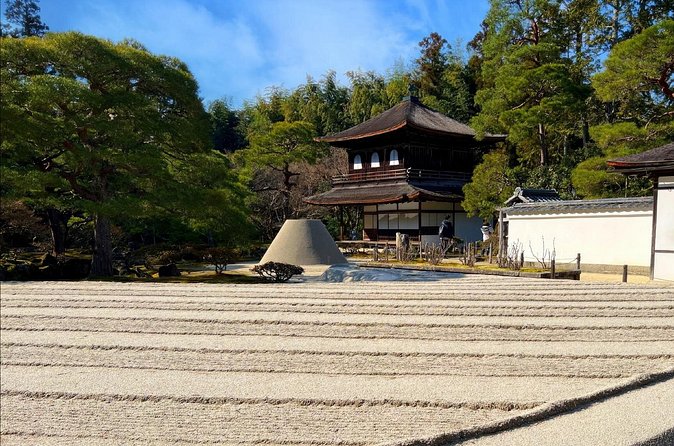
The tour includes an English or Italian speaking travel storyteller. You are not stuck reading a sign. You get an explanation that ties together architecture, garden design, and Zen ideas.
What makes that valuable is the way it helps you interpret details that would otherwise feel abstract. Ginkakuji’s dry-sand garden can look like a static decoration if you do not know what to look for. Philosopher’s Walk can feel like just another scenic path unless someone tells you why the naming matters, and why the canal and seasonal shifts are part of the meditation vibe.
Chion-in’s Kokoro pond symbolism is the kind of detail you might miss entirely if you go alone. A guide helps you see it as the point.
Also, since the group is capped at 12, the storytelling style is more likely to stay conversational and flexible. That matters because Zen is about attention. You want a guide who can slow down with the group, not force everyone through a fast checklist.
Who should book this Silver Pavilion Zen walk
This tour fits well if you want:
- A guided route through three major Zen temple areas in a half-day window
- A focus on gardens, symbolism, and Zen ideas tied to what you are seeing
- A small group experience rather than a big bus-load
It may not be your best match if you prefer:
- Completely self-paced sightseeing with no scheduled stops
- A tour that includes all fees and transit, because entrance fees and public transport cost extra
- Longer time at one site, since each stop is timed (45 minutes, 30 minutes, 45 minutes)
For most visitors, though, the pace is practical. You get depth at each stop without turning the day into an all-day endurance march.
Should you book this tour?
I’d book it if you want your Kyoto Zen experience to feel meaningful, not just photo-heavy. The combination of Ginkakuji’s dry-sand calm, the reflective rhythm of the Philosopher’s Walk, and Chion-in’s Kokoro symbolism gives you three different ways to understand Zen culture, all in one organized half-day.
The main reason to hesitate is simple: budget the extra entrance fees (about 1,100 JPY) and transit (about 500 JPY). If you are the type who hates surprise costs, this might feel a bit nicked and dimed. If you are okay with that, the guide adds value by turning details into something you can actually understand and carry with you.
FAQ
What temples are included on this tour?
The tour visits Ginkakuji Temple, Philosopher’s Walk, and Chion-in Temple.
How long is the Silver Pavilion the Zen Side of Kyoto tour?
It is approximately 3 hours 30 minutes.
How much does the tour cost?
The price is $78.49 per person.
What language is the guide/storyteller?
The tour includes an English or Italian speaking travel storyteller.
Where do we meet for the tour?
The meeting point is Kyoto Station Building, 901 Higashishiokōjichō, Shimogyo Ward, Kyoto, 600-8216, Japan.
What time does the tour start?
The start time is 2:00 pm.
Is public transportation included?
No. Public transportation is not included, and it is estimated to be about 500 JPY.
Are entrance fees included?
No. Entrance fees are not included, and they are estimated to be about 1,100 JPY.
How is the ticket delivered?
You receive a mobile ticket.
Does the tour run in bad weather?
Yes. Rain, shine, or a bit of both, the walking tour still goes on.
What is the cancellation policy?
Free cancellation is available, and you can cancel up to 24 hours in advance for a full refund.
New This Season
- Koyasan Day Trip by Private Car from Kyoto
- Old Port Town and Ultimate Sake Tasting Private Tour From Kyoto
- Kyoto: 5 Types of Sushi Making
- Sacred Peak & Ancient Paths: Kurama-Kibune Hiking Experience
- Kyoto’s Timeless Charm: 3hr Exploration of History and Peace
- Kyoto: Exclusive ZEN practice at Manpukuji temple in Uji
- Kyoto: Private Seasonal Aroma Yoga Class
- Traversing Kyoto’s Scenic West – Arashiyama to Kinkakuji
Temple & Shrine Visits, compared.
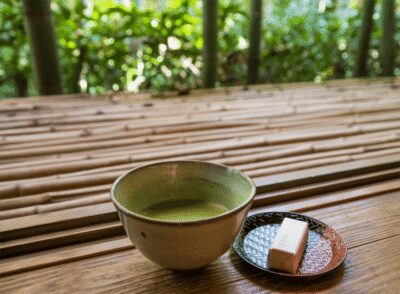
Arashiyama Bamboo, Temple, Monkeys, or Secret Sake Brewery
Read our review →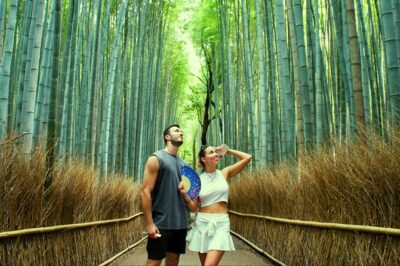
Arashiyama Bamboo Forest, Monkeys, Matcha & Temple Tour
Read our review →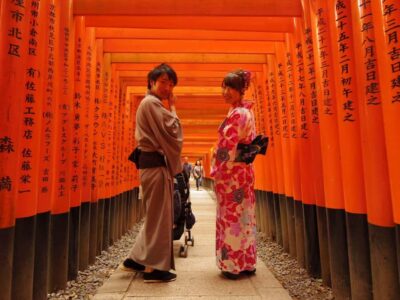
Arashiyama, Nara & Fushimi Inari Shrine w/Lunch
Read our review →
Kyoto Zen Meditation & Garden Tour at a Zen Temple with Lunch
Read our review →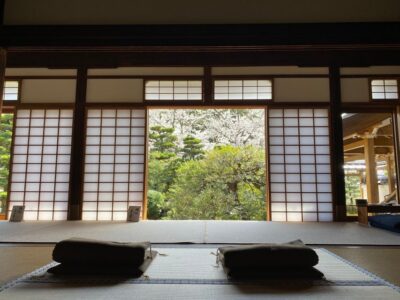
KYOTO Tea Ceremony with kimono near by Imamiya Jinjya Shrine
Read our review →Arashiyama Bamboo, Matcha, Monkeys & Temple Tour
Read our review →Also filed under