Reviewed · ARASHIYAMA BAMBOO FOREST WALKS
Arashiyama Kinkakuji Quiet Trail E-Bike Tour with Hotel Transfer
Kyoto can feel like a traffic maze. This e-bike tour threads through quieter lanes where old streets and river-history forests take over. You get the famous Kinkaku-ji area first, then you move into stretches that feel far from the main crowds.
I also like that it is structured but not rigid. You pause for the right temple moments (with tickets where needed), then spend the rest of the 4 hours pedaling scenic, low-stress sections with a professional guide watching your pace and safety.
One thing to consider: this is real cycling, even with e-bikes. If you hate riding in traffic-adjacent areas at the start, or you are not comfortable on a bike for a few hours, plan to go slow and use the assist early.
In This Review
- Key Points You’ll Notice Right Away
- Kyoto Without the Traffic Lights: Why This Route Works
- Hitting Kinkaku-ji Grounds First (Then Skipping the Crowds)
- The Historic Road North of Kinkaku-ji: Streams, Cedar, and Breathing Room
- Hirosawa Pond: Calm Water and Heian-Era Sacred Space
- Saga Toriimoto Preservation Area and Nenbutsuji Temple Stops
- Adashino Nenbutsu-ji: The 1,000 Stone Statues Moment
- Jizo, Castle Walls, and a No-Car Road Along the River
- Bamboo Forest Walks and the Moment It Feels Like You Left the Main Sights
- E-Bikes, Professional Guides, and What Pickup Changes
- Price and Value: Is $124.28 Worth It?
- Who Should Book This Quiet Trail Ride
- Should You Book It?
- FAQ
- How long is the Arashiyama Kinkakuji Quiet Trail E-Bike Tour?
- Do I get picked up from my hotel?
- Is this tour private?
- What are the included admission ticket stops?
- Do I need to already know how to bike?
- Can the tour skip Kinkaku-ji if I have already seen it?
- When will I receive confirmation after booking?
- What happens if the weather is bad?
- What is the cancellation deadline for a full refund?
Key Points You’ll Notice Right Away
- Hotel transfer pickup helps you start smoothly and keeps the ride focused on scenery.
- Quiet trail routing gets you into preserved areas where few cars and fewer crowds show up.
- Two temple moments with tickets included make the cultural stops feel properly timed, not rushed.
- Hirosawa Pond and the preserved Heian-era vibe add calm, water-side scenery to the ride.
- Guides like June and Argo are repeatedly described as polite, helpful, and safety-focused.
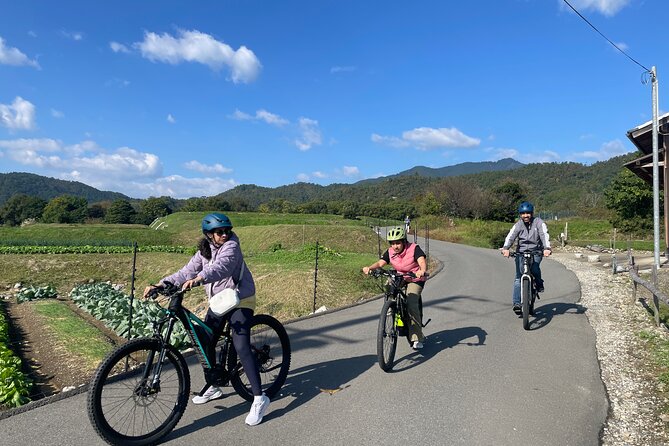
- E-bike support makes it easier to cover old roads and forest sections without feeling wrecked.
Kyoto Without the Traffic Lights: Why This Route Works
Kyoto is gorgeous, but getting around on a regular bike can be a headache. Cars, narrow lanes, and traffic lights add stress fast. The big win here is that your ride is guided and paced for comfort. You pedal through the city edge and then transition into sections where the environment starts doing the work for you.
This is the kind of tour that makes sense if you want “Kyoto atmosphere” more than check-the-box sightseeing. The itinerary moves from well-known Kinkaku-ji grounds into historic roads surrounded by nature, then toward Arashiyama’s sacred areas. The goal is simple: see Kyoto’s peaceful side with enough structure that you feel oriented, even if you are not a confident cyclist.
E-bikes do not just add speed. They let you ride the quieter stretches at a relaxed tempo. That matters because the scenery is not only about views, it is about the way you experience places: streams, cedar trees, bamboo groves, ponds, stone statues, and the sense that you are moving through spaces that have been protected for centuries.
The other practical plus is the private group setup. Only your group participates, so you are not stuck riding at someone else’s pace or waiting for other schedules to sync.
Hitting Kinkaku-ji Grounds First (Then Skipping the Crowds)
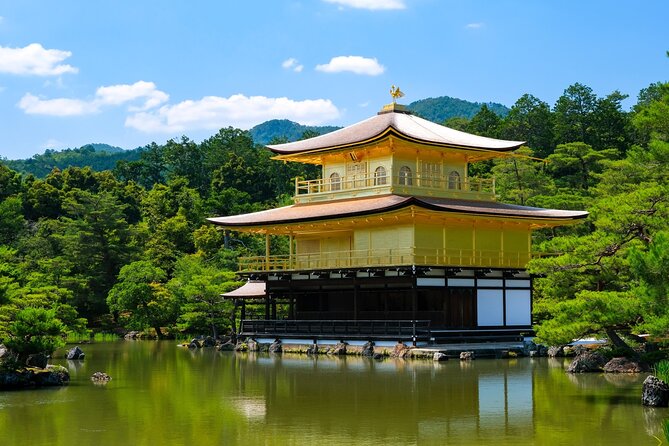
You start with Kinkaku-ji, the Golden Pavilion. The visit is not a long, exhaustive walkthrough. It is a guided look at the temple grounds, with a brief history explanation so you understand what you are seeing instead of just photographing shiny roofs.
Time is about 20 minutes, and admission ticket is included. That short window is actually a smart way to do it. If you have limited time in Kyoto, you get the identity of Kinkaku-ji without burning half your morning in queues.
Here’s the practical flexibility: if you already saw Kinkaku-ji, or you are not that interested, your guide can skip it. For me, that kind of option is huge. It lets you steer the tour toward Arashiyama’s quieter preserved spaces, which is where a lot of the magic happens.
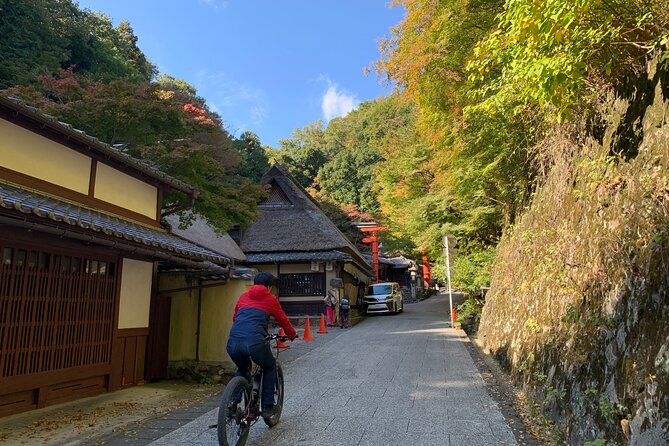
After the temple, the ride becomes the story. You cycle along a historic road that stretches north from Kinkaku-ji, surrounded by streams and tall cedar. Bamboo appears later, but you can already feel the switch from “major sight” to “quiet corridor.” If you love atmosphere, this transition is where the tour starts earning its name.
Kinkaku-ji's gold roof over still water
- Kyoto: Fushimi Inari, Kinkakuji, Bamboo Grove 1 Day Bus Tour
★ 4.8 · 4,316 reviews - Osaka/Kyoto:Kinkakuji,Arashiyama,FushimiInariShrine,NaraPark
★ 4.1 · 1,596 reviews - Kyoto: Nijo, Kinkaku-ji, Arashiyama, Kiyomizu & Fushimi Inari
★ 5.0 · 699 reviews - Kyoto: Kinkakuji, Golden Pavilion Guided Tour
★ 4.7 · 71 reviews
The Historic Road North of Kinkaku-ji: Streams, Cedar, and Breathing Room
Right after the temple, the tour shifts into motion. This is where the e-bike shines, because you are not stopping every ten minutes. You ride through a corridor of nature and old streets, which is much easier to enjoy without the mental load of route-finding.
The description emphasizes a road that has been around for over 1000 years and is lined with lush surroundings like streams and cedar trees. That combination matters for two reasons:
- The scenery feels immediate, not distant. You are cycling right through it.
- The route makes the historic framing feel real. You are not reading about old Kyoto, you are physically moving through a preserved path.
Also, the pace matters. A professional guide helps you settle into the ride, and you can focus on the sights instead of worrying about where you should turn next or whether you are doing something wrong.
Potential drawback: since Kyoto is still Kyoto at the start, you may feel some initial road activity before you hit the calmer stretches. Your best move is to lean on the e-bike assist early and keep your effort consistent. In a guided setup, that is exactly what you should do.
Hirosawa Pond: Calm Water and Heian-Era Sacred Space
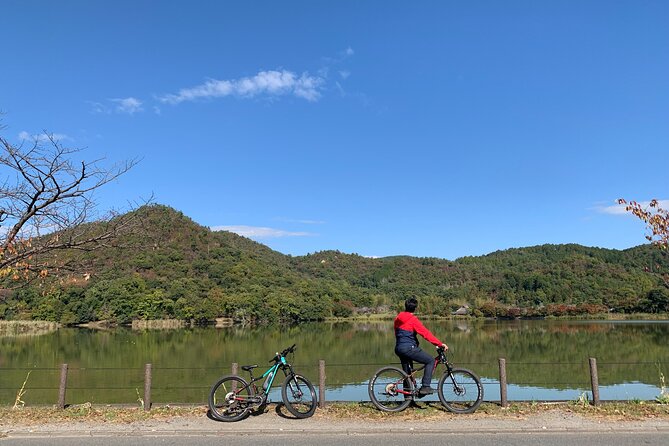
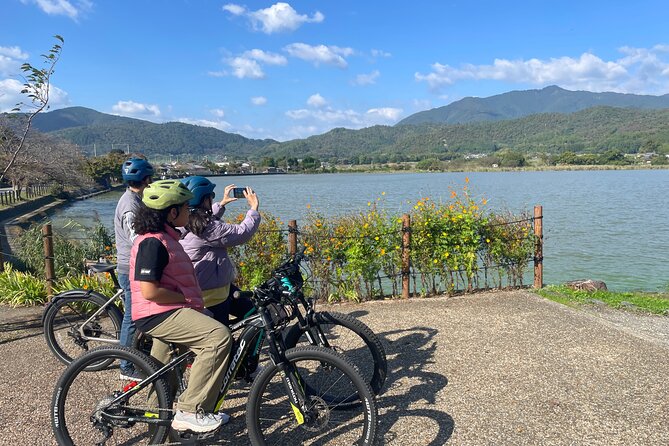
Then you hit Hirosawa Pond, with a short stop of about 10 minutes. Admission is free here. This part is designed to change the mood again, away from temple crowds and into a more quiet, scenic pocket.
The tour focuses on sacred areas preserved since the Heian period, with rice fields and ponds tied to history that stretches back over a thousand years. Even if you are not a history buff, the atmosphere makes sense. You get water-side calm, open views of farmland-like scenery, and a slower feeling that contrasts with the more famous temple zones.
What I like about this stop is that it is brief enough to keep the tour flowing. You are not stuck staring at a pond while your group gets antsy. Instead, you get a sense of place, take in the preserved landscape, and then get back on the bike for the next cultural area.
If you are the type who likes scenic photos, the pond stop delivers, but it is also about quiet moments. This is the kind of stop where even a short break feels restorative.
Saga Toriimoto Preservation Area and Nenbutsuji Temple Stops
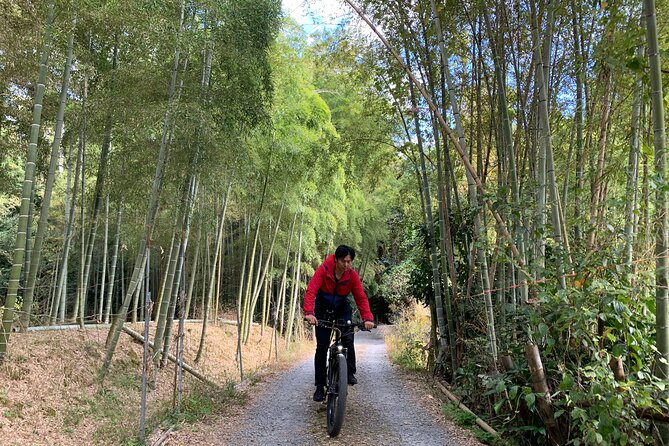
After Hirosawa Pond, the tour moves to the Saga Toriimoto Traditional Buildings Preservation Area, plus a stop at Nenbutsuji Temple. Expect about 20 minutes for this section, and admission is free.
This is a different kind of Kyoto win. Instead of focusing only on a famous landmark, you get preserved traditional building spaces where you can get a feel for how Kyoto neighborhoods hold onto their character. The “preservation area” concept matters because it is not just aesthetic. It suggests rules around how spaces stay intact, so you can sense continuity.
The stop includes Nenbutsuji Temple as part of the experience. While the exact details of what you see at this stop are not spelled out in the tour overview, you can still expect a guided context moment that helps the preservation area make sense. You are trying to connect buildings, temples, and the way these places are arranged.
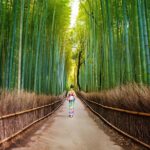
Then the route heads into bamboo forest scenery. You cycle and walk through bamboo, which is often a visual highlight in Arashiyama, but here it is timed after the preservation area. That sequencing helps. You are not just seeing bamboo as a backdrop, you are seeing it as part of a landscape that transitions from human-built historic areas into nature corridors.
Adashino Nenbutsu-ji: The 1,000 Stone Statues Moment
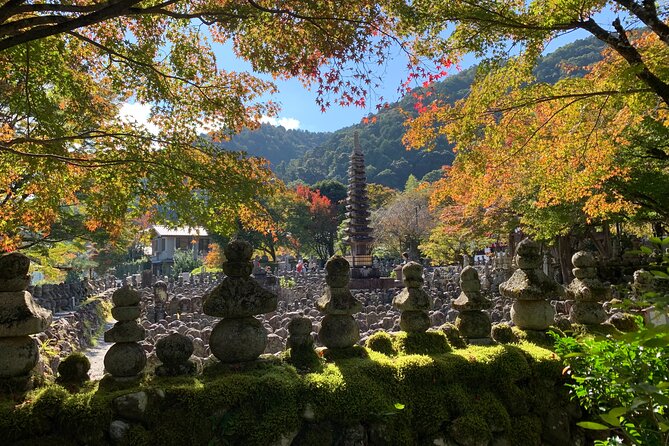
Next comes Adashino Nenbutsu-ji Temple, guided for about 15 minutes. Admission is included, and this is the stop that has a very specific signature: its 1,000 stone statues.
When a temple is defined by a number like that, it signals a particular kind of experience. You are not just admiring a single structure. You are walking through a field of stone statues, which naturally makes the atmosphere feel different from the first temple stop.
Guided time is short, but that can be a good thing. With a place like this, you do not want to overstay and lose the impact. Fifteen minutes is enough to see the core area, understand what the statues are and why the site matters, and then move on while the effect is still fresh.
If you like quieter, more contemplative places, this is likely the stop you remember later. It also fits with what people praise most about this tour: peace and off-the-path feeling. Sites like this reward visitors who enjoy stillness, not just photo ops.
Green light through a bamboo grove

Jizo, Castle Walls, and a No-Car Road Along the River
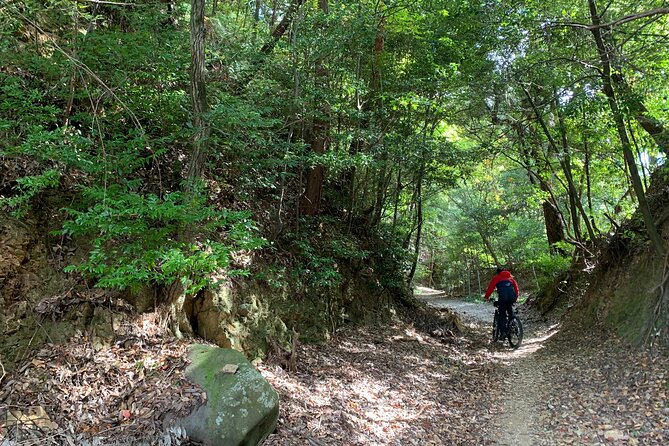
The heart of the experience is the cycling through preserved and atmospheric areas where cars do not pass. The tour overview calls out a “wildest” forest road along the river, with history stretching back about 1200 years. That language points to something important: this is not a casual sidewalk stroll. It is a ride through a path shaped by time, not by modern convenience.
On the route, you can see Jizo statues and castle walls. This is one of those details that makes the landscape feel layered. Jizo statues connect to the spiritual layer of Kyoto. Castle walls add a sense of political and defensive history, even if you are not there to tour a castle in the usual way.
You also get sensory fun from the environment itself. The trolley trains and boats going down the river create a living background soundtrack. That matters because Kyoto can feel too “still” when you focus only on temples. Here, the movement of the river traffic keeps you grounded in the present.
One caution: forest roads and river paths can mean uneven spots or changes in light. You do not need to be an athlete, but you should be comfortable riding and slowing when your guide signals. The repeated praise for guide support and safety makes sense here. In a calmer route, you still want a guide who keeps everyone together and prevents little problems from becoming big ones.
Bamboo Forest Walks and the Moment It Feels Like You Left the Main Sights
Between the temple visits, the tour includes cycling and walking through bamboo forests. The bamboo portion is not just a photo stop. The value comes from the pace and the route design.
When you walk or cycle through bamboo while you are not surrounded by a constant crowd flow, the space feels more like a place than a set. That is where you get the “quiet trail” concept working in your favor.
I like how the tour keeps the itinerary balanced. You do not just stack temples back-to-back. You alternate guided stops with moving segments. That way, your brain rests between cultural inputs, and your body stays engaged without getting tired from too much walking.
If you are traveling with someone who is less enthusiastic about temple details, bamboo and river-road scenery can be the compromise that still feels special. It is scenic in a way that works for all ages and energy levels, as long as you are comfortable riding.
E-Bikes, Professional Guides, and What Pickup Changes
This tour is run by Umino Kyoto E-Bikes, and the overview makes it clear that the e-bikes and guides are the backbone of the experience. That is not marketing fluff. In a city like Kyoto, the difference between an average bike ride and a great one is how well the guide manages pacing, safety, and transitions.
You may also have pickup offered from your hotel or a nearby meeting point, depending on what is available for your booking. Hotel transfer matters because it reduces friction. You spend more time in motion and less time hunting down instructions in a busy city.
Group discounts are mentioned too, which is useful if you are planning as a small group. Since the tour is private for your group, you can spread out and still keep your own rhythm.
How long it takes, about 4 hours, feels realistic. It is enough time to cover multiple distinct scenery types: golden pavilion grounds, preserved pond and farmland-feeling areas, traditional neighborhood blocks, bamboo sections, and then the quieter no-car river path.
If you have an active day planned after, you still might be tired, but it should be a manageable kind of tired. E-bikes do most of the heavy lifting, and guided pacing helps you avoid the mistake of going too hard too early.
Price and Value: Is $124.28 Worth It?
At $124.28 per person, this is not a budget “rent a bike and wander” situation. You are paying for structure, guide support, and included experiences that reduce planning time.
Here is where the value shows up:
- Admission tickets are included for Kinkaku-ji and Adashino Nenbutsu-ji, which are two major cultural stops.
- You get guided context, so you are not just looking at things with no meaning.
- Pickup and a managed route mean you do not spend your day solving logistics in traffic.
- The tour is private for your group, which can be worth it if you want comfort and flexibility without merging into a larger crowd.
What you might be giving up is absolute freedom. If you want to linger for a long time inside Kinkaku-ji or spend extra time photographing every statue up close, a guided time structure may feel limiting. Still, the pacing is built around giving you the highlights and the quiet route that makes this tour different.
The best match for the price is travelers who want more than one good stop. You are buying a smooth, story-driven route through Kyoto’s calmer preserved zones, not just a single landmark.
Who Should Book This Quiet Trail Ride
This tour fits best if you like:
- Cycling that feels like a guided experience, not a self-guided chore.
- Off-the-path Kyoto that leans into preserved neighborhoods, bamboo forest walks, ponds, and river roads.
- Temple visits that come with short, useful explanations.
- A safety-first guide team, which is repeatedly emphasized in the feedback, including guides named June and Argo.
It may not fit as well if:
- You are very sensitive to riding for several hours, even on an e-bike.
- You want long, unstructured time at each sight.
- You prefer public transit and walking-only days.
If you and your group can handle a few temple walks plus a bike ride through varied scenery, you will probably love the contrast between Kinkaku-ji’s fame and Arashiyama’s peaceful feel.
Should You Book It?
If your goal is to see Kyoto’s quiet side without spending your day fighting traffic and map apps, I would book this. The route is built around transitions, from famous temple grounds into preserved areas, then into the atmosphere of a river road where cars do not pass and you can hear trains and boats in the background.
The strongest reasons to choose it are the guide support and the sense of being taken somewhere calmer than the standard sightseeing shuffle. If you want a 4-hour experience that mixes culture and scenery, with included admissions at key stops and the help of hotel pickup, this is a very solid bet.
Just be honest with yourself about comfort on a bike. If you can ride for a few hours and take it easy at the start, you will likely come away feeling like you saw more of Kyoto’s real texture.
FAQ
How long is the Arashiyama Kinkakuji Quiet Trail E-Bike Tour?
The tour is about 4 hours.
Do I get picked up from my hotel?
Pickup is offered, depending on availability and your booking details.
Is this tour private?
Yes. It is private for your group only.
What are the included admission ticket stops?
Kinkaku-ji Temple and Adashino Nenbutsu-ji Temple include admission tickets. Hirosawa Pond and the Saga Toriimoto Traditional Buildings Preservation Area, plus Nenbutsuji Temple in that section, are listed as free.
Do I need to already know how to bike?
Most travelers can participate, and the tour uses e-bikes plus professional guides for support. Still, you should be comfortable cycling for a few hours.
Can the tour skip Kinkaku-ji if I have already seen it?
Yes. If you have already seen Kinkaku-ji or you are not interested, the tour can skip that part.
When will I receive confirmation after booking?
Confirmation is received within 48 hours of booking, subject to availability.
What happens if the weather is bad?
The tour requires good weather. If it is canceled due to poor weather, you will be offered a different date or a full refund.
What is the cancellation deadline for a full refund?
You can cancel up to 24 hours in advance for a full refund. If you cancel less than 24 hours before the start time, the amount paid is not refunded.
More E-Bikes in Kyoto
A Driver for the Day
New This Season
- Koyasan Day Trip by Private Car from Kyoto
- Old Port Town and Ultimate Sake Tasting Private Tour From Kyoto
- Kyoto’s Timeless Charm: 3hr Exploration of History and Peace
- Kyoto: 5 Types of Sushi Making
- Sacred Peak & Ancient Paths: Kurama-Kibune Hiking Experience
- Kyoto: Exclusive ZEN practice at Manpukuji temple in Uji
- Kyoto: Private Seasonal Aroma Yoga Class
- Traversing Kyoto’s Scenic West – Arashiyama to Kinkakuji
Arashiyama Bamboo Forest Walks, compared.
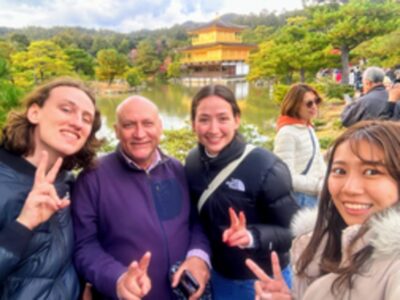
Fushimi Inari, Kinkakuji, Bamboo Grove 1 Day Bus Tour
Read our review →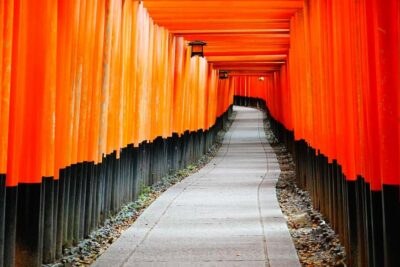
Kinkakuji,Arashiyama,FushimiInariShrine,NaraPark
Read our review →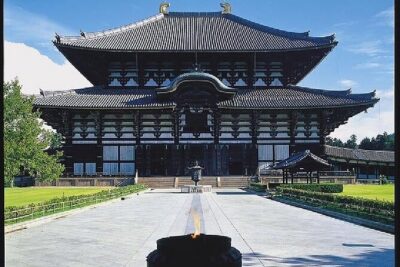
Nara, Fushimi Inari Taisha, Arashiyama Bus Tour
Read our review →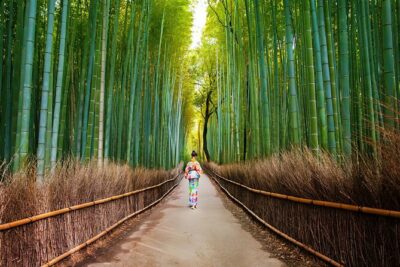
Kyoto Arashiyama Walking Tour: Bamboo, Monkeys, Gardens & Secrets
Read our review →
Arashiyama Bamboo, Temple, Monkeys, or Secret Sake Brewery
Read our review →
Arashiyama Bamboo Forest, Monkeys, Matcha & Temple Tour
Read our review →
Arashiyama, Nara & Fushimi Inari Shrine w/Lunch
Read our review →