
Reviewed · CITY TOURS
Discovering Kyoto A Tailored Private Tour of the City’s Treasures
Kyoto can feel like a puzzle.
A private, customizable half-day makes it simple, with a guide guiding your choices and handling the walking logic. I like that you get a compact route built around big-name Kyoto sights, then you can shift the emphasis toward what you care about most.
Two things I really like: you get guided context at every stop, and you also get the chance to taste Kyoto’s everyday culture, not just postcards. The route includes a mix of Gion streets, shrine rituals, and the Kiyomizu-dera experience, plus a stop at a Kyoto sweet shop.
One possible drawback: because this is a short, 3-hour tour, you will not see every famous site. If you want a specific “must hit” outside the main rhythm, you will need to plan your priorities early so the customization actually fits your day.
In This Review
- Key highlights at a glance
- Why a 3-hour private tour is the smart way to “get Kyoto”
- Price and what you actually get for $95
- Getting started at Kyoto Station, then going straight to the Kyoto you came for
- Gion focus: streets, atmosphere, and the guide who keeps it meaningful
- Yatsuhashi at Izutsu Yatsuhashi Honpo, Gion store: a sweet break that fits the day
- Gion Shirakawa: the pretty walk, with less pressure than you might expect
- Shrines that feel personal: Tatsumi Jinja, Yasui-Konpiragu, and the rituals people come for
- Tatsumi Daimyojin Shrine
- Yasui-Konpiragu
- A short spiritual pause matters
- Yasakanoto and Izumo no Okuni statue: myths and performance history in Gion
- Yasakanoto pagoda
- Statue of Izumo no Okuni
- Kiyomizu-dera: the one-hour anchor you should not rush
- How the customization actually helps you plan your Kyoto day
- What I’d watch out for before booking
- Who this tour suits best, and who might not love it
- Should you book this Kyoto treasures private tour?
- FAQ
- How long is the private Kyoto tour?
- Where does the tour start and end?
- Is pickup included?
- Is this a private tour?
- Are admission tickets included?
- Does the price include transportation?
- What food or drinks are included?
- What is the cancellation policy?
Key highlights at a glance
- Private and tailorable: You choose the focus, your guide steers the flow.
- Gion time plus quieter corners: You see more than the main streets.
- Shrines with specific stories: Each stop links to a clear ritual or legend.
- Yatsuhashi stop in Kyoto style: A dedicated break for a classic local sweet.
- Kiyomizu-dera as the anchor: About an hour at one of Kyoto’s best-known temples.
- Transport is handled: You are not spending your limited energy on logistics.
Why a 3-hour private tour is the smart way to “get Kyoto”
Kyoto is beautiful, but it can be exhausting. Too many neighborhoods feel like they require a full day, and you end up spending half your time figuring out transit and queues. This tour is built for people who want the essential Kyoto feeling, without turning the day into a marathon.
You start with a clear structure and then get control. The tour is customizable, so your guide can steer toward the parts you care about, whether that is shrine rituals, Gion atmosphere, or temple views. And because it is private, your pace does not get reset every time someone else wants to shop.
If you are traveling with kids, a group with mixed interests, or you simply want to maximize the next 3 hours, this format is strong. You get direction, and you also get flexibility, which is exactly what most first-time Kyoto visits need.
Price and what you actually get for $95
At $95 per person for about 3 hours, you are paying for three practical things: a local guide, transportation to the attractions, and selected entrance fees. That matters because the “hidden costs” in Kyoto add up fast, especially around the most popular sites.
The tour includes a local guide and transportation. It also marks several stops as having admission tickets included. That is a big deal for a short tour, because entrance fees can quietly turn a small sightseeing window into a bigger, more expensive plan.
What is not included is also clear: brunch and alcoholic beverages are not part of the price. So plan for your own food timing, especially since your tour window focuses on sights rather than long meals.
For value, this is best if you want guidance on where to go and what to notice. If you are the type who loves wandering without direction, you might feel the price is harder to justify. But if you want a coherent route with context, this one is priced like a practical half-day service, not a random walking tour.
A quieter way to spend a day in Kyoto
- Fushimi Inari Hidden Hiking Tour (Private Option Available)
★ 5.0 · 1,750 reviews - Private Kyoto Tour with a Local, Highlights & Hidden Gems, Personalised
★ 5.0 · 1,543 reviews - Kyoto 6hr Private Tour with Government-Licensed Guide
★ 5.0 · 1,369 reviews - 10 Must-see Spots in Kyoto One Day Private Tour (up to 7 people)
★ 5.0 · 1,108 reviews
Getting started at Kyoto Station, then going straight to the Kyoto you came for
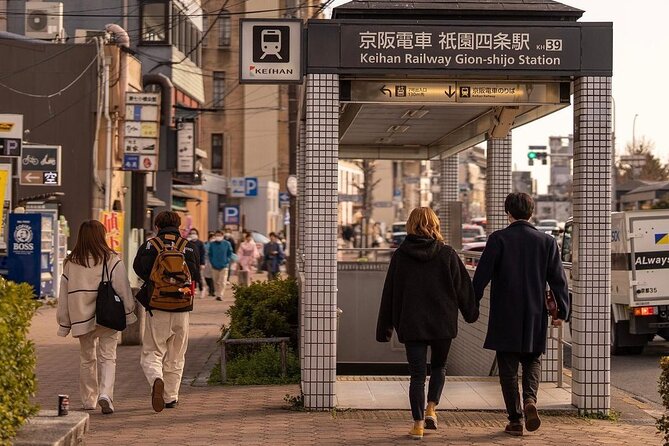
The meeting point is at Kyoto Station in Higashishiokoji Kamadonocho, Shimogyo Ward. The tour also ends back at the same meeting point, so you do not have to rebuild your day at the end.
That round-trip structure is useful in Kyoto. You avoid the stress of trying to get back from a different neighborhood, especially if your timing is tight. It also helps if you are using Kyoto Station as your daily base, whether for trains, luggage storage, or just a known landmark.
You also get helpful details that make the day easier: pickup is offered, you have a mobile ticket, and the meeting area is near public transportation. If you are trying to keep your first morning simple, this matters more than you might think.
Gion focus: streets, atmosphere, and the guide who keeps it meaningful
Gion is why many people come to Kyoto. It is also easy to see it the wrong way, by rushing through crowds or only photographing the obvious corners. This tour builds in dedicated time for Gion and for nearby atmosphere, so you get the look and the meaning.
In the Gion portion, you are set up to understand what makes this area different, beyond the old-street photos. The tour route includes classic landmarks tied to Kyoto identity, and your guide can adjust emphasis based on your interests. That can include iconic sites such as Fushimi Inari Shrine and Arashiyama’s Bamboo Grove as part of the bigger highlight rhythm, alongside the Gion core.
There is also time for walking through areas around Gion where the mood shifts. One practical bonus from the experience is that you can end up near restaurant lanes and quieter stretches associated with geisha culture, rather than getting stuck only on the busiest photo points. If you want Kyoto atmosphere without spending the whole time in the densest crowds, you will appreciate this kind of guidance.
Yatsuhashi at Izutsu Yatsuhashi Honpo, Gion store: a sweet break that fits the day
In between walking, you get a scheduled stop at Izutsu Yatsuhashi Honpo Gion store in the Kyogoku Ichibangai area. This is the kind of stop that works well on a short itinerary. It is not a “sit-down tour” break, it is a quick cultural snack moment you can use to reset your energy.
Yatsuhashi is one of Kyoto’s best-known traditional sweets. The value here is not just eating something local, it is understanding how Kyoto treats food as identity. This stop is short, and it is timed so you do not lose the day’s momentum.
Admission for this stop is marked as free, so you are not paying extra for the experience. That keeps the $95 feeling more honest, because you are not constantly wondering what will cost more later.
Gion Shirakawa: the pretty walk, with less pressure than you might expect
Another Gion-related stop is Gion Shirakawa. This area is famous for its picturesque streets and historic feel. The key is how you experience it on a guided route.
If you go on your own, you might only see what happens in the center of the frame, and you can miss how the surroundings create the mood. With a guide, you can slow down just enough to notice details without turning it into a drawn-out stroll. Your time here is about 20 minutes.
Practically, this is a good place to pause, breathe, and take a few photos that actually feel like Kyoto, not like everyone else’s camera feed.
A day of temples goes further with something to break it up.

Shrines that feel personal: Tatsumi Jinja, Yasui-Konpiragu, and the rituals people come for
Kyoto is full of shrines, but it takes guidance to make them click. This tour includes multiple shrine stops, and each one has a clear reason for being on the route.
Tatsumi Daimyojin Shrine
You visit Tatsumi Jinja, described as having a history dating back over a thousand years. Even if you do not read Japanese fluently, a guide helps you connect the dots, from why people visit to what the shrine’s vibe is supposed to feel like.
Yasui-Konpiragu
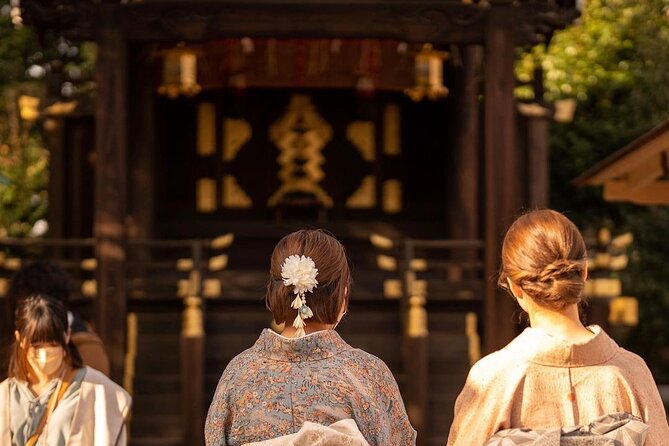
Next is Yasui-Konpiragu, famous for unique stone monuments and rituals. This kind of specificity is what makes a shrine stop more than a quick photo. You get a sense of how belief expresses itself in objects and actions, not just in architecture.
The tour marks this stop as having an admission ticket included. For a short trip, that is useful, because it signals you are paying for access and time, not just walking by gates.
A short spiritual pause matters
These stops are short, but they work together. You get variety without burning the day. It is a good match for visitors who want spirituality in the mix but do not want to spend their whole day inside formal temple grounds.
Yasakanoto and Izumo no Okuni statue: myths and performance history in Gion
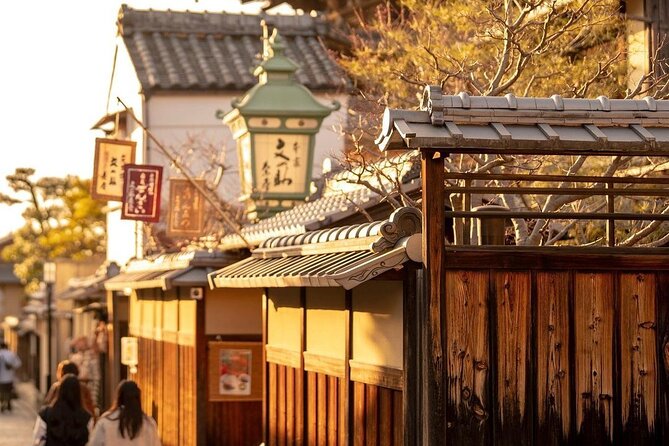
Gion is tied to traditional arts, so it makes sense that the tour includes a stop connected to performance history.
Yasakanoto pagoda
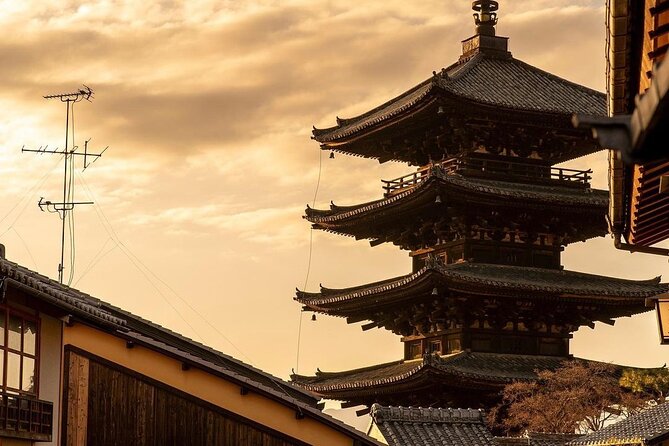
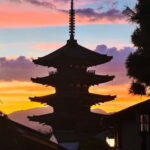
You get a look at Yasakanoto, a towering pagoda in Kyoto’s Gion district with history dating back centuries. A pagoda can sound like a generic architectural stop, but the guide framing usually helps you see why this kind of structure matters in the area’s identity.
Statue of Izumo no Okuni
Then you stop at the statue of Izumo no Okuni, known as the legendary founder of kabuki theater. This is one of those details that makes Kyoto feel alive, because it connects a modern art form to a specific story rooted in place.
If you like the idea that traditions travel through time, this pairing of pagoda and kabuki origin is a smart, memorable contrast. It is not only temples and shrines. You also get Kyoto’s creative DNA.
Kiyomizu-dera: the one-hour anchor you should not rush
No short Kyoto plan feels complete without Kiyomizu-dera Temple. This tour gives it the time it needs, about 1 hour, with admission ticket included.
Kiyomizu-dera is known as the Temple of the Pure Water Spring. It features an impressive viewing platform, a three-storey Koyasu pagoda, and the Otowa Spring, described as medicinal pure waters. The value of having this in the itinerary is that the guide can point out what to focus on while you are there.
Common mistake when you do this on your own is spending too much time staring at one angle. With a guide, you can handle the key viewpoints without losing the best moments to crowd flow. You get a chance to appreciate the big photo spots and also understand the site’s structure and symbolism.
One practical tip for this stop: since it is about views and crowds, you will enjoy it more if you go in with patience. Even with guidance, popular temples are still popular.
How the customization actually helps you plan your Kyoto day
The word customizable is easy to ignore, but here it matters. This tour is designed so you can shape the emphasis across a compact route.
You might choose to:
- spend extra attention on Gion atmosphere if that is your main interest
- keep temples and shrines as your focus and reduce shopping time
- prioritize performance and stories, like the Izumo no Okuni stop
- ask the guide to align the day with your energy level
Because the duration is about 3 hours, the customization works best when you decide what you do not want to chase. If you try to do everything, Kyoto will win. If you pick a theme, this tour becomes efficient in a good way.
What I’d watch out for before booking
First, plan for limited time. This is not a full-day Kyoto tour. You will get a concentrated set of highlights, and that is the point.
Second, it depends on good weather. The experience notes that it requires good weather, and if it is canceled due to poor weather, you are offered a different date or a full refund.
Third, there is a small chance of cancellation if minimum conditions are not met, since it requires a minimum number of travelers. The good news is the tour also offers free cancellation up to 24 hours in advance, so you are not locked in if your schedule shifts.
And one more reality check: Kyoto is popular, and this kind of guided route often books out. The experience is on average booked about 44 days in advance. If your trip dates are fixed, book early rather than hoping a last-minute spot appears.
Who this tour suits best, and who might not love it
This tour is a good fit if you:
- want a private experience with only your group
- feel overwhelmed by Kyoto logistics and prefer a guide to set the rhythm
- like a mix of Gion streets, shrine visits, and one major temple anchor
- want a taste of Kyoto traditions, including a stop for yatsuhashi
It may be less ideal if you:
- want to spend lots of time shopping or doing long temple circuits
- have a highly specific list of sites and no flexibility
- prefer self-guided wandering with no structured route
For most visitors, especially first-timers, this is an efficient way to understand Kyoto’s “why,” not just its “what.”
Should you book this Kyoto treasures private tour?
If you want a smart half-day that puts the most important Kyoto flavors on your plate, yes, I’d book it. The price is reasonable for what you get: a local guide, transportation help, admission coverage for key sites, and a route that balances Gion, shrine rituals, and Kiyomizu-dera without trying to cram in everything.
Book it if your goal is to leave Kyoto feeling like you understood the place, even if you only have a few hours. Skip or rethink it if you already planned your own temple-and-stroll marathon and you hate structure.
If you do book, send your priorities early, especially if you care most about one theme. Then let the guide do what a good guide does: turn a short walking window into a coherent story you can actually remember.
FAQ
How long is the private Kyoto tour?
It runs for about 3 hours.
Where does the tour start and end?
It starts at Kyoto Station (Higashishiokoji Kamadonocho, Shimogyo Ward) and ends back at the same meeting point.
Is pickup included?
Pickup is offered.
Is this a private tour?
Yes. It is a private tour, and only your group participates.
Are admission tickets included?
Some stops include admission tickets, while others are marked as free. The tour also includes admission for Kiyomizu-dera and other specific listed stops.
Does the price include transportation?
Yes. Transportation to attractions is included.
What food or drinks are included?
Brunch is not included, and alcoholic beverages are also not included.
What is the cancellation policy?
You can cancel for free up to 24 hours in advance for a full refund. The experience also depends on good weather, and you may be offered a different date or a full refund if canceled due to poor weather.
New This Season
- Koyasan Day Trip by Private Car from Kyoto
- Old Port Town and Ultimate Sake Tasting Private Tour From Kyoto
- Kyoto’s Timeless Charm: 3hr Exploration of History and Peace
- Kyoto: 5 Types of Sushi Making
- Sacred Peak & Ancient Paths: Kurama-Kibune Hiking Experience
- Kyoto: Exclusive ZEN practice at Manpukuji temple in Uji
- Kyoto: Private Seasonal Aroma Yoga Class
- Traversing Kyoto’s Scenic West – Arashiyama to Kinkakuji
City Tours, compared.
Calligraphy class at Buddhist temple in city center
Read our review →
Private departure transfer from Kyoto city to Kansai International airport
Read our review →
Full-Day City Highlights Bike Tour with Light Lunch
Read our review →
Private departure transfer from Kyoto city to Osaka Itami International airport
Read our review →
Guided Kyoto City Cherry Blossom One Day Private Tour
Read our review →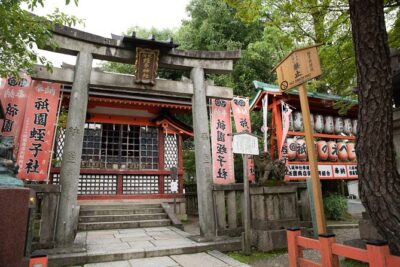
Kyoto’s Top City Highlights: 2-Day Private Tour Experience
Read our review →Also filed under