Reviewed · ARTISAN CRAFT WORKSHOPS
Kyoto: Calligraphy class at Buddhist temple in city center
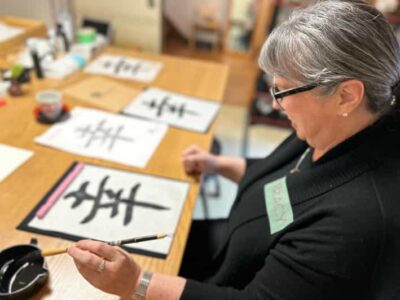
Kyoto calligraphy feels personal fast. This small-group shodo workshop happens inside a central Buddhist temple setting, where you practice basic brushwork and write your own character on a shikishi. I like that the pace is step by step and the take-home omiyage is truly made by you, not just handed to you.
The best part for me is how the teacher and translators work together. You get careful guidance on tools and technique, with multilingual help like Jose and Saskia, plus a Japanese calligraphy instructor who takes time to correct your strokes. One thing to consider: most seating is on the floor in a washitsu with tatami, so if you struggle with kneeling or sitting low, plan for that.
In This Review
- Key highlights worth knowing before you go
- Kyoto Calligraphy Inside Seigan-ji: why this setting matters
- Finding the meeting point on SHINKYOGOKU Street (without bothering staff)
- The 70-minute shodo flow: from tools to your final shikishi
- Picking your kanji: how to choose the word you’ll live with
- Inside the washitsu: tatami, zabuton, and comfort basics
- The teachers you’ll rely on: careful guidance and real corrections
- Your omiyage: key-chain character gift plus a take-home artwork
- Price and value: is $55 fair for 70 minutes in Kyoto?
- Who should book this Kyoto calligraphy class, and who might not
- Should you book this Kyoto calligraphy workshop?
- FAQ
- What is the duration of the Kyoto calligraphy class?
- How much does the experience cost?
- Where do I meet for the workshop?
- Is food or drinks included?
- What’s included in the class materials?
- What should I think about before the class starts?
- Is the workshop silent?
Key highlights worth knowing before you go
- Write your own chosen kanji or word, with options and examples to help you decide
- 70 minutes of structured practice, not a quick demonstration
- Tatami room experience in a temple interior, using zabuton floor pillows
- Take home a finished shikishi piece, plus a key-chain souvenir made with your character
- Small group size up to 6, so you get hands-on feedback
- Multilingual support (English, Spanish, Japanese, Dutch), often with guides like Jose and Saskia
Kyoto Calligraphy Inside Seigan-ji: why this setting matters
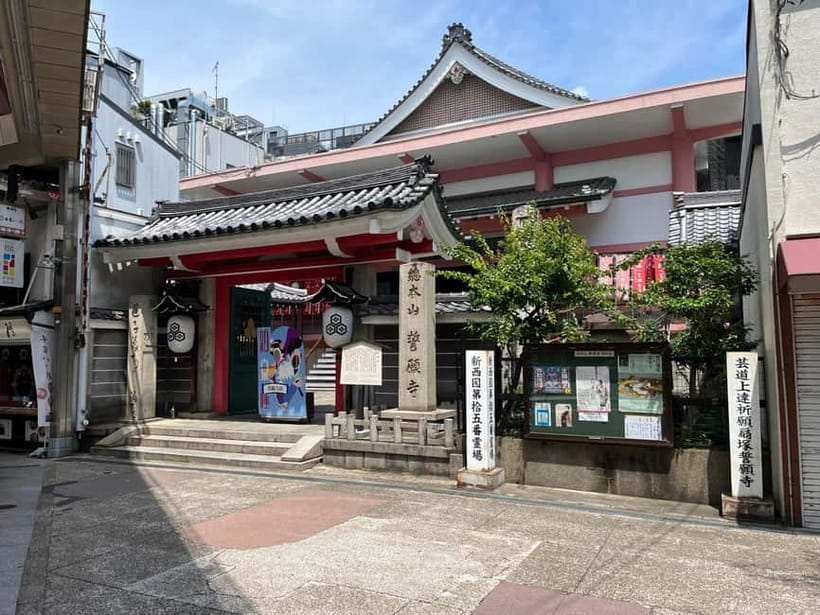
The location is the whole mood here. The class takes place in the city center at Seigan-ji Temple, in a traditional room atmosphere that makes the lesson feel connected to Japanese daily life and history rather than staged for tourists.
You also get a unique cultural lens by learning shodo in a Buddhist temple space. Calligraphy in Japan is treated like a serious skill, taught early, because it forces you to understand form, balance, and meaning. In this workshop, that idea shows up immediately: you start with strokes and tool handling before you’re allowed to create your final character.
Finding the meeting point on SHINKYOGOKU Street (without bothering staff)
You’ll meet in front of Seigan-ji Temple on the SHINKYOGOKU shopping street. Look for the person holding a red lantern on a stick under the roofed street area.
Keep it simple. Do not go up any stairs to enter the temple, and do not ask monks or staff to confirm you’re at the right place. Just wait at the front until you see the lantern, then follow your guide.
This is also where you’ll get your first practical check-in: the people running the workshop know you’re coming for the class, and they’ll bring you into the quiet, controlled space where the lesson happens.
Make something with a Kyoto craftsman
- Authentic knife making experience at a blacksmith in Kyoto
★ 4.8 · 350 reviews - Roketsu dyeing experience: M course Roketsu Dyeing Experience
★ 5.0 · 163 reviews - Kyoto: Japanese Calligraphy Class
★ 4.8 · 89 reviews - Itajime Shibori Scarf Class
★ 5.0 · 84 reviews
The 70-minute shodo flow: from tools to your final shikishi
The workshop runs about 70 minutes, with a clear sequence that helps beginners avoid that common problem, overreaching too early. If you’ve ever seen brush letters online and thought, I could never do that, this structure is what makes it doable.
Here’s the rhythm you can expect:
You start with an introduction to the teacher and the translator(s). Then you pick your kanji or word. If you’re stuck, you’ll have examples to choose from, but it helps if you come with a few ideas in mind.
Next comes tool basics. You learn how to use the brush, ink, and writing materials correctly. Then you practice basic lines first. This matters because the workshop isn’t just asking you to copy one character, it’s teaching you the building blocks of how brush pressure and direction create shape.
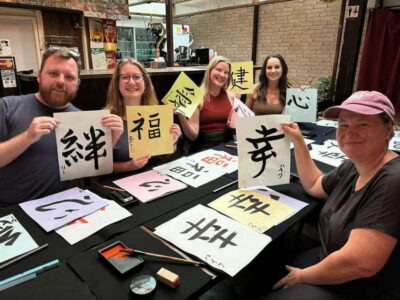
After that, you practice the selected character or kanji. You’ll write, adjust, and rewrite until it starts to look like it belongs on the final square. Then you complete the finished artwork on a shikishi, and you’re done with the part you can proudly frame or gift.
One smart note: the class is designed so you practice enough to get a great result, but not so much you exhaust your arm. If you push too hard during practice, your last strokes can lose their control, and that shows in calligraphy.
Picking your kanji: how to choose the word you’ll live with
This class ends with a piece you’ll keep. That changes the value of picking your character, and it’s why the workshop encourages you to choose a word thoughtfully.
If you want the easiest time, choose something that matches what you actually want to display at home. Many people pick a kanji tied to a personal idea, like a wish, a theme, or a name component, then refine it through practice until it looks right.
If you’re undecided, take the examples seriously. They are there for a reason, to give you options that work well in the format you’ll write on. A little preparation here also makes the session calmer, since the class moves through technique steps efficiently.
If you’re left-handed, you might find it more challenging, simply because brush technique is often taught assuming a right-handed posture. The workshop atmosphere is relaxed, and you can still learn by trying, making mistakes, and getting correction in the moment.
Inside the washitsu: tatami, zabuton, and comfort basics
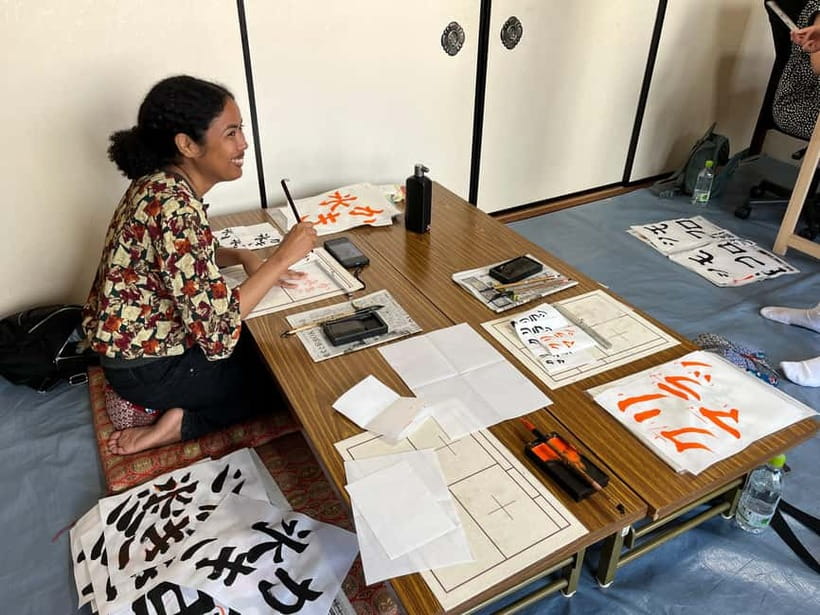
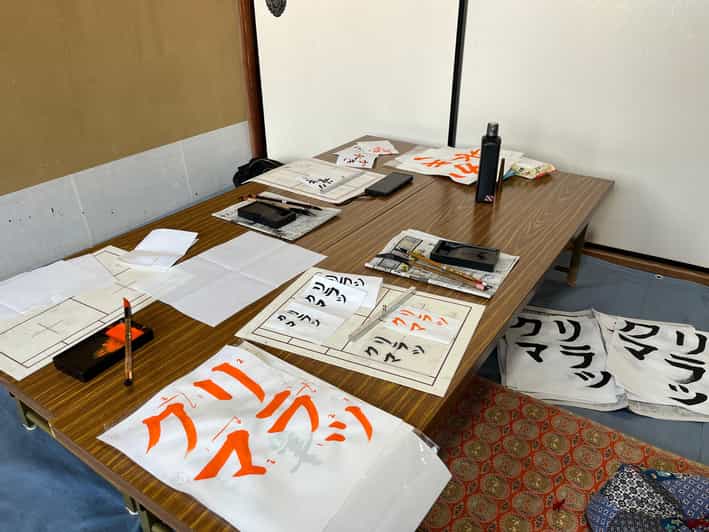
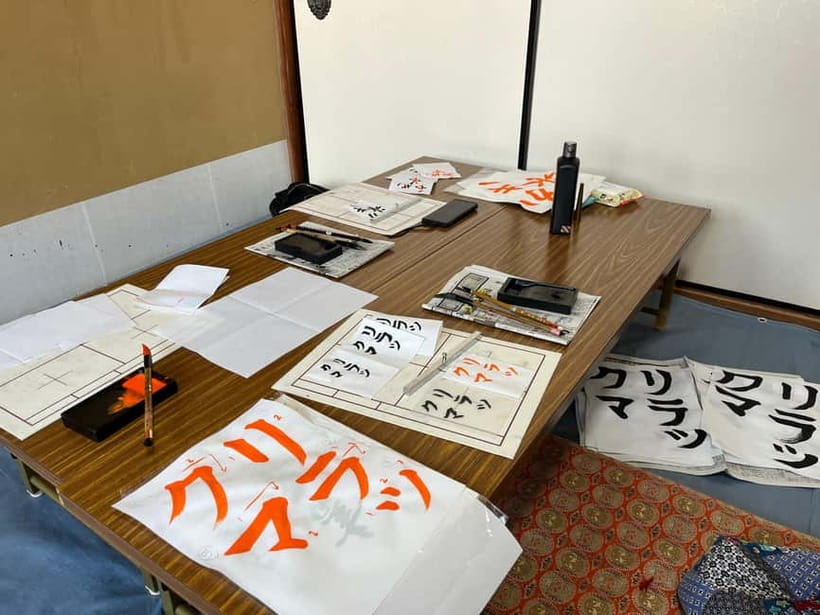
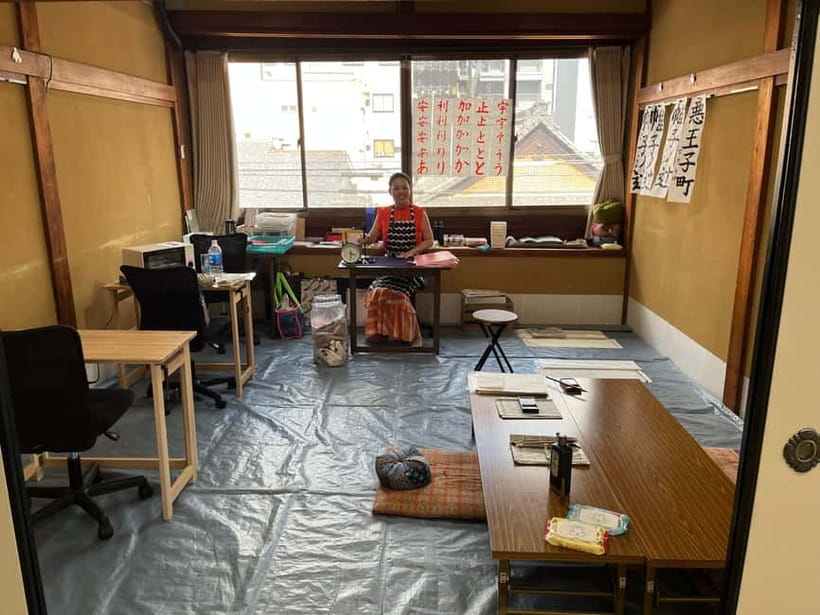
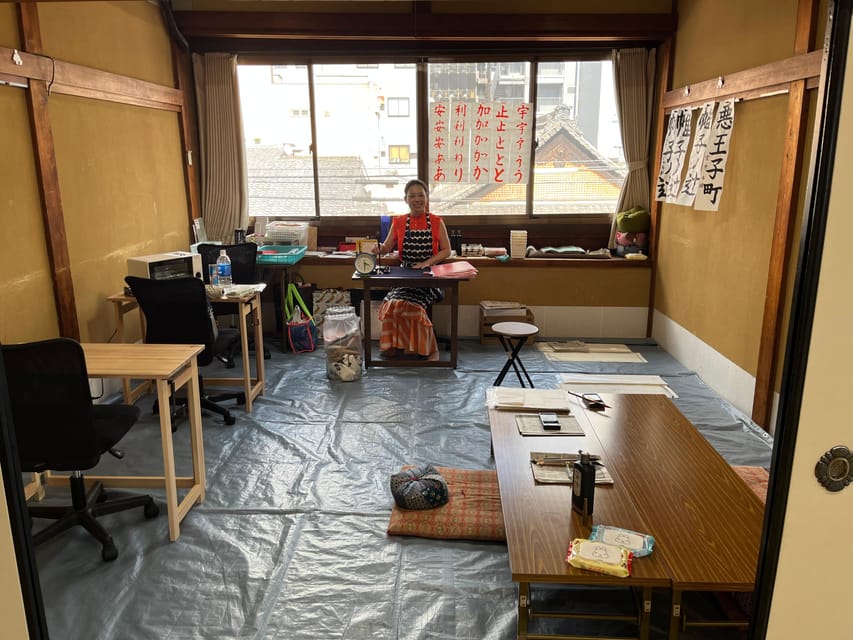
The workshop happens in a washitsu room with tatami flooring. Most seating is on the floor with zabuton (floor pillows), and there are desks available but limited.
That detail sounds small, but it affects your enjoyment. If you plan to book, think about your leg comfort before you arrive. Some people do fine with floor sitting, others spend the session fighting their knees instead of focusing on strokes. The good news is you’re in a short 70-minute session, and the group stays small, so staff can guide you toward a workable seating spot.
Also note the basic etiquette rules. Bare feet are not allowed, so wear shoes appropriately. Smoking and vaping are not permitted, and there’s no alcohol or drugs involved in the experience.
The teachers you’ll rely on: careful guidance and real corrections
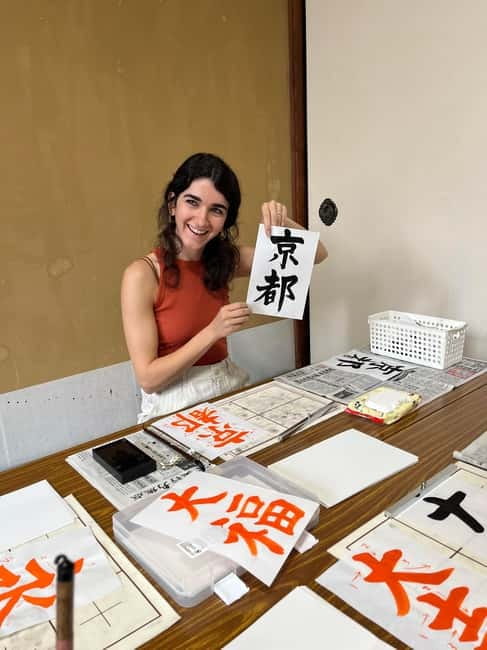
The instruction style is hands-on and patient. The teacher has been involved in calligraphy for over a decade, and the workshop is built around guiding you through each step rather than dumping information on beginners.
What makes this stand out is how guidance is paced. You don’t just jump from introduction to final writing. You start with tools, then lines, then your character. That lets you correct issues early, like brush angle and stroke consistency.
The translators matter too. English and Spanish support is available, and in many cases the experience runs with friendly hosts such as Jose and Saskia helping you understand what the instructor is doing and why. If you’re one of the people who arrives unsure how to choose a kanji, having translation support takes the stress out of decision making.
The overall vibe stays calm, not silent. You’ll hear quiet conversation sometimes, but the room energy is focused, because everyone is concentrating on getting the brush marks right.
More rooftops worth a detour

Your omiyage: key-chain character gift plus a take-home artwork
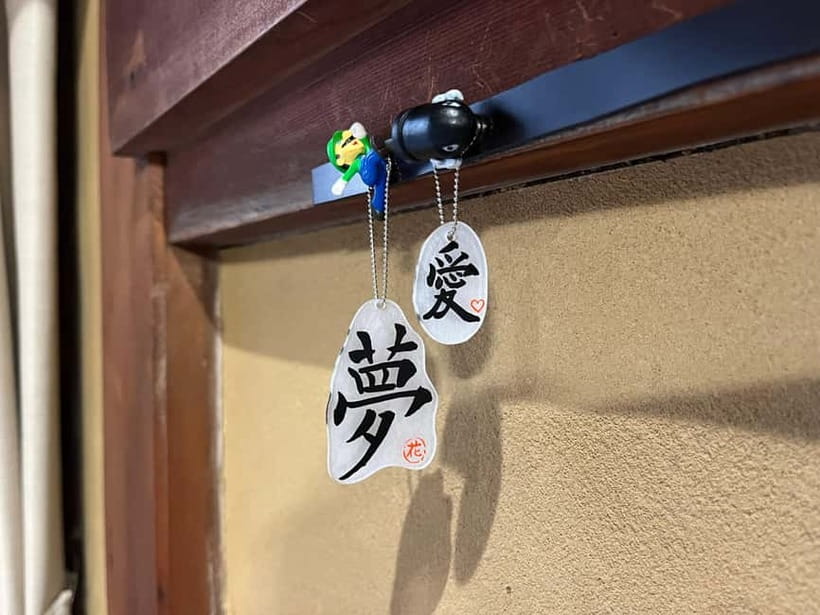
This is not a souvenir you buy on the way out. You get a real, handmade artwork and a small character accessory made for you.
Your final work is completed on a shikishi. After you finish, you take the piece home. That matters because it becomes a memory you can display, not something you store in a bag and forget.
You also receive a key-chain made with your chosen character. The workshop description frames it as a special souvenir, and the feeling you get from the class is that the souvenir is tied to your actual learning, not a generic add-on.
If you’re traveling with someone else, this is also a great keepsake setup. Each person makes their own character, so the pair or group ends up with two distinct pieces, each with different brush shapes, and both are personal.
Price and value: is $55 fair for 70 minutes in Kyoto?
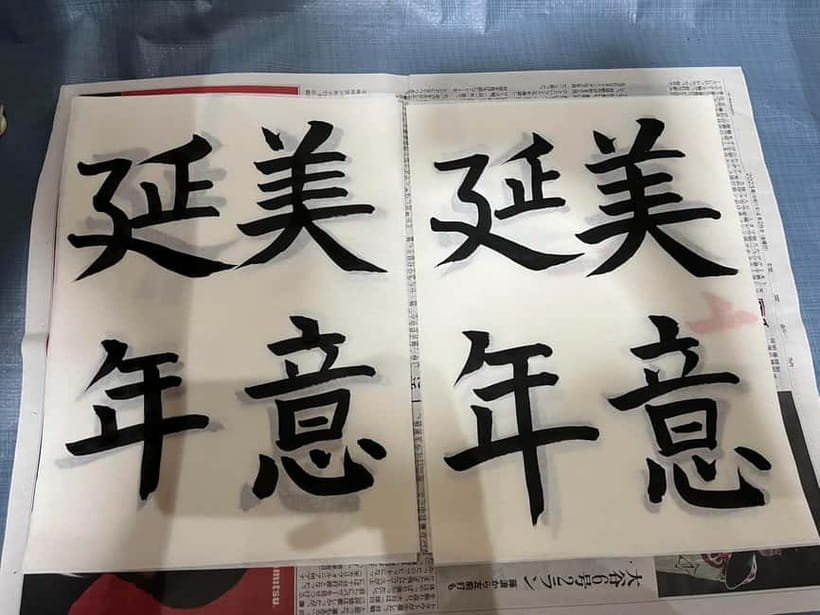
At $55 per person for about 70 minutes, the value is strongest because materials and a finished takeaway are included. You’re not paying for a lecture. You’re paying for structured instruction plus the supplies needed to create something you can keep.
Included materials cover the practical side: washi, brush, ink, bunchi, and shitakami (plus the writing setup that supports your final shikishi). You also get explanations and practice help, and you receive your self-made souvenir.
That’s where the math works. Many “cultural classes” in big cities are expensive for what you actually leave with. Here, you leave with an artwork made through your own effort, and you also get the extra character key-chain gift.
The small group size, limited to 6 participants, is another value driver. You’re more likely to get personal feedback, especially as you practice your selected kanji.
Who should book this Kyoto calligraphy class, and who might not
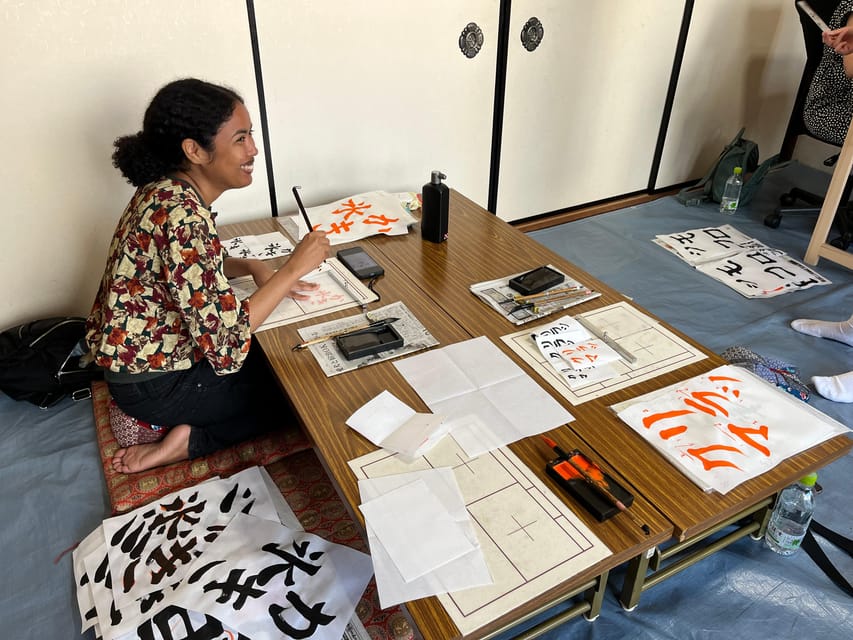
This workshop fits best if you want a hands-on activity that slows your Kyoto day down. It’s ideal for couples, solo travelers, and families with older kids who can sit comfortably during the session.
It also suits people who like thoughtful, quiet tasks. Multiple reviews describe the experience as calming and focused, with a friendly teacher and translator team. Even if you’re not “artistic,” the structured approach helps you succeed.
On the other hand, it may not be right if you need standing-only access or if floor sitting is very uncomfortable for you. Most seating is on tatami with zabuton, and desks are limited.
It’s also not designed for very young children. The experience is not suitable for children under 2, under 3, under 4, or under 5 years old. If you’re traveling with someone with visual impairment, it’s also listed as not suitable for that group. Visually, calligraphy requires close attention to stroke form, so that restriction makes sense.
Wheelchair access is listed as available, but remember the room is still a tatami washitsu setting. If you use a wheelchair, ask how the seating will work for you when you confirm your booking details.
Should you book this Kyoto calligraphy workshop?
Book it if you want a Kyoto activity that’s simple, cultural, and actually results in something you can take home. The combination of small-group instruction, temple setting, and a finished shikishi plus key-chain souvenir is a strong package for the time and price.
Skip it if you know you cannot handle floor seating for a full hour, or if you’re looking for a loud, active tour. This experience is focused and concentrated, and the success comes from steady practice with a brush.
My practical advice: decide your kanji or at least narrow your word ideas before you go. If you show up with a plan, the session feels smooth instead of rushed.
If you’re in central Kyoto and want a meaningful break from walking, this is one of those classes that gives you a skill, a keepsake, and a calm story you’ll remember long after the ink dries.
FAQ
What is the duration of the Kyoto calligraphy class?
The class lasts about 70 minutes.
How much does the experience cost?
The price is listed as $55 per person.
Where do I meet for the workshop?
Meet in front of Seigan-ji Temple on the SHINKYOGOKU shopping street. Look for the person holding a red lantern on a stick under the roofed street.
Is food or drinks included?
No. Food and drinks are not served, but you can buy drinks outside in vending machines.
What’s included in the class materials?
Included materials are washi, brush, ink, bunchi, shitakami, plus explanations, practice, kanji examples to pick from, and your self-made souvenir.
What should I think about before the class starts?
You should think of a word or kanji you would like to write. Examples are provided, but coming with a few ideas helps.
Is the workshop silent?
It is not a complete silent experience, but it tends to be quiet while everyone concentrates on writing.
More Workshops in Kyoto

New This Season
- Koyasan Day Trip by Private Car from Kyoto
- Old Port Town and Ultimate Sake Tasting Private Tour From Kyoto
- Kyoto: 5 Types of Sushi Making
- Sacred Peak & Ancient Paths: Kurama-Kibune Hiking Experience
- Kyoto’s Timeless Charm: 3hr Exploration of History and Peace
- Kyoto: Exclusive ZEN practice at Manpukuji temple in Uji
- Kyoto: Private Seasonal Aroma Yoga Class
- Traversing Kyoto’s Scenic West – Arashiyama to Kinkakuji
Artisan Craft Workshops, compared.
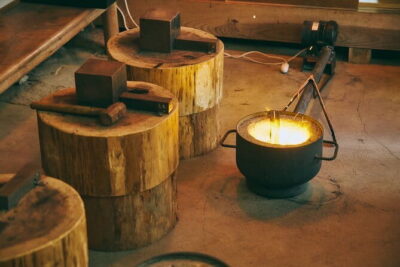
Authentic knife making experience at a blacksmith in Kyoto
Read our review →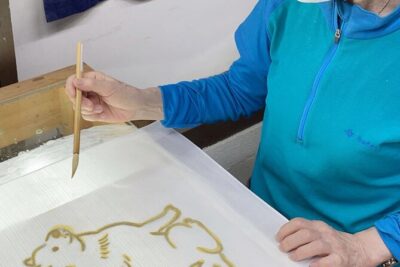
Roketsu dyeing experience: M course Roketsu Dyeing Experience
Read our review →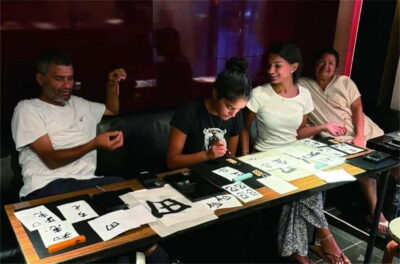

Traditional Japanese Washi Papermaking- Kyoto morning
Read our review →