
Reviewed · ARTISAN CRAFT WORKSHOPS
Kyoto: Traditional Yuzen Dyeing Experience
Silk comes alive in Kyoto’s Nishijin. This hands-on Kyoto Yuzen dyeing class happens inside a traditional machiya townhouse, where you learn the craft and then paint your own design on silk. You’ll be working in the heart of the Nishijin district, with a small group limit of 6, so it feels personal, not assembly-line.
I especially liked two things: the way you start with color choices and get real guidance to make your palette harmonious, and the fact that you leave with something you made yourself, a finished Yuzen-dyed silk keepsake. If you’re lucky, your session may be guided by a master artisan such as Shin’Ichiro, with interpretation support like Ha.
One consideration is that the workshop involves dyeing materials and chemicals, so you should plan for messy clothes and let them know about allergies or sensitivities ahead of time.
In This Review
- Quick take on this Kyoto Yuzen dyeing class
- Kyoto Yuzen, on silk, inside a Nishijin machiya home
- The 2-hour flow: from choosing colors to painting your silk
- Choosing your palette with the artisan, not just random color picks
- Pre-outlined designs: the big reason you get results
- Inside the studio: the pace, the tools, and the calm
- The artisan and interpreter team: what makes it feel truly local
- The take-home silk piece: your personal Kyoto souvenir
- Price and value: what $161 buys you in a craft workshop
- Who this Kyoto Yuzen class is best for (and who should skip)
- Tips to get the best results and enjoy the calm
- Should you book this Kyoto Yuzen dyeing experience?
Quick take on this Kyoto Yuzen dyeing class
- Machiya home setting in Nishijin, not a showroom or storefront
- Pick 1 to 2 starting colors, then the artisan helps balance the rest
- Designs come pre-outlined on silk, so you paint within the lines
- Small groups up to 6, with English or Chinese interpretation
- A take-home silk piece, typically finished with an ironing step to help set and dry
Kyoto Yuzen, on silk, inside a Nishijin machiya home
Kyoto Yuzen is one of those crafts you see in pictures, on kimono, and in shop displays, but it hits different when you’re actually painting the layers. Here, the whole experience is designed around the slow, careful rhythm of dye work, inside an artisan’s own traditional townhouse.
The location matters. Nishijin is closely tied to Kyoto’s textile culture, and you feel that connection when you step into the machiya setting. Instead of being rushed through a demo, you settle into a calmer workspace, guided step by step by the artisan and supported by an interpreter when needed.
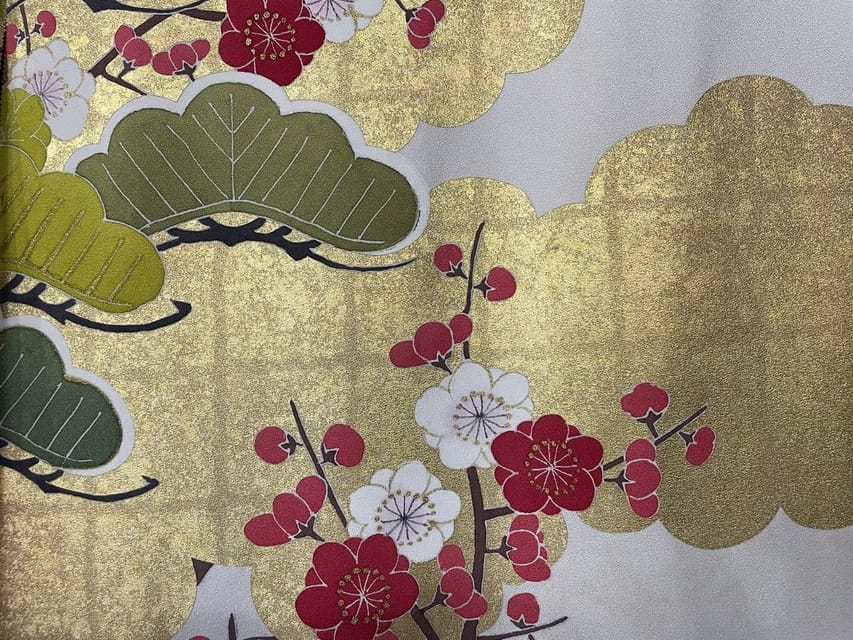
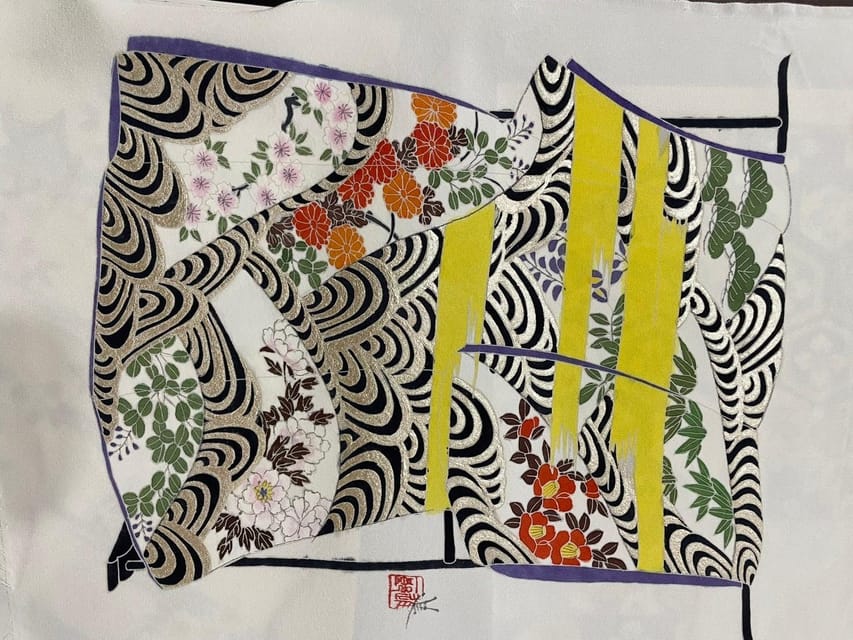
The experience also includes a view display of Kyoto Yuzen works. That’s a practical touch, because it gives you real references for what the dyeing style looks like when it’s fully done, not just as a concept.
The 2-hour flow: from choosing colors to painting your silk
The timing is straightforward: you’re in the studio for about two hours, long enough to get oriented, choose a palette, paint, and finish the piece. Start times depend on availability, so if you have other Kyoto plans, double-check the session slot before you lock in everything else.
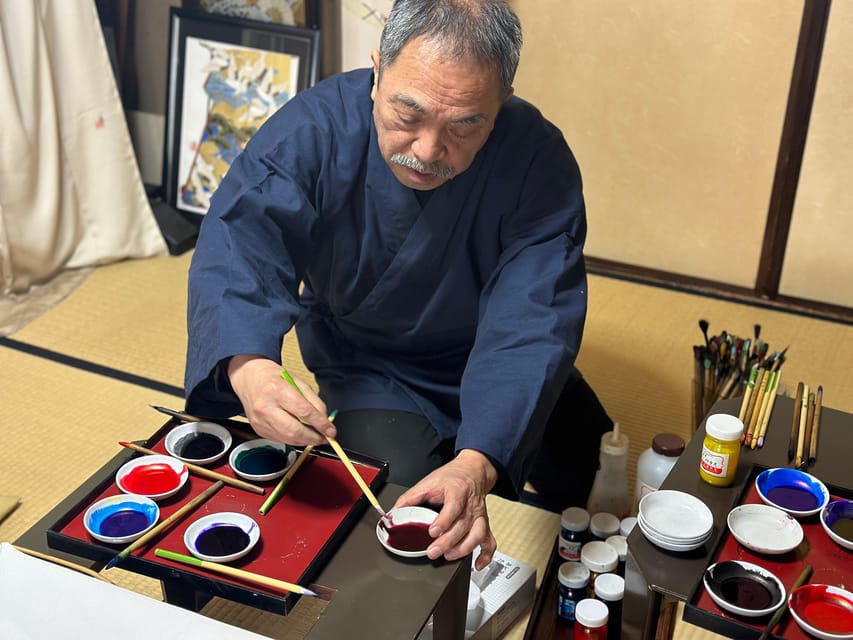
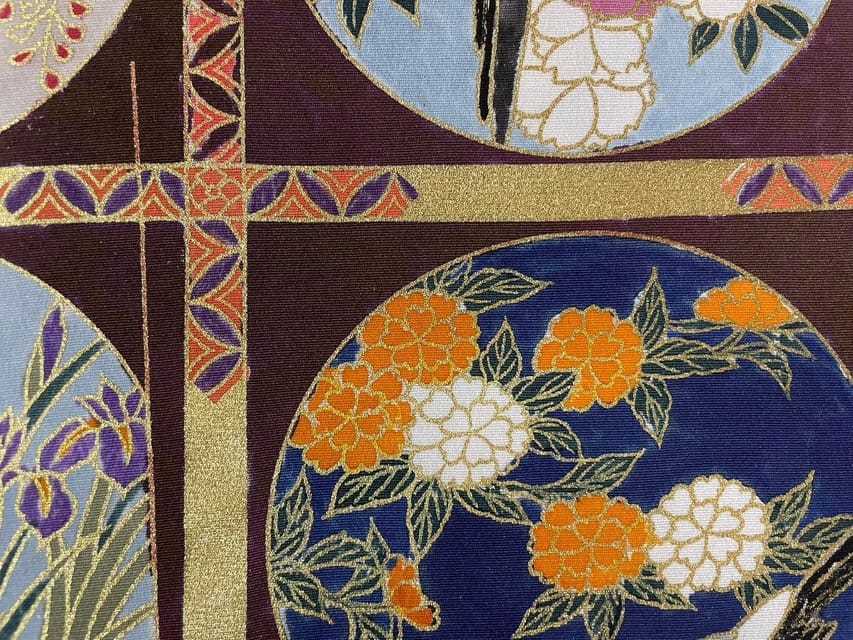
You begin by selecting a design and typically choosing one or two colors that appeal to you. Then the artisan helps with the rest, aiming for a balanced and harmonious look rather than a random mix. This is where you’ll learn how the craft thinks about tone, contrast, and how colors translate on silk.
Next comes the hands-on part. Multiple participants describe starting with silk that already has golden outlines of the chosen design, like a ready-to-paint guide. You then paint the dye into the spaces, guided by the master’s instructions and, when you need it, your interpreter’s support.
One small but important reality check: this is painting work. If you’re expecting something like stamping on a T-shirt and walking out, you’ll notice the difference fast. The dye behaves differently, and your hands will need to slow down, especially if you’re prone to overthinking.
Make something with a Kyoto craftsman
- Authentic knife making experience at a blacksmith in Kyoto
★ 4.8 · 350 reviews - Kyoto: Calligraphy class at Buddhist temple in city center
★ 5.0 · 167 reviews - Roketsu dyeing experience: M course Roketsu Dyeing Experience
★ 5.0 · 163 reviews - Kyoto: Japanese Calligraphy Class
★ 4.8 · 89 reviews
Choosing your palette with the artisan, not just random color picks
I like workshops where the instructor actually reacts to what I choose. Here, you don’t just name colors and hope for the best. You pick one or two starting colors, and the artisan selects remaining tones to keep your final piece looking intentional.
People consistently highlight the calm, professional way the artisan mixes colors and explains why certain shades work together. In one session, the master mixed tones live and used examples to show what shades would look like on the fabric. That kind of feedback is gold, because it turns “color theory” into something you can see immediately.
You’ll also get design-specific guidance. For example, if you’re choosing something like a phoenix against a crescent moon, the color decisions can dramatically change the feeling, from soft and quiet to bold and dramatic. The master’s suggestions are meant to make your choice feel like it belongs in Yuzen.
Practical tip: don’t plan on changing everything at the last minute. Reviews show it helps to commit to the palette early, then focus on steady, careful painting.
Pre-outlined designs: the big reason you get results
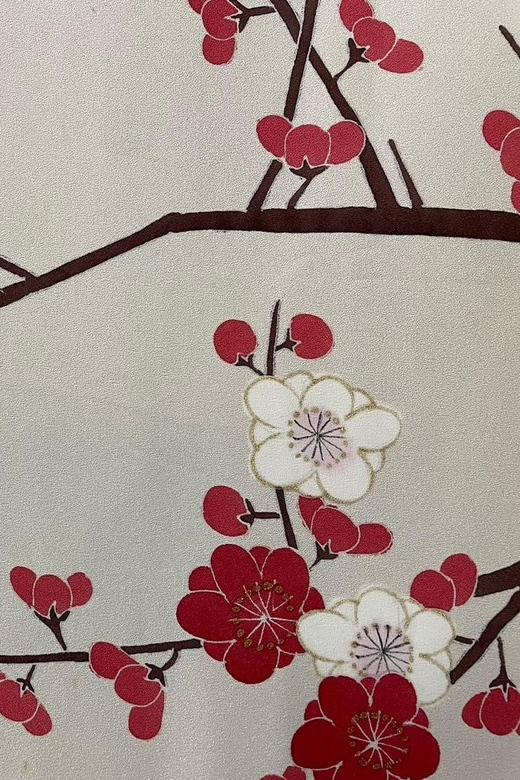
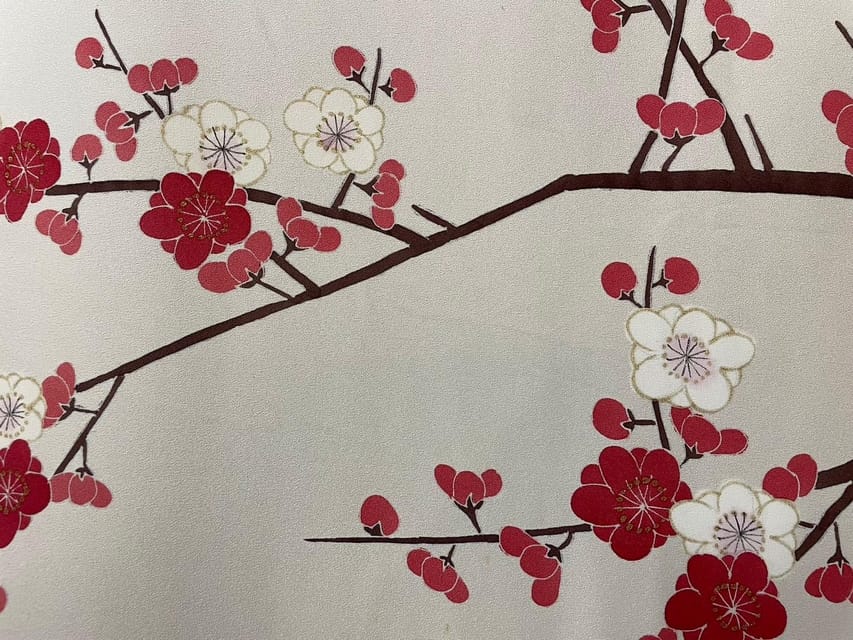
One reason people love this class is that you’re not designing from scratch. You choose from available designs, and the silk arrives with the artwork screened or outlined so you can follow along while painting.
That reduces frustration. It’s a craft class, but it’s also meant to produce a satisfying keepsake. Multiple participants mention designs like phoenix motifs and cranes, and they also note that the selection can be limited depending on the session.
What you do control is the color. Some people end up painting the kind of scene they only associate with kimono and museum textiles. Others treat it like a relaxation project, enjoying the repetitive motion and the slow reveal of color.
There’s also a practical instruction baked into the process. One participant noted that if you overload your brush, the dye can bleed. That’s exactly the kind of detail that makes a difference between a piece that looks crisp and one that looks messy.
Inside the studio: the pace, the tools, and the calm
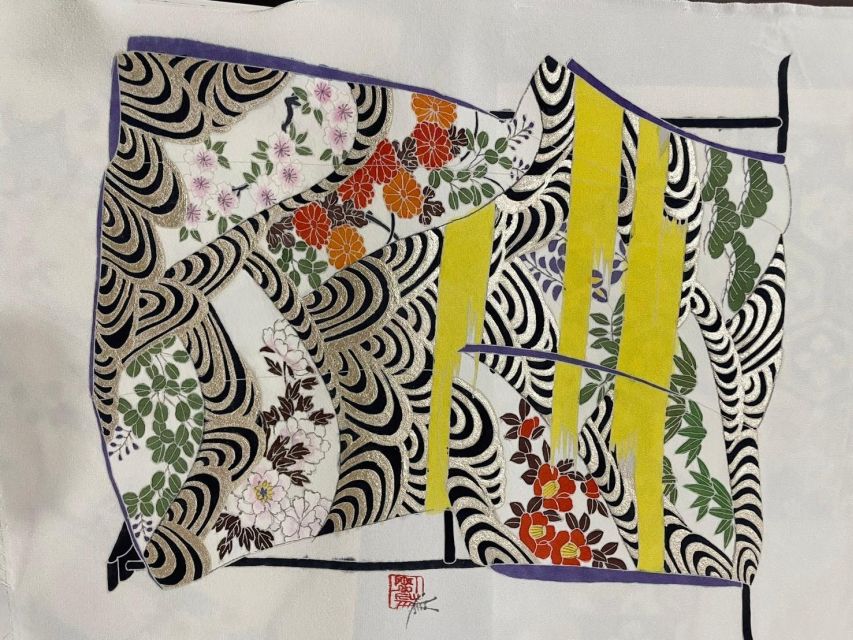
The atmosphere is part of the value here. Reviews repeatedly describe the experience as calm and even meditative, especially because the studio setting is quiet and the work is detailed.
You’ll spend time learning the tools and delicate techniques used in Yuzen dyeing. The class is guided by the artisan directly, not just a lecture. You watch the color come to life on silk as you work, which is a big shift from watching YouTube tutorials and calling it a day.
Group size helps too. With up to 6 participants, you get enough attention to correct small issues without feeling like you’re being hovered over every second. Several reviews mention friendly conversation during painting, which matters because it makes the language barrier feel less intimidating.
One caution: the class is structured around sitting and painting for the full session. A participant specifically warned it’s not ideal for people who struggle to sit on the floor for two hours. If that’s you, you might still be okay because the workshop is described as wheelchair accessible, but confirm what seating setup they use for your particular session.
The artisan and interpreter team: what makes it feel truly local
This isn’t a faceless “tour activity.” It’s a workshop run by artisans, and you’re learning directly from them.
Names show up in the reviews. One master mentioned is Shin’Ichiro, and one interpreter named Ha is described as kind and helpful. You’ll likely have English or Chinese interpretation, and the goal is clear: help you communicate during color choices and techniques so you can actually paint with confidence.
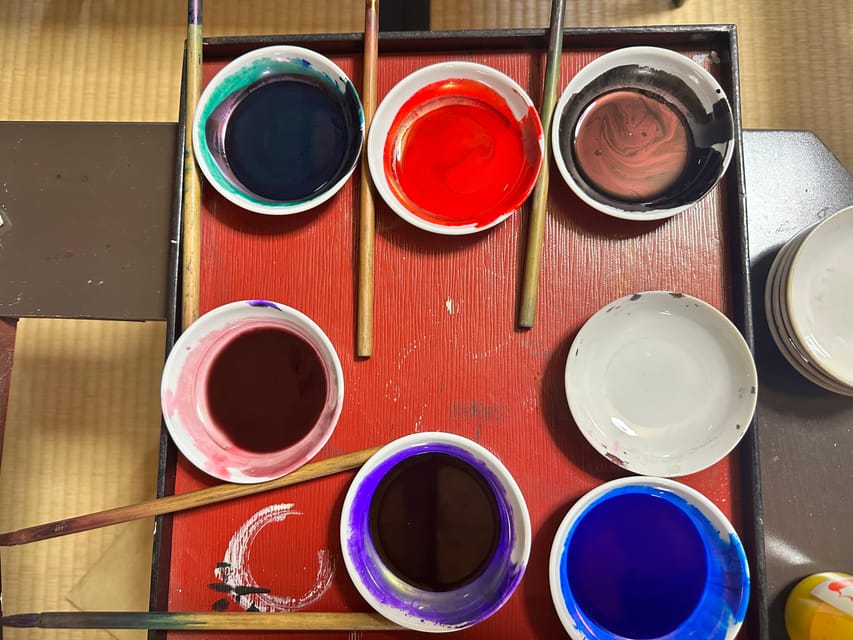
This matters because Yuzen dyeing has practical nuances. The artisan mixes specific amounts and concentration for the shades, and the interpreter helps ensure you understand what you’re doing and why.
It’s also why people describe the experience as well organized, easy to follow, and not rushed. Even when a session ran a bit long for one group, the hosts reportedly stayed patient and accommodating.
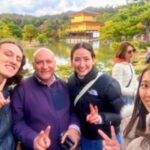
A day of temples goes further with something to break it up.

The take-home silk piece: your personal Kyoto souvenir
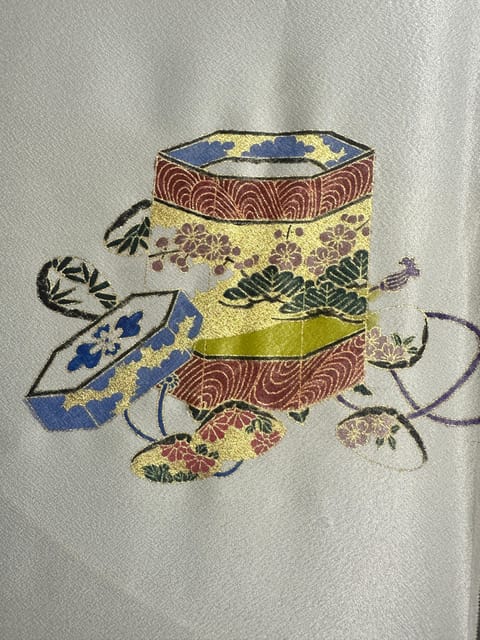
This class ends with the best part: you bring home what you made. That’s the real reason the price feels reasonable for many people, because you’re not paying only for instruction, you’re paying for materials and a finished work of art created in collaboration with the artisan.
The silk is pressed or ironed at the end, with one review specifically mentioning an ironing step to help make sure the work is dry. That’s a small detail, but it’s a big practical one for travel, because you don’t want a finished textile that feels damp or fragile when you’re packing up.
Your finished piece reflects two things at once. It reflects your own color choices, and it reflects the master’s sensibility in how tones are balanced. That blend is exactly what you want from a craft souvenir, not just a random pre-made image.
How to pack it: assume the piece is delicate. Keep it in a sleeve or folder if you have one, and try to avoid heavy pressure in your bag.
Price and value: what $161 buys you in a craft workshop
At $161 per person for two hours, this isn’t a cheap “activity.” But it also isn’t a basic tourist stop, and the inclusions explain why.
You get the Yuzen dyeing experience itself, instruction directly from the artisan, interpreter support, and a display of Kyoto Yuzen works. You’re also in a small group and inside a traditional machiya, which usually costs more than a standard classroom.
Value-wise, the main win is that you leave with a finished silk piece made by your hands. That turns the price into something more like a hands-on art session rather than a passive admission ticket.
Extra costs can come only if you choose to purchase additional works from the artisan by cash, which is not included. If you just want your single piece from the class, you can plan your budget around the stated price.
Who this Kyoto Yuzen class is best for (and who should skip)
This is a great fit if you:
- Like crafts and want something more hands-on than a museum visit
- Enjoy slow, careful work and don’t mind painting for the full session
- Want a Kyoto souvenir that feels personal and meaningful
It’s also ideal if you’re an art lover who wants to learn the process, not just take photos. Reviews repeatedly mention how satisfying it feels to collaborate with a master and see your work become a real textile art piece.
It may not be the best fit if you:
- Can’t sit on the floor comfortably for around two hours
- Are traveling with very young children, since it is not suitable for children under 10 and babies under 1
- Have dye sensitivities or allergies and haven’t informed the organizers in advance
One more practical match question: if you hate mess, you might want to think twice. You’re told to wear clothes you don’t mind getting dye on.
Tips to get the best results and enjoy the calm
A few practical moves will make this class easier and more enjoyable.
First, wear comfortable clothes that can handle stains. Even if you’re careful, dye work is dye work.
Second, go in with a simple plan. Don’t try to overthink the perfect phoenix colors before you arrive. Pick one or two colors you genuinely like, then trust the artisan for the rest. People who had the best outcomes seemed to commit early and focus on steady brushing.
Third, keep your expectations realistic. This is often described as paint in the lines, with minimal skill needed to make a beautiful result, but you still need patience. If you treat it like fast, casual crafts, you’ll get frustrated when dye behaves differently than acrylic paint.
Finally, ask questions. The artisan and interpreter are there to support you, and conversation is part of the experience. If you want your palette to shift warmer or cooler, say so early, not after the final sections are painted.
Should you book this Kyoto Yuzen dyeing experience?
Book it if you want an art experience you can actually take home, in a real traditional home setting. The combination of small group size, direct artisan instruction, and the hands-on painting on silk makes it feel like more than a typical “tour activity.”
Skip it if you’re looking for something fast and low-effort, or if sitting on the floor for two hours is an issue for you. Also, if you have allergies or sensitivities to dyeing materials, tell them ahead of time so they can advise you.
If you’re the type who loves crafts, color, and careful process work, this is one of the most satisfying ways to spend a morning or afternoon in Kyoto. You’ll leave with a souvenir that tells a story, not just a photo.
New This Season
- Koyasan Day Trip by Private Car from Kyoto
- Old Port Town and Ultimate Sake Tasting Private Tour From Kyoto
- Sacred Peak & Ancient Paths: Kurama-Kibune Hiking Experience
- Kyoto’s Timeless Charm: 3hr Exploration of History and Peace
- Kyoto: 5 Types of Sushi Making
- Kyoto: Exclusive ZEN practice at Manpukuji temple in Uji
- Kyoto: Private Seasonal Aroma Yoga Class
- Traversing Kyoto’s Scenic West – Arashiyama to Kinkakuji
Artisan Craft Workshops, compared.
Authentic knife making experience at a blacksmith in Kyoto
Read our review →
Calligraphy class at Buddhist temple in city center
Read our review →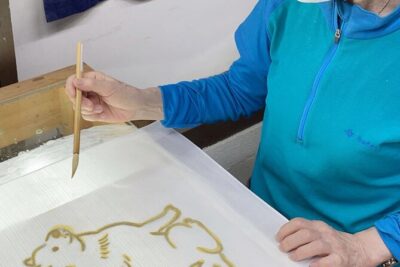
Roketsu dyeing experience: M course Roketsu Dyeing Experience
Read our review →

Traditional Japanese Washi Papermaking- Kyoto morning
Read our review →
Also filed under