
Reviewed · ARTISAN CRAFT WORKSHOPS
Kyoto: Japanese Calligraphy Workshop
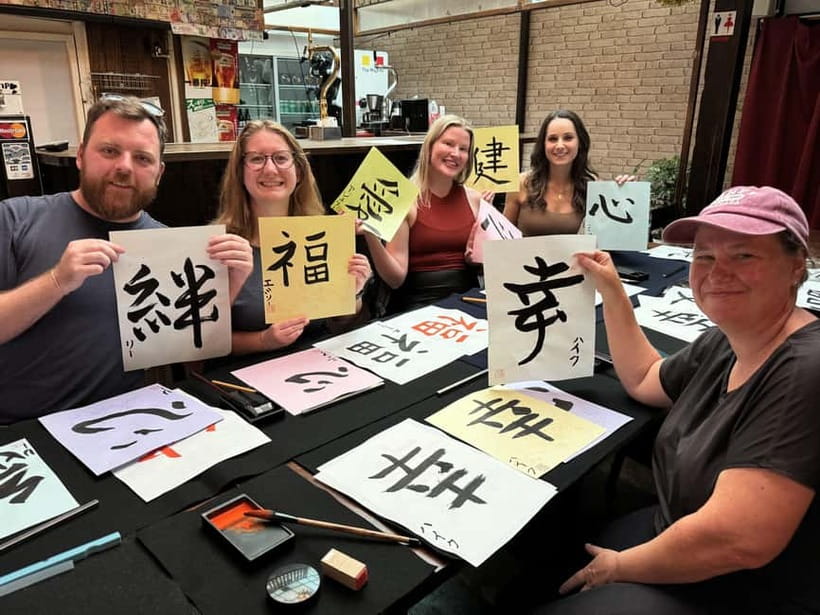
Ink and patience, in Kyoto. This Kyoto Japanese calligraphy workshop teaches SHODO calligraphy with step-by-step guidance, and I like two things most: the structured brush-stroke practice led by instructor Takako and the fact you leave with your own kanji masterpiece on rice paper. One thing to consider, it is a focused, seated workshop, and it is not suitable for kids under 10.
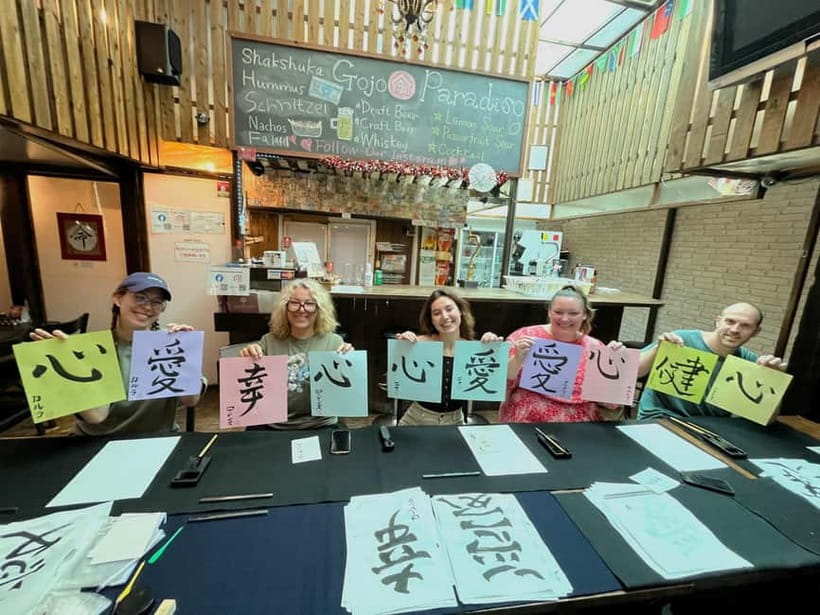
The setting helps. Gojo Paradiso sits along the Takase River near Kiyamachi Street, and it feels calm, not like a rushed “do it and run” stop. With a small group limited to 10 participants, you get real attention while you learn, and you can even get help writing your name in kanji.
Plan for a short commitment, 1 to 2 hours, and come ready to follow a beginner-friendly flow. You will start with an intro to the art, move into strokes and characters, then finish with photos, a gallery moment, and time to place special orders. You also need to reserve at least 1 day ahead.
In This Review
- Key things to know before you go
- SHODO in Kyoto: why the workshop feels more meaningful than a souvenir
- Gojo Paradiso by the Takase River: getting there without stress
- How the lesson flows: from calligraphy history to your first kanji
- Instructor attention in a group of 10: what makes it work
- Your finished keepsake: photos, gallery time, and take-home rice paper
- Price and value: is $32 a good deal in Kyoto?
- Who should book this calligraphy workshop, and who might skip it
- Quick tips so your brush strokes don’t get stressed
- Should you book Kyoto Japanese Calligraphy Workshop at Gojo Paradiso?
- FAQ
- Where is the Kyoto calligraphy workshop meeting point?
- How long does the calligraphy workshop last?
- How much does the workshop cost?
- Do I need to know Japanese or kanji before I go?
- How big is the group?
- Is the workshop suitable for children?
- What is included, and can I take my work home?
- Do I need to reserve in advance?
- Can I book without paying immediately?
Key things to know before you go
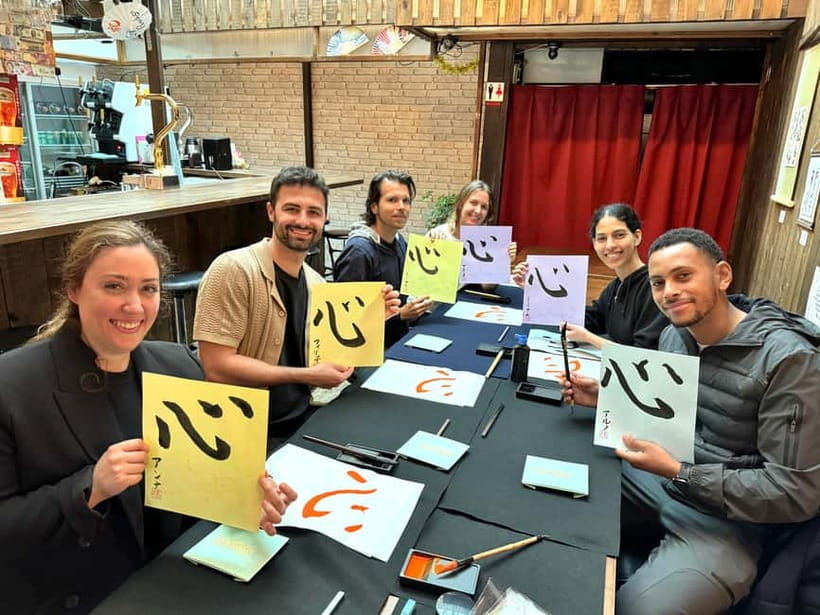
- Small-group SHODO lessons limited to 10, so your questions do not get lost
- English and Japanese instruction, with patient, step-by-step coaching
- Brush-stroke practice first, then you write characters, including your name in kanji
- Take-home calligraphy on rice paper, signed and stamped for keepsake value
- Gojo Paradiso location by the Takase River, easy walking distance from Keihan stations
- Beginner-friendly structure, starting from basics even if you have never touched a brush before
SHODO in Kyoto: why the workshop feels more meaningful than a souvenir
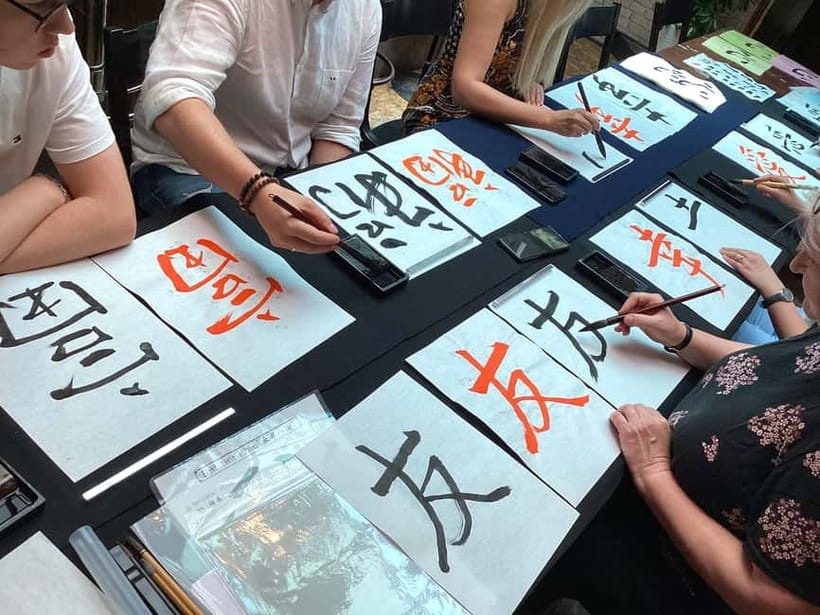
Kyoto has a way of making “culture” feel real, not staged. This calligraphy workshop does that by focusing on the act itself. You are not just watching ink spread. You are learning how the strokes work, how pressure and angle change the result, and how kanji becomes readable when you respect the sequence.
What I like is the balance between tradition and clarity. The class starts with context, then gets practical quickly. That matters because calligraphy can look mysterious from the outside. In a workshop like this, you get the basic mechanics, so your first character does not feel like luck.
You also get an object you can actually use to remember Kyoto. A calligraphy piece on rice paper, finished and stamped, turns into a daily-life reminder, not a “shelf-only” souvenir. If you care about taking home something with personal effort behind it, this is one of the better options in central Kyoto.
Gojo Paradiso by the Takase River: getting there without stress
The meeting point is Gojo Paradiso, on Kiyamachi Street along the Takase River. It is an easy walk from two stations: about a 5-minute stroll from Keihan Kiyomizu Gojo Station and about 10 minutes from Keihan Shichijo Station.
If you like walking in Kyoto, this area is a good bet. You can time your workshop so you arrive a few minutes early, then let the calm of the river-side setting put you in the right mood. If you prefer minimal wandering, just map the route in advance and keep it simple.
The location also helps you fit the class into a day. With a 1 to 2 hour duration, you can slot it between temple visits or after a slower lunch. You are not forced into a whole half-day block.
Make something with a Kyoto craftsman
- Authentic knife making experience at a blacksmith in Kyoto
★ 4.8 · 350 reviews - Kyoto: Calligraphy class at Buddhist temple in city center
★ 5.0 · 167 reviews - Roketsu dyeing experience: M course Roketsu Dyeing Experience
★ 5.0 · 163 reviews - Kyoto: Japanese Calligraphy Class
★ 4.8 · 89 reviews
How the lesson flows: from calligraphy history to your first kanji
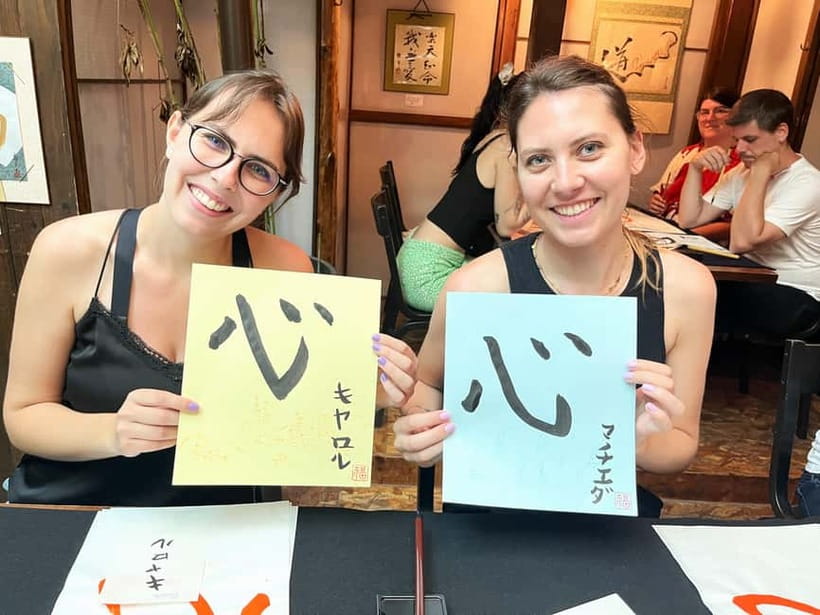
The workshop is built like a skill lesson, not a craft show. You start with a short introduction to Japanese calligraphy, SHODO, including what it means and why it is treated as an art form, not just writing. That intro is useful because it gives your practice a purpose. You are learning technique for a reason.
Then you practice the basics. Expect to work on fundamental brush strokes step by step. In calligraphy, small details matter, so the class focuses on control: how to hold the brush, how to move in clean lines, and how to manage thick and thin parts of each stroke.
After you get a few strokes down, you move to kanji characters. The goal is not perfection. The goal is making something that looks like calligraphy, not random brush marks. With guided instruction, you develop a rhythm and your characters start to look intentional.
A nice touch is that you can write your name in kanji. That is a common highlight in the experience, and it is a great way to make the final piece personal. Even if your name feels intimidating in kanji at first, you get guidance for the characters.
Instructor attention in a group of 10: what makes it work
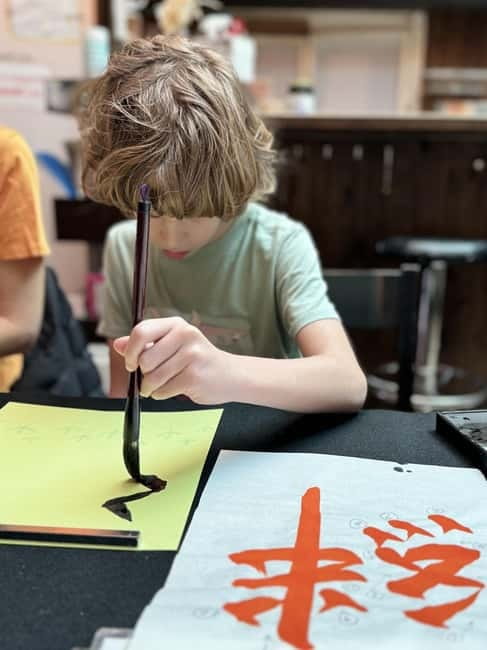
Small group size is not a luxury here. It is part of the learning process. With a maximum of 10 participants, you can get correction in real time when a stroke angle is off or your pressure is inconsistent.
In recent sessions, instructors are described as patient and encouraging, and there are often helpers who support you during exercises. If you want to learn without feeling rushed or embarrassed, this setup is a strong match.
One more practical advantage is language support. The workshop lists instructors in English and Japanese, so you are not left guessing. Even if you understand only a few Japanese words, the step-by-step approach and hands-on guidance do the heavy lifting.
If you are a total beginner, you will still have a path forward. The class is designed to start from basics, then build toward writing characters. You are not expected to already know calligraphy or kanji.
Your finished keepsake: photos, gallery time, and take-home rice paper
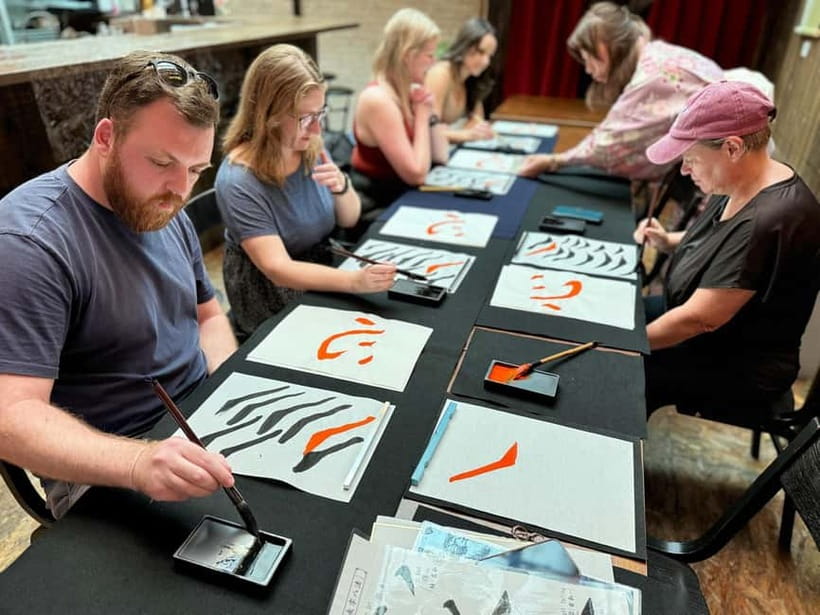
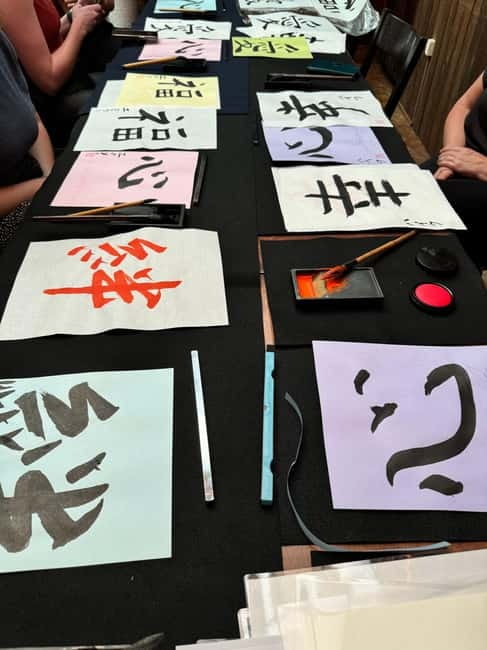
At the end, you get to enjoy what you made. The workshop includes time for photos, plus a gallery moment where you can view and reflect on the calligraphy results around you. That photo time matters more than you might think, because your brain is still processing what you learned and you will want to capture the moment while it feels fresh.
Then comes the best part: taking your work home. You leave with a one-of-a-kind calligraphy masterpiece. The supplies are included, and your final piece is handled as a completed keepsake, not just a trial sheet.
In many classes, your work is signed and stamped. That finishing step adds authenticity and makes the piece feel like art you can frame or keep in a drawer without it losing meaning.
Some sessions also include a small extra gift from the teacher, mentioned as a beautiful handmade calligraphy accented in gold. I would not count on this as a guarantee, but it is the kind of thoughtful extra that has happened in recent classes, and it fits the overall welcoming tone.
There is also mention of special orders at the end. If you want something additional beyond what you make in the class, that is the moment to ask.
Price and value: is $32 a good deal in Kyoto?
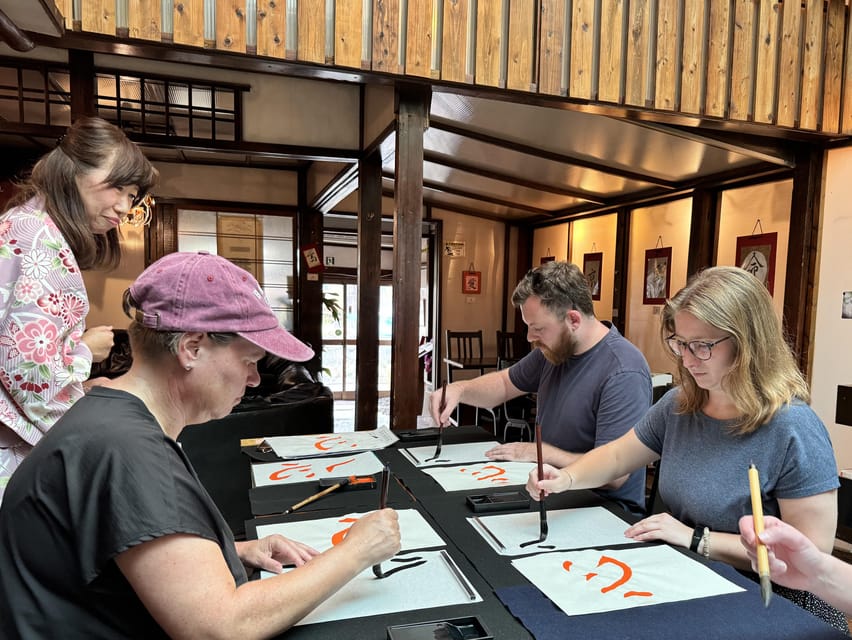
At $32 per person, this workshop lands in the “worth it for what you get” category. Why? Because the price includes the essentials that usually cost extra elsewhere: an expert instructor, all necessary supplies, and a finished take-home result.
Most calligraphy experiences either charge more for personalized attention or they leave you with something that feels unfinished. Here, the structure is designed so you practice, produce characters, and end with a piece you can keep.
The small group size and the time spent with you on exercises also raise the value. You are not just buying entry into a room. You are paying for guidance that turns technique into results.
For couples, solo travelers, and friends traveling together, it is also easy to justify. One class gives you a memorable Kyoto object tied to effort, not just a photographed stop.
A quieter way to spend a day in Kyoto
Who should book this calligraphy workshop, and who might skip it
This workshop is ideal if you want a hands-on cultural activity that is calm and focused. It is a great choice for people who enjoy craft with structure, and for those who like the idea of learning a small skill they can keep practicing later.
You will likely enjoy it if:
- you want something more personal than a typical souvenir
- you enjoy slow, mindful activities with clear steps
- you like having your effort turned into a finished keepsake
You might consider skipping if:
- you expect a lot of walking or sightseeing during the class time
- you want an activity that feels like a live performance rather than a practice lesson
- you are traveling with children under 10, since it is not suitable
Also, because it is 1 to 2 hours and not a full day, it works best as a planned slot in your schedule, not as a spontaneous “maybe we go” idea.
Quick tips so your brush strokes don’t get stressed
- Reserve ahead: reservation is required at least 1 day in advance. Do not leave it to chance.
- Arrive a few minutes early: the location is walkable from Keihan stations, and settling in helps you focus before the first practice stroke.
- Wear comfortable clothes: you will be seated and concentrating, so choose something easy for you to move in.
- Treat it like learning, not testing: calligraphy is technique, and technique improves when you slow down.
- Plan to take photos at the end: photos are part of the flow, so you will get the chance after you finish.
Should you book Kyoto Japanese Calligraphy Workshop at Gojo Paradiso?
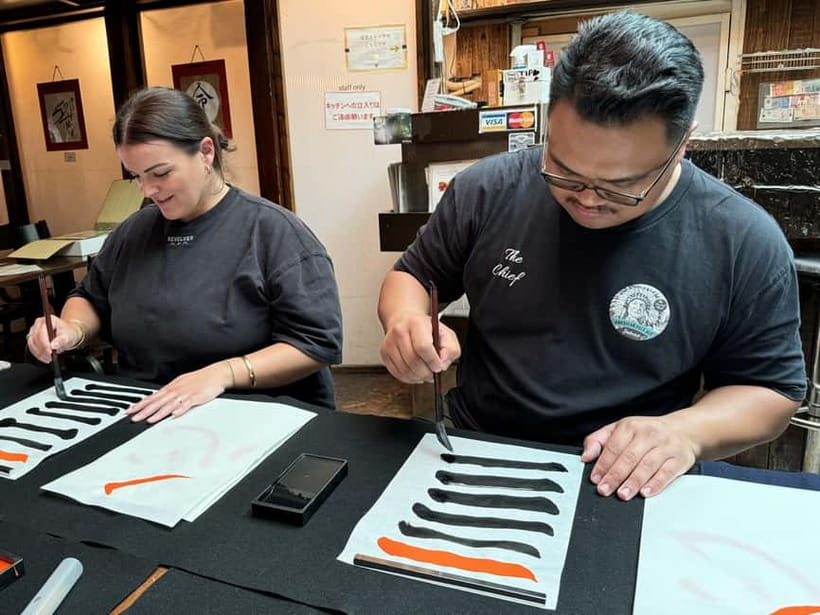
Yes, if you want an authentic Kyoto activity that produces a real keepsake. This is one of those rare workshops where the structure supports beginners, the group size supports attention, and the end result supports pride. The step-by-step SHODO lesson, the ability to write kanji characters and your name in kanji, and the take-home rice paper piece make it feel like more than a ticket.
I would book it if you are in central Kyoto and you want something calm and culture-forward that you can hold in your hands when you leave. If you prefer fast, high-energy sightseeing, then this may feel too quiet. But if you want to slow down for an hour and learn a skill with a beautiful output, it is a very strong pick.
FAQ
Where is the Kyoto calligraphy workshop meeting point?
The meeting point is Gojo Paradiso on Kiyamachi Street, along the Takase River. It is about a 5-minute walk from Keihan Kiyomizu Gojo Station and about a 10-minute walk from Keihan Shichijo Station (listed as 386 meters from Kiyomizu Gojo Station).
How long does the calligraphy workshop last?
The duration is listed as 1 to 2 hours. You can check availability for specific starting times.
How much does the workshop cost?
The price is $32 per person.
Do I need to know Japanese or kanji before I go?
No. The workshop provides step-by-step instruction designed for beginners, and the instructor languages include English and Japanese.
How big is the group?
It is a small group limited to 10 participants.
Is the workshop suitable for children?
No. It is not suitable for children under 10 years old.
What is included, and can I take my work home?
Included items are an expert calligraphy instructor and all necessary supplies. You also get to take home your own unique calligraphy masterpiece.
Do I need to reserve in advance?
Yes. Reservation is required at least 1 day in advance.
Can I book without paying immediately?
Yes. The activity offers Reserve now and pay later, so you can book your spot and pay nothing today, with free cancellation listed up to 24 hours in advance for a full refund.
New This Season
- Koyasan Day Trip by Private Car from Kyoto
- Old Port Town and Ultimate Sake Tasting Private Tour From Kyoto
- Kyoto’s Timeless Charm: 3hr Exploration of History and Peace
- Kyoto: 5 Types of Sushi Making
- Sacred Peak & Ancient Paths: Kurama-Kibune Hiking Experience
- Kyoto: Exclusive ZEN practice at Manpukuji temple in Uji
- Kyoto: Private Seasonal Aroma Yoga Class
- Traversing Kyoto’s Scenic West – Arashiyama to Kinkakuji
Artisan Craft Workshops, compared.

Authentic knife making experience at a blacksmith in Kyoto
Read our review →
Calligraphy class at Buddhist temple in city center
Read our review →
Roketsu dyeing experience: M course Roketsu Dyeing Experience
Read our review →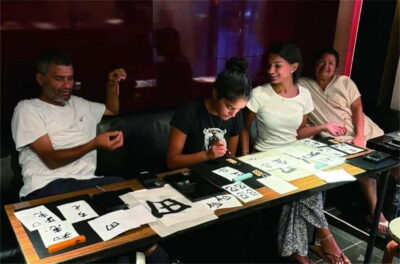

Traditional Japanese Washi Papermaking- Kyoto morning
Read our review →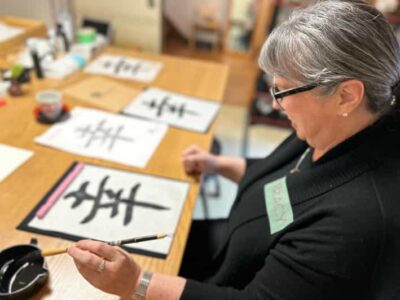
Also filed under