
Reviewed · ARTISAN CRAFT WORKSHOPS
Kyoto: Japanese Calligraphy Class
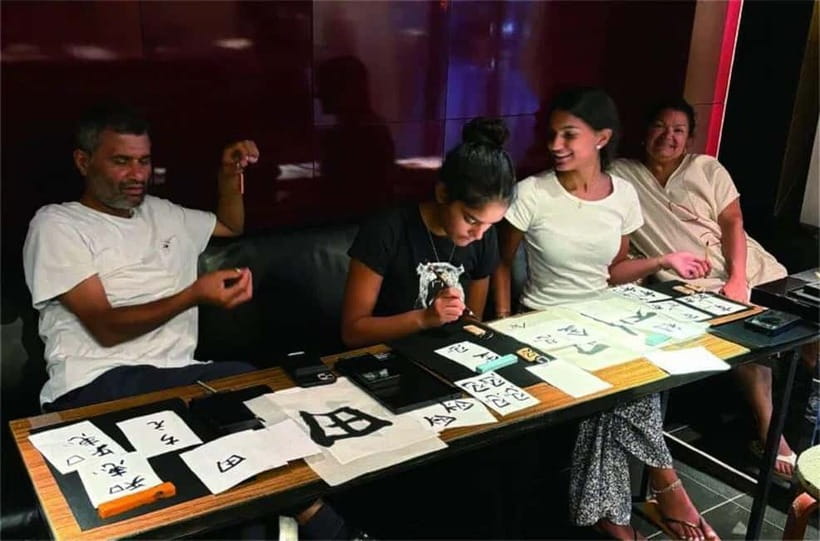
One look at a brush stroke and you get it. This Kyoto calligraphy class turns Kanji from something intimidating into something you can actually make, in just one hour. I like that you get step-by-step help on brush control and ink, plus a clear path from basic characters to your own name and a favorite word. I also like that you leave with real keepsakes, not just a photo. One drawback to flag: you are working with ink and brush technique, so the end result won’t look identical to a master calligrapher, even with guidance.
If you want a calmer Kyoto moment, this is it. You practice at your own pace, and the teaching focus is on getting the strokes right, with English instruction throughout. That makes it a strong choice even if you know almost nothing about Japanese writing. Still, it’s not ideal for very small kids, since it is not suitable for children under 5.
In This Review
- Key Points Before You Go
- Why This Kyoto Calligraphy Class Works in Real Life
- Where You Meet, and How Easy It Is to Fit This In
- Inside the 1-Hour Plan: From Brush Basics to Your Own Kanji
- Step 1: Brush and ink primer
- Step 2: Write basic characters, then take home a Kanji scroll
- Step 3: Your name in Kanji, plus a favorite word
- Step 4: Make extra souvenirs to take home
- Your Name in Kanji: Why This Part Feels So Rewarding
- English Instruction That Keeps You Moving, Not Guessing
- Supplies and What You Actually Get to Use
- Small Group or Private: Who This Class Suits Best
- Price and Value: Is $51 Worth It?
- The One Thing to Watch For Before You Book
- Timing Tips: Best Time of Day in Kyoto
- Should You Book This Kyoto Calligraphy Class?
- FAQ
- Where is the meeting point for the calligraphy class?
- How long is the Japanese calligraphy class?
- Is instruction available in English?
- What supplies are included?
- What can I take home from the class?
- Is this class private or in a small group?
- Is the class suitable for young children?
- Can I reserve now and pay later?
Key Points Before You Go
- In front of Kyoto Station: easy to find, even if your Kyoto days are a bit chaotic.
- English instruction included: you are not stuck guessing what to do with your brush.
- You write more than one thing: basic characters first, then your name and a favorite word in Kanji.
- Take-home souvenirs: you create your own artwork, plus extra items like a fan or picture-frame style craft depending on the option.
- Short and focused at 1 hour: enough time to feel progress without losing half a day.
Why This Kyoto Calligraphy Class Works in Real Life
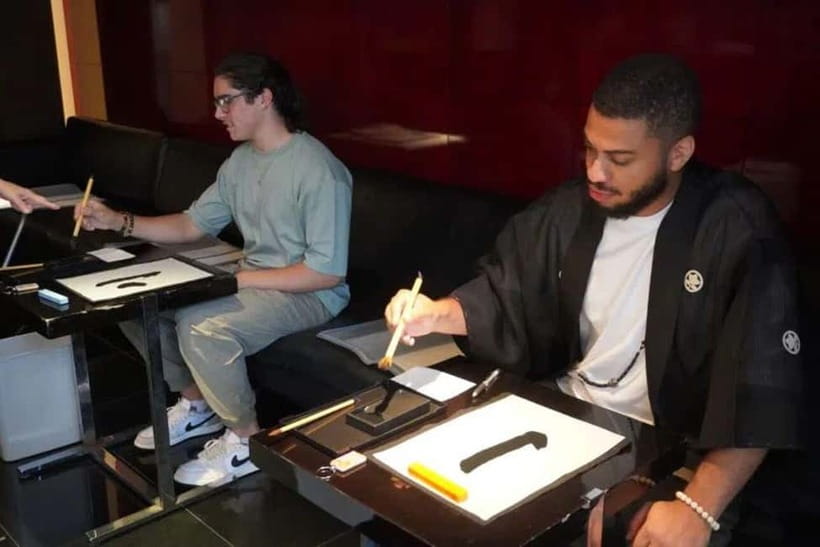
Kyoto can feel like a nonstop show. Temples, crowds, lines, and more lines. This class is different because it slows your hands down and teaches you something tactile. The spot being in front of Kyoto Station matters too, because you do not have to build an entire transit plan around it.
You get a structured flow: start with tools, learn how ink behaves on paper, practice basic characters, then move to your own writing. I like this progression because it prevents that common beginner trap where you jump straight to names and favorite words without a foundation.
Another win is that you are not treated like a nuisance because you are new. The class is set up so instruction adjusts to your pace, and support is very hands-on. In past sessions, instructors like Rena, Lana, Waka, and Kou have been praised for being patient and warm while still giving clear corrections. Even if your Kanji looks imperfect at first, you get the steps to improve it.
Where You Meet, and How Easy It Is to Fit This In
The meeting point is in front of Kyoto station. That is a big deal if your Kyoto itinerary already has you near the station for trains, buses, or airport transfers. It also makes it easier to tack the class onto the end of an afternoon without stress.
That said, the exact meeting point may vary depending on the option booked. So before you go, double-check the details tied to your specific booking. (Kyoto has multiple entrances, and “near the station” can still mean a walk.)
The class runs for about 1 hour. It can vary slightly depending on how quickly you finish the activities, so plan for a little breathing room in your schedule.
Make something with a Kyoto craftsman
- Authentic knife making experience at a blacksmith in Kyoto
★ 4.8 · 350 reviews - Kyoto: Calligraphy class at Buddhist temple in city center
★ 5.0 · 167 reviews - Roketsu dyeing experience: M course Roketsu Dyeing Experience
★ 5.0 · 163 reviews - Kyoto: Japanese Calligraphy Workshop
★ 4.7 · 84 reviews
Inside the 1-Hour Plan: From Brush Basics to Your Own Kanji
Here is the practical rundown of what happens during the session.
Step 1: Brush and ink primer
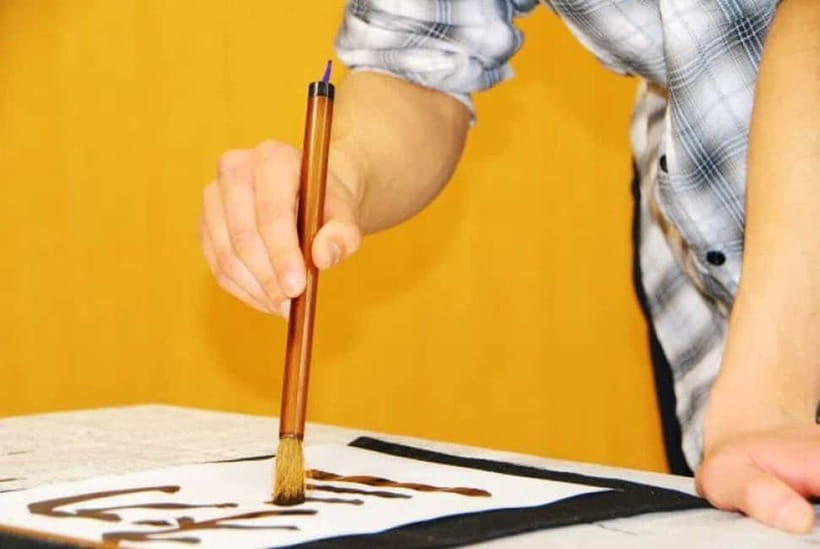
You start with a short lecture on how to use a brush and apply ink. This is not just filler. Brush calligraphy depends on pressure, angle, and how you lift and re-apply ink. If you skip this, you get frustrated fast because the marks look blotchy or uneven.
The instruction also helps you understand what the strokes are supposed to do. Once you know the “why,” the writing becomes more like repeating patterns than random squiggles.
Step 2: Write basic characters, then take home a Kanji scroll
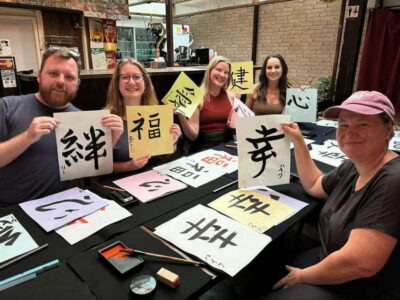
Next comes practice writing basic characters. The class gives you the chance to make a scroll with the Kanji characters you write. That scroll is usually your first real “I made this” moment because it turns practice into an object you can keep.
This part is especially good if you like structure. You learn, repeat, and then produce something concrete.
Step 3: Your name in Kanji, plus a favorite word
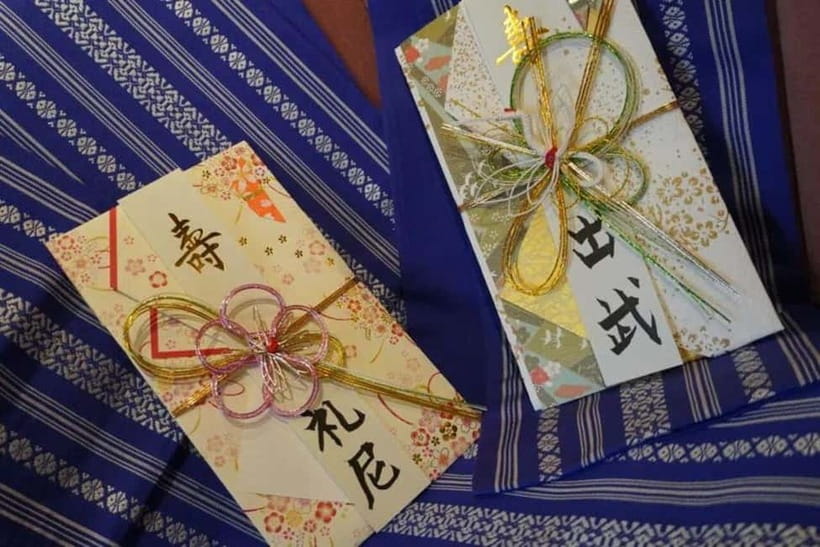
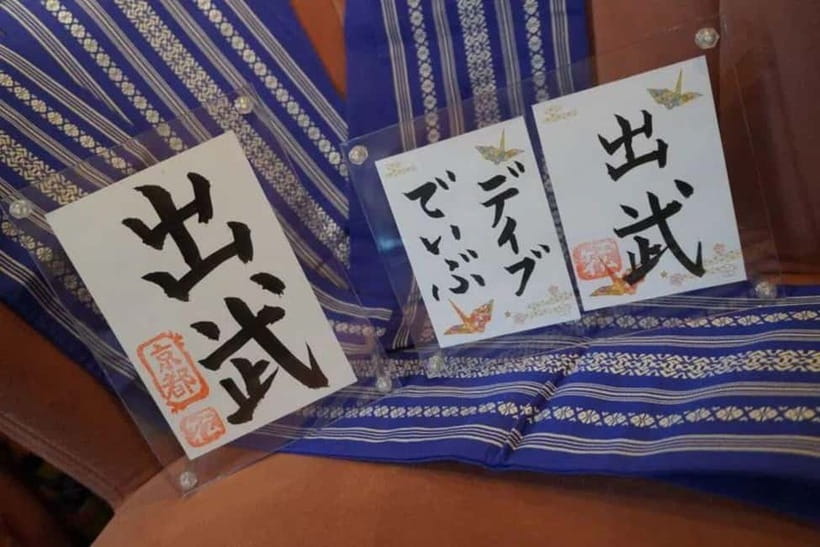
After the basics, you shift to something more personal. You write your own name and your favorite word using Kanji characters and alphabets.
Importantly, the staff helps with possible Kanji choices and their meanings. For example, the class may use name-character mappings like:
- Brian → 武礼安 (with notes such as 武 for martial or bravery, 礼 for politeness or gratitude, 安 for peace)
- Liz → 梨図 (梨 for pear, 図 for painting)
You do not have to memorize Kanji. The support is there so you can focus on writing clearly and confidently.
A quieter way to spend a day in Kyoto
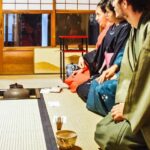
Step 4: Make extra souvenirs to take home
Finally, you make your own souvenirs and take them home. The class includes supplies like brush, ink, and washi-paper, and it often includes additional take-home items such as a Japanese fan, picture frame, or other small craft pieces depending on what the session covers.
This is where the class becomes more than a lesson. You leave with tangible reminders that actually fit into real life back home, like a fan you might display or a frame that can travel with you.
Your Name in Kanji: Why This Part Feels So Rewarding
Writing your own name in Kanji is the big emotional payoff. It turns calligraphy from an art demo into something personal. And because the staff talks through meanings and options, it is not just “pick random characters that look cool.”
This matters because Kanji is loaded with meaning. Even when you are writing a name phonetically or selecting characters for a vibe, you are still working with characters that have associations. That is why the instructors spend time helping you choose possible characters and understand what they mean.
If you are traveling solo, this is the part that gives you an identity moment. If you are traveling with friends or family, it becomes a shared activity where everyone gets something different, not the same generic souvenir.
English Instruction That Keeps You Moving, Not Guessing
One of the best value pieces here is that English instruction is included. Calligraphy classes can be intimidating if they assume you already know how Japanese writing works. Here, the instruction is designed to explain both the mechanics and the cultural context in a way you can follow.
You will see how the strokes connect to meaning and style. And because guidance is hands-on, you can fix errors as they happen. That is key. If corrections wait until the end, beginners often lock in bad habits. With immediate help, you get better faster.
In reviews of the experience, instructors including Rena, Lana, Waka, Yoshia Kobayashi, and Kou have been described as patient and encouraging, with 1:1 style support for getting strokes right. You should expect that kind of supportive feedback. That is a huge reason people come away feeling proud rather than embarrassed.
Supplies and What You Actually Get to Use
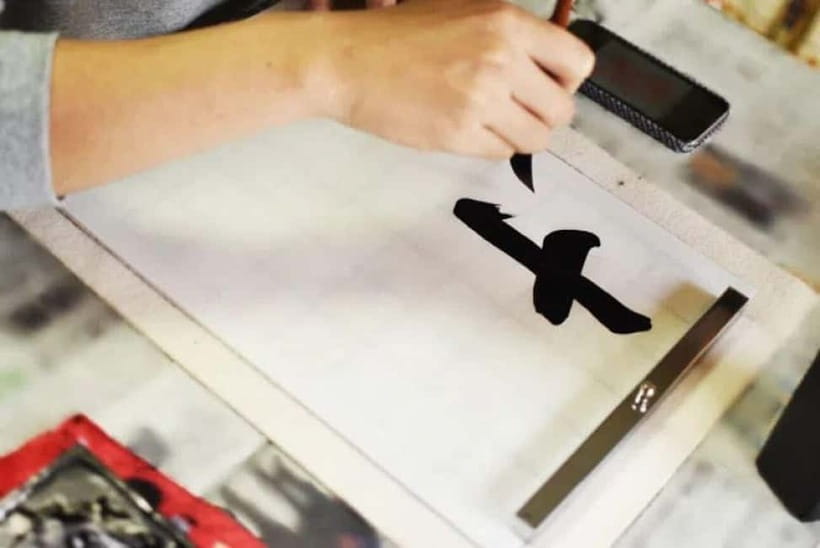
The class provides the materials you need:
- Brushes
- Ink
- Washi-paper
That means you do not need to bring anything except yourself. For a short, 1-hour activity, this matters. You avoid the “I bought art supplies but never used them again” problem.
Beyond that, the class also includes some take-home items and souvenir options (like a Japanese fan or picture-frame style craft). People often come out with a mix of written pieces and small craft items, which makes the purchase feel less like paying for one sheet of paper.
One practical tip: keep your souvenirs flat on the ride home. Paper and delicate craft pieces travel better when you treat them gently.
Small Group or Private: Who This Class Suits Best
This class offers private or small groups. That is useful because calligraphy works best when you can see what the instructor is correcting. A smaller setting also helps you ask questions without feeling rushed.
Who it fits well:
- Couples who want a shared activity that is not just another photo stop
- Solo travelers who want something meaningful, low pressure, and easy to attend near transit
- Families with kids old enough for the activity (the class is not suitable for children under 5)
If you are on a tight schedule, the 1-hour time window helps. If you want a “Kyoto pause” between heavier sightseeing days, this is also a good reset button.
If you hate structured activities, you might find that the sequence from basics to personal writing feels a bit guided. Still, the pace is meant to be comfortable, not rigid.
Price and Value: Is $51 Worth It?
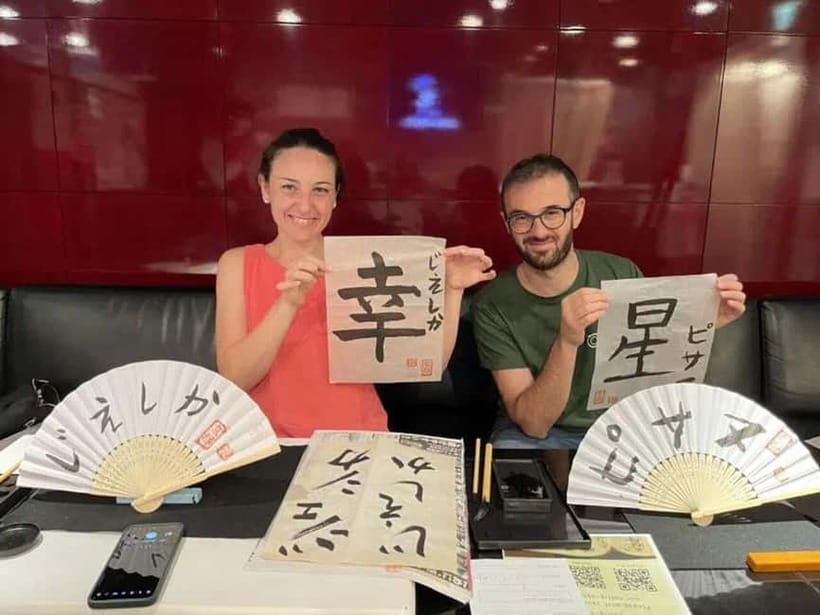
At $51 per person for about 1 hour, the price feels fair for three reasons.
First, you get real instruction in English, not a generic “try this and good luck” setup. That teaching time is the main cost.
Second, you are not paying for the lesson only. You get materials like brushes, ink, and washi-paper, plus take-home items such as a scroll and additional souvenirs depending on the option.
Third, the class gives you something you can use immediately as a memory. A finished piece is more satisfying than a sticker, and it is more personal than buying a mass-produced postcard.
If you compare this to other short craft workshops in Japan that may charge similar amounts but do not always include language support or take-home writing, the value here looks strong.
The One Thing to Watch For Before You Book
Ink and brush technique can be messy if you are careless, and calligraphy can be humbling if you expect perfection. Even with great teaching, your first draft will look like a first draft.
If that stresses you out, treat the goal as learning and creating a keepsake you can be proud of, not producing a masterpiece on demand. The class is set up to help you improve while you go, but it is still beginner-friendly practice, not a performance.
Also, be sure to plan for a short active session. You will be writing for most of the hour, so wear comfortable clothes you do not mind getting close to ink.
Timing Tips: Best Time of Day in Kyoto
You can slot this class into almost any day because the location is near Kyoto station and the duration is about 1 hour. But to make it work best, think about your sightseeing rhythm.
If your day is temple-heavy and crowded, this is a great break activity. Calligraphy offers a calmer contrast, and it helps you slow down and reset.
If you are already tired from walking, schedule it at a time when you can sit comfortably and focus. A short class is only relaxing if you are not rushed to catch your next train five minutes later.
Should You Book This Kyoto Calligraphy Class?
Yes, if you want a real skill you can take home, not just a quick cultural stop.
Book it if:
- You want English instruction and beginner-friendly guidance
- You like personal souvenirs, especially a scroll with your own writing
- You value a short class that still feels meaningful
- You like structured lessons, from basics to your name and favorite word
Skip it if:
- You only want to look, not participate, because this is hands-on writing
- You are traveling with very young kids, since it is not suitable for children under 5
- You cannot tolerate any mess or you hate the idea of practicing a skill imperfectly
If you like the idea of learning strokes, creating a Kanji scroll, and leaving Kyoto with something crafted by your own hand, this class is a smart use of your time.
FAQ
Where is the meeting point for the calligraphy class?
The location is in front of Kyoto station, though the meeting point can vary depending on the option you book.
How long is the Japanese calligraphy class?
The class duration is about 1 hour, and it may vary slightly depending on how the activities go.
Is instruction available in English?
Yes, the instructor provides English instruction.
What supplies are included?
You get use of brushes, ink, and washi-paper.
What can I take home from the class?
You can take home the products you create, including a scroll of the Kanji characters you write. Some sessions also include souvenir items such as a Japanese fan or other craft-like pieces (the exact items can vary).
Is this class private or in a small group?
Private or small groups are available.
Is the class suitable for young children?
It is not suitable for children under 5 years old.
Can I reserve now and pay later?
Yes, you can reserve now and pay later to keep your travel plans flexible.
New This Season
- Koyasan Day Trip by Private Car from Kyoto
- Old Port Town and Ultimate Sake Tasting Private Tour From Kyoto
- Kyoto’s Timeless Charm: 3hr Exploration of History and Peace
- Kyoto: 5 Types of Sushi Making
- Sacred Peak & Ancient Paths: Kurama-Kibune Hiking Experience
- Kyoto: Exclusive ZEN practice at Manpukuji temple in Uji
- Kyoto: Private Seasonal Aroma Yoga Class
- Traversing Kyoto’s Scenic West – Arashiyama to Kinkakuji
Artisan Craft Workshops, compared.
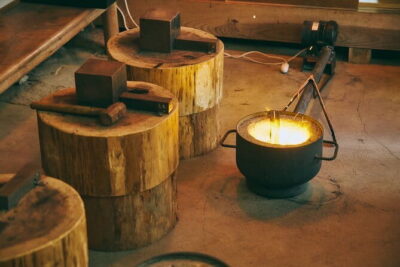
Authentic knife making experience at a blacksmith in Kyoto
Read our review →
Calligraphy class at Buddhist temple in city center
Read our review →
Roketsu dyeing experience: M course Roketsu Dyeing Experience
Read our review →
Traditional Japanese Washi Papermaking- Kyoto morning
Read our review →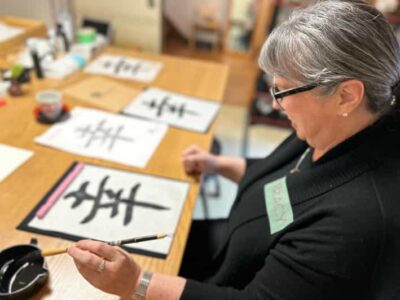
Also filed under