
Reviewed · ARTISAN CRAFT WORKSHOPS
Kyoto: Local Home Visit and Japanese Calligraphy Class
If you love hands-on art, this one is for you. You practice Japanese calligraphy on real paper, guided by an instructor who teaches the stroke-by-stroke logic behind great kanji.
I like that it is set in a local home near Nijo Castle, so it feels personal, not like a classroom you rush through. I also love that you leave with a finished piece you actually wrote, not just a demo to photograph.
The main consideration is time. It is a 1 hour lesson, so you will learn the basics and create something beautiful, but you should not expect mastery in a single session, especially if you arrive late.
In This Review
- Key points before you go
- Kyoto kanji, taught by a real calligrapher in a real home
- Meeting point near Nijo Castle, and how to find the right door
- What the first minutes feel like once you walk in
- The calligraphy basics you actually need in a one hour class
- Choosing your kanji, then adding your name in Japanese
- Materials, tools, and what makes the paper matter (washi)
- Creating your souvenir: taking home a piece you wrote
- The best kind of traveler for this class
- Timing and rules that keep the lesson running smoothly
- Language support: English and Japanese, with real back-and-forth
- Why the private home setting near Nijo Castle adds real value
- Price and what you are really paying for at about $66 per person
- Should you book this Kyoto calligraphy class?
- FAQ
- What is the duration of the Kyoto calligraphy class?
- What is included in the price?
- What should I bring with me?
- Are shoes allowed inside the home?
- Is there language support for non-Japanese speakers?
- What happens if I arrive late?
- Is this class suitable for children?
Key points before you go
- Brush control, not guesswork: You learn the correct movements for kanji, then apply them right away.
- A private home visit feel: The setting gives you a calmer, more human look at Kyoto life near Nijo Castle.
- Pick a kanji that means something: You choose a character that resonates, then add your name in Japanese for extra personal value.
- You get the full making kit: Tools, ink, and washi paper are provided, so you can focus on the strokes.
- Your finished artwork becomes your souvenir: You bring your piece home to display, with the satisfaction of having done it yourself.
Kyoto kanji, taught by a real calligrapher in a real home
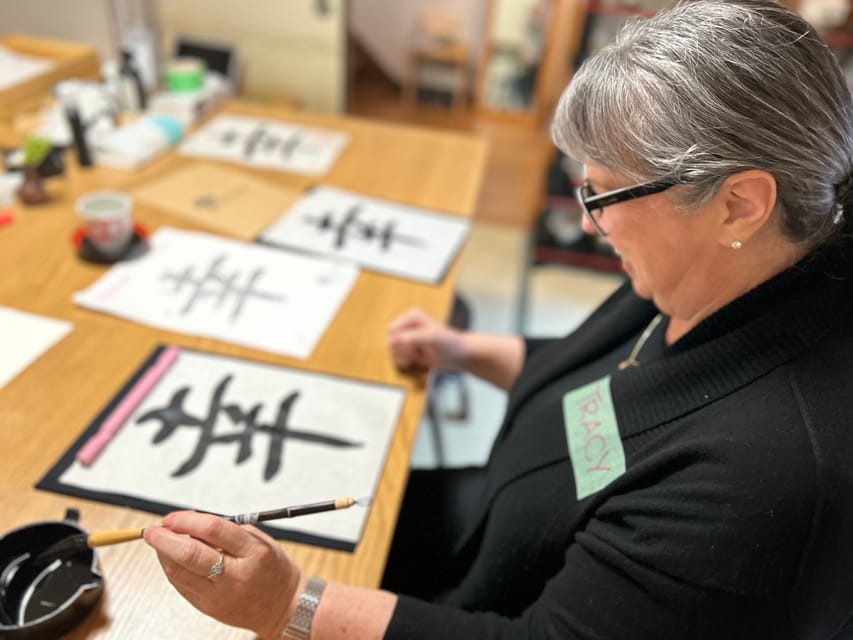
Kyoto has plenty of ways to learn culture, but this one feels especially grounded because you are not only watching. You are actively shaping ink into kanji, stroke by stroke, in a home setting run by people living close to the sights.
The location is practical too. You meet about 200 meters west of Nijo Castle, on the north side of Ebisugawa Street just west of Nishinotoin Street. If you are using a map, enter the venue name rather than relying on the street address, because Kyoto has multiple places with similar names.
I like the pacing. In an hour, the lesson stays focused on what matters most for beginners: starting position, brush angle, stroke order, and how to control thickness and flow.
Meeting point near Nijo Castle, and how to find the right door
This experience has a very specific meeting area, and it is worth taking seriously. The class is near Nijo Castle, a UNESCO World Heritage Site, but the exact spot is tight enough that the wrong address can cost you time.
Use the venue name in your map app, because there are multiple addresses in Kyoto with the same name. If you are taking a taxi, give the driver the phone number so you are not playing phone tag with the wrong gate.
Once you are close, orient yourself like this: the meeting point is on the north side of Ebisugawa Street, just west of Nishinotoin Street. Across the street to the south, you will see the Lions Mansion building, which makes a useful landmark.
Make something with a Kyoto craftsman
- Authentic knife making experience at a blacksmith in Kyoto
★ 4.8 · 350 reviews - Kyoto: Calligraphy class at Buddhist temple in city center
★ 5.0 · 167 reviews - Roketsu dyeing experience: M course Roketsu Dyeing Experience
★ 5.0 · 163 reviews - Kyoto: Japanese Calligraphy Class
★ 4.8 · 89 reviews
What the first minutes feel like once you walk in
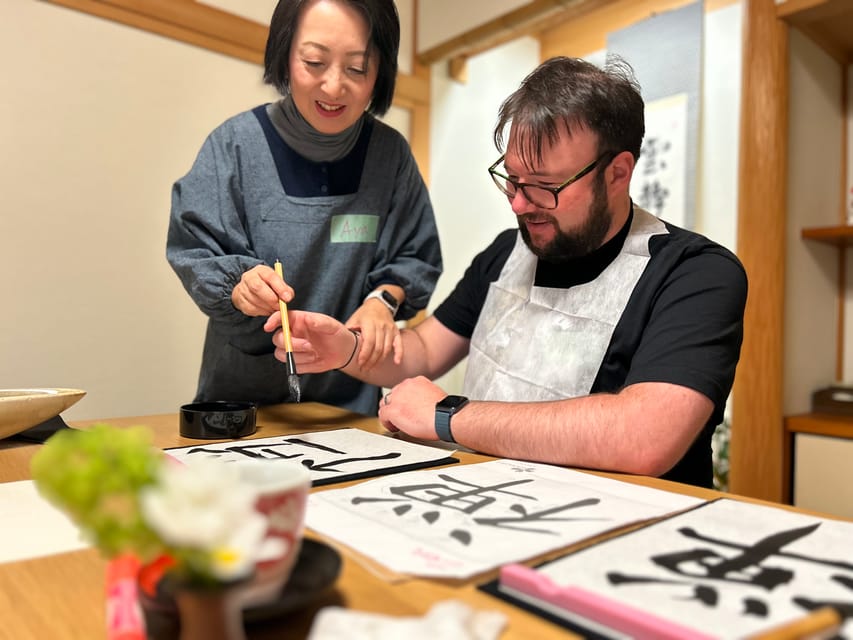
You start with a friendly orientation and instructions in English and Japanese, depending on what fits your group. Because this is a private group, the teacher can slow down or repeat key parts without rushing you along.
You will also deal with the indoors rules right away. Shoes are not allowed indoors, and bare feet are not acceptable. That means you need clean socks, and it is a good idea to bring socks rather than assuming you can borrow them.
The overall vibe is calm and practical. The teaching style is patient, and the focus is on getting your brush movements correct, not on performance or speed.
The calligraphy basics you actually need in a one hour class
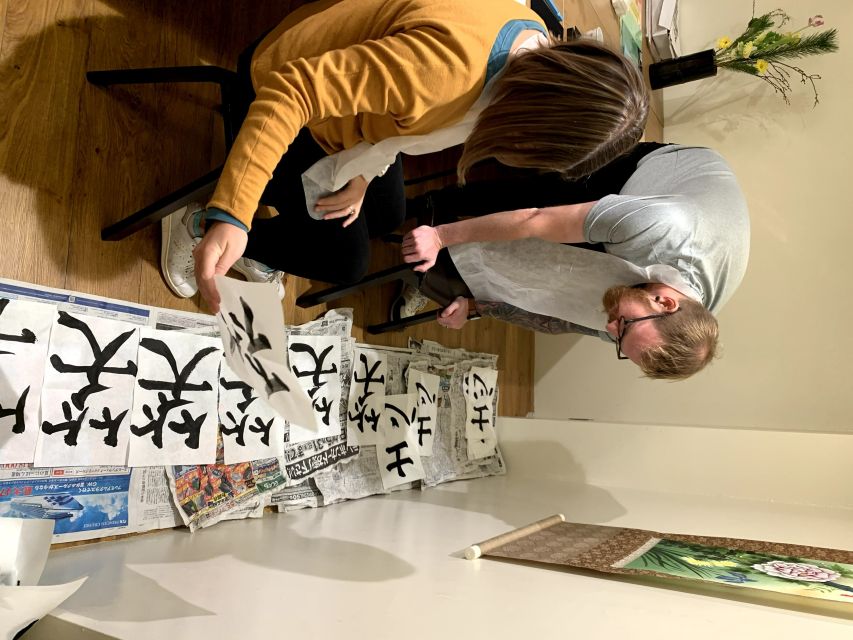
Japanese calligraphy can look mysterious from a distance. Up close, it is really about mechanics and consistency: how you start, how you pull, how you finish the stroke, and how pressure affects what you see on the paper.
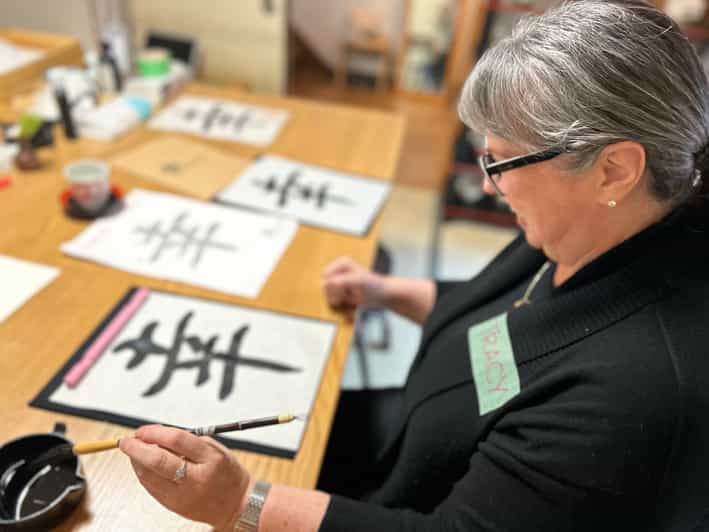
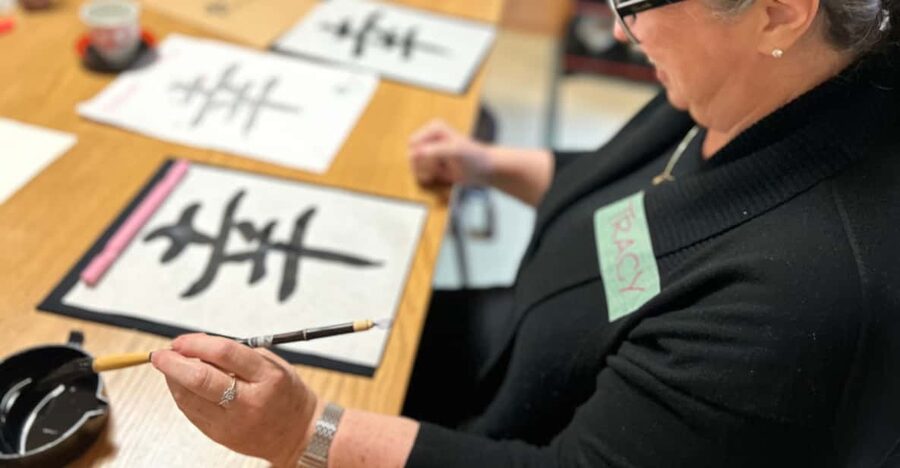
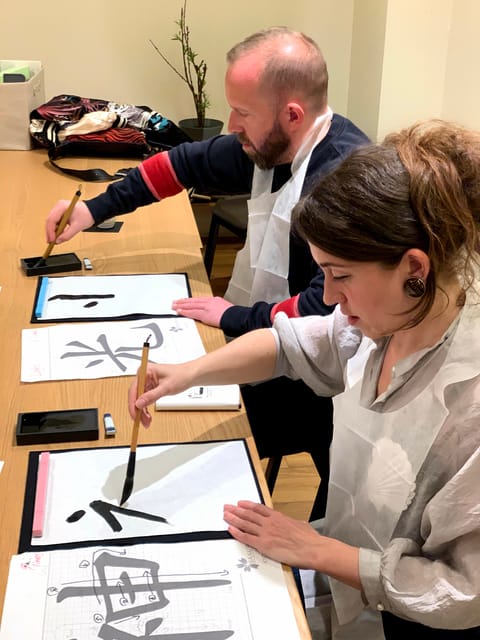
In your session, you learn the correct brush movements for kanji. That means you practice the stroke shapes and the order, so you do not just copy a character as a picture. You learn how the character is constructed, and why certain strokes look right only when the timing and direction are right.
This is also where mindfulness becomes practical. When you concentrate on controlling the brush, you naturally slow down. People often describe this as relaxing, and with good reason, because your attention has nowhere to go except the line in front of you.
Choosing your kanji, then adding your name in Japanese
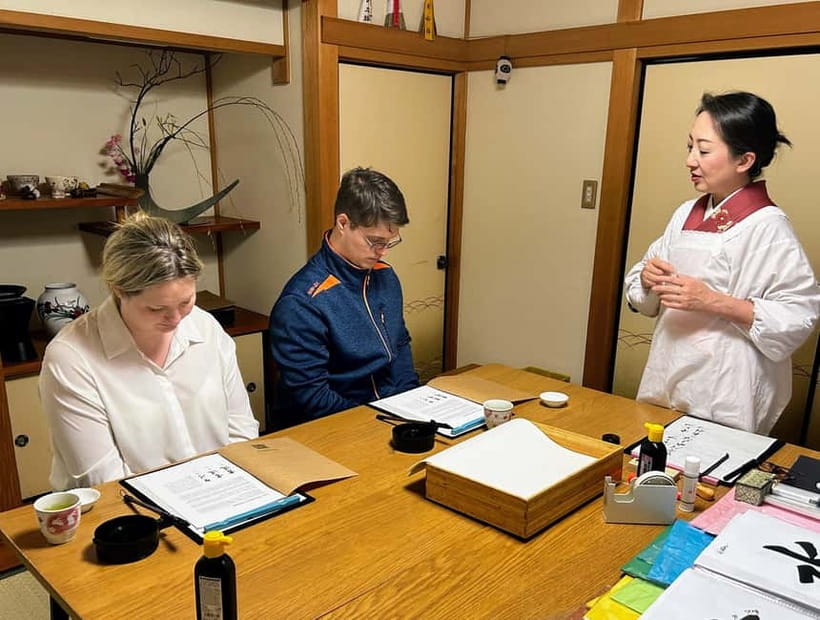
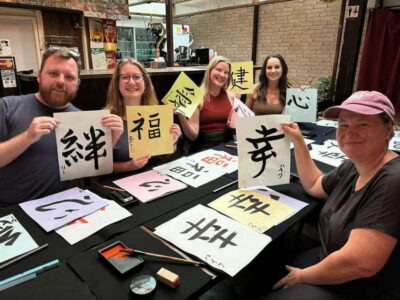
Instead of forcing a random word, you pick a kanji that connects to you. The character you choose can represent something meaningful to your life, like themes such as love, peace, strength, or wisdom.
Then you personalize your work by adding your name in Japanese. That detail is small, but it changes the whole feeling of the piece. It becomes something you made for yourself, not just something you completed.
You also get support while you write. The instructor and assistant can guide your grip and point out where a stroke needs to be adjusted. The result is that your character stays close to what it should look like, even if you are a first-timer.
Materials, tools, and what makes the paper matter (washi)
You are not stuck hunting for supplies. Your lesson includes the calligraphy tools rental, ink, and Japanese paper, washi.
Washi matters because it changes how ink behaves. Beginners often notice that the brush response feels different from typical pens or markers, so you learn to adapt your motion to what the paper allows. That is part of the fun: your strokes get a look that feels distinctly Japanese, because the materials are doing some of the work.
The included tools also make the class more efficient. You do not spend your time trying to figure out what to use. You can jump straight into stroke practice and then apply it to your chosen character.
A quieter way to spend a day in Kyoto
Creating your souvenir: taking home a piece you wrote
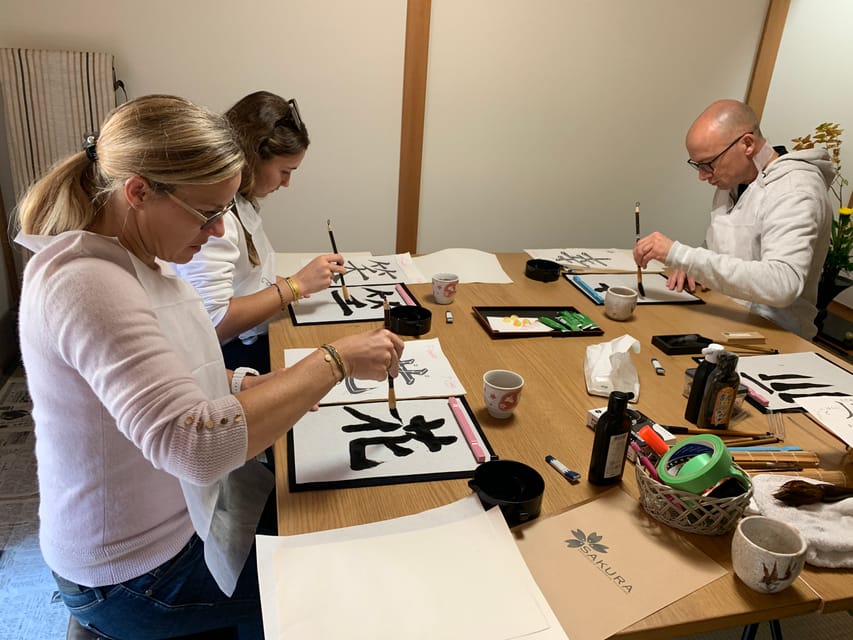
One of the best parts is the souvenir value. You leave with the calligraphy art you created, and it is made from a character you selected and practiced during the class.
That is more satisfying than getting a finished artwork made for you, because you can remember the exact moment the stroke finally looks right. When you display it later, you are not just hanging décor. You are showing a skill you picked up in Kyoto, with your own handwriting.
If you want photos, plan on taking them after a quick check by your instructor. They can help you make sure your strokes are how you intended, and that is when your finished page becomes truly worthy of showing off.
The best kind of traveler for this class
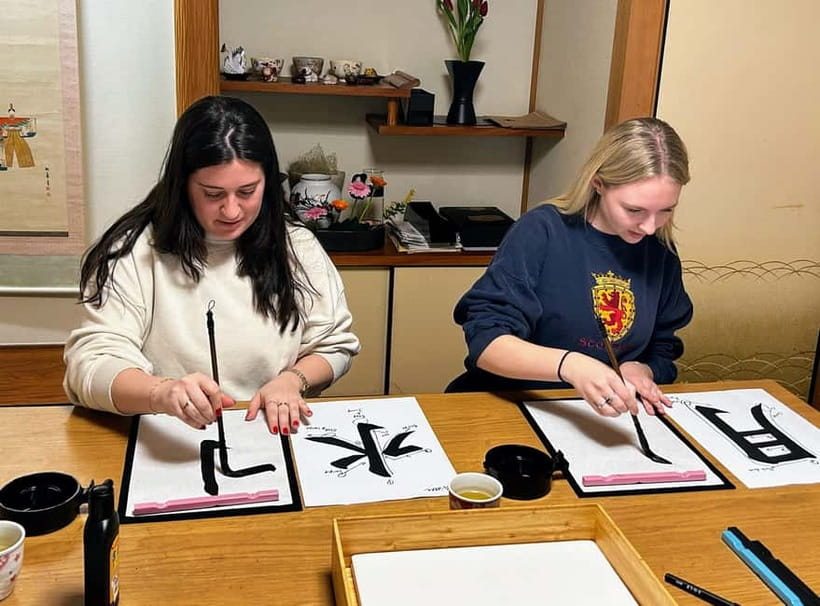
This is a great match if you want a hands-on cultural activity without needing prior experience. You do not need to know kanji before you arrive, because the class is designed around learning how strokes work.
It is also a strong fit if you like smaller, calmer experiences. The private group format means less waiting, more attention, and a better chance to ask questions as you go.
On the other hand, it is not suitable for children under 13. It is also not a good choice if you are expecting a rapid, dramatic transformation into an expert calligrapher. You are learning fundamentals and producing a beautiful finished piece, and that is the win.
Timing and rules that keep the lesson running smoothly
Timing is one of the few things that can affect your experience. Arrive about 5 minutes before the start time. There is no waiting space if you show up too early, so aim for on time rather than overly early.
If you arrive late by more than 15 minutes, the class may not run. Your lesson time can also be shortened if you are late, which matters because the session depends on practicing strokes and finishing your artwork.
Indoors etiquette is strict enough that it is worth reading carefully. No smoking, no vaping, no alcohol and drugs. Strong fragrances are not allowed, and you cannot wear shoes indoors. Bare feet are also not acceptable, so socks are not a “maybe” item.
Language support: English and Japanese, with real back-and-forth
This class runs with an instructor who speaks English and Japanese. That gives you a smoother path to understanding stroke explanations, even if your Japanese is limited.
The teaching approach is hands-on, and it helps when questions come up. You are not left guessing about why a stroke looks off. You get guidance as you practice, which is why people often leave feeling proud of their final kanji.
Why the private home setting near Nijo Castle adds real value
A calligraphy class could happen anywhere. What makes this one feel different is the home visit element near Nijo Castle and the chance to interact in a personal way.
Even when you are focused on your own writing, the setting changes your mindset. You are not surrounded by tour-group bustle, and that matters because calligraphy already asks you to slow down and focus.
You also get a little extra Kyoto context through conversation. In addition to instruction, the host may share recommendations around the area for temples and places to see, which is useful because you are already in a prime sightseeing zone.
Price and what you are really paying for at about $66 per person
At about $66 per person for a 1 hour session, you are paying for three things that matter more than raw cost.
First, you are paying for private attention. Private format usually means you are not competing with a large group for the instructor’s eye on your strokes.
Second, you are paying for materials. Tools rental, ink, and washi paper are included, so you are not doing last-minute shopping.
Third, you are paying for the teacher’s expertise. Learning correct brush movements takes real practice, and an instructor can save you from weeks of trial and error in a single lesson.
If you value experience over souvenirs made for you, the price feels fair. If you mainly want a quick photo stop, you may find it less aligned with your style, since this is a working class and you should treat it like that.
Should you book this Kyoto calligraphy class?
Book it if you want a hands-on Kyoto activity that ends with something you made with your own brush. I would also book it if you like learning in a calm setting near Nijo Castle, because the location and home atmosphere make the hour feel special without being overcomplicated.
Skip it if you cannot follow the basic rules, especially the socks requirement and the no-shoes indoor policy. Also skip it if your schedule is uncertain, because arriving late can shorten your lesson, and late by more than 15 minutes can prevent the class from running.
If you fall into the right category, this is a smart way to spend an hour in Kyoto: you learn stroke basics, choose a meaningful kanji, add your name in Japanese, and take home an actual piece of your time in Japan.
FAQ
What is the duration of the Kyoto calligraphy class?
The class is 1 hour long.
What is included in the price?
You get instructions and explanations, calligraphy tools rental, ink, and Japanese paper (washi).
What should I bring with me?
Bring socks. Bare feet are not acceptable, and shoes are not allowed indoors.
Are shoes allowed inside the home?
No. Shoes are not allowed indoors.
Is there language support for non-Japanese speakers?
Yes. The instructor speaks English and Japanese.
What happens if I arrive late?
Please arrive 5 minutes before the start time. If you are late by more than 15 minutes, the class cannot be offered, and if you are late your lesson time may be shortened.
Is this class suitable for children?
No. It is not suitable for children under 13.
New This Season
- Koyasan Day Trip by Private Car from Kyoto
- Old Port Town and Ultimate Sake Tasting Private Tour From Kyoto
- Kyoto’s Timeless Charm: 3hr Exploration of History and Peace
- Kyoto: 5 Types of Sushi Making
- Sacred Peak & Ancient Paths: Kurama-Kibune Hiking Experience
- Kyoto: Exclusive ZEN practice at Manpukuji temple in Uji
- Kyoto: Private Seasonal Aroma Yoga Class
- Traversing Kyoto’s Scenic West – Arashiyama to Kinkakuji
Artisan Craft Workshops, compared.
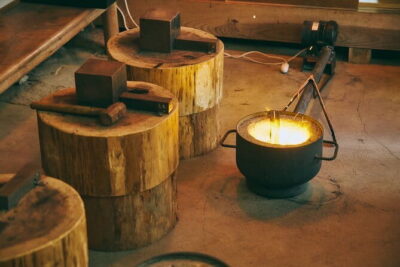
Authentic knife making experience at a blacksmith in Kyoto
Read our review →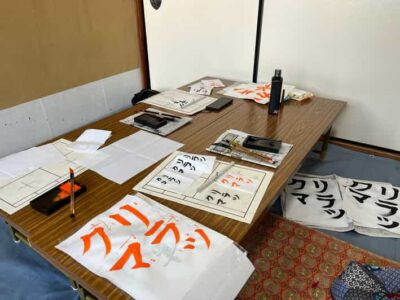
Calligraphy class at Buddhist temple in city center
Read our review →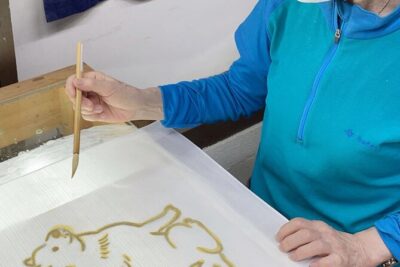
Roketsu dyeing experience: M course Roketsu Dyeing Experience
Read our review →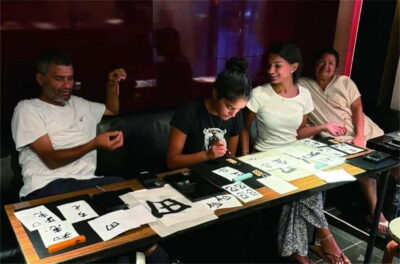

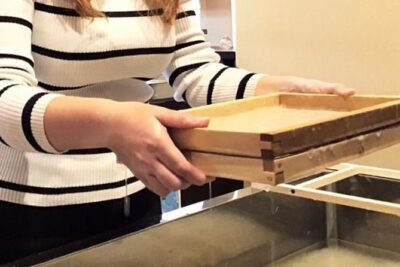
Traditional Japanese Washi Papermaking- Kyoto morning
Read our review →
Also filed under