
Reviewed · CITY TOURS
Kyoto’s Top City Highlights: 2-Day Private Tour Experience
Kyoto in two long, satisfying days. This is a private highlights route built for a quick visit, with a full schedule across 2 days (about 16 hours) and a guide who helps you keep the pace humane. You also get a mobile ticket, so you are not stuck hunting down paper passes in the morning rush.
I especially love how the plan hits big-name sites with real context, not just photo stops. Nijo Castle gives you a taste of Edo-period Kyoto with its UNESCO setting and grand palace-and-garden atmosphere, and Arashiyama pairs the bamboo area with nearby shrines and gardens so your day feels like a connected story.
One drawback to consider is cost stacking: the group price is high, and entry fees plus transit are extra. Also, it is a full schedule, so comfortable shoes are not optional, even if your guide can adjust for what you want most.
In This Review
- Quick Take: What Makes This Kyoto 2-Day Tour Click
- The Real Value of a 2-Day Kyoto Highlights Plan
- Day One: Nijo Castle, Golden Pavilion, Zen Rocks, Nishiki, and Fushimi Inari
- Nijo Castle, UNESCO Edo-Era Kyoto
- Kinkaku-ji Temple, the Golden Pavilion Effect
- Ryoan-ji Temple, Famous Zen Rock Garden Quiet
- Nishiki Market, Kyoto Food Street Time
- Kyoto Station Lunch Reset
- Fushimi Inari, Thousands of Torii Gates
- Day Two: Arashiyama Bamboo, Tenryu-ji Gardens, River Views, Monkey Park, Kiyomizu-dera, and Gion
- Bamboo Forest Street and Nonomiya Shrine
- Tenryu-ji Temple Garden, a calmer counterpoint
- Hozu-gawa River and Togetsu Bridge Views
- Monkey’s Park, a higher viewpoint break
- Lunch at Kyoto Station Again
- Kiyomizu-dera, the hillside icon
- Gion Area, traditional streets and geisha culture
- Price and Logistics: What the $980 Covers, and What Comes Extra
- How the Guide Makes This More Than a Route Map
- Timing, Crowds, and Comfort: How to Prepare for These Long Days
- Stop-by-Stop Reality Check, So You Know What You Are Getting
- Should You Book This Kyoto Highlights Tour?
- FAQ
- How long is the Kyoto top city highlights private tour?
- What is the price for this private tour?
- Is this tour private or shared with other groups?
- What is included in the tour price?
- Are entry fees included for temples and attractions?
- How much should I budget for public transportation?
- Where do we meet for the tour?
- What happens if the weather is poor, or I need to cancel?
Quick Take: What Makes This Kyoto 2-Day Tour Click
- A top-hit itinerary that fits 2 days, from Nijo Castle to Kiyomizu-dera, with Arashiyama and Fushimi Inari included.
- Private, just your group, which makes it easier to move when it is less crowded and ask questions as you go.
- Guides like Yuji, Noriko, Keiko, Marianna, Asano, Moto, and Takaichi have a reputation for clear explanations, smart timing ideas, and flexibility.
- Lunch breaks at Kyoto Station, which gives you a practical reset point during long days.
- Free stops plus paid entrances, so you can mentally budget for temples and still enjoy market time and shrine areas.
The Real Value of a 2-Day Kyoto Highlights Plan
Kyoto can feel like a never-ending list. You can spend days just picking between temples, neighborhoods, and viewpoints, and then you end up with the classic problem: you go home with photos but not much sense of how it all connects.
This tour is designed for the fast-but-not-chaotic version of Kyoto. In practical terms, you get a guide, a set route, and enough time built in to actually experience places, not just sprint through them. The schedule also leaves room for adjustments, so if you care more about the temple side than the shopping side (or vice versa), your guide can steer the day.
I like that the tour includes both cultural landmarks and everyday Kyoto flavor. You get major sites like Kinkaku-ji and Ryoan-ji, then you get a market stop at Nishiki, plus neighborhood wandering in Gion. It is a good mix for first-timers who want the highlights without losing the local texture.
Day One: Nijo Castle, Golden Pavilion, Zen Rocks, Nishiki, and Fushimi Inari
Day one is built around big icons, but it is more than a checklist. You start early, meet at your hotel at 09:00, and you are out exploring by 09:30. That early start matters because so many of these places get busy later.
A quieter way to spend a day in Kyoto
- Fushimi Inari Hidden Hiking Tour (Private Option Available)
★ 5.0 · 1,750 reviews - Private Kyoto Tour with a Local, Highlights & Hidden Gems, Personalised
★ 5.0 · 1,543 reviews - Kyoto 6hr Private Tour with Government-Licensed Guide
★ 5.0 · 1,369 reviews - 10 Must-see Spots in Kyoto One Day Private Tour (up to 7 people)
★ 5.0 · 1,108 reviews
Nijo Castle, UNESCO Edo-Era Kyoto
Nijo Castle is your first major stop, and it sets the tone well. You get Edo-period architecture and gardens, and you focus on key areas like the Ninomaru Palace. Even if you are not a history nerd, this kind of start helps your brain understand why Kyoto looks the way it does.
Time on-site is about 1 hour. That is long enough to see the main layout and take in the gardens, but short enough that you do not feel trapped. Admission is not included, so plan to pay the temple and castle fees separately.
Kinkaku-ji Temple, the Golden Pavilion Effect
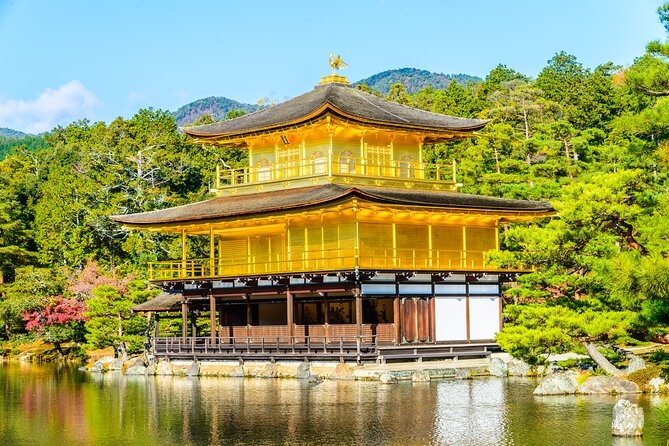
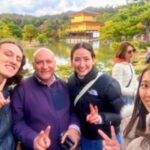
Then you move to Kinkaku-ji, the famous Golden Pavilion. The highlight here is the visual contrast: the pavilion shimmering against a pond backdrop, plus the gardens that frame it. This is one of those places where your best photos come from slowing down, not snapping while you walk.
Expect about 1 hour. Admission is not included. Since this is such an iconic view, it can get crowded, so I recommend being ready to follow your guide’s pacing and where you stand.
Ryoan-ji Temple, Famous Zen Rock Garden Quiet
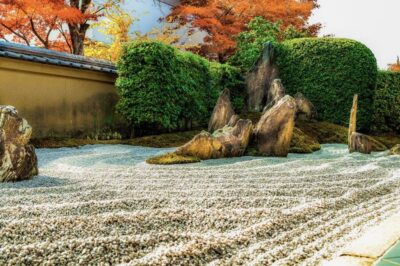
After the Golden Pavilion energy, you shift to Ryoan-ji, home to the most well-known Zen rock garden. The point is not to rush or to hunt for trivia. It is the feeling of simplicity and tranquility, which is exactly why this stop works after the visual spectacle of Kinkaku-ji.
Again, about 1 hour. Admission is not included here either. If you want something calming in the middle of a busy 2-day plan, this is it.
Nishiki Market, Kyoto Food Street Time
Next comes a different side of Kyoto: Nishiki Market, often called Kyoto’s Kitchen. This is a focused 1-hour shopping and snacking block. The idea is to walk through a dense stretch of shops and stalls, where you can browse and pick up small bites without turning it into a full meal.
The time is set so you can still make the rest of the day. Admission is free for this stop, which helps your budget. Food costs are not included, so treat it like optional tastings.
A day of temples goes further with something to break it up.
Kyoto Station Lunch Reset
Lunch is planned at Kyoto Station around 14:00 on day one. That is a practical choice. It gives you a big, predictable anchor in the middle of long days, with lots of choices to fit different tastes and budgets.
The tour does not include food, but the timing is smart because it helps you avoid the end-of-day scramble. If you have dietary needs, Kyoto Station is often easier to work with than tiny neighborhood restaurants.
Fushimi Inari, Thousands of Torii Gates
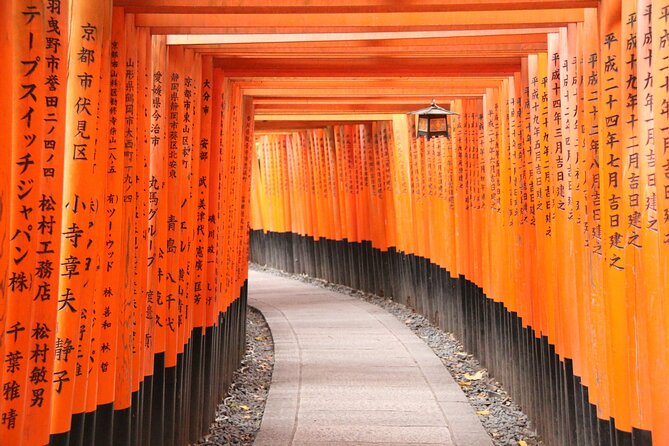
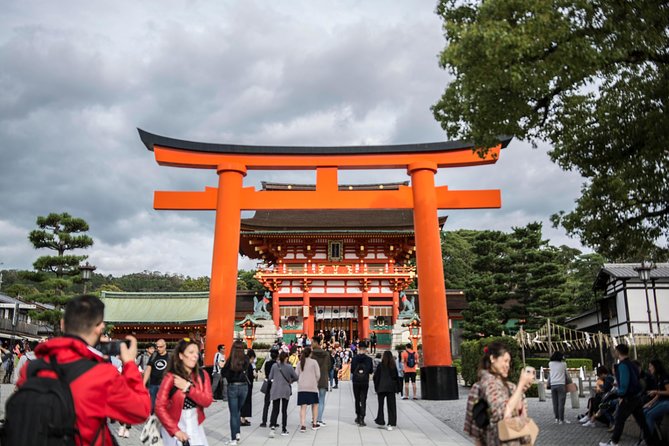
In the late afternoon, you head to Fushimi Inari. This shrine is known for its thousands of red torii gates that form paths through forest trails. It is both spiritual and scenic, and it is one of the best places in Kyoto to feel like you are moving through the city’s layers.
This stop is listed as free, and you get about 1 hour. The biggest tip: wear shoes you trust. The trail can add up, especially after a long day of temples.
Day Two: Arashiyama Bamboo, Tenryu-ji Gardens, River Views, Monkey Park, Kiyomizu-dera, and Gion
Day two also starts at 09:00 at your hotel. The big theme is Arashiyama in the morning, then a transition toward eastern Kyoto landmarks and evening neighborhood atmosphere.
Bamboo Forest Street and Nonomiya Shrine
You begin with the Arashiyama bamboo area, plus Nonomiya Shrine and related sites. The time block is longer on purpose, about 2 hours. That matters, because bamboo can be visually intense. If you only walk through for 10 minutes, it can feel like a postcard. With more time, you slow down, look around, and notice the shifts in light and crowd flow.
Admission is not included for this part. Expect the day to include some walking, and follow your guide’s pacing since crowd levels can change fast.
Tenryu-ji Temple Garden, a calmer counterpoint
You also spend time with the Tenryu-ji temple garden. This pairs nicely with bamboo because it gives you a different kind of Kyoto beauty: curated nature rather than tall stalks and a narrow corridor.
This is one of the places where I would rather be guided than wander randomly. A guide helps you focus on what is worth your time, and you avoid spending energy just looking for the next entrance.
Hozu-gawa River and Togetsu Bridge Views
Then you move to the Hozu-gawa river and Togetsu Bridge area. This is mostly about scenery, and it gives your body a chance to re-center after temple walking. It also creates variety. A 2-day highlights plan can get temple-heavy fast, so this scenic break helps the whole day feel less repetitive.
Monkey’s Park, a higher viewpoint break
After the river, the schedule includes Monkey’s Park. The purpose is viewpoint time, plus a chance to feel the area from higher up.
The tour duration still keeps moving, so you are not stuck waiting around forever. Admission is not included for this portion either, so budget for it in your overall math.
Lunch at Kyoto Station Again
Lunch is again at Kyoto Station around 14:00. The second station break can actually be a relief. Two full days means you will likely want consistency, and Kyoto Station is a dependable reset.
Food is not included, but you can treat this as your chance for something you actually crave instead of whatever is easiest while you are rushing.
Kiyomizu-dera, the hillside icon
In the afternoon, you head to Kiyomizu-dera and then toward Gion. Kiyomizu-dera is listed as a UNESCO World Heritage site and one of Kyoto’s iconic landmarks, perched on a hillside. This stop is often a crowd magnet, so it helps to have a guide who knows how to pace you and where to stand.
Admission is not included here. You get about 1 hour at the Kiyomizu-dera portion.
Gion Area, traditional streets and geisha culture
After Kiyomizu-dera, you walk into Gion. This is Kyoto’s well-known geisha area, with narrow streets and wooden-lined streetscapes. The value of having a guide for Gion is simple: you can enjoy the vibe without turning it into aimless wandering.
This stop is listed as free and gets about 1 hour. It is a good way to end a full day, because you can decompress while still feeling like you made progress.
Price and Logistics: What the $980 Covers, and What Comes Extra
The headline number is $980.00 per group, up to 8 people. That matters a lot, because with a full group, the effective per-person cost can feel reasonable for a private 2-day plan with guided management.
But here is the honest part: you should still plan for additional costs.
- Entry fees are not included and are listed at ¥6,950.00 per person.
- Transportation is not included, and public transportation is listed at ¥2,300 per person.
- Food is not included, and lunch is planned at Kyoto Station on both days.
So how do you judge value? I think this tour is strongest for:
- Small groups or families (so the group price spreads out).
- First-time visitors who want a guided framework for Kyoto.
- People who want a private schedule rather than riding a bus with strangers and playing musical chairs at each stop.
If you are traveling solo or as a couple, the group price can feel steep. In that case, you might compare against self-guided day trips, but you will be trading off the guide’s pacing and adjustments.
One small plus: you get a mobile ticket, which helps reduce friction once you arrive at specific sites.
How the Guide Makes This More Than a Route Map
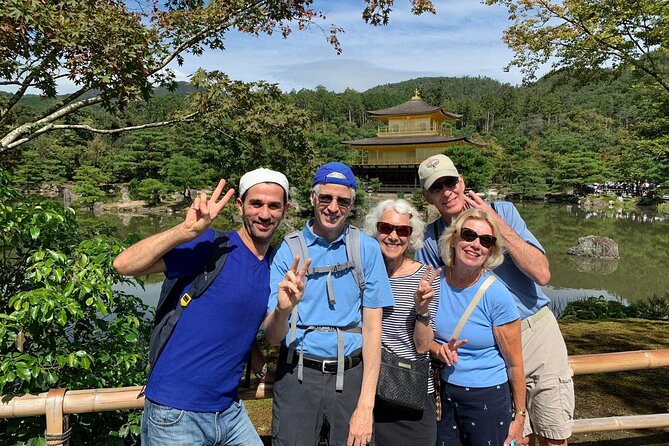
Private tours live or die by the guide. In the cases where this tour is led by people like Yuji, Noriko, Keiko, Marianna, Asano, Moto, and Takaichi, the common thread is practical guidance: clear explanations, smart pacing, and flexibility.
In particular, some guides are known for:
- Adjusting the route based on your preferences ahead of time.
- Suggesting better timing to reduce crowds and make photos easier.
- Helping you decide what to eat, including strong lunch recommendations (one guide is even described as a sushi expert).
- Modifying the plan when weather shifts, so your day stays on track instead of turning into a panicked reroute.
That kind of flexibility is not just nice. It changes how the day feels. Two days in Kyoto can still work if you want downtime, and the right guide can help you build that in without breaking the overall plan.
A practical move: tell your guide what you care about most before day one. Kyoto has too many options for you to decide from scratch every morning. If you say something like temple-heavy, nature-heavy, or food-heavy, you give the guide something to optimize around.
Timing, Crowds, and Comfort: How to Prepare for These Long Days
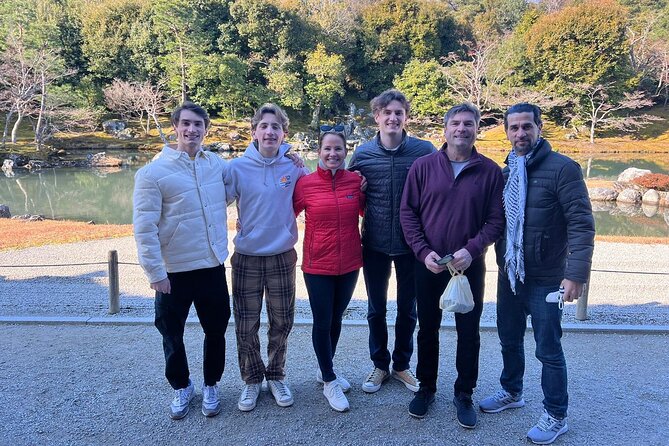
This experience runs from 09:00 to about 17:00 on both days, so you should expect full days of walking and transit. The total is about 16 hours over two days.
To make it comfortable:
- Wear shoes you can walk in for hours.
- Bring a light layer. Temples and shaded trails can feel cooler, and weather can swing.
- Keep small cash or a card handy for market snacks and temple-admission gaps.
Also, weather matters. The tour is marked as requiring good weather, and if it is canceled due to poor weather, you are offered a different date or a full refund.
Crowds are another reality in Kyoto. This tour does not promise empty temples, but it does give you a guide who can help with calmer pacing. I found that advice like where to pause, when to move, and how to structure short visits can make the difference between a tiring day and a satisfying one.
Stop-by-Stop Reality Check, So You Know What You Are Getting
Here is the balanced view of what each major moment tends to feel like:
- Nijo Castle: A structured, UNESCO-grade start, more about architecture and gardens than wandering.
- Kinkaku-ji: A visual “wow,” but you will want to plan your time and stance so you are not just being jostled for a photo.
- Ryoan-ji: Slower and quieter, good for resetting your attention after more crowded scenes.
- Nishiki Market: Fun for browsing and quick bites, not a sit-down meal unless you choose to extend on your own.
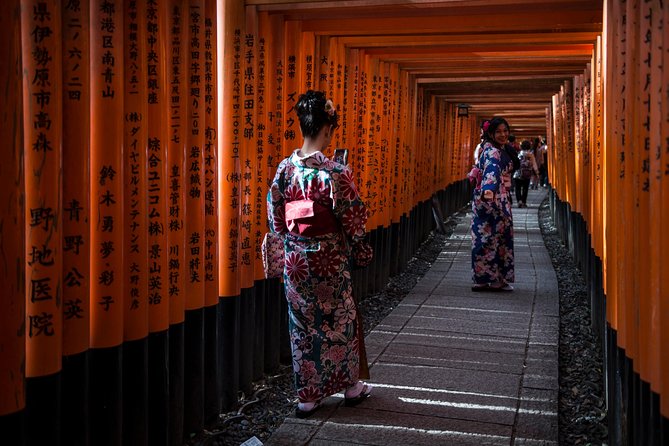
- Fushimi Inari: A walk through torii gates that builds into a hike-like feel. Pace yourself.
- Arashiyama bamboo and Tenryu-ji garden: A classic Kyoto nature-meets-culture mix, best enjoyed when you slow down.
- Hozu-gawa and Togetsu Bridge: A scenic break that changes your pace and helps the day feel varied.
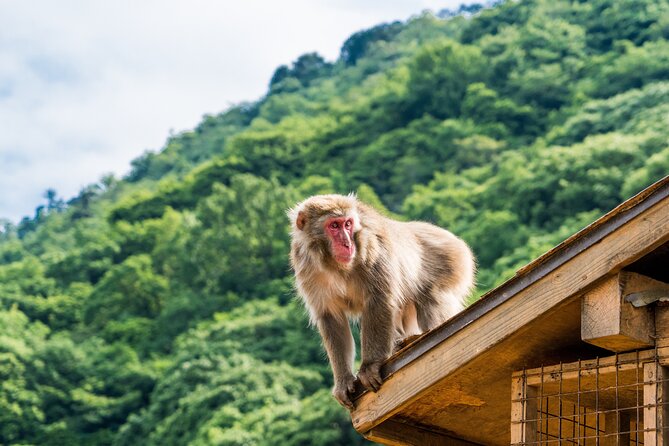
- Monkey’s Park: Viewpoint time, practical if you want photos and a higher perspective.
- Kiyomizu-dera and Gion: Iconic landmark energy, followed by neighborhood atmosphere that helps you end the day on a human scale.
Should You Book This Kyoto Highlights Tour?
I would book it if you fit one of these profiles:
- You have only 2 days and want a tight plan that covers major Kyoto landmarks.
- You care about getting context, not just moving from one entrance to another.
- You are traveling in a group (up to 8) where the $980 per group price can be shared.
- You want flexibility, since the itinerary can be customized with your guide.
I would think twice if:
- You are on a strict budget and you are traveling solo or as a couple. Entry fees (¥6,950 per person) and transit (listed at ¥2,300 per person) add up fast.
- You hate long walking days and temple-style schedules.
If you decide to go, do two things and you will be glad you did: wear good shoes, and give your guide clear priorities before day one. That is when a private Kyoto plan turns into a smooth, memorable experience.
FAQ
How long is the Kyoto top city highlights private tour?
It is approximately 16 hours total across 2 days.
What is the price for this private tour?
The price is $980.00 per group, with a maximum of up to 8 people.
Is this tour private or shared with other groups?
It is a private tour/activity, and only your group participates.
What is included in the tour price?
Tour guiding and management are included. Transportation cost is not included in the price.
Are entry fees included for temples and attractions?
No. Entrance fees are listed as ¥6,950.00 per person.
How much should I budget for public transportation?
Public transportation is listed as ¥2,300.00 per person, and it is not included in the price.
Where do we meet for the tour?
You meet at your hotel in Kyoto, and the tour starts and ends in Kyoto.
What happens if the weather is poor, or I need to cancel?
This experience requires good weather. If it is canceled due to poor weather, you are offered a different date or a full refund. You can cancel for a full refund if you cancel at least 24 hours in advance.
New This Season
- Koyasan Day Trip by Private Car from Kyoto
- Old Port Town and Ultimate Sake Tasting Private Tour From Kyoto
- Kyoto’s Timeless Charm: 3hr Exploration of History and Peace
- Kyoto: 5 Types of Sushi Making
- Sacred Peak & Ancient Paths: Kurama-Kibune Hiking Experience
- Kyoto: Exclusive ZEN practice at Manpukuji temple in Uji
- Kyoto: Private Seasonal Aroma Yoga Class
- Traversing Kyoto’s Scenic West – Arashiyama to Kinkakuji
City Tours, compared.
Calligraphy class at Buddhist temple in city center
Read our review →
Private departure transfer from Kyoto city to Kansai International airport
Read our review →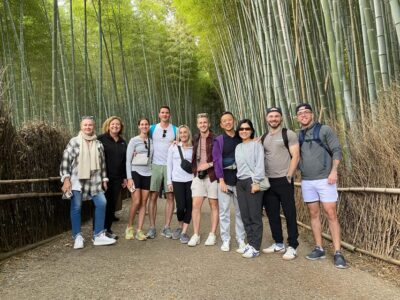
Full-Day City Highlights Bike Tour with Light Lunch
Read our review →
Private departure transfer from Kyoto city to Osaka Itami International airport
Read our review →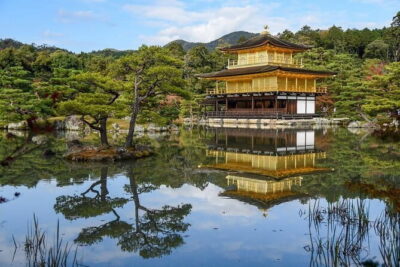
Guided Kyoto City Cherry Blossom One Day Private Tour
Read our review →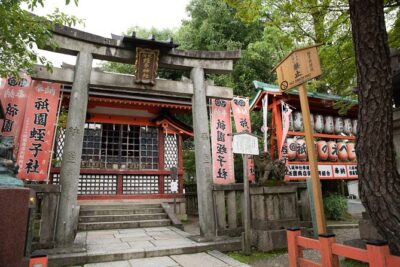
Discovering Kyoto A Tailored Private Tour of the City’s Treasures
Read our review →Also filed under