
Reviewed · FUSHIMI INARI SHRINE WALKS
Inside of Fushimi Inari – exploring and lunch with locals
Fushimi Inari is famous, but this route feels personal. You get the inside track on the shrine, plus a steady hike through bamboo and cedar paths where the crowd thins out. I like that the guide weaves in practical context as you walk, and I especially like the lunch stop at a traditional soba restaurant that actually feels local, not touristy. One heads-up: this is a real walk with stairs and some uphill, so it is not the best pick if you want a fully flat stroll.
What makes it work is the small group size, limited to 10, and the guide pacing that lets you move at your comfort level. Guides such as Ko and Go, Kenji, Yuya, and Taishi are described as friendly and sharp on Shinto context, and they also steer you to photogenic spots away from the main crush. The main consideration is time and energy, since you also go up to the summit shrine area and you will be on your feet for most of the 4 hours.
In This Review
- Quick hits
- Entering Fushimi Inari Taisha through the inside route
- The 4-hour flow: from Great Torii Gate to return there
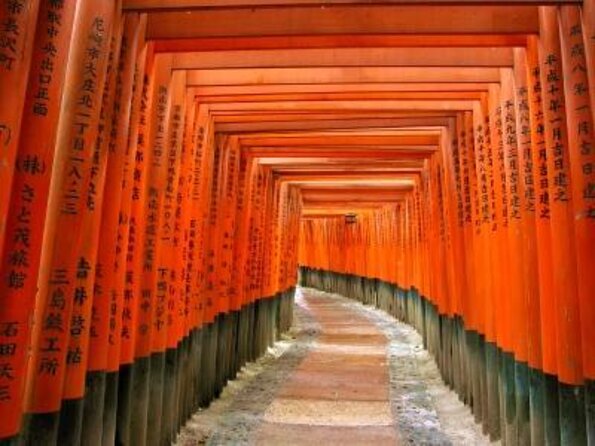
- Main shrine and thousands of torii gates, with the meaning behind them
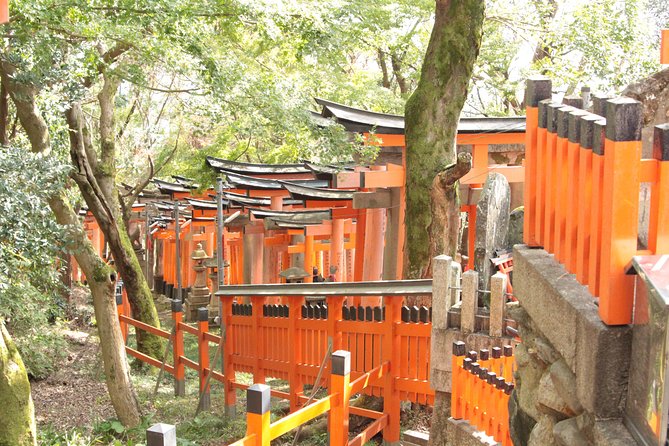
- Bamboo and cedar forest paths, holy spots, and a factory stop
- Climbing to the summit shrine: the 233m route
- Photo stops on the way down, plus time-saving quiet lanes
- Tea, boiled egg, and Kyoto city panorama from a mountain hut
- Lunch at a traditional soba restaurant, vegan support included
- What the guide adds: peace of mind and better context
- Price and value: is $67 for 4 hours worth it?
- Who should book this tour, and who should skip it
- Should you book this Fushimi Inari inside-and-lunch experience?
- FAQ
- How long is the Fushimi Inari inside tour?
- Where do we meet for the tour?
- What is included in the price?
- Are vegan or dietary options available?
- What should I wear or bring?
- Is the hike difficult?
- What part of the tour includes the summit shrine?
- Are drinks at the lunch restaurant included?
- Can I cancel or pay later?
Quick hits
- Small group, up to 10 people, with an English-speaking guide and an easy-moderate hike pace
- The road less crowded, including quiet bamboo and cedar paths plus photo stops away from the main flow
- Torii-making moment, including a chance to watch a master carve torii columns
- Scenic breaks like tea and a boiled egg in a mountain hut, plus a Kyoto city viewpoint
- Soba lunch with vegan support if you tell the team in advance
Entering Fushimi Inari Taisha through the inside route
Fushimi Inari is one of those Kyoto spots where the red torii gates can feel like a theme park if you only see the main lane. This tour changes the feel by focusing on what is happening beyond the obvious photo line, including quieter worship points and hands-on context while you walk.
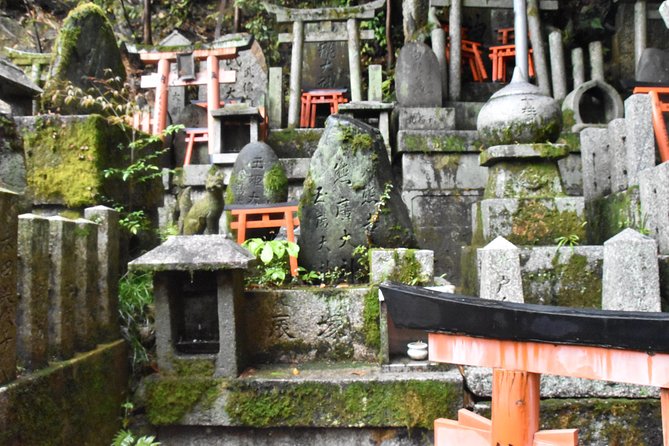
I love that you start by getting oriented at the Great Torii Gate, then transition into routes where time and space feel different. You are not rushing from stop to stop, you are moving along the shrine in a way that lets you notice details: the stones people worship, the small holy spots along the way, and how the shrine fits into everyday life.
The 4-hour flow: from Great Torii Gate to return there
The meeting point is the Great Torii Gate at the first gate, with the stone pillar across from the JR Inari Station exit. You finish back at the same place, so you do not have to re-orient at the end when you are tired.
In terms of rhythm, the plan is built around a hike plus scheduled breaks. You will have a restaurant meal break early in the day, then hike for about 3 hours through Fushimi Inari, and then you will have another local restaurant stop afterward. Exact timing can shift based on your walking speed, but the structure stays the same.
Practically, that means you should plan to wear comfortable shoes and bring a hands-free backpack for the walking sections. The routes are organized, but you do climb and go down stairs, so treat it like a light hike, not a museum stroll.
Still climbing through the orange gates?
- Kyoto: Fushimi Inari, Kinkakuji, Bamboo Grove 1 Day Bus Tour
★ 4.8 · 4,316 reviews - Fushimi Inari Hidden Hiking Tour (Private Option Available)
★ 5.0 · 1,750 reviews - Osaka/Kyoto:Kinkakuji,Arashiyama,FushimiInariShrine,NaraPark
★ 4.1 · 1,596 reviews - Kyoto/Osaka: Nara, Fushimi Inari Taisha, Arashiyama Bus Tour
★ 4.7 · 1,275 reviews
Main shrine and thousands of torii gates, with the meaning behind them
You start with a classic introduction to the shrine grounds, including the main area and the thousands of red torii gates. The guide explains the background and cultural context, which matters here, because the gates look similar from a distance but they are part of a long tradition of worship.
This is also where you learn what to look for as you move. The tour keeps it grounded in what you will actually see on your route, from how worship works to how certain spots connect to the broader Shinto setting. Even if you have visited before, this style of guiding makes it easier to understand why people come back and keep walking deeper into the grounds.
Bamboo and cedar forest paths, holy spots, and a factory stop
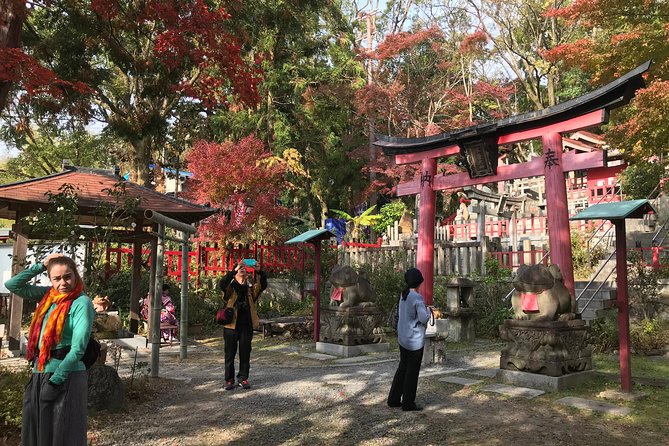
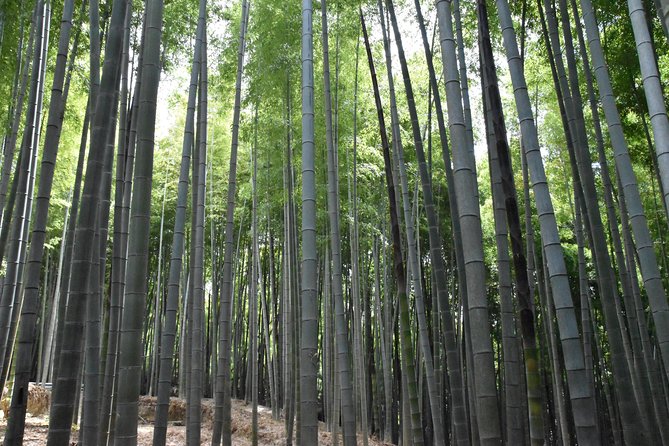
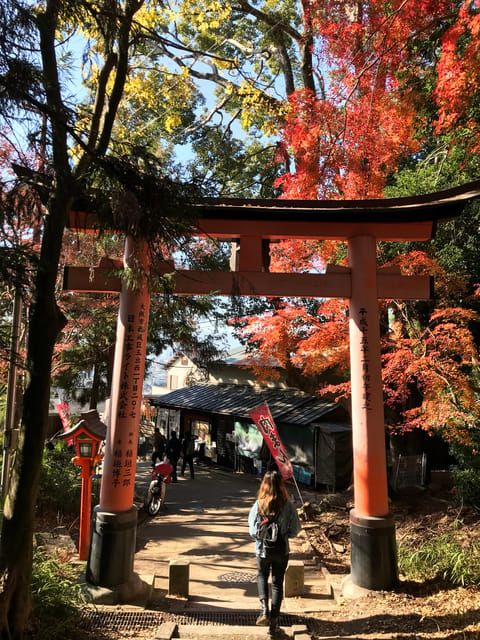
After the main shrine intro, the route becomes calmer, with easy walking through a bamboo and cedar forest path. This is where the tour starts to feel like Kyoto instead of just a headline attraction. You get time among the trees, plus stops at authentic holy spots, including worship stones and a waterfall area.
One of the most praised moments is the visit connected to torii production. The plan includes a factory visit, and more than one guide-led experience includes seeing a master carve torii columns. That is a big deal for understanding Inari: you start to see the shrine not only as a place to visit, but as a living system supported by craft.
If you love photography, this part helps. You are walking in a calmer stretch, and you get angles that feel more like discovery than queueing.
Climbing to the summit shrine: the 233m route
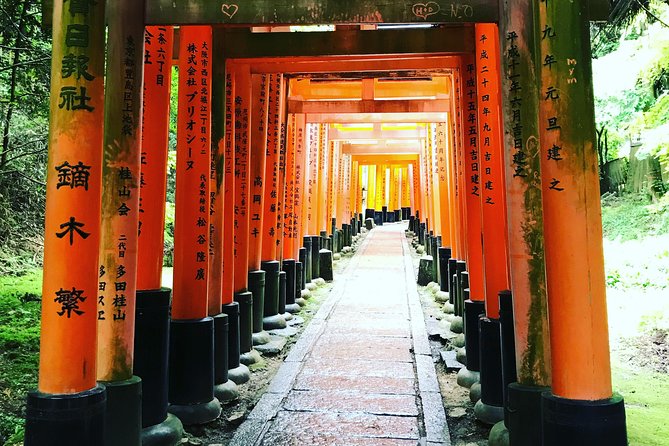
Next comes the uphill segment, with a forest route climb that takes about 20 minutes to reach the summit shrine area. The summit is 233m, and the guide spends time showing you around when you arrive.
This part is short enough to feel doable, but it still gives you a real sense of effort. The pacing is described as flexible, so the guide lets you keep your own rhythm rather than forcing a sprint. The stairs and uphill mean you should keep water and your energy in mind, especially if you are coming from earlier sightseeing in Kyoto.
This climb also sets you up for the later viewpoint moment. Even if the summit walk is not long, it adds a psychological shift from wandering to arriving, which makes the rest of the day more satisfying.
Photo stops on the way down, plus time-saving quiet lanes
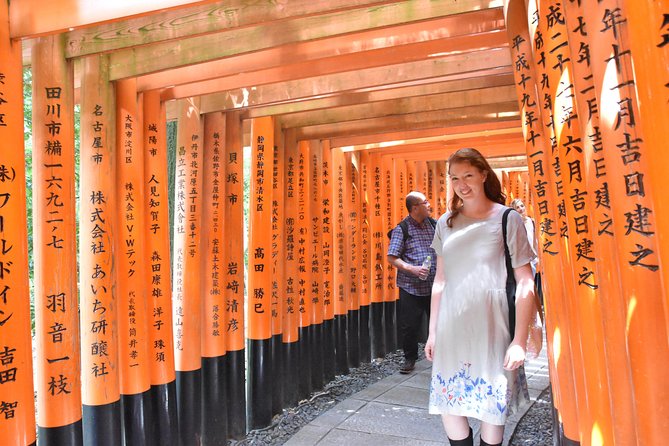
The tour includes a dedicated photo-shooting stretch, but the real value is where you shoot from. Instead of only stopping at the most crowded corners, you get guided to photogenic spots that are usually less crowded.
I like this approach because it protects your attention. You get to see the shrine and take pictures without spending most of your time trapped in a slow-moving wall of people. And the guide keeps the stops practical, so you are not standing around waiting for others to catch up.
If you are the type who wants photos, but also wants to actually understand what you are looking at, this tour does both.
Lunch, wedged between temple visits


Tea, boiled egg, and Kyoto city panorama from a mountain hut
One of the smartest parts of this experience is the break built into the hike. You stop for tea and a boiled egg in a mountain hut, and the day includes a scenic panorama view of Kyoto city from a viewpoint.
This is not just a snack stop. It is a reset. You sit, you refuel, and you get a view that makes the climb feel worth it. The tour also offers vegan options for the tea break, and the included snack is specifically described as hot tea plus a boiled egg with salt.
Practical tip: this is a good moment to slow your breathing and stretch your legs before you keep moving back down.
Lunch at a traditional soba restaurant, vegan support included
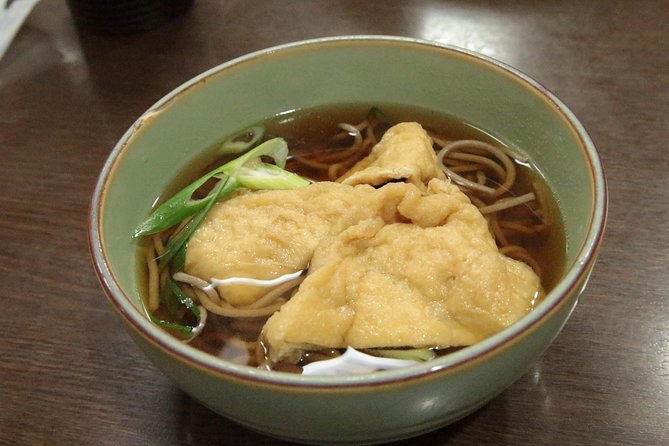
Lunch is built into the plan and is one of the highlights. The included meal features Japanese noodle soba, plus fried sweet sushi (often called Inari sushi). This is the kind of lunch that feels like you ate where local people might eat, not just where tour groups are dumped and shuffled.
If you need vegan options, you can get them, but you have to tell the team in advance. The same is true for allergies and dietary restrictions, where options are available. Also note a clear boundary: drinks at the lunch restaurant are not included, so you might want cash or a card ready if you want something beyond tea.
Based on the day’s flow, you get a meal break before the longest walking chunk and another local restaurant stop after the hike. That structure helps prevent the usual problem with famous shrine visits, which is feeling hungry while you are still walking the hardest parts.
What the guide adds: peace of mind and better context
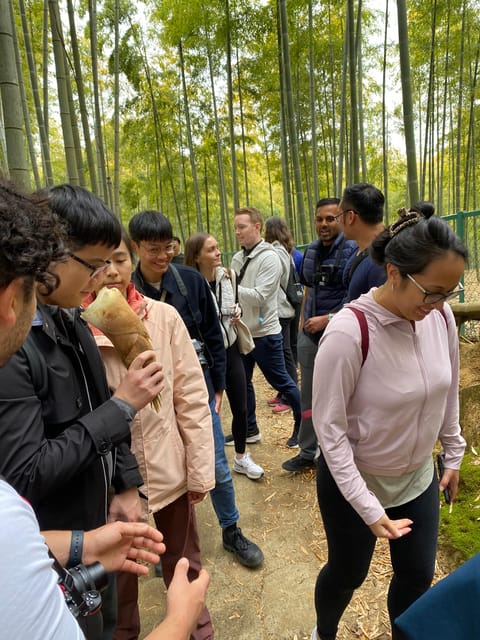
A big reason this tour is rated around 4.9 is not just the route, it is the guiding style. Multiple guides are described as friendly, attentive, and genuinely informative about Fushimi Inari and Shinto traditions. Names that show up include Ko and Go, Kenji, Yuya, and Taishi, and the consistent theme is practical knowledge, not a lecture.
You also get help with shrine etiquette. The experience includes offering staff, so you are not left guessing what to do at worship points. In some versions of this day, guests also mention experiences like fortunes, and the general takeaway is that the guide helps you participate in the shrine rhythm rather than only observing it.
Price and value: is $67 for 4 hours worth it?
At $67 per person for a 4-hour small-group tour, the value hinges on what is included. You get a guided walkthrough with context, a hike with photo stops, tea plus a boiled egg snack, and lunch featuring soba and Inari sushi. Add in the fact that the group is capped at 10 and the pace is adjusted for walking comfort, and the cost starts to make sense.
The big reason this price works for many people is crowd management. You are not simply paying for a map. You are paying for route choices that help you spend more time seeing and less time stuck. If you were to go on your own, you might still cover the gates, but you would likely miss the less-crowded paths, the torii-making craft moment, and the built-in meal rhythm.
Who should book this tour, and who should skip it
This tour is a strong match if you want:
- A small-group hike instead of a bus-style sprint
- Quiet shrine routes, not just the main crowd lane
- Lunch that is part of the experience, with soba and vegan support
- A guide who explains what you are seeing and helps with etiquette
You might skip it if:
- You want a fully flat, no-stairs walk
- You are extremely time-crunched and want just the main shrine in the shortest possible window
- You prefer unguided, self-paced wandering only
Should you book this Fushimi Inari inside-and-lunch experience?
If you care about more than walking through the red gates, this is a great choice. The combination of less-crowded routes, a torii-making craft moment, tea and a viewpoint break, and a real soba lunch makes the day feel complete.
I would book it if you want a guided day that still leaves room for photos, questions, and a comfortable pace. If you only want a quick highlight hit with zero stairs, then you may be happier with a simpler self-guided plan. But if you want Fushimi Inari with meaning, food, and quieter paths, this is one of the most balanced ways to do it in Kyoto.
FAQ
How long is the Fushimi Inari inside tour?
The experience runs for about 4 hours.
Where do we meet for the tour?
Meet at the Great Torii Gate, at the stone pillar at the first gate across from JR Inari Station exit. The finish point is the same.
What is included in the price?
The tour includes the sightseeing with a live English guide, lunch (soba and fried sweet sushi), tea and a boiled egg at the mountain hut, and offering staff.
Are vegan or dietary options available?
Yes. Vegan options are available, but you need to tell the team in advance. Options are also available for allergies or dietary restrictions.
What should I wear or bring?
Wear comfortable clothes and shoes. Bring a hands-free backpack for the hiking part. The routes include stairs.
Is the hike difficult?
It is an easy to moderate hike with organized paths, but you will go up and down stairs and climb to the summit route.
What part of the tour includes the summit shrine?
You go up a forest route to the summit shrine for about 20 minutes, reaching a summit area that is 233m high.
Are drinks at the lunch restaurant included?
No. Drinks at the lunch restaurant are not included.
Can I cancel or pay later?
Free cancellation is available up to 24 hours in advance for a full refund, and you can reserve now and pay later.
New This Season
- Koyasan Day Trip by Private Car from Kyoto
- Old Port Town and Ultimate Sake Tasting Private Tour From Kyoto
- Kyoto’s Timeless Charm: 3hr Exploration of History and Peace
- Kyoto: 5 Types of Sushi Making
- Sacred Peak & Ancient Paths: Kurama-Kibune Hiking Experience
- Kyoto: Exclusive ZEN practice at Manpukuji temple in Uji
- Kyoto: Private Seasonal Aroma Yoga Class
- Traversing Kyoto’s Scenic West – Arashiyama to Kinkakuji
Fushimi Inari Shrine Walks, compared.
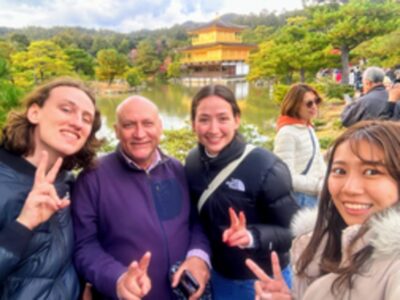
Fushimi Inari, Kinkakuji, Bamboo Grove 1 Day Bus Tour
Read our review →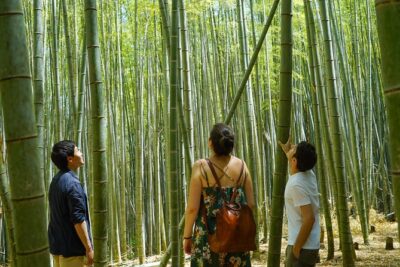
Fushimi Inari Hidden Hiking Tour (Private Option Available)
Read our review →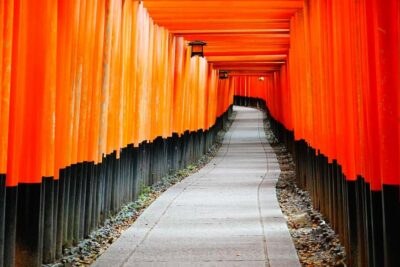
Kinkakuji,Arashiyama,FushimiInariShrine,NaraPark
Read our review →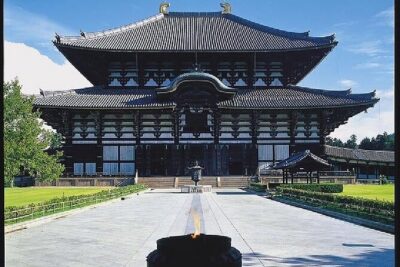
Nara, Fushimi Inari Taisha, Arashiyama Bus Tour
Read our review →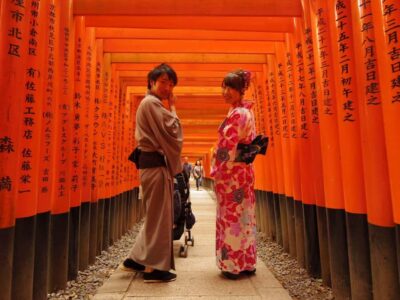
Arashiyama, Nara & Fushimi Inari Shrine w/Lunch
Read our review →
Nijo Castle, Kiyomizu & Fushimi Inari Guided Tour
Read our review →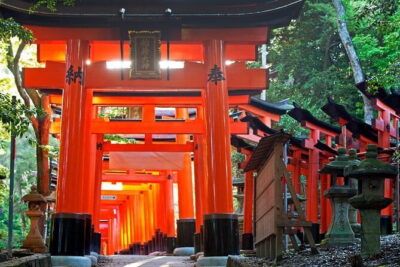
Nijo, Kinkaku-ji, Arashiyama, Kiyomizu & Fushimi Inari
Read our review →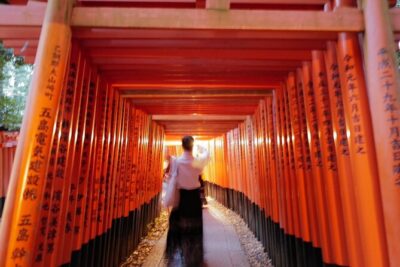
Also filed under