Reviewed · NARA & DEER PARK DAY TRIPS
Kyoto and Nara Private Car Tour with a Local English Guide Driver
One car, two cities, zero transit stress. This private car day tour pairs you with a bilingual local English and Japanese guide, so you get clear context at major sights without spending your energy figuring out trains and transfers.
I like the way this tour is built for real-world touring: hotel pickup and drop-off, Wi-Fi on board, air-conditioned comfort, and a licensed professional driver in a green-numbered vehicle. You will also get hands-on options and special-access possibilities mentioned by the operator, and guides such as Yama or Hibiki are specifically noted for strong English and practical help during the day. The main trade-off is that it is a fast-paced, many-stop route, so each place is brief, plus entrance fees and cash add-ons like gas and parking are not included.
In This Review
- Key highlights you will feel on the day
- How a private car tour works when you have 10 hours
- Kyoto start: Fushimi Inari-taisha and the red torii climb
- Arashiyama: Bamboo Forest, Tenryu-ji, and Togetsukyo Bridge in one sweep
- Arashiyama Kimono Forest, Sagano Torokko train, and Iwatayama monkeys
- Gion and Kinkaku-ji: traditional Kyoto with built-in orientation
- Nishiki Market and Kiyomizu-dera: food energy plus big temple views
- Ginkaku-ji, Yasaka Shrine, and Sanjusangendo’s long hall
- Nijo Castle, Chion-in, and why the guide matters between places
- The long scenic sweep: Amanohashidate and Ine no Funaya
- Crossing into Nara: park deer, Todai-ji, Kasuga, and Kofuku-ji
- Guides, safety, and the little extras you might actually use
- Entrance fees and the cash add-on: what to budget so you are not caught off guard
- Is the $459.81 private car price worth it for your group?
- Should you book this Kyoto and Nara private car tour?
- FAQ
- How long is the Kyoto and Nara private car tour?
- How many people can join the private tour?
- Is hotel pickup and drop-off included?
- Does the guide speak English?
- Are entrance fees included for temples and attractions?
- Are meals included?
- Is Wi-Fi provided in the car?
- What extra costs should I expect on the day?
- Can this tour be customized?
Key highlights you will feel on the day
- Private door-to-door comfort: hotel pickup and drop-off, with a driver who is used to busy Kyoto traffic
- Bilingual guiding that actually helps: clear English explanations and Japanese support if you hit a snag
- A one-day hit list: iconic Kyoto plus Nara, with a structured flow that minimizes wasted time
- Photo-and-walk timing: each stop is short, so you can see the headline sights without turning it into a grind
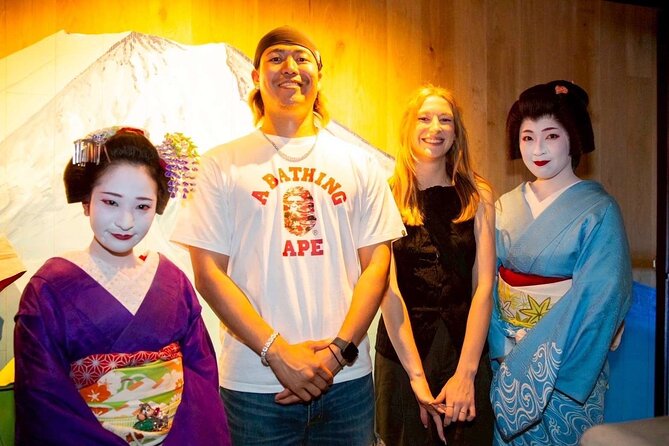
- Optional add-ons if you want them: the day references experiences like ninja training, chopstick-making, and private geisha or maiko options
- Super practical onboard perks: Wi-Fi, mobile ticket, and air-conditioned transport
How a private car tour works when you have 10 hours
This is a group private tour, up to 13 people, which matters because you are not sharing your ride with strangers or waiting for everyone’s pace. The experience runs about 10 hours, and the schedule is structured around quick visits, roughly 15 minutes per stop, plus driving time between areas.
What you get is a day that behaves like a guided checklist, but with explanations you can understand. And because you are with a local English guide and a licensed driver, you spend less time navigating and more time standing in the right place for the right view.
A small but important note: this tour is built around convenience, not deep, slow wandering. If you want to spend an hour in one temple garden reading every sign, you may feel rushed.
Kyoto start: Fushimi Inari-taisha and the red torii climb
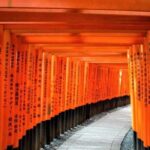
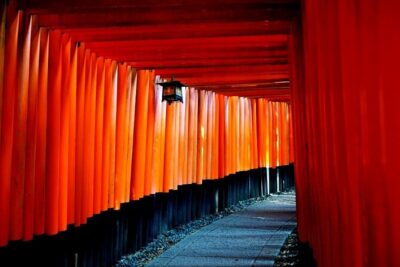
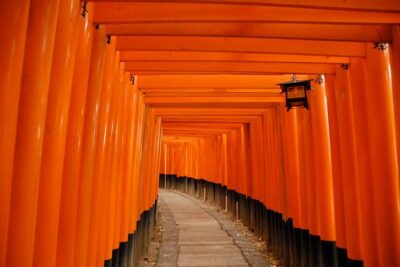
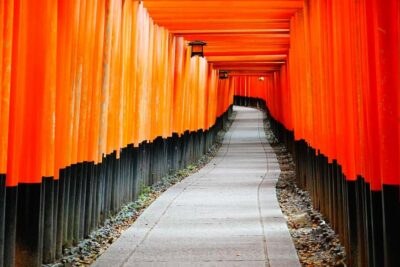
You begin at Fushimi Inari-taisha, Kyoto’s most recognizable shrine. The headliner is the Senbon Torii, thousands of red torii gates stepping up a forested slope. Even with a short visit, you can still walk into the torii tunnel effect and get the iconic photos.
Fushimi Inari is also a great place to start early because the atmosphere changes fast as crowds build. Wear shoes that work for uneven ground and steps, and bring a light layer if it is cool. Entrance there is listed as free, so you are not juggling ticket lines right away.
Deer that bow back, a short ride away
- Osaka/Kyoto:Kinkakuji,Arashiyama,FushimiInariShrine,NaraPark
★ 4.1 · 1,596 reviews - Kyoto/Osaka: Nara, Fushimi Inari Taisha, Arashiyama Bus Tour
★ 4.7 · 1,275 reviews - Osaka/Kyoto: Arashiyama, Nara & Fushimi Inari Shrine w/Lunch
★ 4.4 · 754 reviews - Kyoto and Nara Day Trip from Kyoto
★ 4.5 · 445 reviews
Arashiyama: Bamboo Forest, Tenryu-ji, and Togetsukyo Bridge in one sweep
Next comes Arashiyama, and the tour uses the area smartly by grouping several high-impact stops. You get to see:
- Arashiyama Bamboo Forest, a quick stroll under towering bamboo stalks
- Tenryu-ji Temple, a UNESCO site focused on gardens and traditional architecture
- Togetsukyo Bridge over the Katsura River, famous for scenic framing
Here is why this grouping works for you. Instead of commuting twice or burning time backtracking, you hit the bamboo, then the temple gardens, then a riverside viewpoint while you are already in Arashiyama. That is the difference between a day that feels organized and a day that feels like logistics homework.
Tenryu-ji has an admission fee not included, so if you are trying to budget tightly, expect at least some temples to require tickets even when the drive is paid for.
Arashiyama Kimono Forest, Sagano Torokko train, and Iwatayama monkeys

Right after the classic sights, you will pass by Arashiyama Kimono Forest, a modern art installation near Arashiyama Station with hundreds of illuminated pillars wrapped in colorful kimono fabric. It is a photo-friendly stop that is quick but fun, especially if you want something less traditional mixed into the day.
Then the itinerary includes the Sagano Torokko (Sagano Romantic Train), a scenic ride through the Hozugawa Gorge. This ride is not included in admissions, so think of it as an optional paid add-on if you want to slow down for a little and enjoy the ride view.
If you want something energetic, Monkey Park Iwatayama is next. The idea is a short mountain trail to observe wild Japanese macaques and take in panoramic Kyoto views. This can be a great change of pace from temple walking, but it also means you should pack stamina and stable footwear, and plan for the climb even if it is not long.
Gion and Kinkaku-ji: traditional Kyoto with built-in orientation
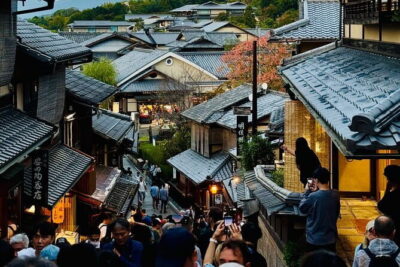
After Arashiyama, you shift to central Kyoto with Gion. You get a chance to stroll through one of Kyoto’s most famous traditional districts, including areas like Hanami-koji Street and the Shirakawa Canal vibe. Even in a brief stop, Gion helps you understand the city beyond temples, because it is a living district with classic streetscapes.
Then it is Kinkaku-ji, the Golden Pavilion, another UNESCO World Heritage stop. This is not just a photo moment. Your guide’s job here is to help you appreciate what you are seeing: the pavilion’s role in Kyoto’s history and why it is so iconic in the first place. Admission is not included, so budget for tickets if you plan to go inside.
Tip from how this day is designed: if you care about getting the best angles, be ready to move when your guide tells you. With short time windows, you want to be in the right spot quickly.
Nishiki Market and Kiyomizu-dera: food energy plus big temple views

Nishiki Market is next, known as Kyoto’s kitchen. The practical value of a guided stop here is that you can walk with confidence, find what you actually want to eat, and not waste time guessing. The market is described as over 100 shops and stalls, and it can turn into sensory overload fast on your own.
If you have ever been in a market where you feel stuck because you do not know what anything is, the guide help matters. Yama and Hibiki-style guidance is specifically praised for making stops easier, including helping with what to look for and when.
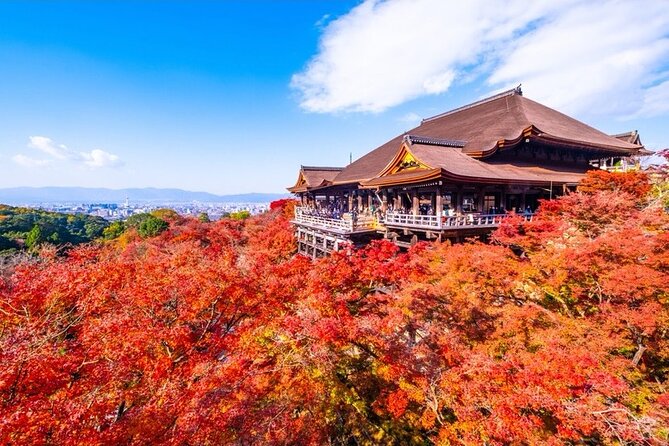
After that, you go to Kiyomizu-dera, another UNESCO site famous for the large wooden stage called Kiyomizu no Butai. This is one of those places where even a short visit gives you the scale of the site. Admission is not included, so plan for the fee if you want to experience the full temple areas.
Skip the buses, hire a driver

Ginkaku-ji, Yasaka Shrine, and Sanjusangendo’s long hall

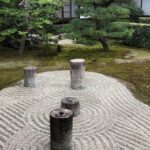
Then the tour hits Ginkaku-ji, or the Silver Pavilion. It is a Zen temple built in the late 15th century, admired for refined simplicity, moss gardens, and carefully considered details. In a short stop, you will not have time to absorb every garden element, but you can still see the overall design logic.
Next comes Yasaka Shrine, located between Gion and Higashiyama. It is known for lively festival energy and lanterns, especially during Gion Matsuri. Entrance is listed as free, which is a nice break when you have already paid other temple tickets earlier in the day.
After Yasaka Shrine, you move to Sanjusangendo Temple. This is the temple with the long wooden hall, about 120 meters, and it is famed for 1,001 life-size statues inside. If you like moments that feel more specific than just scenic, this stop tends to land well, because the scale is the point.
Admission is not included here, so again, your budget should include at least several ticketed stops.
Nijo Castle, Chion-in, and why the guide matters between places
The itinerary includes Nijo Castle, a UNESCO World Heritage site built in the early 17th century as the Kyoto residence of shogun Tokugawa Ieyasu. The highlight you will notice quickly is the elegant palace buildings, plus gardens. Even if you do not spend long inside, the castle setting helps you feel the shogun-era shift from religious spaces to political power.
After the later scenic segment (more on that in a minute), you also get Chion-in, another major Kyoto Buddhist temple complex. It is the head temple of the Jodo sect and is known for its massive Sanmon gate, described as the largest wooden gate in Japan. Entrance is listed as free, which is a bonus for a big architectural stop.
Between these sites, the guide’s real value is timing and interpretation. With lots of moving parts, someone needs to explain what you are looking at before you get bored. Guides such as Yama and Hibiki are specifically noted for clear English and making the day feel fun, not stressful.
The long scenic sweep: Amanohashidate and Ine no Funaya
This tour does not stop at only Kyoto and Nara. It also includes a scenic detour to Amanohashidate and the Ine Bay area in Miyazu. If you only want temples and markets, you might consider whether this portion is your thing. But if you like Japan’s coast-and-views moments, this is where the day breathes a bit.
First is Amanohashidate, one of Japan’s Three Scenic Views. It is described as a 3.6-kilometer sandbar known as the Bridge to Heaven. You can also expect the pine tree character of the area, with nearly 5,000 pine trees mentioned.
Then Ine no Funaya comes in. This is a fishing village famous for funaya, traditional wooden boathouses built directly on the water, with the first floor used as a garage for boats and fishing equipment. This is the kind of place where a short stop can still be memorable because the setting is so specific.
Finally, the route includes Amanohashidate View Land, a viewpoint area for the sandbar. Admission is not included, so confirm ticket costs in your planning, and do not assume every viewpoint is free even if it feels like an open-air park.
Practical note: this part of the day is ideal for comfortable shoes and patience. You are doing a lot of driving, and the driver is a key part of the experience.
Crossing into Nara: park deer, Todai-ji, Kasuga, and Kofuku-ji
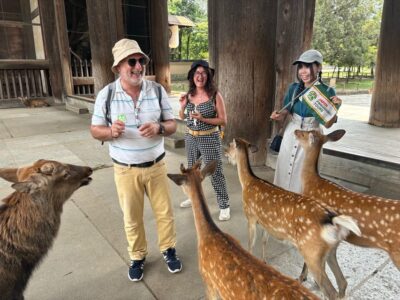
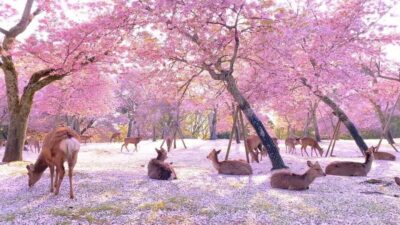
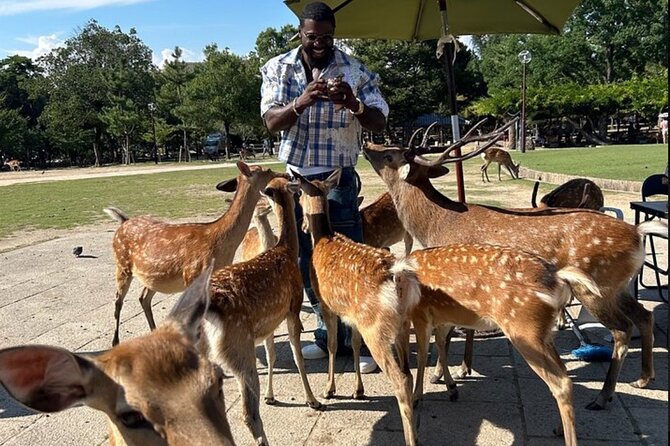
Then you reach Nara Park, where over 1,000 deer roam freely. This is a fun contrast to Kyoto because it feels more like an outdoor world you wander through. The key is to stay aware around the deer and follow your guide’s cues.
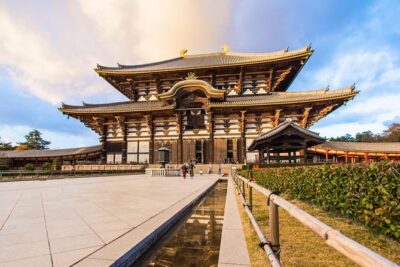
After that comes Todai-ji Temple, a UNESCO site in Nara. The centerpiece is the Great Buddha Hall, Daibutsuden, home to a massive bronze Buddha. This is one of those temples where scale hits you early, even in a short visit. Admission is not included, so it is one more paid ticket to plan for.
Next is Kasuga Taisha, also UNESCO, known for hundreds of bronze and stone lanterns. If you like shrine atmosphere, the lantern density gives you a strong visual memory quickly. Admission is not included.
The day wraps with Kofuku-ji Temple and the five-story pagoda. It is described as one of Nara’s oldest and most important Buddhist temples, founded in 710, and a UNESCO World Heritage Site. This stop gives you a different architectural silhouette before the day ends.
Guides, safety, and the little extras you might actually use
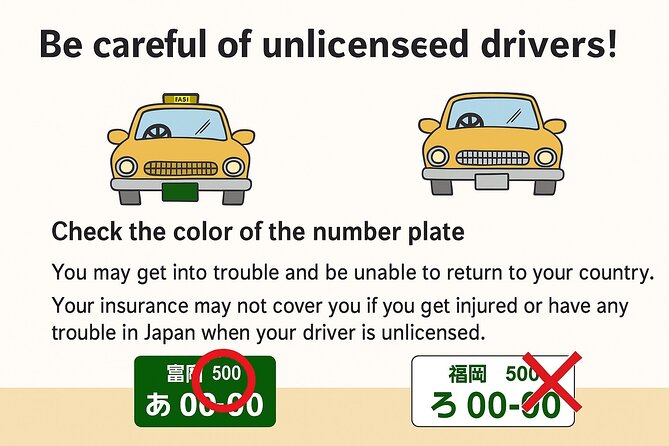
The operator emphasizes safety and reliability in a way that matters in Japan, where traffic can feel fast and complicated even when everything is orderly. The tour includes a private vehicle driven by a professional licensed driver with a green number, and it explicitly frames this as a response to incidents seen with unlicensed or inexperienced drivers elsewhere.
For you, the useful part is what this reduces. You get fewer surprises, and you are more likely to arrive on time when you have back-to-back stops.
On top of that, the guide is local and bilingual. The overview notes free Japanese language support in emergencies, plus complimentary support for Shinkansen and restaurant reservations. That last bit is not a sightseeing feature, but it is practical if you are traveling onward after the tour and want your next day to start smoothly.
You also get Wi-Fi on board and an air-conditioned vehicle. Small comfort, big payoff, especially when your schedule has many stops.
Entrance fees and the cash add-on: what to budget so you are not caught off guard
Entrance fees are not included. Many of the big-ticket temples and special experiences listed have admissions, including Tenryu-ji, Sagano Romantic Train, Monkey Park Iwatayama, Kinkaku-ji, Kiyomizu-dera, Ginkaku-ji, Sanjusangendo, Nijo Castle, Amanohashidate, Ine no Funaya, Amanohashidate View Land, Todai-ji, Kasuga Taisha, and Kofuku-ji Temple.
Also note a cash add-on: gas, parking, and highway fees in Japanese yen are listed as ¥10,000 per booking, paid on the tour day. That is not a separate fee for each person, but it is still something to plan for in advance.
If you like clean budgeting, bring some extra cash and be ready for multiple ticket purchases throughout the day. Your guide can help you keep things organized, but the costs still come from you.
Is the $459.81 private car price worth it for your group?
At $459.81 per group, up to 13 people, this pricing can be strong value if you have a family, a small group of friends, or anyone who hates station transfers. One guide and one driver for a full day means you are paying for convenience, interpretation, and logistics control.
If you are traveling solo and would otherwise take taxis or transit, the cost can feel high. But this tour’s math changes quickly with more people, because the car is private and the schedule is packed with major sites. Also, the inclusion of hotel pickup and drop-off is a meaningful part of the value because you do not have to coordinate meeting points with buses or trains.
For the best value, think about what costs you would pay on your own: paid transport, time spent in transit, and the opportunity cost of a short day. This tour buys you a structured flow, plus bilingual guidance that helps you understand what you are seeing.
Should you book this Kyoto and Nara private car tour?
Book it if you want a stress-light, guided day that hits Kyoto icons and Nara essentials, with a private car that reduces transit headaches. It is especially a good fit for families, mixed ages, or anyone who wants to see a lot without becoming a logistics coordinator.
Skip it, or at least adjust expectations, if you dislike rushed schedules or you want deep time in gardens and halls. This route is packed, and each stop is short. Also, if you are trying to keep entrance costs extremely low, remember that many of the marquee sites are not free.
If your priority is comfort, clear English guidance, and efficient coverage, this is a smart way to do Kyoto and Nara in one day. If your priority is slow travel and unplanned wandering, you may prefer a lighter route with fewer stops.
FAQ
How long is the Kyoto and Nara private car tour?
The tour duration is about 10 hours.
How many people can join the private tour?
The tour is for one private group, up to 13 people.
Is hotel pickup and drop-off included?
Yes, hotel pickup and drop-off are included.
Does the guide speak English?
Yes. The tour includes an experienced local guide who speaks English and Japanese.
Are entrance fees included for temples and attractions?
No. Entrance fees are not included.
Are meals included?
No. Meals are not included.
Is Wi-Fi provided in the car?
Yes, Wi-Fi is provided on board.
What extra costs should I expect on the day?
Gas, parking, and highway fees are listed as ¥10,000 per booking, paid in Japanese yen on the tour day.
Can this tour be customized?
Yes, the tour is described as fully customizable based on your preferences.
A Driver for the Day
New This Season
- Koyasan Day Trip by Private Car from Kyoto
- Old Port Town and Ultimate Sake Tasting Private Tour From Kyoto
- Kyoto’s Timeless Charm: 3hr Exploration of History and Peace
- Kyoto: 5 Types of Sushi Making
- Sacred Peak & Ancient Paths: Kurama-Kibune Hiking Experience
- Kyoto: Exclusive ZEN practice at Manpukuji temple in Uji
- Kyoto: Private Seasonal Aroma Yoga Class
- Traversing Kyoto’s Scenic West – Arashiyama to Kinkakuji
Nara & Deer Park Day Trips, compared.
Kinkakuji,Arashiyama,FushimiInariShrine,NaraPark
Read our review →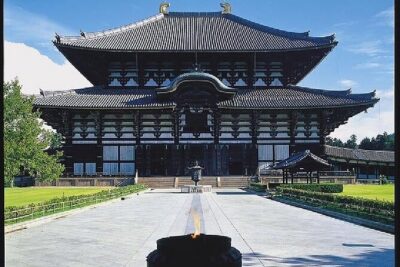
Nara, Fushimi Inari Taisha, Arashiyama Bus Tour
Read our review →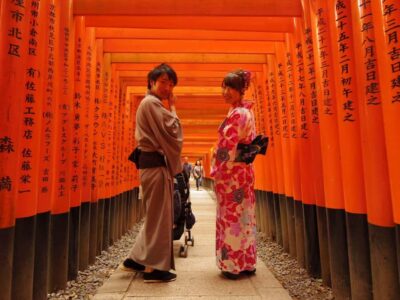
Arashiyama, Nara & Fushimi Inari Shrine w/Lunch
Read our review →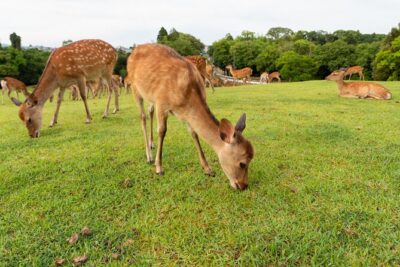
Full Day Guided Tour to Kyoto and Nara from Osaka by Van
Read our review →