Reviewed · KIYOMIZU-DERA TEMPLE VISITS
Kyoto Bus Tour: Iconic Kinkakuji, Ginkakuji, Kiyomizu Temple
Three temples in 4.5 hours.
This bus tour is interesting because it stacks Kyoto’s three big World Heritage temple stops into one scheduled ride, with admission handled for you and a multilingual GPS audio guide (English, Chinese, and Korean) to keep you moving. If you want a time-efficient way to see Kinkakuji, Ginkakuji, and Kiyomizu-dera without getting lost in station-to-temple logistics, this is built for that.
The main thing to watch is pace. This style of tour runs on strict timing, and if you miss the displayed return time, the bus moves on, leaving you to get your own way.
In This Review
- Kyoto Station to Three Temples: Key Things You Should Know
- Price and What You Actually Get With Kyoto’s Temple Trio
- Meeting Point on Kyoto Station Side, and the Timing Rule That Matters
- How This Tour Guides You: Audio, GPS, and a Japanese-speaking Guide
- Kinkakuji Golden Pavilion: Photo Focus vs Quiet Detours
- Ginkakuji Silver Pavilion: Use the Contrast in Mood
- Kiyomizu-dera: A Big Site Means Smart Priorities
- Transport Feel on the Bus: Sharing Seats and Keeping Up
- Admission Included, Audio Included, But You Still Own Your Temple Time
- The One Review Warning Sign, and How to Avoid That Problem
- Who This Tour Suits Best (and Who Should Skip It)
- Quick Value Check: Is $57.50 Worth It for You?
- Should You Book This Kyoto Bus Tour?
- FAQ
- What is the duration of the Kyoto Bus Tour?
- How much does the tour cost?
- What time does the tour start?
- Where do I meet the tour?
- Does the tour include temple admission?
- What language options are available for the audio guide?
- Is there a guide with the tour?
- Is transportation included?
- What happens if I am late back to the bus?
- Can I cancel for a full refund?
Kyoto Station to Three Temples: Key Things You Should Know
- World Heritage trio in one ride: Kinkakuji, Ginkakuji, and Kiyomizu-dera.
- Admission is included: you do not have to buy entry tickets for the temples on the route.
- GPS-enabled audio guide: English, Chinese, and Korean narration through the on-board system.
- Fixed return times: the guide shows your next departure time, and the bus will not wait.
- On-board Japanese-speaking guide: helpful for logistics, but explanations are primarily delivered through audio.
- Small group cap: up to 35 travelers, plus you will likely share seats with Japanese tourists.
Price and What You Actually Get With Kyoto’s Temple Trio
At $57.50 per person for about 4 hours 30 minutes, this is a “buy time and convenience” kind of tour. You are not just paying for the temples, you are also paying for the bus transport and the on-board guidance system that helps you understand what you are looking at while you are between stops.
Here’s the practical value: admission is included, so your day is less about ticket logistics and more about deciding where to stand, what angle you want for photos, and how much time you want for walking paths and stairs. That matters in Kyoto, where it is easy to burn time at every turn.
Still, check what is not included. Food and drinks are not part of the deal, and there is no hotel transfer. You will make your own way to the departure point near Kyoto Station, and you will likely need to plan a snack or cash for drinks so the tour does not turn into an energy crash halfway through.
Meeting Point on Kyoto Station Side, and the Timing Rule That Matters
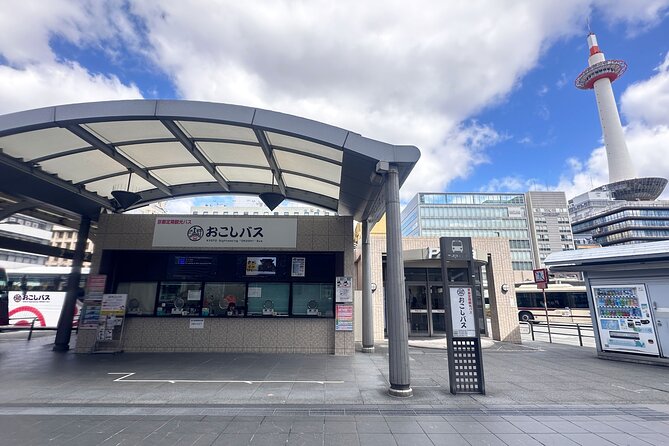
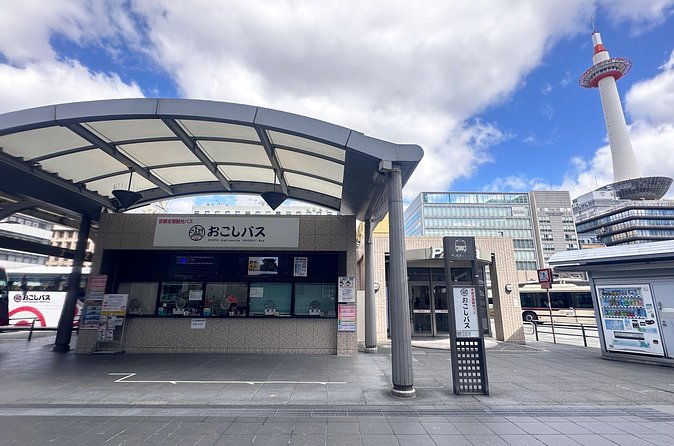
The tour starts at 9:30 am at the Bus Ticket Centre / Information Centre near Kyoto Station, listed at 902 Higashishiokōjichō, Shimogyo Ward. The ticket redemption point is also at Kyoto Sta., Higashishiokojichō, Shimogyo Ward, Kyoto.
Two details here can make or break your experience:
- Arrive at least 20 minutes early. The bus departs on time, and late arrivals will not be permitted with no exceptions.
- Your boarding ticket functions like an entry pass for major sightseeing locations tied to the tour. Keep it safe until the end. If you lose it, it cannot be reissued. The ticket can be exchanged starting three days prior to your boarding date.
If you are even slightly risk-prone about train timing or walking speed, build in extra buffer. Kyoto Station is big, and it is easy to waste 10 minutes just finding the right pickup line.
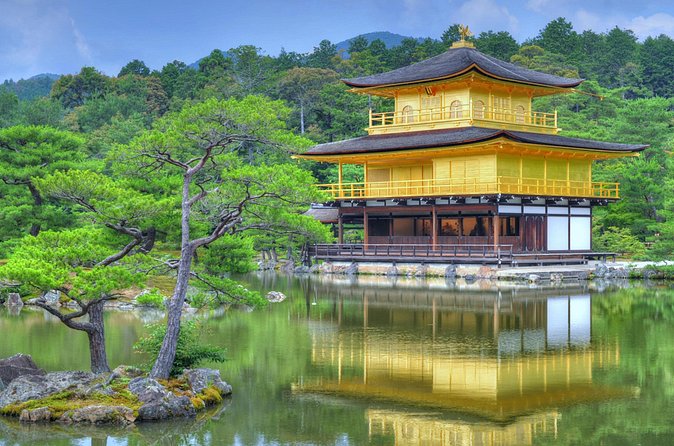
Kinkaku-ji's gold roof over still water
- Kyoto: Fushimi Inari, Kinkakuji, Bamboo Grove 1 Day Bus Tour
★ 4.8 · 4,316 reviews - Osaka/Kyoto:Kinkakuji,Arashiyama,FushimiInariShrine,NaraPark
★ 4.1 · 1,596 reviews - Kyoto: Nijo, Kinkaku-ji, Arashiyama, Kiyomizu & Fushimi Inari
★ 5.0 · 699 reviews - Kyoto: Kinkakuji, Golden Pavilion Guided Tour
★ 4.7 · 71 reviews
How This Tour Guides You: Audio, GPS, and a Japanese-speaking Guide
One of the most important things to understand is how the guidance works. This tour includes an on-board audio guide in English, Chinese, and Korean, delivered with GPS-enabled support. You also have a Japanese-speaking guide on the bus.
What that usually means for your expectations: you get narration while you are on the way, not a long scripted talk at every temple site. In fact, feedback linked to this tour highlights a mismatch that can happen when you want more on-site explanation. If you are the type who enjoys a guide stopping at key spots to point out details in real time, you may feel the pace is fast and the explanation light because a lot of the teaching is happening through audio.
That is not automatically bad. Audio can be great when you want to move at your own pace and listen when you are ready. But it does mean you should treat temple time as your job: you walk, you choose your viewpoint, and you use the audio for context.
Kinkakuji Golden Pavilion: Photo Focus vs Quiet Detours
Kinkakuji, the Golden Pavilion, is one of those Kyoto sights that looks like a postcard, but the real experience is in the details. You are going to be close to the iconic image fast, and you will also see why the setting matters: the pavilion’s reflective look is tied to how the water and surroundings frame it.
With limited time on a bus tour, I recommend you do this in two phases:
- First, find the main angle quickly. Get your classic view, then
- Walk a bit and let your eyes adjust. Even without a long explanation, you can pick up how the architecture changes depending on where you stand.
Potential drawback: because the tour runs by schedule, your time at Kinkakuji may feel rushed if you stop every few steps to listen and read everything. If you want more breathing room, plan your expectations around “see the big picture and the best viewpoints,” not “slow study.”
Also note the operational rhythm: at each stop, the guide displays the return time for the bus. Confirm it, then set a mental checkpoint for yourself. When the return clock is running, your best strategy is to work backward from the bus time.
Ginkakuji Silver Pavilion: Use the Contrast in Mood
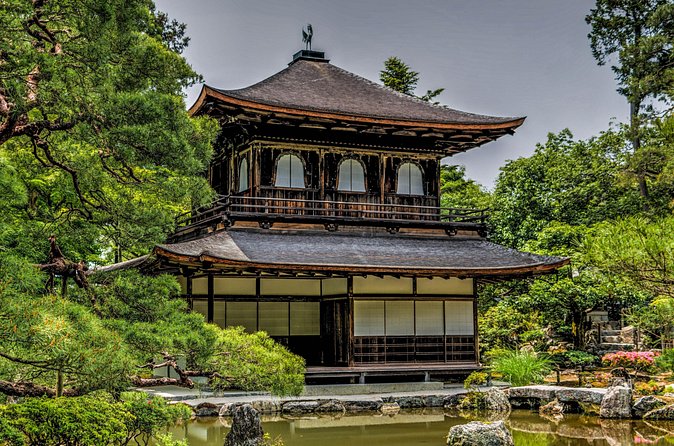
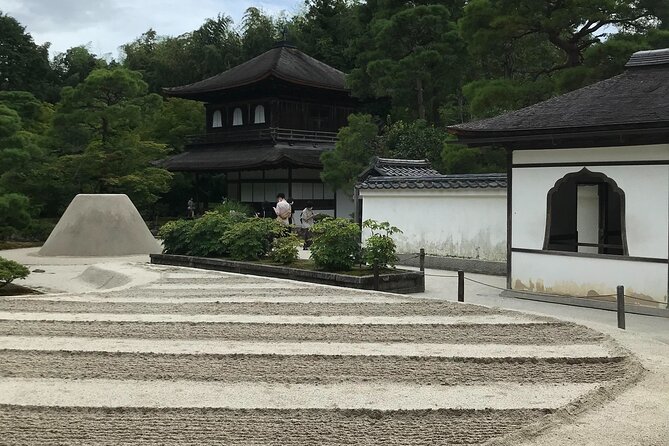
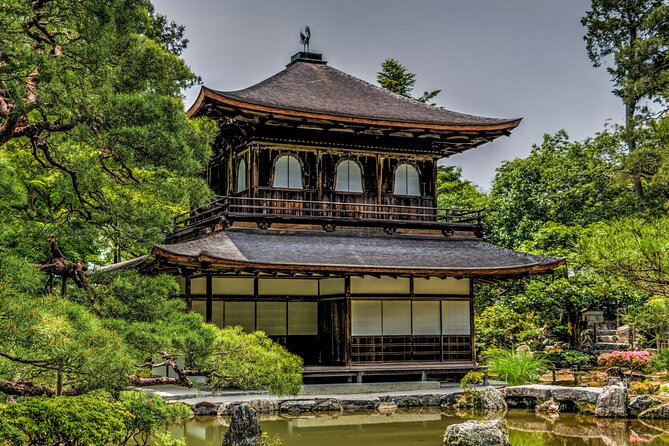
Ginkakuji, the Silver Pavilion, is often less about silver itself and more about restraint. The experience can feel calmer than Kinkakuji, partly because the vibe is different and partly because you are not staring at the same level of visual spectacle.
If you approach this stop with intention, you can get a good “Kyoto lesson” from the contrast. Golden Pavilion is about the immediate wow factor. Silver Pavilion can be about subtlety and atmosphere, including how the site looks from different directions.
A practical tip: before you start walking, pause and check what you can see from your current position. On a time-crunched tour, you do not need to cover every path. You need a viewpoint that makes you feel like you understood the place. Then you can spend the rest of the time roaming lightly rather than sprinting.
Timing concern: again, return times are not suggestions. If you want even a short stroll, watch the clock on your phone and match it to what the guide tells you before you head deeper into the grounds.
Kiyomizu-dera: A Big Site Means Smart Priorities
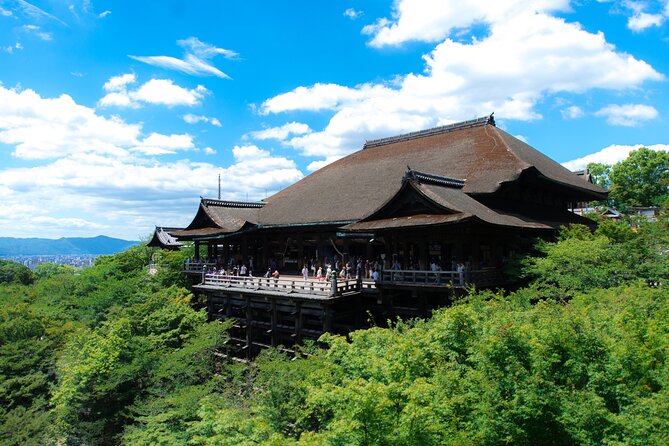
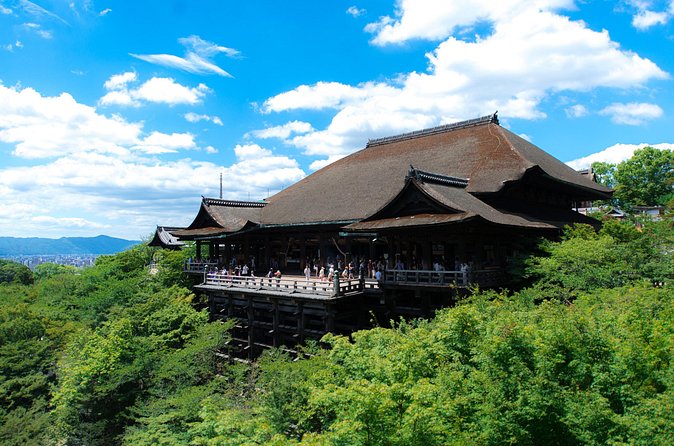
Kiyomizu-dera is one of Kyoto’s biggest temple experiences, and it comes with a lot of movement. This stop is likely where your legs will notice you. Even if you are not thinking about it ahead of time, you will want comfortable shoes and a plan for how long you can stand, how long you can climb, and where you want your main view.
What you can do to make it satisfying on a bus tour:
- Decide your main viewpoint early. You can always explore after.
- Keep a flexible route. If the area is crowded, you may not get the exact angle you want, but you can still get a strong sense of the site.
The tour’s structure can help here because you are not stuck planning between temples. You are dropped at a legendary stop, you have a window, and you return to the bus on schedule.
What could disappoint you is simple: if you expected a slow, guided walking tour through Kiyomizu-dera with detailed on-site commentary, you might find the experience more self-directed. The audio guide can help, but the on-site guide time is not described as a long stop-by-stop explanation.
The wooden stage above the hillside

Transport Feel on the Bus: Sharing Seats and Keeping Up
This tour is capped at 35 travelers, and it is described as sharing the ride with Japanese tourists. That detail matters more than you might think. In practice, that often means you are not the only group trying to manage timing and audio volume at once.
You will also want to treat the bus as the anchor. The tour runs like a chain: bus, temple, bus, temple. When you remember that, your day gets easier. You return on time, you listen to the audio segments during transitions, and you do not get caught in the trap of assuming the next stop is a quick walk from the last one.
Group size helps, too. A 35-person cap is not tiny, but it is not huge. You should be able to move around at stops, especially if you are not trying to photograph everything from the exact same spot.
Admission Included, Audio Included, But You Still Own Your Temple Time
This is where the tour design becomes very clear. You get admission and on-board GPS audio. You do not get included meals, and you do not get long, personalized, at-each-site guiding time spelled out in the details you were given.
In other words, you are being set up to do two things:
- Ride efficiently between three major landmarks.
- Use audio as your background guide while you explore.
That can be a fantastic match for first-time Kyoto visitors who feel overwhelmed by logistics and want to see the highlights without building a route. But it is not ideal if you want a slow, interactive lecture style tour where a guide explains every choice of where to stand.
The One Review Warning Sign, and How to Avoid That Problem
There is at least one strongly negative account tied to this tour style. The criticism centered on a guide moving quickly between points without enough explanation, leaving the group at the destination. The operator’s response clarified that this product offers audio guides inside the bus, not an extended, on-site explanation service.
So here is how you protect yourself from that mismatch:
- Use the audio before you arrive at each temple area. Do not wait until you are already walking away from the key spot.
- Treat your time as your responsibility. If the bus shows a return time, plan to be back early, not exactly on time.
- If your dream is a slow, deeply narrated temple walk, consider that this tour is built around transportation plus audio, not a long guided stroll.
A tour like this can still be enjoyable even if you are not getting a live lecture at each stop. You just need the right mindset going in.
Who This Tour Suits Best (and Who Should Skip It)
This tour is a good fit if you:
- Want to see Kinkakuji, Ginkakuji, and Kiyomizu-dera in one half-day without dealing with bus transfers.
- Like using audio guides and want narration in multiple languages.
- Are comfortable exploring on your own once you are dropped off, with return times clearly explained.
It may not suit you if you:
- Want lots of live on-site explanation at each temple.
- Prefer long free time at stops rather than a structured schedule.
- Feel anxious about strict meeting and return timing.
If you are traveling with family, this can be workable because the bus route reduces stress. Just set expectations with your group about getting back at the stated return times.
Quick Value Check: Is $57.50 Worth It for You?
Value is personal, but here is a grounded way to judge it.
You likely feel good about the price if:
- You would otherwise spend time piecing together transit and possibly admission.
- You value having admission handled and a multilingual guide in your ear.
- You want a clean, scheduled route rather than experimenting.
You might question the price if:
- You want a lot of live guiding at the temples.
- You would rather slow down and explore more than three sites.
- You are already comfortable navigating Kyoto by public transit and you enjoy building your own day.
For many visitors, the biggest hidden benefit is time saved. Kyoto logistics are doable, but they are not always painless. This tour compresses the decision-making.
Should You Book This Kyoto Bus Tour?
If your priority is a fast, structured way to hit Kyoto’s signature temples, this tour can be a solid booking. The included admission, the GPS-enabled multilingual audio, and the bus pickup near Kyoto Station make it a convenient way to get a lot of Kyoto in one window.
If your priority is a slow, deeply explained, hands-on guide experience at each temple, you should probably rethink it. The format leans on audio delivered on the bus, and strict return times are part of the deal. Go in with that expectation, and you will likely be happier.
If you do book, my advice is simple: arrive early, confirm the return time each stop, and plan for a bit of walking stamina, especially at Kiyomizu-dera.
FAQ
What is the duration of the Kyoto Bus Tour?
The tour duration is approximately 4 hours 30 minutes.
How much does the tour cost?
The price is $57.50 per person.
What time does the tour start?
The start time is 9:30 am.
Where do I meet the tour?
You meet at the Bus Ticket Centre / Information Centre, 902 Higashishiokōjichō, Shimogyo Ward, Kyoto, 600-8216, Japan.
Does the tour include temple admission?
Yes. Admission to all temples visited during the tour is included.
What language options are available for the audio guide?
The on-board audio guide is available in English, Chinese, and Korean.
Is there a guide with the tour?
Yes. A Japanese-speaking guide accompanies the tour.
Is transportation included?
Yes. Transportation by bus is included.
What happens if I am late back to the bus?
Before leaving each sightseeing spot, the guide displays the return time. If you do not follow the instructions and return on time, the bus will depart for the next destination without waiting.
Can I cancel for a full refund?
Yes. Free cancellation is available if you cancel up to 24 hours in advance of the experience start time for a full refund.
Temples and Shrines

New This Season
- Koyasan Day Trip by Private Car from Kyoto
- Old Port Town and Ultimate Sake Tasting Private Tour From Kyoto
- Sacred Peak & Ancient Paths: Kurama-Kibune Hiking Experience
- Kyoto’s Timeless Charm: 3hr Exploration of History and Peace
- Kyoto: 5 Types of Sushi Making
- Kyoto: Exclusive ZEN practice at Manpukuji temple in Uji
- Kyoto: Private Seasonal Aroma Yoga Class
- Traversing Kyoto’s Scenic West – Arashiyama to Kinkakuji
Kiyomizu-dera Temple Visits, compared.
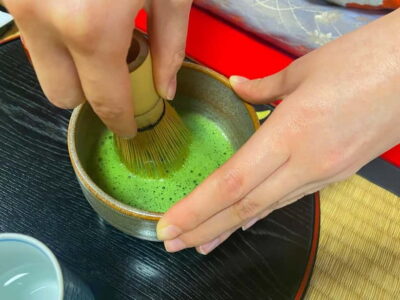
Tea Ceremony in a Traditional Tea House in Kiyomizu
Read our review →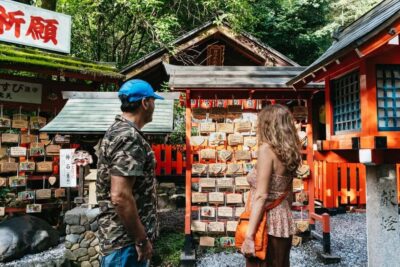
Nijo Castle, Kiyomizu & Fushimi Inari Guided Tour
Read our review →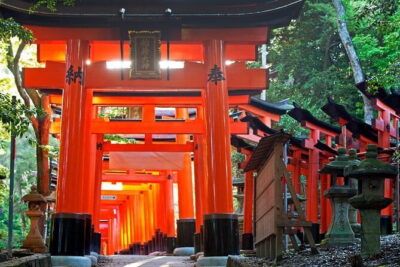
Nijo, Kinkaku-ji, Arashiyama, Kiyomizu & Fushimi Inari
Read our review →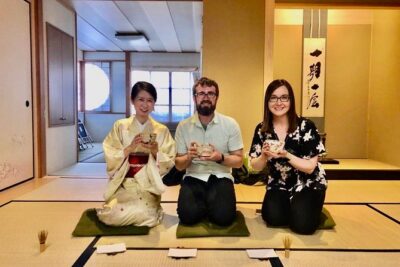
Kyoto Tea Ceremony & Kiyomizu-dera Temple Walking Tour
Read our review →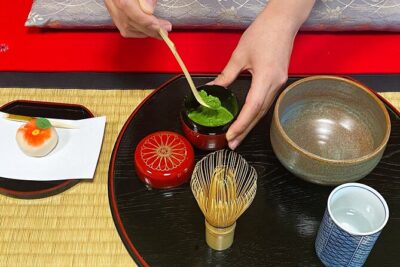
Kyoto Kiyomizu Tea Ceremony with Scenic Garden Views
Read our review →
Kimono/Yukata Rental 5 Minute from Kiyomizu-dera
Read our review →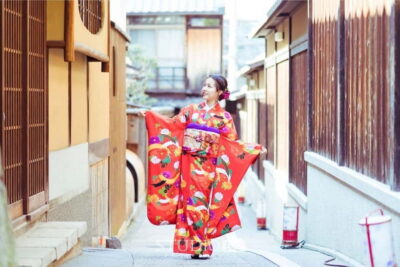
Kyoto Gion Kiyomizudera Kimono Yukata Hairstyle | Photoshoot
Read our review →