
Reviewed · ARASHIYAMA BAMBOO FOREST WALKS
Kyoto: Descending Arashiyama (Private)
Arashiyama can feel chaotic, until someone maps it for you. This private Kyoto walk strings together the big-name sights and the quieter corners between them, with a guide who helps you move with confidence instead of wandering. I really like the way the route covers multiple temples and gardens in one day, and I also like that the pacing includes a proper tea pause at an Edo-period cafe. One thing to consider, this is still a lots-of-walking day, so comfortable shoes matter.
The tour’s standout is how much context you get as you go, especially from guides such as Andrew, who focuses on what gardens are trying to show you and why. You’ll spend time with some genuinely unusual places, like a temple garden filled with stone Buddhas and a moss garden tucked in bamboo shade. The one drawback for some people is cost creep if you do not plan for paid entries, since admissions are not included and you need extra cash on hand.
In This Review
- Key points at a glance
- Why Arashiyama Feels Easier With a Private Guide
- Meeting at Randen Arashiyama Station, Timing, and Walking Reality
- Stop 1: Togetsukyo Bridge, The Photo Start That Sets the Tone
- Tenryu-ji Temple: Zen Garden Time at a Major Early Zen Site
- Otagi Nenbutsu-ji Temple and Its 1,200 Stone Buddhas
- Ayuchaya Hiranoya: An Edo-Period Tea Break That Actually Refreshes You
- Adashino Nembetsu-ji: Over 8,000 Memorial Stones and Bamboo Walks
- Gio-ji Temple’s Moss Garden, Founded by Two Ex-Geisha
- Okochi Sanso Garden: Views Built for a Silent Film Star
- Sagano Bamboo Grove Trail: The Sagano Bamboo Grove, With a Plan
- Price and What You’re Paying For at $690 per Group
- What Makes the Experience Stand Out in Real Life
- Who This Tour Fits Best
- Should You Book This Private Kyoto Day?
- FAQ
- How long is the Kyoto Arashiyama Descending tour?
- What does the tour cost?
- Is the tour private?
- How many people are in the group?
- Where do we meet, and when does it start?
- What is included in the price?
- Are admission tickets included?
- Is lunch included?
- What if the weather is bad?
- Is it stroller-friendly?
Key points at a glance
- Private, low-stress format: only your group participates, with a cap on group size
- Iconic plus off-mainstream: Togetsukyo Bridge and Sagano Bamboo Grove, plus several lesser-known temple stops
- Garden-focused storytelling: Andrew-style explanations connect each scene to its design choices
- Real culture stops: Zen temple gardens, a Heian-era temple, and an Edo-period cafe break
- Plan for admissions cash: bring additional yen for entry fees and budget lunch
Why Arashiyama Feels Easier With a Private Guide
Arashiyama is one of those Kyoto areas where you can accidentally lose an hour just moving between places. This experience solves that by pairing you with a professional guide and building a logical route across major sights and calmer temple grounds.
I love how the tour is designed so you can stop thinking about logistics and start thinking about what you’re seeing. That matters with bamboo season, when crowds can turn every photo into a waiting game. With a guide, you also get context fast, like what a garden is meant to communicate, not just what it looks like.
The group stays small, and because it’s private, you are not shoehorned into someone else’s plan. That flexibility is one of the reasons people rate this so highly, especially for learning and feeling like the day actually had a point.
Meeting at Randen Arashiyama Station, Timing, and Walking Reality
You start at Randen Arashiyama Station Center, a short hop from public transportation. The tour begins at 9:30 am and runs about 7 hours 30 minutes, returning you back to the same meeting point.
Here’s the practical side: this is a moderate physical activity day. You will be walking from site to site for most of the afternoon, with stops that range from about 30 minutes to 1 hour. If your body prefers frequent breaks, you will still be okay, but you should pace yourself and keep water handy.
Strollers are available, and you can store them at each site’s reception desk. One key limitation is that strollers are not allowed inside the sites themselves, so you will need to plan for that short handling step.
Also, the tour needs good weather. If conditions are poor, the operator offers a different date or a full refund. So, if you’re traveling in rainy season, build in some slack in your schedule.
Green light through a bamboo grove
- Kyoto: Fushimi Inari, Kinkakuji, Bamboo Grove 1 Day Bus Tour
★ 4.8 · 4,316 reviews - Osaka/Kyoto:Kinkakuji,Arashiyama,FushimiInariShrine,NaraPark
★ 4.1 · 1,596 reviews - Kyoto/Osaka: Nara, Fushimi Inari Taisha, Arashiyama Bus Tour
★ 4.7 · 1,275 reviews - Kyoto Arashiyama Walking Tour: Bamboo, Monkeys, Gardens & Secrets
★ 5.0 · 1,216 reviews
Stop 1: Togetsukyo Bridge, The Photo Start That Sets the Tone
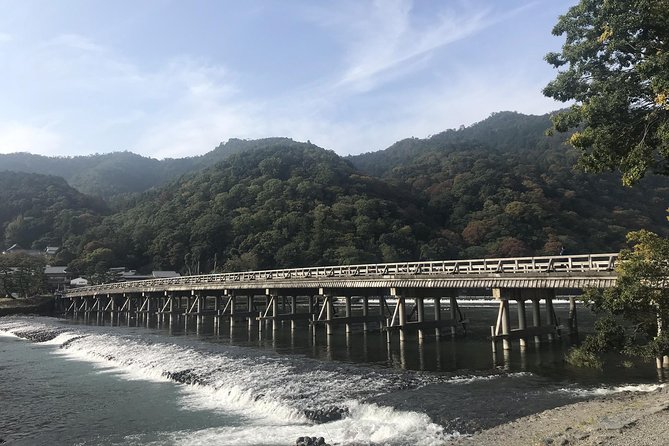
You kick off at Togetsukyo Bridge, one of the iconic images people associate with Arashiyama. It’s short and sweet at about 20 minutes, and it works as a visual warm-up for the rest of the day.
This is your chance to orient yourself. After that first look, the downstream sights make more sense, because you understand the geography of the area and how the river and pathways fit together.
Potential downside: it’s a famous start, so it can be busy. Going early helps, but even with a guide, don’t expect this to feel like a quiet viewpoint. Think of it as a steady opening act, not the emotional peak of your day.
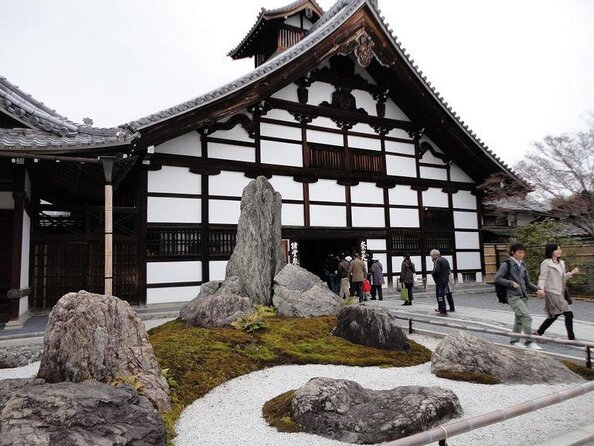
Tenryu-ji Temple: Zen Garden Time at a Major Early Zen Site
Next up is Tenryu-ji Temple for about 1 hour. This is one of the early Zen temples in Japan and it’s known for a standout Zen garden.
If you only pass by gardens, you tend to miss what makes them special. A guide helps you notice design choices, like where your line of sight goes and how the garden is arranged to change how you feel while you walk.
Admission is not included here, so remember to budget for entry fees. The upside is that the time you get is enough to slow down and actually experience the garden, not just tick it off.
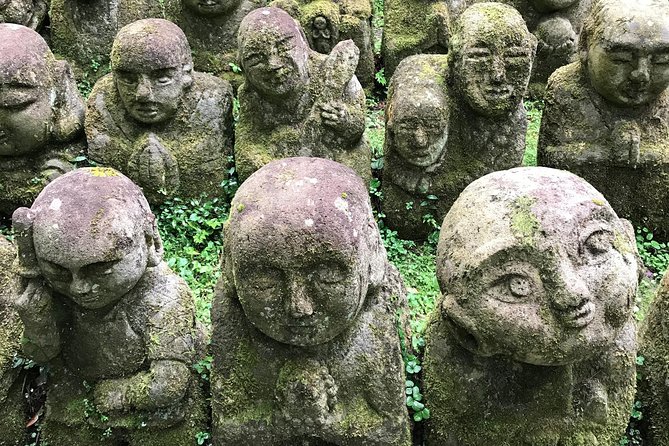
Otagi Nenbutsu-ji Temple and Its 1,200 Stone Buddhas
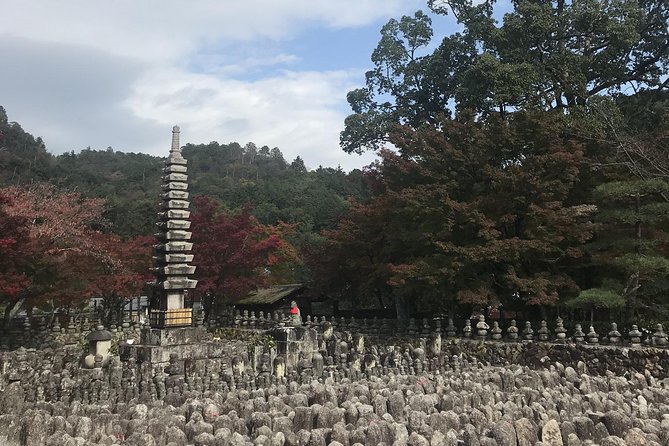
Then the tour heads to Otagi Nenbutsu-ji Temple, where history reaches back to the Heian period. You’ll spend about 1 hour walking the grounds and focusing on 1,200 stone Buddha statues.
This stop is the kind of place where the scale surprises you. Instead of one impressive object, you get an entire field of small, repeated forms, which changes how you experience the space. The guide’s explanations also help you avoid seeing it as just a photo wall.
One practical note: this is a walking temple environment. If you are sensitive to uneven ground, take your time and wear shoes with grip. The payoff is that it feels different from the more predictable Arashiyama highlights.
Ayuchaya Hiranoya: An Edo-Period Tea Break That Actually Refreshes You
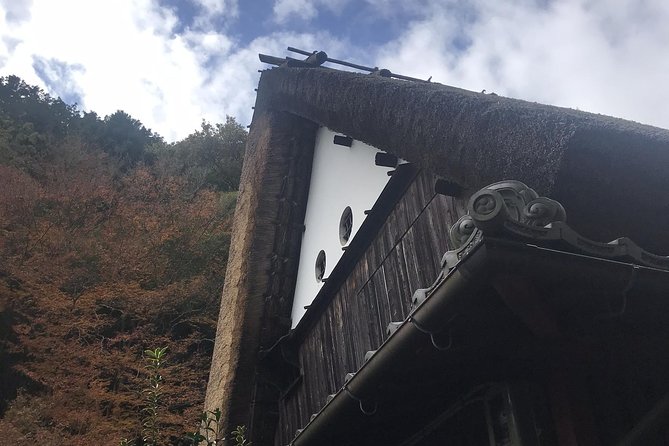
After the temples, you take a breather at Ayuchaya Hiranoya, an Edo-period cafe. You’ll have tea and sweets here for about 1 hour.
I like this kind of cultural pause built into a walking day. Tea helps reset your pace and gives you a chance to sit, look around, and recharge before the afternoon gets more temple-and-garden heavy.
Admission is not included for this stop, but it’s not an extra-ticket trap like some sightseeing stops can be. The tour also gives you a framework for lunch later, with a budget note that lunch cost should not exceed 1,500 yen per guest.
The only consideration is that sweets and tea may not be enough if you burn through calories. Plan to eat lunch after, with your guide’s timing in mind.
A quieter way to spend a day in Kyoto


Adashino Nembetsu-ji: Over 8,000 Memorial Stones and Bamboo Walks
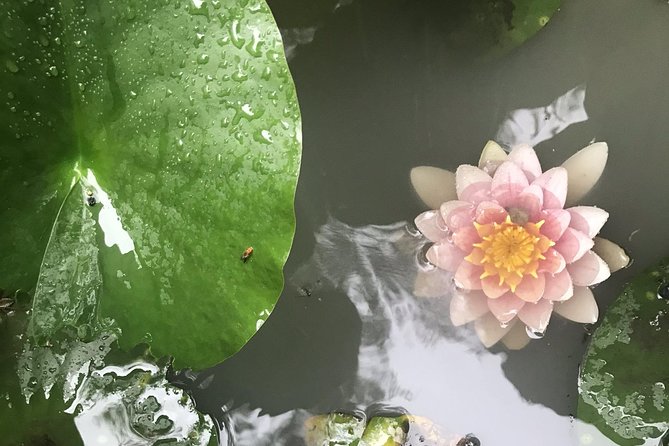
Next is Adashino Nembetsu-ji Temple, where you’ll see more than 8,000 memorial stones gathered from nearby mountains. You’ll spend about 1 hour here, and you also get a small bamboo grove that adds a picturesque touch.
This stop has a different emotional tone than the bamboo forest. Instead of focusing on a single iconic view, you’re surrounded by thousands of memorial stones, each one part of a larger story. A guide helps you understand why the site is arranged this way, and that context makes the scale feel meaningful instead of overwhelming.
Expect this to be a contemplative walk, but still a walk. If you want photos, you can find viewpoints, but the main value is the experience of moving through the grounds slowly.
Gio-ji Temple’s Moss Garden, Founded by Two Ex-Geisha
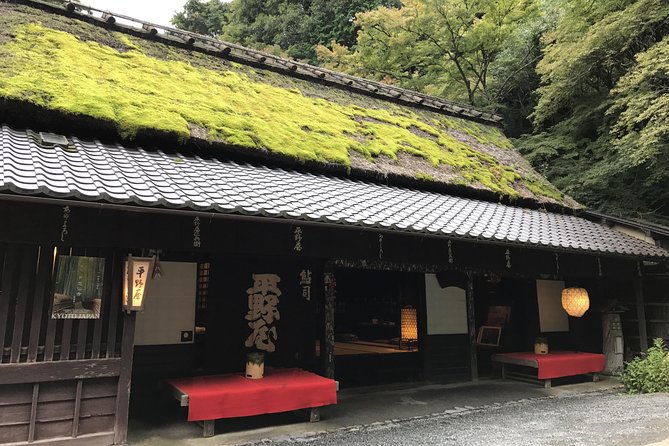
For Gio-ji Temple, you’ll spend about 30 minutes. The site was once a nunnery founded by two ex-geisha, and you’ll walk through a moss garden surrounded by bamboo.
This is a good short stop when you want something calm without committing the whole hour. Moss gardens can be easy to overlook if you rush, and the bamboo framing helps your attention stay on the ground-level textures.
Admission is not included here, so factor that into your cash planning. If you tend to enjoy detail work, like how moss carpets change with light and shade, you’ll appreciate the time you get.
Okochi Sanso Garden: Views Built for a Silent Film Star
Then you head to Okochi Sanso Garden for about 1 hour. It’s the sprawling estate of a well-known silent film actor, and the views from here are described as some of the best in all of Arashiyama.
This is where Arashiyama shifts from temple immersion to a broader scenic payoff. Gardens at this kind of estate often feel designed for stopping at specific overlooks, and a guide’s garden commentary can help you appreciate the planning behind where you stand.
Practical consideration: you’ll want to bring your attention to both the view and the garden design. If you only look outward, you might miss the reason the path and planting matter.
Admission is not included, so again, keep the entry cash ready.
Sagano Bamboo Grove Trail: The Sagano Bamboo Grove, With a Plan
Finally, you reach the Bamboo Forest Trail, including the Sagano Bamboo Grove, for about 30 minutes. This is the part most people picture when they think of Arashiyama, so it’s also the part where crowds can be strongest.
Because the rest of the day has already built context, this stop feels less like a single photo moment and more like the payoff. You can look at bamboo patterns, the way pathways funnel you, and how the light changes as you walk in.
One practical tip: don’t rush to get to the perfect frame. If you move slowly for those 30 minutes, you’ll notice more than the same thirty-second clip. With a guide, you may also find that you spend more time actually experiencing the forest, not just queueing.
Admission is not included for this stop, but it’s worth it to budget for because it’s one of the signature places in Kyoto.
Price and What You’re Paying For at $690 per Group
The price is $690 per group, up to 4 people. It’s a private tour, so your group gets a dedicated guide instead of sharing attention with strangers.
I look at value in two buckets: time and decision-making. This day is scheduled across major sites that would otherwise take research and careful route planning to connect efficiently. You are not just buying entry tickets, you are buying a route and a guide who helps you make sense of what you see.
Now the money details that matter for planning: admissions are not included. You need to bring an additional 5,000 yen in cash for admission tickets. Lunch is also not included, and the tour notes that it should not exceed 1,500 yen per guest.
So the true cost for your day depends on party size and what you choose to eat. As a rough sense of scale, if you have four people sharing the group price, you divide the $690 into a much lower per-person figure than if you book as a couple. If you’re traveling solo or as two, the guide time still can be worth it, but you may feel the pricing more.
What Makes the Experience Stand Out in Real Life
What people love most here is that the day does not feel like a loud checklist. The route moves through famous places, but it also includes several stops that feel less routine, which helps Arashiyama feel varied instead of repetitive.
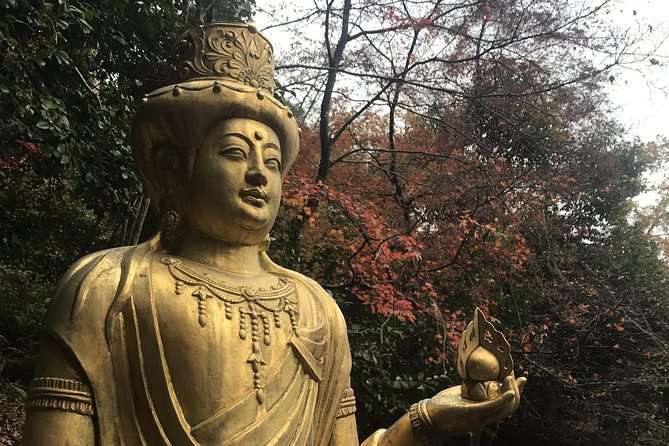
The other big praise is learning. Guides like Andrew are described as telling stories that connect the gardens to what they are, what they mean, and how they were created. That is the difference between walking through temples and understanding why the scenes look the way they do.
You also get a calmer atmosphere because the group stays small, and because it’s private. That supports questions, pacing, and spending time where your attention wants to linger.
Who This Tour Fits Best
This tour fits you if you want Arashiyama without doing a day’s worth of research first. You get a ready-made route, a guide to help you navigate, and context that makes the stops more than just pretty backdrops.
It also works well if you enjoy gardens, Zen spaces, and places where design matters. Stops like Tenryu-ji, Otagi Nenbutsu-ji, and Okochi Sanso reward people who like to slow down and pay attention.
If you want the least walking possible, you might want a shorter option. This tour has you on your feet for much of the day, and sites involve walking on temple grounds.
Should You Book This Private Kyoto Day?
I’d book it if your priorities are clear: see Arashiyama’s main icons, plus a stack of temple and garden stops that feel thoughtfully connected. The structure makes the day easier, and the guide style described by past visitors suggests you will come away understanding more than you expected.
I’d hesitate only if you hate walking or you want maximum free time to wander on your own with no plan at all. This is a guided experience with a schedule, and while there is room for appreciating each stop, you are still moving through the area purposefully.
If you do book, come with comfortable shoes, keep your cash for admissions ready, and plan for lunch with your budget in mind. You’ll get a day that feels like Kyoto, not like a rushing line between postcards.
FAQ
How long is the Kyoto Arashiyama Descending tour?
It runs for about 7 hours 30 minutes.
What does the tour cost?
The price is $690.00 per group, up to 4 people.
Is the tour private?
Yes. It’s a private tour, with only your group participating.
How many people are in the group?
It’s described as a small-group tour with a maximum of 7 travelers, even though the pricing is per group up to 4.
Where do we meet, and when does it start?
You meet at Randen Arashiyama Station Center, 20-2 Tsukurimichi-cho. The start time is 9:30 am.
What is included in the price?
A professional guide service is included. You also get a mobile ticket.
Are admission tickets included?
No. You need to bring additional cash of 5,000 yen for admission tickets.
Is lunch included?
Lunch is not included. The tour notes your lunch cost should not exceed 1,500 yen per guest.
What if the weather is bad?
The tour requires good weather. If it is canceled due to poor weather, you’ll be offered a different date or a full refund.
Is it stroller-friendly?
Strollers are available for use as you walk between sites, but they will not be allowed inside the sites themselves. You can store them at each site’s reception desk.
New This Season
- Koyasan Day Trip by Private Car from Kyoto
- Old Port Town and Ultimate Sake Tasting Private Tour From Kyoto
- Kyoto’s Timeless Charm: 3hr Exploration of History and Peace
- Kyoto: 5 Types of Sushi Making
- Sacred Peak & Ancient Paths: Kurama-Kibune Hiking Experience
- Kyoto: Exclusive ZEN practice at Manpukuji temple in Uji
- Kyoto: Private Seasonal Aroma Yoga Class
- Traversing Kyoto’s Scenic West – Arashiyama to Kinkakuji
Arashiyama Bamboo Forest Walks, compared.
Fushimi Inari, Kinkakuji, Bamboo Grove 1 Day Bus Tour
Read our review →
Kinkakuji,Arashiyama,FushimiInariShrine,NaraPark
Read our review →
Nara, Fushimi Inari Taisha, Arashiyama Bus Tour
Read our review →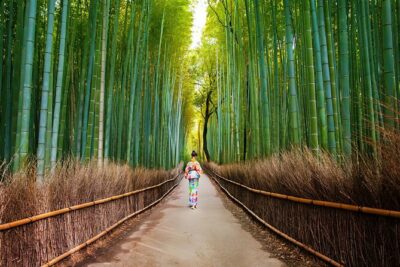
Kyoto Arashiyama Walking Tour: Bamboo, Monkeys, Gardens & Secrets
Read our review →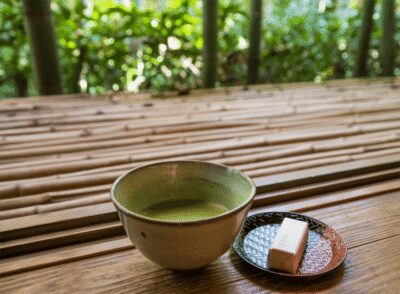
Arashiyama Bamboo, Temple, Monkeys, or Secret Sake Brewery
Read our review →
Arashiyama Bamboo Forest, Monkeys, Matcha & Temple Tour
Read our review →
Arashiyama, Nara & Fushimi Inari Shrine w/Lunch
Read our review →
Nijo, Kinkaku-ji, Arashiyama, Kiyomizu & Fushimi Inari
Read our review →Also filed under