Reviewed · FULL-DAY
Kyoto Full-Day Private Tour by Public Transportation
Kyoto rewards slow looking, even on a tight day. This full-day private tour threads Arashiyama bamboo, riverside views, and iconic temples into one smooth plan using public transportation. You get on-the-ground guidance to help you understand what you are seeing, not just where to stand.
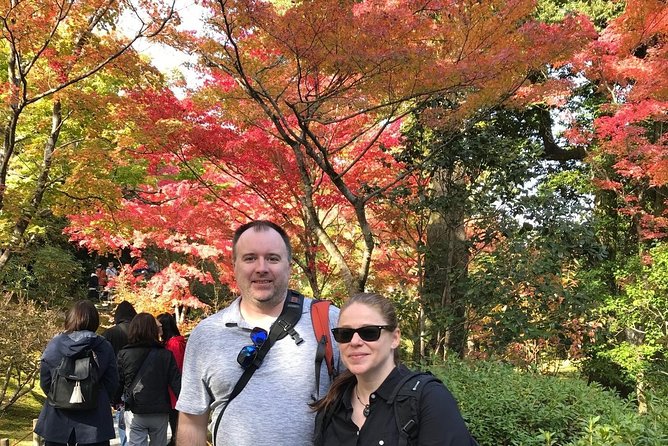
I love how the day is built around the big sights that people actually travel to Kyoto for, including the bamboo stretch near Nomiya Shrine, the rock garden at Ryoan-ji, and the Golden Pavilion at Kinkaku-ji. I also like the practical setup: hotel pickup in the lobby and no stressful meet-up maze, so you can focus on sightseeing instead of calendar logistics.
One consideration: major temple admissions are not included, and food and drinks are also on you. That means the final spend can be a bit higher than the headline price, especially if you add extra experiences like a rickshaw ride in the bamboo area.
In This Review
- Key highlights worth your attention
- How this Kyoto day plan fits together from bamboo to the Golden Pavilion
- Hotel pickup, mobile tickets, and how the schedule stays stress-free
- Bamboo Forest Street: the near-sky tunnel you can walk in an hour
- Togetsukyo Bridge over the Katsura River: a 155 meter photo line
- Tenryu-ji Temple: World Heritage setting and the garden mindset
- Ryoan-ji and the Karesansui rock garden: what to notice in quiet time
- Kinkaku-ji Golden Pavilion: the three-tier sparkle and the 1950 fire story
- Price and value: what $176.53 per person really includes
- Who should book this Kyoto day, and who might want a different pace
- Should you book it? My honest take
- FAQ
- How long is the Kyoto full-day private tour?
- Is this tour private?
- Does the tour use public transportation?
- Is hotel pickup included?
- Are admission fees included in the price?
- Which stops have admission tickets free?
- Can I add a rickshaw ride in the bamboo forest area?
- What is the cancellation policy?
- Do I get confirmation and a mobile ticket?
Key highlights worth your attention
- Private tour using public transit, so you get local pacing without renting a car
- Hotel lobby pickup and drop-off, which makes the whole day feel simple
- Arashiyama bamboo forest walk, a roughly 400 meter corridor of tall stalks
- Togetsukyo Bridge views, a long wooden bridge over the Katsura River
- Ryoan-ji rock garden time, plus seasonal note for Kyoyochi pond water lilies
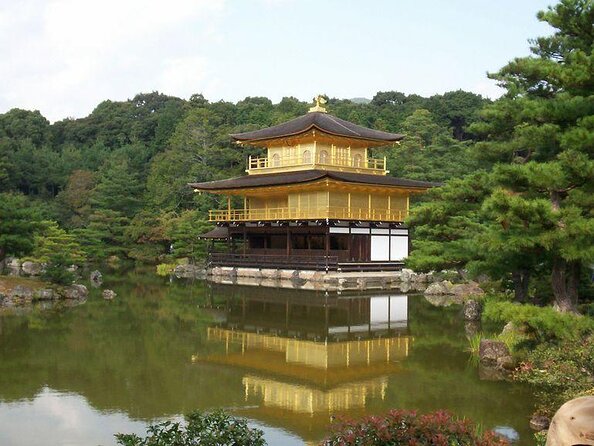
- Kinkaku-ji Golden Pavilion, rebuilt in 1955 after the 1950 fire
How this Kyoto day plan fits together from bamboo to the Golden Pavilion
Kyoto in one day sounds ambitious, but this route is smart because it clusters sights that belong to the same mental map. You start in the Arashiyama area for bamboo and riverside scenery, then you move through top temple stops that share a similar theme of gardens and carefully composed views. By the time you reach Kinkaku-ji, the day has built toward one of the city’s strongest “wow” moments.
What makes this plan work for you is the rhythm. Bamboo and river scenes help you reset, then temples shift you into a slower mode of observation. A private guide matters here because they can point out what to look for in each garden or courtyard, not just recite names.
Also, using public transportation changes the feel of the day. You will spend less time thinking about driving and parking, and more time in the neighborhoods where locals actually move through the day. It is a more eco-friendly way to tour, and it usually keeps you grounded in Kyoto’s real pace.
Hotel pickup, mobile tickets, and how the schedule stays stress-free
The biggest win is that you meet the guide at your hotel lobby and get taken back at the end of the day. That removes one of the most annoying parts of day tours: hunting for a meeting point while you are tired, jet-lagged, or trying to read transit signage.
You also get a mobile ticket, which helps the day run smoothly when you are hopping between stops. And because it is a private tour, it is only your group, so you are not stuck waiting on a large crowd or feeling rushed by other people’s pace.
One more detail that affects your experience: it is explicitly near public transportation. That matters because it usually means shorter walks at each transfer point, which helps when you are covering multiple attractions in a single day. You will still want comfortable shoes, but the day is not built like a long hike.
A quieter way to spend a day in Kyoto
- Fushimi Inari Hidden Hiking Tour (Private Option Available)
★ 5.0 · 1,750 reviews - Private Kyoto Tour with a Local, Highlights & Hidden Gems, Personalised
★ 5.0 · 1,543 reviews - Kyoto 6hr Private Tour with Government-Licensed Guide
★ 5.0 · 1,369 reviews - 10 Must-see Spots in Kyoto One Day Private Tour (up to 7 people)
★ 5.0 · 1,108 reviews
Bamboo Forest Street: the near-sky tunnel you can walk in an hour
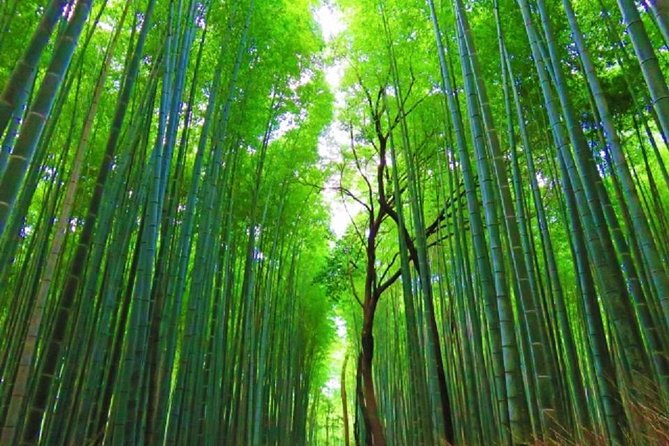
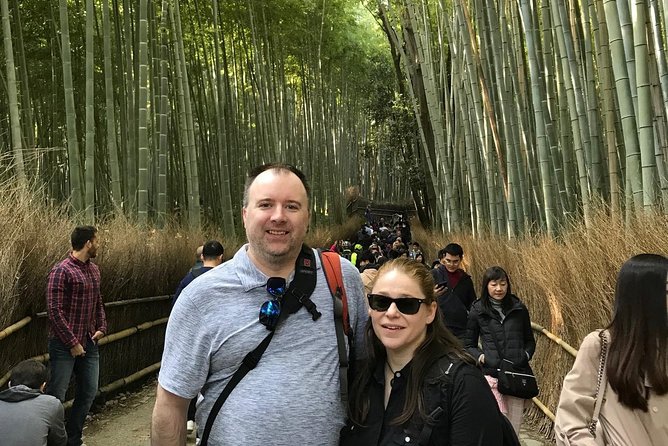
Your first stop runs from Nomiya Shrine toward Okawachi Sanso Garden, with about 400 meters of bamboo forest. The description is spot-on: these bamboo stalks are tall enough to blur and cover the sky as you move through. That “tunnel” effect is why this is one of Kyoto’s most photographed stretches, and why it often feels more special in person.
Plan on around one hour here. If you like slow strolling and simple photo stops, that time is comfortable. If you are in a hurry, you might feel like you could do it faster, but I would still give it the full hour. Bamboo forests look different as you walk, because the angle of the stalks changes and the light shifts.
There is also an optional add-on: you can ride a rickshaw for an extra charge. If you are interested, tell the guide when booking or on the day. That is a fun way to reduce walking while still experiencing the scenery, especially if you want a smoother pace before you start temple hopping.
Practical note: bamboo areas can feel cooler and shaded. Bring a light layer if you tend to get cold, especially in mornings or later in the season.
Togetsukyo Bridge over the Katsura River: a 155 meter photo line
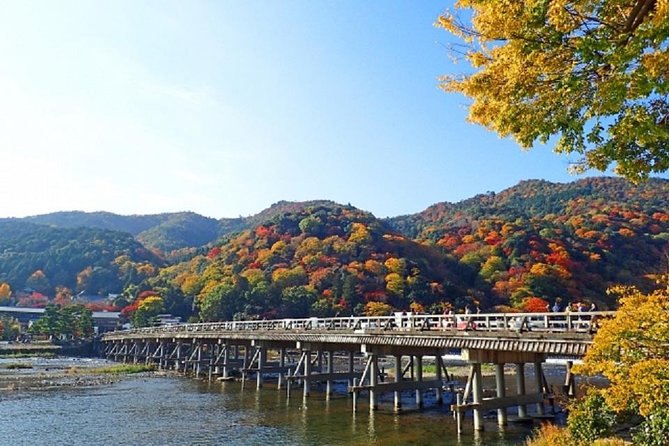
Next up is Togetsukyo Bridge, a wooden bridge spanning the Katsura River. It is 155 meters long and 11 meters wide, which is why it reads as both a structure and a viewpoint. The key idea is the composition: the bridge over gentle water, with Arashiyama behind it.
You get about 30 minutes here. That is enough time to cross if you want the full river perspective, and also enough time to pause for photos without turning it into a long detour. This is one of those stops where you do not need complicated planning, but you do benefit from paying attention to what the guide points out, like where the background lines up best with the water.
A useful thing to know is the seasonal note. The bridge and surrounding Arashiyama are famous for showing different moods across the year. Even if you travel in a less iconic season, the bridge’s length and the river’s calm make it a pleasant break from temple interiors.
Tenryu-ji Temple: World Heritage setting and the garden mindset
After the river view, you transition to Tenryu-ji Temple in Arashiyama. This temple is a World Heritage site as one of Kyoto’s cultural assets, and the setting is part of the reason people keep coming back. You are not just walking through a building complex. You are stepping into an environment designed to be looked at, from paths and openings that frame the gardens.
Time here is about one hour. Admission is not included, so expect a separate ticket cost at the gate. Since you are already moving through multiple major sites, it helps to treat this like one continuous sightseeing block. If you plan snacks or a lunch, you might want to keep an eye on timing so you are not searching for food at the last second.
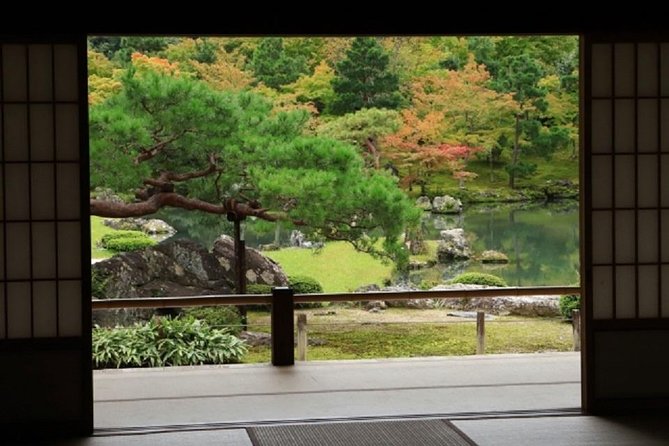
What you can do to make the visit more rewarding: slow down at garden sightlines. Instead of rushing from hall to hall, pause where the landscape opens up. A guide helps here because they can explain how the garden and temple relationship is meant to be experienced, which is often the difference between seeing a temple and actually understanding why it matters.
Ryoan-ji and the Karesansui rock garden: what to notice in quiet time
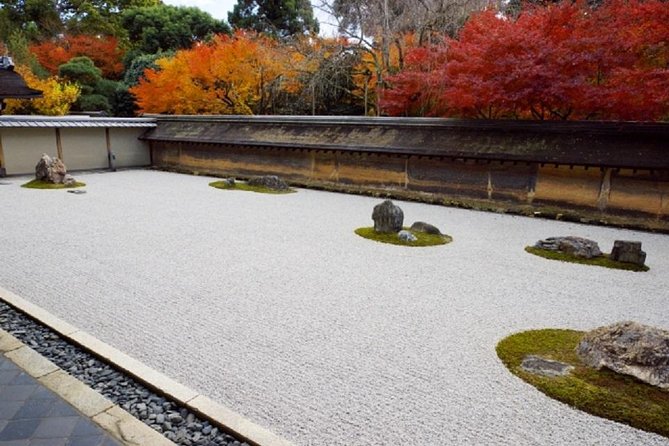
Ryoan-ji Temple is famous for its Karesansui rock garden. If you have seen photos, you already know the general layout, but visiting is still a different experience because the garden’s balance becomes more apparent when you stand still and look from the right angles.
You get about one hour here, and admission is not included. This is a good stop to set your expectations to match the place. A rock garden is not a “fast checklist” attraction. It rewards patience. Even just repositioning within the viewing area can change what your eyes settle on.
There is also a seasonal note tied to Kyoyochi pond, famous for its water lilies. The peak timing mentioned is May and July. If you travel around those months, you can watch for that added layer of color. If you do not travel in the peak season, the pond and surrounding elements still add calm structure to the garden setting.
The practical takeaway: give yourself permission to be quiet and to look. This is where your guide’s explanations can help you stop thinking like a tourist and start thinking like a careful observer.
A day of temples goes further with something to break it up.
Kinkaku-ji Golden Pavilion: the three-tier sparkle and the 1950 fire story
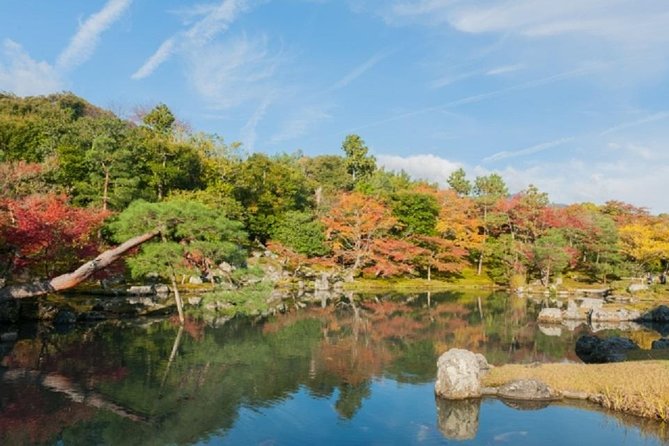
Then you reach Kinkaku-ji, also known for its building called Kinkaku Sariden. The story is dramatic, but the end result is visually unforgettable. The original structure burned down in a fire in the 1950s, and it was rebuilt in 1955 almost as it was. That reconstruction is part of why the pavilion feels both historic and persistent.
The architectural details are worth your attention. The Kinkaku is a three-tiered structure, and the second and third layers have gilded gold foil. Each layer uses different architectural styles, which adds texture to what might otherwise seem like just a gold landmark.
You have about one hour here, and admission is not included. This is usually the stop that people remember most, because the pavilion is dramatic and also because the gardens around it are designed for strolling. Plan to slow down in the pathways near the viewing areas. Photos are great, but the “stroll and pause” approach is what makes the visit feel satisfying instead of rushed.
One practical tip: if you want the pavilion at its best in photos, pay attention to the light and your viewing angle. The gold foil can look different depending on the sun, and the reflections can change as you move.
Price and value: what $176.53 per person really includes
At $176.53 per person, this tour is priced as a private guide experience plus transportation support, using Kyoto’s public system. You are not just paying for access to monuments. You are paying for someone to shape your day, guide you between stops, and explain what you are looking at.
What is included:
- Private tour
- Professional guide
- Hotel lobby meeting
What is not included:
- Food and drinks
- Admission fees for the temple stops where tickets apply
- Public transportation to and from (meaning you still need to handle transit if it is not covered by the package)
So the value equation depends on how you tour. If you like walking and you want a guide to make the garden and temple details click, the private format can be worth it. If you prefer to travel completely on autopilot with no guide, it may feel expensive. And because admissions and meals are extra, you should budget for those if you want to avoid surprises.
Also, there are group discounts, which can improve value if you are traveling with friends or family. Private tours can get pricey for a couple, so the more people share the cost, the easier it becomes to justify.
Who should book this Kyoto day, and who might want a different pace
This tour is designed for people who want the Kyoto highlights in a single day without driving. Since it uses public transportation and includes hotel pickup, it is a strong fit if you:
- want an organized day with a guide explaining temples and gardens
- prefer not to figure out route planning across multiple areas
- like a mix of nature scenery and major temple stops
The itinerary also suggests a good match for first-time visitors who want to see multiple “must” sights without juggling tickets and logistics on their own.
You might want to think twice if you:
- want food included (it is not)
- are hoping admission fees are covered (they are not for the major temples)
- want a slower, deeper tour with more time at fewer locations (this is built as a full-day hit list)
Most people can participate, but you still should consider your comfort level with moving around for several hours, especially since you are covering multiple high-interest sites.
Should you book it? My honest take
If your goal is to see Arashiyama bamboo, a signature river bridge, and Kinkaku-ji in one day with a guide and a private setup, this is a solid booking. The route has a natural flow, and the stops include exactly the kind of sights that make Kyoto feel like Kyoto.
I would especially recommend it if you care about getting the context behind what you see, because temples and gardens can turn confusing if you do not know what to watch for. And if the Golden Pavilion is on your list, you will likely love the payoff of that last stop, with its gilded tiers and garden stroll atmosphere.
Just do your homework on budgeting for admissions and meals, since those are not included. If you are okay with paying those extras, this private public-transit format can be a smooth, efficient way to get a memorable Kyoto day without the headache of figuring everything out yourself.
FAQ
How long is the Kyoto full-day private tour?
The tour duration is about 8 hours.
Is this tour private?
Yes. It is a private tour, so only your group participates.
Does the tour use public transportation?
Yes. The tour is designed around public transportation.
Is hotel pickup included?
Yes. You meet the guide in the hotel lobby, and pickup is offered.
Are admission fees included in the price?
No. Admission fees are not included for the stops that list tickets as not included.
Which stops have admission tickets free?
The bamboo forest street and Togetsukyo Bridge are listed as free.
Can I add a rickshaw ride in the bamboo forest area?
Yes. There is an extra charge for a rickshaw ride, and you can arrange it by informing the guide when booking or on the day.
What is the cancellation policy?
You can cancel for free up to 24 hours in advance for a full refund.
Do I get confirmation and a mobile ticket?
You receive confirmation at booking in most cases. If booked within 2 days of travel, confirmation is received within 48 hours subject to availability. A mobile ticket is included.
New This Season
- Koyasan Day Trip by Private Car from Kyoto
- Old Port Town and Ultimate Sake Tasting Private Tour From Kyoto
- Kyoto’s Timeless Charm: 3hr Exploration of History and Peace
- Kyoto: 5 Types of Sushi Making
- Sacred Peak & Ancient Paths: Kurama-Kibune Hiking Experience
- Kyoto: Exclusive ZEN practice at Manpukuji temple in Uji
- Kyoto: Private Seasonal Aroma Yoga Class
- Traversing Kyoto’s Scenic West – Arashiyama to Kinkakuji
Full-Day, compared.
5 Top Highlights of Kyoto Full Day Bike Tour (E-bike option)
Read our review →
Full Day Biking Tour Exploring the Best of Kyoto
Read our review →
Full Day Guided Tour to Kyoto and Nara from Osaka by Van
Read our review →
Nara Park, Osaka & Kobe from Kyoto Full Day tour
Read our review →
Kyoto Private Car Tour – Full Day with Local Guide & Nara Option
Read our review →
Full Day Hiroshima and Miyajima Tour by Bullet Train from Kyoto
Read our review →