Reviewed · GUIDED
Kyoto Highlights & Hidden Gems in Nature (Private Van Eng-Guide)
Kyoto turns quieter when you skip the crowd math. This private minivan tour strings together temples far from the main flows and nature viewpoints across Kyoto, with a local English guide explaining the Buddhism and history as you go.
I really like the door-to-door setup, including pickup and drop off anywhere in Kyoto City. I also like the mix of big-name icons with genuinely calmer stops, like Gio-ji and the Arashiyama area, plus the Shinto moments around ancient cedar trees.
One thing to consider: a few temple stops involve short walks and stairs, so if that is an issue for you, you will want to ask the guide what to skip.
In This Review
- Key points
- A 1 pm Kyoto plan built for comfort, not chaos
- Kinkakuji and Gio-ji: the classics with breathing room
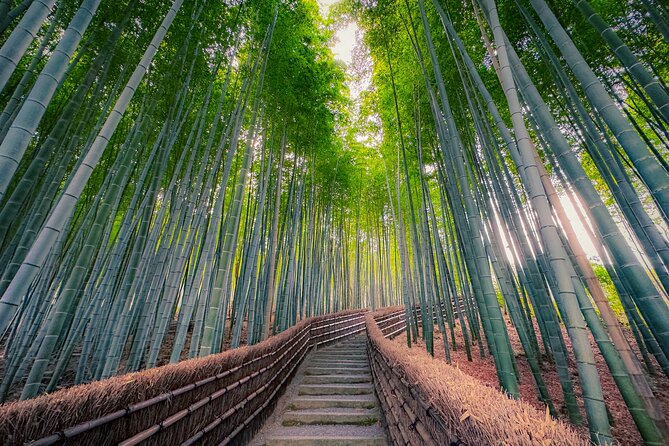
- Arashiyama Bamboo Forest plus Otagi Nenbutsu-ji’s old-Kyoto calm
- Arashiyama-Takao Parkway: seasonal cherry and maple scenery from the road
- Ogura Observatory and Hozukyo: city views, gorge energy, and a sense of geography
- Nakagawa Hachiman-gu’s ancient cedar, plus Kitayama’s Daisugi platform
- A Geisha street sighting by car, then Heian Jingu’s giant torii
- Fushimi Inari’s senbon torii: finishing strong on a private route
- What the price covers, and when it feels like a good deal
- Who this Kyoto van tour is best for
- Should you book this Kyoto highlights and nature private van tour?
- FAQ
- What time does the Kyoto private van tour start?
- How long is the tour?
- Is this a private tour?
- Is pickup and drop off included?
- Are the temple and shrine admission fees included?
- Which parts include admission tickets?
- Is there a mobile ticket?
- Is the guide available in English?
- Are there walks or stairs during the tour?
- Can I bring a service animal?
Key points
- Door-to-door private van lets you cross Kyoto fast without fighting buses or transfers
- Arashiyama without the grind, including the Bamboo Forest and quieter temple stops nearby
- Mount and gorge outlooks from Ogura and Hozukyo, with mountain air and city views
- Shinto cedar stops like Nakagawa Hachiman-gu, where locals worship an ancient tree
- A secret-feeling cedar viewpoint at Kitayama Big Daisugi, accessed by a narrow cliff road
- Fushimi Inari late-day timing with thousands of torii gates and easier pacing than doing it alone
A 1 pm Kyoto plan built for comfort, not chaos
This tour starts at 1:00 pm and runs about 6 hours. That timing matters. You get some classic sights without burning the whole day, and you often hit popular places after the morning rush has eased.
The big practical win is the private Japanese minivan. You are picked up and dropped off anywhere in Kyoto City, and you stay in the vehicle for the long hops between neighborhoods and hills. If you have limited time or you simply do not want to play transit roulette, this style makes Kyoto feel doable.
Your guide also shapes how the day flows. The route is designed to cover both city icons and mountain countryside in one shot, with “from the car” views that help you understand how Kyoto is laid out between hills and temple districts. And because the guide focuses on Buddhism and history in clear English, you get context fast, instead of just admiring without knowing why a place matters.
Kinkakuji and Gio-ji: the classics with breathing room
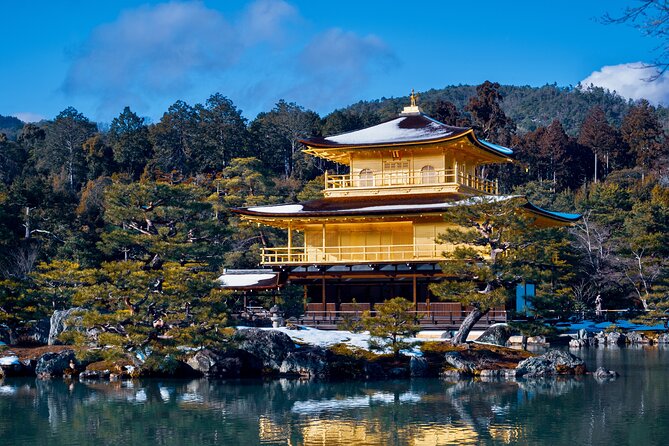
You begin with Kinkakuji Temple, the Golden Pavilion. Plan on about 45 minutes here. The admission fee is not included, so you will pay separately, but the trade-off is that you are not spending your time figuring out tickets, buses, or the best approach.
What makes this stop work on a private plan is pace. Kinkakuji can be crowded, but a van day gives you flexibility around timing and how long you linger. You can also step back and look at the setting, since the visit is long enough to take in both the building and its surroundings instead of treating it like a photo sprint.
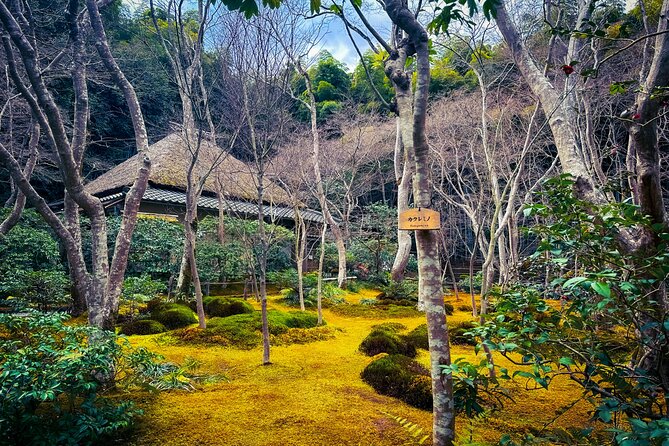
Next comes Gio-ji Temple in the Arashiyama area. It is shorter, about 15 minutes, and admission is also not included. This is where the tour starts leaning into the “calmer Kyoto” feeling. The garden setting is described as a moss-covered view with a modest thatched-hut atmosphere, framed by bamboo nearby. Even if you are not a garden person, you usually feel the shift here, from headline temple energy to quiet observation.
A quieter way to spend a day in Kyoto
- Fushimi Inari Hidden Hiking Tour (Private Option Available)
★ 5.0 · 1,750 reviews - Private Kyoto Tour with a Local, Highlights & Hidden Gems, Personalised
★ 5.0 · 1,543 reviews - Kyoto 6hr Private Tour with Government-Licensed Guide
★ 5.0 · 1,369 reviews - 10 Must-see Spots in Kyoto One Day Private Tour (up to 7 people)
★ 5.0 · 1,108 reviews
Arashiyama Bamboo Forest plus Otagi Nenbutsu-ji’s old-Kyoto calm
After Kinkakuji and Gio-ji, you move into Arashiyama proper, and the tour keeps things tight and efficient.
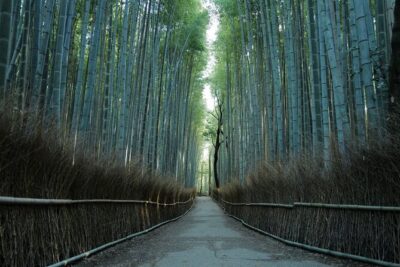
First is the Arashiyama Bamboo Forest, about 15 minutes. Admission is free, and this is one of those places where sound matters as much as sight. The guide will explain bamboo’s origin and how it connects to Edison’s lighting story. That kind of detail turns a walk-through into a “wait, that makes sense” moment.
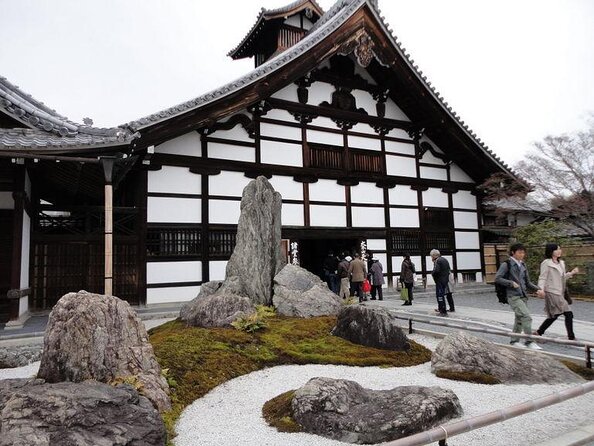
Then you head to Otagi Nenbutsu-ji Temple. It is also around 15 minutes, with admission not included. The description emphasizes “old-Kyoto-view” scenery in a well-maintained area north of Arashiyama’s central tourist zone. That positioning is the key, because it can feel less like a theme park and more like you are moving through an older district.
Practical note: temple grounds sometimes mean stairs or uneven walking. The tour data specifically flags that some stops include walks and stair climbing, so if you want to avoid that, tell your guide early. This is the kind of tour where a small adjustment can make the day much more comfortable.
Arashiyama-Takao Parkway: seasonal cherry and maple scenery from the road
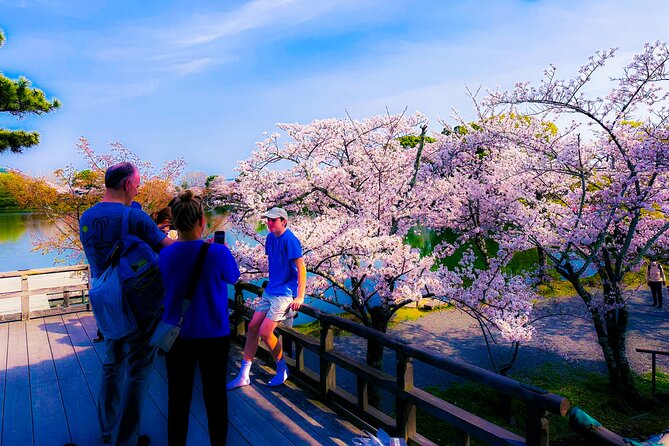
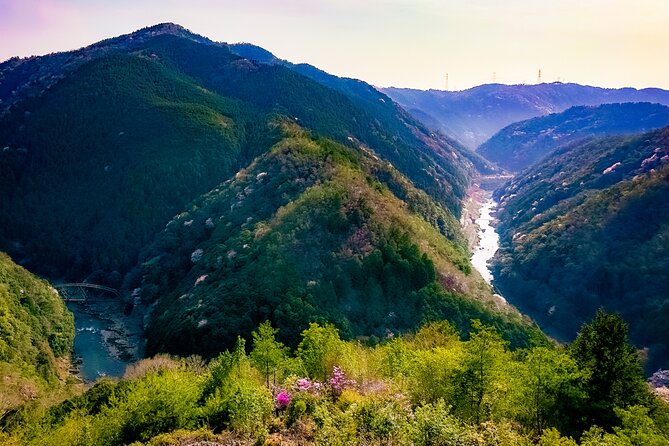
One of the more “nature-forward” legs is the Arashiyama-Takao Parkway, with about 45 minutes allocated and admission ticket included. This is a scenic road segment, described as turning into a corridor of roughly 2,000 cherry trees in April or maple trees in November.
Even outside peak seasons, the value here is simple: the vehicle gets you into views that are harder to reach smoothly on your own. In a place like Kyoto, where hills and valleys break up travel, this kind of ride time can be the difference between a day that feels exhausting and a day that feels like sightseeing.
Ogura Observatory and Hozukyo: city views, gorge energy, and a sense of geography
After the parkway, you get two quick viewpoint stops.
At Mount Ogura Observatory, you have about 5 minutes and admission is free. The point is the view over Kyoto from higher ground. It is short, but that is exactly why it works. You do not need a long hike to get the “Kyoto is surrounded by hills” reality check.
Then it is on to Hozukyo Observatory, also about 5 minutes and free. This one focuses on the Hozu Gorge, described as an iconic nature view of Kyoto. It is also known for traditional hard-stream boat rafting. The rafting itself is not part of this tour as described, but knowing it exists gives your brain something to attach to the view, like, OK, this is why people come here for water adventures.
Because these stops are brief, they keep the schedule realistic. You get the payoff of scenery without losing hours to transit or waiting.
Nakagawa Hachiman-gu’s ancient cedar, plus Kitayama’s Daisugi platform
This portion of the tour is where the “local Kyoto” feeling shows up most clearly.
First is Nakagawa-hachimangū Shrine, about 5 minutes and free. The highlights here are specific: an old Japanese cedar tree, described as the oldest Japanese cedar tree of the area, and worshipped as a guardian. The tour description also includes an invitation to touch the tree to feel the spirit power. Even if you are not into rituals, you will likely find it memorable because it is not just a postcard. It is a living tradition.
Then comes the “secret” style stop: Kitayama Big Daisugi (the Kitayama Giant Platform Cedar Trees). It is about 10 minutes and free. The route description talks about a narrow cliff road where few people go, and a viewpoint that reveals the cedar platform trees. The value here is not speed or spectacle. It is the sense that you found something local without crowds closing in on you.
This is also a good reminder of why private touring works in Kyoto. You get to spend short blocks at places that would otherwise be hard to sequence with buses and walking, and those minutes add up to a different experience than doing just the headlines.
A day of temples goes further with something to break it up.
A Geisha street sighting by car, then Heian Jingu’s giant torii
You also get a city-culture moment that is intentionally low stress.
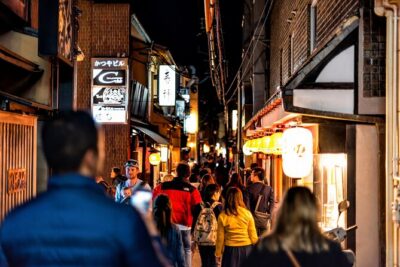
There is an experience of a 600-year-old street known for geishas by car. The idea is to avoid walking in crowds and to take photos from the car. The tour data adds an important etiquette note: taking pictures of geishas needs their permission. Even if you are not planning to photograph anyone, the rule is useful. It frames the day around respectful watching rather than aggressive filming.
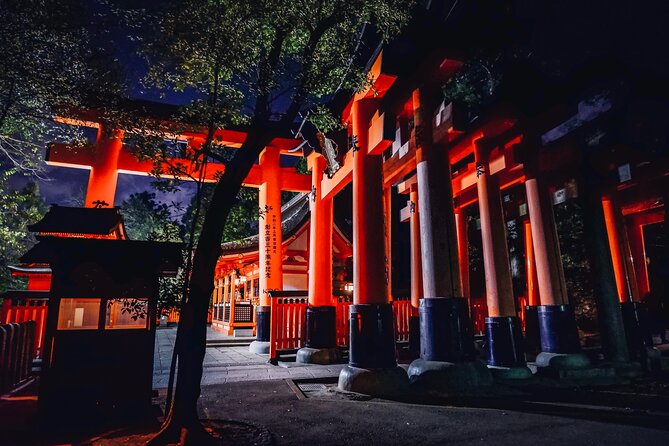
After that, you stop at Heian Jingu Shrine Otorii, specifically the huge red torii gate. It is about 5 minutes and free. The description gives the height as 24.4 meters (about 80 feet), which makes this one easy to spot and easy to understand. You are seeing scale, and you get a quick visual anchor before you end the day at Fushimi Inari.
Fushimi Inari’s senbon torii: finishing strong on a private route
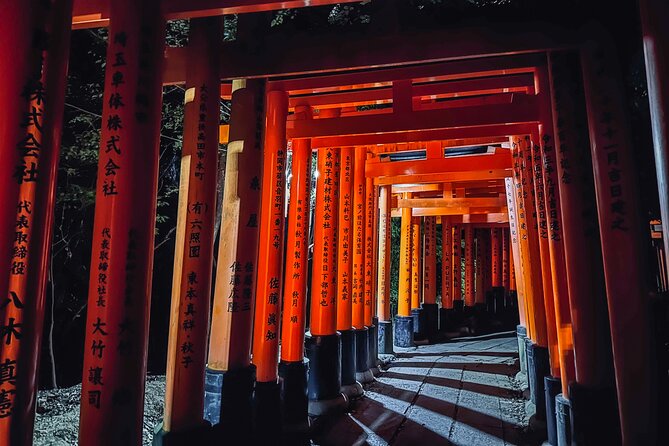
You end with Fushimi Inari-taisha Shrine, about 40 minutes and free admission. This is the big Kyoto icon, the famous path of “SenbonTorii,” thousands of torii gates dedicated to the shrine.
What makes this tour ending feel smart is pacing. Instead of dropping into Fushimi Inari as the first stop and dealing with maximal crowds for a long stretch, you are finishing after several other sites and viewpoint breaks. That usually helps you enjoy it more because you are not mentally fried from nonstop transit.
If you want the best experience here, keep a couple things in mind. First, set expectations that this is a walking space and the gates create a lot of photo opportunities. Second, use the guide to help you move through with less backtracking. The tour includes a structured block of about 40 minutes, which is long enough to feel the place without turning it into a 2-hour endurance test.
What the price covers, and when it feels like a good deal
The price is listed as $230.61 per group (up to 1), and the tour runs about 6 hours. Admission fees for the day are not included, with a total estimate of about ¥1,400 per person.
So what are you paying for? You are paying for time, comfort, and local navigation. A private van plus pickup and drop off anywhere in Kyoto City is a real cost, and the guide is built into the schedule. You are also paying for routing value, meaning you are not spending your afternoon stitching together far-flung temple districts with bus transfers.
Here is when it tends to feel especially worthwhile. If you are traveling with a small group who can share the vehicle, it can become much better value than a solo traveler price. One detail from past experiences is that the tour can work out efficiently for families because it is tied to the vehicle rather than priced strictly per person. If you are a solo traveler, it is still a great choice if you care about a smooth, curated day and want to avoid the logistics headache.
Who this Kyoto van tour is best for
This tour fits you best if you want Kyoto highlights plus countryside nature views without turning it into a marathon.
It is a strong pick if:
- you have limited time and want pickup and drop off instead of figuring out transit
- you care about both Buddhism context and real cultural etiquette at shrines and temple spaces
- you like scenic drives and short viewpoint stops, not long hikes
- you want calmer moments in Arashiyama, including Gio-ji and Otagi Nenbutsu-ji
It might be less ideal if:
- you need fully flat walking, since some temple stops involve walks and stairs
- you prefer to roam entirely on your own schedule, since the day is structured around set stops
Should you book this Kyoto highlights and nature private van tour?
I think you should book it if you want a Kyoto day that balances big icons like Kinkakuji and Fushimi Inari with actual variety, like cedar worship at Nakagawa Hachiman-gu and the viewpoint stops around Ogura and Hozukyo. The private van format is the heart of the value, because it lets you see far-apart areas without spending your afternoon stuck between trains and bus lines.
If you are sensitive to stairs, message your needs ahead of time and ask the guide what to skip. If you can handle a little walking, this kind of routing is one of the easiest ways to experience Kyoto in a single afternoon-to-evening stretch.
FAQ
What time does the Kyoto private van tour start?
The start time is 1:00 pm.
How long is the tour?
The tour lasts about 6 hours.
Is this a private tour?
Yes, it is a private tour/activity, and only your group participates.
Is pickup and drop off included?
Yes. Pickup and dropping off are offered at anywhere in Kyoto City.
Are the temple and shrine admission fees included?
No. Admission fees are not included, with total entry fees estimated at about ¥1,400 per person.
Which parts include admission tickets?
The itinerary notes that admission tickets are included for Arashiyama-Takao Parkway. Other listed stops like Kinkakuji and Gio-ji are marked as not included, while several others are marked as free.
Is there a mobile ticket?
Yes, the tour includes a mobile ticket.
Is the guide available in English?
Yes. The guide provides fluent English.
Are there walks or stairs during the tour?
Some temples need walks and walking up stairs. If you want to avoid stairs, ask the guide if you can skip those parts.
Can I bring a service animal?
Yes, service animals are allowed.
New This Season
- Koyasan Day Trip by Private Car from Kyoto
- Old Port Town and Ultimate Sake Tasting Private Tour From Kyoto
- Kyoto’s Timeless Charm: 3hr Exploration of History and Peace
- Kyoto: 5 Types of Sushi Making
- Sacred Peak & Ancient Paths: Kurama-Kibune Hiking Experience
- Kyoto: Exclusive ZEN practice at Manpukuji temple in Uji
- Traversing Kyoto’s Scenic West – Arashiyama to Kinkakuji
- Kyoto: Private Seasonal Aroma Yoga Class
Guided, compared.
Kyoto Early Morning Tour with English-Speaking Guide
Read our review →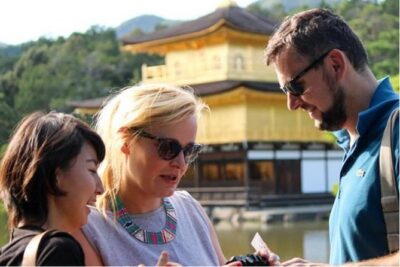
Kyoto 6hr Private Tour with Government-Licensed Guide
Read our review →Early Morning Tour with English-Speaking Guide
Read our review →
Nijo-jo Castle and Ninomaru Palace Guided Tour
Read our review →
Kyoto Gion Night Walk & Geisha District Guided Tour
Read our review →
Nijo Castle, Kiyomizu & Fushimi Inari Guided Tour
Read our review →