
Reviewed · TEMPLE GARDENS
Kyoto Japanese Garden Lover’s Private Tour with Government-Licensed Guide
Your pace through Kyoto’s most meditative gardens. This private walking tour pairs a government-licensed multilingual guide with a truly customizable garden plan, so you can choose 3 to 4 sites from a strong menu. I especially like how the route mixes the famous with the calmer, from Kinkakuji and Ginkakuji to moss and sand garden moments at places like Honen-in and Honen-in. One thing to consider up front: it is walking, entrance fees and transport are on you, so plan comfortable shoes and a little extra budget.
At about 6 hours, it is a focused half-day that helps you cover “big name” Kyoto without turning your day into a frantic checklist. Pickup is offered, but it is pickup on foot, and you meet the guide within a designated area, so you will want to arrive a few minutes early and ready to go.
In This Review
- Key things I found most useful
- Government-licensed guide plus your garden wishlist
- What to expect from your guide
- Value math: what $153.11 buys in a 6-hour tour
- Walking plan: how a pickup on foot changes the day
- Option set: Kinkakuji and Ginkakuji for first-timers
- Kinkakuji Temple, Golden Pavilion
- Ginkakuji Temple, Silver Pavilion
- Honen-in, Nanzenji Suirokaku, Tofuku-ji: Zen texture tour stops
- Honen-in
- Nanzenji Suirokaku
- Tofuku-ji
- Kyoto Imperial Palace and Shugakuin: garden calm in imperial settings
- Kyoto Imperial Palace
- Shugakuin Imperial Villa
- Ryoan-ji, Taizo-in, and Daitoku-ji: rock garden fame, plus where to slow down
- Ryoan-ji
- Taizo-in
- Daitoku-ji
- Katsura Imperial Villa: where design and architecture talk to each other
- Arashiyama essentials: Togetsukyo Bridge, bamboo paths, Okochi Sanso
- Togetsukyo Bridge
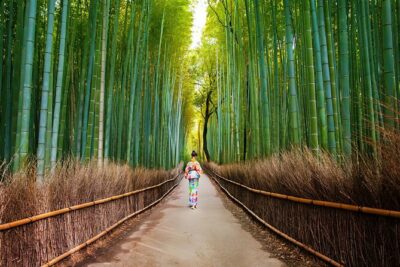
- Bamboo Forest Street
- Okochi Sanso Garden
- Gio-ji and Kyoto Botanical Garden: mossy calm and a softer pace
- Gio-ji
- Kyoto Botanical Garden
- Kennin-ji: Zen close to the shopping streets
- Byodoin in Uji: a classic UNESCO-style add-on
- How to choose your 3-4 stops without regretting it
- Who this private Kyoto garden tour suits best
- Should you book this Kyoto Japanese Garden Lovers private tour?
Key things I found most useful
- Government-licensed guide interpreter helps you understand the why behind each garden, not just what it looks like
- Pick 3-4 gardens from a set list, so you can match your energy and interests instead of being forced into a fixed route
- Flexibility with timing is a real strength, including late itinerary changes by guides like Kaeko and Shun
- Iconic Zen variety from gold and silver pavilions to rock gardens and mossy corners
- Arashiyama options add variety with Togetsukyo Bridge, bamboo paths, and Okochi Sanso
- Uji add-on potential with Byodoin Temple if you want a classic UNESCO stop
Government-licensed guide plus your garden wishlist
Kyoto’s temple gardens are easy to enjoy, even if you know little Japanese. Still, a lot of the meaning is hiding in plain sight. A national government-licensed guide interpreter is the point here. You do not just walk between sights, you learn how plants, rocks, architecture, and even spacing create a mood.
I also like that this is built as a private tour. That matters in Kyoto, where “same temple, different day” can feel like two different experiences. A guide can adjust your pace and your stop choices based on what you care about most, and the reviews highlight exactly that kind of flexibility, including guides like Kaeko adapting to individual requests and Shun handling itinerary changes with good humor.
What to expect from your guide
You choose your must-sees from the list, then the guide turns it into a walk you can actually enjoy. You meet on foot within a designated area. From there, you move site to site, with guidance that helps you notice the garden design details you would otherwise miss.
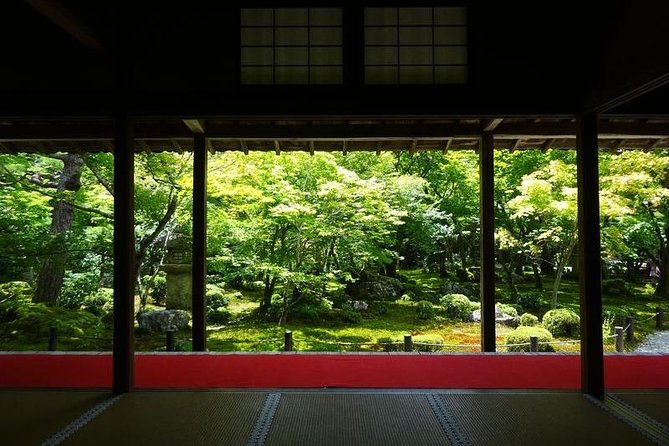
Moss, stone, and raked gravel gardens
- Kyoto Arashiyama Walking Tour: Bamboo, Monkeys, Gardens & Secrets
★ 5.0 · 1,216 reviews - Kyoto Zen Meditation & Garden Tour at a Zen Temple with Lunch
★ 5.0 · 441 reviews - Kyoto Arashiyama Bamboo forest & Garden Half-Day Walking Tour
★ 5.0 · 413 reviews - Kyoto: Zen Garden, Zen Mind (Private)
★ 5.0 · 126 reviews
Value math: what $153.11 buys in a 6-hour tour
This costs $153.11 per person, and that number is not meant to cover temple entry, lunch, or transport. So the value is in three things:
- Time with a licensed guide who can explain the culture and context in English
- Private customization so you are not forced into the “wrong” gardens for your interests
- Efficiency in a walking format, so you use the day you paid for
Six hours sounds long until you try to connect Kyoto sights on your own. With 3 to 4 chosen stops, you get a calmer rhythm than you would with a typical all-day tour that sprints you from point to point. If your top priority is gardens over everything else, this tends to make financial sense because you are spending money on guide interpretation and less on wasted time.
Walking plan: how a pickup on foot changes the day
This is a walking tour, and pickup is offered on foot. That is not a drawback if you plan smart. It means fewer “dead moments” where you sit on a bus while your day drains away.
Still, walking is real in Kyoto. You are moving between temple areas, often on streets and paths with some slopes. Bring comfortable shoes, and keep your jacket ready. Even in pleasant seasons, Kyoto weather can shift quickly around garden sites.
Also note this important detail: the guide entry fees are covered only for sights listed under what to expect. Entrance fees themselves are not included, so you should treat the stops as paid-at-the-door options unless your guide tells you otherwise for your chosen sites.
Option set: Kinkakuji and Ginkakuji for first-timers

If you want the classic Kyoto icons, these two are your best starting point.
Kinkakuji Temple, Golden Pavilion
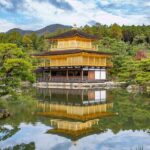
Kinkakuji is Rokuonji, a Zen temple known for its top floors covered in gold leaf. Even if you have seen photos, the real impact is in how the gold catches light and reflects into the surrounding setting. This is a garden tour stop that doubles as a visual performance.
Consideration: Kinkakuji can draw crowds. If your goal is calm, ask your guide to think about timing and where to pause so you can actually enjoy the view.
A quieter way to spend a day in Kyoto


Ginkakuji Temple, Silver Pavilion
Ginkakuji is modeled as a retirement villa complex in the Higashiyama area. The key here is mood. It is tied to a different aesthetic than Kinkakuji, more about refined restraint than shine.
Why it fits a private garden tour: with a guide, you can compare the two pavilions as a study in contrast, then carry that understanding into the quieter Zen spaces later in your day.
Honen-in, Nanzenji Suirokaku, Tofuku-ji: Zen texture tour stops
Kyoto gardens become more interesting when you leave the “postcard layer” and start noticing texture.
Honen-in
Honen-in is one of those places where the approach matters. There is a scenic entry culminating in a moss-covered gate. Inside, you pass between two sand mounds, with design details meant to guide attention.
What you will get: a strong sense of atmosphere fast, because you start seeing garden thinking before you even reach the main viewing spots.
Nanzenji Suirokaku
Nanzenji is a major Zen temple with spacious grounds at the base of the forested Higashiyama mountains. The stop focuses on a signature Suirokaku structure area within that broader Zen setting.
Good for: people who want architecture and environment together, not only a “single-view” garden.
Tofuku-ji
Tofuku-ji is famous for autumn colors, and that makes it a seasonal choice. Even if you are not visiting in peak fall, it can still be a strong garden and temple stop because it anchors the day in Kyoto’s seasonal thinking.
Consideration: if you are visiting outside autumn, your guide can help you decide if you want this stop now or swap it for a moss and rock garden option.
Kyoto Imperial Palace and Shugakuin: garden calm in imperial settings
A lot of visitors think Kyoto is only temples. But imperial sites connect directly to Japanese design traditions.
Kyoto Imperial Palace
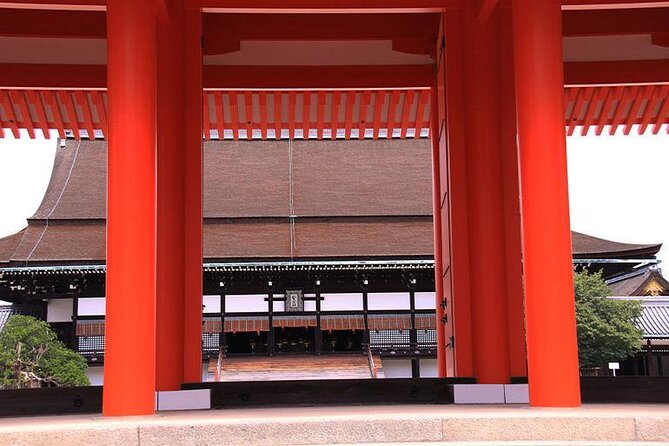
The Kyoto Imperial Palace used to be the residence of Japan’s Imperial Family until 1868. The value for a garden lover is the setting: the grounds feel spacious and tied to a historical rhythm.
Why it works in a 3-4 stop plan: it gives you a change of scenery. After temple gardens, this can feel like a quieter reset.
Shugakuin Imperial Villa
Shugakuin Rikyū was built in the 17th century by Emperor Gomizuno and is managed by the Imperial Household Agency. It includes Upper, Middle, and Lower Villa areas, which means you can experience more than one garden style within a single broader complex.
What you will like: this is often where garden aesthetics and lived-in architecture meet in a more layered way.
Ryoan-ji, Taizo-in, and Daitoku-ji: rock garden fame, plus where to slow down
These are the stops that make a Kyoto garden day feel like more than sightseeing.
Ryoan-ji
Ryoanji is home to Japan’s most famous rock garden, one that attracts hundreds daily. The design is about seeing differently as your position changes.
Key idea for you: go in prepared to take time. The famous view is only part of the experience. Your guide can help you understand how the garden encourages attention and interpretation.
Taizo-in
Taizo-in is a subtemple of Myoshin-ji and is known for one of Kyoto’s most famous gardens. It is highly recommended in any season, which is great for planning flexibility.
This is also where timing can matter. Past experiences with guides like Kaeko highlight the advantage of getting an early quieter window, including a moment when Taizo-in was enjoyed before a later group arrived. If your heart is set on calm, you can ask your guide to sequence Taizo-in early.
Daitoku-ji
Daitoku-ji is a Zen temple complex with temples inside temples, and it is described as having deep significance behind meditative gardens. This is the stop for people who want to stay in Zen mode the longest.
Good to know: because it is a complex, you might want your guide to focus you on the specific garden(s) that match your taste, rather than trying to absorb everything at once.
Katsura Imperial Villa: where design and architecture talk to each other
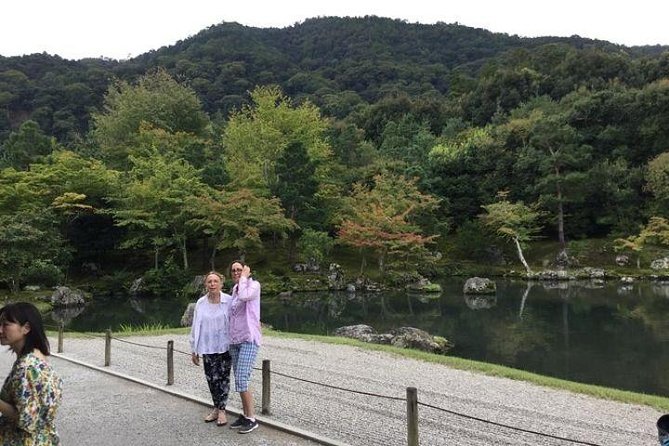
Katsura Imperial Villa, Katsura Rikyū, is one of the finest examples of Japanese architecture and garden design. The villa and garden in their current form were completed in 1645 as a residence for the imperial family.
This is a stop you should choose if you care about structure as much as nature. In a private tour format, the guide can help you connect the points between rooms, views, and garden composition.
Consideration: if your priority is only big temple icons, Katsura might feel slower. If you enjoy design thinking, it will feel worth it.
Arashiyama essentials: Togetsukyo Bridge, bamboo paths, Okochi Sanso
If you want a Kyoto garden day with variety, Arashiyama is a smart move.
Togetsukyo Bridge
Togetsukyo Bridge is Arashiyama’s iconic landmark, originally built in the Heian Period and reconstructed in the 1930s. The bridge is also about views, especially the way it frames the river and surroundings.
Bamboo Forest Street
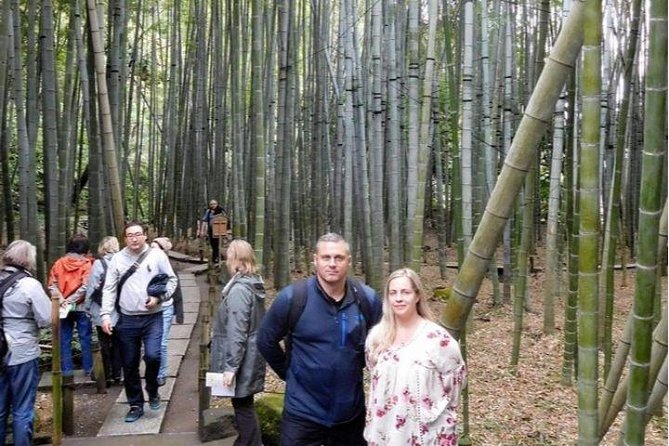
The bamboo grove paths make for an easy walk. When there is a light wind, the tall stalks sway, creating a moving pattern rather than a static photo scene.
Practical tip: treat this as a strolling segment, not a “speed” stop. If you rush, you miss what makes bamboo feel special.
Okochi Sanso Garden
Okochi Sanso is the former villa of actor Okochi Denjiro. It includes several gardens and buildings and is located at the back of the bamboo groves.
This is where Arashiyama shifts from public spectacle to a more garden-focused experience. Admission fees are not included, so plan for that if you add it.
Gio-ji and Kyoto Botanical Garden: mossy calm and a softer pace
Kyoto can be intense. These two options give you a calmer tempo, depending on which day and season you visit.
Gio-ji
Gio-ji is even more tucked into the forest than Jojakkoji and Nisonin. It is known for a moss garden punctuated with tall maple trees. The thatched-roof feel also supports a cozy, old-world mood.
Why it fits a garden lover tour: moss and maple create strong seasonal atmosphere, and a guide can help you understand the composition choices behind that look.
Kyoto Botanical Garden
Kyoto Botanical Garden is described as overlooked and affordable, and it is a must-visit for both visitors and locals alike. This is more of a plant-focused stop than a pure Zen composition stop.
Consideration: if your goal is only traditional rock and sand garden design, you might prefer another Zen temple choice. If you love plants and variety, it is a great balance.
Kennin-ji: Zen close to the shopping streets
Kennin-ji sits near Hanamikoji and Shijo streets. It has expansive grounds that are pleasant to walk, plus two karesansui (dry Zen garden) areas.
This can be a helpful option if you want your garden day to connect with central Kyoto energy. It also helps when your route needs a “human scale” stop between bigger temple areas.
Practical note: because it is close to busier areas, you can get a contrast that makes the garden feel even calmer by comparison.
Byodoin in Uji: a classic UNESCO-style add-on
Byodoin Temple is known for its Phoenix Hall, which is a National Treasure of Japan and a UNESCO World Heritage Site. It is located in Uji city in Kyoto prefecture, which means extra travel time.
If you want this, plan for it as a true addition rather than a quick swap. Your guide can help you decide if your 3 to 4 stop selection should include Byodoin, based on your tolerance for travel time.
Who will love it: people who want one “big cultural landmark” moment in addition to gardens.
How to choose your 3-4 stops without regretting it
The biggest advantage of a private customizable plan is not just “freedom.” It is that you can build a day with a clear theme. Here are simple ways to choose.
- Theme: classic iconic Kyoto first
Pair Kinkakuji and Ginkakuji, then add one Zen texture stop like Honen-in or Ryoan-ji. Finish with something different like Katsura or an Arashiyama bamboo walk.
- Theme: Zen garden attention and rock and sand
Choose Ryoan-ji, Taizo-in, and Daitoku-ji. Then add either a moss-forward place like Gio-ji or a broader imperial-feel reset like Kyoto Imperial Palace.
- Theme: calmer variety, less crowd pressure
Put Taizo-in and Honen-in early in the day if possible, then choose one larger iconic place late. This approach makes it easier to enjoy the quieter designs instead of rushing through them.
- Theme: architecture and views
Consider Shugakuin Rikyū, Katsura Imperial Villa, and Togetsukyo Bridge, then round out with a bamboo segment for softness.
If you are stuck deciding, pick one “must” icon from the list and then let the guide balance the rest for contrast and pacing.
Who this private Kyoto garden tour suits best
This tour-style works best if you want:
- A licensed English-speaking guide who can explain the cultural meaning behind gardens
- A private format for choosing your own set of sites from the list
- A walking day that still feels relaxed, not rushed
It also suits you if you like some flexibility. The reviews emphasize guides like Kaeko and Shun adapting to changes, even when requests shift later in the day. That is a big deal when you hit weather, energy level changes, or a sudden strong preference for one garden type over another.
Should you book this Kyoto Japanese Garden Lovers private tour?
I think you should book if you want a garden day that feels personal and understandable, not just a line of temple photos. The value is strongest when you use the customization feature to pick 3 to 4 stops that match your taste, then let the government-licensed guide connect what you see to the design logic behind it.
Skip it or rethink it if:
- you want everything included, including transport and entry fees
- you hate walking or have limited flexibility for uneven temple grounds
- you want a fixed route with no decisions
If you are a first-time Kyoto visitor, this is a smart way to hit iconic gardens while still leaving room for meaning, timing, and the calmer moments that make Kyoto feel like Kyoto.
New This Season
- Koyasan Day Trip by Private Car from Kyoto
- Old Port Town and Ultimate Sake Tasting Private Tour From Kyoto
- Kyoto’s Timeless Charm: 3hr Exploration of History and Peace
- Kyoto: 5 Types of Sushi Making
- Sacred Peak & Ancient Paths: Kurama-Kibune Hiking Experience
- Kyoto: Exclusive ZEN practice at Manpukuji temple in Uji
- Kyoto: Private Seasonal Aroma Yoga Class
- Traversing Kyoto’s Scenic West – Arashiyama to Kinkakuji
Temple Gardens, compared.
Kyoto Arashiyama Walking Tour: Bamboo, Monkeys, Gardens & Secrets
Read our review →
Kyoto Zen Meditation & Garden Tour at a Zen Temple with Lunch
Read our review →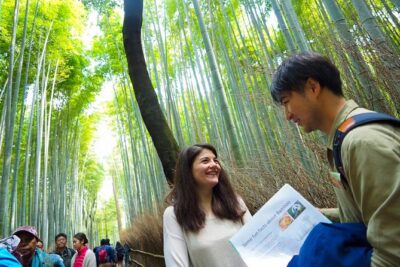
Kyoto Arashiyama Bamboo forest & Garden Half-Day Walking Tour
Read our review →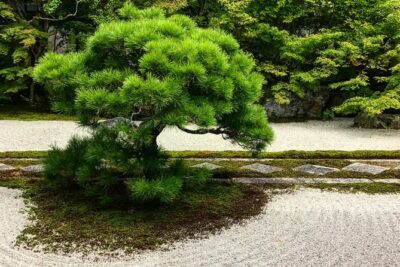
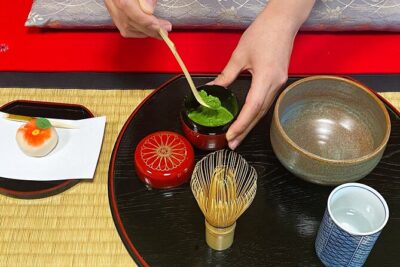
Kyoto Kiyomizu Tea Ceremony with Scenic Garden Views
Read our review →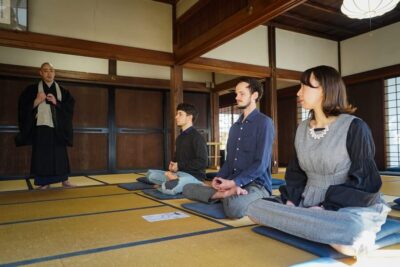
Zen Meditation and Garden Tour at a Temple with Lunch
Read our review →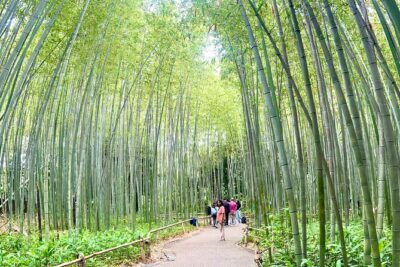
Stunning Private Tea Ceremony: Camellia Garden Teahouse
Read our review →Also filed under