Reviewed · FULL-DAY
Kyoto Private & Personalized Full-Day Tour with a Local Guide
Kyoto can feel like a puzzle. This tour turns it into a plan. You get a private, personalized full-day walking route through standout places like Kinkaku-ji, Higashiyama lanes, and Kiyomizu-dera, with stops designed around what you care about.
Two things I like a lot: you start with a pre-tour questionnaire so your guide can tailor the day, and you cover top sights without wasting time on stuff that does not fit your interests. The route also leans on walking, which means you get into areas that are awkward or impossible to reach comfortably by bus.
One thing to consider: it is an 8-hour day on foot, and while pickup can be offered, transportation between spots is not included and can add cost. There’s also been a report of a guide requesting extra transportation payment before the tour began, so I’d message ahead to confirm what costs might pop up for transfers.
In This Review
- Key highlights before you lace up
- How a private guide saves you time in Kyoto
- Walking an 8-hour Kyoto route without feeling wrecked
- The modern-and-traditional setup: Kyoto’s skyline viewpoints
- Sugawara no Michizane shrine: plum blossoms and a monthly market vibe
- Kinkaku-ji: gold leaf shine and Zen-era origins
- Higashiyama lanes: slopes, wooden houses, and snack-friendly wandering
- Kiyomizu-dera: the stage, the view, and the Otowa stop
- What you actually get for the $253.22 price
- Guides, communication, and why names showed up in praise
- Getting the most out of your day: what I’d ask your guide
- Who this tour is for, and who should pick something else
- Should you book this Kyoto private walking tour?
- FAQ
- How long is the tour?
- Is this tour a walking experience?
- Where does the tour start and end?
- What is included in the price?
- Are food, drinks, and tickets included?
- How does the customization work?
- Can I cancel for a full refund?
Key highlights before you lace up
- Fully customizable route built around your pace, interests, and must-sees, not a fixed checklist
- Pre-tour questionnaire and direct messaging, so your guide can plan ahead before you meet
- Walking-first experience that reaches lanes and temple approaches you would not enjoy from a vehicle
- Multiple Kyoto icons in one day including Kinkaku-ji, Higashiyama, and Kiyomizu-dera
- Guides with real street skills, including efficient navigation using public transport and taxis
How a private guide saves you time in Kyoto
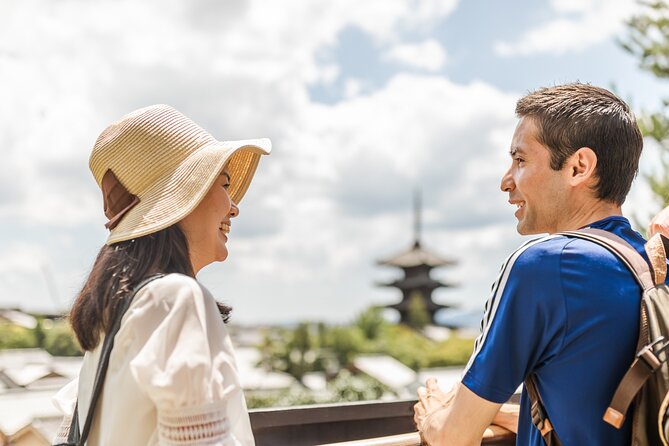
Kyoto is famous for temples, but it is also famous for decision fatigue. A standard tour can dump you at popular spots with limited flexibility. Here, the whole point is that your guide shapes the day around you, so you spend your energy on the places you actually want.
You also get a real sense of local flow. Instead of sprinting between far-flung sights, you tend to move in a way that feels more like Kyoto itself: clustered areas, short transitions, and time to stop and look. In the reviews tied to this experience, guides like Alex and Eko were praised for figuring out what guests wanted quickly and adjusting coverage to match available time.
This matters most if you are a first-timer or you only have one day. It also helps if you have strong preferences, like temple architecture, gardens, or neighborhood streets. If your idea of a perfect Kyoto day is structure plus room to breathe, this format fits.
Walking an 8-hour Kyoto route without feeling wrecked
This is primarily a walking tour. A private vehicle is not included, so you can expect a rhythm of walking plus short transfers when needed. That is a good thing, because Kyoto’s best street moments often happen off the main roads.
You should plan for steady walking. Even with transfers, you are still on your feet for hours, and the itinerary includes hilly temple approaches and sloping lanes in Higashiyama. If you have mobility limits or you get sore quickly, consider whether you want a shorter day or a gentler route.
The upside is access. The tour is set up to take you places that are not easy to reach by car or bus. In plain terms, you get to experience Kyoto as pedestrians, not as passengers stuck behind traffic.
A quieter way to spend a day in Kyoto
- Fushimi Inari Hidden Hiking Tour (Private Option Available)
★ 5.0 · 1,750 reviews - Private Kyoto Tour with a Local, Highlights & Hidden Gems, Personalised
★ 5.0 · 1,543 reviews - Kyoto 6hr Private Tour with Government-Licensed Guide
★ 5.0 · 1,369 reviews - 10 Must-see Spots in Kyoto One Day Private Tour (up to 7 people)
★ 5.0 · 1,108 reviews
The modern-and-traditional setup: Kyoto’s skyline viewpoints
One stop gives you a contrast from the temple-heavy day. You will visit a striking modern landmark with dramatic architecture, rooftop gardens, and panoramic city views. It is a smart early or mid-day break because you get height and perspective right away.
Why it works: views help you connect the dots. Once you see the city from above, the later walks through historic districts feel more navigable. It also gives you photos that do not look like every other Kyoto temple shot.
The main drawback is time and weather. Rooftop views depend on visibility and comfort. If it is extremely hot, rainy, or windy, you may want to ask your guide for the most sheltered path or for how long you should spend there.
Sugawara no Michizane shrine: plum blossoms and a monthly market vibe
Heading north brings you to a revered shrine dedicated to Sugawara no Michizane. It is famous for plum blossoms in late winter, and it also has a lively monthly market. Even if you are visiting outside plum season, the shrine area still gives that Kyoto sense of ritual and everyday local activity.
A shrine like this is also a nice tonal shift between major temple stops. It is less of a grand spectacle and more about atmosphere. You can slow down, watch people, and learn the story threads around Michizane, who is closely tied to learning and scholarship themes.
If your timing aligns with the market, ask your guide how to time the visit. Market crowds can change your walking pace. If you prefer photos with fewer people, you may want to arrive at a specific moment rather than rushing in as soon as you get there.
Kinkaku-ji: gold leaf shine and Zen-era origins
Then comes Kyoto’s iconic sight: Kinkaku-ji Temple, the Golden Pavilion. You see the gleaming gold-leaf exterior, and you also get context that it was originally a shogun’s villa and later transformed into a Zen temple in the 1400s. That origin story matters because it changes how you look at the building.
In other words, you are not just admiring gold. You are seeing how power, taste, and religion overlapped in one place. The UNESCO World Heritage angle also signals why this site remains on nearly every Kyoto itinerary, but the real value here is that you are not stuck in a slow, no-explanation crush.
A practical note: Kinkaku-ji is a photo magnet. If you love photography, tell your guide you want specific angles and calmer moments. If you prefer quiet contemplation, say so too. Guides like Oussama and Juraj were specifically praised for matching the tour pace, which is exactly what you want at a famous site.
Higashiyama lanes: slopes, wooden houses, and snack-friendly wandering
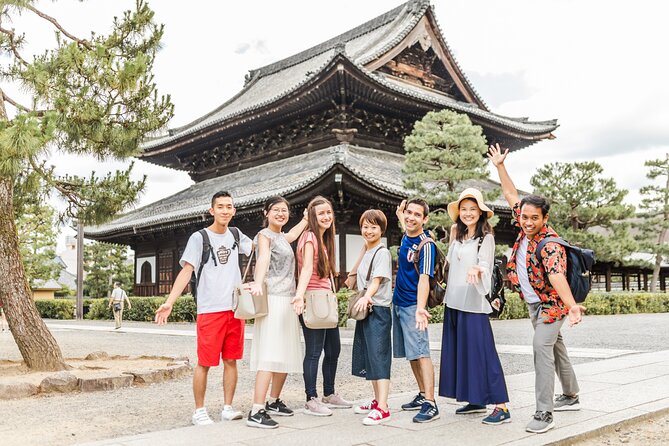
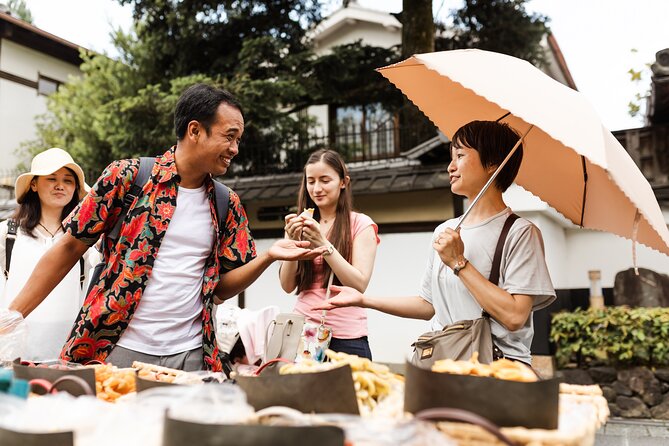
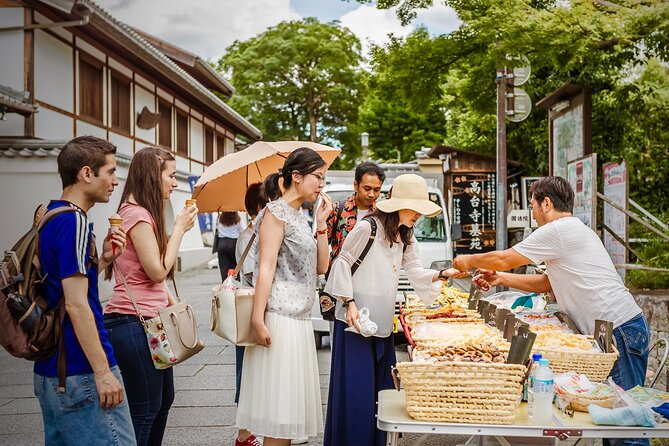
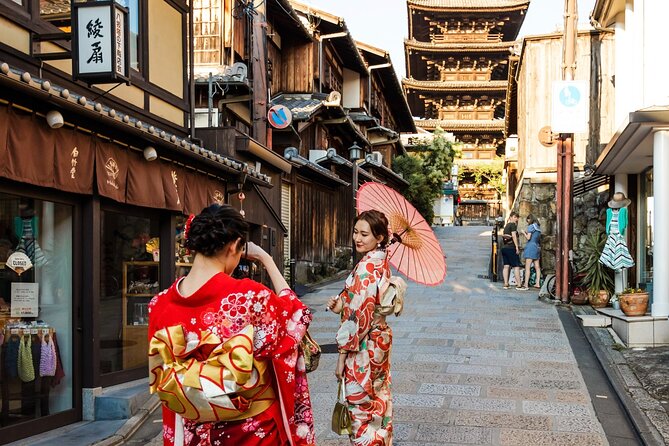
Next is Higashiyama, where Kyoto’s old street character shows up in full. You walk through atmospheric, sloping lanes lined with wooden townhouses, traditional merchant shops, and cafes and restaurants. This part of the day is where Kyoto stops feeling like a “must-see list” and starts feeling like a place you could actually live for a while.
The main value of a guided walking route here is focus. You are not just walking from landmark to landmark, you are guided through streets where the details matter: storefront styles, street layout, and where small stops fit naturally into the route.
What to watch for: this neighborhood is great for wandering, which can also mean temptation to over-shop and over-snack. Food and drinks are not included, so budgeting matters. If you want to try treats, tell your guide early what you like, so you can make smart choices without losing time you could spend at Kiyomizu-dera.
A day of temples goes further with something to break it up.
Kiyomizu-dera: the stage, the view, and the Otowa stop
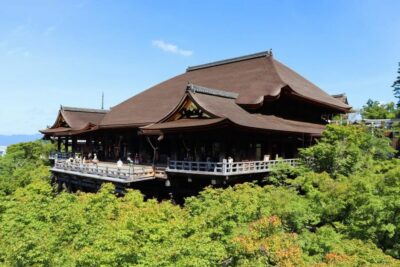
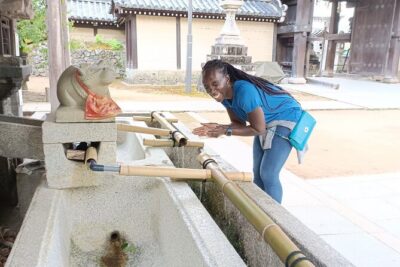
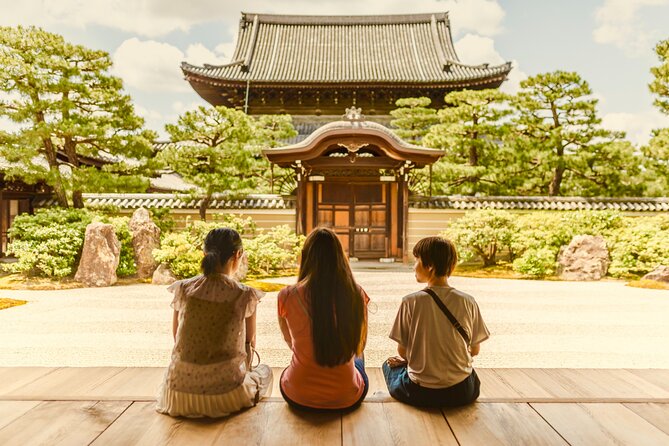
The day’s grand finale is Kiyomizu-dera, one of Japan’s most celebrated temples. You see the massive wooden stage with sweeping city views, and your guide helps you notice details like the Otowa area. It is also especially beautiful during autumn foliage season.
Why this stop feels worth the effort: Kiyomizu-dera is not just an object. It is a viewpoint. When you stand at the stage area, you get a sense of how temples functioned socially and geographically, as places people gathered and looked out from.
This is also where the pacing your guide builds really pays off. If you arrive when crowds are at their peak, your experience can turn from scenic to stressful. A private guide can help you manage time on site, so you spend the best moments where you want them, whether that is for photos, views, or a slower look at the architecture.
The tradeoff is energy. If you saved your best walking legs for late afternoon, you will enjoy this more. If you are already tired, it is worth taking small breaks without feeling guilty.
What you actually get for the $253.22 price
At $253.22 per person for an approximately 8-hour private walking tour, the value is not just the guide’s time. It is the planning and flexibility that comes with tailoring the route to you.
Here is how that cost tends to make sense:
- You are paying for a route built from a questionnaire and customized around your interests
- You are paying for navigation and context, so each stop lands better
- You are paying for time efficiency, since you avoid spending the day on “maybe later” sights
But you should also understand what is not included. Food, drinks, and attraction tickets are not included, and transportation between sites may require extra cost. In the price-value equation, that means your final spend depends on how you choose to handle tickets and transfers.
There is also the practical question of pickup. Pickup can be offered, but the meeting point listed is a Starbucks at Kyoto Sanjo-ohashi Bridge. To avoid confusion, I’d clarify where you will meet exactly and how any pickup transfers are handled before you arrive. That is the most common place where surprise expenses can happen.
Guides, communication, and why names showed up in praise
One reason this type of tour performs well is that it is built around human interaction. The guide reaches out after you book, using your preferences to craft a route that fits your style, whether you prefer history, food, hidden gems, or cultural experiences.
In the reviews, multiple guides were praised by name, including Alex, Eko, Oussama, Vanessa, Taibi, Juraj, and Justus. The positive threads are consistent: quickly understanding what guests wanted, navigating Kyoto efficiently, staying patient with requests, and explaining what you are seeing in a way that makes the stops click. Oussama, for example, was described as contacting in advance and adjusting timing to maximize a limited day, while Vanessa was noted for helping make garden and temple elements feel meaningful.
Even with that, I do not ignore the downside. There’s at least one cautionary note about unexpected transportation requests and a communication mismatch where the guide did not focus enough on history and culture for that guest. The practical fix is simple: message your guide clearly about what you want emphasized, and ask how transportation and any additional costs will be handled.
Getting the most out of your day: what I’d ask your guide
You do not need a script, but a few questions can dramatically improve the day:
- Which parts of the day are busiest, and can we time them to match my priorities?
- How much walking should I expect between stops, and are there any optional shortcuts?
- What is the most important thing to notice at Kinkaku-ji and Kiyomizu-dera for my interests?
- If I want snacks or a meal, where do you recommend I build that in without losing key view time?
- If public transport is needed, do we use it at specific points, or would taxis make sense for my comfort?
Since the tour is fully private, you can also request your pace. If you want more photo time, say so. If you want more explanation, ask for it. The best results come from aligning your expectation with how your guide works.
Who this tour is for, and who should pick something else
This tour is ideal if:
- You want a first-time Kyoto orientation with a local lens
- You only have one day and you want several top sites in a sensible flow
- You like walking and you want access to temple approaches and neighborhood lanes
- You want a day tailored to your interests, not a rigid itinerary
It may be less ideal if:
- You cannot do long stretches of walking
- You expect all transport and all tickets to be included in the base price
- You prefer a fixed schedule with no customization
One more fit check: if your main interest is shopping, you can absolutely build it in, but food and attraction tickets are not included, and street areas like Higashiyama can be full of distractions. A guided route helps, but you should still budget time and money.
Should you book this Kyoto private walking tour?
I’d book it if you want maximum Kyoto in one day with real flexibility. The itinerary hits the big icons you came for, and the walking style is well suited to how Kyoto is actually experienced on foot. With the pre-tour questionnaire and the guide’s planning, you have a strong chance of getting a day that feels personal rather than generic.
I would not book it blindly if you hate the idea of extra costs for tickets, food, or transfers. Do a quick message to confirm what transportation might cost beyond the walking sections, and clarify how any pickup transfers are handled based on where you actually plan to meet.
If you can handle an 8-hour walking day and you like the idea of a guide shaping the route to you, this is a strong value way to see Kyoto beyond the checklist.
FAQ
How long is the tour?
The experience is listed as approximately 8 hours.
Is this tour a walking experience?
Yes. It is primarily a private walking experience, and a private vehicle is not included. Public transportation or local taxis may be used to transfer between sites.
Where does the tour start and end?
It starts at Starbucks Coffee – Kyoto Sanjo-ohashi Bridge (Kyoto, Nakagyo Ward, Nakajimachō, 113 近江屋ビル 1F). It ends back at the meeting point.
What is included in the price?
Included are the private and personalized 8-hour walking experience with a local guide, flexible start times, a pre-tour questionnaire to tailor the day, and direct communication with your host for planning and recommendations.
Are food, drinks, and tickets included?
No. Food, drinks, and tickets to any attractions are not included.
How does the customization work?
After booking, you receive a short questionnaire to share your interests, preferences, and must-sees. Your guide then personally reaches out to craft a fully customized itinerary that suits your style and pace.
Can I cancel for a full refund?
Yes. Free cancellation is available if you cancel up to 24 hours in advance for a full refund. Changes made less than 24 hours before the start time are not accepted.
New This Season
- Koyasan Day Trip by Private Car from Kyoto
- Old Port Town and Ultimate Sake Tasting Private Tour From Kyoto
- Kyoto’s Timeless Charm: 3hr Exploration of History and Peace
- Kyoto: 5 Types of Sushi Making
- Sacred Peak & Ancient Paths: Kurama-Kibune Hiking Experience
- Kyoto: Exclusive ZEN practice at Manpukuji temple in Uji
- Kyoto: Private Seasonal Aroma Yoga Class
- Traversing Kyoto’s Scenic West – Arashiyama to Kinkakuji
Full-Day, compared.
5 Top Highlights of Kyoto Full Day Bike Tour (E-bike option)
Read our review →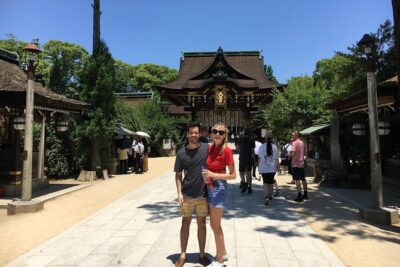
Full Day Biking Tour Exploring the Best of Kyoto
Read our review →
Full Day Guided Tour to Kyoto and Nara from Osaka by Van
Read our review →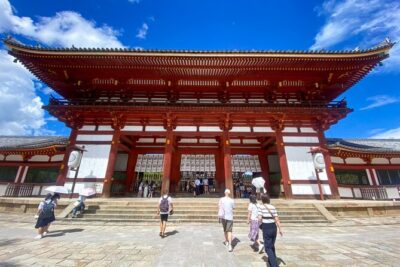
Nara Park, Osaka & Kobe from Kyoto Full Day tour
Read our review →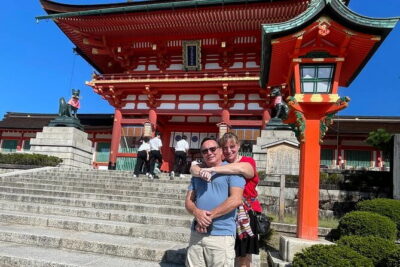
Kyoto Private Car Tour – Full Day with Local Guide & Nara Option
Read our review →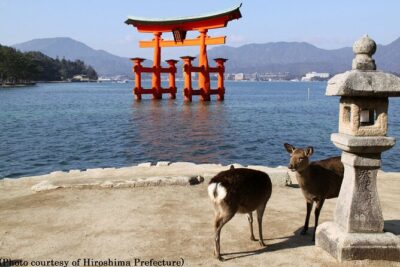
Full Day Hiroshima and Miyajima Tour by Bullet Train from Kyoto
Read our review →