Reviewed · GUIDED
Kyoto: Private Tour with Licensed Guide & Vehicle
Kyoto can feel like a maze when you are moving between neighborhoods. This private half-day tour is interesting because you get a licensed local guide and your own vehicle, so you spend less time figuring out transit and more time seeing the places that matter to you. I especially like the fact that you can tailor your route from a long menu of top sights, and that the pace works for a small group of up to 7.
The one drawback to keep in mind is that a 6-hour plan means you will choose only 3 to 4 locations, so you need to think a little before booking if you want a packed day. Also, like many Kyoto days, walking time can add up, even if the tour is wheelchair accessible, so ask your guide how much time each stop will take.
In This Review
- Key things to know before you go
- Why private guiding matters in Kyoto, not just for comfort
- How you pick your 3 to 4 stops (and why that choice controls the whole day)
- Kiyomizu-dera and Gion, the Kyoto postcard you actually learn something from
- Sagano bamboo forest and Arashiyama scenery, without losing your schedule
- Beyond the big names, how each type of stop changes your day
- Shrines and iconic steps, like Fushimi Inari-taisha
- Temple gardens and calm landscapes, like Ryoan-ji
- Castles and fortified views, like Nijo Castle
- Shopping and food browsing, like Nishiki Market
- Neighborhood evenings, like Pontocho
- Palace-style Kyoto, like Kyoto Imperial Palace
- Aqueduct and monastery areas, like Nanzenji Suirokaku
- Guide quality: what I’m taking from Noriko and Masaki
- Price and logistics, what $308 per person is really buying
- Comfort and pacing, especially if walking is part of your plan
- Smart tips to get the most out of your 6-hour Kyoto route
- Should you book this private Kyoto tour?
- FAQ
- How many places can I see during this 6-hour tour?
- What is included in the tour price?
- What should I budget for since entrance fees and lunch are not included?
- Is this tour wheelchair accessible?
- What languages do the guides speak?
- Where can the driver pick me up?
- Can I combine this tour with other groups?
Key things to know before you go
- Private vehicle + max 7 people means easier logistics and a calmer day than public transport shuffling
- Licensed English-speaking guide helps you connect the dots across temples, streets, and neighborhoods
- You choose 3 to 4 stops from a big list, or your guide can recommend a smart route
- Kiyomizu-dera, Gion, and Sagano/Arashiyama are strong anchor points for first-time Kyoto visitors
- Wheelchair accessible with practical routing, helpful in Kyoto’s uneven streets
- Cash is required, and entrance fees and lunch are not included
Why private guiding matters in Kyoto, not just for comfort
Kyoto is gorgeous, but it can also be tiring in a very specific way. The sites are spread out, and bus and subway navigation can be confusing if you are not used to the system. If you have mobility limits, that friction multiplies quickly, because detours and long walks start to steal time from sightseeing.
This is where a private setup helps. You are not just buying a car ride. You are buying someone who can plan the order of stops, keep you on track, and make smart calls about what is worth your limited time. That is a big deal on a 6-hour tour, where you will only visit 3 to 4 places.
I also like that the guide is local and licensed, with English support. In past bookings, guides such as Noriko and Masaki were praised for excellent English and for building a route around your wishes, not just running a script. A calm, polite driver also makes a difference, because Kyoto traffic and narrow streets can turn stressful fast if your day is self-managed.
How you pick your 3 to 4 stops (and why that choice controls the whole day)
After you book, your guide contacts you to plan a personalized tour. That is the key to making the day feel customized. The tour is not confirmed until the guide connects with you, and in many cases guides get in touch within 7 days, with the provider stepping in if a guide is unavailable.
From your side, you typically pick the locations you want in the 6-hour window. You can choose from a list that includes major classics such as:
- Fushimi Inari-taisha Shrine
- Gion and Pontocho
- Nijo Castle
- Nishiki Market Shopping District
- Kyoto Imperial Palace
- Kiyomizu Temple
- Ginkakuji Temple
- Nanzenji Suirokaku
- Ryoan-ji Temple
- Arashiyama and Sagano options like the Bamboo Forest area, Tenryu-ji, and Togetsukyo Bridge
- Garden and villa-style stops like Okochi Sanso Garden and several imperial villa locations
- River and hilltop sights like Kurama-dera and Kibune River
Here is the practical part: you should think in themes. A simple pattern that works well is:
- One neighborhood vibe (Gion or Pontocho)
- One big temple moment (Kiyomizu-dera, Fushimi Inari, Ginkakuji, Ryoan-ji)
- One nature or scenic block (Sagano bamboo forest, Togetsukyo Bridge, a garden like Okochi Sanso)
- Optional extra if time allows (Nijo Castle, Nishiki Market for food browsing, or Kyoto Imperial Palace)
Your guide can also recommend the order. That matters because some sights are best paired by geography and walking style. For example, you might pair Kiyomizu-dera with Gion, because the dramatic temple view naturally connects to the historic street atmosphere nearby. Or you might combine Sagano bamboo forest with an Arashiyama temple or bridge stop so you do not backtrack.
A quieter way to spend a day in Kyoto
- Fushimi Inari Hidden Hiking Tour (Private Option Available)
★ 5.0 · 1,750 reviews - Private Kyoto Tour with a Local, Highlights & Hidden Gems, Personalised
★ 5.0 · 1,543 reviews - Kyoto 6hr Private Tour with Government-Licensed Guide
★ 5.0 · 1,369 reviews - 10 Must-see Spots in Kyoto One Day Private Tour (up to 7 people)
★ 5.0 · 1,108 reviews
Kiyomizu-dera and Gion, the Kyoto postcard you actually learn something from
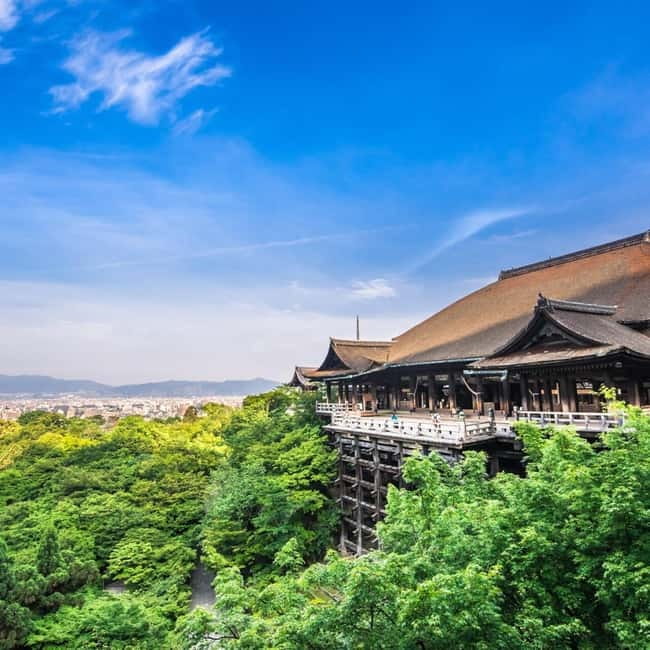
If you are aiming for classic Kyoto, Kiyomizu-dera is usually a top choice for a reason. It towers over the historical Gion district, and that relationship helps your day click. You are not just walking from one attraction to another. You are moving through the layers of Kyoto, where grand temple space and old-town streets sit close enough to feel connected.
Kiyomizu-dera tends to be visually memorable, and your guide can help you slow down and notice what you are looking at instead of rushing. Then Gion adds the cultural texture. Gion is famous for geisha history, and even if you are not trying to hunt down specific moments, you still get a real sense of how Kyoto’s traditional arts took shape in this neighborhood.
What I like about this pairing is that it works for first-timers and return visitors alike. First-timers get iconic sights. Return visitors can focus on context, like how the temple view and the streets below relate to each other day-to-day.
Possible consideration: both areas involve walking, and Kyoto streets can be uneven. Even with a wheelchair accessible tour option, you should be clear with your guide about how much walking you want to do at each stop, so you do not end up spending your limited time on footpaths you would rather skip.
Sagano bamboo forest and Arashiyama scenery, without losing your schedule
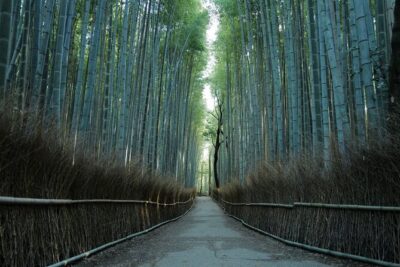
Sagano and Arashiyama are often the most requested nature stops. The bamboo forest area brings that instantly recognizable Kyoto atmosphere, and the surrounding temples and gardens give it structure. On a private route, you can usually manage crowds better, because you can time the day to your pace and your guide’s plan.
If you want variety, this is where your itinerary can become more than one photo stop. You might choose:
- Bamboo forest street time for that slow, quiet walkway feel
- A temple stop in the Arashiyama area, where gardens and halls create contrast to the bamboo
- Togetsukyo Bridge for wide views and river atmosphere
- Okochi Sanso Garden for a more garden-forward, scenic approach
- Tenryu-ji as a classic temple add-on in the same general zone
Here is what you will appreciate, especially if you have limited mobility or you are traveling with family. A private guide can help you pick the right “version” of the area. Some people want maximum scenery time. Others want fewer transfers and easier walking. Either way, you are making those calls with a professional who can adjust.
One more tip: Arashiyama is popular. You will likely see crowds at peak times. Your best strategy is to agree on your priorities early. If your heart is set on bamboo, build the rest of the day around that. If you prefer gardens and views over crowds, ask your guide which nearby spots best match that style.
Beyond the big names, how each type of stop changes your day
Kyoto can be temples and shrines all day, or it can be street culture, markets, and palace grounds. The value of this tour is that your choices let you steer the day toward what you enjoy.
Here is how different categories tend to feel, and what to think about when selecting your 3 to 4:
Shrines and iconic steps, like Fushimi Inari-taisha
Fushimi Inari-taisha Shrine is one of the most distinctive places in Kyoto. The main appeal is the shrine atmosphere plus the visual scale of the site. If you choose it, plan for a very photogenic experience with paths that can involve a noticeable amount of walking. With a private guide, you can control how long you stay and where you pause.
A day of temples goes further with something to break it up.
Temple gardens and calm landscapes, like Ryoan-ji
Ryoan-ji Temple is known for garden-focused viewing. This type of stop is a great counterbalance to more crowded streets, because it rewards slower attention. If your day includes lively areas like Gion or Nishiki Market, a garden temple helps balance the energy.
Castles and fortified views, like Nijo Castle
Nijo Castle adds a different kind of history, with palace grounds and a more defensive feel. This is a good fit if you want variety beyond temples and streets. It can also work well as a daytime anchor, depending on your routing.
Shopping and food browsing, like Nishiki Market
Nishiki Market Shopping District is for people who like to snack and browse. You might add it if your group wants a more casual stop where you can pick up small bites and watch daily life. Just note that markets can be crowded and movement can be tighter, so ask your guide about a route that suits your walking comfort.
Neighborhood evenings, like Pontocho
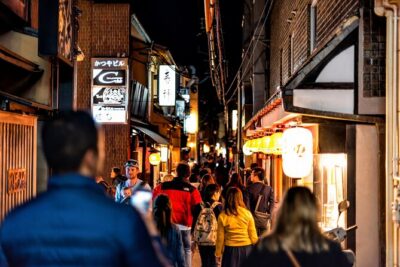
Pontocho is often a choice for that old-street atmosphere, especially later in the day when the area feels more alive. If you are pairing it with earlier temple time, a private guide helps you place it at the right moment so you are not stuck trying to fit everything into rushed daylight.
Palace-style Kyoto, like Kyoto Imperial Palace
Kyoto Imperial Palace offers a different sense of place. It is more about grounds and institutional history than the shrine-and-temple visual experience. If you like architecture or you want a break from the most crowded temple zones, this can be a smart inclusion.
Aqueduct and monastery areas, like Nanzenji Suirokaku
Nanzenji Suirokaku brings a distinctive structure element. It is a good option when you want something less “standard postcard” and more architectural. It also helps your day feel varied without needing extra travel time far beyond the main zones.
The big takeaway: when you pick your stops, you are not just selecting landmarks. You are shaping the rhythm of your day, how often you change neighborhoods, and how your energy holds up across 6 hours.
Guide quality: what I’m taking from Noriko and Masaki
A private tour can succeed or fail based on guide skill. Good guiding turns a list of sites into a story you can follow in real time. In reviews tied to this tour, Noriko was praised for strong knowledge, excellent English, and a friendly approach with great sense for guest wishes. Masaki was also described as super, with a visit program that guests really appreciated.
Even if you do not know which guide you will get, this hints at what you should look for when you plan your route. You want a guide who can:
- Adjust the pace to your interests
- Answer questions in clear English
- Keep the day moving without turning it into a sprint
- Suggest a route that makes geographic sense for Kyoto
That is exactly what you are paying for with a licensed local guide plus a private vehicle.
Price and logistics, what $308 per person is really buying
At $308 per person for a 6-hour tour, this is not a budget option. But you are not paying for a generic sightseeing ticket either. You are paying for:
- A licensed local English-speaking guide
- A private vehicle for easier routing
- A customizable walking tour of 3 to 4 sites
- A small maximum group size of up to 7 people
So the “value” depends on you. If you are traveling solo, the price might sting compared to public transit. But if you want mobility support, time savings, and someone who can shape your day around your preferences, it starts to make sense fast.
Think of it as buying three things:
- Less time fighting logistics
- More time understanding what you are seeing
- Less stress when Kyoto gets confusing or walking becomes harder
Also, entrance fees and lunch are not included. Budget for that separately. Bring cash, since cash is listed as something you should have.
Pickup and boundaries also matter for value. Your driver can pick you up in Kyoto City, but pickup does not include Kobe Port, Osaka Port, or Osaka International Airport (KIX). If you are starting farther out, you might need extra planning to get to the Kyoto City pickup area.
One more practical note: you cannot combine multiple tour groups. That means the experience stays private, but you should not expect a “group of strangers” to make the price feel cheaper.
Comfort and pacing, especially if walking is part of your plan
This tour is wheelchair accessible, and that is a real plus in Kyoto. Kyoto streets can be uneven, and transfers between neighborhoods can take time. A private vehicle reduces the “travel tax” you would usually pay on your own.
Car seats and booster seats are limited, and rear-facing car seats are not available. If you are traveling with kids and you need specific seating, you will need to contact the provider directly.
For day-of comfort, I suggest you do two simple things:
- Tell your guide your walking comfort level upfront, even if it feels obvious
- Wear shoes you can walk in for the exact number of minutes you are willing to spend
In a 6-hour window, pacing is everything. Your guide can keep your day balanced, but your preferences steer the schedule.
Smart tips to get the most out of your 6-hour Kyoto route
Kyoto is a place where small decisions matter. Here are a few I would use to make the day feel smooth:
- Pick one must-see anchor, like Kiyomizu-dera or Fushimi Inari-taisha, and then build the rest around it.
- If you want both old streets and scenic nature, pair a neighborhood stop like Gion or Pontocho with a nature stop like Sagano/Arashiyama.
- Ask your guide about the order, not just the list. In Kyoto, order can change how crowded places feel and how much walking you end up doing.
- Plan for entrance fees and lunch cost separately, because they are not included.
- Bring cash, since cash is mentioned as a needed item.
- If you are booking for a group, discuss preferences fast. This tour can handle up to 7 people, so you can usually align interests, but it helps if everyone agrees on priorities.
Finally, keep your questions ready. A private guide is best when you use the advantage of real-time answers, like why a shrine layout is designed a certain way or how one neighborhood connects to another.
Should you book this private Kyoto tour?
Book this tour if you want a calmer Kyoto day with a licensed guide and a vehicle, and you care about choosing your own mix of temples, neighborhoods, and scenery. It is especially worth it if you:
- Feel overwhelmed by Kyoto transit and want a simpler path between areas
- Have walking limitations and need a route that respects your pace
- Want iconic stops like Kiyomizu-dera and Gion, plus nature time like Sagano or Arashiyama
- Prefer a small group setting (up to 7) with real flexibility
Skip it or reconsider if you want to do a large number of sites beyond 3 to 4, or if you enjoy navigating everything independently and are comfortable with longer walking and transit time.
FAQ
How many places can I see during this 6-hour tour?
You can typically visit 3 to 4 sites during the 6-hour duration.
What is included in the tour price?
Included are a licensed local English speaking guide, a private vehicle, and a customizable walking tour of your chosen 3 to 4 sites.
What should I budget for since entrance fees and lunch are not included?
Entrance fees, lunch, and other personal expenses are not included, so you should plan to pay for those separately during your day.
Is this tour wheelchair accessible?
Yes, the tour is listed as wheelchair accessible.
What languages do the guides speak?
The tour offers live guidance in English and Japanese.
Where can the driver pick me up?
The driver can pick you up in Kyoto City. Pickup does not include Kobe Port, Osaka Port, or Osaka International Airport (KIX).
Can I combine this tour with other groups?
No. You cannot combine multiple tour groups.
New This Season
- Koyasan Day Trip by Private Car from Kyoto
- Old Port Town and Ultimate Sake Tasting Private Tour From Kyoto
- Kyoto’s Timeless Charm: 3hr Exploration of History and Peace
- Kyoto: 5 Types of Sushi Making
- Sacred Peak & Ancient Paths: Kurama-Kibune Hiking Experience
- Kyoto: Exclusive ZEN practice at Manpukuji temple in Uji
- Traversing Kyoto’s Scenic West – Arashiyama to Kinkakuji
- Kyoto: Private Seasonal Aroma Yoga Class
Guided, compared.
Kyoto Early Morning Tour with English-Speaking Guide
Read our review →
Kyoto 6hr Private Tour with Government-Licensed Guide
Read our review →Early Morning Tour with English-Speaking Guide
Read our review →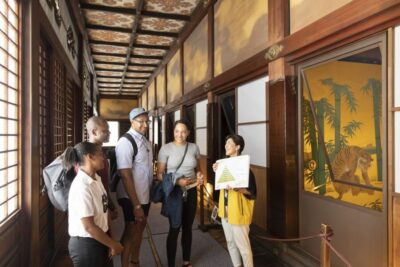
Nijo-jo Castle and Ninomaru Palace Guided Tour
Read our review →
Kyoto Gion Night Walk & Geisha District Guided Tour
Read our review →
Nijo Castle, Kiyomizu & Fushimi Inari Guided Tour
Read our review →