
Reviewed · NARA & DEER PARK DAY TRIPS
Nara Car Tour from Kyoto: English speaking Driver Only, No Guide
Nara feels simpler with a private car. This Kyoto to Nara day trip is interesting because you ride in a private vehicle with an English-speaking driver, not a stressful bus shuffle, and you can focus on the sights. I like the comfort of door-to-door transport and the way you can shape the day around your group. One consideration: there is no licensed local guide on board, so you will do more of the reading and let the driver handle mainly logistics and practical context.
You get about 8 hours to cover major Nara landmarks and still make time for the preserved merchant lanes of Naramachi. The tour is priced per group (up to 5) and you can choose 3 to 4 sites, which is a big deal in a place where opening hours and walking add up fast.
In This Review
- Key points to know before you go
- Why a driver-only Kyoto to Nara day trip is a smart setup
- Price and value: $713.87 per group, how that math works for you
- The Kyoto pickup ride: start clean, end relaxed
- Nara Park and the deer: free time, just plan for the chaos
- Todaiji Temple: Daibutsuden scale, tickets, and what to look for
- Wakakusayama Hill: fast climbing, big city views
- Horyu-ji Temple: Prince Shotoku roots and some of the oldest wood
- Kasuga Taisha Shrine: free outer area, paid inner, Fujiwara clues
- Shin-Yakushiji and Yakushiji: quieter temples with strong structure
- Naramachi merchant district: slow lanes, preserved machiya, snack time
- Back to Kyoto: how to keep the 8 hours from slipping
- Should you book this Nara car tour from Kyoto?
- FAQ
- Is this tour just an English-speaking driver, or do I get a guide?
- How long is the Kyoto to Nara private car experience?
- What is the group size limit?
- Are tickets included for all the temples?
- Which parts of Nara are free in this plan?
- Can I customize which sites I visit?
- Do I get pickup in Kyoto?
- Is there a mobile ticket?
- Are service animals allowed?
- What if I need child car seats or boosters?
- Is cancellation free?
Key points to know before you go
- Driver-only means flexibility, not a lecture, so you control what you spend time on.
- 3 to 4 sites per group keeps the day realistic, especially with temple ticket lines.
- Free stops help your budget, including Nara Park and Naramachi.
- Todai-ji and Horyu-ji are the ticket anchors, with set adult prices listed for each.
- Wakakusayama gives quick city views, with seasonal cherry tree timing in early April.
Why a driver-only Kyoto to Nara day trip is a smart setup
Nara is easy to reach from Kyoto, but once you land there, the rest can get messy fast. Temples are spread out, deer are everywhere, and you still need to pay attention to opening times. A private car plus an English-speaking driver solves the most annoying part, getting you from place to place without public-transport stress.
What I especially like for independent travel is that this is built for your pace. You choose the focus, you decide how long you linger, and you do not feel rushed by fixed join-a-group time blocks. One person in your group has an English-speaking chauffeur handling the driving and the practical questions, which is a huge stress reducer.
The tradeoff is also clear: you do not have a licensed local guide included. If you love deep historical commentary at every stop, you might want to pre-read a bit or plan to ask your driver what they can. A named example from previous bookings is a driver called Nobu, praised for clear English and professionalism.
Price and value: $713.87 per group, how that math works for you
The price is $713.87 per group for up to 5 people. That sounds high until you compare it to the reality of a full day: private transport for about 8 hours, English-speaking driver time, and a route shaped around 3 to 4 Nara priorities.
Here is the value angle that matters. If your group is closer to 5 people, the cost per person drops a lot, and entrance fees become the only real variable. If you are traveling as a smaller group, it can still be worth it because you are paying for time saved and fewer headaches, not just the car ride.
Also note what is not included. Entrance fees, lunch, and personal expenses are on you. The details do list several ticket prices for specific temples, so you can budget accurately:
- Todai-ji: 600 yen adult, 300 yen elementary students
- Horyu-ji: 1,500 yen adult, 750 yen child (age cut at 12+ for adult)
- Kasuga Taisha: outer area free, inner area 500 yen
- Shin-Yakushiji: 600 yen
For Yakushiji, the details say the admission is not included, but they do not list a price here.
Deer that bow back, a short ride away
- Osaka/Kyoto:Kinkakuji,Arashiyama,FushimiInariShrine,NaraPark
★ 4.1 · 1,596 reviews - Kyoto/Osaka: Nara, Fushimi Inari Taisha, Arashiyama Bus Tour
★ 4.7 · 1,275 reviews - Osaka/Kyoto: Arashiyama, Nara & Fushimi Inari Shrine w/Lunch
★ 4.4 · 754 reviews - Kyoto and Nara Day Trip from Kyoto
★ 4.5 · 445 reviews
The Kyoto pickup ride: start clean, end relaxed
The tour includes pickup in Kyoto, and you return to Kyoto by private vehicle at the end. Practically, that means you do not need to figure out transfers, timing, and platform navigation while carrying day-pack energy.
The road time is part of the day plan. You effectively get about an hour to shift from Kyoto mode into Nara mode. I like using that time to decide what you actually want to see most, like whether you prioritize the big Buddha experience, a calmer temple, or the deer-and-park atmosphere.
It is also helpful that you get a mobile ticket. That small thing can shave off friction when you are moving between stops with tight walking windows.
Quick reality check: you are spending a full day. If you are prone to museum fatigue, pick 3 to 4 sites and protect your energy. This is the best way to get value without turning Nara into a speed run.
Nara Park and the deer: free time, just plan for the chaos
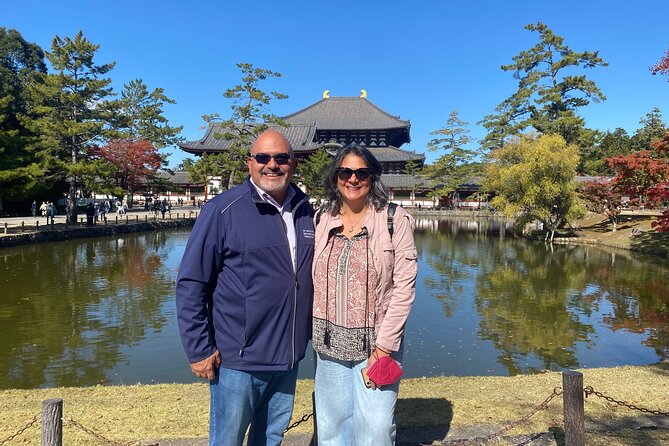
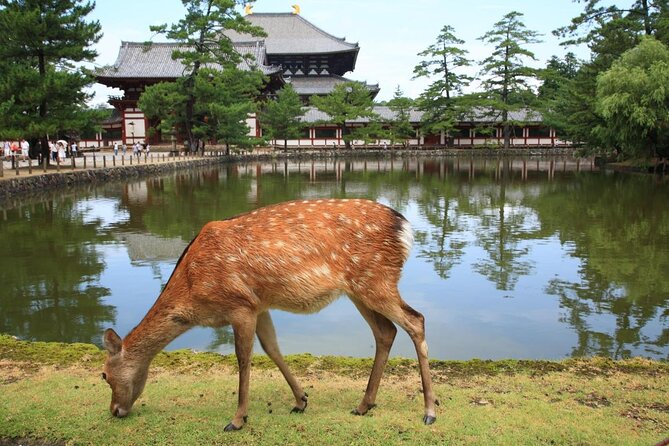
Nara Park is the center hub for several famous sights, and it is also a free stop. You are there for about 40 minutes, long enough to get your bearings, find a good photo moment, and enjoy the sacred deer atmosphere.
Established in 1880, the park is where visitors connect the dots between multiple Nara highlights. You can see how Todai-ji and other major attractions relate to each other geographically, which makes your later temple hops easier.
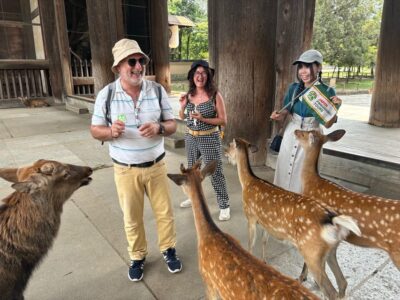
The practical downside is obvious once you arrive: deer are free roaming, and they act like they own the place. Keep your snacks secure, watch your step near close encounters, and be mindful around people feeding or photographing. If you want the classic deer moments, you still want personal space.
Todaiji Temple: Daibutsuden scale, tickets, and what to look for
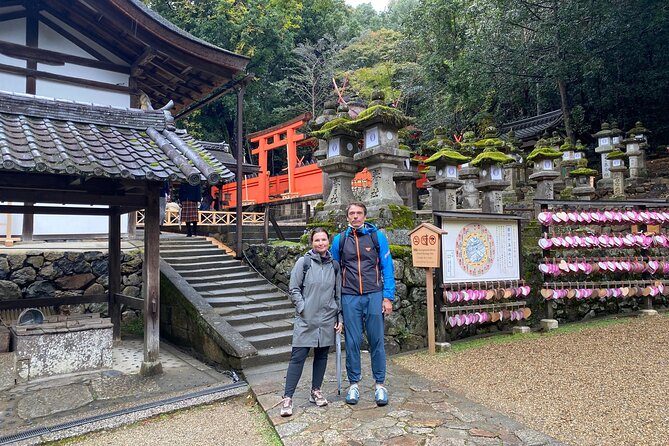
Todai-ji is one of Japan’s most famous temples, tied to the year 752, when it was constructed as a major Buddhist center. The story is a strong part of the experience: as the temple gained influence, the capital shifted away from Nara in 784, partly to reduce that pressure.
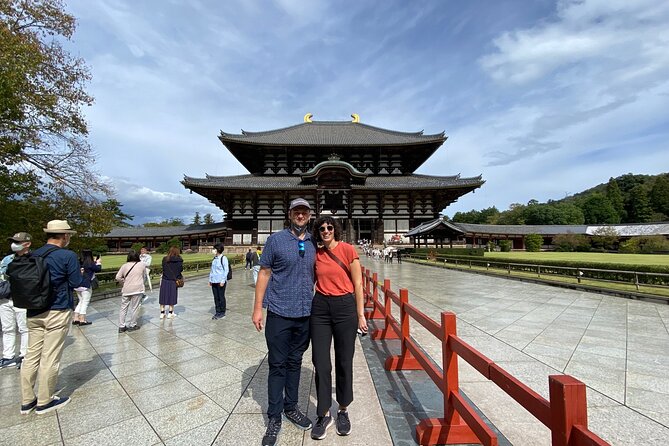
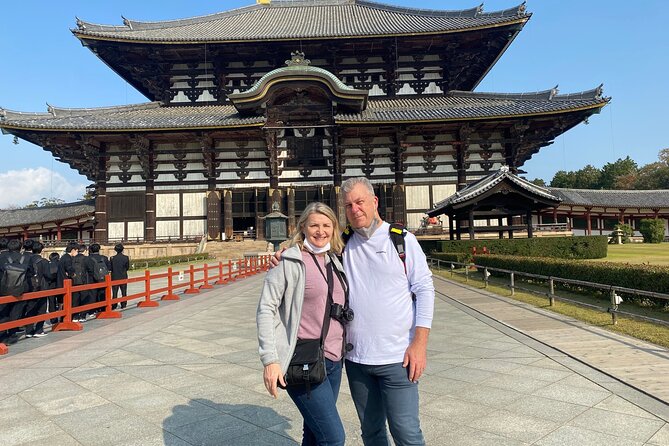
The Big Buddha Hall, called the Daibutsuden, is central to why people come. The reconstruction completed in 1692 is smaller than the original, but it is still enormous. Even if you have seen photos, standing in the space is the main point, because scale is hard to grasp in pictures.
Timing matters here. You have about 1 hour for this stop, but the real time needs are usually travel-in, find the best viewing angle, and then slow down for a second look. The admission ticket is not included, with 600 yen for adults and 300 yen for elementary students.
One more good strategy when you are traveling without a guide: pick one specific detail you want to focus on before you enter. You will naturally notice more when you have a target, like the hall structure, the central statue area, or the surrounding temple layout.
Wakakusayama Hill: fast climbing, big city views
If your group wants open-air views without committing to a long hike, Wakakusayama is a smart add-on. Mount Wakakusayama sits behind Nara Park between Todai-ji and Kasuga Taisha. It is about 350 meters tall, and you can climb it in most seasons.
The access details are important. Tourists can climb all year except winter, and there is a small entrance fee mentioned for the hill. The route is grass-covered, so you are not dealing with complex terrain, but it still climbs.
This stop is timed for about 30 minutes, which is just enough for a viewpoint payoff if you manage expectations. You can reach a plateau halfway up in about 15 to 20 minutes, and many people stop there for great over-city views. Going on to the peak adds more time, about 20 to 30 minutes more.
If you are visiting in early April, pay attention to the cherry trees along the slope. It is not guaranteed for any year, but it is a well-known timing window, and the view from up top is a different Nara perspective than the temple circuit.
Have someone else navigate the day
Horyu-ji Temple: Prince Shotoku roots and some of the oldest wood
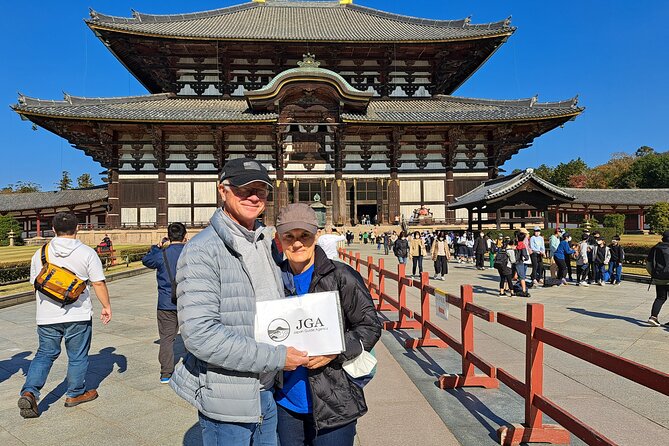
Horyu-ji is the kind of stop that rewards you for slowing down. Founded in 607 by Prince Shotoku, it connects to the early spread of Buddhism in Japan. It also holds major bragging rights: it contains the world’s oldest surviving wooden structures and became a World Heritage site in 1993.
You get about 1 hour here, and the temple grounds are spacious with two main precincts. The Western Precinct is called Saiin Garan, and the Eastern Precinct is Toin Garan. If you only skim, you will miss the feel of the complex. If you walk patiently, you can sense why the buildings matter beyond just being old.
Admission is not included, with 1,500 yen for adults and 750 yen for children. Hours vary by season:
- 8:00 to 17:00 from 2/22 to 11/3
- 8:00 to 16:30 from 11/4 to 2/21
In a driver-only day, I like Horyu-ji because you do not need a lecture to enjoy it. The architecture and the layout do the work for you.
Kasuga Taisha Shrine: free outer area, paid inner, Fujiwara clues
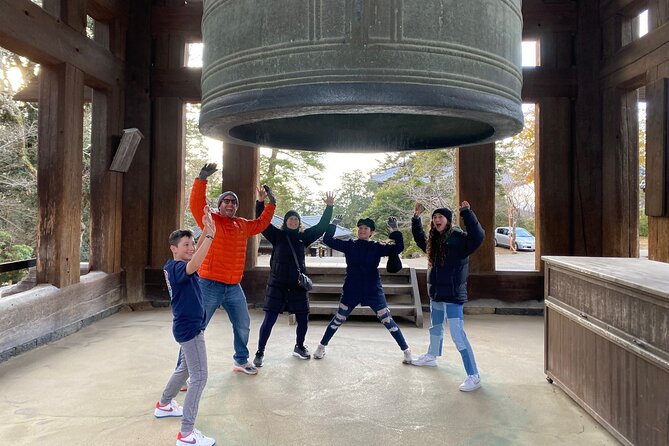
Kasuga Taisha is Nara’s most celebrated shrine, and it helps explain why Nara feels spiritually concentrated. It was established around the same time as the capital and is dedicated to the deity responsible for the city’s protection.
It is also closely linked to the Fujiwara clan, which held major power during the Nara and Heian periods. The shrine was rebuilt periodically for centuries on a roughly 20-year cycle, until the custom ended at the end of the Edo period.
Here is the fee logic you should use to manage your budget. The outer area is free and the inner area is 500 yen. You can choose based on how much time you want to spend inside.
Hours are listed as:
- 6:30 to 17:30 (March to October)
- 7:00 to 17:00 (November to February)
Inner area: 9:00 to 16:00
This is another stop where a guide is not required to enjoy it. But it does help to know the outer versus inner difference ahead of time, so you do not end up rushing right at closing.
Shin-Yakushiji and Yakushiji: quieter temples with strong structure
Not every day needs the biggest names at full volume. Shin-Yakushiji and Yakushiji work well as supporting stops because they feel more focused and less like a race.
Shin-Yakushiji was founded during the Nara period (710 to 794) by an empress for the sake of ailing emperor. The temple is devoted to Yakushi Buddha, and the meaning of Shin-Yakushiji is tied to the fact there was already a Yakushiji temple.
You get about 30 minutes, with hours listed as 9:00 to 17:00. Admission is 600 yen, and the key practical move is to treat it like a short, structured visit, not an all-day exploration.
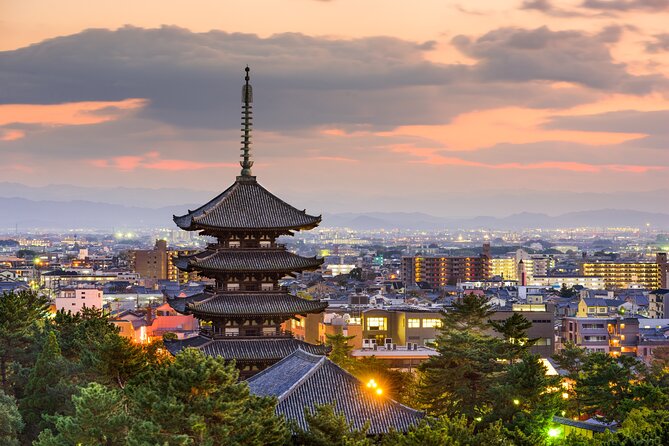
Yakushiji is a bit more visually architectural. It was constructed by Emperor Tenmu in the late 7th century for recovery of his sick wife. The layout is strictly symmetric, with a main hall and lecture hall on a central axis, flanked by two pagodas. The hall was rebuilt in the 1970s after a fire, and it houses a Yakushi trinity. One pagoda detail that is especially useful to know: the East Pagoda is the only surviving structure through many fires, and it dates from 730.
Yakushiji also runs about 30 minutes in this plan, and the admission is not included, though no fee is listed in the details you provided. If you want to reduce decision fatigue, these two temple stops let you pick “structure and symmetry” as your theme for the day.
Naramachi merchant district: slow lanes, preserved machiya, snack time
Naramachi is the place to switch gears after temples. This former merchant district keeps traditional residential buildings and warehouses, with access to several buildings preserved for the public.
You get about 40 minutes, and admission is free. The lanes are narrow, and the area now mixes preserved machiya with shops, cafes, and restaurants. It is a good counterbalance to the more solemn temple mood.
What I find genuinely interesting here is the machiya detail. Many of these townhouses have narrow storefronts, partly because taxes used to be calculated based on street access rather than total property size. When you walk those lanes, you can feel how the design shaped the commerce.
If your group wants a practical plan: give yourselves a snack mission in Naramachi. You can reset your energy, buy a small treat for the ride back, and still keep the day moving.
Back to Kyoto: how to keep the 8 hours from slipping
You return to Kyoto by private vehicle, and the plan includes about 1 hour for the return leg. That means you need to be intentional about how you spend your time between sites.
In a driver-only setting, the biggest risk is each stop taking slightly longer because you want one more photo, one more look at a hall, or one extra deer encounter. You will avoid that by choosing your 3 to 4 priorities before you start and treating everything else as optional.
If you are traveling with kids, the pace also matters. Todai-ji, Wakakusayama, and Naramachi can be easier for younger visitors than long temple walks, depending on your child’s temperament.
One more practical note for planning your group comfort. Car seats and booster seats are limited, and rear-facing car seats are not available. If you need specific child seating, you must contact the provider directly.
Should you book this Nara car tour from Kyoto?
I would book this if you want a smooth, private day trip without navigating trains, buses, and station transfers. The combination of English-speaking driver, door-to-door convenience, and a choice of 3 to 4 sites is ideal for couples, small families, and friend groups that want to move on their own schedule.
I would think twice if your main goal is deep historical storytelling at every temple. With no licensed local guide included, you will want to bring curiosity and do a little pre-reading, or rely on your driver’s explanations when they are available.
Also, plan your budget for entrance fees at the temples where charges are listed, and remember that lunch is not included. If you do that homework, this becomes a very comfortable way to see Nara without turning your day into logistics.
FAQ
Is this tour just an English-speaking driver, or do I get a guide?
It includes an English-speaking driver, but a licensed local English speaking guide is not included.
How long is the Kyoto to Nara private car experience?
It runs for about 8 hours (approx.).
What is the group size limit?
The price is per group up to 5 people.
Are tickets included for all the temples?
No. Entrance fees are not included. Some stops are listed as free, and others have listed prices such as Todai-ji (600 yen adult), Horyu-ji (1,500 yen adult), Kasuga Taisha inner area (500 yen), and Shin-Yakushiji (600 yen).
Which parts of Nara are free in this plan?
Nara Park is free, and Naramachi is free. The outer area at Kasuga Taisha is also free.
Can I customize which sites I visit?
Yes. The tour is described as a customizable plan based on 3 to 4 sites you choose.
Do I get pickup in Kyoto?
Yes, pickup offered in Kyoto is included.
Is there a mobile ticket?
Yes, a mobile ticket is included.
Are service animals allowed?
Yes, service animals are allowed.
What if I need child car seats or boosters?
There are only limited car seats and booster seats available, and rear-facing car seats are not available. You must contact the provider directly if you need them.
Is cancellation free?
Free cancellation is available. You can cancel up to 24 hours in advance of the experience for a full refund.
New This Season
- Koyasan Day Trip by Private Car from Kyoto
- Old Port Town and Ultimate Sake Tasting Private Tour From Kyoto
- Kyoto’s Timeless Charm: 3hr Exploration of History and Peace
- Kyoto: 5 Types of Sushi Making
- Sacred Peak & Ancient Paths: Kurama-Kibune Hiking Experience
- Kyoto: Exclusive ZEN practice at Manpukuji temple in Uji
- Kyoto: Private Seasonal Aroma Yoga Class
- Traversing Kyoto’s Scenic West – Arashiyama to Kinkakuji
Nara & Deer Park Day Trips, compared.
Kinkakuji,Arashiyama,FushimiInariShrine,NaraPark
Read our review →
Nara, Fushimi Inari Taisha, Arashiyama Bus Tour
Read our review →
Arashiyama, Nara & Fushimi Inari Shrine w/Lunch
Read our review →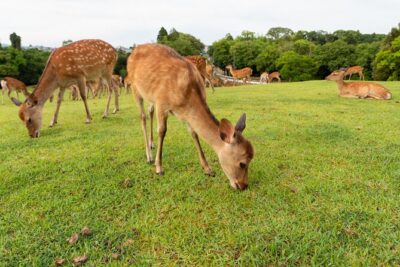
Full Day Guided Tour to Kyoto and Nara from Osaka by Van
Read our review →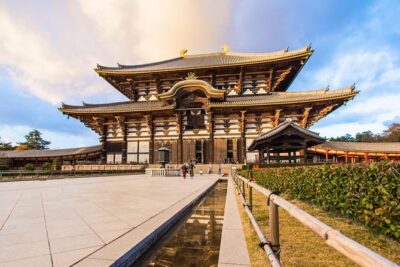
Also filed under