
Reviewed · ARASHIYAMA BAMBOO FOREST WALKS
Zen Run in Arashiyama
Running through Kyoto sounds a bit odd until you do it. This Arashiyama route mixes bamboo forest paths, temple stops, and river views into a flexible, scenery-first workout that feels more like exploring with a mission than sightseeing on foot.
Two things I really like: you get to cross the area’s most famous river scene at Togetsukyō Bridge, then slow down for meaningful cultural stops without the stress of crowd-chasing. And the experience is guided by an English-speaking fitness lead, so you are not just moving, you are learning how to do it comfortably and safely.
One consideration: even though it is not a high-intensity run, you should expect a moderate fitness level plus some uphill effort during the Monkey Park part, and warm weather can make the day feel harder than the distance suggests.
In This Review
- Key highlights you’ll feel right away
- Kyoto on your feet, but with a running rhythm
- Pace, fitness level, and how the guide keeps it comfortable
- Price and value: what you are really paying for
- Meeting point and timing for an easy start
- Stop 1: Togetsukyō Bridge and Katsura River views
- Stop 2: Nonomiya Shrine, literature links, and quiet courtyard time
- The bamboo forest section: where running feels like a photo essay
- Stop 3: Otagi Nenbutsu-ji statues and the “otherworldly” vibe
- Stop 4: Tenryu-ji and Sogenchi gardens for a calmer finish
- Stop 5: Monkey Park Iwatayama hike, 120 macaques, and safe feeding
- What the English-speaking fitness guide actually gives you
- Practical tips for your 8:00 am Zen Run
- Who should book this and who should skip it
- Should you book Zen Run in Arashiyama?
- FAQ
- How long is the Zen Run in Arashiyama?
- What is included in the price?
- What is not included?
- Where does the tour start and when?
- Is this tour strenuous?
- Are tickets mobile?
- What happens on Wednesdays?
Key highlights you’ll feel right away
- Flexible-paced jogging with breaks, so you can stay in control of your effort
- Togetsukyo Bridge crossing for classic Katsura River views in a short, scenic segment
- Temple stops with time to look, including Otagi Nenbutsu-ji and Tenryu-ji’s Sogenchi gardens
- Bamboo forest running that turns a photo stop into an actual sensory walk-run
- Monkey Park Iwatayama with over 120 wild Japanese macaques you can safely observe and feed
- Small group size (max 12) for a more personal pace, especially if you need adjustments
Kyoto on your feet, but with a running rhythm
If you have only done Arashiyama the slow way, this changes the mood fast. Instead of shuffling between must-see spots, you get motion in between, which helps the whole area feel connected. I like that the plan is designed around scenic route segments, not a strict pace or a test of speed.
This is also not a treadmill-style fitness class. The goal is a “stay active, keep it enjoyable” morning, with stops at key landmarks and plenty of opportunities to pause, take photos, and reset.
And the vibe is practical. Your guide shares running tips and motivation, but the bigger point is that you keep moving without frying yourself.
Pace, fitness level, and how the guide keeps it comfortable
The tour is described as a scenic, flexible-paced experience, suitable for all fitness levels, and the practical note is “moderate physical fitness level.” In real terms, that means you should be comfortable jogging at least some of the time and walking temple paths and a scenic hike. It is not built for people who want a purely flat, stroller-friendly route.
Heat is the big wildcard in Kyoto. One review mentioned intense heat and that the guide, Francis and Ario, modified the run so the family could still see everything even when a child was not feeling well. That detail matters because it tells you the leaders do not treat the itinerary like a stopwatch.
So if you are a beginner, you can plan on slower running segments and more walking moments. If you are an experienced runner, you still get enjoyment from the scenery, but this is not the time to chase a personal best.
Green light through a bamboo grove
- Kyoto: Fushimi Inari, Kinkakuji, Bamboo Grove 1 Day Bus Tour
★ 4.8 · 4,316 reviews - Osaka/Kyoto:Kinkakuji,Arashiyama,FushimiInariShrine,NaraPark
★ 4.1 · 1,596 reviews - Kyoto/Osaka: Nara, Fushimi Inari Taisha, Arashiyama Bus Tour
★ 4.7 · 1,275 reviews - Kyoto Arashiyama Walking Tour: Bamboo, Monkeys, Gardens & Secrets
★ 5.0 · 1,216 reviews
Price and value: what you are really paying for
At $98.22 per person for a 1.5 to 2 hour experience, the sticker price looks like a splurge until you break down what is included. You have a professional English-speaking guide, time built around major Arashiyama landmarks, and included admissions at key stops.
Admission is included for Otagi Nenbutsu-ji, Tenryu-ji, and Monkey Park Iwatayama. Togetsukyō Bridge and Nonomiya Shrine are listed as free, which is nice because it keeps part of the day cost-light. Lunch is not included, so you may want to plan that separately.
If you compare this kind of service to piecing together a self-guided plan plus buying tickets plus figuring out where to run, the value becomes clearer. You are paying for guidance, pacing help, and structured time at places that can be easy to rush past on your own.
Meeting point and timing for an easy start
You start at Saga-Arashiyama Station, at 11-1 Sagatenryūji Kurumamichichō, Ukyo Ward, Kyoto (616-8373). The start time is 8:00 am, and the activity ends back at the meeting point.
Starting in the morning is smart in Arashiyama. You get better light for photos and you are more likely to avoid the worst heat and peak crowds. Also, because the meeting spot is near public transportation, you can build this into your Kyoto schedule without complicated logistics.
You will use a mobile ticket, which is convenient if you prefer keeping everything on your phone.
Stop 1: Togetsukyō Bridge and Katsura River views
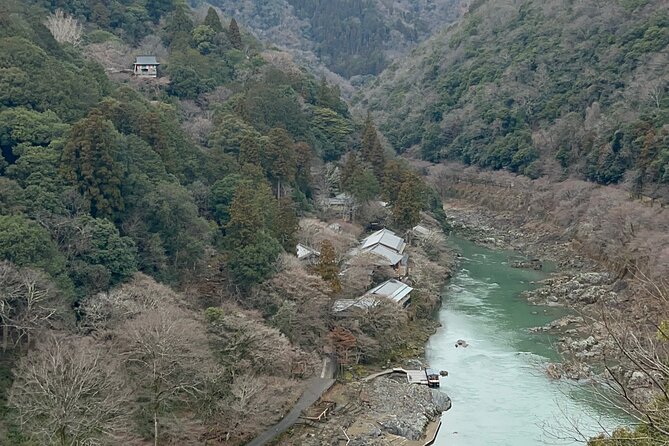
Your first landmark is Togetsukyō Bridge, with about 5 minutes here as you traverse the river crossing. Even with such a short stop, this matters because it anchors the whole Arashiyama area visually. The bridge is a historic piece of the neighborhood’s story, and the river setting gives you immediate context for where you are headed next.
Practical tip: treat this like a quick reset moment. A couple minutes to look around, take a photo, then get moving again is the rhythm this tour wants.
Stop 2: Nonomiya Shrine, literature links, and quiet courtyard time
Next is Nonomiya Shrine for about 10 minutes. This stop stands out because it connects the site to people and stories beyond travel brochures. It is mentioned in the works of Murasaki Shikibu and is tied to imperial princesses.
That matters when you have a running route, because it gives meaning to the scenery. Instead of just “we pass a shrine,” you get a reason the place mattered and why it is still remembered.
This is also a good moment to slow down. If you have been warming up, you can settle into a calmer walking pace for a bit before heading toward the bamboo.
A day of temples goes further with something to break it up.
The bamboo forest section: where running feels like a photo essay
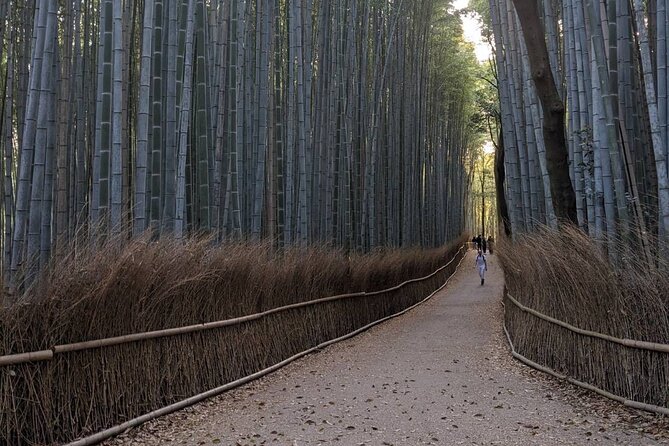
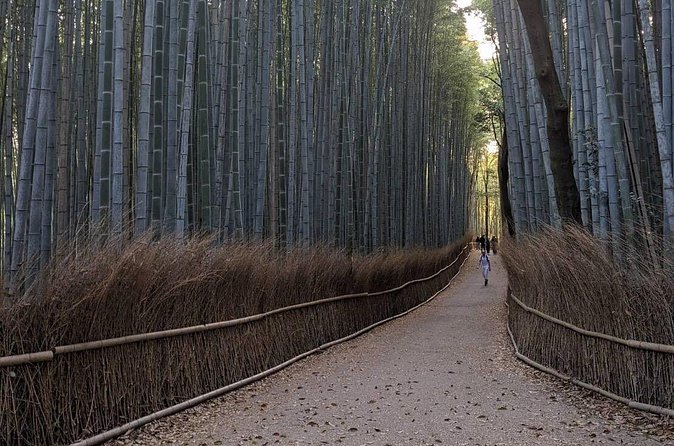
Then you move into the world-famous bamboo forest. The tour does not list a specific duration for this section in the itinerary, but the intent is clear: you are not just viewing bamboo. You are moving through it, with frequent photo opportunities.
Why it works: bamboo groves can feel crowded if you approach them like a checklist. Running through at a flexible pace, with stops when you want them, turns the experience into something more personal. The rhythm of footfalls plus the tunnel-like feel of bamboo makes it feel quieter than you might expect.
Practical tip: keep your phone ready but do not run while you are trying to frame every shot. You will have more fun if you treat photos as quick pauses.
Stop 3: Otagi Nenbutsu-ji statues and the “otherworldly” vibe
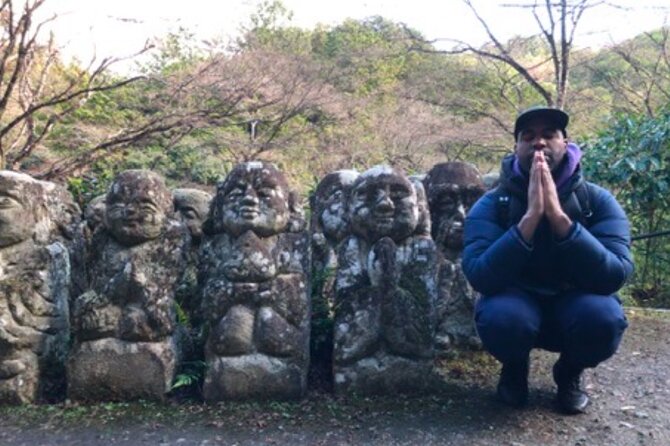
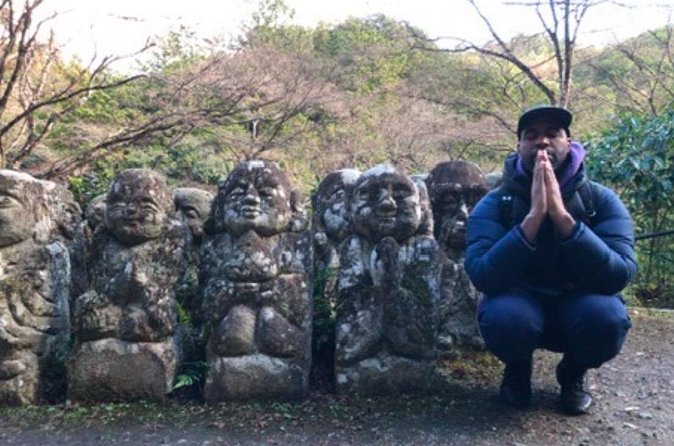
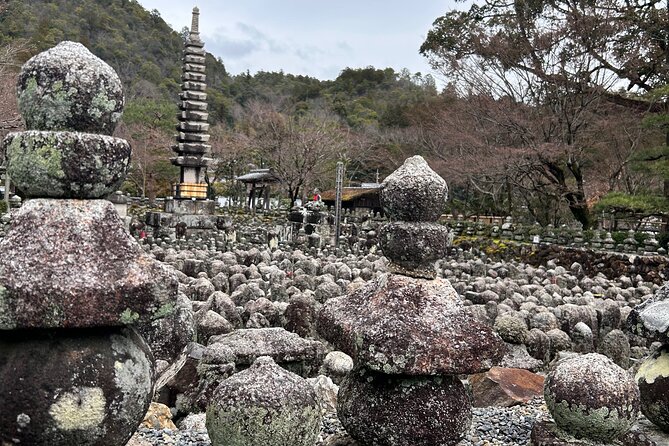
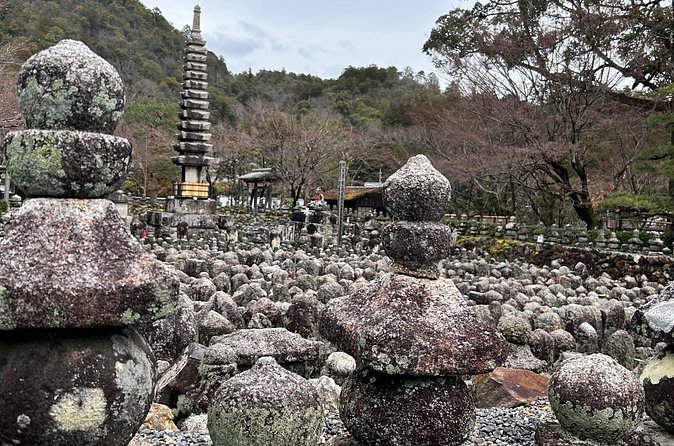
The route heads to Otagi Nenbutsu-ji Temple for around 20 minutes, with admission included. This is the stop people tend to remember because it is unusual. You will see hundreds of unique statues, and that scale is part of what creates the strange, otherworldly mood.
This is one of the best “look with your eyes” moments on the tour. Even if you are generally a runner who cares more about movement than monuments, these statues are the kind of visual variety that makes your brain switch gears from pace to wonder.
Important day-of note: on Wednesdays, Otagi Nenbutsu-ji is closed, so the tour visits Adachi no Nenbutsuji instead. If you are booking midweek, do not assume you will see the exact same statue site every time. The tour plans around closures.
Stop 4: Tenryu-ji and Sogenchi gardens for a calmer finish
Next is Tenryu-ji Temple, also about 20 minutes, with admission included. The focus here is the Sogenchi gardens at Tenryu-ji, which gives you a quieter, more contemplative contrast to earlier stops.
I like putting a garden visit in the middle to late part of an active tour. After a run and a few more intense visuals (bamboo plus statue work), this is where you can slow your breathing and take in details at a human pace.
You will get guided context, but the gardens also let you choose what to emphasize. If you are into architecture, plants, or just composition for photos, you can spend your time accordingly.
Stop 5: Monkey Park Iwatayama hike, 120 macaques, and safe feeding
Finally comes Monkey Park Iwatayama, with about 1 hour for this stop, and admission included. This is described as a scenic hike with stunning Kyoto views, where over 120 wild Japanese macaques roam.
Two things make this stop especially worth it on a running tour. First, the hike portion breaks up the day nicely so you are not just jogging and stopping at flat locations. Second, you get the chance to safely observe and even feed the macaques, which turns a “look but don’t touch” wildlife experience into something more interactive.
Practical consideration: this is a place with animals, so you want to follow your guide’s lead about what is allowed and how to behave. The tour specifically says the monkeys can be safely observed and fed, so the guide will be setting expectations for how to do that responsibly.
The time window here also signals that this is not a quick photo moment. You should plan to be present for it.
What the English-speaking fitness guide actually gives you
The guide is more than a translator. The tour calls for an English-speaking fitness guide who provides local insights, running tips, and motivation throughout the journey.
That kind of support becomes especially valuable when you are mixing jogging with stairs, uneven temple paths, and a hike. Even if you already run, having someone help you pace your effort can reduce the risk of arriving at the temple stops too exhausted to enjoy them.
And based on one review, the leaders genuinely adjust. Francis and Ario adapted the run when heat and a child’s condition made running feel too intense, while still keeping the group on track to see the main sights.
So think of the guide as your “make it work” person. If you are having an off moment, you are not stuck with a fixed plan that ignores reality.
Practical tips for your 8:00 am Zen Run
A morning run in Arashiyama sounds easy until you hit the details. Use these tips to keep the day fun:
- Bring comfortable running shoes. Temple paths can be uneven, and the monkey park segment includes a hike.
- Dress for warm weather, even if you start early. One review specifically called out intense heat, and it affected how the group moved.
- Carry water. The tour includes active segments plus time walking through multiple stops.
- Plan on photo breaks. The itinerary is built around stops, and you will be given chances to take pictures.
Also, because the tour uses a mobile ticket and ends where you started, you can keep your day organized. You do not need to plan another pickup after the run.
Who should book this and who should skip it
This tour is a strong fit if you want Arashiyama in a new format. You like getting outside, staying active, and seeing major landmarks without turning your day into a slow shuffle. The bamboo forest plus statue temple plus macaques creates a good “variety per minute” mix.
It is also a decent choice for families in at least one sense. The monkey park is described as a hit for all the family, and the guide showed flexibility in a review when a child was not feeling well.
Who should consider skipping? If you cannot manage a moderate fitness route with some hiking, you might find the energy too much. The tour does not claim to be a fully easy walk-only itinerary.
Should you book Zen Run in Arashiyama?
I think this is a smart booking if you want to see Arashiyama beyond the standard walking loop. The big win is that it turns iconic places into a connected experience: bridge first, shrine with literary ties, bamboo forest running, statues at Otagi, garden time at Tenryu-ji, then monkeys at Iwatayama.
If you are the kind of traveler who likes movement, you will appreciate how structured the timing is, but also how flexible the effort can be. And if weather or personal conditions are an issue, you have evidence the guide team can adjust on the spot, like they did for Francis and Ario with the heat and a sick child.
If you are mainly after a totally relaxed, sit-down sightseeing pace, this might feel too active. But if your ideal day includes fresh air, photo stops that happen while you move, and a small-group guide leading the way, then yes, book it.
FAQ
How long is the Zen Run in Arashiyama?
The tour runs about 1 hour 30 minutes to 2 hours.
What is included in the price?
All fees and taxes are included. Admission is included for Otagi Nenbutsu-ji Temple, Tenryu-ji Temple, and Monkey Park Iwatayama.
What is not included?
Lunch is not included.
Where does the tour start and when?
You meet at Saga-Arashiyama Station at 8:00 am, and the tour ends back at the meeting point.
Is this tour strenuous?
It is described as not high-intensity and flexible-paced, but you should have a moderate physical fitness level because of jogging and a scenic hike.
Are tickets mobile?
Yes, it’s a mobile ticket experience.
What happens on Wednesdays?
Otagi Nenbutsu-ji Temple is closed on Wednesdays, so the tour visits Adachi no Nenbutsuji instead.
New This Season
- Koyasan Day Trip by Private Car from Kyoto
- Old Port Town and Ultimate Sake Tasting Private Tour From Kyoto
- Sacred Peak & Ancient Paths: Kurama-Kibune Hiking Experience
- Kyoto’s Timeless Charm: 3hr Exploration of History and Peace
- Kyoto: 5 Types of Sushi Making
- Kyoto: Exclusive ZEN practice at Manpukuji temple in Uji
- Kyoto: Private Seasonal Aroma Yoga Class
- Traversing Kyoto’s Scenic West – Arashiyama to Kinkakuji
Arashiyama Bamboo Forest Walks, compared.
Fushimi Inari, Kinkakuji, Bamboo Grove 1 Day Bus Tour
Read our review →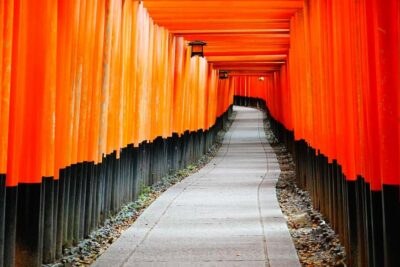
Kinkakuji,Arashiyama,FushimiInariShrine,NaraPark
Read our review →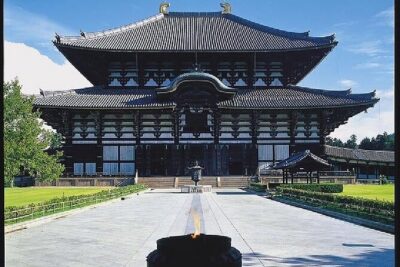
Nara, Fushimi Inari Taisha, Arashiyama Bus Tour
Read our review →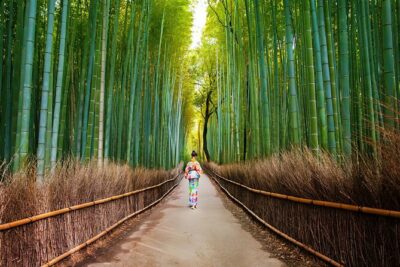
Kyoto Arashiyama Walking Tour: Bamboo, Monkeys, Gardens & Secrets
Read our review →
Arashiyama Bamboo, Temple, Monkeys, or Secret Sake Brewery
Read our review →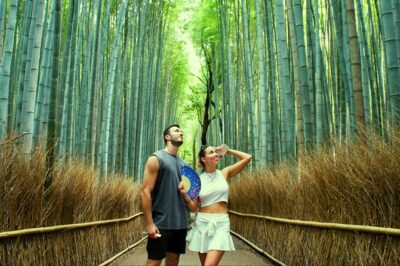
Arashiyama Bamboo Forest, Monkeys, Matcha & Temple Tour
Read our review →
Arashiyama, Nara & Fushimi Inari Shrine w/Lunch
Read our review →
Nijo, Kinkaku-ji, Arashiyama, Kiyomizu & Fushimi Inari
Read our review →Also filed under