
Reviewed · SAMURAI TRAINING EXPERIENCES
160 Years Authentic Seated Archery Experience in Kyoto
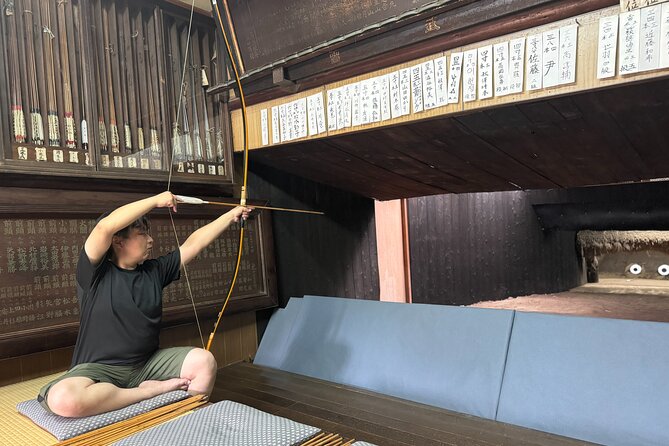
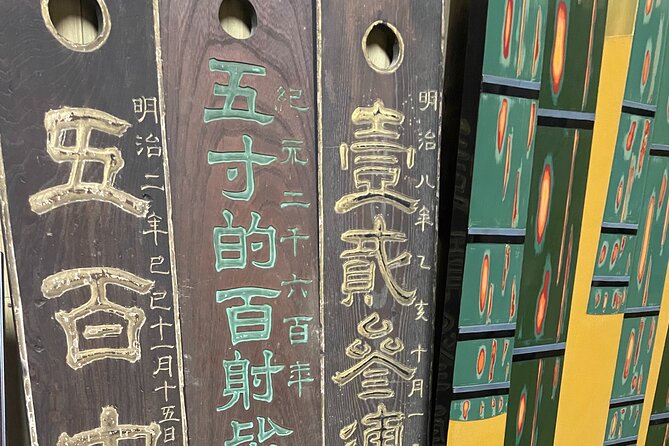
Kyudo turns focus into action. In Kyoto, this 160-year-old dojo turns Japanese longbow archery into a seated, beginner-friendly experience you can actually do in about an hour. If you manage 3 hits out of 16 arrows, you earn the honor of writing your name in traditional Japanese calligraphy, displayed proudly in the dojo.
I love that the class is built for non-experts, with an English-speaking translator and hands-on guidance as you learn the basics of Kyudo form. I also like the clear structure, including a 10-minute video tutorial, so you know what you are aiming for before you start shooting.
One consideration: Kyudo is physical, even seated, and you should be comfortable with moderate fitness demands. Also, the transportation fee is not included, so plan your route to the meeting point around Higashiyama and Gion.
In This Review
- Key highlights you should know
- Kyudo basics in Kyoto, seated, formal, and very learnable
- The 1-hour flow: from a 10-minute video to 16-arrow practice
- Your calligraphy moment: the 3 hits out of 16 challenge
- What expert instruction actually means in Kyudo
- The dojo setting in Higashiyama, and how to show up ready
- Price and value at about $96.70 per person
- Who this seated Kyudo class is perfect for
- Should you book 160 Years Authentic Seated Archery in Kyoto?
- FAQ
- How long is the seated archery (Kyudo) experience in Kyoto?
- What is the price per person?
- What is included in the experience?
- What is not included?
- Where is the meeting point, and do I return there afterward?
- What is the maximum group size?
- Do I need prior archery experience?
- What fitness level do I need?
- How does the calligraphy prize work?
- What is the cancellation policy?
Key highlights you should know
- Seated Kyudo with real bows and arrows in a traditional dojo setting
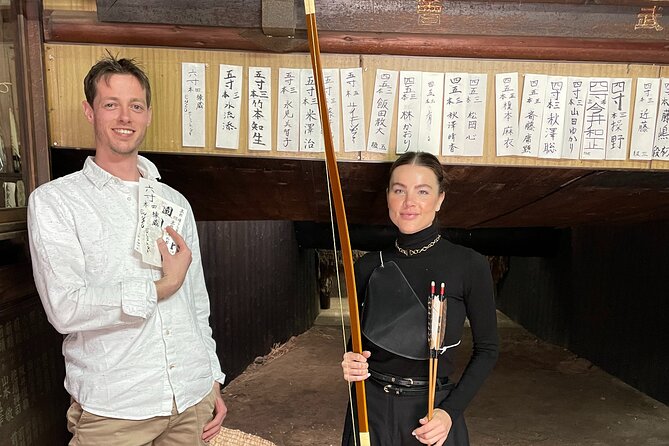
- Calligraphy incentive: write your name if you hit 3 targets out of 16 arrows
- English support throughout, including an in-person guide and translator
- Small groups, with a maximum of 4 travelers
- A short pre-class video tutorial to get your bearings fast
- Maruyama Park area meeting point in Kyoto’s Higashiyama, near public transportation
Kyudo basics in Kyoto, seated, formal, and very learnable
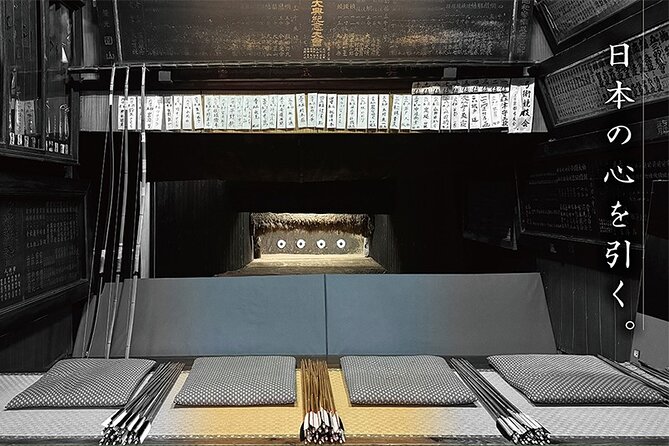
Kyudo is not just shooting. It is a whole ritual of posture, timing, and intention, done with a Japanese longbow. The good news is that this experience is designed to make that feel understandable, not intimidating, even if you have never picked up a bow before.
What I appreciate most is the setting. You are practicing in a dojo that has preserved Kyudo traditions for 160 years, connected to the late Edo period. That matters because it changes the vibe. This is not a theme-park show. You are stepping into a space where discipline and etiquette are part of the training.
You will be seated for the experience, which helps a lot if you are short on mobility or prefer a stable practice setup. Still, Kyudo form asks for focus and control, so it is not a casual “try it once” gimmick. Think controlled movements, attention to instructions, and an activity that rewards patience.
The 1-hour flow: from a 10-minute video to 16-arrow practice
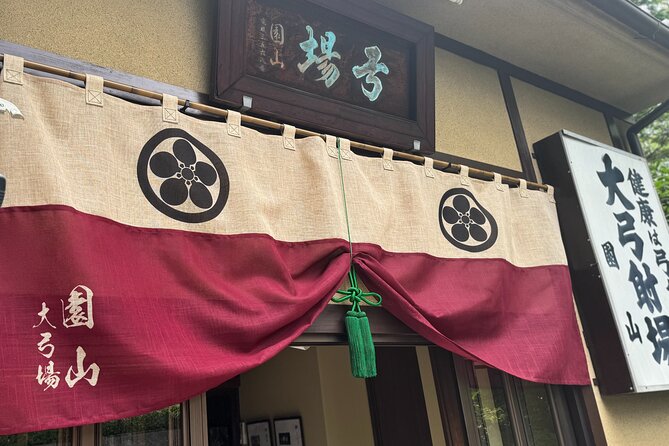
The experience runs about 1 hour, so the pacing is tight and efficient. You start by meeting at 園山大弓場 (Enzan Daikyujyo) in the Maruyama Park area of Higashiyama, specifically 円山 公園北林. From there, the session is structured to get you ready and shooting without wasting time.
A 10-minute video tutorial comes early in the process. That is a smart choice. You walk in, learn the basics visually, and then the live instruction can focus on corrections you can feel in your body, not just concepts.
Once the video has set the tone, you get hands-on practice with expert instruction. The goal is not to turn you into a Kyudo practitioner by the end of the hour. The goal is to help you understand what proper shooting feels like, how to aim with intention, and how to keep your form consistent across multiple arrows.
Then you shoot your full set of 16 arrows. This matters because you get enough repetitions to notice patterns. If one step of your form is off, you will usually see it in the target results, and the guidance can help you adjust for the next arrows.
Finally, you close out the session and head back to the same meeting point. It is a simple start-to-finish experience, which is exactly what you want when your Kyoto day has a lot of walking already.
Pick up a sword for an afternoon
- Kyoto Samurai Experience
★ 5.0 · 1,294 reviews - Kyoto: Kendo and Samurai Experience with Uniform and Gear
★ 4.9 · 815 reviews - Kyoto: Samurai Sword Class by Experts in Traditional Arts
★ 4.9 · 657 reviews - Skip the lines Basic Ticket at SAMURAI NINJA MUSEUM KYOTO
★ 4.5 · 632 reviews
Your calligraphy moment: the 3 hits out of 16 challenge
Here is the part that makes people lean forward in their seats. If you hit the target 3 times out of 16 arrows, you earn the honor of writing your name in traditional Japanese calligraphy.
This is not just a souvenir option. The calligraphy is described as being proudly displayed in the dojo, which gives your success a real place in the experience. Even if you do not reach 3 hits, the training still gives you something tangible: you learn the flow of Kyudo and you leave with a clearer sense of how the technique connects to results.
Practical advice: treat those first arrows as setup, not pressure. Your best chance to hit 3 times is usually by keeping your posture and rhythm steady from arrow to arrow. If you get one poor result, use it as feedback for your next attempt, not as a reason to rush.
If you are traveling with family or friends, this calligraphy incentive is also a great conversation starter after. You can compare how you approached the shots and what changed when you adjusted your form.
What expert instruction actually means in Kyudo
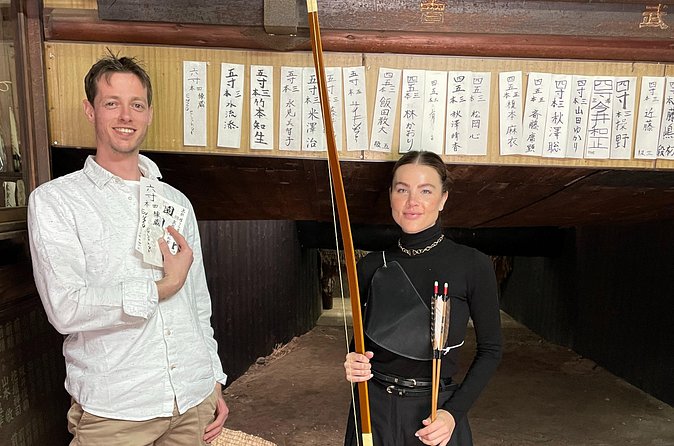
Kyudo has a reputation for being strict, and it can look complicated from the outside. This class tackles that by breaking the experience into guided, repeatable steps.
You are taught by expert instructors in a dojo environment that emphasizes elegance and discipline. In other words, the instruction is not random coaching. It follows a traditional approach to posture and shooting, taught in a way that beginners can understand.
A big plus for most visitors is the language support. The experience includes an English-speaking translator plus an in-person guide (English and Japanese). That combination is useful because some Kyudo concepts are hard to explain with a single translation. A translator helps with accuracy, while the guide can confirm what you are doing with real-time correction.
Also, the session is not only technique. Kyudo connects focus, discipline, and harmony, and the class format reflects that. You will likely find yourself slowing down mentally, because Kyudo does not reward chaos. You shoot better when your mind is calm and your movements are controlled.
The dojo setting in Higashiyama, and how to show up ready
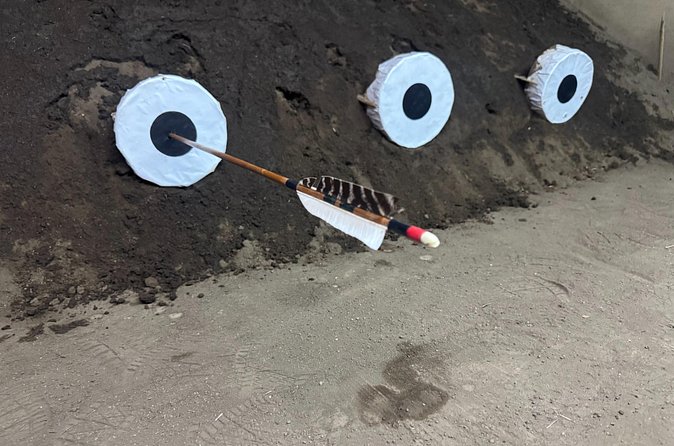
Your meeting point is in Kyoto’s Higashiyama Ward, near the Gion area, at 園山大弓場 (Enzan Daikyujyo) by Maruyama Park (円山 公園北林). It is listed as near public transportation, which is a big help because Kyoto can chew up time if you are zigzagging across town between activities.
What to do before you go is simple:
- Wear comfortable clothes you can move in while seated
- If you use strong scent products, go light. Traditional spaces tend to prefer subtlety
- Bring a positive mindset. Kyudo rewards steady practice, not speed
Because the experience says you should have a moderate physical fitness level, plan for some physical demands even though it is seated. You will still be doing controlled movement with the bow and maintaining posture across a series of shots.
If you are recovering from illness or you are not feeling steady that day, it is better to choose a calmer Kyoto plan. Kyudo is not the kind of activity where you want to push through pain.
Price and value at about $96.70 per person
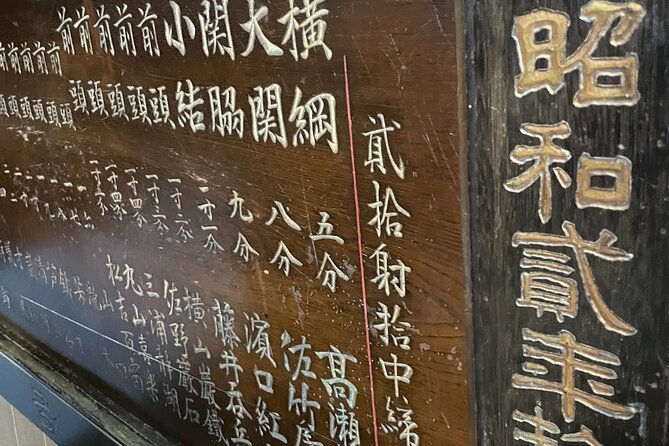
At $96.70 per person, this class might look steep until you see what is included. It covers all Kyudo items, the class fee, an English-speaking translator, and a 10-minute video tutorial. You also get an in-person guide with English and Japanese support.
The big value piece is that you do not have to coordinate gear rental or figure out how to access a specialty cultural activity on your own. Kyudo equipment is specific. Having it handled for you means you start learning faster, and you spend your Kyoto time on the experience rather than logistics.
The main cost you still need to consider is transportation. Since the transportation fee is not included, think of this as a local, neighborhood-based activity. If you are already spending the day in Higashiyama or near Gion, the total cost feels more reasonable. If you are staying far away, the transportation add-on can change the math.
Group size is also a value factor. With a maximum of 4 travelers, you should expect more attention and less waiting. That small-group feel is what helps beginners actually improve from arrow to arrow during the session.
A day of temples goes further with something to break it up.

Who this seated Kyudo class is perfect for
This is an excellent fit if you want a hands-on cultural experience that is short, guided, and genuinely structured. If you are the type who likes learning a skill instead of just taking photos, you will probably enjoy this.
It is also a good choice for families, because the session length is about an hour and the calligraphy incentive gives kids and adults something to aim for. The combination of instruction and a clear success rule makes it easier to stay engaged even if your first shots are imperfect.
If you are traveling with a group of friends and you want something that feels distinct from typical Kyoto sightseeing, this works well. It gives you a break from the crowds and adds a quiet, focused activity to balance your day.
Who might find it less ideal: if you have trouble sitting for sustained periods or you are unsure about moderate physical demands, consider whether you can manage the posture and controlled bow handling. The experience is seated, but it is still Kyudo, not a gentle craft class.
Should you book 160 Years Authentic Seated Archery in Kyoto?
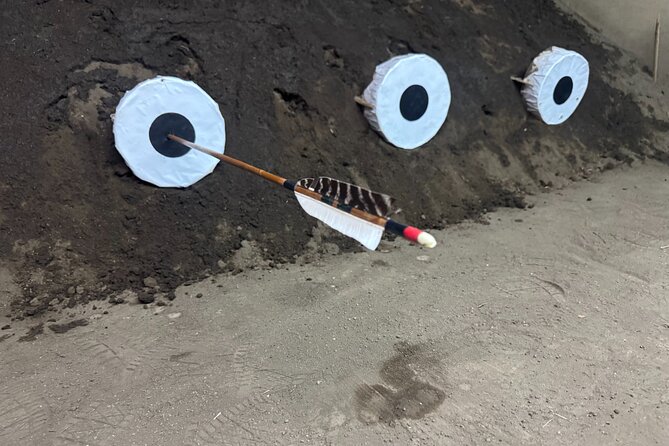
I think this is worth booking if you want an authentic Kyudo experience with real instruction, English support, and a built-in goal that makes the class fun. The calligraphy option is a memorable twist, especially for travelers who like activities with a concrete outcome you can share.
Book it if:
- You want to try Kyudo in a serious dojo setting
- You appreciate small groups and clear guidance
- You like hands-on activities that teach you technique, not just facts
- You will be in the Higashiyama or Gion area anyway, so transport is easy
Skip or reconsider if:
- You cannot comfortably handle the moderate physical demands that come with posture and bow work
- You are trying to stack multiple far-apart attractions in one day, and transportation will be a hassle
- You prefer activities that do not involve any performance goal, since the 3 out of 16 calligraphy challenge creates that pressure in a good way, but it still feels like a challenge
If you are deciding between “just watch” and “actually try,” choose this. Seated Kyudo is one of those rare Kyoto experiences where effort turns into understanding quickly, and the dojo setting gives the whole hour a sense of purpose.
FAQ
How long is the seated archery (Kyudo) experience in Kyoto?
The class runs for about 1 hour.
What is the price per person?
The price is $96.70 per person.
What is included in the experience?
It includes all items for Kyudo, the class fee, an English-speaking translator, a 10-minute video tutorial, and an in-person guide in English and Japanese.
What is not included?
Transportation fees are not included.
Where is the meeting point, and do I return there afterward?
You start at 園山大弓場 (Enzan Daikyujyo), Kyoto, and the activity ends back at the meeting point.
What is the maximum group size?
The experience has a maximum of 4 travelers.
Do I need prior archery experience?
No. The experience is taught as beginner-friendly, with instruction from experts.
What fitness level do I need?
You should have a moderate physical fitness level.
How does the calligraphy prize work?
If you hit the target 3 times out of 16 arrows, you earn the honor of writing your name in traditional Japanese calligraphy, which is displayed in the dojo.
What is the cancellation policy?
Free cancellation is available. You can cancel up to 24 hours in advance for a full refund. If you cancel less than 24 hours before the start time, the amount paid is not refunded.
New This Season
- Koyasan Day Trip by Private Car from Kyoto
- Old Port Town and Ultimate Sake Tasting Private Tour From Kyoto
- Kyoto’s Timeless Charm: 3hr Exploration of History and Peace
- Kyoto: 5 Types of Sushi Making
- Sacred Peak & Ancient Paths: Kurama-Kibune Hiking Experience
- Kyoto: Exclusive ZEN practice at Manpukuji temple in Uji
- Kyoto: Private Seasonal Aroma Yoga Class
- Traversing Kyoto’s Scenic West – Arashiyama to Kinkakuji
Samurai Training Experiences, compared.
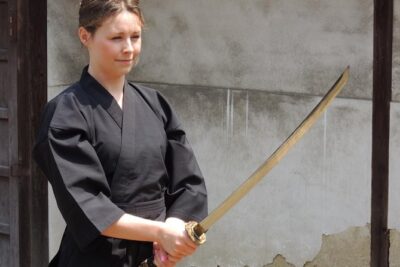
Kendo and Samurai Experience with Uniform and Gear
Read our review →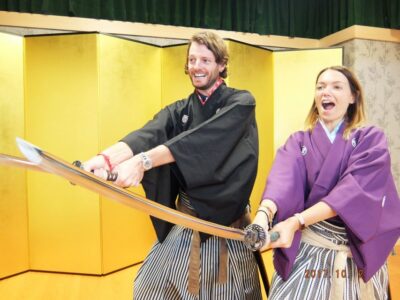
Samurai Sword Class by Experts in Traditional Arts
Read our review →
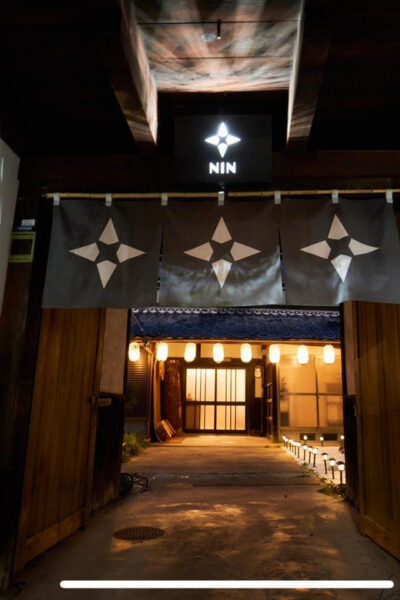
Skip the lines Basic Ticket at SAMURAI NINJA MUSEUM KYOTO
Read our review →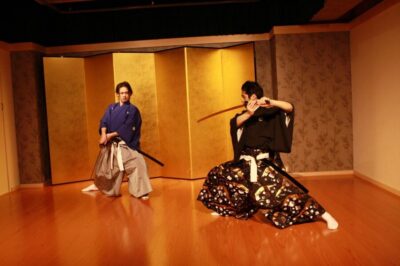
Samurai Training with Modern day Musashi in Kyoto
Read our review →
Private Tea Ceremony and Sake Tasting in Kyoto Samurai House
Read our review →Also filed under