
Reviewed · ARASHIYAMA BAMBOO FOREST WALKS
Arashiyama Hidden Gems: Walking Tour escaping crowds
Kyoto’s Arashiyama can feel like a crowded theme park. This tour is built for a calmer pace, with a small group and a route that favors quiet temples and scenic pauses over sprinting with the crowd.
I love the thoughtful stop order, starting at Nonomiya Shrine and then moving toward Seiryoji and Daikaku-ji, so you get variety without exhausting detours. The second big plus is the optional The Tale of Genji angle, where Yusuke Tanaka adds historical and literary context as you pass places connected to the novel.
One thing to consider: the tour is about 3 to 4 hours and includes a roughly 3 km walk, plus temple entry fees that are not included. If you prefer fully free, super-short sightseeing, you may find the ticket add-ons and shoe-off moments a bit annoying.
In This Review
- Key highlights you should know
- Why Arashiyama Feels Quieter on This Walk
- Yusuke Tanaka and the Two Ways to See the Same Route
- Nonomiya Shrine: The Black Torii Gate and Moss Garden Calm
- Bamboo Forest Without the Stampede
- Seiryoji Temple: Shoes Off, Old Buildings, Shaka Nyorai
- Daikaku-ji and Saga Gosho: An Imperial Feel With Fewer Crowds
- Osawaike Pond: Japan’s Oldest Artificial Pond and Quiet Sightlines
- Price and Value: What $89 Covers, What Costs Extra
- Practical Logistics: Where to Meet, How Long You’ll Walk
- Who This Tour Fits Best, and Who Might Want Something Else
- Should You Book This Arashiyama Crowd-Light Walking Tour?
- FAQ
- How long is the Arashiyama walking tour?
- How many people are in the group?
- Where does the tour start and end?
- Is the bamboo forest stop included?
- What fees are not included in the tour price?
- Do I need to remove my shoes?
- What is included in the $89 price?
- What ticket method is used?
- What happens if the weather is bad?
- Can I cancel for a full refund?
Key highlights you should know
- Small group max 6 people, so you can actually hear the guide and keep a comfortable pace
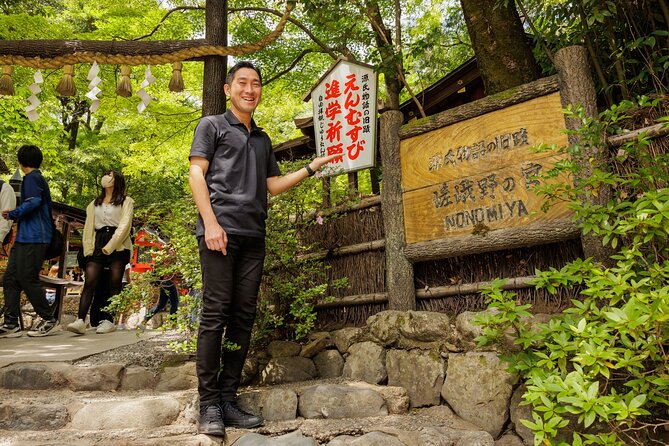
- Nonomiya Shrine black torii gate plus a moss garden, one of only two in Japan with black torii
- Timed bamboo forest visit with a photo moment and Yusuke helping with shots
- Seiryoji Temple national treasure viewing, with shoes off before entering
- Daikaku-ji Saga Gosho setting that feels more imperial and less busy
- Optional The Tale of Genji storytelling option that connects most stops (except the bamboo forest) to the novel
Why Arashiyama Feels Quieter on This Walk
Arashiyama is famous for a reason, but the famous parts can get packed fast. What I like about this tour format is that it nudges you toward the slower, calmer side of the district, with a guided route designed to keep the day feeling breathable. The group size tops out at 6, which matters a lot in Kyoto, where “popular” often means standing shoulder-to-shoulder.
You also get an itinerary that makes practical sense. You start near a transit-friendly meeting point, then you move through shrines and temples in a way that keeps the walking steady rather than stop-start hopping. The tour totals about 3 to 4 hours, with about 55 minutes of walking time included in that total, and you’ll cover around 3 km while still getting long enough to enjoy each stop.
If you’re the type who wants views, but also wants to feel like you’re exploring rather than queueing, this is the right energy. The route leans local: quieter paths, calm temple atmospheres, and a focus on places that don’t always top everyone’s one-day checklist.
Yusuke Tanaka and the Two Ways to See the Same Route
The guide here is Yusuke Tanaka, a local Kyoto guide who designed and leads the tour. He has guided over 3,000 guests, and his approach clearly comes from knowing how to pace a walking day, not just knowing facts.
One of the best practical touches is the tour booklet. You get an original booklet of about 15 pages, which is perfect for two reasons. First, it helps you remember what you saw without needing to stop and read everything at the moment. Second, it adds context to the route, especially if you choose the storytelling option.
That storytelling choice is the optional The Tale of Genji upgrade. If you pick it, most places on the tour (except the bamboo forest) appear in The Tale of Genji, and Yusuke explains the historical and literary background during the walk. The route stays the same either way, but the Genji option adds deeper narrative, so your day becomes more than just sightseeing.
If you care about Japanese literature, this is a fun way to turn a temple route into a story route. And if you do not, you still get plenty of cultural context, just with a more straightforward sightseeing focus.
One more useful detail: Yusuke helps with photos, and he mentions learning photography as a hobby. That doesn’t mean you’ll get a studio shoot, but it does mean you’ll get better angles and timing ideas at the key photo moments.
Green light through a bamboo grove
- Kyoto: Fushimi Inari, Kinkakuji, Bamboo Grove 1 Day Bus Tour
★ 4.8 · 4,316 reviews - Osaka/Kyoto:Kinkakuji,Arashiyama,FushimiInariShrine,NaraPark
★ 4.1 · 1,596 reviews - Kyoto/Osaka: Nara, Fushimi Inari Taisha, Arashiyama Bus Tour
★ 4.7 · 1,275 reviews - Kyoto Arashiyama Walking Tour: Bamboo, Monkeys, Gardens & Secrets
★ 5.0 · 1,216 reviews
Nonomiya Shrine: The Black Torii Gate and Moss Garden Calm
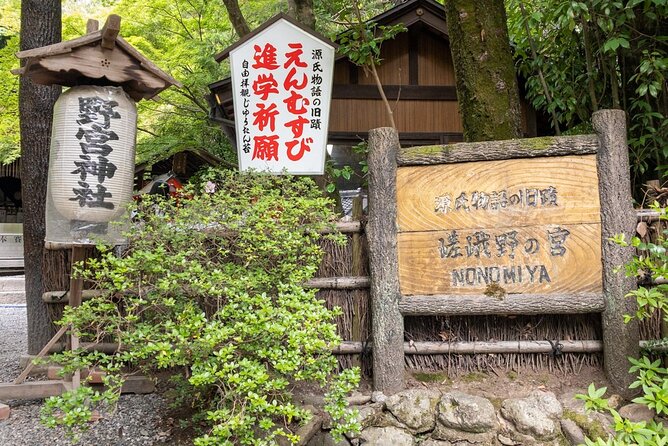
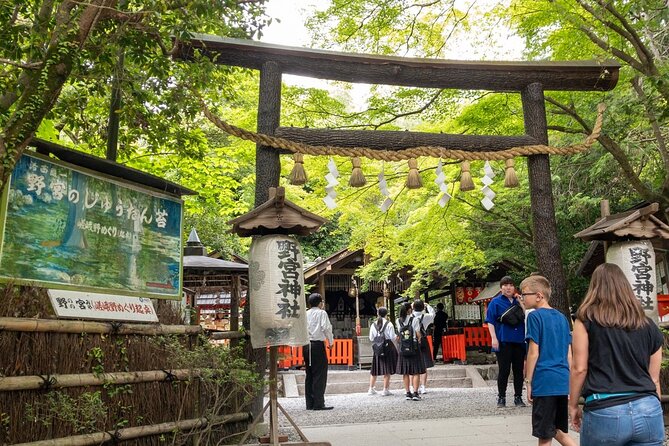
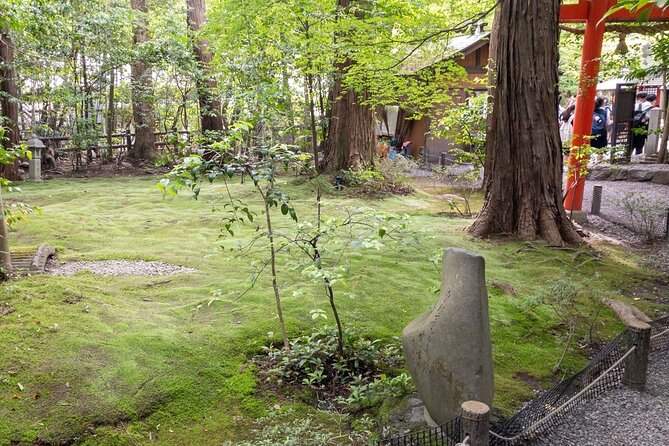
Stop 1 is Nonomiya Shrine, and it’s a strong start because it immediately sets a quieter tone for the day. You’ll see the shrine’s black wooden torii gate. The tour notes that only two shrines in Japan have black torii gates, and Nonomiya is one of them. That single detail gives you a real sense that you’re not just repeating the most obvious Arashiyama stops.
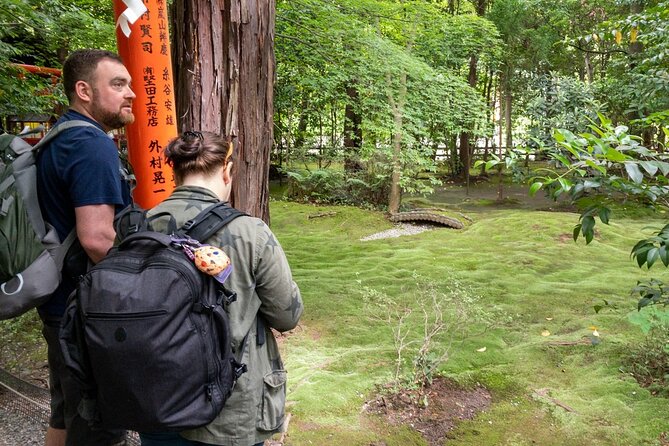
You’ll also spend time with the moss garden and learn the way of visiting the shrine and praying. Even if you’ve visited shrines before, having a guide explain the steps is valuable, because it helps you avoid turning a sacred moment into awkward guesswork. The tour also covers the differences between shrine and temple, which is helpful if your Kyoto travel style includes a mix of both.
This stop is about 30 minutes, and admission is free. In other words, it’s a low-cost, high-impact opener that helps you ease into the area before you get to the more attention-grabbing locations.
Bamboo Forest Without the Stampede
Then you head to the Arashiyama Bamboo Forest for a short, focused visit. The tour keeps it to about 15 minutes, and that timing is a big part of why this walk feels more comfortable than a full-day bamboo immersion. You get to see the bamboo, hear the soundscape, and take photos without turning it into your whole day.
I like that the tour builds in a specific photo time and includes Yusuke taking photos for you in the bamboo forest. Bamboo photos can be tricky because lighting and angles matter, and the crowd crush can force bad shots. A guided photo moment helps you slow down for the photo while still keeping the overall pace manageable.
Admission is free for this part, according to the tour. If you’re someone who wants bamboo, but you also know how quickly it can become crowded, a shorter visit can be the sweet spot. You still get the atmosphere, without burning your whole energy on the busiest zone.
Seiryoji Temple: Shoes Off, Old Buildings, Shaka Nyorai
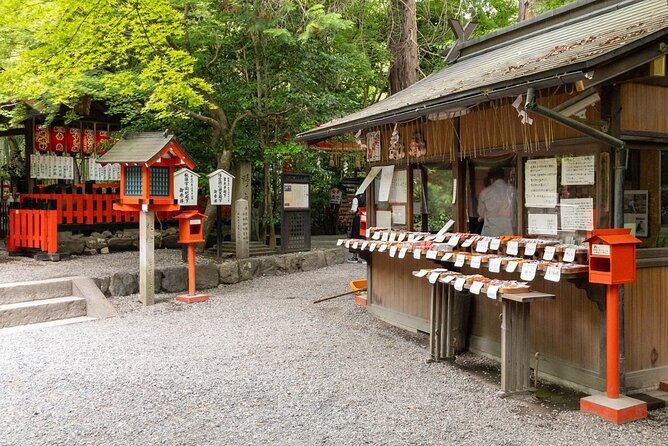
Stop 3 is Seiryoji Temple, and this is where the tour turns more historical and deeper in mood. You’ll spend about 55 minutes here, with admission not included. The listed Seiryoji temple fee is 500 yen.
Seiryoji is described as an old temple, originally built about 1,200 years ago, with the current building about 300 years old. That timeline matters because it helps you understand you are not just looking at something “old,” you’re looking at layers of time.
One highlight is viewing a Japanese national treasure, the Shaka Nyorai Buddhism statue. If you’ve only seen temple exteriors on travel days, this stop gives you more of the spiritual and artistic core. The tour also notes that you must take off your shoes to enter inside at Seiryoji, so plan for a quick shoe-off moment and keep your pace steady.
A possible drawback, depending on how your day runs, is that this is one of the longer stops. It’s worth it, but it’s not the “quick peek and move on” style. If you’re prone to getting tired on walking tours, this is where you’ll want to feel comfortable pausing and adjusting to indoor temple etiquette.
Daikaku-ji and Saga Gosho: An Imperial Feel With Fewer Crowds
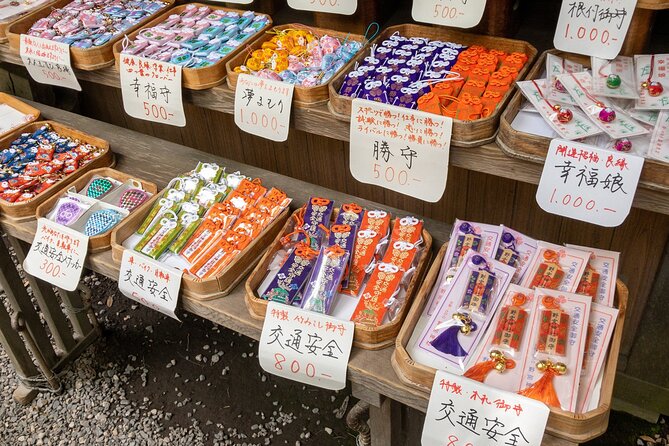
Next is Daikaku-ji Temple, about 50 minutes. Admission is not included, and the tour lists entrance as requiring payment for Daikakuji temple, plus Osawa-no-ike pond, at 800 yen per person. Even if you think of Daikaku-ji as just another temple, the tour’s description helps you see what makes it special: it was an imperial palace site, Saga Gosho, built about 1,200 years ago.
This stop is framed as a hidden, calmer experience where you can enjoy a traditional imperial palace atmosphere without crowd pressure. Even if you don’t care about historical site lineage, the “former imperial palace” context gives Daikaku-ji a different feel. It’s not just a place of worship, it’s a place that once belonged to power and court life.
You’ll also have another shoes-off requirement to enter inside at Daikakuji. So by now, you’re getting used to temple entry etiquette, which makes the day flow more smoothly.
From a pacing standpoint, Daikaku-ji works well as an ending anchor. The tour finishes near here, which helps you keep momentum even if you’re done walking.
A quieter way to spend a day in Kyoto

Osawaike Pond: Japan’s Oldest Artificial Pond and Quiet Sightlines
The final stop is Osawaike, a pond stop about 20 minutes. This is a nice way to bring the tour to a calm close, because ponds are naturally slower-feeling than bamboo and courtyard temples.
The tour highlights Osawaike as the oldest artificial pond in Japan. You’ll see scenery that changes by season, and you’ll enjoy the quiet bamboo forest around the pond. The ticket is listed as 300 yen for Osawaike.
One practical note: pond + temple routing often means you’ll be outdoors for part of the stop, so if the weather is harsh, it can affect comfort. The tour does require good weather, and if poor weather forces cancellation, you’ll be offered a different date or a full refund.
Price and Value: What $89 Covers, What Costs Extra
The price is listed at $89 per person, and the tour can be booked about 25 days in advance on average. For a Kyoto walking tour with a local guide, a small group, and guided photo help, I think the cost is reasonable because you are paying for a guided route plus context, not just access to temples.
Included in the price:
- Guiding
- An original tour booklet (about 15 pages)
- Help taking photos, with Yusuke working from photography as a hobby
Not included:
- Seiryoji temple fee, listed as 500 yen
- Daikakuji and Osawa-no-ike pond fee, listed as 800 yen
- Osawaike pond ticket, listed as 300 JPY
- Optional Japanese snacks (about 500 yen)
- Insurance (you prepare your own)
- Gratitude
So what are you really buying for $89? You’re buying:
- a small-group pacing advantage
- a guide who can connect stops, including the optional Genji storytelling
- less time wasted figuring out shrine vs temple etiquette
- photo help at the key moment
If you’re the kind of traveler who wants to reduce planning stress, that value is high. If you’re trying to keep spending super tight, you’ll want to budget for the temple and pond admissions.
Practical Logistics: Where to Meet, How Long You’ll Walk
Meet-up is at Randen-yaJapan, inside the Hannari Hokkori Square near Arashiyama Station. The exact address is given in the tour info: 616-8384 Kyoto, Ukyo Ward, Sagatenryūji Tsukurimichichō, 202. It’s designed to be easy to reach by public transportation.
The tour ends at Daikaku-ji Temple. If you prefer to return to the starting point, Yusuke offers a free returning walking tour. That’s a thoughtful option because the ending area can be less convenient if your plans are back near the station.
The tour duration is about 4 hours, and you’ll walk about 3 km total during the tour. That doesn’t sound huge on paper, but temple-to-temple walking includes stairs, waiting, and short pauses. The stopping time matters, so if you’re planning your day around dinner, allow buffer rather than treating it like a fast “sightseeing sprint.”
Two more practical details that matter:
- You will take your shoes off to enter inside at Seiryoji and Daikakuji.
- There are not many restaurants around the ending point, so you may want to bring snacks if you need them.
Finally, you’ll use a mobile ticket. That keeps things simple, as long as you can access the ticket on your phone at the meeting point.
Who This Tour Fits Best, and Who Might Want Something Else
This tour is a great fit if you:
- want Arashiyama without the constant crowd-pressure feeling
- like the idea of calm temples and scenic views in one walk
- care about Japanese culture beyond the bamboo photo
- want help with photos rather than guessing your way through key angles
- are interested in the option that connects stops to The Tale of Genji
I’d also say it’s a smart choice for travelers who want a guided “how to visit properly” experience at shrines and temples. The start at Nonomiya Shrine includes praying etiquette, and the guide also explains shrine vs temple differences.
The biggest reason you might pass is if you prefer very short, low-ticket outings. While it’s well paced for the day, you still have about 3 km of walking and multiple temple fees. Also, the tour is weather-dependent, so if your schedule includes only one day in Kyoto, you’ll want a plan B.
And if you’re sensitive to warmer conditions, note that the route length can feel like a lot in heat. The walking is not extreme, but it’s still a real half-day experience.
Should You Book This Arashiyama Crowd-Light Walking Tour?
Book it if you want a calmer Arashiyama day led by Yusuke Tanaka, with photo help, shrine and temple etiquette, and the optional The Tale of Genji storytelling. It’s especially good value if you like the idea of connecting places into a narrative rather than ticking off photos.
Skip it if you want a purely free self-guided route, a very short stop-by-stop itinerary, or you know you strongly dislike shoe-off temple entry. Also, if your schedule is rigid around weather, consider that the tour requires good conditions.
For most Kyoto visitors, this is a strong way to see Arashiyama without letting the crowds control your mood.
FAQ
How long is the Arashiyama walking tour?
It runs about 3 to 4 hours. The tour includes travel and walking time, with about 55 minutes of walking during the experience.
How many people are in the group?
The group size is limited to a maximum of 6 travelers.
Where does the tour start and end?
It starts at Randen-yaJapan inside the Hannari Hokkori Square near Arashiyama Station, and it ends at Daikaku-ji Temple.
Is the bamboo forest stop included?
Yes. The tour includes a visit to the Arashiyama Bamboo Forest for about 15 minutes.
What fees are not included in the tour price?
Temple and pond admissions are not included. Seiryoji is listed as 500 yen, and Daikakuji plus Osawa-no-ike pond is listed as 800 yen. Osawaike is also listed as 300 JPY.
Do I need to remove my shoes?
Yes. You must take off your shoes to enter inside at both Seiryoji Temple and Daikakuji Temple.
What is included in the $89 price?
The price includes guiding, an original tour booklet (about 15 pages), and help taking good photos.
What ticket method is used?
You receive a mobile ticket.
What happens if the weather is bad?
This experience requires good weather. If it is canceled due to poor weather, you will be offered a different date or a full refund.
Can I cancel for a full refund?
Yes, free cancellation is available. You must cancel at least 24 hours in advance for a full refund, based on local time.
New This Season
- Koyasan Day Trip by Private Car from Kyoto
- Old Port Town and Ultimate Sake Tasting Private Tour From Kyoto
- Kyoto’s Timeless Charm: 3hr Exploration of History and Peace
- Kyoto: 5 Types of Sushi Making
- Sacred Peak & Ancient Paths: Kurama-Kibune Hiking Experience
- Kyoto: Exclusive ZEN practice at Manpukuji temple in Uji
- Kyoto: Private Seasonal Aroma Yoga Class
- Traversing Kyoto’s Scenic West – Arashiyama to Kinkakuji
Arashiyama Bamboo Forest Walks, compared.
Fushimi Inari, Kinkakuji, Bamboo Grove 1 Day Bus Tour
Read our review →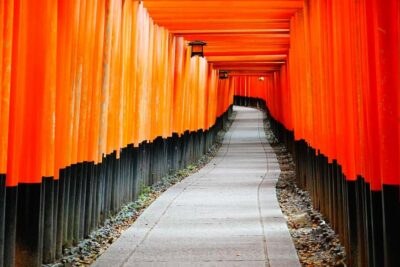
Kinkakuji,Arashiyama,FushimiInariShrine,NaraPark
Read our review →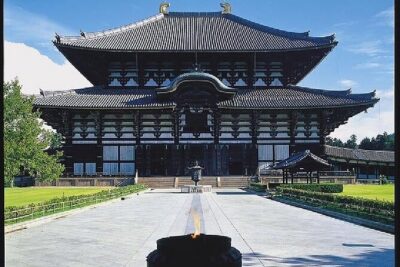
Nara, Fushimi Inari Taisha, Arashiyama Bus Tour
Read our review →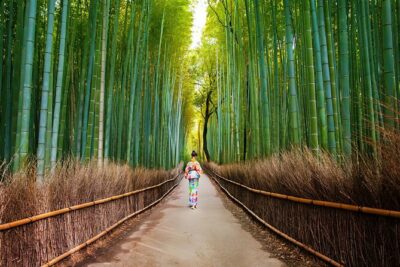
Kyoto Arashiyama Walking Tour: Bamboo, Monkeys, Gardens & Secrets
Read our review →
Arashiyama Bamboo, Temple, Monkeys, or Secret Sake Brewery
Read our review →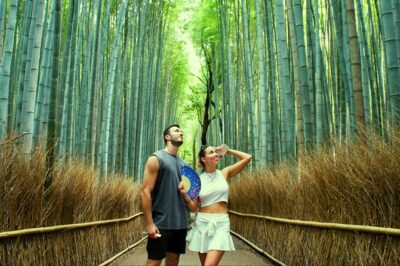
Arashiyama Bamboo Forest, Monkeys, Matcha & Temple Tour
Read our review →
Arashiyama, Nara & Fushimi Inari Shrine w/Lunch
Read our review →
Nijo, Kinkaku-ji, Arashiyama, Kiyomizu & Fushimi Inari
Read our review →Also filed under