
Reviewed · GION GEISHA QUARTER WALKS
Authentic Kyoto Gion Geisha/Maiko Cultural Experience
A quiet alley, a proper tea moment, then dancing. This Gion teahouse experience explains geisha culture with a translator and keeps the group small. I love the chance to ask questions directly during the sitting, and I love that the experience is built around live performance and photo time, not a rushed walk-through. A key consideration, though, is that you cannot choose whether you meet a maiko or geiko, it depends on the day.
You start with a guided stroll on Hanamikoji Street, where the guide helps you spot the details that usually fly by when you’re just sightseeing. Then you move into a tatami room for a ceremony style matcha break, along with traditional dance. Some guides also bring a personal angle, including Kyoto upbringing and firsthand context on the tradition.
This is a short, focused 90 minute experience, so it’s not for people who want hours of wandering. And because you’ll be in tatami spaces, you’ll want to follow the practical rules about socks and keeping feet and bags dry.
In This Review
- Key highlights to look forward to
- Walking Hanamikoji Street with context, not just photos
- The tatami room: tea ceremony, conversation, and live dance
- Maiko or geiko performance: what you actually learn in the room
- Photos are part of the experience, so plan around etiquette
- The money question: is $155.22 worth 90 minutes in Gion?
- Meeting point, flow, and how to get there without stress
- Who should book this maiko or geiko teahouse session
- Should you book it?
- FAQ
- How long is the geisha and maiko cultural experience?
- How big is the group?
- Can I choose whether I meet a maiko or a geiko?
- What is included in the experience?
- What should I wear or do for the teahouse?
- Are children allowed?
- What is the cancellation window for a full refund?
Key highlights to look forward to
- Small group limit of 10 means easier questions and a calmer vibe in Gion
- English-speaking guide provides translation and context as you walk and sit
- Maiko or geiko plus tea master depending on the day, so expect different guest energy
- Traditional dance and music performed live, not a pre-recorded show
- Photo opportunities included, including photos during the teahouse segment
- Matcha ceremony style tea with a designed tatami room setting
Walking Hanamikoji Street with context, not just photos
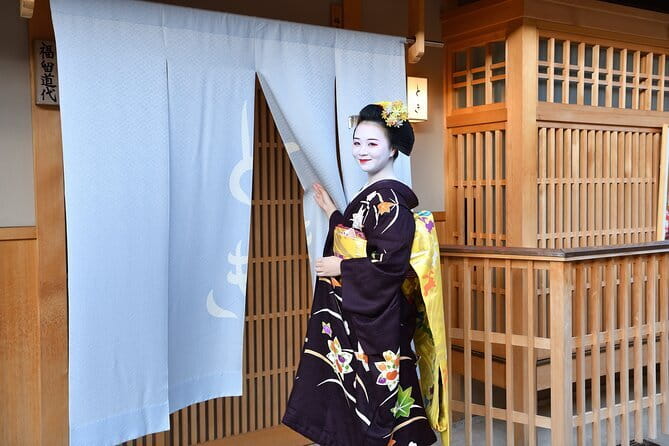
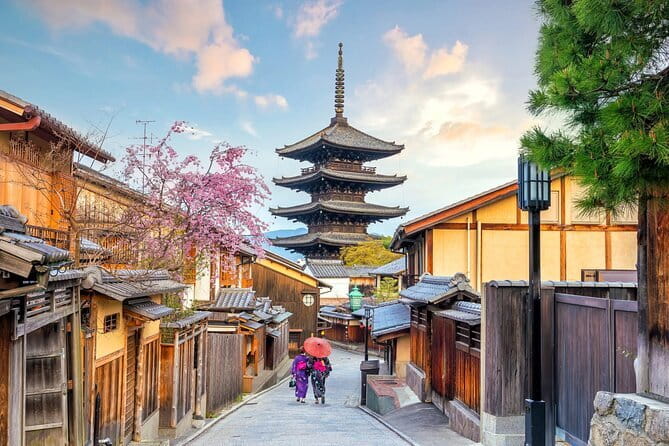
The best part of Gion is also what makes it confusing. The streets look classic on purpose, but if nobody explains what you’re seeing, you can miss why certain details matter. This experience starts at Gion-Shijo Station, with your English-speaking guide leading you toward the teahouse along the charm of Gion, including the famous Hanamikoji Street.
It’s about a short guided walk, roughly 15 minutes for this first segment. The guide uses that time to set the scene, so when you reach the teahouse you already understand the basics of how the geiko and maiko world fits into Kyoto life. That context matters because the performance and conversation land better when you know what to listen for.
One practical benefit here is pacing. With a small group, you are not stuck behind a slow-moving crowd trying to get a single decent street view. You’ll still see iconic streets and atmosphere, but the guide helps you slow down in the right places.
The tatami room: tea ceremony, conversation, and live dance
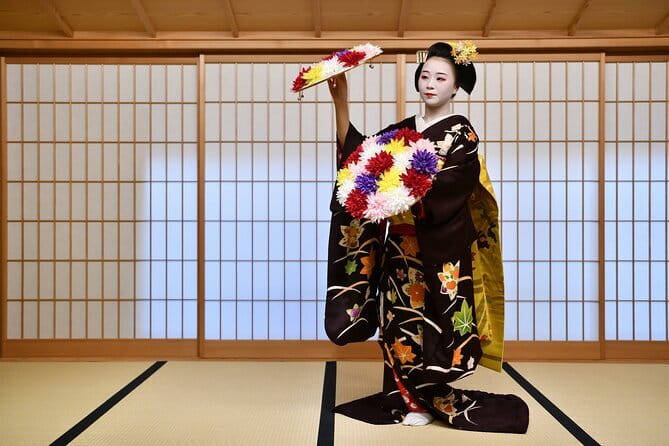
Once you arrive at the teahouse, the experience shifts from street level to inside Kyoto etiquette. This is where the tour does something most quick Gion activities do not, you get an intimate, structured time with a maiko or geiko plus tea ceremony moments.
The teahouse segment runs about 1 hour. You’ll join a small group of up to 10 participants and spend time in a tatami room designed for comfort and proper behavior. There’s a clear flow: you’ll settle in, watch traditional dance, enjoy a ceremonial matcha tea experience, and then have time for conversation.
What I like about the setup is that it’s not just watching. The most praised element in the feedback is the chance to ask questions directly, including questions about daily life, training, and the meaning behind what you see. Some guides are described as excellent interpreters and even added personal perspective, like growing up in Kyoto and explaining how they experienced the tradition themselves.
Also, the experience can feel more personal than you expect in a 90 minute slot. People point out how they could ask follow-up questions and how the guide helped them connect what was happening in the room to what they noticed outside on the street.
Lantern-lit streets of the geisha quarter
- Kyoto Geisha Walking Tour: Gion District & Hidden Gems
★ 4.7 · 3,273 reviews - Kyoto: Gion Magical Night Walking Tour with Geisha Trivia
★ 4.9 · 2,393 reviews - Kyoto: Gion Geisha District Walking Tour – Stories of Geisha
★ 4.7 · 2,187 reviews - Best of Kyoto: Gion, Geisha, Pagodas & Cobblestones
★ 4.9 · 2,058 reviews
Maiko or geiko performance: what you actually learn in the room
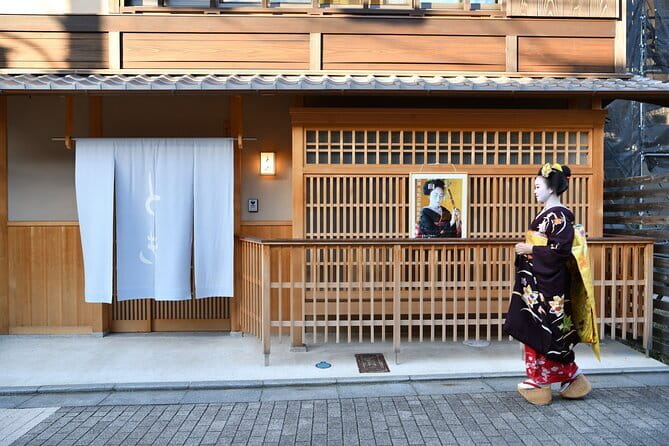
Here’s the important part for managing expectations. This tour does not let you pick who you meet. During the teahouse portion, you’ll be accompanied by either a maiko (apprentice geisha) or a geiko (an established performer), based on the day, and you also have a tea master depending on the day.
So treat this as a cultural experience, not a guarantee of a specific person. The value is in seeing and understanding the tradition through live performance plus guided translation.
The live content typically includes:
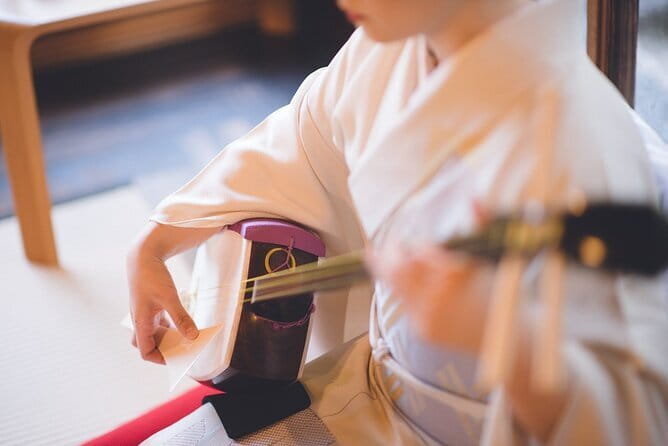
- A traditional dance viewing, performed by the maiko or geiko
- Tea ceremony style matcha service
- A photo moment during the experience
You might also find extra cultural details folded into the visit. In participant feedback, people mention things like traditional instrument playing by the owner, described as a former geiko, and dessert add-ons such as matcha ice cream or a flour sweet alongside tea. Since those items are not listed in the core tour description as guaranteed, just think of them as pleasant surprises rather than a promise.
The conversation angle is what makes this more than a show. When you can ask questions, you stop guessing. You learn how training works, what etiquette means in practice, and how modern life intersects with an old craft.
Photos are part of the experience, so plan around etiquette
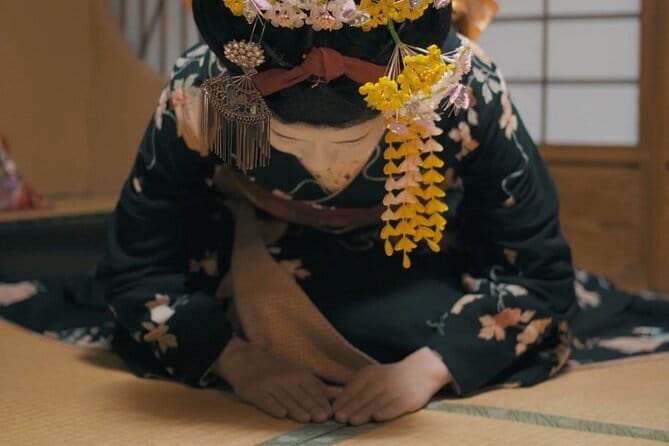
Photo time is included, and that’s a big deal for this kind of cultural experience. Many similar activities say you can take photos, then silently make it awkward. Here, the structure actually builds in photo opportunities during the teahouse portion.
Still, the rules are clear because you’re entering a space built for correct etiquette. The tour asks that you wear socks, and if your feet, clothes, or bag are wet, you should wipe the water off with a towel before entering. It’s not about being fussy, it’s about keeping tatami spaces clean.
If you’re visiting in rainy season, this is the one logistical point that can change your experience. Bring a small towel if you can. If you’re coming in from wet streets, pause for a quick wipe before you step inside. It keeps the mood smooth, and it shows respect for the setting.
Also, because you’re on tatami, think about what you carry. A bag that’s damp or muddy will slow everyone down while you handle it. Light and dry is your best strategy.
The money question: is $155.22 worth 90 minutes in Gion?
Let’s talk value in plain terms. $155.22 per person is not cheap for 1 hour 30 minutes. But you’re not paying only for the tea and a seat at a room. You’re paying for several things that are expensive in time and coordination.
First, you’re paying for access that’s hard to replicate on your own. A teahouse setting with a live dance moment, a tea ceremony format, and an interpreter who translates what you’re seeing is the core product.
Second, you’re paying for the small group format, max 10 participants. That matters because you can actually ask questions and understand answers in real time. In big group situations, question time turns into a blur. Here, the experience is structured so the guide can connect street context to what’s happening inside.
Third, you’re paying for guided interpretation. Reviews repeatedly highlight English translation and the guide making the experience feel understandable, not just pretty. If geisha culture is interesting to you, that interpretive layer is what turns the moment into learning.
The one cost trade-off is also real: it’s short. If you want a long evening, multiple stops, and hours of wandering, this won’t satisfy that itch. But if you want one high-focus cultural moment in Gion, this is built for that.
Meeting point, flow, and how to get there without stress
You meet at Gion-Shijo Station and the address listed is 1 Chome Miyagawasuji, Higashiyama Ward, Kyoto 605-0801. The tour ends at the teahouse in Gion after the experience, with the end area listed at Gionmachi Minamigawa, Higashiyama Ward, Kyoto 605-0074.
That ending point is convenient in the sense that you’re not sent far away after the main event. But it also means you should plan your next activity around being in Gion. Think of this as a “middle of the itinerary” slot rather than something you tack on at the end without a plan.
The tour uses a mobile ticket, which is handy for modern travel days. Confirmation is typically received within 48 hours of booking, as long as availability works.
A day of temples goes further with something to break it up.

Who should book this maiko or geiko teahouse session
This experience is a great fit if you want:
- A small group cultural encounter in Gion
- A guided explanation while you’re actually watching dance and tea ceremony moments
- Photo opportunities included in a respectful setting
- Time to ask questions, not just sit quietly
It’s especially good for first-time Kyoto visitors who want one or two “big culture” moments without building a complex plan. If you already know a bit about geiko and maiko culture, the guide’s context can still sharpen what you notice.
It may not be the best fit if:
- You want to choose exactly whether you meet a maiko or a geiko, since you cannot select
- You expect a long sightseeing tour, because this is roughly 90 minutes total
- You are bringing very young kids. Children 0-5 cannot join, and minors have parent permission rules
Should you book it?
I’d book it if you want one focused, respectful Gion experience where the core activity is real, live performance plus tea, with a translator and room time built for questions. The small group size, the structured tea ceremony, and the chance to ask direct questions are the reasons people rate this so highly.
But if your idea of value is “a full evening of sightseeing,” or if meeting a specific type of performer is non-negotiable for you, look closely at your priorities. The tour delivers best when you treat it as a cultural appointment, not a casual street event.
FAQ
How long is the geisha and maiko cultural experience?
It runs about 1 hour 30 minutes total.
How big is the group?
The experience has a maximum of 10 travelers.
Can I choose whether I meet a maiko or a geiko?
No. During the teahouse experience, you will be accompanied by either a maiko or geiko depending on the day, and maiko and geiko cannot be selected.
What is included in the experience?
You get the teahouse experience, including maiko or geiko traditional dance viewing, a tea ceremony (matcha), picture taking, and more. You also get an English speaking guide.
What should I wear or do for the teahouse?
Wear socks. If your feet, clothes, or bag are wet, wipe the water off with a towel before entering. Help keep tatami spaces clean.
Are children allowed?
Children ages 0 to 5 cannot join the tour. For participants under 18, parental permission in writing is required, and participants under 15 or not yet enrolled in middle school must be joined by a parent or guardian.
What is the cancellation window for a full refund?
You can cancel up to 24 hours in advance for a full refund.
New This Season
- Koyasan Day Trip by Private Car from Kyoto
- Old Port Town and Ultimate Sake Tasting Private Tour From Kyoto
- Kyoto’s Timeless Charm: 3hr Exploration of History and Peace
- Kyoto: 5 Types of Sushi Making
- Sacred Peak & Ancient Paths: Kurama-Kibune Hiking Experience
- Kyoto: Exclusive ZEN practice at Manpukuji temple in Uji
- Kyoto: Private Seasonal Aroma Yoga Class
- Traversing Kyoto’s Scenic West – Arashiyama to Kinkakuji
Gion Geisha Quarter Walks, compared.
Kyoto Geisha Walking Tour: Gion District & Hidden Gems
Read our review →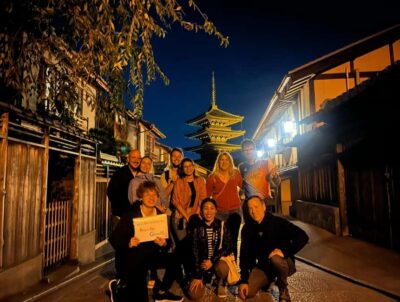
Gion Magical Night Walking Tour with Geisha Trivia
Read our review →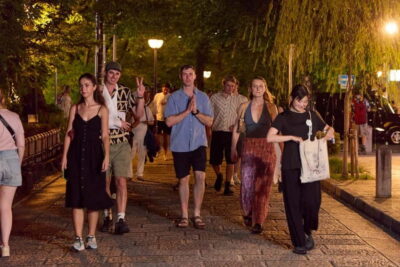
Gion Geisha District Walking Tour – Stories of Geisha
Read our review →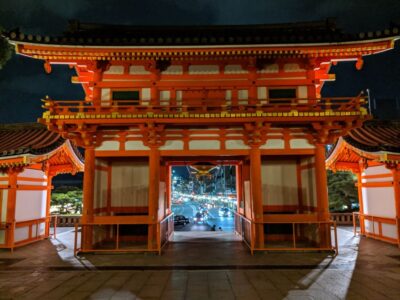
Best of Kyoto: Gion, Geisha, Pagodas & Cobblestones
Read our review →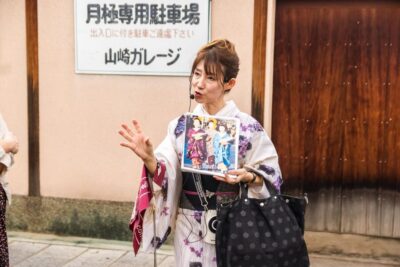

Kyoto Night Foodie Tour in Gion (9+ dishes + 6 Sake tastings)
Read our review →
Kyoto Gion Geisha District Walking Tour – The Stories of Geisha
Read our review →
Kyoto Gion: 2-Hour Geisha Culture & History Walking Tour
Read our review →Also filed under