
Reviewed · WORKSHOPS
Bamboo Teaspoon Making Class
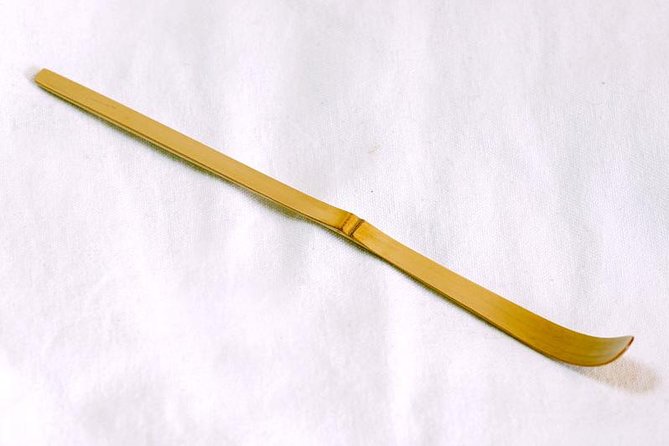
A spoon in two hours, made by hand. In Kyoto, this Bamboo Teaspoon Making Class has you work with Kyomei white bamboo, shaving it down to the fineness you want and finishing it with sandpaper. I especially like that you take your finished teaspoon home the same day, so you leave with something real, not just a photo. The main drawback to plan around is that food and drinks are not included.
The workshop is run by Yokoyama Bamboo Products Co., and one prior participant highlighted a teacher who was kind, encouraging, and informative. They also said the space felt clean and professional, which matters when you are handling small tools.
Plan ahead: you should reserve at least 3 days in advance, and you will get confirmation within 48 hours of booking if spots are available. This is a mobile-ticket experience, capped at 15 travelers, so timing and check-in matter.
In This Review
- Key things you’ll notice right away
- Kyomei white bamboo and the craft behind a simple spoon
- Your 2-hour hands-on process, from shaving to sandpaper
- Finding the workshop at 110-4 Kainokamichō, and getting there
- What is included in the $100.97 class fee (and what isn’t)
- A small group with a supportive instructor, what that feels like
- Taking your bamboo teaspoon home the same day
- Price and value: does $100.97 make sense here?
- Should you book this bamboo teaspoon workshop in Kyoto?
- FAQ
- Where is the meeting point for the bamboo teaspoon class?
- How long does the class take?
- What is the cost per person?
- Is a mobile ticket used?
- What materials and supplies are included?
- Can I take the finished teaspoon home the same day?
- Are food and drinks included?
- Do I need hotel pickup or drop-off?
- What is the minimum age, and can children attend?
- What is the cancellation policy?
Key things you’ll notice right away
- Kyomei white bamboo, shaved to your preferred fineness with a small knife
- Sandpaper finishing you do yourself, step by step
- You complete it on the spot and take it home the same day
- Small groups (max 15) with an instructor guiding you
- Materials and tax included, so you show up and start making
Kyomei white bamboo and the craft behind a simple spoon
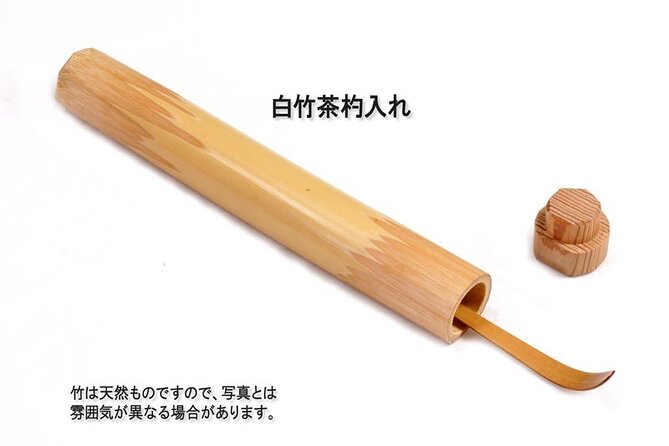
This class is centered on one specific material: Kyomei bamboo, often called white bamboo. What makes that interesting is the way the spoon is made. You are not building with heavy machinery or buying a pre-shaped item. You are shaping the bamboo yourself, using a small knife to shave it down, then using sandpaper to refine the feel and finish.
That approach is exactly why a tiny object like a teaspoon can feel like a big deal. When you shape the bamboo by hand, you quickly understand how craft work is about control. It is less about speed and more about making gradual choices, stopping when the thickness looks right to you.
And because the bamboo starts as a “raw” form, you are also learning a quiet part of Japanese craft culture: the idea that a useful everyday object can be made carefully, with patience, and without fuss. One participant even sounded genuinely proud of their finished piece, calling it their matcha spoon.
Your 2-hour hands-on process, from shaving to sandpaper
Think of the class as a guided making session you can actually finish. The duration is about 2 hours, and the design is straightforward: you start, you work through the steps, and you end with a completed teaspoon you can take home immediately.
Here is the core workflow you should expect:
- You begin by learning the technique for shaping bamboo with a small knife.
- You shave the Kyomei white bamboo to the desired fineness. This is where you feel the craft part, because small changes matter.
- You finish the spoon shape with sandpaper, smoothing and refining what you made.
The big practical point: you are not just watching someone else craft. You are doing the shaving and finishing yourself, with an instructor present. If you like hands-on work, you will probably enjoy how quickly you see progress, because you are building a physical object on the table, right in front of you.
Also, this is set up for most travelers to participate, including first-timers. Just note the minimum age requirement: kids must be 9+ and accompanied by an adult.
A quieter way to spend a day in Kyoto
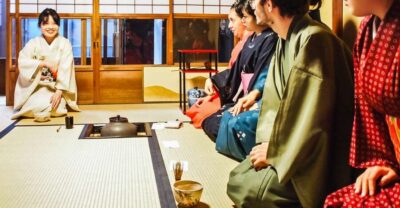
- Kyoto: 45-Minute Tea Ceremony Lesson Experience
★ 4.3 · 2,378 reviews - Ramen Cooking Class at Ramen Factory in Kyoto
★ 5.0 · 1,937 reviews - Kyoto : Chopsticks Making Workshop in Gion with Engraving Option
★ 5.0 · 958 reviews - Kyoto: Samurai Sword Class by Experts in Traditional Arts
★ 4.9 · 657 reviews
Finding the workshop at 110-4 Kainokamichō, and getting there
You meet at 110-4 Kainokamichō, Kamigyo Ward, Kyoto, 602-8061, Japan. The class also ends back at the meeting point, so you are not commuting across town afterward.
A couple logistics notes that help you plan your day:
- There is no hotel pickup or drop-off, so you will need to arrive on your own.
- Transportation to and from attractions is not included, but the meeting point is near public transportation. That’s good news in Kyoto, where routes are easier when you can hop on trains and buses.
- You will likely want to treat this like a real appointment. With a small group size (max 15), late arrivals can throw off the pacing.
You will use a mobile ticket. If you rely on your phone for QR codes, make sure you have it charged and ready before you leave your hotel.
What is included in the $100.97 class fee (and what isn’t)
At $100.97 per person, you are paying for a short, focused craft experience with guidance and materials. The fee includes:
- all necessary materials
- an instructor
- consumption tax
- the TripAdvisor Experiences brokerage fee
What it does not include is just as important. Food and drinks are not provided, and there is no hotel pickup or drop-off. So if your class sits in the middle of a sightseeing day, you will want to eat before you go. Kyoto offers plenty of quick options, but you do not want to gamble on finding something comfortable right near your class time.
Also, since transportation is not included, you should build in normal Kyoto buffer time for getting from the station or bus stop to the meeting point. This is one of those experiences where arriving calm helps you enjoy the making part.
A small group with a supportive instructor, what that feels like
This class keeps the group small, with a maximum of 15 travelers. That matters more than it sounds. With a class built around using a small knife and doing sandpaper finishing, you want an instructor who can check in as you work.
One review specifically praised the instructor for being kind, encouraging, and informative. That tone is not just nice. It helps when you are learning a skill where you might otherwise worry about doing it wrong. If you are a nervous beginner, a patient teacher can turn the whole thing from intimidating to doable.
The same review also said the workshop space was clean and professional. When you are working at a workbench, cleanliness and clear setup make it easier to focus. It also signals that the tools and materials are meant for an organized class, not a rushed public demonstration.
If you like learning in a calm, practical way, this setup fits well.
Taking your bamboo teaspoon home the same day
This is a key value point. You make the teaspoon on the spot, and you can take it home on the day you make it. That turns the class into more than entertainment. It becomes a functional souvenir, something you can actually use.
There is also something satisfying about finishing a craft piece yourself. Bamboo is light, and it feels different once you sand it and shape it to the fineness you chose. Even if you are not a craft person, you will likely appreciate having a tangible result you can point to and say, I made this.
One participant even described being proud of their matcha spoon. The takeaway for you is simple: you are not leaving with a vague memory. You are leaving with a finished object that fits Kyoto’s craft reputation, and it comes from real hands-on work.
A day of temples goes further with something to break it up.


Price and value: does $100.97 make sense here?
For craft classes in popular cities, pricing can feel all over the place. Here, the math is fairly clear because the fee includes the parts that usually add up: materials and instruction.
At $100.97, you get:
- the bamboo material used for the spoon
- the tools and supplies needed to shape and finish it
- an instructor to guide you through the knife and sandpaper steps
- consumption tax included
- brokerage fee included in the published total
What you do not get is food and drinks, and you provide your own transportation to the workshop. So the true “trip cost” depends on what you already planned to spend for lunch or snacks that day.
I think the value lands well if you want an active Kyoto experience and you like making things with your hands. If you only want scenic wandering, this will feel too focused. But if you want a skill, a small project, and a take-home piece, it is easy to justify.
Should you book this bamboo teaspoon workshop in Kyoto?
Book it if you want:
- a hands-on craft you can finish in about 2 hours
- to work directly with Kyomei white bamboo
- a small-group class where an instructor can support you
- a take-home item you made yourself, same-day
Skip it or think twice if:
- you do not like tool-based activities (even though most travelers can participate, it still involves a small knife and sanding)
- you need food and drink included, since none is provided
- you are traveling with a child who is under 9, because the minimum age is 9 with an adult accompaniment
If your Kyoto plan is temple-heavy and you want one different kind of experience, this is a solid choice. It is practical, it ends with something useful, and it gives you a real sense of what bamboo craft work feels like, one careful shaving at a time.
FAQ
Where is the meeting point for the bamboo teaspoon class?
The meeting point is 110-4 Kainokamichō, Kamigyo Ward, Kyoto, 602-8061, Japan. The activity ends back at the same meeting point.
How long does the class take?
The experience duration is approximately 2 hours.
What is the cost per person?
The price is $100.97 per person.
Is a mobile ticket used?
Yes, this experience uses a mobile ticket.
What materials and supplies are included?
All necessary materials are included, along with an instructor and consumption tax.
Can I take the finished teaspoon home the same day?
Yes. You can complete your bamboo teaspoon on the spot and take it home on the day you make it.
Are food and drinks included?
No. Food and drinks are not included.
Do I need hotel pickup or drop-off?
No. Hotel pickup and drop-off are not included.
What is the minimum age, and can children attend?
The minimum age is 9 years. Children must be accompanied by an adult.
What is the cancellation policy?
You can cancel for a full refund if you cancel at least 24 hours before the experience start time, based on local time. Free cancellation is offered.
New This Season
- Koyasan Day Trip by Private Car from Kyoto
- Old Port Town and Ultimate Sake Tasting Private Tour From Kyoto
- Kyoto’s Timeless Charm: 3hr Exploration of History and Peace
- Kyoto: 5 Types of Sushi Making
- Sacred Peak & Ancient Paths: Kurama-Kibune Hiking Experience
- Kyoto: Exclusive ZEN practice at Manpukuji temple in Uji
- Kyoto: Private Seasonal Aroma Yoga Class
- Traversing Kyoto’s Scenic West – Arashiyama to Kinkakuji
Workshops, compared.

Ramen Cooking Class at Ramen Factory in Kyoto
Read our review →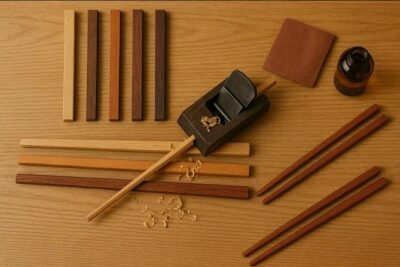
Chopsticks Making Workshop in Gion with Engraving Option
Read our review →
Samurai Sword Class by Experts in Traditional Arts
Read our review →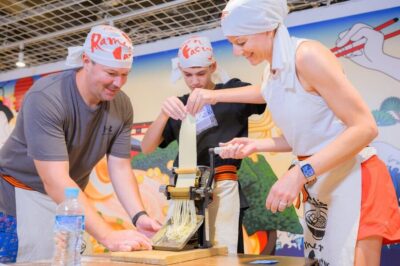
Ramen Cooking Class at a Ramen Factory with Souvenir
Read our review →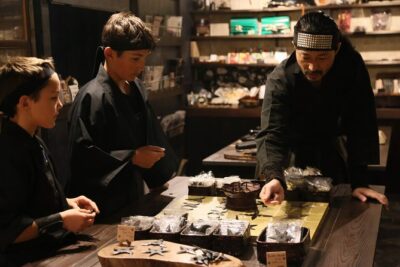
Ninja 1-hour Hands-on Lesson by Japanese master in Kyoto -Entry
Read our review →
The Original Small-Group Sushi Making Class in Kyoto
Read our review →Also filed under