
Reviewed · SUSHI-MAKING WORKSHOPS
The Original Small-Group Sushi Making Class in Kyoto
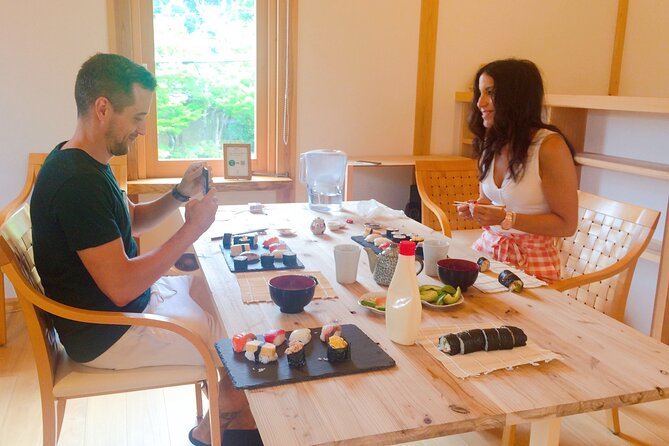
Sushi lessons in Kyoto’s old houses work. This is Kyoto’s original small-group sushi workshop, taught in English, with hands-on practice and a calm, historic setting near Kiyomizu-dera and Gion. The 8-guest limit keeps the guidance personal, and the focus stays on technique, not just watching.
I love the patient coaching from Kana and the relaxed pace, because you are shaping nigiri and rolling maki step by step while asking questions. I also love that the class ends with a proper sushi meal made from what you learned, and many people mention taking home class notes and tools like a sushi mat and chopsticks.
One possible drawback to plan around is that there is no vegetarian or vegan option, since the class uses premium fresh fish and local ingredients.
In This Review
- Key highlights
- Why this Kyoto sushi class feels different from a restaurant demo
- Where to meet, how to arrive, and what you get right away
- Rice seasoning is the real lesson behind nigiri
- Shaping nigiri: control, not chaos
- Rolling maki: how to get a tight roll you can actually eat
- Eat what you make: lunch or dinner, and why it’s a good value
- What you take home: notes, recipes, and tools mentioned in reviews
- Price and value at $69.64 per person
- Who this workshop fits best, and what to consider first
- Scheduling in Kyoto: near Kiyomizu-dera and Gion
- Should you book this Kyoto sushi class?
- FAQ
- How long is the sushi making class in Kyoto?
- What is the group size limit?
- Is the class taught in English?
- What will I learn to make?
- Is a meal included?
- Do they provide any gear?
- Is coffee or tea included?
- Do they offer vegetarian or vegan options?
- Where is the meeting point?
- Can I get a full refund if I cancel?
Key highlights
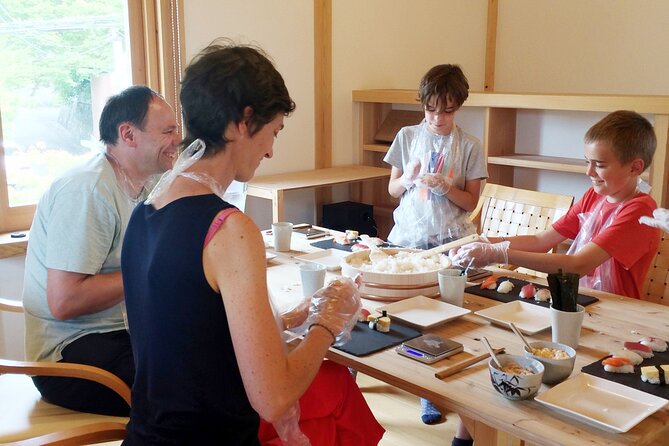
- 8 guests max so you get real feedback instead of rushed instructions
- English-led instruction with a Japanese instructor, focused on technique
- Nigiri plus maki rolls so you learn more than one style
- Historic townhouse setting near Kiyomizu-dera and Gion, not a generic cooking studio
- Sushi meal included, plus coffee and/or Japanese tea
- Take-home materials show up in reviews, including class notes and tools for practicing later
Why this Kyoto sushi class feels different from a restaurant demo
Kyoto has plenty of places to eat sushi, including right in tourist-heavy zones. This class feels more grounded because you are learning in a restored historic townhouse setting, a calmer atmosphere than you would expect from a short “watch and repeat” activity.
The small-group design matters. With a maximum of 8 travelers, the instructor can actually correct your grip, your rice handling, and how you assemble sushi pieces. That is the difference between feeling like you made a thing, and feeling like you learned a skill you can repeat at home.
You also get a Japanese instructor who teaches in English. That combination matters too, because sushi technique is specific. Even if you have eaten sushi for years, you will still learn how rice seasoning and shaping change the final bite.
Where to meet, how to arrive, and what you get right away
The class meets at Atelier SUSHI, 311-1 Kitatōryōchō, Higashiyama Ward, Kyoto. It is near public transportation, which is a relief in Kyoto, where walking between neighborhoods can eat up time fast.
You receive a mobile ticket, and the activity ends back at the meeting point. Practically, that means you can pair this with a nearby temple or evening stroll around Gion without needing a complicated transit plan.
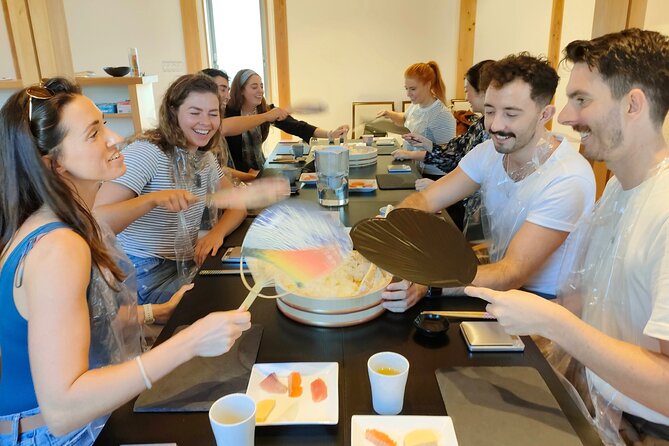
Once you arrive, you are not just handed a recipe and sent off. You get apron and gloves, which helps the space feel hygienic and comfortable while you handle rice and ingredients. You also get coffee and/or Japanese tea, a nice reset before you start turning out sushi like your new side hobby.
Learn to roll your own sushi
- Sushi Making in Kyoto! Same-day bookings welcome!
★ 5.0 · 713 reviews - Kyoto: Small-Group Authentic Sushi Making Workshop
★ 5.0 · 137 reviews - Sushi – Authentic Japanese Cooking Class – the best souvenir from Kyoto!
★ 5.0 · 93 reviews - Private Kyoto Sushi Cooking Class & Tea Ceremony with Emika
★ 5.0 · 66 reviews
Rice seasoning is the real lesson behind nigiri
Most sushi classes focus on the dramatic parts, the fish and the shapes. Here, you start with rice, specifically seasoning properly cooked sushi rice. That makes sense, because rice is the foundation for everything you put on top.
In this workshop, you practice the technique that helps rice work the way it should for nigiri: sticky enough to hold, but still light and well-seasoned. You are also learning how to handle the rice so it becomes a clean base for toppings instead of a messy clump.
This is also where the small-group setup shines. With 8 people max, you can get individual feedback while you practice. If your rice is too warm, too loose, or you are pressing in the wrong way, you want a quick correction. You do not want to find out later, when your nigiri falls apart or tastes off.
Shaping nigiri: control, not chaos
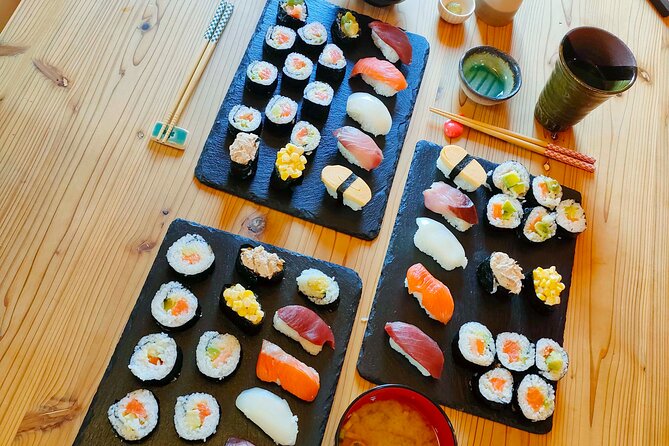
After rice comes nigiri, and you are not limited to one simple piece. The class teaches you to shape nigiri in a way you can repeat, using the same core technique across different styles.
What I like about this approach is that it teaches structure. Nigiri is basically a balancing act between rice shape and topping placement. If you get either wrong, the sushi feels heavy, breaks during eating, or just does not sit right.
The instructor provides hands-on guidance throughout. Reviews also highlight Kana’s patience and the fact that participants feel confident enough to make nigiri at home afterward. You are learning how to do the shaping, not just following one lucky outcome.
If you are nervous about touching raw fish, that is normal. More than one reviewer mentioned that fresh ingredients changed their opinion, making the experience feel both safe and delicious.
Rolling maki: how to get a tight roll you can actually eat
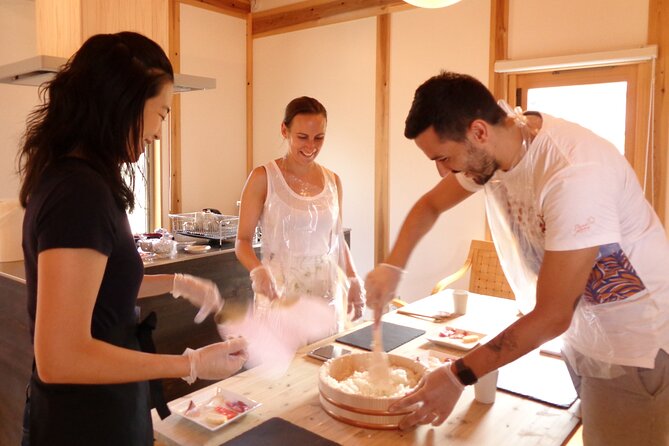
Maki rolls are where sushi classes usually separate into two groups: those where the roll looks okay in photos, and those where it actually holds together.
In this class, you learn to roll maki using carefully selected local ingredients. You practice the rolling technique so the roll stays intact and the inside ingredients are distributed the way they should be.
Even though maki can look simple from far away, it is really about consistency. The rice layer, the filling placement, and the pressure of the roll all matter. The benefit of learning here is that you get step-by-step support and time to ask questions as you go.
By the end, you are not leaving with one roll that crumbled in embarrassment. The class is designed so you build enough practice to leave feeling capable. That is what you want from a workshop.
Eat what you make: lunch or dinner, and why it’s a good value
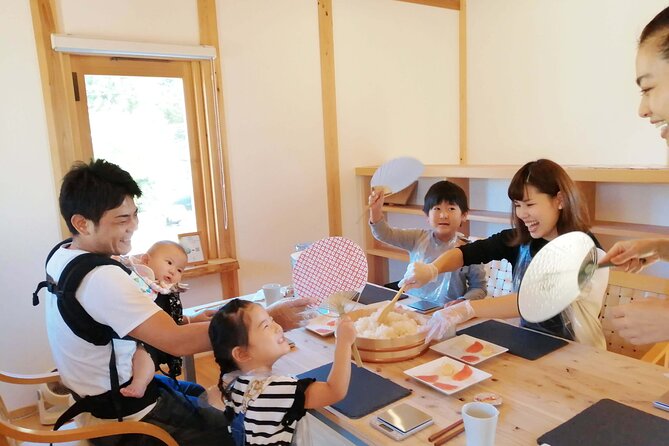
This is not a class where you make a few bites and then go hunt for dinner. You get a sushi meal included, served as lunch or dinner depending on the workshop time.
In reviews, people repeatedly say the portion is substantial, and that they do not leave hungry. That is a big deal for a short 1 hour 30 minutes experience, because you are paying for instruction plus a meal, not just instruction.
There is also a practical reason eating matters. You taste immediately what your technique produces. If the rice seasoning is off, you will taste it. If your shaping is uneven, you will notice mouthfeel and balance. That feedback loop is how skills stick.
Coffee and/or Japanese tea also help make the meal feel like part of the whole experience, not an afterthought.
A quieter way to spend a day in Kyoto
What you take home: notes, recipes, and tools mentioned in reviews
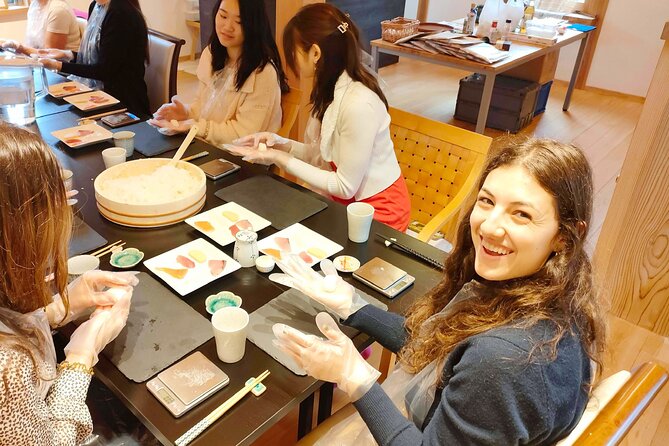
You will likely leave with more than sushi on your stomach. Reviews mention a souvenir gift bag with class notes, and also mention take-home tools like a sushi mat and chopsticks.
Some reviewers also mention getting recipes, especially for the rice, plus guidance for rolling at home. That is exactly what you want when you book a cooking class, because otherwise it is just a one-day memory.
One practical tip: if you want to keep your skills sharp, put the class notes somewhere you will see them in the kitchen. Rice and rolling techniques are the kind of thing that fade quickly unless you practice soon after returning home.
Price and value at $69.64 per person
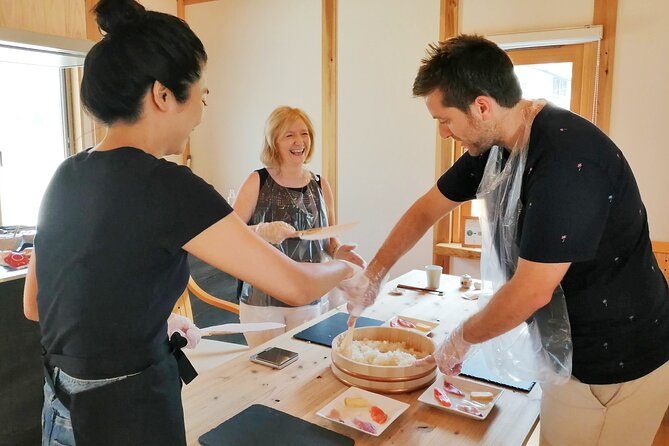
At $69.64 per person, this is not “cheap,” but it is also not trying to be a high-end private lesson. The value comes from what is included and how small the group stays.
You get:
- a Japanese instructor with English guidance
- hands-on practice for both nigiri and maki
- premium fresh fish and carefully selected local ingredients
- aprons and gloves
- coffee and/or Japanese tea
- a sushi meal at the end
When you price out those pieces separately, the per-person cost starts to make sense, especially because you are capped at 8 participants. In practice, you are paying for focused time with an instructor and for the ingredients that make the class actually taste like sushi, not like a cooking imitation.
Who this workshop fits best, and what to consider first
This workshop fits well if you:
- want a hands-on cooking experience in a small group
- like learning technique, not just eating
- enjoy sushi and want to build confidence making it yourself
- are traveling as a couple, family, or solo visitor (reviews mention all three)
If you are traveling with kids, this may also work nicely. One review specifically mentioned a 12-year-old sushi fan loving the class.
Your biggest consideration is diet and seafood. There is no vegetarian or vegan option, and the class uses fresh fish as part of the learning plan. If you avoid seafood, this one will likely frustrate you.
Allergies are another thing to think about. Some reviews mention accommodations for gluten and shellfish allergies, including celiac and shellfish allergy. The safe move is simple: tell the provider about your allergy as early as possible and ask how it will be handled in the class you book.
Scheduling in Kyoto: near Kiyomizu-dera and Gion
The location is a big plus. You are near Kiyomizu-dera and Gion, two areas that can easily fill your day. Since the class ends back at the meeting point, it is easy to connect it to a short walk, dinner, or a transit change.
A smart way to plan it is to schedule it earlier in your trip. More than one review suggested taking the class early so you can get local advice for the rest of Kyoto. Even if you are an experienced planner, a local perspective on neighborhoods, timing, and what to see next is worth something.
Also, consider whether you want lunch or dinner. The class timing determines what meal you get, so choose based on your energy level and the rest of your day.
Should you book this Kyoto sushi class?
If you want a sushi experience that teaches technique, not just entertainment, book it. The combination of 8-person limit, English instruction from Kana, and a historic townhouse setting near Kyoto’s iconic sights is exactly the kind of practical cultural activity that makes a trip feel more real.
Book it especially if you care about leaving with skills you can repeat. Reviews mention confidence at home, plus take-home notes and tools. That is a meaningful payoff for a short 1 hour 30 minutes session.
Skip it if you need a vegetarian or vegan option, since the class is fish-based by design. And if you have serious allergies, email ahead and confirm how your specific restriction will be handled for the sushi and ingredients used.
If you fit the sushi-eating, technique-learning profile, this is one of those “do it once, then keep using it” Kyoto experiences.
FAQ
How long is the sushi making class in Kyoto?
The class runs about 1 hour 30 minutes.
What is the group size limit?
The class is limited to a maximum of 8 travelers.
Is the class taught in English?
Yes, the workshop is conducted in English.
What will I learn to make?
You learn to season sushi rice and make nigiri and maki rolls.
Is a meal included?
Yes. A sushi meal is included, served as lunch or dinner depending on the workshop time.
Do they provide any gear?
Yes. Apron and gloves are provided.
Is coffee or tea included?
Yes. Coffee and/or Japanese tea is included.
Do they offer vegetarian or vegan options?
No vegetarian or vegan option is listed.
Where is the meeting point?
You meet at Atelier SUSHI, 311-1 Kitatōryōchō, Higashiyama Ward, Kyoto, 605-0918, Japan.
Can I get a full refund if I cancel?
Free cancellation is available up to 24 hours in advance for a full refund.
New This Season
- Koyasan Day Trip by Private Car from Kyoto
- Old Port Town and Ultimate Sake Tasting Private Tour From Kyoto
- Kyoto’s Timeless Charm: 3hr Exploration of History and Peace
- Kyoto: 5 Types of Sushi Making
- Sacred Peak & Ancient Paths: Kurama-Kibune Hiking Experience
- Kyoto: Exclusive ZEN practice at Manpukuji temple in Uji
- Kyoto: Private Seasonal Aroma Yoga Class
- Traversing Kyoto’s Scenic West – Arashiyama to Kinkakuji
Sushi-Making Workshops, compared.
Sushi Making in Kyoto! Same-day bookings welcome!
Read our review →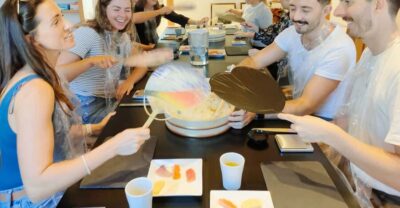
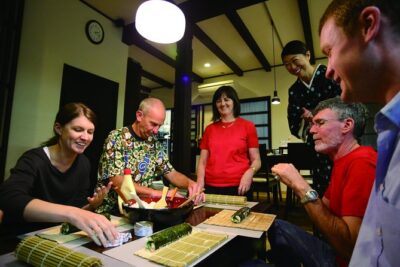
Sushi – Authentic Japanese Cooking Class – the best souvenir from Kyoto!
Read our review →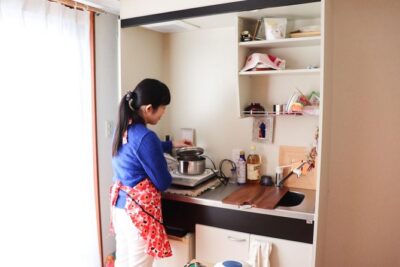
Private Kyoto Sushi Cooking Class & Tea Ceremony with Emika
Read our review →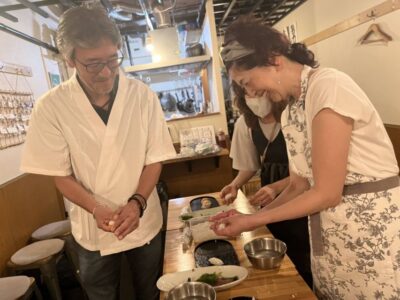
Enjoy Sushi & Market Tour! Best for Family & Couple!
Read our review →
Sushi or Traditional Japanese Cuisine in a Kyoto Home with Emika
Read our review →
Kyoto Sushi Making Experience with a Professional Sushi Chef
Read our review →Also filed under