
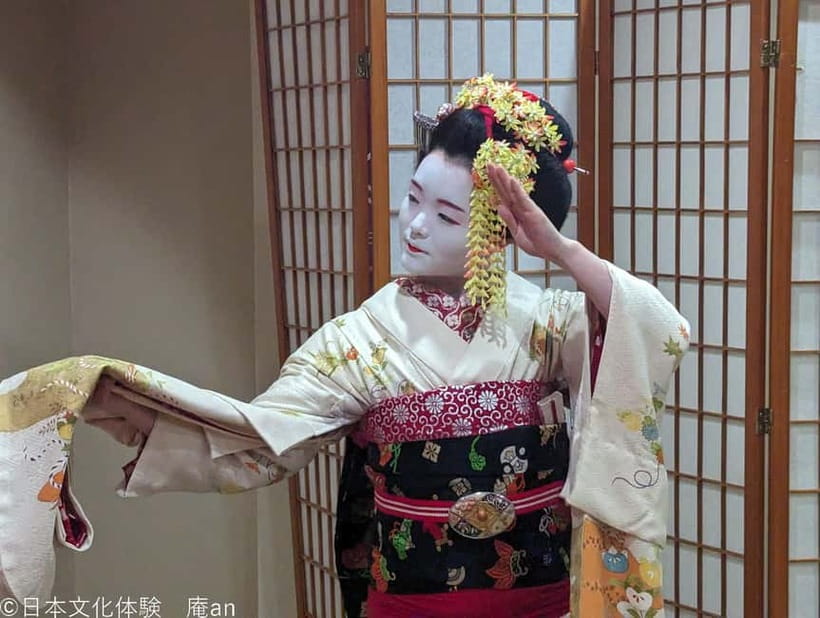
Reviewed · GION GEISHA QUARTER WALKS
Dance and Game with Maiko
Meet a Maiko close and fast. This Kyoto-area experience gives you two Maiko dances to watch up close and a photo moment right beside the performer, all in a time slot that fits a packed day. My favorite part is the direct access, no long waiting around. The main thing to consider is that the program length can run closer to 30 minutes on some days, so keep a small buffer.
You get more than a show. After the dances, you will join a simple traditional game and then get a commemorative photo plus a small lucky charm called Senjafuda. The venue is not an ochaya or a traditional tea-house style room, so the vibe is more relaxed and practical than “movie set.”
Quick heads up: this is a short, interactive program. If you are expecting to just sit silently the whole time, you may be disappointed, because non-participants may not be allowed into the experience room.
In This Review
- Key Things That Make This Maiko Dance and Game Worth Your Time
- Where to Go Near Gojo Station (and What the Room Is Like)
- The 45-Minute Promise, and Why It Can Feel Like 30
- Two Maiko Dances Up Close: What You Are Really Seeing
- The Traditional Game With Audience Participation (Yes, You Can Be Part of It)
- Photo Time Right Beside the Maiko
- The Senjafuda Lucky Charm: A Small Thing With Big Feelings
- Maiko Only, or Geiko Instead? What You Should Expect
- Language Support and How to Make It Easier
- Price and Value: Is $28 a Good Deal?
- Who This Fits Best (and Who Might Feel Unsatisfied)
- Should You Book This Dance and Game With Maiko?
- FAQ
- How long is Dance and Game with Maiko?
- Where is the meeting point?
- How much does it cost?
- What is included in the experience?
- Are children allowed, and do kids pay?
- Do I need to participate, or can I just watch?
- Can it be Geiko instead of Maiko?
- Is the venue elevator accessible?
- What language support is available?
- When does this experience run?
Key Things That Make This Maiko Dance and Game Worth Your Time
- Two Maiko dances performed with graceful, expressive storytelling through music and movement
- Up-close photos beside the Maiko for a real keepsake, not a distant stage shot
- Senjafuda lucky charm handed out as a personal souvenir
- A traditional game where audience volunteers can join, plus easy cheering and clapping
- A short time commitment that works even when your Kyoto schedule is packed
- Maiko or Geiko possible, depending on the situation
Where to Go Near Gojo Station (and What the Room Is Like)
You are meeting very close to transit, which matters in Kyoto. The meeting point is about a one-minute walk from Exit 1 of the Karasuma Line Gojo Station. The entrance faces Gojo-dori, so it is not one of those “good luck finding it” situations.
Inside, you should expect a building venue, not an ochaya-style house. That is not a deal-break. It usually means the experience feels relaxed, with friendly staff and no special dress code or preparations you need to worry about. Still, it is useful to know the difference before you go, because part of Kyoto’s magic for some people is the old-house setting.
One more practical point: there is no elevator. You will need stairs to reach the venue spaces. If you are traveling with heavy bags or you do not love stairs, plan your day so you are not rushing through multiple uphill transfers after this.
The 45-Minute Promise, and Why It Can Feel Like 30
The scheduled duration is listed at about 45 minutes, with the flow designed to move quickly. The rhythm is straightforward: dances first, then the game, then photos and the charm, followed by a bit of chatting time.
Here is the part to plan for: even though the slot is set for around 45 minutes, you may find it runs nearer to 30 minutes on some days. That lines up with how these short programs often work, especially when timing is coordinated with other visitors coming for lunch or dinner.
So I suggest you do two things:
- Keep this experience earlier in your day when possible, so timing surprises are less stressful.
- Do not schedule it back-to-back with another thing that has a hard start time.
Lantern-lit streets of the geisha quarter
- Kyoto Geisha Walking Tour: Gion District & Hidden Gems
★ 4.7 · 3,273 reviews - Kyoto: Gion Magical Night Walking Tour with Geisha Trivia
★ 4.9 · 2,393 reviews - Kyoto: Gion Geisha District Walking Tour – Stories of Geisha
★ 4.7 · 2,187 reviews - Best of Kyoto: Gion, Geisha, Pagodas & Cobblestones
★ 4.9 · 2,058 reviews
Two Maiko Dances Up Close: What You Are Really Seeing
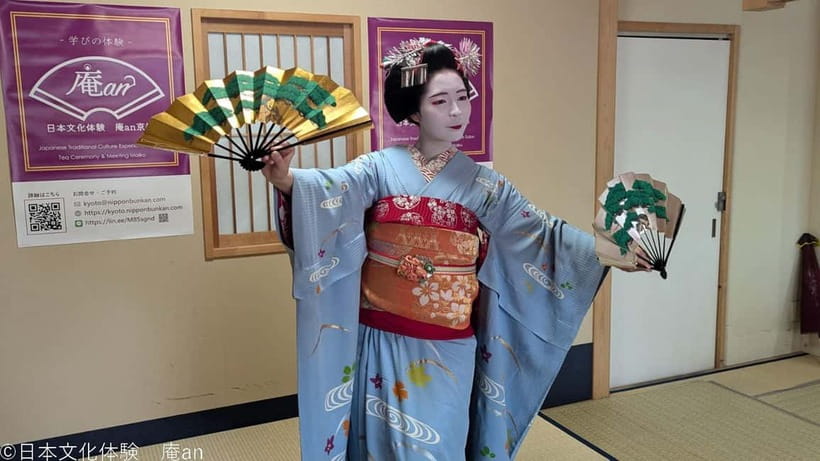
This is not a long theater production. You come to see two elegant Maiko dance performances, close enough that you can actually watch the details rather than just admire from far away.
Maiko dances are built to “say” things without words. They often portray scenes from Japan’s seasons, love stories, and everyday life, guided by music and careful gestures. In a short format like this, the value is focus. You are not lost in a full evening program. You get concentrated moments that make it easier to notice rhythm, expression, and how the choreography connects to the theme.
You also get a big advantage from the “up close” setup. Even if you are not an expert in dance, you can read the performance through posture, timing, and how the Maiko uses space in the room. For many first-timers, that is the difference between seeing something traditional and actually understanding why people fall for it.
The Traditional Game With Audience Participation (Yes, You Can Be Part of It)
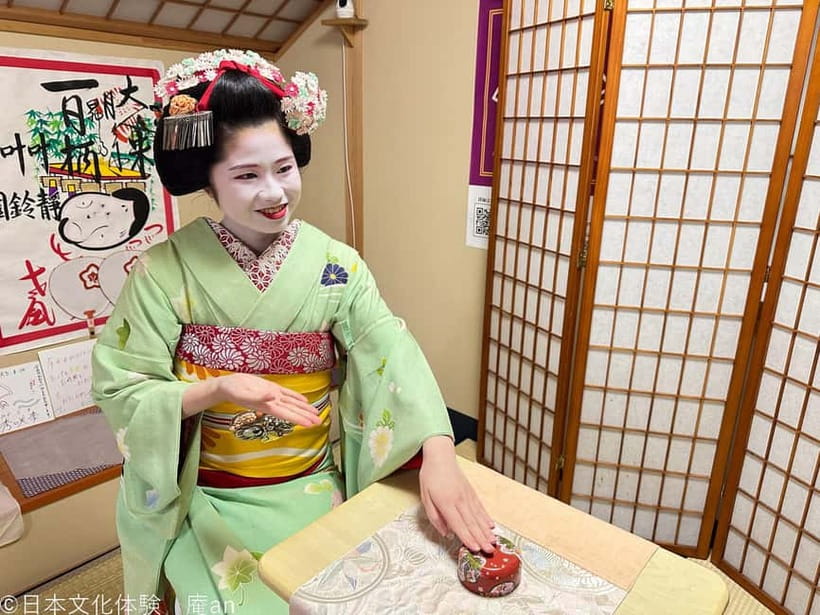
After the dances, the program shifts to a simple traditional game played between the Maiko and the guests.
What I like about this segment is that it breaks the “museum silence” feeling. You are invited to clap, cheer, and join in. Volunteers from the audience may be invited to play with the Maiko, and even if you are watching rather than jumping in, the energy is more shared and social.
That said, be realistic about your group. If you bring kids, think about comfort level. A child might enjoy watching but feel shy about participating in a small room with other people present. If that is a concern for you, you might plan to arrive with a calm attitude, so the game feels like a friendly cultural moment, not an awkward test.
Also, the experience has a participation rule. Those who do not participate may not be allowed to enter the room for the experience. So if you are thinking about attending as a pure observer, it is worth aligning your expectations before you go.
Photo Time Right Beside the Maiko
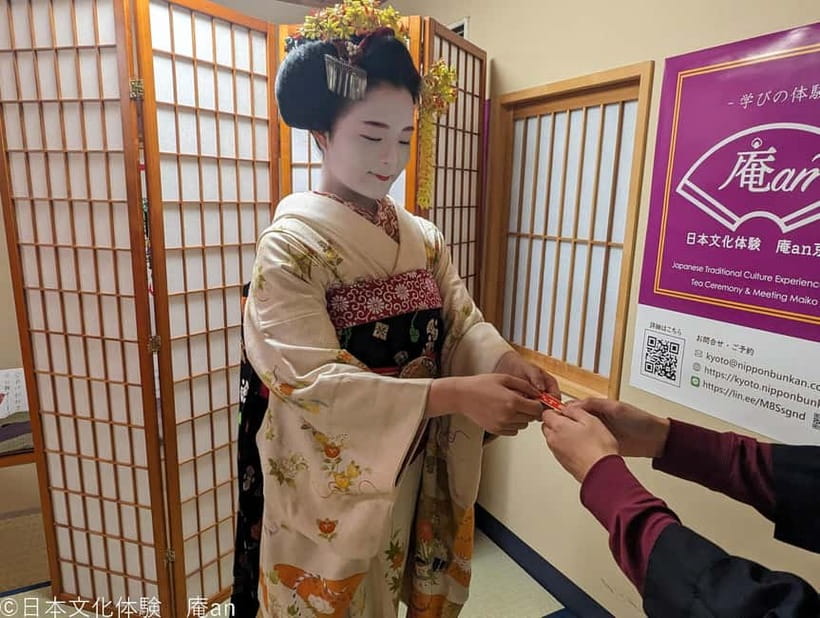
This is one of the clearest reasons to book. You get a chance to take photos right beside the Maiko for a commemorative snapshot.
For a lot of Kyoto “meet and greet” experiences, the photos can feel like you are standing in a line with a quick pose and no personal connection. Here, the emphasis is on being close. The photo moment is designed to be part of the experience, not an afterthought.
My practical advice: bring your camera settings ready. If you are using a phone, check battery and storage before you start. Lighting in indoor cultural venues can vary, and you will want to focus on capturing the dance-and-photo memory without fumbling.
The Senjafuda Lucky Charm: A Small Thing With Big Feelings
At the end, the Maiko presents you with a lucky charm called Senjafuda. It is a small souvenir, but that type of keepsake matters more than people expect.
Why it works: it gives your visit a physical marker. You are not only taking photos; you are leaving with something you can carry. In a city where you might do several cultural stops, that “one object” memory is a tidy way to anchor the day.
It also adds emotional closure to a short program. After the dances, game, and photo moment, the charm feels like a respectful farewell, like the host is passing you a little luck for your time in Kyoto.
A day of temples goes further with something to break it up.

Maiko Only, or Geiko Instead? What You Should Expect
There is one detail worth knowing before you arrive. Depending on the situation, the experience may invite Geiko instead of Maiko.
This matters if you are specifically chasing a Maiko encounter. But it should not necessarily be a disappointment. The key is that the program format still centers on traditional dance and the interactive game format, so you are still getting a cultural performance moment designed for visitors.
If you want to maximize your odds of a Maiko, just be mentally flexible. Kyoto schedules can shift, and your experience is built to adapt.
Language Support and How to Make It Easier
The instructor is Japanese, and English translation is provided as much as possible. If you want translation help, you may need to reach out in advance.
So here is how to handle it smartly:
- Keep your questions simple and short if you plan to speak.
- Focus on what you can observe through movement and the flow of the program.
- Think of the experience as a guided cultural moment first, language lesson second.
Even with limited English, the structure is clear: you watch dances, you join the game, you take photos, you receive the charm. That step-by-step pacing helps non-Japanese speakers follow along.
Price and Value: Is $28 a Good Deal?
At about $28 per person, this falls into the “short experience” category, not the “all-evening show with extras” category. The value comes from how much you get per minute.
You are paying for:
- Two Maiko dance performances in one session
- An interactive traditional game
- A close photo opportunity
- A Senjafuda lucky charm souvenir
Where the value shines is efficiency. Kyoto can eat time. If your schedule is packed, paying for a tight program can feel like a good trade. You still get meaningful cultural contact, not just a quick photo from the street.
Potential trade-off: because it is short and held in a building venue, it will not feel like a full, immersive traditional evening in an ochaya setting. If that exact atmosphere is your priority, you might want a longer tea ceremony or dinner-style cultural program instead. But if your goal is meeting a Maiko, watching two dances, and taking a close commemorative photo, $28 is reasonable for what you get.
Who This Fits Best (and Who Might Feel Unsatisfied)
This experience is ideal if you:
- Want a Maiko encounter without sacrificing half a day
- Like interactive cultural moments, including simple audience participation
- Care about getting an up-close photo and a souvenir charm
- Are comfortable with a building venue and stairs
It may not fit as well if you:
- Only want to watch silently and do not want to participate in the game flow
- Need a wheelchair-friendly, elevator-accessible venue (there is no elevator)
- Are hoping for a long, cinematic traditional tea-house atmosphere
Also, consider children thoughtfully. Kids under 2 can be free if they sit on a parent’s lap. But older kids will still need to be comfortable in a shared indoor setting, since participation may be part of the experience.
Should You Book This Dance and Game With Maiko?
I would book it if you want a compact, friendly, culture-forward Maiko moment in Kyoto. The combination of two dance performances, a traditional game, close photos, and the Senjafuda charm makes it feel complete for a short time slot.
Skip it or reconsider if you hate stairs, want a purely passive observer experience, or you are chasing the look and feel of an ochaya house. In that case, you might be happier with a longer, more atmospheric alternative.
If you are flexible on the Maiko versus Geiko possibility and you treat it as a short cultural highlight, this is a solid way to add something personal to your Kyoto day.
FAQ
How long is Dance and Game with Maiko?
The program is scheduled for about 45 minutes. The flow includes performances, a game, photo time, and receiving the Senjafuda charm.
Where is the meeting point?
It is a one-minute walk from Exit 1 of the Karasuma Line Gojo Station. The entrance faces Gojo-dori.
How much does it cost?
The price is $28 per person.
What is included in the experience?
You get the Maiko dance and the game with Maiko, plus a commemorative photo moment and the Senjafuda lucky charm.
Are children allowed, and do kids pay?
Children under 2 are free if they sit on their parents’ laps. If a seat or meal is required for a child under 2, the same fee as one person will be charged.
Do I need to participate, or can I just watch?
Those who do not participate in the experience will not be allowed to enter. Audience volunteers may be invited to play in the game.
Can it be Geiko instead of Maiko?
Yes. Depending on the situation, it may involve Geiko instead of Maiko.
Is the venue elevator accessible?
There is no elevator in the building. You will need to take stairs.
What language support is available?
The instructor is Japanese. English translation is provided as much as possible. If you want additional translation help, you can contact the operator.
When does this experience run?
Operation hours are from 10:00 to 17:00. Reservations received after 17:00 are processed the next day.
New This Season
- Koyasan Day Trip by Private Car from Kyoto
- Old Port Town and Ultimate Sake Tasting Private Tour From Kyoto
- Kyoto’s Timeless Charm: 3hr Exploration of History and Peace
- Kyoto: 5 Types of Sushi Making
- Sacred Peak & Ancient Paths: Kurama-Kibune Hiking Experience
- Kyoto: Exclusive ZEN practice at Manpukuji temple in Uji
- Kyoto: Private Seasonal Aroma Yoga Class
- Traversing Kyoto’s Scenic West – Arashiyama to Kinkakuji
Gion Geisha Quarter Walks, compared.
Kyoto Geisha Walking Tour: Gion District & Hidden Gems
Read our review →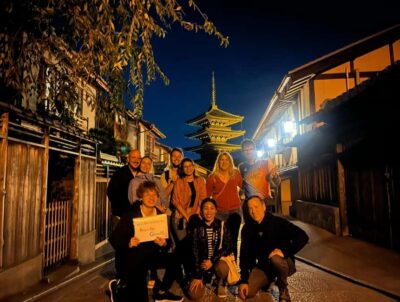
Gion Magical Night Walking Tour with Geisha Trivia
Read our review →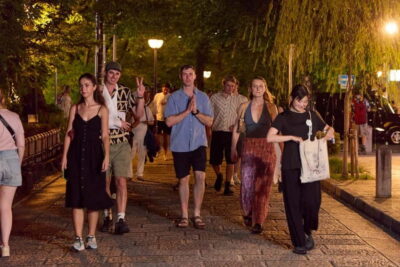
Gion Geisha District Walking Tour – Stories of Geisha
Read our review →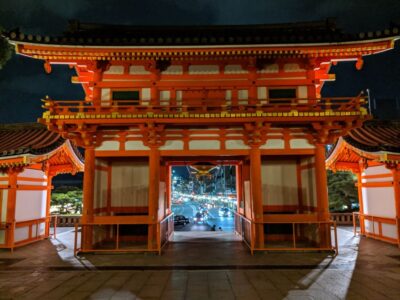
Best of Kyoto: Gion, Geisha, Pagodas & Cobblestones
Read our review →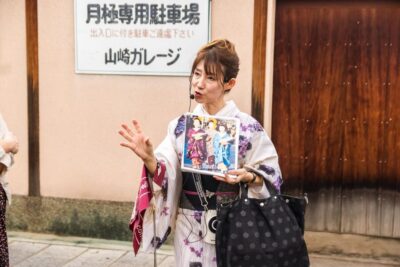

Kyoto Night Foodie Tour in Gion (9+ dishes + 6 Sake tastings)
Read our review →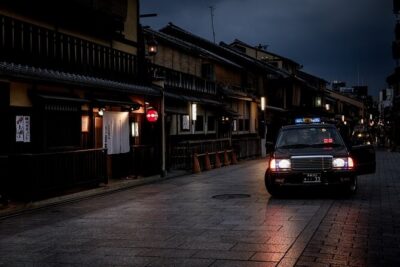
Kyoto Gion Geisha District Walking Tour – The Stories of Geisha
Read our review →
Kyoto Gion: 2-Hour Geisha Culture & History Walking Tour
Read our review →Also filed under