
Reviewed · COOKING CLASSES
Experience Authentic Japanese Home Cooking in Kyoto
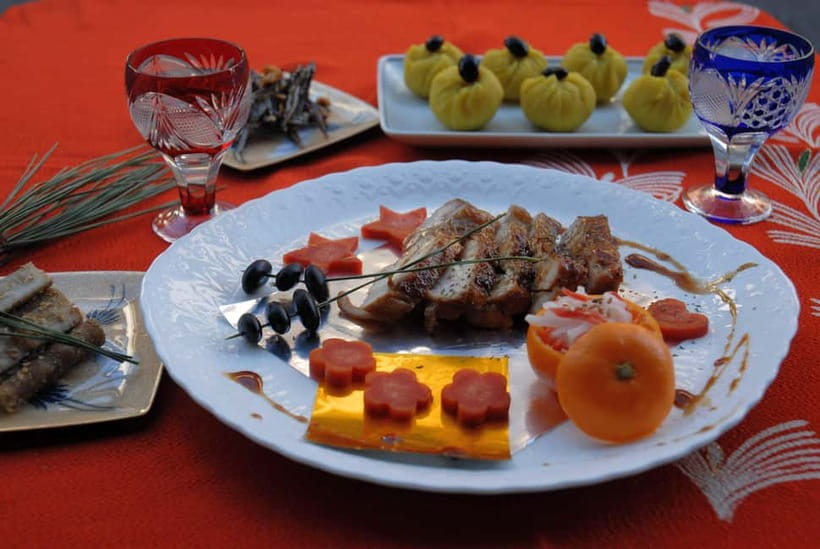
Kyoto comfort starts with dashi. You’ll make it from katsuobushi (bonito flakes) and kombu (kelp), then use that base to cook warm, everyday-style dishes. I also like the focus on practical knife technique, so the cooking feels doable, not like a cooking show.
One thing to think about first: this location does not accept men only. If that’s a dealbreaker, you can ask about an alternative kitchen option by message.
In This Review
- Key Highlights You’ll Care About
- A 100-Year Kyoto Townhouse Where You Actually Cook
- Where You Meet, and How Close It Is to Kyoto Sights
- Building Real Dashi: Bonito Flakes and Kelp Basics
- Knife Skills for Delicate Japanese Prep
- The Menu You’ll Actually Cook: From Dashi-maki Tamago to Miso Soup
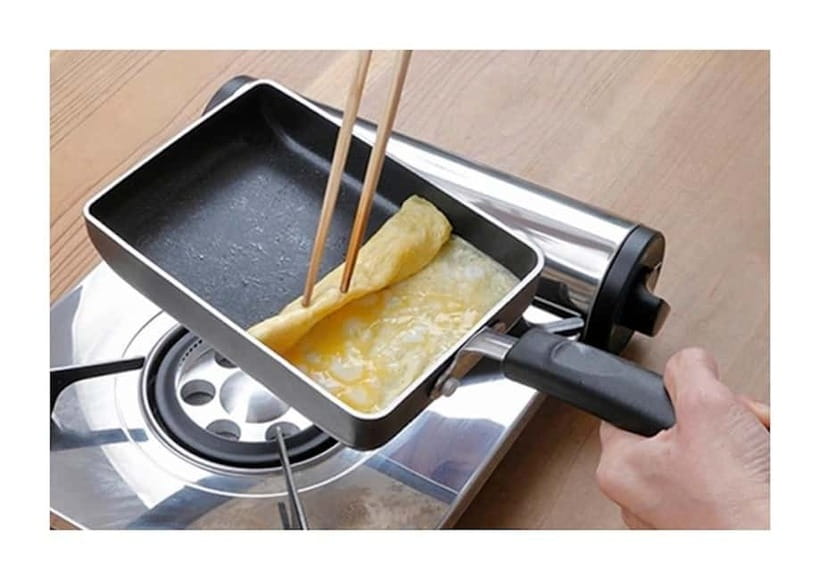
- Dashi-maki egg (rolled omelet)
- Chicken teriyaki
- Simmered vegetables with seasonal ingredients
- Miso soup
- Plating and setting the table
- Additive-Free Seasonings and the Katsuo Doi Home-Cooking Approach
- English Support and Instructor Style That Keeps It Practical
- Price and Value for a Kyoto 2.5-Hour Cooking Class
- Who This Class Fits Best, and Who Should Rethink It
- Should You Book This Kyoto Home Cooking Class?
- FAQ
- How long is the cooking class?
- What is included in the price?
- What dishes will I cook?
- Where do I meet the instructor?
- Is the class taught in English?
- Can men join this class at the home location?
- Are children allowed?
- What is not included?
- Is cancellation possible?
Key Highlights You’ll Care About
- Real dashi building blocks using bonito flakes and kelp, not shortcuts
- Additive-free seasonings that keep the flavor clean and home-style
- Knife practice for delicate Japanese prep, guided step-by-step
- A hands-on 2.5-hour class in a traditional Japanese townhouse over 100 years old
- A menu you can repeat at home, including dashi-maki egg and miso soup
- English instruction and support, including a translator setup when needed
A 100-Year Kyoto Townhouse Where You Actually Cook
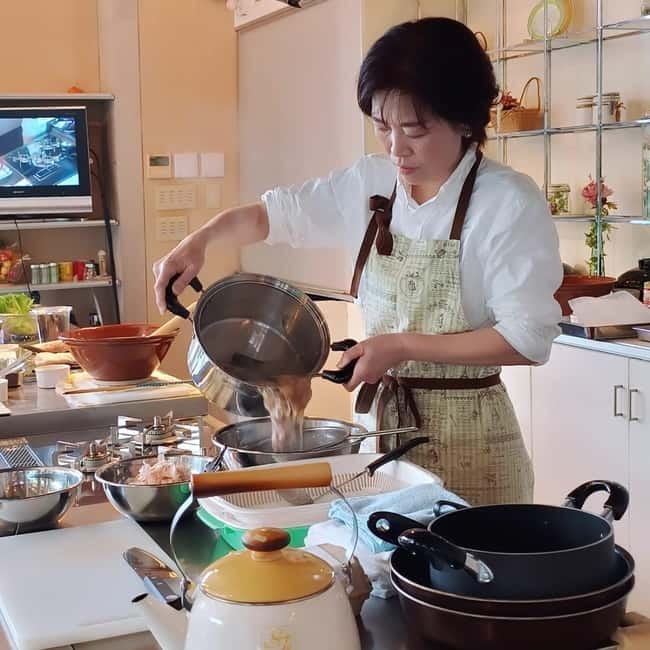
This class gives you what most Kyoto food experiences do not: a real home setup where you cook, not just watch. The setting is a traditional Japanese townhouse that’s over 100 years old, which matters because it frames the whole idea of the lesson. You’re learning daily Japanese cooking routines, not a performance aimed at restaurant plating.
You also get a clear sense of the instructor’s approach. The philosophy follows Katsuo Doi, one of Japan’s well-known home-cooking experts, with a focus on deliciousness and health. That translates into teaching dishes Japanese families actually make, warm and nourishing, with techniques you can repeat later.
The class is in a private group format, and it runs for about 2 hours 30 minutes. Since it is held at the instructor’s home, you should expect a smaller, more personal pace than a large cooking studio.
Where You Meet, and How Close It Is to Kyoto Sights
Getting there is fairly easy if you are already planning around the Sanjo area. The nearest station is said to be about 10 minutes on foot from Sanjo Keihan or Subway Sanjo Station. The meeting point is Subway Shijo Station, where you walk about 10 minutes, and the host comes to the station to pick you up after your reservation is confirmed.
That combination is actually helpful for sightseeing planning. If you are spending your day around Gion, Yasaka Shrine, Heian Shrine, or Kyoto Imperial Palace, this location sits in the zone where you can keep moving on foot after (or before) class.
As for timing, you’ll want to think of this as one block in your day, not something to stack with tight reservations back-to-back. Plan buffer time for pickup and for the natural rhythm of a cooking lesson.
A quieter way to spend a day in Kyoto
- Ramen Cooking Class at Ramen Factory in Kyoto
★ 5.0 · 1,937 reviews - Kyoto: Ramen Cooking Class at a Ramen Factory with Souvenir
★ 4.9 · 532 reviews - Kyoto: Ramen, Gyoza, and Onigiri Cooking Class
★ 5.0 · 445 reviews - Kyoto: Japanese Washoku Bento Small Group Cooking Class
★ 5.0 · 380 reviews
Building Real Dashi: Bonito Flakes and Kelp Basics
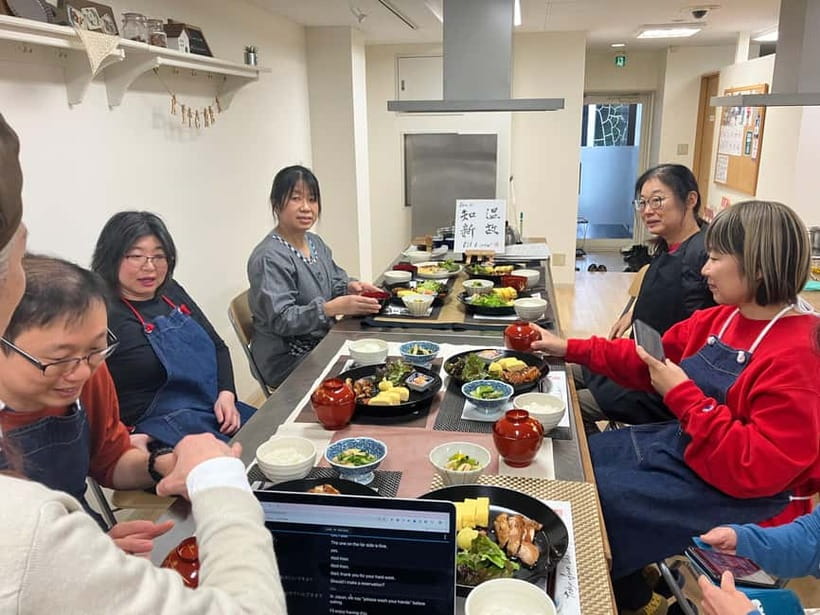
The foundation of everything here is dashi. You’ll make soup stock using katsuobushi (bonito flakes) and kombu (kelp), then watch and learn as the flavors develop while the broth simmers.
This is more than a starter recipe. In Japanese home cooking, dashi is the flavor engine behind a lot of dishes, so learning how it’s made gives you leverage. You won’t just memorize instructions, you’ll understand why the stock tastes the way it does.
One practical benefit: the aroma shows up quickly enough that even if you are new to cooking, you can follow along. The lesson is designed to guide you step by step, so you’re not left guessing what the instructor expects at each stage.
You’ll also learn about Japanese ingredients and how they connect to the final taste, including the idea that Japanese cooking balances flavor with everyday nutrition. It’s a home-cooking lesson, not a chemistry lecture, but the result is the same, clarity.
Knife Skills for Delicate Japanese Prep
Knife technique is a big part of why this class feels like home cooking. You learn how to use delicate Japanese knives, with instruction that’s meant to be accessible even if you do not have kitchen experience.
This matters because Japanese cuisine often depends on precise prep. Cutting shapes, sizes, and timing affect how ingredients cook and how they present on the plate. When you learn the technique in a guided way, you can later repeat the style without trying to copy the results blindly.
From the tone of the class, it’s also clear the goal is calm control, not speed. You’ll be guided through the prep so you can focus on doing it the right way, the first time.
The Menu You’ll Actually Cook: From Dashi-maki Tamago to Miso Soup
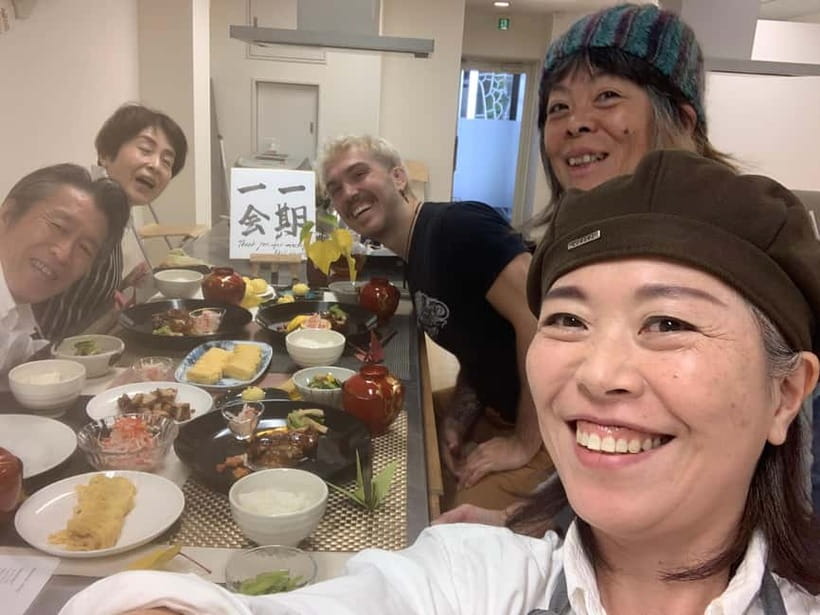
The menu is short enough that you can master the steps, but varied enough that you get the feel of a full home meal. Here’s what you’ll make:
Dashi-maki egg (rolled omelet)
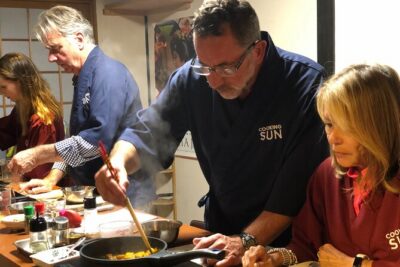
You’ll cook dashi-maki tamago using freshly made dashi. This dish is deceptively simple, but it teaches you how Japanese flavor builds through a gentle base broth. The rolled omelet part is hands-on, and it’s the kind of dish that helps you understand how subtle seasoning translates into a finished bite.
A day of temples goes further with something to break it up.

Chicken teriyaki
You’ll make chicken teriyaki with traditional flavors. What I like about including teriyaki here is that it shows how dashi and seasoning philosophy can carry over into a dish many people associate with Japanese restaurants. This version is framed as home-cooking style, so it fits the class theme.
Simmered vegetables with seasonal ingredients
You’ll prepare simmered vegetables using seasonal ingredients. This is one of the most Kyoto-friendly lessons because it connects food directly to the four seasons. Seasonal vegetables are not just a slogan, you’ll work with ingredients chosen for the time of year, then see how simmering brings out sweetness and softness.
Miso soup
You’ll also learn to make miso soup as part of the meal. In many cooking classes, miso soup is treated as an easy add-on. Here it supports the meal as something you can reproduce at home, which makes your final set of skills more complete.
Plating and setting the table
The lesson includes plating the dishes beautifully and setting the table. That might sound small, but it’s the difference between cooking and eating like a home. You’re learning how the meal is meant to look and feel once it lands on the table.
Additive-Free Seasonings and the Katsuo Doi Home-Cooking Approach
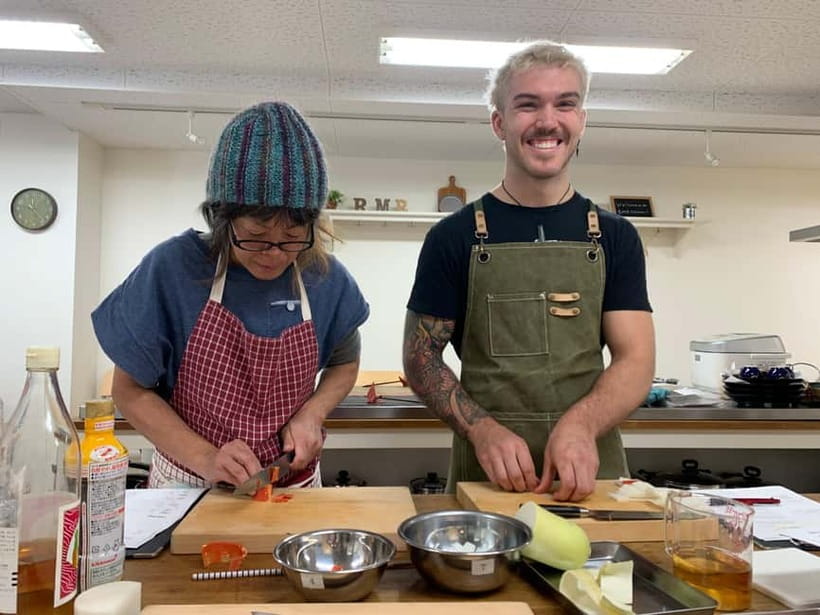
A key promise here is that the class uses additive-free seasonings. That lines up with the overall message: you are learning everyday Japanese cooking, not a version engineered for crowds.
You’ll also hear and practice the connection between ingredients, preparation method, and healthful balance. The instructor frames dashi as relaxing and beneficial for health, and the overall menu as warm daily food you can share.
A nice detail from the way the class is described is how it treats Japanese cooking as seasonal rhythm. Seasonal changes are built into what you cook, and the lesson reflects that. That gives the dishes context, so they make sense as part of Kyoto life, not just as a list of recipes.
English Support and Instructor Style That Keeps It Practical
The class is taught in English. That’s essential for a home-cooking setup where you need to understand instructions in the moment.
In at least one experience account, English support included a translator setup when needed, and language barrier did not become a problem for the lesson. You’re not thrown into silent tasks. You get help if your Japanese is limited.
You’ll also likely hear the name Kayo in the teaching role. One account describes Kayo as delivering traditional Japanese gastronomy at a level everyone can access, and that matches what the structure suggests: step-by-step guidance, with enough explanation that you can repeat the results later.
What you’ll take away is practical technique, plus a sense of which ingredients matter. One review highlights helpful advice about good brands, which is exactly what you want after a cooking class. Recipes are one thing, finding the right ingredients is how you keep the dish tasting right at home.
Price and Value for a Kyoto 2.5-Hour Cooking Class
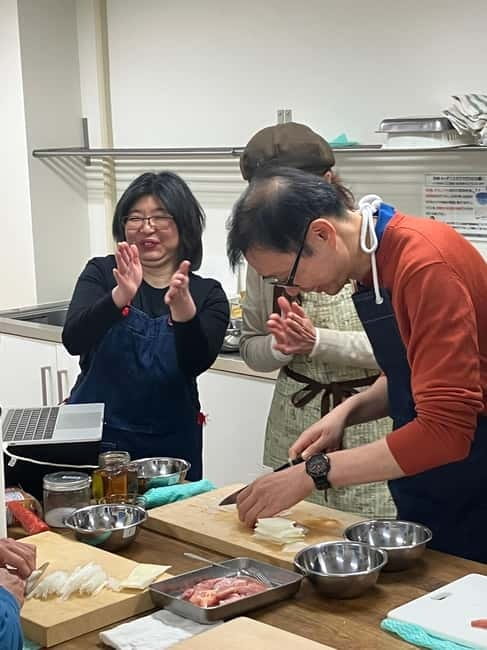
At $122 per person for about 2 hours 30 minutes, this is not a cheap snack activity. But it is also not overpriced for what you get, because the class includes:
- the full cooking experience
- aprons and cloths rental
- all menu items cooked during the lesson
- materials and ingredients used for the dishes
- the meal itself
When you look at cooking classes, the best value usually comes from two things: lots of hands-on time and a menu you will actually cook again. Here you make multiple components of a real meal, including dashi-maki egg, chicken teriyaki, simmered vegetables, and miso soup. That’s a strong set of repeatable dishes.
You’re also paying for the setting, a home-based townhouse over 100 years old, and for the instructor-led knife and dashi foundations. If you want a Kyoto food memory that turns into real home meals later, this price starts to make sense.
Who This Class Fits Best, and Who Should Rethink It
This is a good fit if you want more than tasting. You want to learn the foundation of Japanese cooking, especially dashi, and you want the knife technique to feel approachable.
It’s also ideal if you like structured instruction and step-by-step guidance. Even reviews emphasizing hands-on learning describe that the dishes were simple enough to do at home afterward, which is what you should look for in a class like this.
Two practical constraints matter:
- Men only cannot participate at this location. If you are traveling in a group with only men, you should ask about an alternative rental kitchen option by message.
- Children under 6 years are not suitable.
If you are traveling as a couple or solo, a private group format can feel extra personal, and it can also help if you want to ask questions about ingredient choices and technique.
Should You Book This Kyoto Home Cooking Class?
I’d book it if your goal is to learn Japanese home cooking in a way that transfers to your own kitchen. The strong point is the foundation: real dashi from bonito flakes and kombu, then meals built on that base. The inclusion of knife technique, additive-free seasonings, and a full menu you can repeat later makes it more than a one-time food stop.
Skip or pause if the men-only restriction affects your group, or if you want a faster, lighter experience. This is a 2.5-hour hands-on class, so it asks for focus.
If you like your Kyoto experiences practical and rooted in daily life, this one is a solid choice. You’ll leave with a meal you made yourself, plus the techniques behind it.
FAQ
How long is the cooking class?
The cooking class takes about 2 hours 30 minutes.
What is included in the price?
The price includes the cooking experience, rental of aprons and cloths, all menus, materials, and the meal.
What dishes will I cook?
You’ll make dashi, dashi-maki egg (rolled omelet), chicken teriyaki, simmered vegetables, and miso soup. You’ll also plate the dishes and set the table.
Where do I meet the instructor?
The meeting point is Subway Shijo Station, and you walk about 10 minutes. After your reservation is confirmed, the instructor comes to the station to pick you up.
Is the class taught in English?
Yes. The instructor teaches in English.
Can men join this class at the home location?
Men only cannot participate at this location. You can ask if lessons with only men can be done at another rental kitchen by messaging the provider.
Are children allowed?
Children under 6 years are not suitable for this activity.
What is not included?
A dashi soup set is not included, and merchandise is not included.
Is cancellation possible?
Free cancellation is available up to 24 hours in advance for a full refund.
New This Season
- Kyoto: Discover Uji’s Two Hidden World Heritage Treasures
- Kyoto: Enjoy Byodoin Temple and Tea Sweets – 90 Min Tour
- Kyoto & Uji Private Customized Tour with English Driver
- Kyoto: Zen Meditation & Zen workshops with a Westerner Monk!
- Kyoto: Tea Museum and Tsuen Teahouse Guided Tour
- 7 Hours Private Guided Tour Uji and Wazuka Matcha Farm
- Utilising upcycled Matcha! Creating matcha incense (Uji, Kyoto)
- Kyoto tea town for matcha lovers
Cooking Classes, compared.
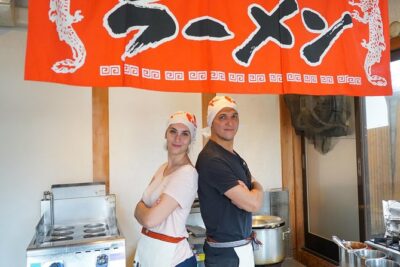
Ramen Cooking Class at Ramen Factory in Kyoto
Read our review →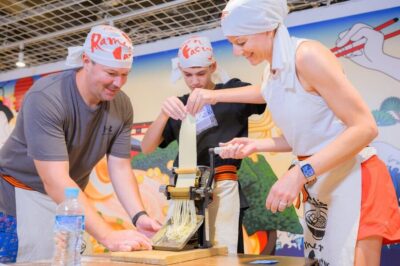
Ramen Cooking Class at a Ramen Factory with Souvenir
Read our review →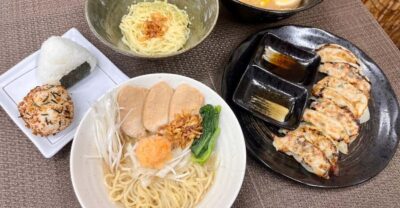
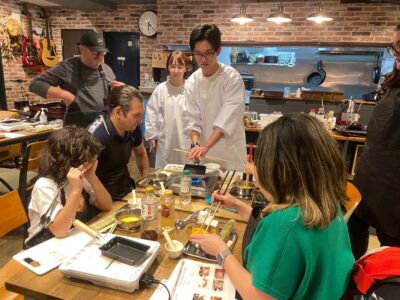
Japanese Washoku Bento Small Group Cooking Class
Read our review →
Japanese Traditional Sweets Making and Tea Ceremony
Read our review →
Kyoto Ramen and Gyoza Cooking Class with Professional Chefs
Read our review →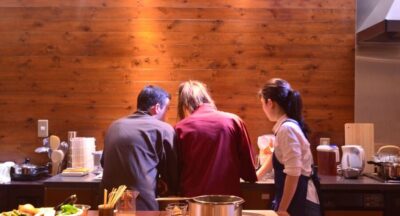
Also filed under