
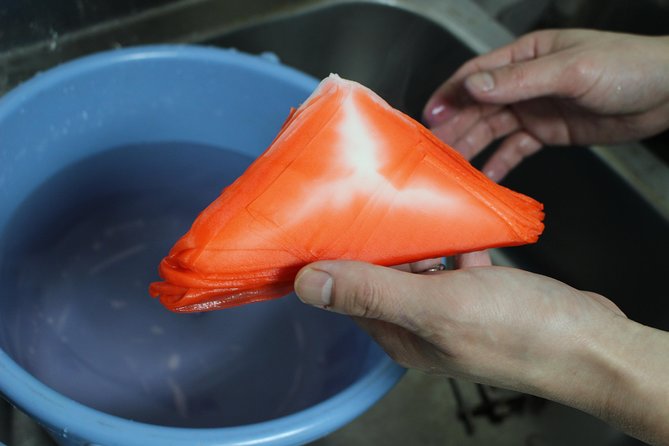
Reviewed · WORKSHOPS
Hanakoushi cotton Scarf Class
A scarf-making class beats Kyoto souvenir shopping. You get a private class and you learn sekka shibori dyeing on a cotton scarf, so the finished piece feels truly yours. I love the personalized pace and the fact you leave with a wearable Kyoto souvenir. One possible drawback: it is a short session, about 30 minutes to 60 minutes, so you may want more time if you expected a long craft day.
At the Kyoto Shibori Museum, dyeing is only part of the fun. While your fabric dries for about 30 minutes, you can browse shibori artworks, tools, and samples, then check out the museum shop.
In This Review
- Key highlights to know before you go
- Kyoto Shibori Museum: a scarf you actually make
- Private class timing, and what 30 to 60 minutes feels like
- Step-by-step: choosing color, folding, and dyeing your hanakoushi scarf
- While your scarf dries: museum exhibits and the shibori context
- Your instructor experience: what to expect from staff and guidance
- Price and value: why $43.35 can be worth it in Kyoto
- How to make the most of your scarf workshop
- Who should book this class in Kyoto
- Should you book: Hanakoushi cotton scarf class in Kyoto?
- FAQ
- How long is the Hanakoushi cotton scarf class?
- Is this experience private?
- Where does the class take place?
- What do I learn during the class?
- What size scarf will I make?
- Do I take home what I make?
- What happens while the fabric is drying?
- Is there a museum shop to visit during or after?
- Do I get a mobile ticket?
- What is the cancellation policy?
Key highlights to know before you go

- Private, your-party-only class: Instruction is tailored to your group, not a mixed crowd.
- Sekka shibori technique on a cotton scarf: You learn the folding and dye steps that create the pattern.
- Hanakoushi shibori method focus: The specific folding approach used for this scarf makes the workshop feel focused.
- You get a full-size scarf to take home: The class result is a 70-inch by 17-inch cotton scarf.
- Museum time while dye dries: About 30 minutes of drying also means browsing displays and tools.
- Shop and souvenirs on-site: The museum store offers additional shibori items, fabrics, and keepsakes.
Kyoto Shibori Museum: a scarf you actually make
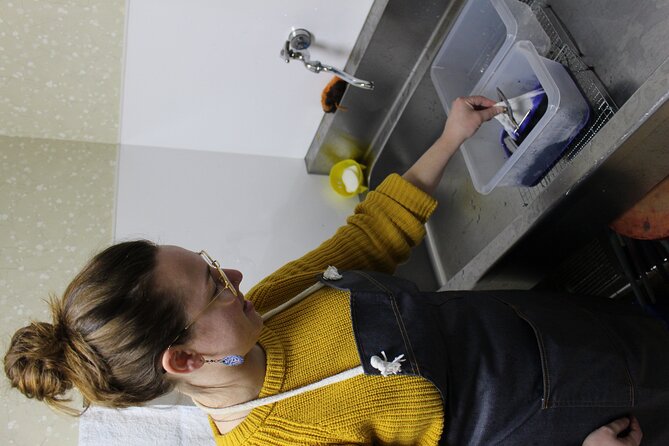
This experience is simple in concept, and that is why it works. Instead of buying a Kyoto souvenir that looks nice in a shop, you make a scarf using the traditional Japanese shibori process taught at the Kyoto Shibori Museum.
You dye a cotton scarf in the workshop using the sekka shibori method and the hanakoushi shibori approach. The scarf size is large too, 70 inches by 17 inches (175 cm by 50 cm). That matters because it means your finished piece is not just a small craft you hang on the wall. You end up with something you can wear, wrap, or gift.
I also like that the class is framed as traditional handcraft learning, not just a quick photo stop. You are taught how to fold the fabric in a particular way, then how to apply dye. That combination makes the end result feel earned, and it helps you appreciate why shibori patterns look the way they do.
One more practical win: because the museum is right there, you can turn the waiting time into extra learning and browsing. So even if you only have a short window in Kyoto, you still get craft education plus an actual object you leave with.
Private class timing, and what 30 to 60 minutes feels like
The tour duration is listed at about 30 minutes, but the reality is that classes usually run 30 minutes to 60 minutes per session. If you are the type of person who hates rushing, this is still workable because the session is structured around a dyeing step that naturally takes time to dry.
The workshop is a private tour/activity, meaning only your group participates. That changes the vibe fast. If you have questions, you do not have to wait for a turn in a bigger group. If you want to move at a steady pace, you can do that too.
You start at the Kyoto Shibori Museum at 135-5 Shikiamichō, Nakagyo Ward, Kyoto, 604-8261, Japan. The activity ends back at the meeting point, so you are not stuck trying to figure out a second location after the class.
Because it is short, your expectations should match the format. This is hands-on craft instruction plus a finished souvenir, not an all-day artisan immersion. If you wanted something that feels like a multi-hour deep lab with lots of repeated folding and dyeing trials, you might find it moves quickly. Still, most people seem to leave happy precisely because it is efficient and you get a real result.
A quieter way to spend a day in Kyoto
- Kyoto: 45-Minute Tea Ceremony Lesson Experience
★ 4.3 · 2,378 reviews - Ramen Cooking Class at Ramen Factory in Kyoto
★ 5.0 · 1,937 reviews - Kyoto : Chopsticks Making Workshop in Gion with Engraving Option
★ 5.0 · 958 reviews - Kyoto: Samurai Sword Class by Experts in Traditional Arts
★ 4.9 · 657 reviews
Step-by-step: choosing color, folding, and dyeing your hanakoushi scarf
Your class starts with a key decision: choosing your favorite color. The instructor guides you through selecting the color first, then moves to the physical part, folding the fabric in a specific way for the hanakoushi technique.
From there, the workflow stays clear and direct:
- Choose a color.
- Fold the fabric in the required pattern.
- Dye the fabric with your chosen color.
That is it. No vague instructions, no waiting around for hours. You are doing the active work, and the instructor supports you through each stage.
This is also where shibori becomes fun instead of intimidating. People often think shibori means complicated knots and endless tying. In this class format, it is taught as a traditional method, but the process is set up to be doable within a tourist-friendly timeframe. You still get instruction about what you are making, and the patterns are impressive without turning into a full-day knot marathon.
If you want to feel confident, watch for the instructor’s pacing cues. You can pick up quickly when the guidance is patient and easy to follow. Past participants have also noted that the staff explain things in clear English, which is a big help when you are handling materials and trying to remember each step.
While your scarf dries: museum exhibits and the shibori context
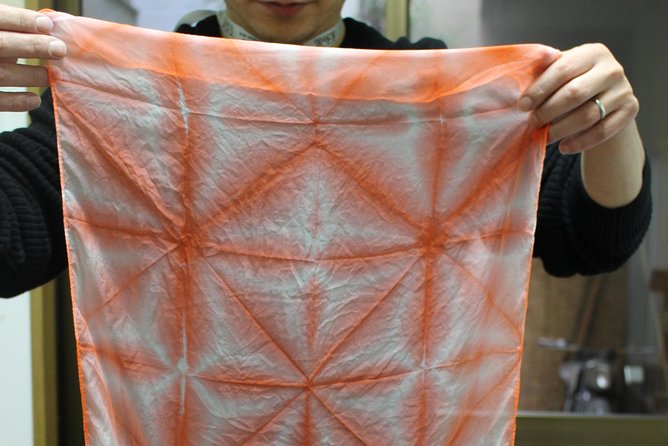
Here is the part that makes the session feel more than just a crafting appointment. While your fabric is drying, you are not left staring at a timer.
You spend about 30 minutes learning more about shibori by browsing displays at the Kyoto Shibori Museum. The museum has art pieces, tools, and samples on hand, so you can connect what you just did to what shibori looks like in different forms.
This is also the moment when you can shift from making to understanding. Looking at tools and sample work helps you notice the logic behind the folding and dyeing steps. You start to see how resist methods create patterns, instead of thinking of it as random luck.
Past participants have described the museum as interesting and welcoming, and one even noted an educational video and show-and-tell style explanations during their visit. You might find there is a short learning segment available as part of the museum time as well, since the workshop is designed to pair hands-on work with context.
And since the museum shop is on-site, this is also the time you will probably want to explore what else you can take home beyond your scarf. The shop sells shibori items, souvenirs, fabrics, and more, so you can compare what you made to what is available for purchase.
Your instructor experience: what to expect from staff and guidance
Even though it is a private class, the workshop still depends on clear teaching. That is where the Kyoto Shibori Museum seems to shine.
People have described the instructors as kind, helpful, and patient, and the guidance as easy to understand. The workshop is set up so you are not left guessing while you fold and dye. You follow steps, check your progress, and end up with a scarf that looks good enough to be proud of.
In some sessions, participants have named instructors such as Nina or Yokahama-san, and staff are sometimes referred to with the term Sensei. You will not need to know names to enjoy it, but it is a sign that the class is run by people who care about the craft and about making it understandable for visitors.
One consideration is expectations about independence. This is a guided lesson, and if you expected to do everything entirely on your own for a long stretch, you may feel the activity is more structured than you hoped. The upside is that structure helps you get a great final scarf without hours of trial and error.
Price and value: why $43.35 can be worth it in Kyoto
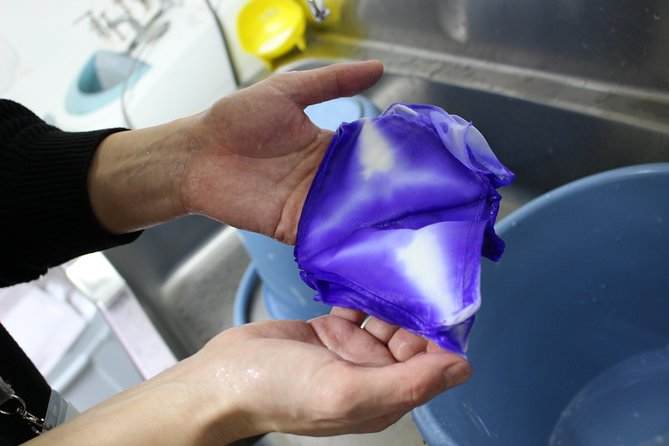
At $43.35 per person, this feels like a reasonable price for three things that are hard to combine in Kyoto. You get:
- a private class experience for your party,
- instruction in a traditional technique (sekka shibori and hanakoushi shibori folding),
- and a finished souvenir that is a full-size 70-inch by 17-inch cotton scarf.
If you only bought a scarf as a souvenir, you would still be paying for the finished object. The value here is that you also pay for the teaching and the satisfaction of making something yourself.
The time commitment is also compact. It is roughly 30 minutes to 60 minutes, and part of that is naturally spent drying your scarf while you learn at the museum. So the class does not feel like you are sacrificing an entire afternoon just to get one handmade item.
Also, timing matters. This type of workshop is commonly booked about 23 days in advance. I recommend planning a few weeks ahead if you are visiting during popular seasons or if you have a tight itinerary. Booking earlier tends to give you more choice in session times.
One more confidence boost: the experience has a strong track record with a 4.8 rating and a 94 percent recommendation rate. That does not replace your judgment, but it does suggest the workshop consistently lands well for most people.
A day of temples goes further with something to break it up.



How to make the most of your scarf workshop
You do not need special preparation, but a few choices can improve your experience.
First, be intentional when choosing your color. Since you are taking the finished scarf home, pick a shade you would actually wear or gift. The instructor helps you, but you are the one who decides what you want your scarf to look like.
Second, use the drying time actively. Browsing art pieces, tools, and samples is not just a filler activity. It is how you connect the folding and dye steps to the bigger shibori picture. Plan to wander the exhibits a bit, then return to the shop if you still want more shibori items after you see what is possible.
Third, plan for the fact that this is a guided craft process. Wear comfortable clothes for handling textiles, and focus on following the steps as taught. The more you stay present during folding and dyeing, the less likely you are to feel rushed at the end.
Finally, arrive with a mindset of craft learning, not just shopping. The finished scarf is the payoff, but the real satisfaction is seeing how the technique creates the pattern.
Who should book this class in Kyoto
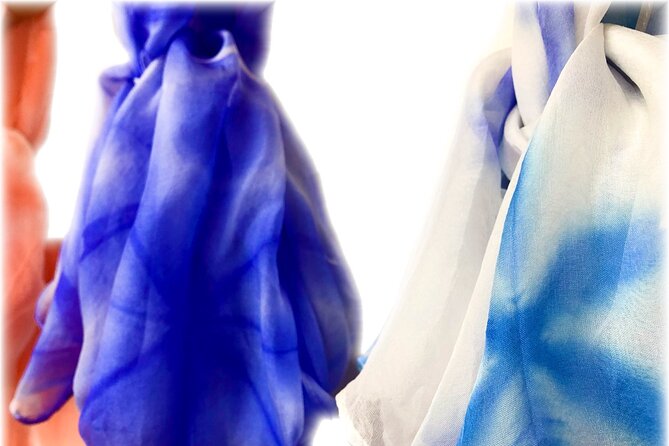
This workshop is a great match if you want a Kyoto souvenir with a story attached. You will love it if you like hands-on activities, appreciate traditional Japanese handcrafts, and want something more personal than a typical store-bought item.
It also works well for couples or small groups because it is a private class exclusively for your party. Even if you come with a range of interests, everyone can participate, and you leave with matching handmade memories.
Where it might not fit is if you want a long, slow artisan experience with lots of repeated practice. The workshop is short by design, and the process is taught in a format that tourists can complete within the session.
If you are deciding between this and a museum-only visit, I would choose this if you want a take-home object you made with your own hands. If you are mainly museum-focused and prefer looking rather than handling materials, a museum visit alone might feel better.
Should you book: Hanakoushi cotton scarf class in Kyoto?
Book it if you want:
- a quick Kyoto craft experience that ends with a real, wearable souvenir,
- a private class where you can move with the instructor’s pace,
- and time at a museum shop and displays while your fabric dries.
Skip it if you are expecting a long self-guided studio session or an all-day workshop with lots of repetition. This class is efficient. You get taught the method, you produce a scarf, and then you transition into museum browsing.
If you book, plan ahead since sessions are often scheduled about 23 days in advance. And go in ready to participate. When you treat it like a hands-on learning session, the scarf you leave with feels like the best kind of Kyoto memory, one you can actually use.
FAQ
How long is the Hanakoushi cotton scarf class?
The duration is listed as about 30 minutes. Classes usually take 30 minutes to 60 minutes per class.
Is this experience private?
Yes. It is a private tour/activity with only your group participating.
Where does the class take place?
The class is at Kyoto Shibori Museum, 135-5 Shikiamichō, Nakagyo Ward, Kyoto, 604-8261, Japan.
What do I learn during the class?
You learn how to dye using the traditional sekka shibori method, specifically the hanakoushi shibori method, including folding the fabric and then dyeing it.
What size scarf will I make?
You make a cotton scarf that is 70 inches by 17 inches (175 cm by 50 cm).
Do I take home what I make?
Yes. You leave the class with a beautiful scarf as a souvenir or gift from Kyoto.
What happens while the fabric is drying?
While your fabric is drying for about 30 minutes, you learn more about shibori by browsing art pieces, tools, and samples displayed in the museum.
Is there a museum shop to visit during or after?
Yes. The museum shop sells shibori items, souvenirs, fabrics, and more.
Do I get a mobile ticket?
Yes. The experience uses a mobile ticket.
What is the cancellation policy?
Free cancellation is available. You can cancel up to 24 hours in advance for a full refund. If you cancel less than 24 hours before the experience starts, the amount paid is not refunded.
New This Season
- Koyasan Day Trip by Private Car from Kyoto
- Old Port Town and Ultimate Sake Tasting Private Tour From Kyoto
- Kyoto’s Timeless Charm: 3hr Exploration of History and Peace
- Kyoto: 5 Types of Sushi Making
- Sacred Peak & Ancient Paths: Kurama-Kibune Hiking Experience
- Kyoto: Exclusive ZEN practice at Manpukuji temple in Uji
- Kyoto: Private Seasonal Aroma Yoga Class
- Traversing Kyoto’s Scenic West – Arashiyama to Kinkakuji
Workshops, compared.

Ramen Cooking Class at Ramen Factory in Kyoto
Read our review →
Chopsticks Making Workshop in Gion with Engraving Option
Read our review →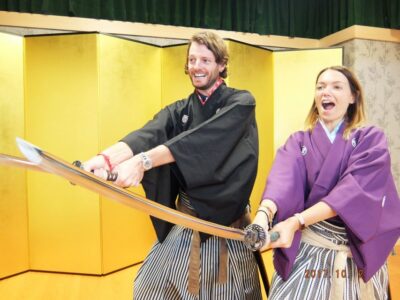
Samurai Sword Class by Experts in Traditional Arts
Read our review →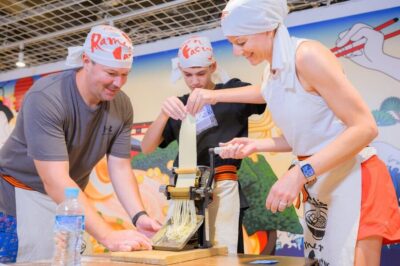
Ramen Cooking Class at a Ramen Factory with Souvenir
Read our review →
Ninja 1-hour Hands-on Lesson by Japanese master in Kyoto -Entry
Read our review →
The Original Small-Group Sushi Making Class in Kyoto
Read our review →Also filed under