
Reviewed · GION GEISHA QUARTER WALKS
Kioto: Gion Tour, recorrido a pie (Español/Castellano)
Gion looks simple, until someone explains it. This 2-hour, small-group walk turns Kyoto’s most famous old streets into a real story, with a Spanish guide who helps you read what you’re seeing as you go. I love the question-friendly pace, because the guide actively invites you to ask about details and everyday life.
You also get three hanamachi areas instead of just one busy street, which makes the walk feel complete. With stops around Pontocho, Gion-Kobu, and Gion-Higashi, you’ll connect the dots between riverside atmosphere, traditional neighborhoods, and the routines of Maiko and Geiko life.
One thing to plan for: a Maiko or Geiko sighting is not guaranteed, and Hanamikoji-dori is not part of the route. If your main goal is only photos of performers, this may feel like a mixed bag.
In This Review
- Quick hits before you go
- Entering Gion like a local, not a spectator
- Price and group size: what $35 buys in 2 hours
- Meeting point at Disney Kyoto Shijo-Kawaramachi, and how to find your guide fast
- What to bring for comfortable Gion strolling
- The route you’ll follow: Pontocho alleys, Kamogawa, and Sanjo Ohashi
- Gion-Kobu: Gion Shinbashi Dori, Shirakawa, and Tatsumi Jinja moments
- Gion-Higashi and Yasaka Shrine: where the district name comes from
- Hanamikoji-dori is not included, and Maiko-Geiko sightings are not guaranteed
- Cherry blossom season changes the route
- Timing: 9:45 vs 12:30 starts, and the optional Gion Gallery extension
- The best part, in plain language: your guide will talk like a person
- Who should book this Gion walking tour
- Should you book it? A practical decision guide
- FAQ
- How long is the Kioto Gion walking tour?
- What language is the tour offered in?
- How many people are in the group?
- Where do we meet the guide?
- Which areas of Gion does the route cover?
- Is Hanamikoji-dori included?
- Can the tour guarantee a Maiko or Geiko sighting?
- How far do we walk?
- What should I bring?
Quick hits before you go
- Small group (up to 6 people) for real conversation, not a lecture
- 3 hanamachi in 2 hours: Pontocho, Gion-Kobu, and Gion-Higashi
- Yasaka Shrine area included to explain how Gion got its name
- Gion Festival context if time allows, tied to the district’s origins
- Route flexes for cherry blossoms season, so you see seasonal Gion scenery
- About 3.3 km (2 miles) of walking, with comfort gear in mind
Entering Gion like a local, not a spectator
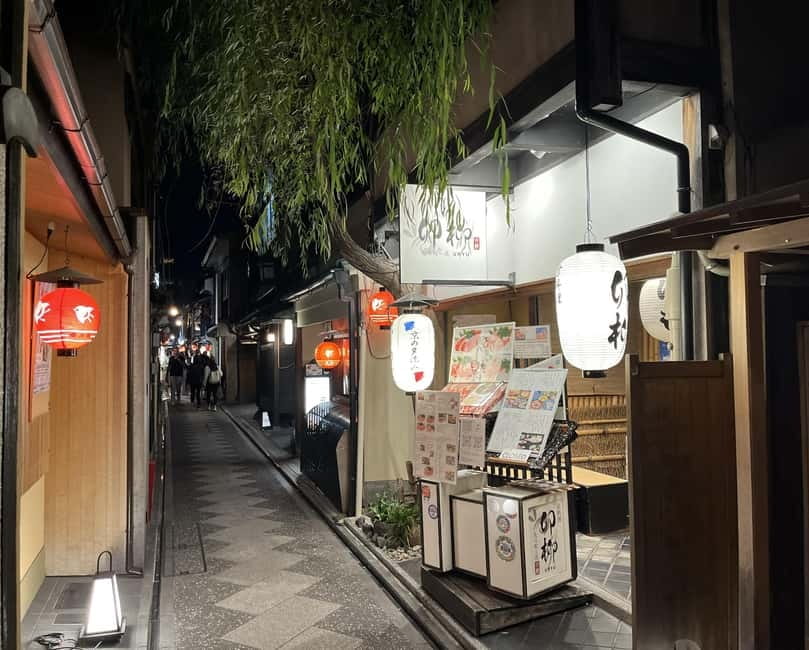
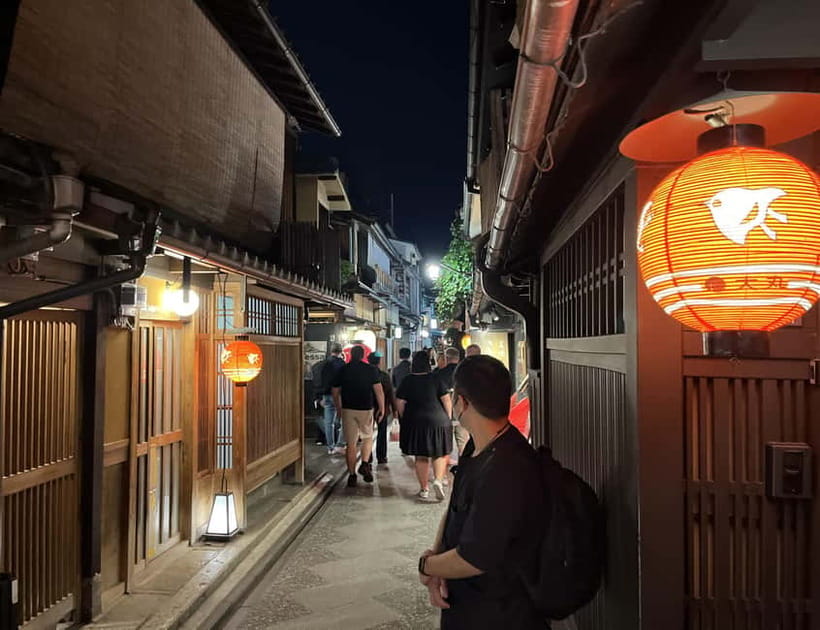
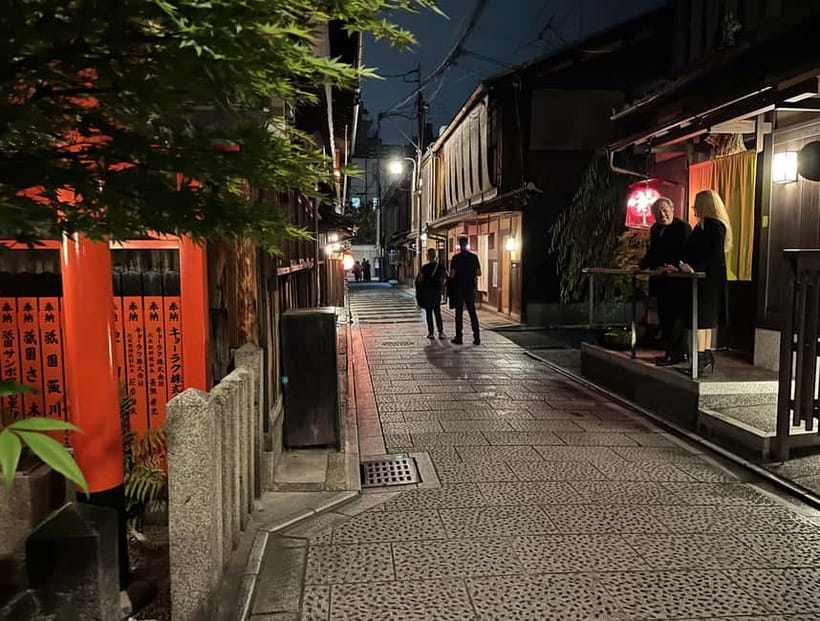
Gion is the kind of place where it’s easy to wander and still miss the point. You can walk the alleys and see elegant wooden houses, lanterns, and the quiet rhythm of a neighborhood that doesn’t feel staged. What changes everything is having a guide who explains what you’re looking at, and why it matters in Kyoto.
This tour works because it does not treat Gion like a single photo stop. The guide frames Gion as more than the entertainment district people already know. You’ll hear how the hanamachi connect to Kyoto downtown life, and how long-established traditions show up in small, practical ways.
I especially like that you’re encouraged to ask lots of questions as you walk. That matters in Japan, because many things are subtle: a sign, a street name, the direction you’re pointed, even the way a building faces the road.
Price and group size: what $35 buys in 2 hours
At $35 per person for about 2 hours, this is a straightforward way to buy time and context. You’re paying for a local guide, live Spanish commentary, and the advantage of someone pointing out what you’d likely skip on your own.
The small group cap is a big part of the value. With up to 6 participants, you get space for back-and-forth questions, instead of hoping your one question somehow survives the crowd. If you’re the type who likes to understand why things are the way they are, that format is worth it.
There is no add-on included, so don’t expect a ticketed experience. The whole value is the guided walk and the interpretation of what you see, such as neighborhood history, hanamachi culture, and daily-life observations shared by the guide.
Lantern-lit streets of the geisha quarter
- Kyoto Geisha Walking Tour: Gion District & Hidden Gems
★ 4.7 · 3,273 reviews - Kyoto: Gion Magical Night Walking Tour with Geisha Trivia
★ 4.9 · 2,393 reviews - Kyoto: Gion Geisha District Walking Tour – Stories of Geisha
★ 4.7 · 2,187 reviews - Best of Kyoto: Gion, Geisha, Pagodas & Cobblestones
★ 4.9 · 2,058 reviews
Meeting point at Disney Kyoto Shijo-Kawaramachi, and how to find your guide fast
Your start point is near the one and only Disney store in Kyoto, at Disney - Kyoto Shijo-Kawaramachi. The guide will be standing in front of the store, holding an iPad. The iPad image should say Kioto Gion Recorrido Guiado ESPAÑOL/CASTELLANO 00:00 AM/PM.
This kind of meeting spot is actually helpful. Big guided walks in Japan can be chaotic if the “meet here” landmark is vague. A recognizable storefront like this makes it easier to line up on time, especially if you’re arriving from central stations by bus or walking.
What to bring for comfortable Gion strolling
This is a walk of about 3.3 km, roughly 2 miles. That means comfortable shoes are non-negotiable. Add weather comfort and you’ll enjoy the experience more, because Gion rewards slow attention.
Bring:
- comfortable shoes
- sun hat
- umbrella
- sunscreen
- sunscreen
- water
The tour is built for enjoying details, so you’ll be happier if you’re not constantly adjusting blisters or sweltering under the sun.
The route you’ll follow: Pontocho alleys, Kamogawa, and Sanjo Ohashi
The walk begins in Pontocho, Kyoto’s narrow lane that runs alongside the Kamogawa river. This is one of those places where the streets feel slightly out of sync with the surrounding city. You get that contrast right away, and the guide helps you notice the signals that locals pay attention to.
Next you’ll move through key Pontocho sights along the way, including Kaburenjo area elements and riverfront context. As you continue, the tour includes stops connected to the Kamogawa river view, plus Yagi-san and Kita-san statues. Those names may mean little at first, but a good guide makes them land, because they connect local storytelling to the physical space you’re standing in.
Then you’ll cross toward the Sanjo Ohashi bridge area. Bridges are useful points for understanding a city. You can look across, orient yourself, and then the guide can link what you saw on one side to how neighborhoods function on the other. From there, you’ll head into Yamato Dori, which helps transition from river lane energy to deeper hanamachi streets.
What I like here is the sequencing. Instead of skipping around, the route builds your mental map in real time. You start with the atmosphere, then add specific references, then use a bridge moment to reset your bearings.
Gion-Kobu: Gion Shinbashi Dori, Shirakawa, and Tatsumi Jinja moments

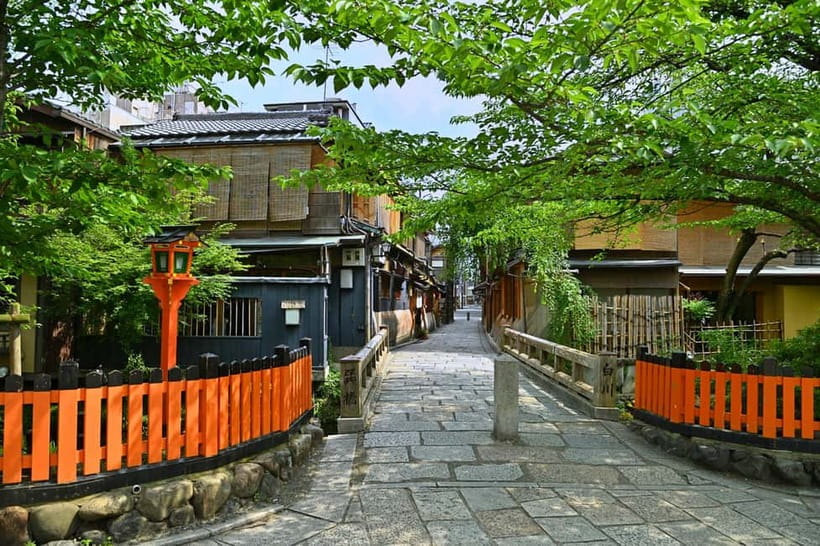
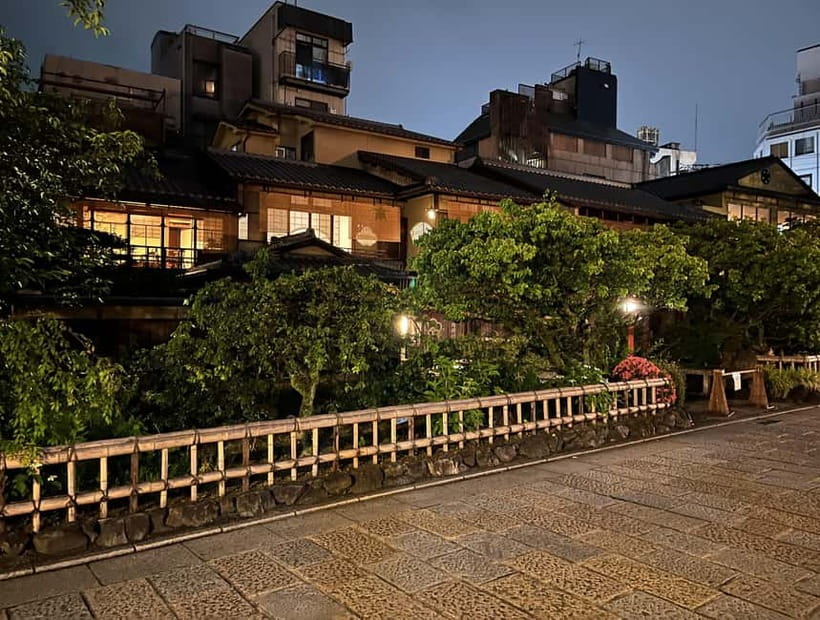
The tour continues into Gion-Kobu, where the neighborhood texture becomes more “Kyoto local” and less “tourist lane.” You’ll walk along Gion Shinbashi Dori, then continue toward Gion Shirakawa.
This is where a guided interpretation matters most. From street level, many traditional homes can look similar to first-timers. The guide’s job is to point out what changes from one street to the next and what those differences mean historically and culturally.
Expect a stop that includes Tatsumi Jinja, plus a chance to look at the Tatsumi Hashi (bridge) area. In a walk like this, shrines are not just quick photo stops. They’re anchors for the local spiritual geography, and they often tie into older neighborhood names, festivals, and community identity.
The tour is also designed around hanamachi culture. You’ll learn about the Maiko and Geiko life style, including practices and routines, and how people move through the district day to day. Even if you never see a performer close up, understanding what drives the rhythm helps you spot more than costumes. You’ll start noticing timing, street flow, and the quiet logic of the neighborhood.
A day of temples goes further with something to break it up.

Gion-Higashi and Yasaka Shrine: where the district name comes from
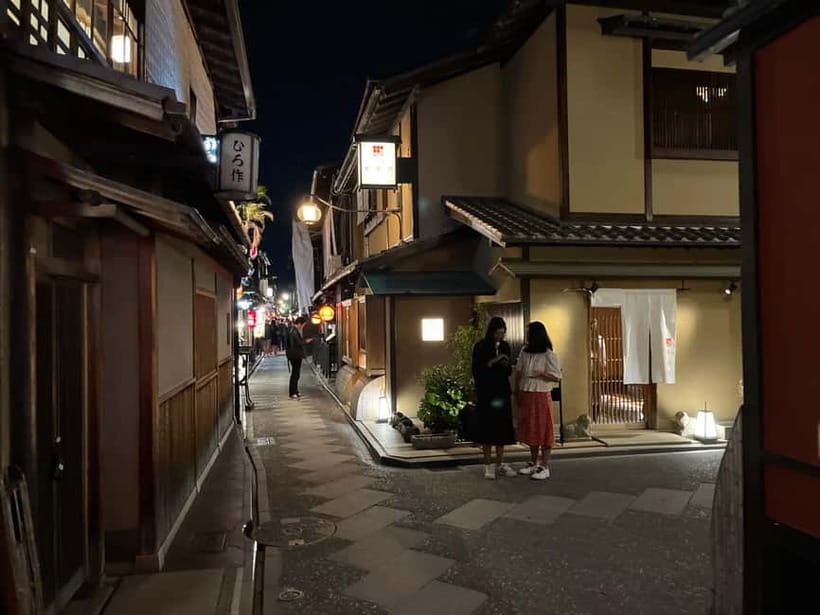
The final neighborhood in the 2-hour loop is Gion-Higashi. By this point, you’re not only seeing streets. You’re reading them. That’s the real payoff: your brain stops treating Gion like a collection of pretty lanes and starts treating it like a living map of Kyoto tradition.
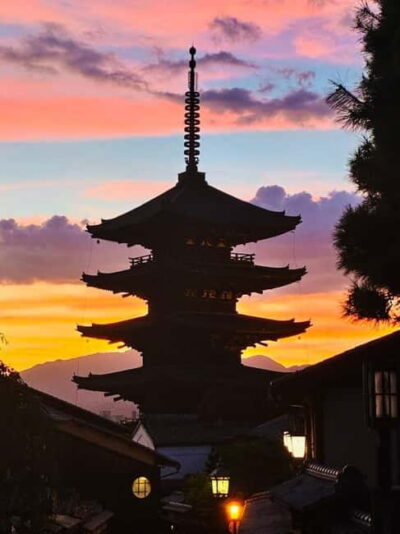
A highlight here is the visit to the former Gion Shrine, now Yasaka Shrine, which is tied directly to the district name origin. This connection is powerful because it turns a label you’ve heard in guidebooks into something you can stand next to. You’ll learn how that naming links back to the district, with origins described as more than 1100 years ago.
If you have time, the guide may also explain the Gion Festival, one of Japan’s major festivals, and why it connects back to this same area. Even if you’re not traveling during festival dates, this context gives you a deeper reason to care about what you see.
Hanamikoji-dori is not included, and Maiko-Geiko sightings are not guaranteed

It’s important to set expectations. Hanamikoji-dori is not included in the itinerary, so if you’re chasing that exact street for photos, you’ll need to go elsewhere on your own.
Also, a Maiko and/or Geiko sighting cannot be guaranteed. That’s not a failure of the tour. It’s just reality in Gion. People come and go, and performing schedules do not follow a tourist map.
What you can count on is a strong chance to understand the culture around them. The guide is there to help you see beyond what’s immediately visible, including how routines work and what visitors often misunderstand about hanamachi life.
If your goal is only a guaranteed encounter with performers, you might feel disappointed. If your goal is to understand Gion so your photos mean more, you’ll likely feel grateful you booked a guide.
Cherry blossom season changes the route

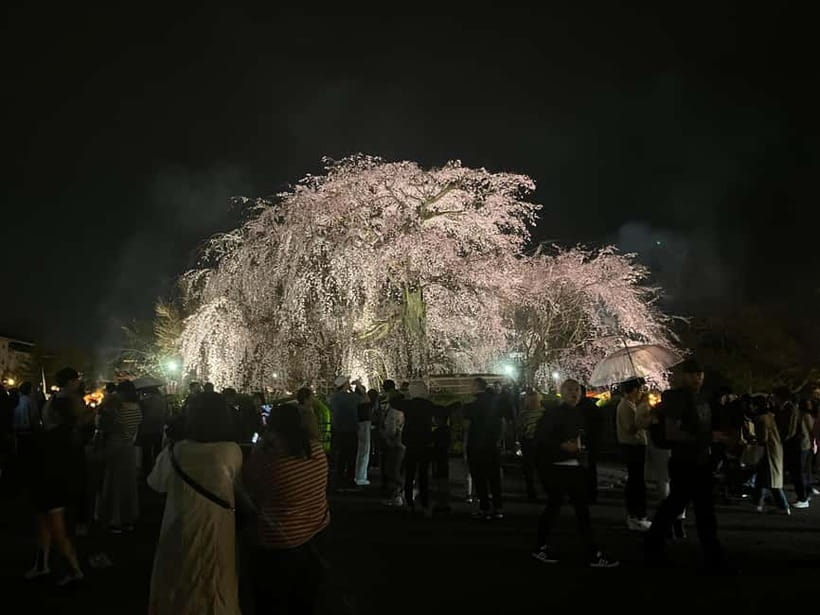
During cherry blossom season, roughly late March to early April, the route is adjusted slightly to showcase blossoms around Gion. That means you still get the full experience, but with seasonal emphasis.
This is a smart detail. In Japan, spring is not just scenery, it’s atmosphere. If you’re visiting around that window, plan your energy for photo stops and gentle detours, because the vibe will be different.
Timing: 9:45 vs 12:30 starts, and the optional Gion Gallery extension
The tour runs at 9:45 and 12:30. The schedule gives you flexibility based on your day plan in Kyoto.
If you want a little extra, the 9:45 and 12:30 tours can include a free visit to the Gion Gallery, if you extend the tour time and ask for it. That’s a useful option if you like learning before you hit the streets, or if you want a quieter indoor moment when the weather shifts.
The best part, in plain language: your guide will talk like a person
The strongest praise in the guide experience is consistent: guides are described as close, friendly, and detail-focused. Spanish-language tours also benefit when the guide stays flexible, because questions keep popping up when you’re surrounded by old Kyoto architecture.
One theme you should expect is this: the guide doesn’t just point and name. They explain small things so you can make sense of them. You’ll also likely hear a personal angle on what daily life in Japan looks like, which makes the culture feel less like a script and more like something you can understand.
Names that show up in past Spanish-guided experiences include José and Juan, and the common thread is an inviting style plus strong knowledge. If you like learning through Q&A, you’ll fit right into this tour.
Who should book this Gion walking tour
This is a great match if:
- you want Gion context, not only photos
- you enjoy questions and conversation
- you prefer a small group format for pacing
- you want a guided map that covers multiple hanamachi areas in one go
It may be less ideal if:
- you only want to walk one famous street, like Hanamikoji-dori
- you need a guaranteed chance to see performers up close
For most visitors, this tour is a clean way to get the district story while still keeping your feet moving and your day flexible.
Should you book it? A practical decision guide
Book this tour if you want to understand Gion as a neighborhood with history, structure, and real day-to-day meaning. The price is fair for the time, the group size makes questions realistic, and the itinerary covers several key areas instead of one isolated block.
Skip it if your plan is built around a single street or a guaranteed performer sighting. The tour can’t promise Maiko or Geiko encounters, and it does not include Hanamikoji-dori, so you’ll want to plan your expectations accordingly.
If you’re aiming for a guided walk that helps you read Kyoto, this one is a solid pick.
FAQ
How long is the Kioto Gion walking tour?
The tour lasts 2 hours.
What language is the tour offered in?
The tour is in Spanish (live guide).
How many people are in the group?
The group is limited to 6 participants.
Where do we meet the guide?
Meet in front of the Disney - Kyoto Shijo-Kawaramachi store. The guide will be holding an iPad with the tour image for Kioto Gion Recorrido Guiado ESPAÑOL/CASTELLANO.
Which areas of Gion does the route cover?
In 2 hours, the tour visits three hanamachi areas: Pontocho, Gion-Kobu, and Gion-Higashi.
Is Hanamikoji-dori included?
No. Hanamikoji-dori is not included in the itinerary.
Can the tour guarantee a Maiko or Geiko sighting?
No. A Maiko and/or Geiko sighting cannot be guaranteed.
How far do we walk?
The route is about 3.3 km, or about 2 miles.
What should I bring?
Bring comfortable shoes, sun hat, umbrella, sunscreen, and water.
New This Season
- Koyasan Day Trip by Private Car from Kyoto
- Old Port Town and Ultimate Sake Tasting Private Tour From Kyoto
- Kyoto’s Timeless Charm: 3hr Exploration of History and Peace
- Kyoto: 5 Types of Sushi Making
- Sacred Peak & Ancient Paths: Kurama-Kibune Hiking Experience
- Kyoto: Exclusive ZEN practice at Manpukuji temple in Uji
- Kyoto: Private Seasonal Aroma Yoga Class
- Traversing Kyoto’s Scenic West – Arashiyama to Kinkakuji
Gion Geisha Quarter Walks, compared.
Kyoto Geisha Walking Tour: Gion District & Hidden Gems
Read our review →
Gion Magical Night Walking Tour with Geisha Trivia
Read our review →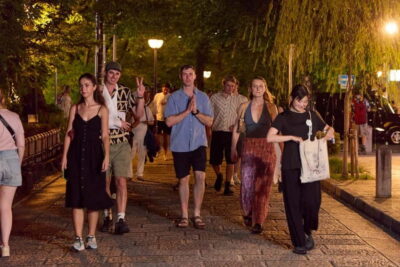
Gion Geisha District Walking Tour – Stories of Geisha
Read our review →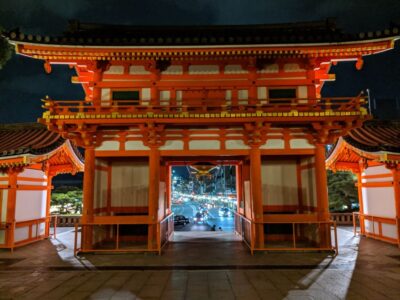
Best of Kyoto: Gion, Geisha, Pagodas & Cobblestones
Read our review →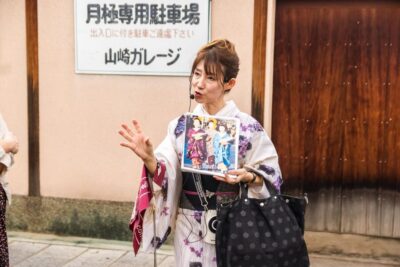

Kyoto Night Foodie Tour in Gion (9+ dishes + 6 Sake tastings)
Read our review →
Kyoto Gion Geisha District Walking Tour – The Stories of Geisha
Read our review →
Kyoto Gion: 2-Hour Geisha Culture & History Walking Tour
Read our review →Also filed under