
Reviewed · GOLDEN PAVILION VISITS
Kyoto and Nara 2-Day Tour: Golden Pavilion, Todaiji, Deer Park
Golden Pavilion and Nara deer, in two days. This Kyoto and Nara 2-day tour strings together the biggest sights with a private group feel and a guide that keeps you moving in a smart order.
I like two things most. First, you get admission fees covered for key stops, and public transport is handled for you. Second, the guides get repeatedly praised for staying organized and flexible, with names like Naoko, Nick, Ryusuke, and Tomoko Murai coming up for humor, patience, and clear explanations.
One caution: this is a full-on sightseeing schedule, so plan for long stretches of walking and quick transitions. Also, food and drinks are on your own, so you will want to build snack and meal time into your day.
In This Review
- Key highlights to know before you go
- Is This Kyoto and Nara 2-Day Tour Good Value?
- Day 1 in Kyoto: Kinkakuji, Bamboo, Nijo Castle, and Gion
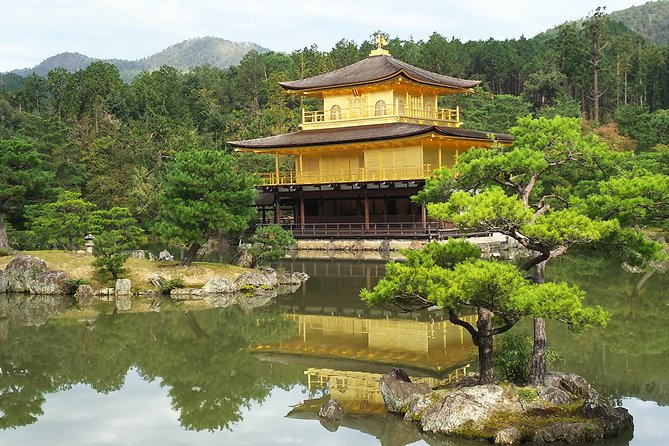
- Kinkakuji Golden Pavilion and the pond reflection
- Bamboo Forest Street: what you can actually do with your senses
- Nijo Castle: shogun lodging and Kyoto politics
- Gion stroll: old streets, geisha districts, and a low-pressure finish
- Day 2: Fushimi Inari, Todaiji, and Kasuga Grand Shrine in Nara time
- Fushimi Inari-taisha: the torii tunnel and the meaning behind donations
- Todai-ji Temple: Great Buddha Hall and the scale shock
- Kasuga Grand Shrine: 3,000 lanterns and a shrine network
- The deer park angle, and how Nara fits in
- Guide Power: why this tour can feel easier than DIY
- Price, admissions, and what you should plan to spend
- What to pack for a temple-and-shrine schedule
- Who should book this Kyoto and Nara tour?
- Should you book this Kyoto and Nara 2-Day Tour?
- FAQ
- What time does the tour start?
- Where do we meet for the tour?
- How long is the tour?
- What is included in the price?
- Is food included?
- What should I bring or expect physically?
- Can I cancel for a full refund?
Key highlights to know before you go
- Golden Pavilion (Kinkakuji) with the pond reflection as a main visual payoff
- Bamboo Forest Street timed for a calmer, sensory walk
- Nijo Castle focused on the shogun’s Kyoto connection
- Gion district stroll for traditional streets without the planning headaches
- Todaiji Temple with the scale of the Great Buddha Hall built from wood
- Kasuga Grand Shrine focused on lanterns and its network of branch shrines
Is This Kyoto and Nara 2-Day Tour Good Value?
At $321.93 per person for about two days, this tour sits in a mid-range spot for guided sightseeing in the Kansai area. The value comes from what is included: guide fare, public transportation, and admission fees (with tickets included for multiple stops). When you price those items individually, the math starts to make sense, especially if you want fewer logistical decisions and more time enjoying the sites.
Another detail I appreciate: the tour is scheduled to start from Kyoto Station Building 901 Higashishiokōjichō at 9:30 am, and it ends back at the same meeting point. That matters in Kyoto, where travel time can quietly eat your day if you are hopping between neighborhoods on your own.
The booking timing also says something. If a tour like this is being booked around 54 days in advance on average, it usually means people find the mix appealing: classic Kyoto icons plus a Nara temple day, all in one continuous flow.
The tour also uses a mobile ticket and offers group discounts, which makes it easier to show up and go. Confirmation happens at booking time, so you are not left guessing what you secured.
Who this fits best: you want structure, you like understanding what you are seeing, and you are okay with a busy schedule. If your travel style is slow, long meals, and lots of side streets, you may find the day pacing tight.
Day 1 in Kyoto: Kinkakuji, Bamboo, Nijo Castle, and Gion
Day 1 is classic Kyoto, laid out in an order that makes geographic sense. You start at a Kyoto hub, hit the Golden Pavilion area, move through the bamboo experience, then swing toward castle history and end in the famous street scenes of Gion. The whole point is to mix visual icons with cultural context, so you do not just take photos and move on.
Stops are built for short, focused visits:
- Kinkakuji Temple: about 45 minutes
- Bamboo Forest Street: about 1 hour 30 minutes
- Nijo Castle: about 50 minutes
- Gion: about 40 minutes
Because admission is included for some stops, you are less stuck waiting to figure out ticketing. And because there is a guide, you can connect the dots between what looks beautiful and what it meant historically.
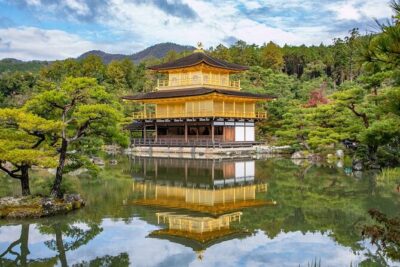
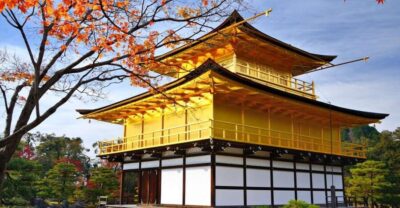
Kinkaku-ji's gold roof over still water
- Kyoto: Fushimi Inari, Kinkakuji, Bamboo Grove 1 Day Bus Tour
★ 4.8 · 4,316 reviews - Osaka/Kyoto:Kinkakuji,Arashiyama,FushimiInariShrine,NaraPark
★ 4.1 · 1,596 reviews - Kyoto: Nijo, Kinkaku-ji, Arashiyama, Kiyomizu & Fushimi Inari
★ 5.0 · 699 reviews - Kyoto: Kinkakuji, Golden Pavilion Guided Tour
★ 4.7 · 71 reviews
Kinkakuji Golden Pavilion and the pond reflection
Kinkakuji Temple is the kind of place where the first view is almost automatic. The hall is covered in gold leaf, and the pond reflection is part of the signature effect. You are not only looking at an object, you are seeing a designed composition meant to harmonize with the surroundings.
The temple is tied to Zen and to shogun-era power, which helps the experience click. Even if you already know Kyoto has layers of politics and religion, the guide explanations help you feel the link between samurai culture and what ends up preserved as an iconic temple form.
Practical note: this is one of those stops where timing matters. You have a set window of about 45 minutes, which is enough to see the main views without turning it into a half-day detour. If you are the type who likes to linger, it helps that the next stop is scheduled nearby in spirit, if not in exact distance.
Bamboo Forest Street: what you can actually do with your senses
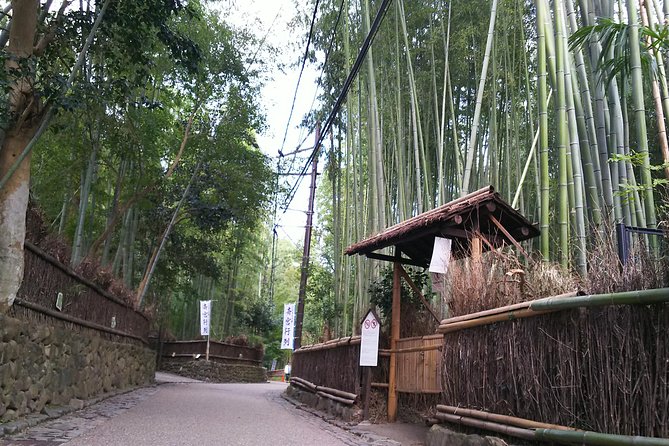
The bamboo forest stop is the long one on Day 1, at 1 hour 30 minutes. This is not just a quick walk-by. It is your chance to slow down for a minute.
The tour experience leans into something simple: listen. Close your eyes and notice the sound when bamboo trunks and leaves interact. It is a tiny instruction, but it changes the feel of the walk. Instead of scanning for photo angles, you start noticing texture and rhythm.
One benefit of having a guide here is pacing. Bamboo areas can attract crowds and churn. With a planned stop length, you are more likely to settle in for the calmer part of the visit rather than feeling rushed the moment you arrive.
Tip: wear shoes you can trust. Bamboo paths often mean uneven ground or lots of gentle walking. If your body gets tired early, you will feel it later at castle and city-street stops.
Nijo Castle: shogun lodging and Kyoto politics
Next up is Nijo Castle, tied to a specific historical moment: when the shogunate shifted its seat to Edo, the then shogun still needed a Kyoto base. Nijo Castle was built as the place where the shogun would stay when he visited Kyoto.
That background helps you understand the castle differently than if you only treat it as a scenic heritage site. You start noticing how a castle can be both performance and power, designed to impress visitors and reinforce authority.
You get about 50 minutes here, and admission is included. That means you can focus on interior details and explanations, instead of spending mental energy figuring out ticket lines and timing.
If you like architecture, ceremony, or the “how does a place tell a story” angle, this is one of the most satisfying stops because it connects politics to physical space.
Gion stroll: old streets, geisha districts, and a low-pressure finish
Day 1 ends with Gion, about 40 minutes. Gion is described as the biggest of five kagai (geisha districts). The tour frame here is cultural: traditional Japanese culture, and the role geisha play in it.
This stop works well as a gentle wrap-up. You are not forced into a museum pace. Instead, you stroll and absorb the look and feel of the neighborhood. Even if you do not plan to go inside any buildings, it is still valuable because it gives your brain a visual contrast to the temples and castle before you head into Nara.
Practical tip: keep expectations simple. A district like this can feel busy around peak hours. A short, guided stroll is a good fit if you want atmosphere without overcommitting your day.
Deer that bow back, a short ride away

Day 2: Fushimi Inari, Todaiji, and Kasuga Grand Shrine in Nara time
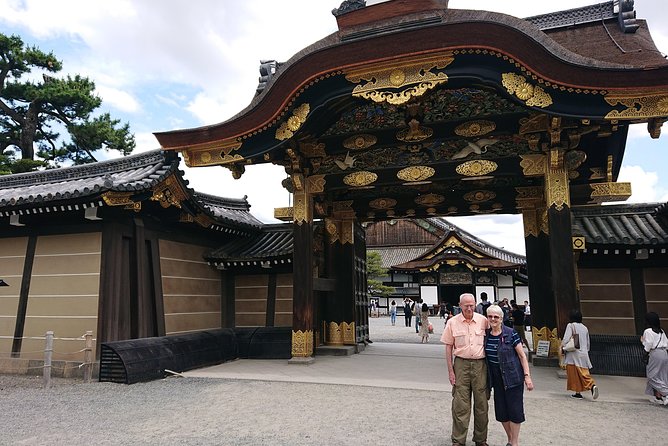
Day 2 shifts you into a major temple and shrine day. The itinerary starts with Fushimi Inari-taisha Shrine, then moves to Todai-ji Temple, and finishes with Kasuga Grand Shrine.
Stop windows look like this:
- Fushimi Inari-taisha: about 45 minutes
- Todai-ji: about 50 minutes
- Kasuga Grand Shrine: about 40 minutes
Even though this is a Kyoto and Nara tour, the included day structure gives you both famous symbolism and big scale. You get the vermilion torii look, then the wooden-buddha scale, then lantern-filled shrine atmosphere.
Fushimi Inari-taisha: the torii tunnel and the meaning behind donations
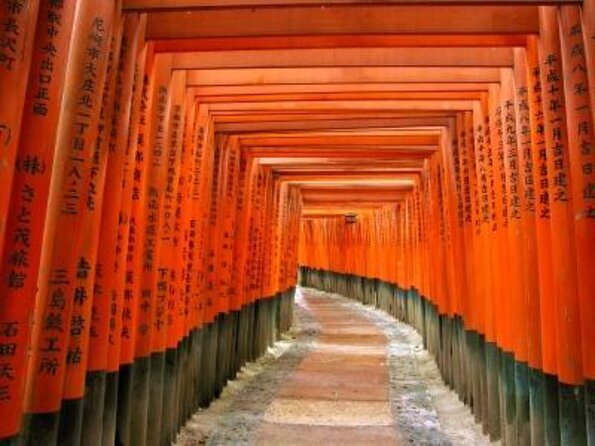
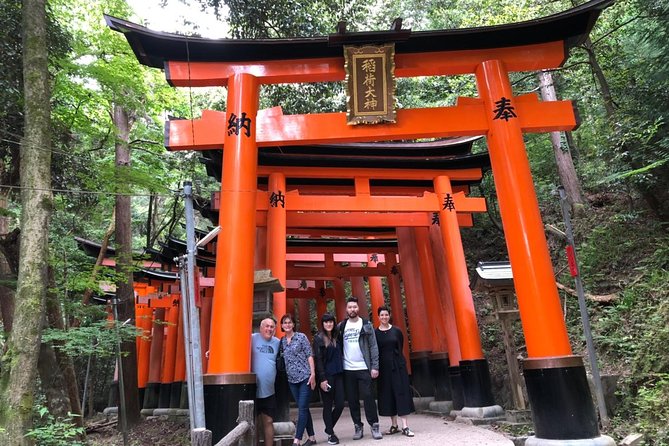
Fushimi Inari-taisha is famous for the tunnel of thousands of vermilion torii gates. The visual is the obvious draw, but the tour also gives you context for why those gates exist.
In the tour description, the torii gates are donated by worshippers in appreciation of good fortune received. That simple explanation makes the place feel less like a photo corridor and more like a living practice of gratitude and offering.
With 45 minutes, you can see the key views without turning it into an all-day climb. It is a good match for a two-day itinerary where you need energy for the next two major stops.
Todai-ji Temple: Great Buddha Hall and the scale shock
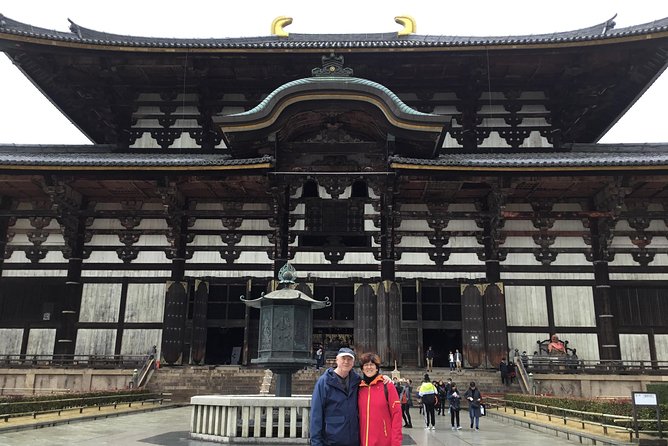
Todai-ji is the star for many people, and it has a reason to be. The Buddha Hall is renowned as one of the largest wooden buildings in the world. When you enter the corridor, you can feel the scale before you fully process it.
The tour also includes a small ritual step: cleansing hands and mouth at a purifying point before entering. It is brief, but it changes your mindset. You are not just observing, you are participating in a small part of the temple sequence.
You get about 50 minutes plus included admission. That is enough to appreciate:
- the hall’s size
- the experience of moving from entry space into the main area
- the guide’s explanations tied to what you are seeing
If you care about craftsmanship and physical scale, this stop delivers. If you are more of a “show me the best view and move on” person, it still works because the key impact happens quickly.
Kasuga Grand Shrine: 3,000 lanterns and a shrine network
The final stop is Kasuga Grand Shrine, around 40 minutes. The shrine is described as historical, built around 1,300 years ago, and it holds about 1,000 branch shrines all over Japan.
The lantern detail is the highlight: there are more than 3,000 lanterns in its precincts, described as the largest in Japan. This matters for how you experience the place. It is not just a single focal object. It is a whole atmosphere created by repeated light and dense visual elements.
The tour frames Kasuga in terms of its distribution too, not just a local stop. That helps you understand why a shrine can feel both specific to one location and connected across the country.
If your day feels intense, Kasuga is a good way to end because it is visually concentrated. You can take it in without needing to hunt for the next “must-see” moment.
The deer park angle, and how Nara fits in
Your tour name points to the deer park highlight, and you are clearly being taken into Nara through the major shrine and temple sequence. The itinerary provided here spotlights Fushimi Inari-taisha, Todai-ji, and Kasuga Grand Shrine on Day 2, so the most reliable way to think about it is this:
You are getting a structured Nara experience built around famous sacred sites, and the deer park reputation belongs naturally to the same Nara area. If deer are your priority, it is smart to ask your operator on the day where you will have time for that specific moment so you do not end up counting on it too much.
Guide Power: why this tour can feel easier than DIY
The reviews you can rely on here point to one theme: the guides bring the trip to life through structure and personality. Names like Naoko show up for detailed, insightful explanations and organization with a strong sense of humor. Nick is praised for being patient and flexible, which matters when trains run on real-world schedules or when people need a minute to catch up. Ryusuke gets credit for sharing historical background in a way that helps you connect the sites. Tomoko Murai is highlighted for expertise and a kind, empathetic approach.
Even if you do not care about history trivia, a good guide helps you:
- keep your timing tight between stops
- avoid getting lost in station-to-station confusion
- understand what you are looking at instead of guessing
That is where value often hides. You pay for access to the guide, and it saves you mental energy.
Price, admissions, and what you should plan to spend
Here is where I would focus your budgeting.
Included:
- Guide fare
- Public transportation fare
- Admission fees for the included paid sites
Not included:
- Food and drinks
- Accommodation
So even though the base price covers a lot, you still need to pay for meals. On days with temples, castles, and shrine walking, meal timing can be tight. Bring a snack you like, or plan a lunch you can eat without rushing.
Also, because admission is included for key stops, you will not have that annoying add-on cost at the ticket gate. That can be the difference between enjoying the day and trying to do math while standing in line.
What to pack for a temple-and-shrine schedule
The tour lists a moderate physical fitness level requirement. That is your clue to pack for real walking and stairs.
Bring:
- Comfortable, broken-in shoes
- Light layers, since temple courtyards and shrine areas can feel different from streets
- A small day bag for water and snacks since food is not included
For practical comfort, also consider:
- a simple plan to use restroom stops when you see them, since the day is timed
- a camera setting that works in bright outdoor reflections, especially for the pond views at Kinkakuji
Who should book this Kyoto and Nara tour?
Book this if you want a guided, two-day sweep that covers major Kyoto and Nara icons without DIY planning stress. It also works well if you like explanations, because the guide-driven format is part of the value.
You may want a different style of tour if you:
- want long, unstructured time in neighborhoods like Gion
- prefer food to be organized by the operator
- plan to spend your day slowly, with big meal breaks
Should you book this Kyoto and Nara 2-Day Tour?
My take: this is a smart choice if you want the classics and you want them organized. The included admissions and transport help the cost feel controlled, and the day-by-day sequence makes sense: Golden Pavilion and bamboo in Kyoto, then castle and Gion mood, then the big Nara temple and shrine highlights.
If your top priority is the deer park moment, I would confirm where it fits in the schedule relative to Todai-ji and Kasuga Grand Shrine. If you are flexible on timing and happy to let the guide set the pace, you will likely enjoy how the trip connects Kyoto’s shogun-era and Zen-era visuals to Nara’s temple scale and lantern atmosphere.
FAQ
What time does the tour start?
The tour starts at 9:30 am.
Where do we meet for the tour?
The meeting point is Kyoto Station Building 901 Higashishiokōjichō, Shimogyo Ward, Kyoto, 600-8216, Japan.
How long is the tour?
The duration is about 2 days.
What is included in the price?
The price includes guide fare, public transportation fare, and admission fees for the included attractions.
Is food included?
No. Food and drinks are not included.
What should I bring or expect physically?
The tour lists a moderate physical fitness level requirement, so expect walking between stops.
Can I cancel for a full refund?
Yes. You can cancel up to 24 hours in advance for a full refund. If you cancel less than 24 hours before the start time, you will not receive a refund. The tour also requires good weather, and if it is canceled due to poor weather, you will be offered a different date or a full refund.
New This Season
- Koyasan Day Trip by Private Car from Kyoto
- Old Port Town and Ultimate Sake Tasting Private Tour From Kyoto
- Kyoto’s Timeless Charm: 3hr Exploration of History and Peace
- Kyoto: 5 Types of Sushi Making
- Sacred Peak & Ancient Paths: Kurama-Kibune Hiking Experience
- Kyoto: Exclusive ZEN practice at Manpukuji temple in Uji
- Kyoto: Private Seasonal Aroma Yoga Class
- Traversing Kyoto’s Scenic West – Arashiyama to Kinkakuji
Golden Pavilion Visits, compared.
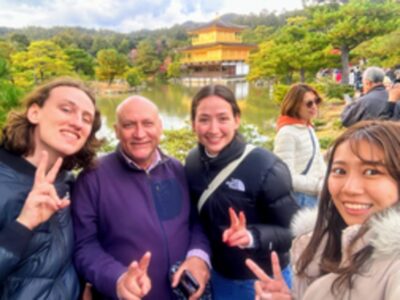
Fushimi Inari, Kinkakuji, Bamboo Grove 1 Day Bus Tour
Read our review →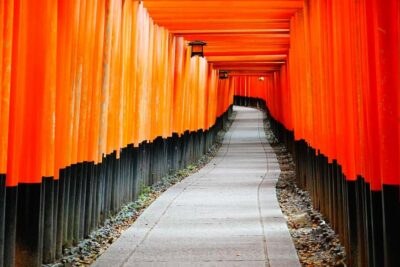
Kinkakuji,Arashiyama,FushimiInariShrine,NaraPark
Read our review →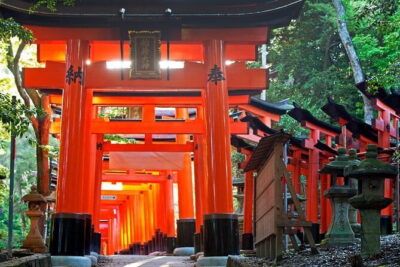
Nijo, Kinkaku-ji, Arashiyama, Kiyomizu & Fushimi Inari
Read our review →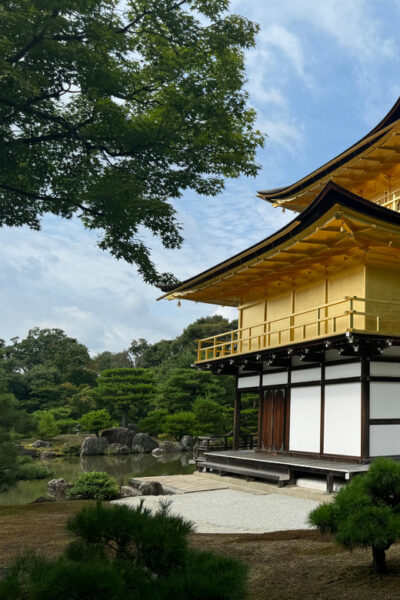
Kyoto top must-see Golden pavilion and Bamboo forest half-day Private tour
Read our review →
Kyoto Bamboo Forest & Golden Pavilion E-Bike Tour
Read our review →
Golden Pavilion, Nijo Castle, & Nishiki Market Half day tour
Read our review →Also filed under