Reviewed · MORNING
Kyoto Early Morning Private Tour with Government-Licensed Guide
Beat Kyoto crowds before breakfast. This private early-morning tour gives you a government-licensed English guide and a calmer route through Kyoto’s biggest hits. I especially like the early start, because it can make places like Fushimi Inari and Kiyomizu-dera feel way less packed. I also like the flexibility to pick 2-3 attractions that match your pace, whether that’s castles, temple grounds, or a market morning. The main drawback to plan for is that it’s a walking tour with limited time, and most entrance fees are not included.
You meet your guide in a designated area, then spend about 4 hours moving through historic neighborhoods and major sites without the stress of figuring it out alone. And if you get a guide like Rie, Tomy, Kay, Yasu, Yoji, Nabet, or Mayumi, you’ll likely get clear explanations plus practical tips for what to do next.
In This Review
- Key highlights you should care about
- How Kyoto feels different before the crowds
- Private guide + government licensing = fewer headaches
- Walking logistics: pickup on foot, no private vehicle
- Choosing your 2-3 stops from Kyoto’s best list
- Fushimi Inari-taisha, torii gates, and viewpoint time
- Nijo Castle: power, floors, and UNESCO-level structure
- Gion: narrow lanes and the geisha district vibe
- Nishiki Market: Kyoto’s Kitchen for snacks and shopping
- Kiyomizu-dera: iconic temple grounds and big views
- Kyoto Imperial Palace: wide grounds, historical shift
- Pontocho: alley dining energy by the river
- Higashiyama Ward: classic old Kyoto streets
- Ginkakuji (Silver Pavilion): Zen temple with aesthetic calm
- Nanzenji Suirokaku: major Zen space and aqueduct interest
- Tofukuji: Zen temple with famous seasonal moments
- Toji: big temple energy and Kyoto’s height
- Kinkakuji (Golden Pavilion): the gold leaf moment
- Ninna-ji: World Heritage temple setting
- Shugakuin Imperial Villa: quieter imperial gardens
- Kibune River and Kifune Shrine area: forest valley mood
- Kurama-dera: rural temple stop
- Ryoan-ji rock garden: short stay, big impact
- Arashiyama: western district with long appeal
- Katsura Imperial Villa: architecture and garden design
- Daikaku-ji: detached palace roots
- Tenryu-ji: top Zen temple in Arashiyama
- Yoshimine-dera: a calmer mountain alternative
- Togetsukyo Bridge: the iconic Arashiyama moment
- Bamboo Forest Street: walk it before it turns into a line
- Okochi Sanso Garden: garden experience behind the scenes
- Jojakkoji, Nisonin, Gioji: hillside temples with moss focus
- Adashino Nenbutsuji and Otagi Nenbutsuji: stone statues that stop you
- Daikakuji through Arashiyama choices: keep your travel circle tight
- The pacing: what 4 hours looks like in real life
- Price and value: what $101.82 gets you (and what it doesn’t)
- Best-fit match: who will love this tour most
- Should you book Kyoto’s early-morning private guide?
- FAQ
- Is this tour private?
- How long is the Kyoto early-morning tour?
- Can I choose which sites to visit?
- Is transportation or a private vehicle included?
- Are entrance fees included?
- Can I cancel for a full refund?
Key highlights you should care about
- Government-licensed English speaking guide who can explain what you’re seeing and help you navigate fast
- Choose 2-3 sites instead of a fixed mega-route, so you can match your interests and energy
- Early start timing aimed at avoiding the heaviest crowds at iconic shrines and temples
- On-foot walking tour format with no private vehicle, so you get more culture per step
- Entrance fees usually not included, but several stops listed as free help keep costs down
How Kyoto feels different before the crowds
Kyoto is famous for temples and shrines, but it can also be famous for bottlenecks. The biggest value in an early-morning tour is simple: you get to see the same places with breathing room.
This tour is built around that idea. It runs for about 4 hours, and the goal is to catch major stops while the day is still waking up. One reason this works so well is that many Kyoto landmarks turn into photo lines later on. When you arrive early, you spend less time waiting and more time looking. You can also enjoy the sights without the heat and fatigue that can hit later in the morning, especially in warm months.
A second benefit is mindset. Early morning makes Kyoto feel calmer and more “local.” You’re still in a tourist city, but the atmosphere is less like a theme park and more like a real neighborhood with history.
Private guide + government licensing = fewer headaches
This is not a bus tour. It’s a private format, meaning only your group participates. You’ll have a licensed local English speaking guide, and that changes the day in two important ways.
First, you control the route. You can customize the tour around 2-3 attractions from the options. Want more temples? Pick temple-heavy areas. Want photogenic streets and views? Choose neighborhoods like Gion or Higashiyama. Want architecture and gardens? You can target places like Katsura Imperial Villa or Shugakuin Imperial Villa. The tour is designed so your time goes where you actually want it to go, not where the schedule says.
Second, you get context on what you’re looking at. Kyoto has layers, and a licensed guide helps you connect the dots quickly. Even if you’re not a deep history person, you’ll learn enough to make the experience click. You’ll also get practical guidance on what to prioritize inside each site, like where to spend your time first.
You might even notice the “style” of different guides. Names that appear in past tours include Rie, Tomy, Kay, Yasu, Nabet, Yoji, Yoshi Tanizawa, and Mayumi, and their comments often share the same theme: clear storytelling plus helpful orientation.
Beat the crowds with an early start
- Kyoto Early Morning Tour with English-Speaking Guide
★ 5.0 · 1,427 reviews - Kyoto: Early Morning Tour with English-Speaking Guide
★ 4.9 · 1,128 reviews - From Kyoto: Nara Guided Morning Tour
★ 4.6 · 335 reviews - Kyoto Morning Tour from Kyoto or Osaka
★ 4.0 · 281 reviews
Walking logistics: pickup on foot, no private vehicle
This is a walking tour, and you should plan your morning like one. The tour info says pickup is on foot and you meet your guide within a designated area of Kyoto. There is no private vehicle included.
That matters because it affects how you experience the day:
- You’ll rely on short walks and public transport links, not door-to-door comfort.
- You’ll want sturdy shoes, since Kyoto’s big sites often mean steps, slopes, and uneven ground.
- You’ll want a simple plan for timing. In a 4-hour tour, one slow moment can steal time from a second stop.
It also affects what you should pack. Bring water, a small umbrella if rain is possible, and keep your phone charged for maps. If you’re traveling with teens or older family members, the private format helps because you can adjust pace. In at least one past tour, a guide added extra time to help manage an ankle issue, which is a good sign that your comfort can matter.
Choosing your 2-3 stops from Kyoto’s best list
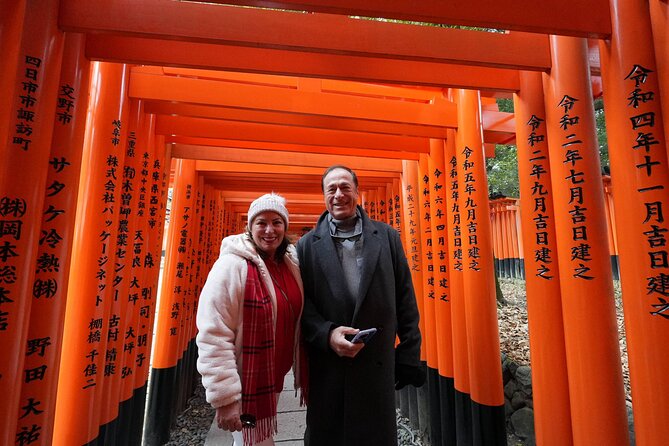
The tour offers a long menu of possible sites, but you only choose 2-3 attractions for the day. That’s the real power here. Rather than cramming 10 landmarks, you can build a morning that feels cohesive.
Below is what you can expect from many of the major options, and what to consider before you pick them.
Fushimi Inari-taisha, torii gates, and viewpoint time
Fushimi Inari-taisha Shrine is the famous one with the vermillion-red torii gates. The draw is more than the tunnel look. You’re walking through a living religious complex where the sightlines keep changing as you move.
Admission here is listed as free, which is a nice cost win. The consideration is effort. Even if you don’t go all the way up the trails, the area can involve climbing and lots of steps. Early morning helps because the crowd pressure is usually far lower.
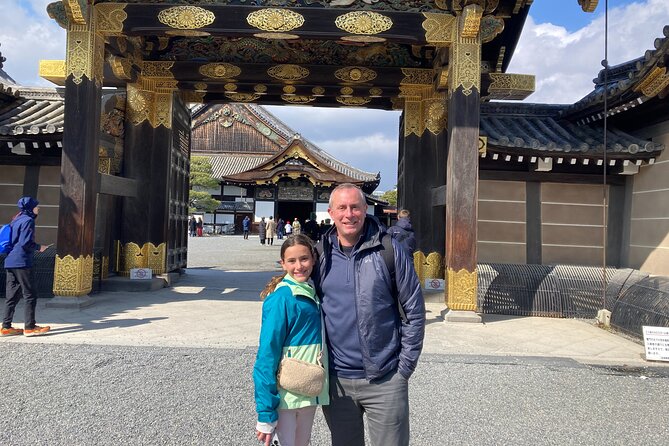
Nijo Castle: power, floors, and UNESCO-level structure
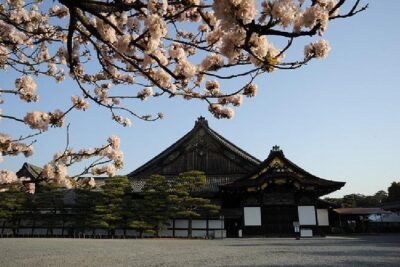
Nijo Castle is a UNESCO World Heritage site built in 1603 as the Kyoto residence of Tokugawa Ieyasu. It’s a great pick if you want a “palace” day instead of a “temple photos” day.
Admission is listed as not included, so you may pay your own ticket depending on the setup. The payoff is that castles like this give you a different angle on Kyoto: governance, power, and Edo-period life.
A quieter way to spend a day in Kyoto

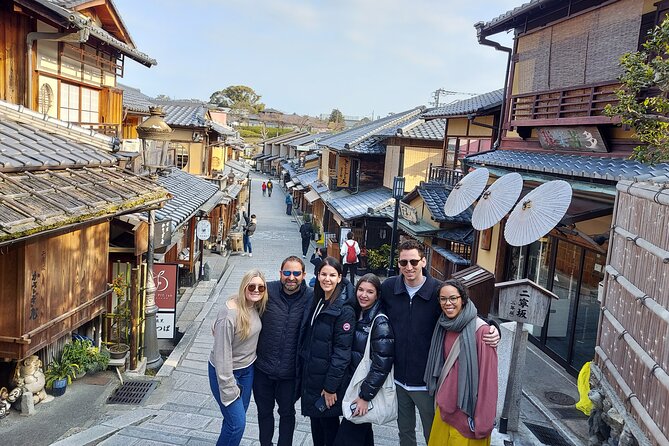
Gion: narrow lanes and the geisha district vibe
Gion is Kyoto’s geisha district feel. If you’ve never been, it can be easy to wander in circles because the streets are narrow and signage varies. Having a guide makes it simpler, and you’ll likely end up in the right lanes faster.
Admission is listed as free. The consideration is that Gion can be busy later in the day, so early morning is where this choice starts paying off.
Nishiki Market: Kyoto’s Kitchen for snacks and shopping
Nishiki Market is a narrow shopping street known as Kyoto’s Kitchen, with more than one hundred shops and restaurants. This is the stop for food lovers who want to taste and browse.
Admission is listed as free. The main drawback is time pressure. Markets move fast, and it can be hard to do shopping and sightseeing at once. If you choose Nishiki, decide early whether you’re focused on sampling snacks or buying souvenirs.
Kiyomizu-dera: iconic temple grounds and big views
Kiyomizu-dera Temple is one of Kyoto’s most popular temples. It’s famous for views and for the big, memorable feel of the grounds.
Admission is listed as not included. The consideration is that “popular” also means crowds and queues later on. Morning visits are your best bet, and a guide can help you route through the grounds efficiently so you see the key spots without wasting time.
Kyoto Imperial Palace: wide grounds, historical shift
Kyoto Imperial Palace (Kyōto Gosho) connects you to Japan’s imperial story. It was the residence of the Imperial Family until 1868, when the emperor and capital moved from Kyoto to Tokyo.
Admission is listed as not included. The consideration is that this can feel more spacious than other stops. If you’re short on stamina, plan to concentrate on the most important areas rather than walking every path.
Pontocho: alley dining energy by the river
Pontocho is an atmospheric dining area, a narrow alley running from Shijo-dori to Sanjo-dori, one block west of Kamogawa River. It’s a great choice if you want Kyoto’s “evening street” vibe, even during a morning visit.
Admission is listed as free. The drawback is simple: many places here are restaurants, so in the morning you might see more atmosphere than action. Still, the street itself is worth it.
Higashiyama Ward: classic old Kyoto streets
Higashiyama District is one of Kyoto’s best preserved historic areas along the eastern mountains. It’s ideal if you want traditional streets and a sense of Kyoto’s older layout.
Admission is listed as free. The consideration is that it can be touristy. Pair it with one big anchor stop nearby so your walk feels purposeful.
Ginkakuji (Silver Pavilion): Zen temple with aesthetic calm
Ginkakuji (Silver Pavilion) is a Zen temple tied to Ashikaga Yoshimasa. It’s a strong option if you like quiet, designed spaces.
Admission is listed as not included. The drawback is that it’s not a “hands-on” place. It’s more about stillness, gardens, and views, so it’s best if you enjoy slow looking.
Nanzenji Suirokaku: major Zen space and aqueduct interest
Nanzenji Suirokaku sits at Nanzenji Temple, one of the most important Zen temples in Japan. The grounds are spacious and it’s located at the base of the Higashiyama mountains.
Admission is listed as not included. This is a good pick if you want a bigger temple experience where you can spread out a bit.
Tofukuji: Zen temple with famous seasonal moments
Tofukuji Temple is a large Zen temple known for autumn colors. Early morning visits may not give you autumn drama, but you can still enjoy the grounds and architecture.
Admission is listed as not included. The consideration is seasonality. If you’re visiting outside leaf season, you might appreciate it more as a temple walk than as a color spectacle.
Toji: big temple energy and Kyoto’s height
Toji Temple (East Temple) is famous for its large presence and its five-story pagoda. The tour data lists admission as free for this stop.
This one is a strong choice when you want dramatic Kyoto visuals without paying extra. The consideration is that the pagoda and complex still take time, so keep it in mind with only 2-3 sites total.
Kinkakuji (Golden Pavilion): the gold leaf moment
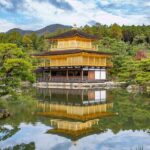
Kinkakuji (Rokuonji) is a Zen temple whose top floors are covered in gold leaf. It’s the type of place where a guide’s timing and viewpoint advice can really help.
Admission is listed as not included. The drawback is crowds later in the day. Morning is a smart move, and you’ll likely get better photos and a calmer feel.
Ninna-ji: World Heritage temple setting
Ninna-ji Temple is another World Heritage-listed site and head temple of the Omuro School of the Shingon sect. It’s a good option if you want something with gravitas but also lots of atmosphere.
Admission is listed as not included. The consideration is that it can be easy to overlook if you’re only focused on “the big three.” If you like temple variety, it’s worth it.
Shugakuin Imperial Villa: quieter imperial gardens
Shugakuin Imperial Villa is managed by the Imperial Household Agency and consists of Upper, Middle, and Lower Villa. The key idea here is gardens and grounds, not just buildings.
Admission is listed as not included. The drawback is that it can be longer walking for a 4-hour day. If you choose it, cut down on other far-away stops.
Kibune River and Kifune Shrine area: forest valley mood
Kibune is a small town in a forested valley in northern Kyoto, developed around Kifune Shrine. It’s a great “change of scenery” option away from the densest tourist zones.
Admission is listed as not included. The consideration is distance and timing. If you go here, your other chosen sites should stay within a reasonable travel circle.
Kurama-dera: rural temple stop
Kurama-dera is in the northern mountains, less than an hour from the city center. It’s known for its temple and hot spring area.
Admission is listed as not included. The consideration is that it feels rural compared with the core Kyoto classics. If you want classic city streets, don’t make it your only stop.
Ryoan-ji rock garden: short stay, big impact
Ryoan-ji Temple is home to Japan’s most famous rock garden. The experience is quiet and compact, which makes it a smart choice for a 4-hour tour.
Admission is listed as not included. The drawback is that you’ll likely want time to sit and think, so pair it with a less time-consuming stop.
Arashiyama: western district with long appeal
Arashiyama is a district with a long history of noble visits, plus today’s nature-meets-tourism atmosphere. It’s a strong choice if you want Kyoto beyond temples.
Admission is listed as not included. Consideration: it can be busy. If you pick Arashiyama, early morning helps you enjoy it instead of just passing through.
Katsura Imperial Villa: architecture and garden design
Katsura Imperial Villa (Katsura Rikyū) is one of the finest examples of Japanese architecture and garden design, completed in 1645 in its current form.
Admission is listed as not included. The consideration is time and walking again. If your goal is gardens, this is a great anchor, but don’t stack too many distant stops.
Daikaku-ji: detached palace roots
Daikakuji was originally built as a detached palace of Emperor Saga in the early 800s. That gives it a palatial tone even though it’s a temple complex.
Admission is listed as not included. The drawback is it’s easy to under-plan if you’re expecting only one photo point. Build in time to actually walk the grounds.
Tenryu-ji: top Zen temple in Arashiyama
Tenryu-ji Temple is described as the most important temple in Arashiyama and is registered as a world heritage site. It’s an excellent choice when you want the “main” temple experience in this area.
Admission is listed as not included. The tour list repeats Tenryu-ji twice, but practically, you’d still treat it as one choice. It’s a strong centerpiece if you’re doing western Kyoto.
Yoshimine-dera: a calmer mountain alternative
Yoshiminedera is a Tendai sect temple in the western mountains. It’s less famous than the big names, which can mean fewer crowd pressures.
Admission is listed as not included. Consideration: it may not feel as iconic on day one, but it can be a great fit if you want variety.
Togetsukyo Bridge: the iconic Arashiyama moment
Togetsukyo Bridge is Arashiyama’s most iconic landmark, known as Moon Crossing Bridge. Admission is listed as free.
The consideration is that the bridge area can get busy depending on time of day. Early morning often makes the experience smoother.
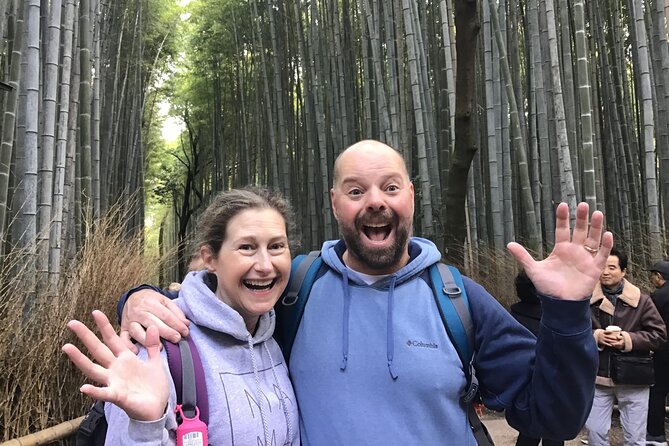
Bamboo Forest Street: walk it before it turns into a line
Bamboo Forest Street is the walking path through bamboo groves. It’s particularly attractive in a light wind when bamboo stalks sway.
Admission is listed as free. This is one of the stops that benefits most from timing because it’s visual and also crowd-sensitive.
Okochi Sanso Garden: garden experience behind the scenes
Okochi Sanso Garden is the former villa of actor Okochi Denjiro, set back behind Arashiyama bamboo. It’s a garden-with-buildings kind of stop.
Admission is listed as not included. The consideration is cost versus time. If your budget is tight, you might prefer the bamboo street itself and skip paid gardens.
Jojakkoji, Nisonin, Gioji: hillside temples with moss focus
Jojakkoji Temple is a mountainside temple with small buildings and gates, plus maple and moss along paths.
Nisonin Temple is similar but a bit larger and more imposing.
Gioji Temple is known for a moss garden with tall maple trees, plus thatched roof features.
All are listed as not included. The consideration across all three is that they’re more about atmosphere and gradual footwork than one big headline view. If you like quiet walks, they’re great. If you want big monuments, you may want fewer of these.
Adashino Nenbutsuji and Otagi Nenbutsuji: stone statues that stop you
Adashino Nenbutsuji has stone statues placed for the souls of the dead, and it’s located near the Saga-Toriimoto Preserved Street.
Otagi Nenbutsuji Temple is famous for its 1200 stone statues of rakan, each with different facial features.
Both are listed as not included. The consideration is emotional impact. These aren’t the typical smiling-photo attractions. They can feel powerful in a quiet way, so pace yourself.
Daikakuji through Arashiyama choices: keep your travel circle tight
When you choose multiple stops in this western Kyoto zone, you’re often combining lots of hillside walking and bridge or bamboo areas. The biggest practical tip is to stay coherent: pick Arashiyama plus one nearby garden or temple complex, then stop. Trying to mix Arashiyama with far eastern stops inside 4 hours can leave you rushing.
The pacing: what 4 hours looks like in real life
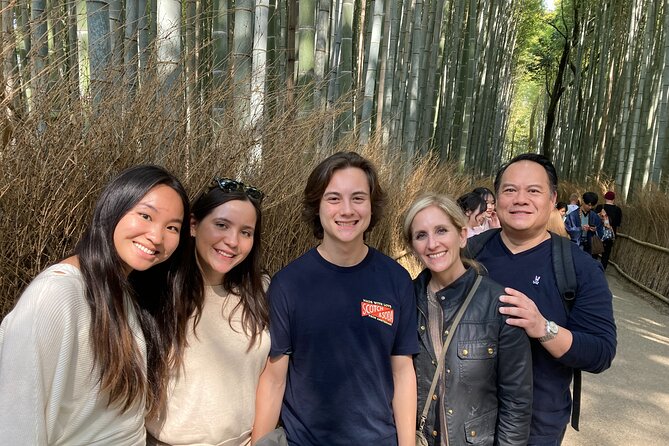
A private early-morning format usually feels like this: you start with a major anchor sight, then add one or two supporting stops, using your guide to keep the timing smooth.
Because you choose only 2-3 attractions, you get more “time inside” each place and less time in transit. You should still expect transitions. Kyoto sites are spread out, and even when you’re moving efficiently, stairs and walking take time.
One detail that can matter a lot: the tour experience includes a guide for the selected sites, but transportation and entrance tickets are not included. So your day is really about using the guide to maximize your time on site, not about handing you a full museum-style itinerary where everything is paid.
In at least one example schedule shared by a guide, the tour started around 7:00am and ended around late morning, with a handoff to a preferred spot for lunch. That fits the idea of a morning-focused tour: you finish before the busiest midday crush.
Price and value: what $101.82 gets you (and what it doesn’t)
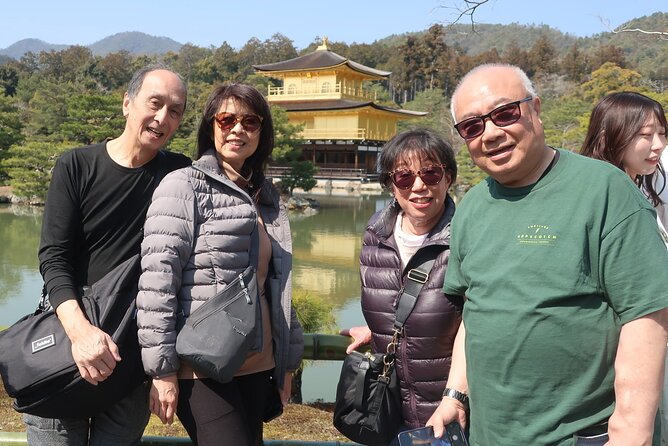
At $101.82 per person for an approximately 4-hour private guided experience, you’re paying for two things: a licensed English speaking guide and a customized route with only your group.
What’s a fair value here? If you were to do Kyoto solo, you’d still pay for your own transport, you’d still walk a lot, and you’d still face crowd timing. The guide’s job is to remove friction. You get faster “what to see” decisions, better routing inside sites, and context so the morning doesn’t feel like random sightseeing.
But you also need to budget for your own expenses:
- Private vehicle is not included.
- Entrance fees are not included as a general rule, and “guide entry fees” are only covered for sights listed under what to expect.
- Lunch is not included.
On the upside, several stops are listed as free admissions, like Fushimi Inari-taisha Shrine, Gion, Nishiki Market, and Toji, plus items like Togetsukyo Bridge and Bamboo Forest Street. If you build your 2-3 choices around those free or lower-cost admissions, the tour feels like even better value.
Also, there are features like mobile ticket and group discounts listed with the price. Those can help if you’re traveling with friends or family.
Best-fit match: who will love this tour most
I think this tour is strongest for travelers who want Kyoto classics without the chaos. It’s especially good if:
- you’re visiting Kyoto for the first time and want someone to help you prioritize
- you hate being stuck on a fixed schedule
- you want a guided explanation, not just a list of stops
- you’re traveling with teens or mixed ages and need flexibility
If you’re the kind of traveler who wants to wander for hours with no plan, this might feel too structured. The walking tour format also means you should be comfortable with early mornings and footsteps.
Should you book Kyoto’s early-morning private guide?
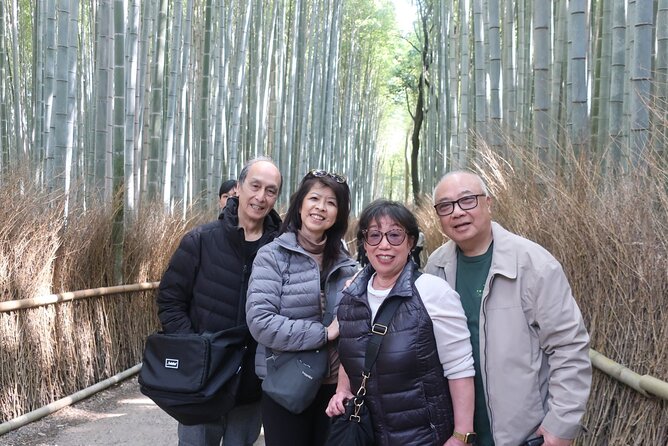
If your goal is a smooth, calmer Kyoto morning with government-licensed guidance and 2-3 smart stops, then yes, I’d book it. It’s a good fit when you care about both what you see and why it matters, without giving up flexibility.
I’d think twice if you want a long list of must-sees in one day, or if you’re counting on entrance fees being covered. Your best strategy is to choose your 2-3 attractions carefully, leaning on free-admission options when possible, and building your day around the early time window.
If you do book, wear good shoes, drink water, and pick one “big anchor” sight plus one “supporting” stop. That’s the sweet spot for this kind of 4-hour Kyoto experience.
FAQ
Is this tour private?
Yes. It’s a private tour/activity, and only your group participates.
How long is the Kyoto early-morning tour?
The duration is approximately 4 hours.
Can I choose which sites to visit?
Yes. The customizable tour is described as choosing 2-3 sites from the provided What to expect list.
Is transportation or a private vehicle included?
No. A private vehicle and transportation fees are not included. It’s a walking tour with pickup on foot.
Are entrance fees included?
Not generally. The guide entry fees are only covered for sights listed under What to expect, and entrance fees are not included. Some listed stops show admission ticket free, while others are not included.
Can I cancel for a full refund?
Yes, free cancellation is available. You can cancel up to 24 hours in advance for a full refund.
New This Season
- Koyasan Day Trip by Private Car from Kyoto
- Old Port Town and Ultimate Sake Tasting Private Tour From Kyoto
- Kyoto’s Timeless Charm: 3hr Exploration of History and Peace
- Kyoto: 5 Types of Sushi Making
- Sacred Peak & Ancient Paths: Kurama-Kibune Hiking Experience
- Kyoto: Exclusive ZEN practice at Manpukuji temple in Uji
- Kyoto: Private Seasonal Aroma Yoga Class
- Traversing Kyoto’s Scenic West – Arashiyama to Kinkakuji
Morning, compared.
Kyoto Early Morning Tour with English-Speaking Guide
Read our review →Early Morning Tour with English-Speaking Guide
Read our review →

Traditional Japanese Washi Papermaking- Kyoto morning
Read our review →