Reviewed · TOURS
Kyoto Full Course Tour: Explore 10 Must-See Sights & Hidden Gems
Kyoto feels different when you stop guessing. This full-day, 9.5-hour course strings together major icons and lesser-known street scenes so you can see a lot in one go. I like that it is guided by locals who know how to move through the city’s transit maze without burning your whole day stuck in lines.
Two things stand out right away: the fast, organized route through places like Kinkaku-ji and Fushimi Inari, and the very human guidance you get from named guides such as Megumi and Masako. The one drawback to plan for is the pace, you will be walking hard, with reports of over 20,000 steps, so you need comfortable shoes and a moderate fitness level.
In This Review
- Key highlights at a glance
- A 9.5-hour Kyoto hit list, built for first-time planning
- Price and logistics: what $98.83 covers, and what to budget for
- Meet at Saga-Arashiyama: the calm start that sets your whole day up
- Arashiyama to the Golden Pavilion: Kinkaku-ji in a timed, efficient visit
- Ryoan-ji rock garden: when the guide adds the meaning
- Fushimi Inari-taisha: 1,000 torii gates without the chaos spiral
- Kiyomizu-zaka and Sanneizaka: the old-street walk you will actually remember
- Kiyomizu-dera: the famous stage and the stress test for your calves
- Hokan-ji and Yasaka Pagoda: the symbol stop that feels smaller than the icons
- Gion at the end of the day: the traditional streetscape payoff
- Lunch at a sushi-go-round: tasty, fast, and vegetarian needs a plan
- The walking reality: who will love this pace, and who won’t
- IC card tip and timing tip: make Kyoto transit feel manageable
- What to watch for at each stop, without losing the day
- Should you book this Kyoto full-course tour?
- FAQ
- What is the tour duration?
- Where is the meeting point, and where does the tour end?
- How much does the tour cost?
- What is included in the price?
- What extra costs should I expect?
- Is lunch included, and is it vegetarian-friendly?
- What is the cancellation policy?
Key highlights at a glance
- Arashiyama start with bamboo and a calm mountain-forest vibe
- Golden Pavilion (Kinkaku-ji) plus quick context so photos make sense
- Ryoan-ji rock garden visit paired with the famous Queen Elizabeth connection
- Fushimi Inari torii gates, timed like a sightseeing circuit instead of a chaotic hike
- Old-street lanes at Kiyomizu-zaka and Sanneizaka for snacks and souvenirs
- Gion ending where Kyoto’s traditional atmosphere still feels present
A 9.5-hour Kyoto hit list, built for first-time planning
This is a full-course, approximately 9 hours 30 minutes day built around getting to the big-name sites plus a few streets that feel more local than postcard-only. It is designed for people who want a strong first pass at Kyoto without spending their first days figuring out which bus goes where.
The day starts in the Arashiyama area and finishes around Gion Shopping Street. That matters, because Kyoto’s sights are spread out, and doing them in one linear day helps you avoid the common mistake of bouncing around randomly and losing time.
Group size is capped at 10, which is a real plus in Kyoto. Smaller groups move faster and stay together more easily, especially when you are hopping between temples, shrines, and old neighborhoods.
Price and logistics: what $98.83 covers, and what to budget for
The tour price is $98.83 per person, and it includes the tour fee plus consumption tax. It does not include transportation, food, or entrance fees, so you should budget extra.
Here is the math from the tour details:
- Transportation: about $10 (¥1,340) total per person
- Food and beverage: about $6.8 to $14 per person, depending on what you order
- Entrance fees: about $11 (¥1,600) total per person
So in real terms, you should expect a total that is more than the headline price. For me, the value question is simple: you are paying for coordination and a route that hits a lot of Kyoto without you reinventing the wheel each time.
Practical note: you’ll need cash ready and an IC card such as SUICA or PASMO in advance. The tour uses a mobile ticket, which helps you check in smoothly, but the day still runs on time and movement.
Also, this program starts just on time, late arrivals are not allowed, and there are no refunds if you miss the start. If you are the type who shows up 5 minutes late, shift your routine the day before.
Kyoto rewards patience — the quieter half of the city sits just off the main path.
- PERFECT KYOTO 1-Day Bus Tour
★ 5.0 · 13,518 reviews - Kyoto: Fushimi Inari, Kinkakuji, Bamboo Grove 1 Day Bus Tour
★ 4.8 · 4,316 reviews - Kyoto: Tea Ceremony in a Traditional Tea House in Kiyomizu
★ 4.9 · 3,519 reviews - Kyoto Geisha Walking Tour: Gion District & Hidden Gems
★ 4.7 · 3,273 reviews
Meet at Saga-Arashiyama: the calm start that sets your whole day up
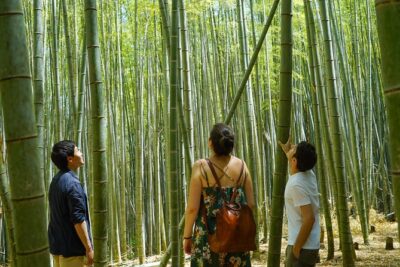
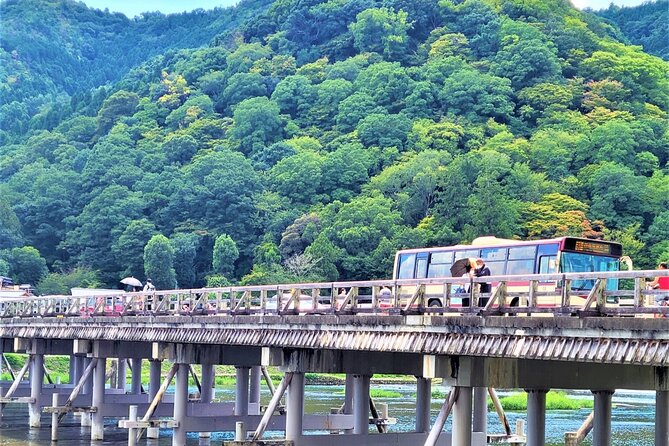
You meet at JR Saga-Arashiyama Station in the morning, and the itinerary begins right in the Arashiyama area. This is a good choice for a first stop, because Arashiyama starts you with nature and space, not crowds and steep stairs.
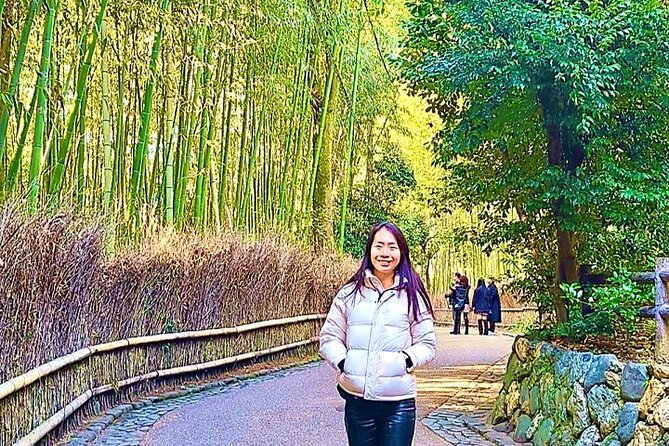
Stop 1 is Arashiyama, with a bamboo forest and a Japanese forested mountain feel. Even if you have seen bamboo photos before, the early timing makes a difference, and it helps you move from Kyoto’s everyday pace into sightseeing mode.
This is also where you want to set your walking strategy. Reviews and tour notes point to over 20,000 steps, so treat the first hour as training for the rest of the day. Comfortable shoes are not optional.
Arashiyama to the Golden Pavilion: Kinkaku-ji in a timed, efficient visit
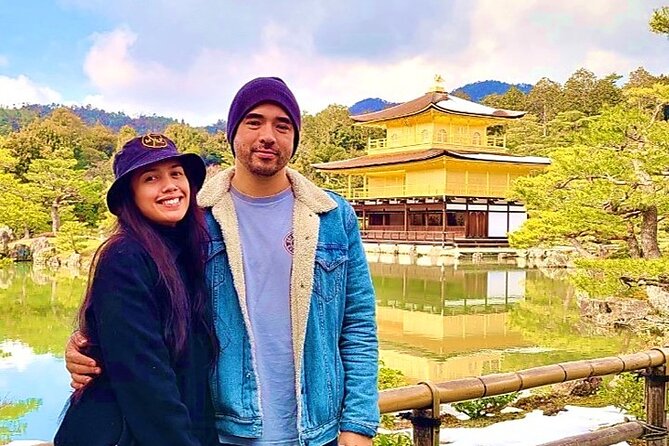
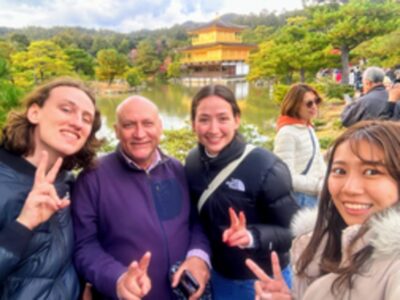
Kinkaku-ji, the Golden Pavilion, is the kind of stop you cannot miss in Kyoto. This tour gives you about 30 minutes there, and that’s enough to see the main building and take your best photos, as long as you keep moving with the group.
The entrance fee is not included, so factor that into your day budget. It is also worth noting that the tour is built to cover a lot, so you are not going to linger forever. If you like to sit with art and details for a long time, you might feel a little rushed here.
For most people, though, that short, focused window works. You get the big icon experience without sacrificing the rest of the day.
Ryoan-ji rock garden: when the guide adds the meaning
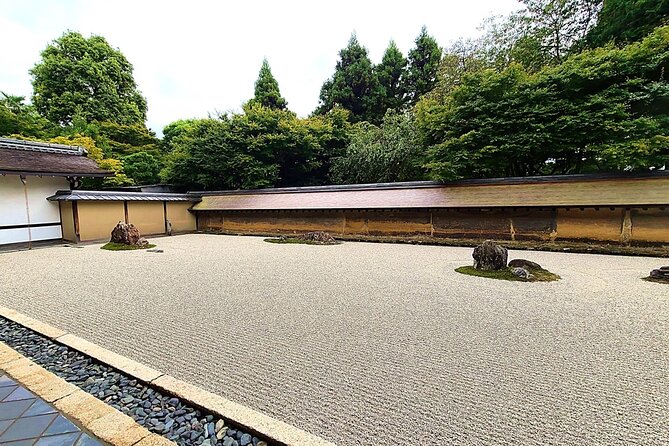
Stop 3 is Ryoan-ji, famous for its stone garden. The tour pairs the visit with the story that Queen Elizabeth visited and praised it, which gives you something to look for beyond the simple photo.
Like other temple stops, the entrance fee is not included. Your time here is about 30 minutes, which is tight but fair. You can still take in the garden layout and learn the basic way to read it, especially when your guide is explaining what the stones and pacing represent.
This is also where a strong guide matters most. In the reviews, named guides such as Masako and Megumi get credit for clear explanations and keeping the day fun. When you know what you are looking at, you get more out of the short visit.
Fushimi Inari-taisha: 1,000 torii gates without the chaos spiral
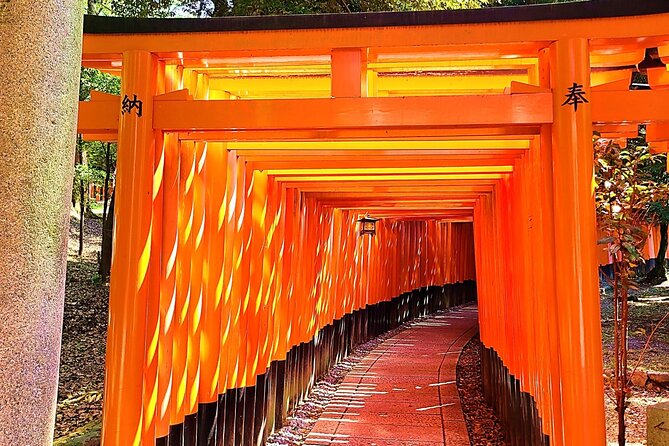
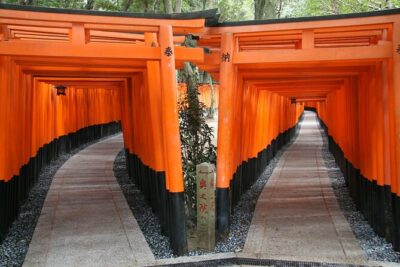
Fushimi Inari-taisha is Stop 4, and the tour frames it as Kyoto’s #1 sightseeing spot. The headline is the more than 1,000 red torii gates lining the path, and the feeling is spectacular.
The tricky part is how people experience it on their own, you can end up walking far more than you planned. Here, the guided structure helps you enjoy the main stretch without turning the whole day into an endless climb.
Admission is not included, and you get about 30 minutes. That is enough to walk through the torii corridor, get key views, and still keep your schedule.
If you are sensitive to crowds or steep ground, this is a good moment to rely on the group pace. You’ll still walk, but you won’t be guessing your way into a slowdown.
A day of temples goes further with something to break it up.
Kiyomizu-zaka and Sanneizaka: the old-street walk you will actually remember
Stops 5 and 7 are the street scenes, not temples. Stop 5 is Kiyomizu-zaka Street, lined with souvenir shops and local eateries. Stop 7 is Sanneizaka, another beautiful pedestrian slope with a similar old Kyoto feel.
Both are about 30 minutes each, and they work as breaks from temple concentration. You can snack, browse, and reset your legs for the next climb.
The practical upside: these stops are where Kyoto’s atmosphere shows up on your feet. The stairs and slopes are part of the experience, and they give you that real neighborhood texture that you usually miss when you only do ticketed attractions.
Kiyomizu-dera: the famous stage and the stress test for your calves
Stop 6 is Kiyomizu-dera, the most popular temple spot for Japanese tourists, with the famous wooden stage that does not use a single nail. This is one of Kyoto’s headline sights for a reason.
You get about 30 minutes, and entrance is not included. This is also one of the spots where you feel the tour’s intensity. If you are worried about leg strain, this is a place to manage your expectations and move steadily.
You’ll likely spend time walking up and around the main areas, and you might want to plan a quick strategy for photos. With limited time, you get the best result by aiming for a few high-value angles rather than chasing every view.
Hokan-ji and Yasaka Pagoda: the symbol stop that feels smaller than the icons
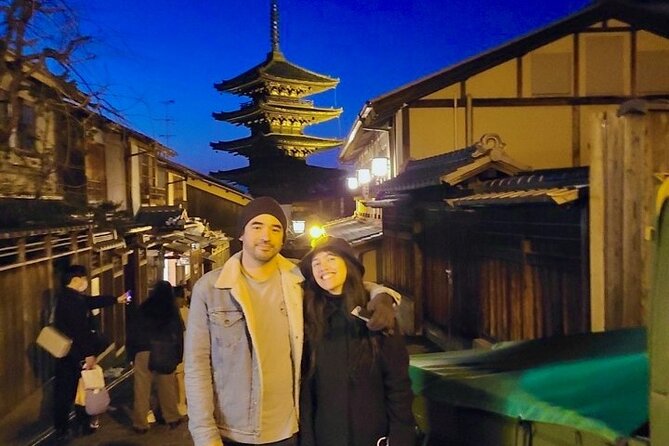
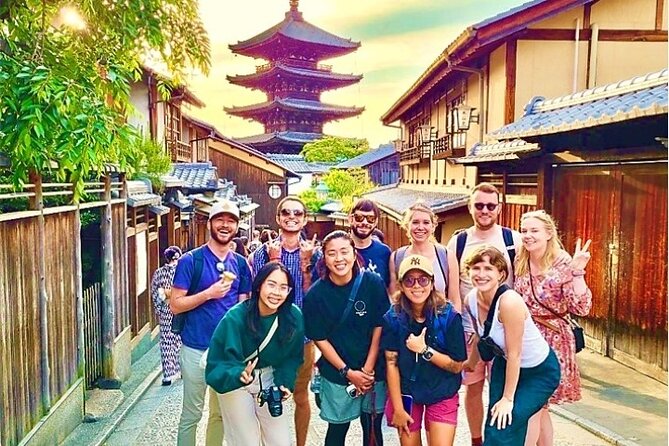
Stop 8 is Hokan-ji Temple, featuring the Yasaka Pagoda, one of Kyoto’s major symbols. This is a strong add-on because it is easier to appreciate a symbol when you have seen the surrounding temple and shrine cluster earlier in the day.
Time here is about 30 minutes, and the tour lists admission as free. That makes it one of the most budget-friendly stops of the day.
Because it is a shorter, lighter-feeling stop compared with the biggest names, it helps balance the schedule. You get atmosphere and a recognizable Kyoto image without another long ticketed entry.
Gion at the end of the day: the traditional streetscape payoff
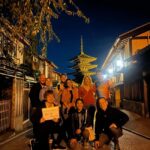
Stop 9 is Gion. This is where Kyoto’s historic, traditional atmosphere shows up in the open, with lanes and views that feel like you are stepping into a slower story.
The tour keeps it to about 30 minutes, and it is labeled as free. That is a good structure because Gion is exactly the kind of place that can swallow time if you let it.
In the reviews, people mention spotting a geisha in Gion. You should treat that as a possibility, not a promise. Either way, you will end with a satisfying sense of place rather than a last stop that feels like a checkbox.
Lunch at a sushi-go-round: tasty, fast, and vegetarian needs a plan
Lunch is at a conveyor-belt sushi restaurant as part of the day. The tour highlights include options such as sushi, vege-sushi, ramen, kara-age, beer, and mochi, depending on what you order.
Here is the key consideration: it is not an all-vegetarian meal. The tour notes say you will be informed where lunch will be, and only some menu might be okay for vegetarians.
If you are traveling with a vegetarian, bring an extra layer of caution. Compare that with Osaka, where there may be more restaurant choices near certain tourist zones. In Kyoto, the tour explains that there are fewer restaurants around temple-heavy areas, so this schedule leans on a practical lunch option near the sightseeing flow.
Also, the tour suggests having cash ready. That matters because meal choices and quick add-ons can depend on what you order that day.
The walking reality: who will love this pace, and who won’t
This tour is intensely active. You should plan for more than 20,000 steps. The itinerary is built from temple and shrine stops plus long streets and transit time, so your feet will do most of the work.
This is a great fit if:
- You only have a short stay in Kyoto, like a first or second day, and you want a clear overview fast
- You like structure and want someone to handle timing and transit
- You are comfortable with public transport and lots of walking
It is a tougher fit if:
- You want a slow, lingering, sit-down sightseeing day
- Your schedule is flexible but your energy is not
- You need easy-access routes for every stop, since the day includes multiple slopes and temple approaches
- You dislike being on a tight schedule where the program starts on time and you stay with the host
Another important rule: you are required to follow the host. If you break away, the host cannot look for you, and there are no refunds. That is how group tours protect everyone’s timing and safety, so just keep it simple and stay close.
IC card tip and timing tip: make Kyoto transit feel manageable
Kyoto transit is complicated, and this tour’s big value is that the guides handle the move between areas like locals. You still benefit from doing your part.
Use an IC card like SUICA or PASMO ahead of time. That reduces friction when buses and trains line up with your route. The tour also mentions that you learn how to take public transportation and general etiquette, which is useful if this is your first time in Japan.
Timing is equally important. Since the tour starts sharply and runs for about 9.5 hours, you should build in buffer time the morning of your tour so you do not feel stressed before it begins.
What to watch for at each stop, without losing the day
To get the most out of a tour like this, I recommend thinking in mini-goals, not big wishes.
- At Kinkaku-ji, pick a couple of angles and move on when time is up.
- At Fushimi Inari, enjoy the torii corridor and avoid turning it into a solo expedition.
- At Kiyomizu-dera, plan for stairs and stay steady so your legs can still handle Gion at the end.
This is not a day for ultra-detailed study of every artifact. It is a day for strong impressions and a guided understanding of what matters where.
That matters because the best Kyoto strategy is often a split: do a route like this once for orientation, then return on your own for the places that grab you.
Should you book this Kyoto full-course tour?
I’d book this tour if you have limited time and you want a high-coverage Kyoto day with real guidance and a route that connects distant sights without you wrestling the transit system all day. It is also strong for first-timers, because you finish with a clear sense of where Kyoto neighborhoods feel most alive.
I would skip it or choose a different style if you hate intense walking, need lots of rest breaks, or you want a slow, flexible sightseeing day with long temple stays. The pace is the trade-off for seeing so much.
If you go in with comfy shoes, an IC card, some cash for meals and admissions, and a plan for how you want to handle lunch and walking, this is a good value way to get your bearings fast.
FAQ
What is the tour duration?
The tour lasts approximately 9 hours 30 minutes.
Where is the meeting point, and where does the tour end?
You meet at JR Saga-Arashiyama Station at the start of the day, and the tour ends at Gion Shopping Street.
How much does the tour cost?
The price is $98.83 per person.
What is included in the price?
The tour fee and consumption tax are included. Entrance fees, food and beverage, and transportation expenses are not included.
What extra costs should I expect?
Transportation is about $10 (¥1,340), food and beverage are about $6.8 to $14 depending on your order, and entrance fees total about $11 (¥1,600).
Is lunch included, and is it vegetarian-friendly?
Lunch is included, and it is described as a sushi-go-round. The notes say only some menu might be okay for vegetarian diets.
What is the cancellation policy?
The experience is non-refundable and cannot be changed for any reason.
New This Season
- Koyasan Day Trip by Private Car from Kyoto
- Old Port Town and Ultimate Sake Tasting Private Tour From Kyoto
- Kyoto’s Timeless Charm: 3hr Exploration of History and Peace
- Kyoto: 5 Types of Sushi Making
- Sacred Peak & Ancient Paths: Kurama-Kibune Hiking Experience
- Kyoto: Exclusive ZEN practice at Manpukuji temple in Uji
- Kyoto: Private Seasonal Aroma Yoga Class
- Traversing Kyoto’s Scenic West – Arashiyama to Kinkakuji
Tours, compared.
Fushimi Inari, Kinkakuji, Bamboo Grove 1 Day Bus Tour
Read our review →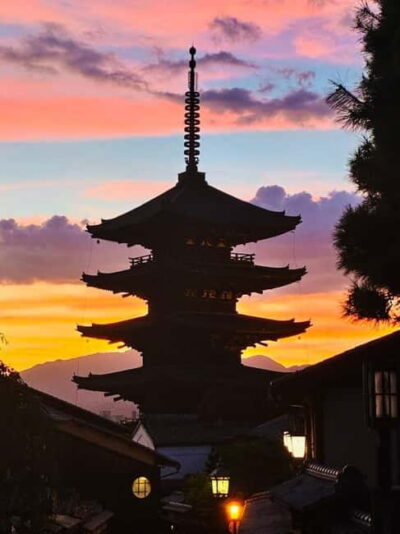
Kyoto Geisha Walking Tour: Gion District & Hidden Gems
Read our review →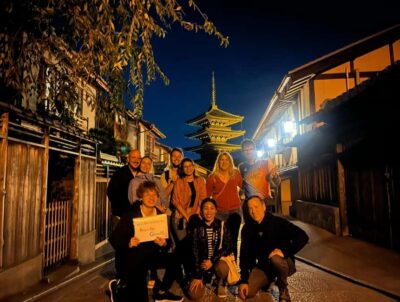
Gion Magical Night Walking Tour with Geisha Trivia
Read our review →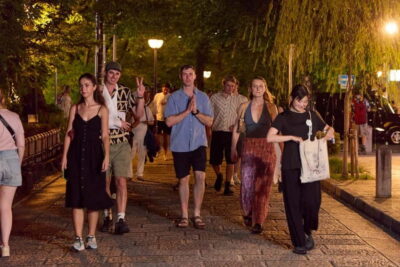
Gion Geisha District Walking Tour – Stories of Geisha
Read our review →
Kyoto Night Foodie Tour in Gion (9+ dishes + 6 Sake tastings)
Read our review →