Reviewed · GION GEISHA QUARTER WALKS
Kyoto: Gion Evening Walk with Hidden Gems, Geisha & Sake
Gion feels different after dark. This 90-minute night walk turns Kyoto’s famous geisha district into a quiet, story-filled stroll, with lantern light and local sake shaping the pace.
I love the small group size, capped at 10, which keeps the conversation real and friendly, not rushed. I also love the photo assist at key stops, so you spend less time guessing angles and more time actually seeing.
One possible drawback: it’s still a walking tour, so if you have back trouble, you may want to skip this and choose something easier on your body.
In This Review
- Key things to notice on this Gion evening walk
- Why Gion after dark beats the daytime rush
- Price and what $32 really buys you
- Meeting point, walking pace, and how to behave respectfully
- Stop 1: Hanamikoji Street, where Gion’s geisha lanes live on
- Stop 2: Yasui Kompira-gū Shrine and the power-stone tradition
- Stop 3: Hōkan-ji Temple (Yasaka Pagoda) after dark
- Stop 4: Ninenzaka’s cobblestone slope and preserved streets
- Stop 5: Yasaka Shrine, finishing at Gion’s long-time spiritual landmark
- The sake part: how the included cup fits the experience
- What makes the guide experience worth it (and not just the itinerary)
- Who should book, and who should skip
- Should you book this Kyoto Gion Evening Walk?
- FAQ
- How long is the Kyoto Gion evening walk?
- What does the tour cost?
- Where do I meet the guide?
- Is the tour group small?
- Is there an English-speaking guide?
- What is included during the walk?
- Is smoking allowed?
- Is it suitable for people with back problems?
Key things to notice on this Gion evening walk
- Lantern-lit Gion at night: softer light, calmer sidewalks, and the district’s old-world feel after crowds thin out
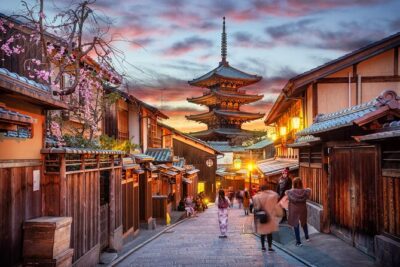
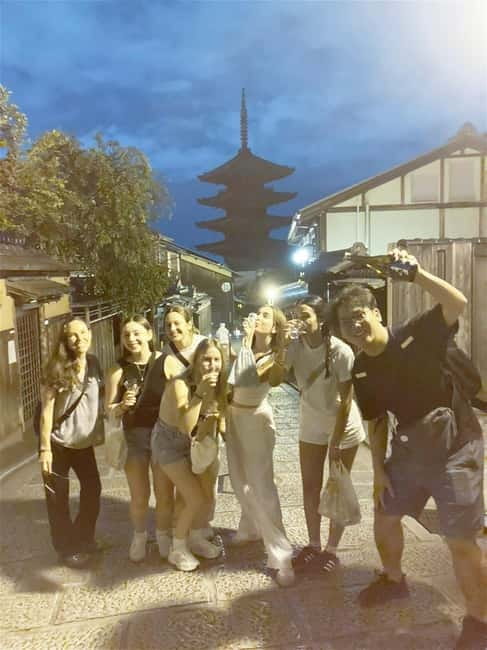
- Yasaka Pagoda views (Hōkan-ji Temple): the five-story pagoda is lit up at night, and the route is designed to help you catch it
- Shrines with real local meaning: Yasui Kompira-gū’s power-stone focus on cutting bad ties and building good ones
- Cobblestones and preserved streets: Ninenzaka gives you that classic Kyoto slope vibe with traditional wooden townhouses
- Sake as part of the timing: a cup of local sake is included while you stroll, which makes the whole experience feel more Kyoto than checklist
- Guides who keep it conversational: guides have been praised for humor, patience, and answering all kinds of questions, from culture to practical tips
Why Gion after dark beats the daytime rush
I get why people start their Kyoto sightseeing early. But Gion works differently at night. The streets shift from “where do I go next” to “slow down, look around.” Lantern light makes the lanes feel older and more intimate, and the atmosphere lets you notice details you’d otherwise miss.
This tour is designed around that timing. You’re not just walking between famous spots. You’re moving through the rhythm of Gion after the day crowds have faded, which means you can actually hear the stories your guide is telling about the traditions tied to geiko and maiko culture, plus the Shinto and Buddhist backdrop of Kyoto.
You also get a practical benefit: in the dark, it’s harder to find your footing and frame photos without help. The tour’s pacing is relaxed, and the guide adds photo assistance, so you’re not standing around like a confused tourist camera setup.
One more thing I like: the route includes both the iconic views and the smaller, calmer corners. That combo is what keeps it from feeling like a quick hit of “big landmark, next.” You get a sense of how the district connects.
Price and what $32 really buys you
At $32 per person for about 90 minutes, you’re paying for more than walking. You’re paying for three things that add up fast:
- A live English guide who can explain what you’re seeing in plain terms, including the meaning behind shrines and temple landmarks.
- Small-group attention (max 10), which matters when you want to ask questions or you’d like photo help at a specific angle.
- Included local sake, which turns the tour from a pure sightseeing session into a cultural night stroll.
Could you do some of these stops on your own? Sure. But you’d be piecing together timing, navigation, and etiquette on the fly. Here, the route is already planned to connect Hanamikoji Street, Yasui Kompira-gū Shrine, Hōkan-ji Temple (Yasaka Pagoda), Ninenzaka, and then Yasaka Shrine, all in a way that fits an evening.
For me, that’s the value. You’re buying time, flow, and context, not just entry-level photos of “stuff people post online.”
More cups to sample before dinner
- Kyoto Night Foodie Tour in Gion (9+ dishes + 6 Sake tastings)
★ 5.0 · 1,762 reviews - 3-Hour Kyoto Insider Sake Brewery Tour with Tastings & Pairings
★ 5.0 · 917 reviews - Arashiyama Bamboo, Temple, Monkeys, or Secret Sake Brewery
★ 4.8 · 886 reviews - Kyoto: Insider Sake Brewery Tour with Sake and Food Pairing
★ 5.0 · 704 reviews
Meeting point, walking pace, and how to behave respectfully
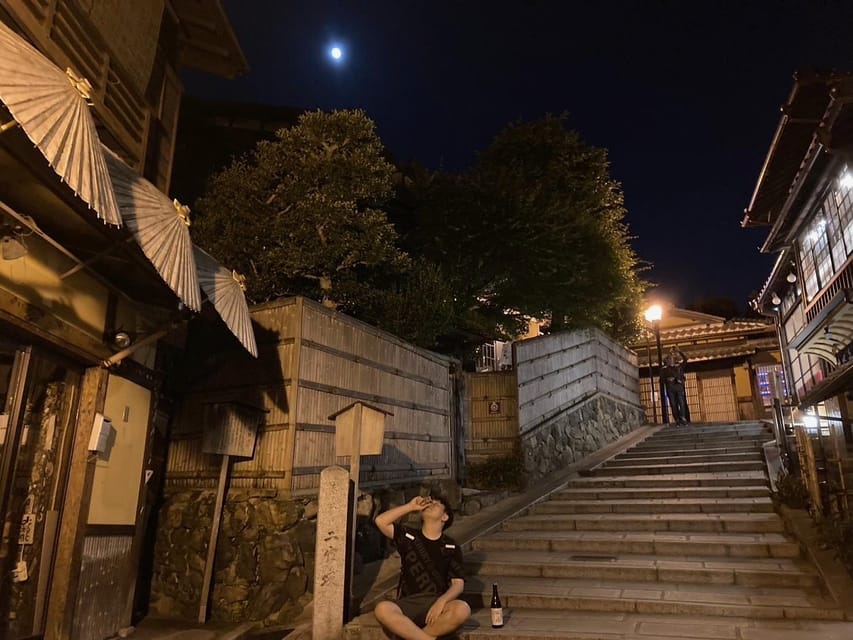
The tour meets at Shijo Kiyamachi, with a guide holding a sign that says Otatrip Guide. The sign is posted between McDonald’s and the Japanese restaurant Kikunoi Roan, a little south along Kiyamachi Street. Show up on time, because the tour starts promptly.
What to expect physically: it’s a walking tour, and you’re on your feet for most of the session. The recommended comfort upgrade is simple: comfortable shoes. If rain hits (it happens in Kyoto), the streets can be slick, so take your time crossing and keep your steps measured.
Also, this is in active residential and sacred areas. The tour asks you to keep voices low in those spaces. That’s not just polite. It also helps preserve the calm night mood you came for.
Group size is small, so you won’t feel like you’re trapped inside a moving crowd. But you still need to stay with the group, especially during photo stops when the guide helps you capture shots at each location.
Stop 1: Hanamikoji Street, where Gion’s geisha lanes live on
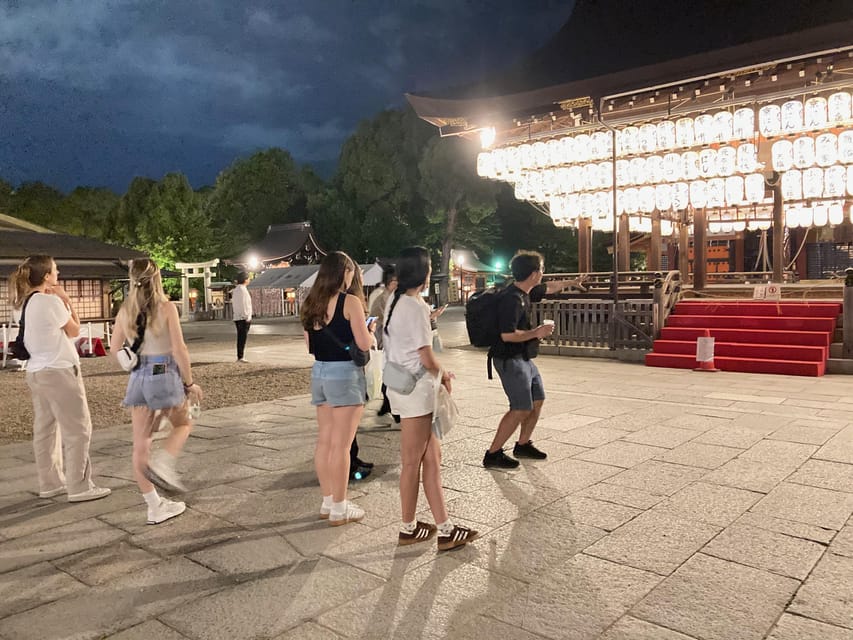
Your first major stop is Gion, with a photo stop and guided tour timed at about 15 minutes. The star here is Hanamikoji Street, Kyoto’s best-known geisha street. It’s lined with traditional tea houses, and at night the whole street feels more like a real neighborhood than a theme set.
What I like about starting here: it gives you context early. You see the “stage” so you can understand the “story” your guide is explaining about geiko and maiko culture. It’s easier to connect the cultural meaning to what you’re seeing when you start with the iconic lane first.
Photo-wise, this is where the guide’s help matters. In the evening, lighting is uneven, and narrow streets change your angle fast. With photo assistance, you’re more likely to get a shot that includes the mood of the street, not just a blurry sign and your feet.
Etiquette matters too. If you’re hoping for a special sight, the best approach is quiet awareness. You’re in someone’s world, not just a backdrop.
Stop 2: Yasui Kompira-gū Shrine and the power-stone tradition
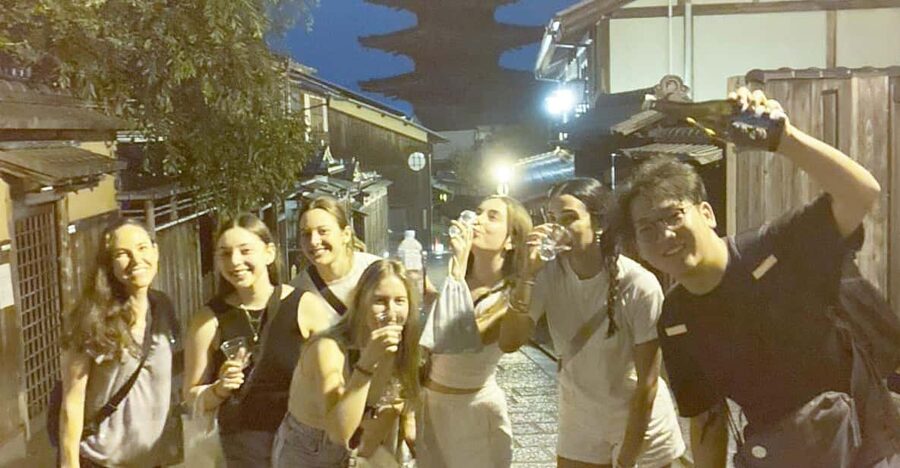
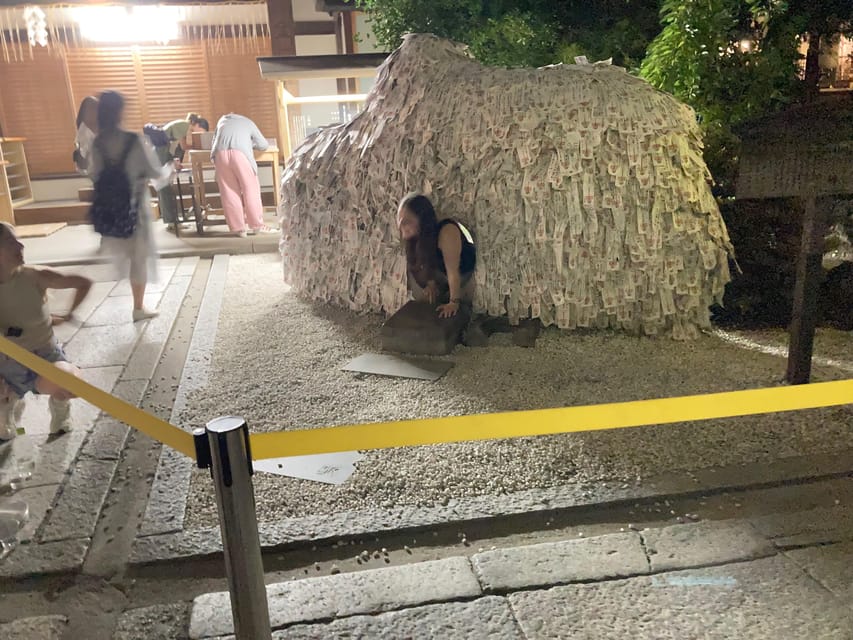
Next comes Yasui Kompira-gū Shrine, about 10 minutes including a photo stop and a guided visit. This shrine is known for its power stone, and locals come with a specific intention: to cut bad ties and build good ones.
That might sound personal, but it also explains the shrine’s role in everyday life. Shinto and local belief in Japan often shows up as practical spiritual thinking, not distant theory. The guide’s job here is to put that meaning into words you can carry with you as you walk.
Why this stop works in an evening tour: it’s a break from the “look at the street” vibe. You slow down, you focus, and you reset your attention. The night setting also makes shrines feel more contemplative without requiring a long temple stay.
Drawback? This is a short stop, so if you want extra time for photos or quiet reflection, you’ll probably wish you had more minutes. Still, the tour’s strength is balance. You get the highlight and move on while the evening light remains at its best.
Stop 3: Hōkan-ji Temple (Yasaka Pagoda) after dark
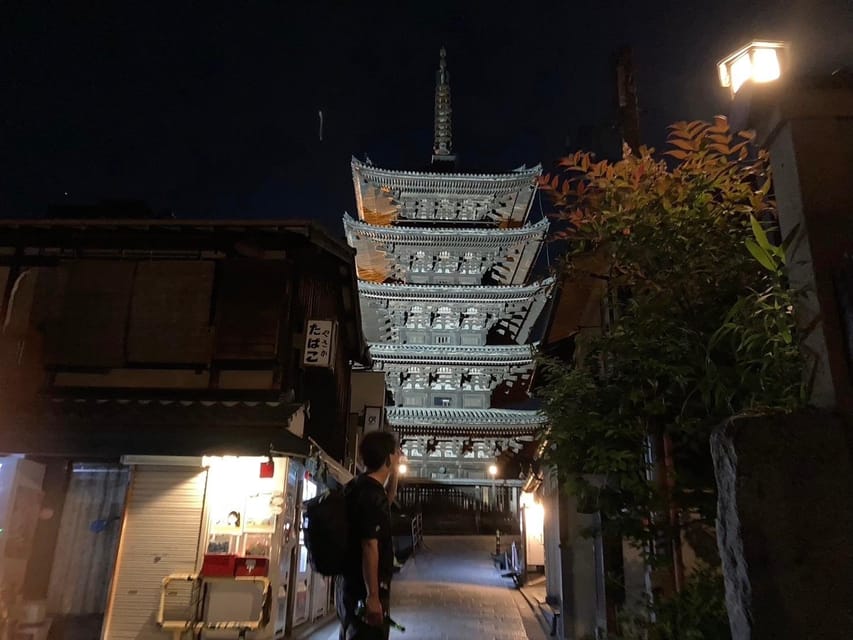
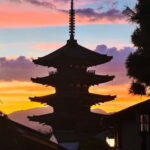
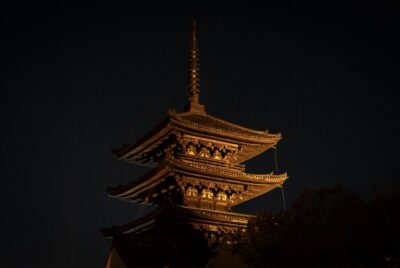
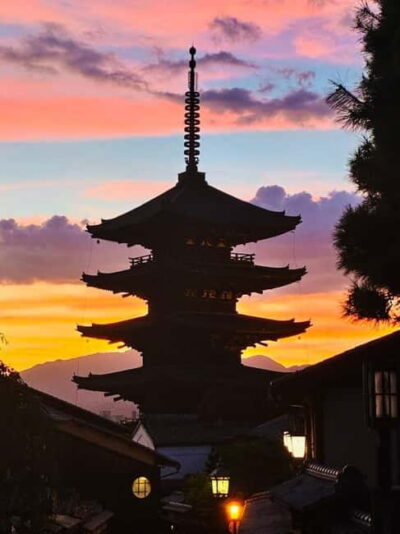
Then you head to Hōkan-ji Temple, again about 10 minutes with a photo stop and guided visit. The famous feature is the Yasaka Pagoda, a five-story pagoda that becomes the kind of landmark you actually remember, because at night it’s lit and easier to read from the street.
This is one of the big reasons to choose an evening walk instead of daytime. Daytime can feel like everyone is trying to get the same shot. Nighttime lighting changes the whole scene, and the tour route helps you see it without constantly fighting the crowd.
Photo tips you’ll appreciate here: the guide helps you time your photos and pick the right viewpoint so the pagoda looks tall and intentional, not washed out. If you’ve ever tried to photograph lit temple structures in Japan, you know the struggle. A hand here saves frustration.
One more practical note: if it’s raining, you may see reflections or muted colors. That can be beautiful, but it also means extra care for footing. Bring your attention, not just your phone.
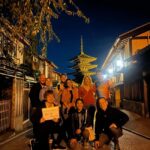
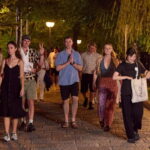
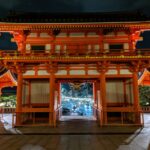
Lantern-lit streets of the geisha quarter
Stop 4: Ninenzaka’s cobblestone slope and preserved streets
Your next stop is Ninenzaka, with about 10 minutes for a photo stop and guided tour. Ninenzaka is a charming cobblestone slope with traditional wooden townhouses. At night, it feels like you’ve stepped into an older Kyoto version of the city.
I like this segment because it blends architecture with movement. You’re not just standing. You’re walking on a street where the texture matters. Cobblestones make you slow down naturally, and that helps you take in the shapes of the buildings and the way street-level lanterns (or evening lighting) bounce off surfaces.
The main drawback is also simple: it’s still a slope, still cobblestones. If you rush, you’ll miss details and you’ll likely feel it in your legs later. The whole point is to keep a relaxed pace and let the guide set the rhythm.
If you’re the type who enjoys atmosphere over big-ticket interiors, this is the stop that delivers. It’s the “Kyoto feeling” moment.
Stop 5: Yasaka Shrine, finishing at Gion’s long-time spiritual landmark
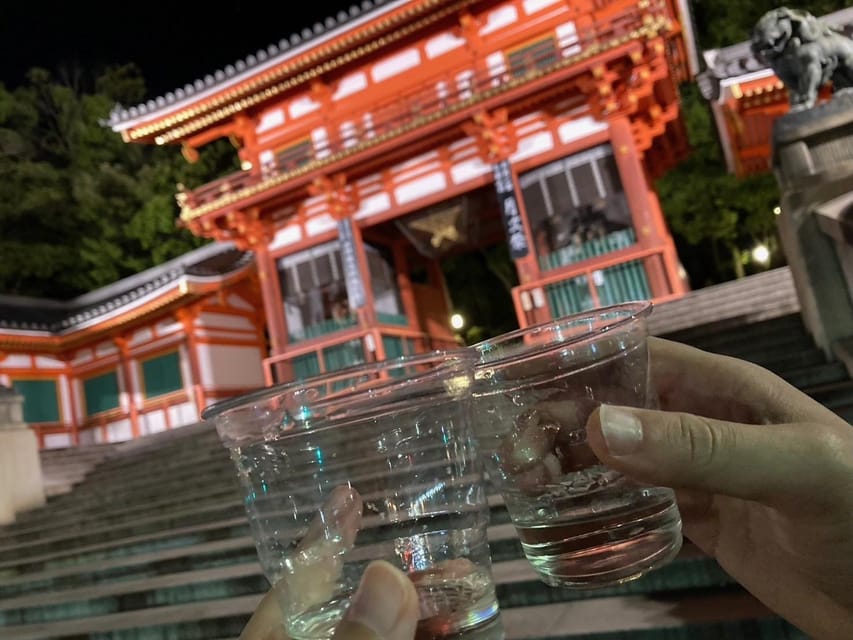
The tour finishes at Yasaka Shrine (八坂神社). This is a grand spiritual landmark that has watched over Gion for over 1,300 years. Even when the stop time is limited, it gives you a strong closing image.
Why I like ending here: it ties the themes together. You started in geisha district streets, you visited a shrine with everyday intentions, you saw a landmark temple pagoda, and you moved through preserved old-town lanes. Ending at Yasaka Shrine feels like the final chapter, where the spiritual timeline of the area becomes visible in one big scene.
When you arrive, take a minute to look up and around. The shrine setting is designed for sightlines, and at night the scale feels even more striking. If you’ve been paying attention to the guide’s explanations, you’ll likely feel like everything connects more than it would on a self-guided route.
The sake part: how the included cup fits the experience
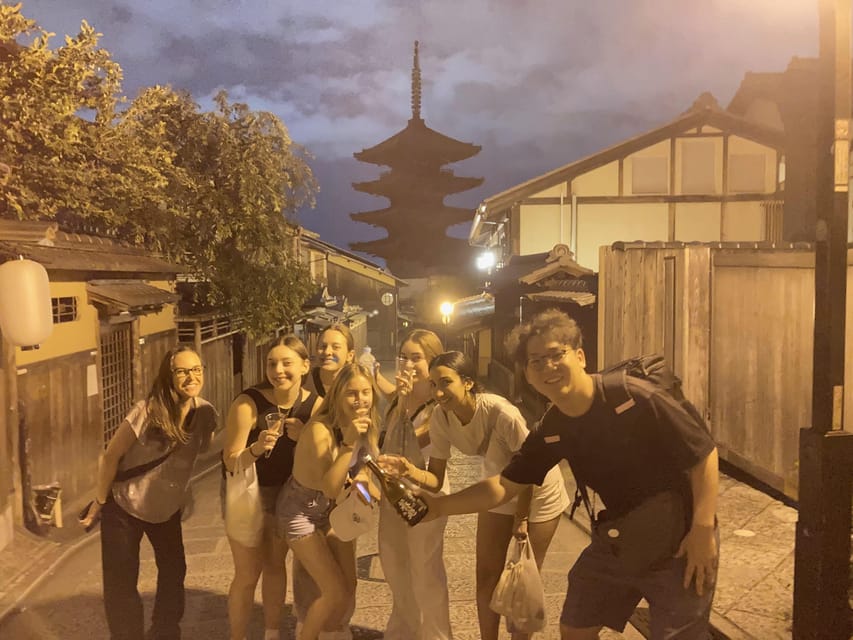
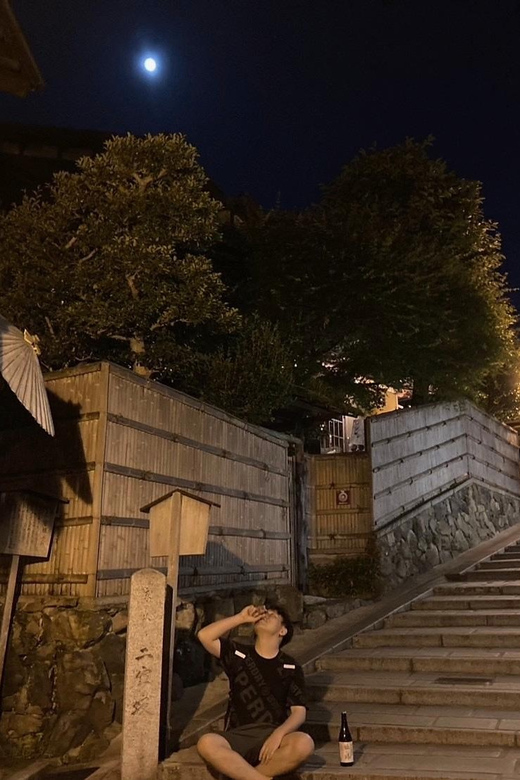
A cup of local sake is included during the walk. I like this detail because it matches the tour’s tone. This isn’t just “see sights, take photos, leave.” It’s more of a shared evening moment.
Sake also helps explain why the guide pacing feels relaxed. You slow down for a sip, you listen to a story, and you keep walking. It’s a small ritual that turns the night stroll into something with a beginning, middle, and end.
If you’re drinking alcohol, do it responsibly. The tour asks you to be respectful and mindful in the neighborhood, and that same courtesy applies to how you handle your pace and volume.
From what you’ll hear from different guide styles, some guides, including Shumpei and Nick, have been described as fun to talk with and generous with sake. Even if your guide is different, expect a friendly tone and a guided flow where the drink is part of the experience, not a random add-on.
What makes the guide experience worth it (and not just the itinerary)
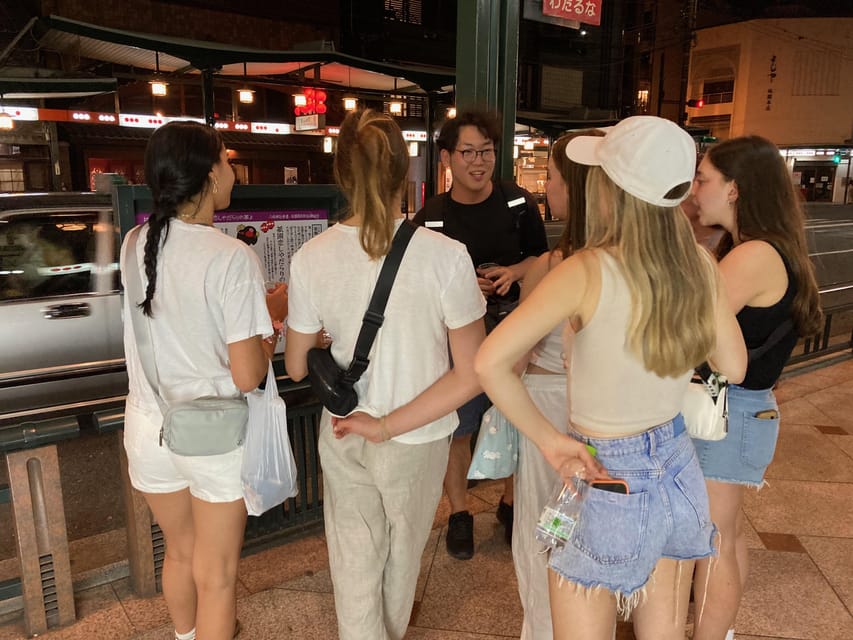
The guide is the difference between a list of stops and a real night walk. This tour is set up for conversation. You can ask what to eat next, what to see in Kyoto after this, or the real story behind geiko and maiko culture.
In practical terms, that means you’re not stuck with one-direction lectures. You get explanations in plain English, and the pace stays relaxed. Many people also value photo assistance, because it helps you get the shot without making you lose the mood.
If you enjoy history, you’ll like how the guide connects what you see to why it matters in Japanese religious and cultural life. If you don’t want heavy facts, you can keep it light and ask everyday questions. Either way, small-group format helps.
There’s another quiet bonus: with fewer people, you can notice how the guide moves. You’re given cues about where to stand, how to look, and when to pause. That makes the whole route feel smoother, even when the sidewalks are uneven.
Who should book, and who should skip
This tour fits best if you:
- Want a nighttime Kyoto experience with a slower, calmer feel
- Care about cultural context, not just photos
- Like small-group tours and talking with your guide
- Appreciate photo guidance in low light
It may not be the right fit if you:
- Have back problems, since it’s still a walking tour
- Prefer fully seated sightseeing or minimal walking
Also, if you’re sensitive to evening walking, wear shoes that support you. Kyoto streets can be uneven, and you’ll be on them for most of the tour.
Should you book this Kyoto Gion Evening Walk?
I’d book it if you’re aiming for Kyoto that feels human, not a racing line of landmarks. The pairing of Gion after dark, the big nighttime pagoda view, and the added sake makes it feel like an evening you’ll remember, not just an activity you checked off.
Book it especially if:
- You want a small group, max 10, and real conversation
- You value photo assistance, because evening shots are trickier than they look
- You want cultural context about geiko and maiko traditions, plus Shinto and Buddhist connections
Skip it if your body can’t handle a walking-paced night tour. And if you’re the kind of traveler who hates any planning at all, you might prefer a self-guided night walk. But if you want the route to flow and the meaning explained, this is a strong pick for a first-time or mid-trip Kyoto evening.
FAQ
How long is the Kyoto Gion evening walk?
The tour lasts 90 minutes. It includes 70 to 90 minutes of walking with a guide.
What does the tour cost?
The price is $32 per person.
Where do I meet the guide?
Meet at Shijo Kiyamachi. The guide will be holding a sign that says Otatrip Guide, between McDonald’s and the Japanese restaurant Kikunoi Roan, slightly south along Kiyamachi Street.
Is the tour group small?
Yes. It is a small group tour limited to a maximum of 10 participants.
Is there an English-speaking guide?
Yes. The tour is guided in English.
What is included during the walk?
You get photo assist and a cup of local sake as you stroll.
Is smoking allowed?
No. Smoking is not allowed.
Is it suitable for people with back problems?
No. It is listed as not suitable for people with back problems. Comfortable shoes are recommended.
More Food & Drink in Kyoto

More Drinking Tours in Kyoto
New This Season
- Koyasan Day Trip by Private Car from Kyoto
- Old Port Town and Ultimate Sake Tasting Private Tour From Kyoto
- Kyoto’s Timeless Charm: 3hr Exploration of History and Peace
- Kyoto: 5 Types of Sushi Making
- Sacred Peak & Ancient Paths: Kurama-Kibune Hiking Experience
- Kyoto: Exclusive ZEN practice at Manpukuji temple in Uji
- Kyoto: Private Seasonal Aroma Yoga Class
- Traversing Kyoto’s Scenic West – Arashiyama to Kinkakuji
Gion Geisha Quarter Walks, compared.
Kyoto Geisha Walking Tour: Gion District & Hidden Gems
Read our review →
Gion Magical Night Walking Tour with Geisha Trivia
Read our review →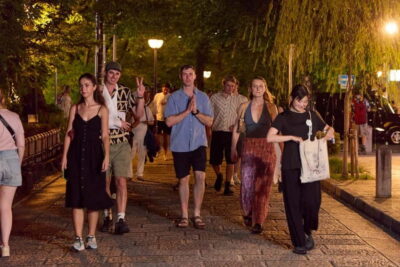
Gion Geisha District Walking Tour – Stories of Geisha
Read our review →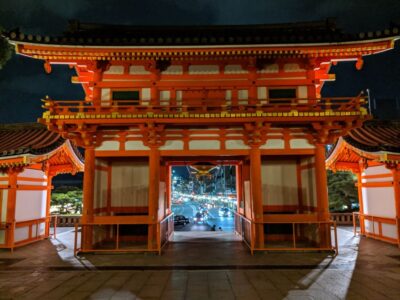
Best of Kyoto: Gion, Geisha, Pagodas & Cobblestones
Read our review →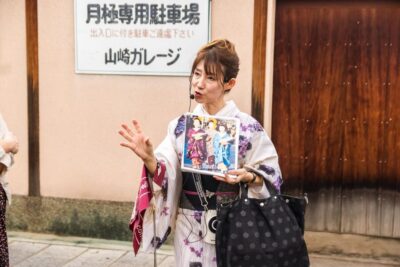
Kyoto Night Foodie Tour in Gion (9+ dishes + 6 Sake tastings)
Read our review →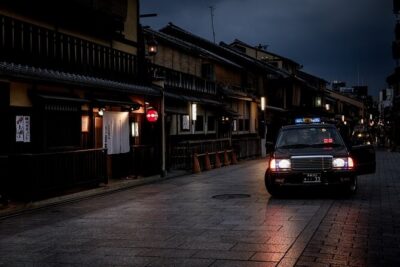
Kyoto Gion Geisha District Walking Tour – The Stories of Geisha
Read our review →