
Reviewed · TEMPLE & SHRINE VISITS
Kyoto: Guided Tour of Toji Temple with 5-Story Pagoda
A 55-meter pagoda changes your Kyoto pace. This 90-minute guided Toji Temple tour turns UNESCO history into something you can actually see and understand, from the landmark tower to the inner halls of Shingon Buddhism.
I love how the guide sets the story straight away, starting with Toji’s 8th-century roots and then connecting what you see to the beliefs behind it. I also like that you get guided access to the Kodo Hall and Kondo Hall, where the religious art can feel overwhelming if you are on your own.
The main drawback to plan around is simple: no photos inside the halls, and you will do a fair amount of walking. That makes it a tough choice if mobility is limited.
In This Review
- Key highlights you will feel fast
- Meeting at Kyoto Station, then heading straight to Toji
- Toji Temple and the 55m 5-story pagoda that dominates the skyline
- Kodo Hall: esoteric Buddhist art and the Cosmic Buddha’s mandala
- Kondo Hall: main worship hall energy, plus the Medicine Buddha trio
- Why the 90-minute format works better than a loose visit
- Practical advice so you enjoy it without stress
- Price and value: what $53 buys you in Kyoto
- Who should book this Toji Temple tour (and who might skip it)
- Should you book this guided Toji Temple experience?
- FAQ
- Where do I meet my guide?
- How long is the Toji Temple guided tour?
- Is this tour private or shared?
- What parts of Toji Temple do we visit?
- Can I take photos during the tour?
- What languages are available for the live guide?
- Is it suitable for wheelchair users or people with mobility impairments?
- Can I cancel and get a full refund?
Key highlights you will feel fast
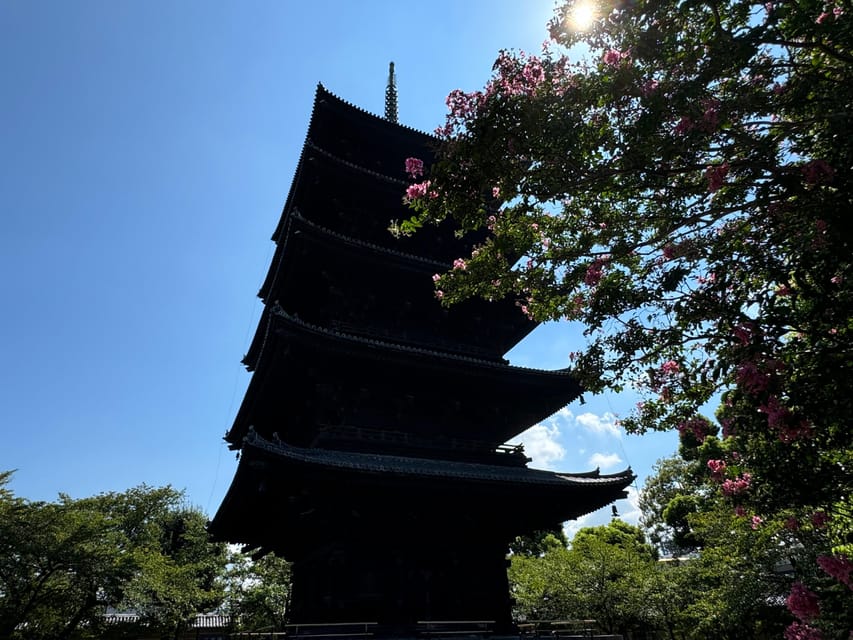
- 55m 5-story pagoda at Toji: the tallest pagoda of its type in Japan
- Kodo Hall statues and mandala order: Dainichi Nyorai surrounded by 21 deities
- Kondo Hall and the Medicine Buddha: Yakushi Nyorai with Nikkō and Gakkō Bosatsu
- Toji’s Shingon context with Kukai (Kobo Daishi): why the art looks the way it does
- A personal touch from your guide: Kanako tailored the tour to your interests
Meeting at Kyoto Station, then heading straight to Toji
Your tour starts at Kyoto Station, meeting your guide in front of the West ticket gate. You will spot them holding a yellow sign with the DeepExperience logo. That sounds small, but it matters in Kyoto, where station exits can waste time if you are not sure where you are going.
This is a private group tour with English or Japanese guidance. In practice, private usually means less rushing and better chances to ask real questions when you see something you do not recognize.
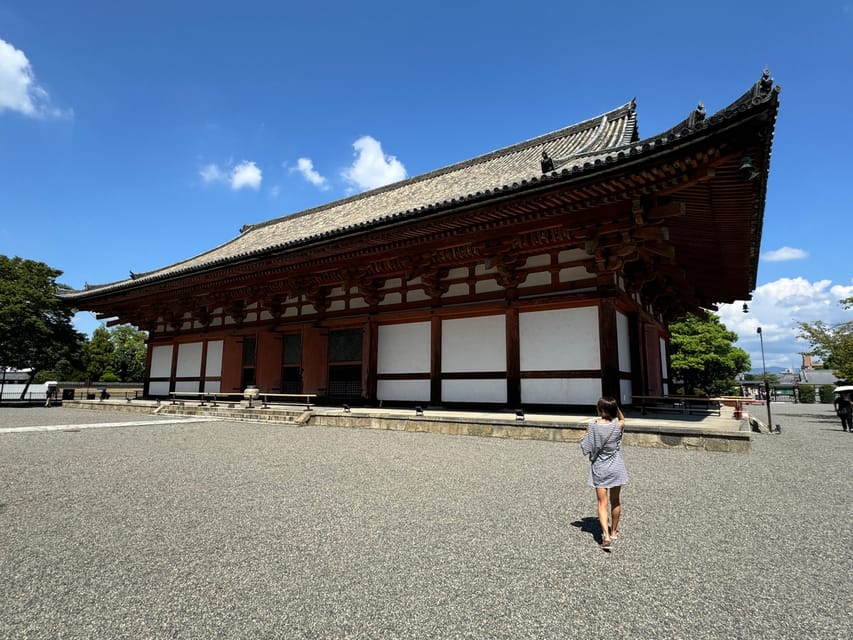
You then head to Toji Temple, a UNESCO World Heritage site. Toji is one of those places where the buildings are the message, so arriving with a guide helps you notice details instead of just admiring the big picture.
Toji Temple and the 55m 5-story pagoda that dominates the skyline
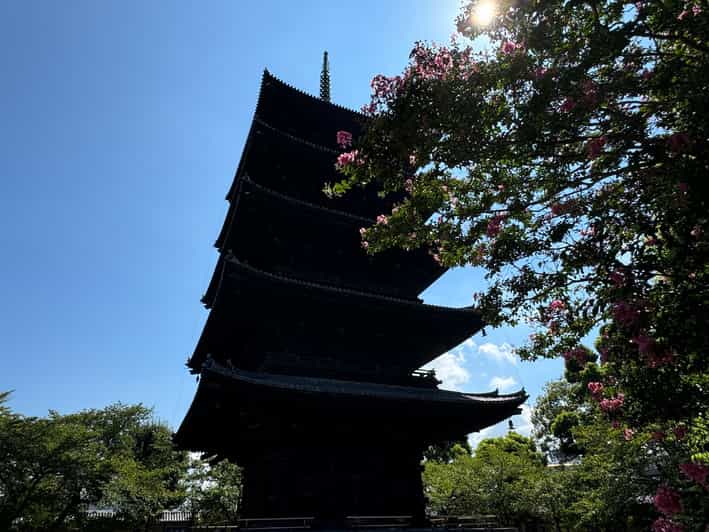
Toji Temple is famous for its 5-story pagoda, and on this tour you get the chance to see it up close. The tower reaches 55 meters, and it is described as the tallest pagoda of its kind in Japan. When you stand near it, you feel how much of the temple’s identity is built around height and symmetry.
The guide also gives you the temple’s background in plain language. Toji’s story goes back to the 8th century, so you are not just looking at old buildings, you are seeing a long-running religious and cultural site that survived wars, fires, and rebuilding.
A practical note: temple photography rules will affect how you capture the pagoda. Flash photography is not allowed, and photography is not permitted inside the halls. So if the pagoda is a must-have photo for you, you will want to plan your timing accordingly once you are outside.
More rooftops worth a detour
- Kyoto: Tea Ceremony Ju-An at Jotokuji Temple
★ 4.9 · 3,207 reviews - Arashiyama Bamboo, Temple, Monkeys, or Secret Sake Brewery
★ 4.8 · 886 reviews - Kyoto: Arashiyama Bamboo Forest, Monkeys, Matcha & Temple Tour
★ 5.0 · 759 reviews - Osaka/Kyoto: Arashiyama, Nara & Fushimi Inari Shrine w/Lunch
★ 4.4 · 754 reviews
Kodo Hall: esoteric Buddhist art and the Cosmic Buddha’s mandala
The Kodo Hall is one of the main reasons people book this tour, because it is packed with symbolism and it is hard to read without context. This hall is known for its esoteric Buddhist art tied to the Shingon tradition. The tour explains Shingon’s arrival through the monk Kukai (Kobo Daishi), which helps you understand why so much of the artwork is structured like a cosmic diagram.
Inside, you focus on a central figure: Dainichi Nyorai, often called the Cosmic Buddha. The tour describes Dainichi Nyorai as surrounded by 21 deities arranged in a mandala formation. That is not decorative crowding. The layout represents the universe’s order, and the guide helps you connect what you see to the core teachings behind Shingon Buddhism.
This is one of those moments where I like having a guide because the statues can look similar at first glance. With the explanations, the “pattern” becomes visible. You can also slow down and notice how each figure seems to belong to a larger system, not just a single icon.
There is also a real atmosphere inside the hall. Even though you are looking at artwork, the tone is calm. The arrangement of statues creates a sense of spiritual depth, and you will likely feel that shift once you stop treating it like a museum display and start treating it like a sacred space.
Kondo Hall: main worship hall energy, plus the Medicine Buddha trio
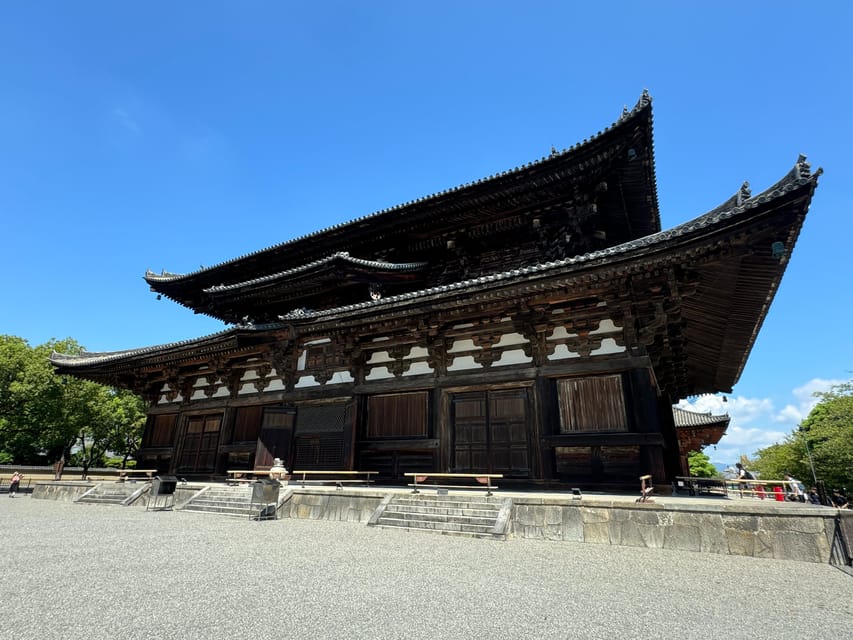
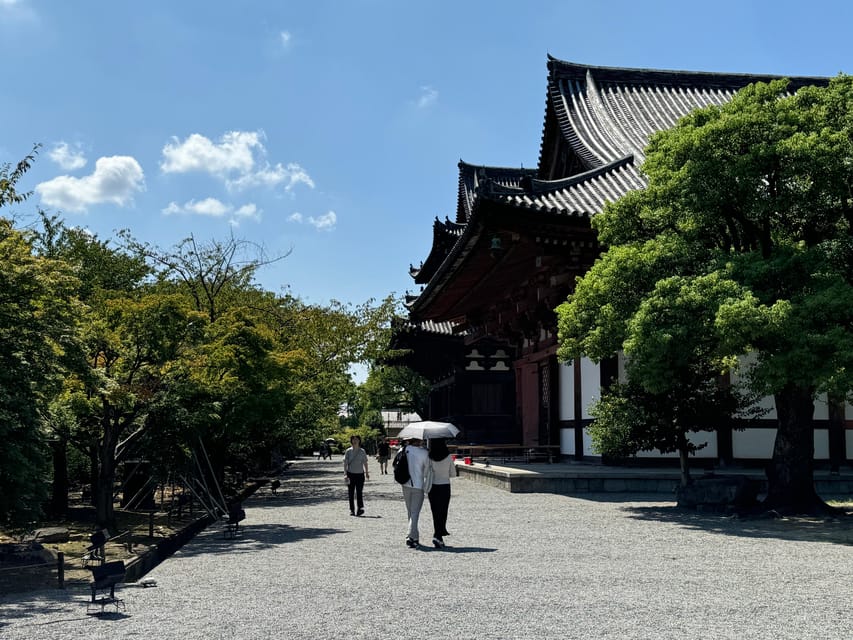
Next you move to the Kondo Hall, the main worship hall of Toji Temple. This hall matters historically because it is described as one of the oldest surviving buildings on the site. The original building dates back to 796, and the present structure dates to the early 17th century after it was rebuilt following a fire.
That history is more than trivia. It explains why the hall feels both old and “repaired,” like a living institution rather than a frozen artifact. The Kondo Hall is also the centerpiece of Toji’s sacred architecture, so it is where the tour’s emotional center lands.
Inside, you see three large Buddha statues. The star is Yakushi Nyorai, the Medicine Buddha, flanked by Nikkō Bosatsu and Gakkō Bosatsu. The tour connects these figures to the idea of sunlight and moonlight bodhisattvas. In other words, the meaning is built into who stands where, not only into what the Buddha represents.
The Medicine Buddha theme is about healing and relief from suffering. The statues are described as masterfully crafted and conveying peace. If you are the type who likes religious art that feels specific, not abstract, this is the hall that tends to satisfy. You get a clear message: comfort, recovery, and the power of medicine as compassion.
Why the 90-minute format works better than a loose visit
This tour is 90 minutes, which is a sweet spot in Kyoto. Kyoto can swallow your day if you are flexible in a way that ignores energy and time. Here, you get a structured path that still leaves room for you to actually look.
In that time you cover the temple complex with a guided route and then focus on two key interiors: Kodo Hall and Kondo Hall. That is smarter than trying to sprint through everything on your own. You will get the big landmarks, but you will also get the “why” behind the most important statues.
One more reason the format is valuable: inside the halls, you are expected to be respectful and keep silence. A guide helps you follow the rhythm of the place. It is easier to do the right thing when someone tells you what matters, and it keeps the visit from turning into accidental chaos.
Practical advice so you enjoy it without stress
Wear comfortable shoes. Toji is not a sit-and-read experience. There is enough walking that you will feel it by the end if you arrive in stiff footwear.
Go in ready for restrictions. Flash photography is not allowed, and photography is not permitted inside the halls. That means you should use your eyes and your guide’s explanations as your main “souvenir.” If you want photos, save them for areas where you are allowed to photograph, and be ready that the best interior scenes will be off-limits.
Also, think about language. The tour offers English and Japanese, and your experience quality will depend on how well the guide explains symbolism to your level. If you care deeply about Shingon Buddhism, ask questions as you go. If you are newer to it, the guide can still keep things clear and focused.
A quieter way to spend a day in Kyoto

Price and value: what $53 buys you in Kyoto
At $53 per person for about 90 minutes, this tour is priced for a focused, guided experience that includes entry to the Kodo and Kondo halls and the chance to see the 55m pagoda. The value is not just that someone brings you to the right doors. The value is the interpretation.
Without a guide, you can still enjoy Toji Temple, but you might miss why the mandala formation is significant or what the Medicine Buddha trio represents beyond a general sense of Buddhist imagery. With a guide, the art becomes legible. That is especially true for the Kodo Hall, where the Dainichi Nyorai and 21 deities arrangement can feel overwhelming without a map in your head.
This is also a good match if you want a short Kyoto plan that does not require you to research temple rules and symbolism ahead of time. In that sense, the cost buys you time and clarity, not just access.
Who should book this Toji Temple tour (and who might skip it)
You should strongly consider this tour if you:
- Want a UNESCO Kyoto experience that is more than sightseeing photos
- Like Buddhist art when someone explains the “structure” behind the statues
- Have limited time and want 90 minutes that stay focused on the best parts of Toji
You might skip it if:
- You have difficulty walking, because the tour is not suitable for wheelchair users or people with mobility impairments
- You are counting on photos inside the halls, since photography is not permitted there
- You prefer unstructured visits where you do not have to follow temple instructions
The private-group setup also makes sense if you dislike feeling herded. A good guide can help you slow down in the right places, and one of the best signals here is that Kanako is described as personalizing the tour to your interests, with strong knowledge of local customs and history.
Should you book this guided Toji Temple experience?
If you want a short, high-impact introduction to Toji Temple, I think this is a smart booking. The combination of the 55m pagoda outside and the guided interpretation inside Kodo Hall and Kondo Hall makes the tour feel worth it, even with the photography limits.
Book it when you value context. The real payoff is understanding why the statues and layouts matter in Shingon Buddhism, from Dainichi Nyorai’s cosmic order to Yakushi Nyorai’s healing message. If that kind of meaning is your thing, you will likely leave feeling like you understood more than you expected in just 90 minutes.
FAQ
Where do I meet my guide?
Meet your guide in front of the West ticket gate at Kyoto station. The guide will be holding a yellow sign with the DeepExperience logo.
How long is the Toji Temple guided tour?
The tour lasts about 90 minutes.
Is this tour private or shared?
This is a private group tour.
What parts of Toji Temple do we visit?
You visit Toji Temple and tour the Kodo Hall and Kondo Hall, with time to see the 5-story pagoda.
Can I take photos during the tour?
Photography is not permitted inside the halls. Flash photography is also not allowed.
What languages are available for the live guide?
The live tour guide is available in English and Japanese.
Is it suitable for wheelchair users or people with mobility impairments?
No. It is not suitable for people with mobility impairments or wheelchair users.
Can I cancel and get a full refund?
Yes. You can cancel up to 24 hours in advance for a full refund.
New This Season
- Koyasan Day Trip by Private Car from Kyoto
- Old Port Town and Ultimate Sake Tasting Private Tour From Kyoto
- Kyoto’s Timeless Charm: 3hr Exploration of History and Peace
- Kyoto: 5 Types of Sushi Making
- Sacred Peak & Ancient Paths: Kurama-Kibune Hiking Experience
- Kyoto: Exclusive ZEN practice at Manpukuji temple in Uji
- Kyoto: Private Seasonal Aroma Yoga Class
- Traversing Kyoto’s Scenic West – Arashiyama to Kinkakuji
Temple & Shrine Visits, compared.
Arashiyama Bamboo, Temple, Monkeys, or Secret Sake Brewery
Read our review →
Arashiyama Bamboo Forest, Monkeys, Matcha & Temple Tour
Read our review →
Arashiyama, Nara & Fushimi Inari Shrine w/Lunch
Read our review →
Kyoto Zen Meditation & Garden Tour at a Zen Temple with Lunch
Read our review →
KYOTO Tea Ceremony with kimono near by Imamiya Jinjya Shrine
Read our review →Arashiyama Bamboo, Matcha, Monkeys & Temple Tour
Read our review →Also filed under