
Reviewed · FUSHIMI INARI SHRINE WALKS
Kyoto: Half-day Guided Bike Tour with Fushimi Inari
Kyoto is better at bicycle speed. This half-day ride links Toji, Gion backstreets, and Fushimi Inari’s orange torii in a smooth loop that keeps moving without feeling rushed. It also gets you off the main foot-traffic paths at just the right moments.
I like two things most. First, the temple and shrine sequence makes geographic sense, starting with Toji and flowing toward Fushimi Inari. Second, the guides put real personality into the stops, from Jay’s passionate Kyoto storytelling to Indra’s practical insider angles and rain-friendly pacing.
The main drawback is simple: you need to be comfortable riding a bike for a few hours. If rain hits hard, paths near canals and river edges can feel slippery, so you will want steady footing and good biking comfort.
In This Review
- Key takeaways before you pedal
- South Kyoto by bike, why this route works
- Starting at Cycle Kyoto near Kyoto JR Station
- Toji: starting with Kyoto’s oldest temple
- Higashi-Honganji: temple scale you can feel
- Takase Canal and Kamo River: quick scenic resets
- Gion backstreets: the calm side of geisha district Kyoto
- Tofukuji photo stop: what to expect and how to maximize it
- Fushimi Inari Taisha: torii gates with a smart landing strategy
- Bikes, safety, and who should request an e-bike
- Price and value for a half-day guided ride
- Should you book this Kyoto bike tour with Fushimi Inari?
- FAQ
- How long is the Kyoto half-day guided bike tour to Fushimi Inari?
- What is the group size for this tour?
- What is included in the price?
- Is there an e-bike option?
- What is the minimum age to join?
- Is this tour suitable if I have back problems or cannot ride a bike?
- Where do we meet from Kyoto JR Station?
Key takeaways before you pedal
- UNESCO Toji first, Kyoto’s oldest temple sets the tone fast
- Gion backstreets on bikes, less waiting, more street-level Kyoto
- Riverside breaks at Takase Canal and the Kamo River for breathing room
- Tofukuji is mostly for photos, so don’t expect a long guided wander
- Fushimi Inari torii gates last, letting you start the day relaxed and end at the big payoff
- Small group up to 8, which usually means fewer bottlenecks on narrow streets
South Kyoto by bike, why this route works
This tour is built for one very smart idea: use a bike to connect South Kyoto’s highlights without spending half your day in transit. You get enough structure from the guide to know what you are looking at, but you also get the freedom of cycling through smaller lanes where you can actually feel like you are in Kyoto, not just passing through it.
The pacing is also the point. You start with heavier temple sights, then shift toward scenic walking segments by water, then finish with the world-famous shrine experience. That order matters because it helps you save your energy for the torii-gate climax at Fushimi Inari.
Starting at Cycle Kyoto near Kyoto JR Station
Your meetup is close to Kyoto JR Station, so you do not need to fight across town just to begin. You go past Avanti, cross one set of traffic lights, then after the Daily Yamazaki convenience store, take the next left. It is the kind of meeting point you can find even if you are running late, and that is a big deal when you are planning a half day.
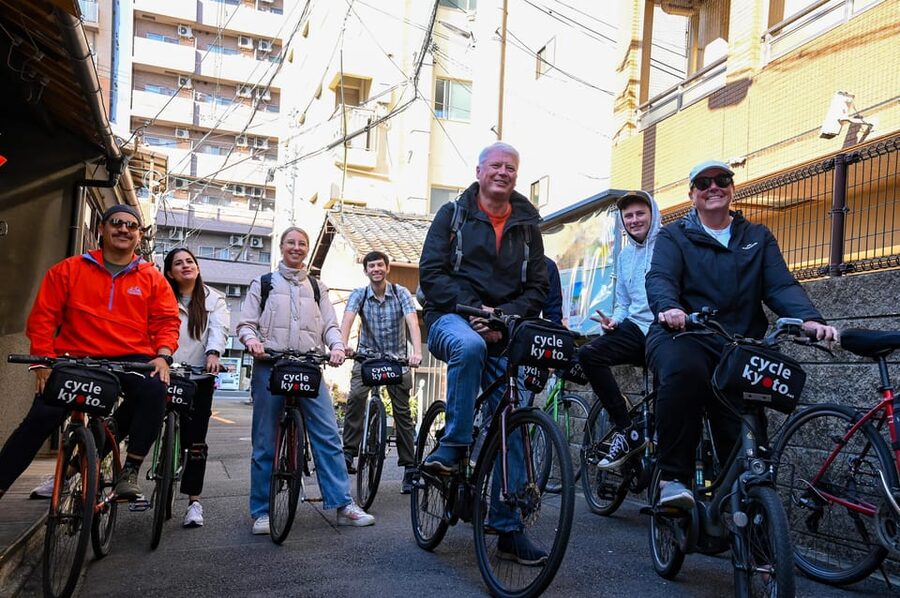
Once you arrive, there is a safety briefing before you set off. This matters more than it sounds. Kyoto’s streets can be calm, but you still want clear rules for bike spacing, crossings, and how the group stays together.
You will also have the basics covered: bicycle rental, a helmet, water, and an English live guide. That means you can focus on actually enjoying the ride instead of micromanaging your day.
Still climbing through the orange gates?
- Kyoto: Fushimi Inari, Kinkakuji, Bamboo Grove 1 Day Bus Tour
★ 4.8 · 4,316 reviews - Fushimi Inari Hidden Hiking Tour (Private Option Available)
★ 5.0 · 1,750 reviews - Osaka/Kyoto:Kinkakuji,Arashiyama,FushimiInariShrine,NaraPark
★ 4.1 · 1,596 reviews - Kyoto/Osaka: Nara, Fushimi Inari Taisha, Arashiyama Bus Tour
★ 4.7 · 1,275 reviews
Toji: starting with Kyoto’s oldest temple
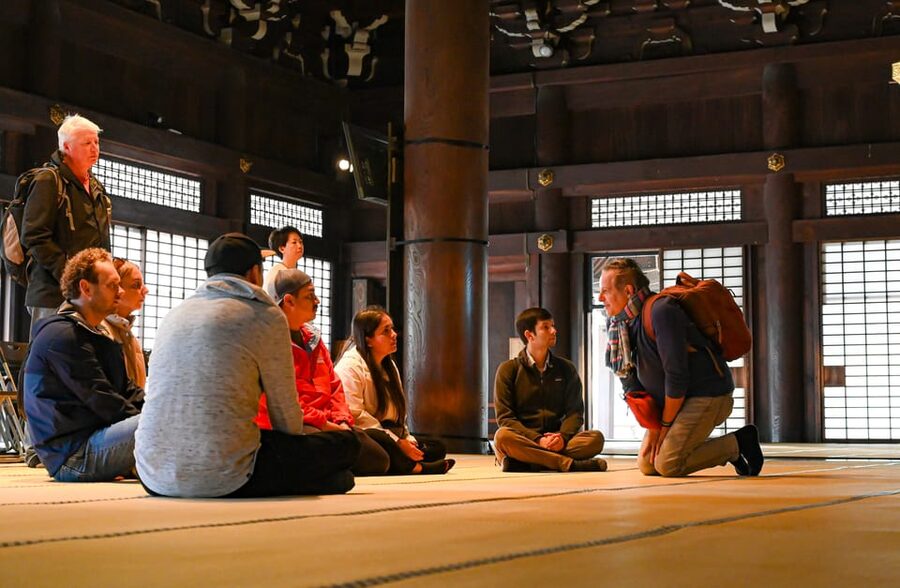
Toji is your first major stop, and it is a strong choice. As a UNESCO heritage site and Kyoto’s oldest temple, it gives you instant context for why this city is still so tightly tied to Buddhism and temple culture.
You spend about 35 minutes with your guide at this stop. In that time, you should not expect a slow museum-style walk, but you will get enough orientation to understand what you are seeing and why it matters. This is the kind of start that helps you later, when the tour transitions from temple space to neighborhood streets.
The value here is not just the name on a sign. It is the way you begin with something foundational, then use the rest of the tour to watch Kyoto’s religious and cultural geography unfold around you.
Higashi-Honganji: temple scale you can feel
Next up is Higashi-Honganji, one of Japan’s largest temples. This stop leans more toward scale than quick photo moments. When you move through a site of that size with a guide, it is easier to notice how the grounds, buildings, and pathways work together.
You also get around 35 minutes here. That time is usually enough for a meaningful look without turning the tour into a long sit-down experience. It also breaks up the riding, so your body is not stuck in one mode.
If you want context for Kyoto beyond the postcard sites, this is where the tour can do the most for you. A good guide will connect Higashi-Honganji to what you will see later around Gion and Fushimi Inari.
Takase Canal and Kamo River: quick scenic resets
Between temples, the tour adds time to breathe at Takase Canal and the Kamo River. You spend about 10 minutes at the Takase Canal and 15 minutes along the Kamo River.
These breaks are practical. Cycling is great, but it can also make your head spin when you are visiting several major places in a row. Waterways give you a chance to slow down, take pictures, and reset your attention so the next stop feels special instead of automatic.
Also, canals and river edges tend to offer a different angle of Kyoto than the main streets. Even when you are just standing and looking, you start to see how the city’s layout shapes daily life.
Gion backstreets: the calm side of geisha district Kyoto
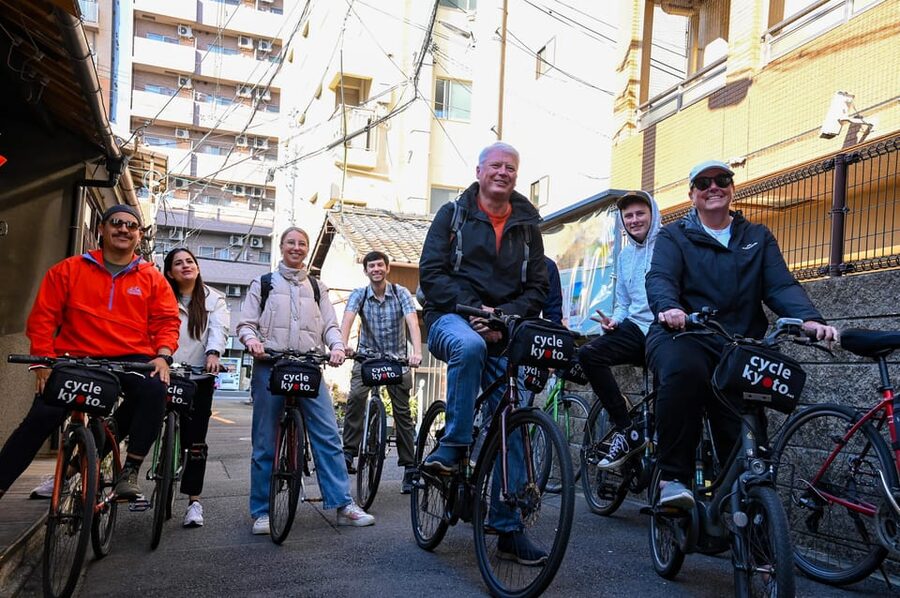
After the canal-and-river pause, you roll into Gion and get the guided portion there, around 30 minutes. This is one of the tour’s best ideas: you see Gion on bikes through backstreets rather than doing the full stop-and-go tourist shuffle.
Gion is famous, but that fame can also be exhausting. A guided bike loop helps you catch the vibe without spending your whole time fighting crowds or trying to guess where the interesting streets actually are.
You also come through Gion after the early temple stops, so you feel the shift in atmosphere. It goes from big spiritual sites into a more everyday Kyoto mood, including teahouse district streets and the kind of narrow lanes that make you feel like you are moving like a local.
If you care about getting street-level photos, this segment is where you can do it. Even if you only capture a handful of images, you will likely get shots that feel more like Kyoto lived-in than Kyoto staged.
A quieter way to spend a day in Kyoto

Tofukuji photo stop: what to expect and how to maximize it
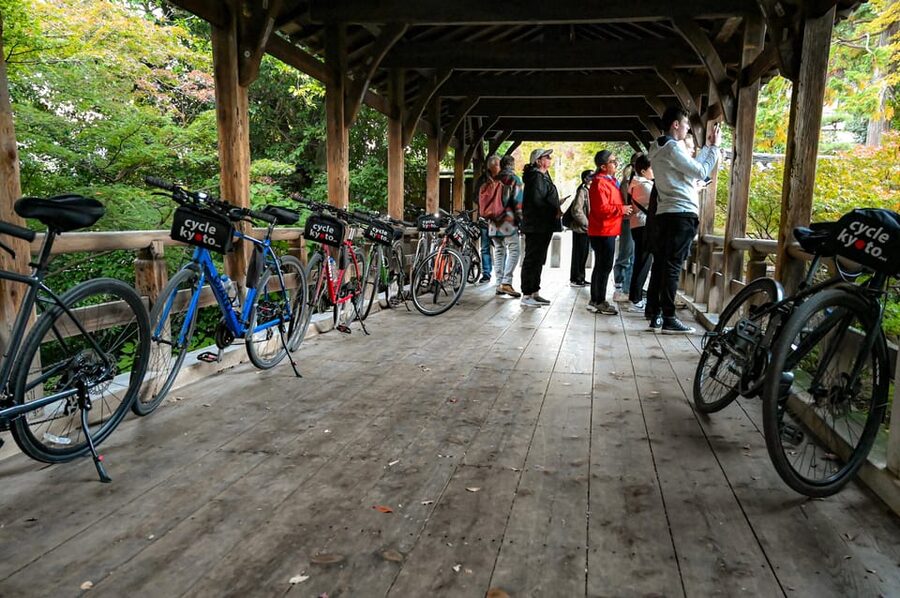
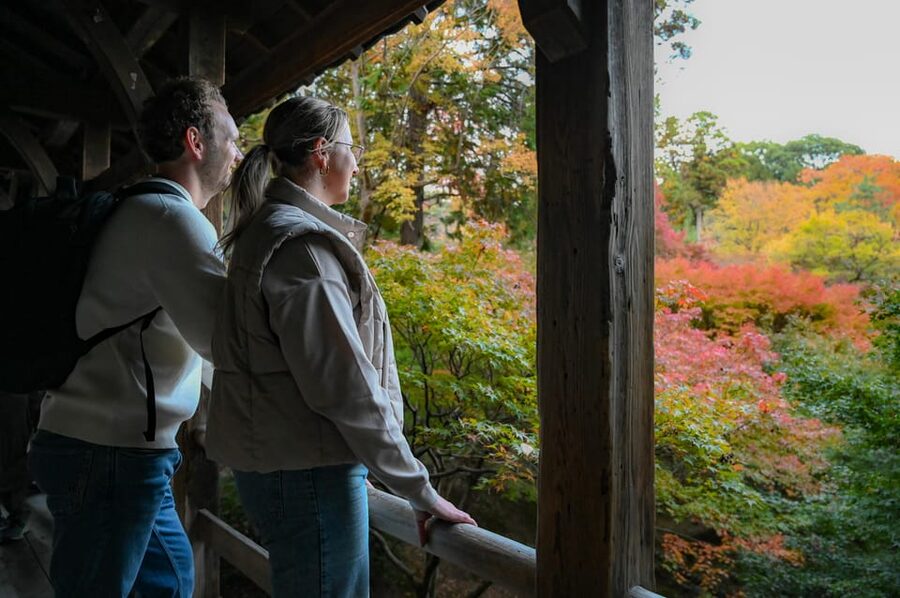
Then comes Tofukuji Temple, with a photo stop of about 30 minutes. This is not a full guided walking session through every corner, so manage expectations. Think of it as a strong photo window plus a short guided orientation.
For me, this format can be a good thing. After earlier stops, you know what to look for, and you can focus on composition: angles, framing, and the temple sightlines that will make your photos actually look like you were there.
You will likely want to bring your camera out quickly, because once the group moves on, you are not lingering on your own schedule. If you are serious about photos, plan to keep your lens or camera ready during the first part of the stop.
Fushimi Inari Taisha: torii gates with a smart landing strategy
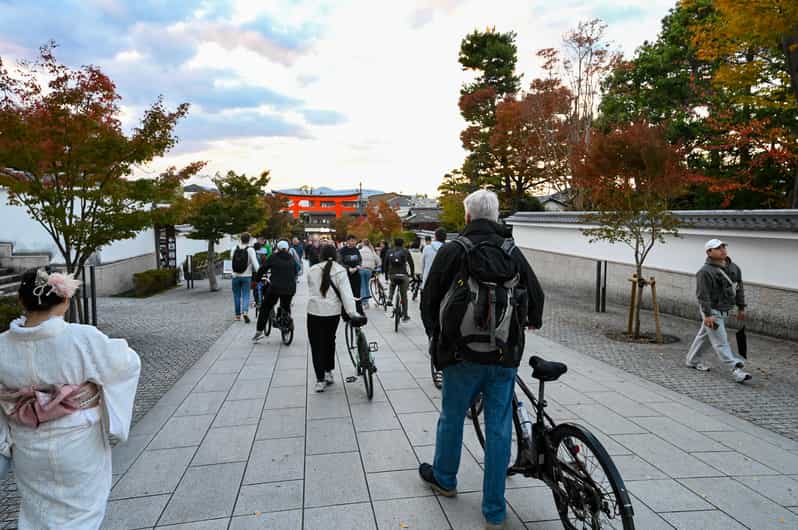
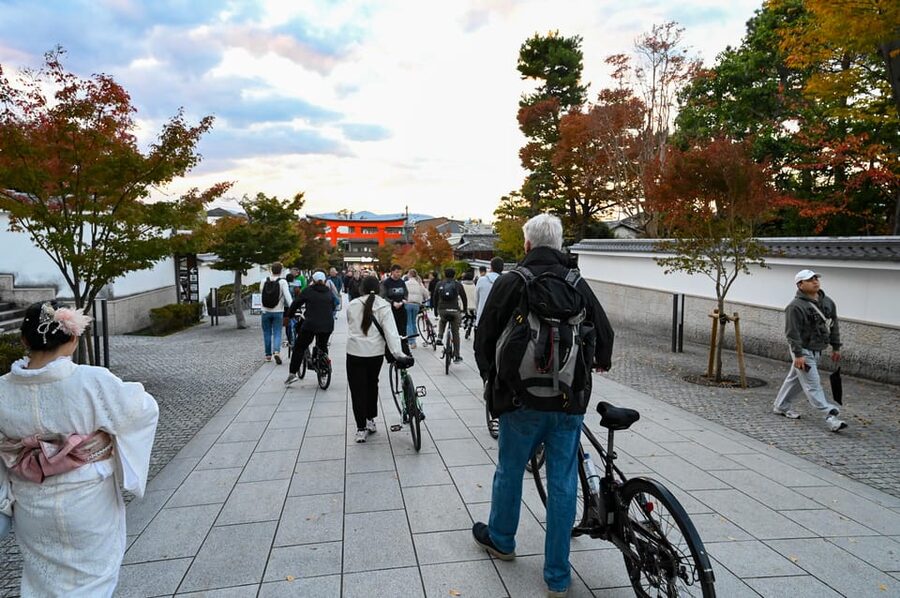
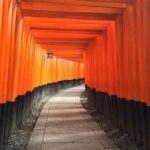
The final big attraction is Fushimi Inari Taisha, and the torii gates are the reason people come. The tour gives you about 45 minutes with a guided portion there, including time for a stroll around the famous orange torii.
Starting earlier and ending here is a smart structure. By the time you arrive, you are not exhausted from only walking every step from the start. You have had breaks for water scenery, you have absorbed the temple context, and now you can enjoy the shrine experience as the main event.
One practical tip: at Fushimi Inari, the mood changes as you move deeper into the torii path. The best photos and the most peaceful moments often come after you have walked a bit. With a guided tour, you get a framework for where to go and how to pace yourself.
Bikes, safety, and who should request an e-bike
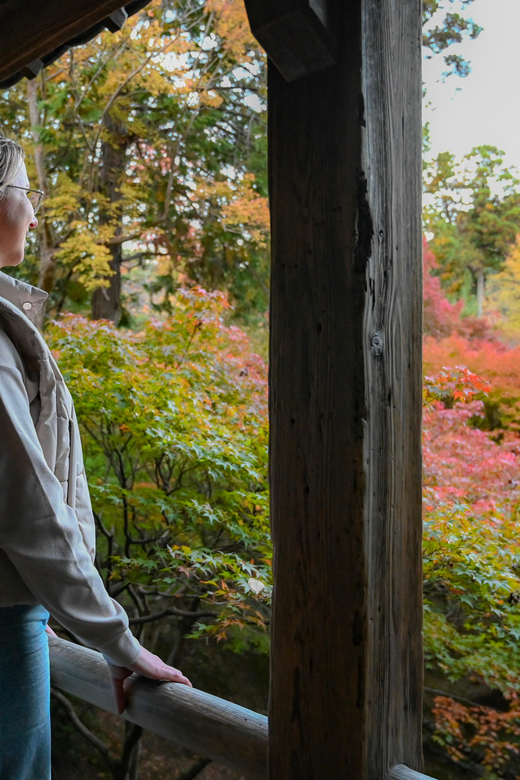
This tour is not for everyone, and that is fair. It is not suitable for people with back problems, and it is not right for anyone who cannot ride a bike. There is a minimum age of 13 for public tours.
Good news: the operator provides helmets, and the group stays small, limited to 8 participants. In practice, that helps your guide keep an eye on the group and adjust the ride when needed.
E-bikes are available upon request for an upgrade fee of 3000 yen. If you want to keep the experience comfortable, an e-bike can be the difference between enjoying the scenery and spending your energy thinking about effort.
What should you bring?
- Comfortable shoes
- Warm clothing (even if you think it will be mild, Kyoto can surprise you)
- Sunscreen
- A camera
- Comfortable clothes for biking
If you feel even slightly unsure about your biking comfort, I would lean toward the e-bike option. It keeps the tour fun, not just doable.
Price and value for a half-day guided ride
At $77 per person for about 210 minutes, this sits in the middle for guided experiences in Kyoto, but the value is in what you get bundled. You are not just paying for a guide to talk. You are getting bicycle rental, a helmet, water, and an itinerary that hits multiple major sites in a compact timeframe.
Also, you are paying for the time-saving factor of cycling. Kyoto’s best sights can be spread out, and doing a similar loop on your own can mean more stops, more route planning, and more backtracking.
What is not included is meals. That is the one clear trade-off. If you book this morning or early afternoon, plan to eat after the tour so you are not biking hungry.
For families or groups, the small-group format is a plus. For solo travelers, it is also a nice way to get local context without the pressure of planning the route yourself.
Should you book this Kyoto bike tour with Fushimi Inari?
Book it if you want a smart, efficient way to see South Kyoto highlights without spending your day in transit. It is especially worth it if you like temples, want Gion street views, and still want Fushimi Inari as the final payoff.
Skip it if you cannot ride a bike comfortably or you have back issues. Also, if you hate the idea of cycling in changing weather, you might feel more stressed than excited. This tour can work in rain, but your enjoyment will still depend on your comfort level with wet streets and short walks.
If you do book, I recommend showing up ready to ride with warm clothing and closed-toe shoes. Then let the guide handle the transitions. Your best memories here will come from the moments between the big landmarks, when Kyoto feels like a neighborhood you are moving through, not a checklist you are trying to complete.
FAQ
How long is the Kyoto half-day guided bike tour to Fushimi Inari?
The total duration is 210 minutes.
What is the group size for this tour?
The group is small, limited to 8 participants.
What is included in the price?
It includes bicycle rental, a helmet, a live English guide, and water.
Is there an e-bike option?
Yes. E-bikes are available upon request for an upgrade fee of 3000 yen.
What is the minimum age to join?
The minimum age is 13 for a public tour.
Is this tour suitable if I have back problems or cannot ride a bike?
No. It is not suitable for people with back problems and it is not suitable for people who cannot ride a bike.
Where do we meet from Kyoto JR Station?
From Kyoto JR Station, go past Avanti, cross one set of traffic lights. After the Daily Yamazaki convenience store, take the next left.
New This Season
- Koyasan Day Trip by Private Car from Kyoto
- Old Port Town and Ultimate Sake Tasting Private Tour From Kyoto
- Kyoto’s Timeless Charm: 3hr Exploration of History and Peace
- Kyoto: 5 Types of Sushi Making
- Sacred Peak & Ancient Paths: Kurama-Kibune Hiking Experience
- Kyoto: Exclusive ZEN practice at Manpukuji temple in Uji
- Kyoto: Private Seasonal Aroma Yoga Class
- Traversing Kyoto’s Scenic West – Arashiyama to Kinkakuji
Fushimi Inari Shrine Walks, compared.
Fushimi Inari, Kinkakuji, Bamboo Grove 1 Day Bus Tour
Read our review →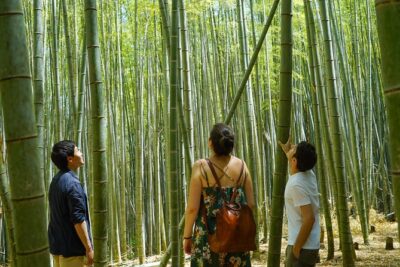
Fushimi Inari Hidden Hiking Tour (Private Option Available)
Read our review →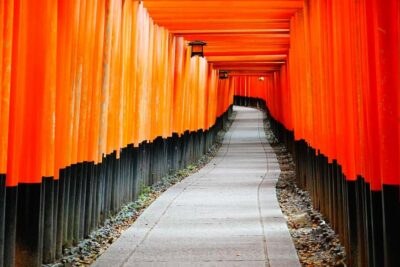
Kinkakuji,Arashiyama,FushimiInariShrine,NaraPark
Read our review →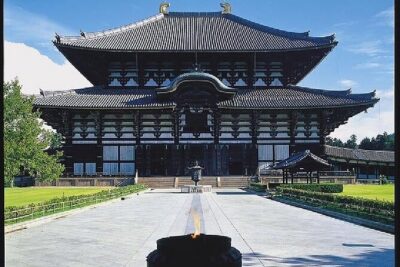
Nara, Fushimi Inari Taisha, Arashiyama Bus Tour
Read our review →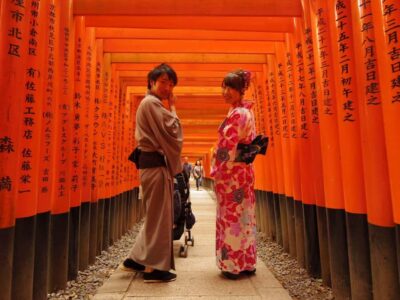
Arashiyama, Nara & Fushimi Inari Shrine w/Lunch
Read our review →
Nijo Castle, Kiyomizu & Fushimi Inari Guided Tour
Read our review →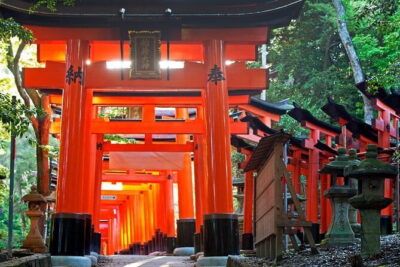
Nijo, Kinkaku-ji, Arashiyama, Kiyomizu & Fushimi Inari
Read our review →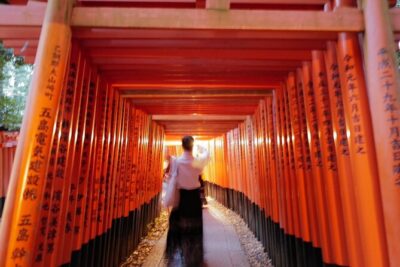
Also filed under