
Reviewed · WORKSHOPS
Kyoto: Japanese Hair Accessories & Brooch Workshop
Kyoto is a great place to slow down, make something, and learn by doing. This 90-minute workshop has you creating a personalized hair accessory or brooch with traditional materials like washi and mizuhiki cords. I love that you get real creative control over colors and textures, and you also get dressed up in a rented haori while you work. One thing to consider is the pace: it is designed to be quick, so if you want a very lengthy, detailed art session, plan to add extra time elsewhere in Kyoto.
You will leave with more than just a craft. The included certificate, a handmade souvenir, and tea and sweets make it feel like a complete cultural moment, not a grab-and-go activity. And English-speaking instruction is backed by strong classroom energy, with teachers like Mikiko-san and Ayumi-san often praised for being kind and patient.
In This Review
- Key Things to Know Before You Go
- Entering Kyoto Through a Creative Hands-On Class Near Nijo Castle
- What You’ll Make: A Hair Ornament or Brooch You Can Actually Wear
- The Haori Jacket Experience, Plus Why the Photo Session Feels Worth It
- How the 90-Minute Crafting Flow Typically Feels
- 1) Arrival and getting set up
- 2) Choosing colors and materials
- 3) Building with washi, mizuhiki, and folded details
- 4) Adding the finishing touches
- 5) Wearing it and taking photos
- 6) Tea, sweets, and take-home items
- Value in the $80 Price: What You’re Getting for Your Money
- Who This Workshop Fits Best in Your Kyoto Plans
- Great for
- You might want to skip it if
- Practical Tips to Get the Best Workshop Result
- The Bottom Line: Should You Book This Kyoto Accessory Workshop?
- FAQ
- How long is the Kyoto hair accessories and brooch workshop?
- What is the price per person?
- Where in Kyoto is the workshop located?
- What can I make during the workshop?
- What is included in the workshop price?
- What should I bring with me?
- Is the workshop offered in English, and is it family-friendly?
Key Things to Know Before You Go
- Two wearable options: you design a piece that works as either a hair ornament or a brooch
- Traditional materials you actually use: washi paper, mizuhiki cords, origami elements, and artificial Japanese flowers
- Haori jacket rental included: you wear it during the workshop for a more authentic feel
- Personal choices matter: you pick colors and materials so the final accessory looks like you
- A thoughtful finish: photo time with your creation, plus a certificate and a handmade souvenir
- Low-pressure, family-friendly vibe: there is a kid-friendly version available too
Entering Kyoto Through a Creative Hands-On Class Near Nijo Castle
This workshop is one of those Kyoto activities that makes the city feel personal fast. Instead of just walking past crafts and traditions, you work with the materials yourself. And because it is located near Nijo Castle in central Kyoto, it slots nicely into a sightseeing day that also includes areas like Gion, Arashiyama, Kawaramachi, and Karasuma.
I like that it is short. A 90-minute class is long enough to learn, make decisions, and take home something you helped create. It is also short enough that you do not lose your whole day to planning and transit. If you are traveling solo, this format is especially friendly because you are doing the activity, not searching for conversation.
One practical point: you will want comfortable clothes. You are crafting, handling small pieces, and wearing a rented haori jacket. Dress for movement and easy sitting, and bring your camera if you care about documenting your finished look and piece.
What You’ll Make: A Hair Ornament or Brooch You Can Actually Wear
The workshop’s main idea is simple and smart: design a one-of-a-kind accessory that can be worn in two ways. You can treat it like a hair ornament, or pin it like a brooch. That flexibility matters because it makes your souvenir more useful after the trip. A craft that only works in one place is fun for a moment. One that works in multiple ways is easier to keep.
The materials connect you to Japanese aesthetics in a hands-on way:
- Washi (traditional paper) for structure and texture
- Mizuhiki cords for accenting and tying
- Origami elements for the folded look and form
- Artificial Japanese flowers to bring seasonal color and finishing detail
The teacher guides you through the process, but the design choices come from you. You choose your favorite colors and materials, so even if the workshop uses a set of traditional components, the final look still feels personal.
This is also where the experience becomes more than a souvenir factory. When you pick colors, you are making style decisions like you would for an outfit. When you assemble elements, you are learning how Japanese craft techniques produce a clean, balanced result. You end up understanding the “why” behind the look, not just copying the steps.
A quieter way to spend a day in Kyoto
- Kyoto: 45-Minute Tea Ceremony Lesson Experience
★ 4.3 · 2,378 reviews - Ramen Cooking Class at Ramen Factory in Kyoto
★ 5.0 · 1,937 reviews - Kyoto : Chopsticks Making Workshop in Gion with Engraving Option
★ 5.0 · 958 reviews - Kyoto: Samurai Sword Class by Experts in Traditional Arts
★ 4.9 · 657 reviews
The Haori Jacket Experience, Plus Why the Photo Session Feels Worth It
One of the most enjoyable parts is the haori jacket rental, included for the workshop. This matters for two reasons.
First, it changes how you move and pay attention. When you wear a haori, the activity feels ceremonial, not casual. Even if you are not from Japan, the clothing helps you slip into the mood of making something with intention.
Second, it sets up a better photo. The workshop includes a chance to take pictures with your creation and outfit. For many people, the craft is the highlight, but photos are what help you remember the moment later. This one is built into the flow, so you do not have to rush to find a spot to shoot after you are done.
If you want the best results, bring a camera you already know how to use. The class time is meant for crafting, so you do not want to waste energy on fiddling with settings. Also, plan to wear something you can move in easily under the haori.
How the 90-Minute Crafting Flow Typically Feels
Think of the class like a sequence of calm decisions and guided steps. There is not time to stress, and that is the point. You show up, choose materials, make the piece, then finish with a small celebratory sendoff.
Here is what the experience includes, in the order that helps it make sense:
1) Arrival and getting set up
You will be directed through the workshop format, provided the crafting materials, and equipped with the haori jacket. The instruction is offered in English and Japanese, so even if your Japanese is basic, you can follow along.
2) Choosing colors and materials
This is where your accessory starts to feel like yours. You pick your preferred color palette and the materials that go into your design. I love that you are not stuck with a single template. You can still create within traditional boundaries, but you have room to express yourself.
A day of temples goes further with something to break it up.


3) Building with washi, mizuhiki, and folded details
You work with the core components like washi paper, mizuhiki cords, and origami-related elements. The teacher’s job is to keep the steps understandable and the finishing details neat. In past classes, teachers such as Mikiko-san have been praised for patience, which is exactly what you want when you are working with small pieces and precision work.
4) Adding the finishing touches
This is where artificial Japanese flowers help the accessory look complete. The goal is a polished result that looks balanced from the front and from a distance. Your design choices guide how bold or soft the final piece feels.
5) Wearing it and taking photos
When you finish, you get photo time with your creation and outfit. This is a nice break from pure crafting. It helps you appreciate the end result before you leave.
6) Tea, sweets, and take-home items
The class ends with Japanese tea and sweets, plus extras like your certificate of completion and an additional handmade souvenir. That combination turns the workshop into a full experience, not just a craft session.
Value in the $80 Price: What You’re Getting for Your Money
At $80 per person, this workshop is not a “cheap and cheerful” souvenir stop. But it is also not overpriced for what is included.
Here is what is bundled into the price:
- 90-minute guided crafting time
- crafting materials
- haori jacket rental
- certificate of completion
- handmade souvenir (in addition to your own accessory)
- Japanese tea and sweets
- instruction in English and Japanese
When you compare that to paying separately for guided experiences, craft supplies, and a cultural add-on like tea, the total starts to make sense. The workshop is also short, which reduces the opportunity cost of time. You get a strong cultural activity without losing the whole day.
If you are the type of traveler who values high-touch experiences, this is a solid spend. If you are only chasing Instagram photos, you might still enjoy the result, but you will likely feel the value more when you treat the workshop as a learning experience.
Who This Workshop Fits Best in Your Kyoto Plans
This is one of those flexible activities that works across travel styles.
Great for
- Solo travelers who want something structured and friendly
- Couples who want a shared memory that is wearable
- Groups who enjoy a calm, hands-on project
- Families, because children can participate with a kid-friendly version of the workshop
One detail I appreciate is that it is family-friendly without turning into a watered-down craft. The experience is built around guided making, and it is designed to feel accessible.
You might want to skip it if
You are strictly hunting for high-energy, major sightseeing with lots of walking. This is a seated craft experience. It is peaceful by design, and the value comes from making something, not from seeing a long chain of monuments.
Practical Tips to Get the Best Workshop Result
A little preparation helps a lot with crafts like this.
- Bring a camera if you care about the finished look and the haori outfit
- Wear comfortable clothes for sitting and handling materials
- Go in ready to choose colors. If you overthink, you lose creative momentum
- Plan around your energy. This is relaxing, but you still need focus for small steps
If you have a preference for how you will use the final piece, decide early whether you want it to read more like a hair ornament or more like a brooch. The class lets you create a two-way accessory, but your styling choices can still influence how you imagine wearing it.
The Bottom Line: Should You Book This Kyoto Accessory Workshop?
Book it if you want a short, meaningful Kyoto experience where you make something with traditional materials, wear a haori, and leave with multiple take-home items. The inclusion of instruction in English and Japanese, plus the certificate, handmade souvenir, and tea and sweets, turns it into more of a complete cultural stop than a typical craft class.
Consider skipping if you have zero interest in crafting and only want sightseeing highlights. This is not that kind of activity. It is calmer and more personal, and it pays off best when you enjoy hands-on learning and style choices.
If that sounds like your travel taste, you will likely love the way the time flies by, the way your accessory turns out, and the fact that you get to bring home something you can actually wear.
FAQ
How long is the Kyoto hair accessories and brooch workshop?
The workshop lasts 90 minutes.
What is the price per person?
The price is $80 per person.
Where in Kyoto is the workshop located?
It is near Nijo Castle in central Kyoto, with easy access to areas like Gion, Arashiyama, Kawaramachi, and Karasuma.
What can I make during the workshop?
You create a unique accessory that can be worn as a hair ornament or as a brooch, using traditional materials such as washi, mizuhiki cords, origami, and artificial Japanese flowers.
What is included in the workshop price?
Included are the 90-minute workshop, crafting materials, a haori jacket rental, a certificate of completion, a handmade souvenir, and Japanese tea with sweets.
What should I bring with me?
Bring a camera and wear comfortable clothes.
Is the workshop offered in English, and is it family-friendly?
Instruction is available in English and Japanese, and children are welcome with a kid-friendly version of the workshop.
New This Season
- Koyasan Day Trip by Private Car from Kyoto
- Old Port Town and Ultimate Sake Tasting Private Tour From Kyoto
- Kyoto’s Timeless Charm: 3hr Exploration of History and Peace
- Kyoto: 5 Types of Sushi Making
- Sacred Peak & Ancient Paths: Kurama-Kibune Hiking Experience
- Kyoto: Exclusive ZEN practice at Manpukuji temple in Uji
- Kyoto: Private Seasonal Aroma Yoga Class
- Traversing Kyoto’s Scenic West – Arashiyama to Kinkakuji
Workshops, compared.

Ramen Cooking Class at Ramen Factory in Kyoto
Read our review →
Chopsticks Making Workshop in Gion with Engraving Option
Read our review →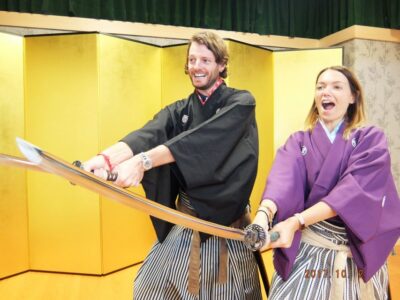
Samurai Sword Class by Experts in Traditional Arts
Read our review →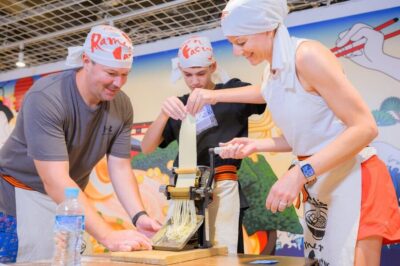
Ramen Cooking Class at a Ramen Factory with Souvenir
Read our review →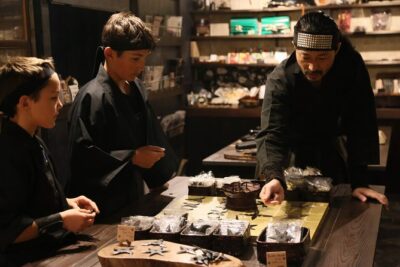
Ninja 1-hour Hands-on Lesson by Japanese master in Kyoto -Entry
Read our review →
The Original Small-Group Sushi Making Class in Kyoto
Read our review →Also filed under