
Reviewed · GION GEISHA QUARTER WALKS
Kyoto: Maiko Happy Hour at a Historic Machiya
A historic Kyoto townhouse plus a real maiko performance sounds like a movie set, but this experience is built around the details: a 140-year-old machiya, traditional arts, and close maiko access in a setting that still feels period-correct. You start at Tondaya, a nationally registered cultural landmark, then move into a program centered on tea, dance, and playful maiko traditions. The “happy hour” part is mostly about the relaxed vibe with tea, sweets, and conversation, not a bar crawl.
What I like most is the setting and the rare access. Tondaya is preserved wooden architecture you can actually walk through, not just view from the outside, and the maiko program gives you an unusually direct window into how these arts are presented.
One drawback to weigh: the value depends heavily on smooth communication. Even though interpreters are arranged when possible, I’ve seen cases where English support didn’t land well, which can make a short, two-hour show feel chaotic instead of calm.
In This Review
- Key highlights that make this experience worth your attention
- Entering Tondaya, a 140-year-old machiya that sets the mood
- The maiko tea ceremony: Uji matcha, sweets, and choreography-by-routine
- Buyō dance and the music that makes it feel old, not staged
- Maiko party games: when you’re not just watching
- Photo time with a maiko, the rare part you should plan for
- Price and timing: is $709 per person actually good value?
- Language, socks, and other practical tips that save headaches
- Who should book this Kyoto maiko happy hour, and who might skip it
- Should you book Kyoto Maiko Happy Hour at a Historic Machiya?
- FAQ
- Where is the meeting point for this experience?
- How long is Kyoto Maiko Happy Hour at a Historic Machiya?
- What is included in the program?
- Do I need to bring anything?
- Are alcohol drinks included?
- What if I need to cancel?
Key highlights that make this experience worth your attention
- 140-year-old machiya visit at Tondaya, a nationally registered cultural landmark
- Maiko-hosted tea ceremony with Uji matcha and Japanese sweets
- Buyō dance performance with classical music
- Kyoto maiko party games with an explanation of how they work
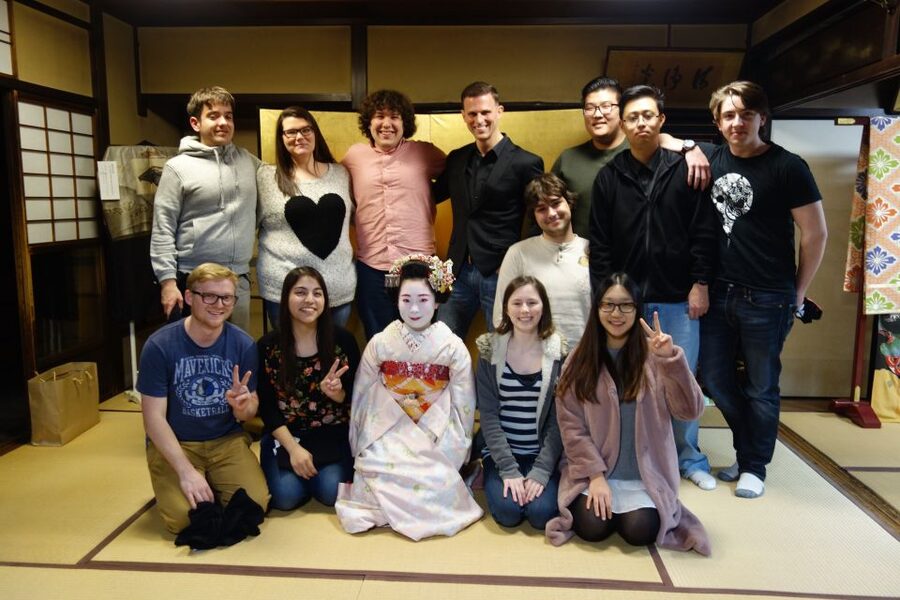
- Rare photo time with the maiko, which is not part of regular public access
- Fast, focused 2-hour program, so you need to be ready to start on time
Entering Tondaya, a 140-year-old machiya that sets the mood
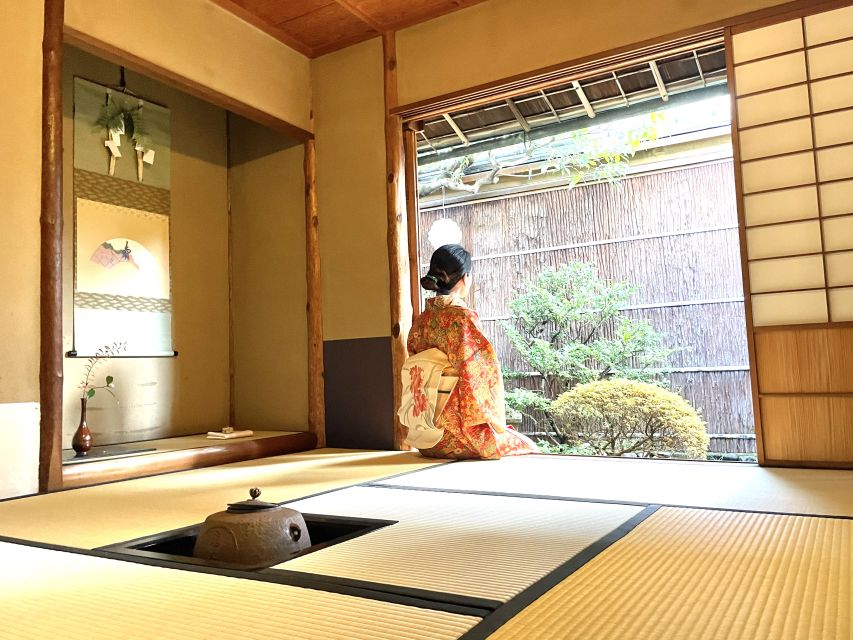
Your tour begins at Tondaya-Nishijin Japanese Cultural Experience Museum, the kind of meeting point that immediately signals this is about place, not just performance. From the start, you’re guided through a 140-year-old machiya that Kyoto City recognizes as culturally significant, meaning this isn’t a generic event room. You’re in a nationally registered cultural landmark, so the wood, layout, and atmosphere matter.
I love this part because a machiya is more than pretty walls. It’s how daily life worked in Kyoto, with rooms that feel designed for conversation, seasonal shifts, and quiet rituals. Even if your knowledge of Kyoto architecture is basic, you can still connect the dots as you move through the townhouse.
The only real consideration here is pacing. The whole experience runs about two hours, so you’ll get a guided walk plus the performance program, but it won’t feel like a long museum visit where you can read everything slowly. If you want slow, in-depth sightseeing, you’ll likely want to pair this with extra time around Kyoto after.
The maiko tea ceremony: Uji matcha, sweets, and choreography-by-routine
Next comes the heart of the program: you meet an authentic maiko and experience a traditional tea ceremony. The focus is on Uji matcha and Japanese sweets, presented in a way that highlights how ritual shapes the mood. The tea part isn’t just about drinking, it’s about attention, timing, and how people communicate through small actions.
I like that the ceremony is hosted by the maiko herself. That means you’re not watching a separate demo and then leaving, you’re staying inside the flow of maiko culture for the duration of the segment. You also get a deeper sense of why matcha is treated with respect in Kyoto, not treated like a novelty.
One practical note: the translation setup is not guaranteed to be word-for-word perfect in every language situation. The experience may use an interpreter, and a translation device may be used when necessary. When translation is smooth, the ceremony feels complete and understandable. When translation is weaker, you can still enjoy the tea ceremony as a visual art, but you’ll rely more on gestures and the pace of the room.
Lantern-lit streets of the geisha quarter
- Kyoto Geisha Walking Tour: Gion District & Hidden Gems
★ 4.7 · 3,273 reviews - Kyoto: Gion Magical Night Walking Tour with Geisha Trivia
★ 4.9 · 2,393 reviews - Kyoto: Gion Geisha District Walking Tour – Stories of Geisha
★ 4.7 · 2,187 reviews - Best of Kyoto: Gion, Geisha, Pagodas & Cobblestones
★ 4.9 · 2,058 reviews
Buyō dance and the music that makes it feel old, not staged
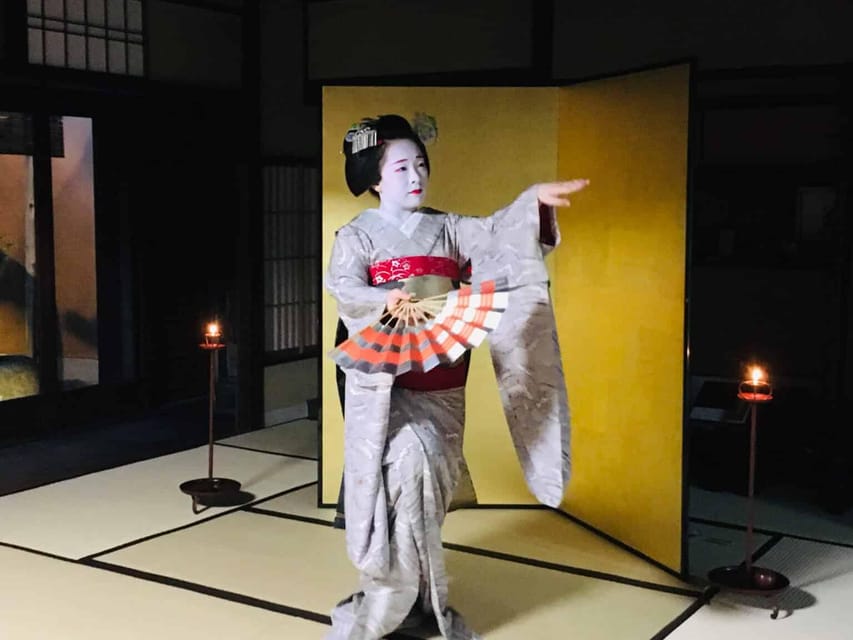
After tea, the program shifts into performance mode with buyō, a refined form of traditional Japanese dance accompanied by classical music. This is where the machiya setting really helps. The wood-and-paper acoustics and the intimate room feel make the dance read more like something happening inside a culture than something imported for tourists.
What I appreciate about buyō is that it communicates through movement quality, not just athleticism. The slowness and precision can feel hypnotic, especially when you’re sitting close enough to notice how the dancer frames the space. Even if you don’t know the terminology, you can feel the structure of the choreography and the music’s cues.
A consideration here is expectations. The whole program is designed to fit into a tight timeline, so you won’t get a long, multi-part lecture. If you’re hoping for a lengthy history lesson to go with the dance, you’ll get culture context, but it will be focused, not extensive.
Maiko party games: when you’re not just watching
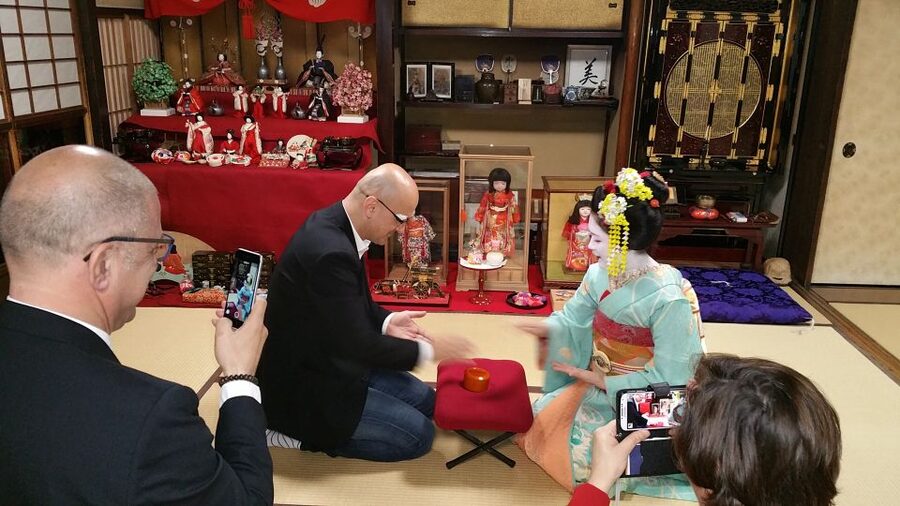
Once the main performance pieces are done, you get to participate in traditional maiko party games. This is a fun change of pace, because it moves you from spectator mode to participant mode. The maiko explains how the games work, and you play together, which makes it easier to ask questions about maiko culture in a more relaxed setting.
I think this is one of the best value components because it gives you something practical to remember. A performance can fade from memory if you only watched. Games make you participate, and that creates a stronger emotional memory tied to Kyoto traditions.
Also, this section often reveals the difference between a staged show and a cultural moment. When the maiko is actively walking you through rules and encouraging questions, it feels less like a transaction and more like a short social exchange. You’ll still want to keep your energy respectful and focused, but you can be genuinely engaged.
Photo time with a maiko, the rare part you should plan for
At the end, you get time for commemorative photos with the maiko. This is important because maiko are generally not permitted to take photos with the public in the usual course of things. That means this part is more than a souvenir, it’s the closest you’ll likely get to personal interaction during their training period.
I recommend you treat this like a moment with your camera ready, not a moment you casually remember to do at the end. Wear the socks required for the experience, and come prepared to stand or sit as instructed, so you’re not scrambling right before the photo segment.
If you’re the type who cares about good photos, you’ll probably love this part. If you’re not into selfies, you can still enjoy it as a chance to show gratitude and confirm the experience was real. Just keep in mind it’s a timeboxed part of the 2-hour program.
Price and timing: is $709 per person actually good value?
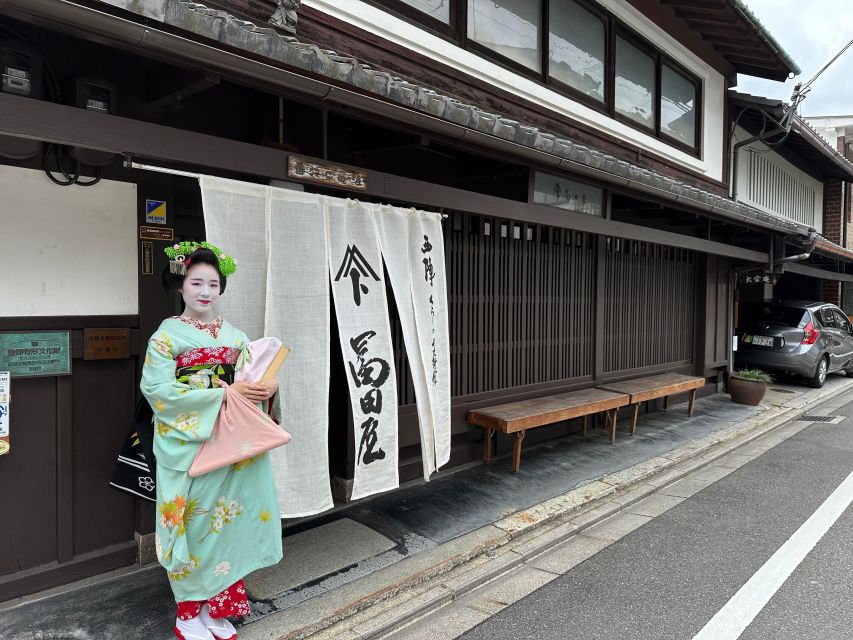
The listed price is $709 per person for a total duration of about 2 hours. That’s a big number, and it deserves a fair reality check. You are paying for three things that are hard to recreate on your own: access to a preserved machiya, live maiko arts in a structured program, and close interaction that you generally cannot get as a normal visitor.
Here’s how I’d judge value:
- If you’re a Kyoto culture fan who wants one memorable, high-touch evening moment, this can feel worth it. You’re not just seeing dance, you’re also seeing tea ritual, learning about maiko party games, and getting photo time that is usually off-limits.
- If you’re expecting a long meal with lots of food, the program description points to tea ceremony and sweets, and alcohol is not included. Some guests have felt the experience was short and priced too high for how much food they expected, so set expectations early.
- If you care a lot about understanding every spoken detail, make sure you’re comfortable with the idea that translation support can vary. English interpretation is arranged when possible, but communication quality can directly affect how smoothly the session feels.
Also, the cancellation rule is strict and the experience is non-refundable. That increases the risk if your Kyoto plans might change, so only book if your dates are solid.
More of Kyoto's centuries, explained

Language, socks, and other practical tips that save headaches
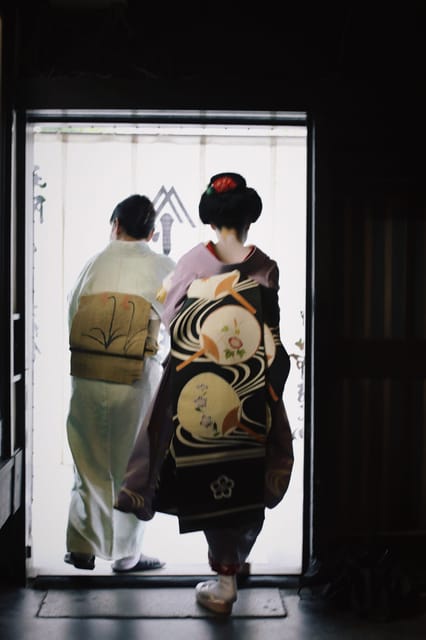
Before you go, remember the simple stuff. You need to bring socks, and the guidance specifically asks you not to wear stockings. That’s not a stylistic request, it’s about how the interior space is used and what foot covering works for seated and indoor time.
Plan to arrive on time for your appointment. This is the kind of experience where being late can throw off the flow for everyone, especially since the schedule includes a tea ceremony and a dance performance. The meeting point is Tondaya-Nishijin Japanese Cultural Experience Museum, so aim to find it early enough that you are not rushing.
Language support is listed as Japanese, English, and Chinese, with interpreters arranged when needed. A translation device may be used when necessary, which tells me they try to keep communication moving even if not every staff member speaks your language perfectly.
Two more notes that matter for comfort and planning. The experience is not suitable for wheelchair users, and Tondaya is closed from December 31 to January 1. If you’re traveling near late December, also note that maiko reservations are not available from December 29 to January 10.
Who should book this Kyoto maiko happy hour, and who might skip it
I’d put this high on the list for travelers who want a short, high-quality introduction to Kyoto traditions through real performance and direct interaction. It’s also a strong fit if you enjoy structured arts experiences like tea ceremonies and classical dance, and you’re comfortable paying more to access something rare.
You might feel mismatched if you’re looking for a casual night out with a lot of time to roam, because this is a tight, scheduled 2-hour program. You might also feel disappointed if you assume the “happy hour” includes drinks or a big food spread, since alcohol is not included and the explicit food focus is Uji matcha and Japanese sweets.
Finally, keep the maiko vs geiko detail in mind. Depending on availability, a geiko may be arranged instead of a maiko, and preferences cannot be accepted. If meeting a maiko specifically is your top goal, that’s something to weigh when deciding whether to book.
Should you book Kyoto Maiko Happy Hour at a Historic Machiya?
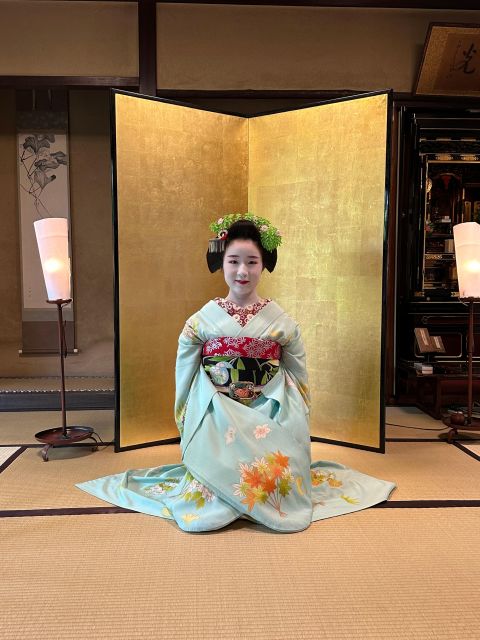
If you’re spending time in Kyoto and you want one experience that combines a real machiya setting with maiko-led tea and performance, I think it’s a good booking, as long as you’re comfortable with the price and time limits. The rare photo access and the hands-on maiko party games are the kind of details that make it feel special, not generic.
I’d suggest booking when your schedule is firm, because the experience is non-refundable and maiko reservations have strict date limits. And if English understanding is critical to you, go in ready to enjoy the nonverbal parts too, since the overall flow depends on communication.
FAQ
Where is the meeting point for this experience?
You meet at Tondaya-Nishijin Japanese Cultural Experience Museum.
How long is Kyoto Maiko Happy Hour at a Historic Machiya?
The experience lasts about 2 hours.
What is included in the program?
It includes a guided tour of the machiya, a maiko dance performance, party games, a tea ceremony, photography opportunities, and a lesson on Kyoto and maiko culture.
Do I need to bring anything?
Yes. You should bring socks. The guidance also says to refrain from wearing stockings.
Are alcohol drinks included?
No. Alcoholic drinks are not included.
What if I need to cancel?
The activity is non-refundable. The notes specify that the only exception is if you cancel at least ten days before the scheduled appointment.
New This Season
- Koyasan Day Trip by Private Car from Kyoto
- Old Port Town and Ultimate Sake Tasting Private Tour From Kyoto
- Sacred Peak & Ancient Paths: Kurama-Kibune Hiking Experience
- Kyoto’s Timeless Charm: 3hr Exploration of History and Peace
- Kyoto: 5 Types of Sushi Making
- Kyoto: Exclusive ZEN practice at Manpukuji temple in Uji
- Kyoto: Private Seasonal Aroma Yoga Class
- Traversing Kyoto’s Scenic West – Arashiyama to Kinkakuji
Gion Geisha Quarter Walks, compared.
Kyoto Geisha Walking Tour: Gion District & Hidden Gems
Read our review →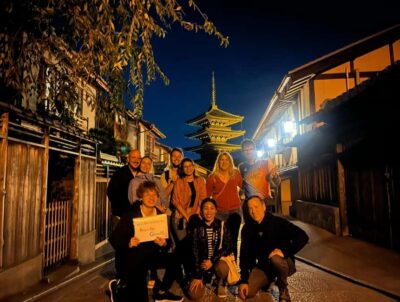
Gion Magical Night Walking Tour with Geisha Trivia
Read our review →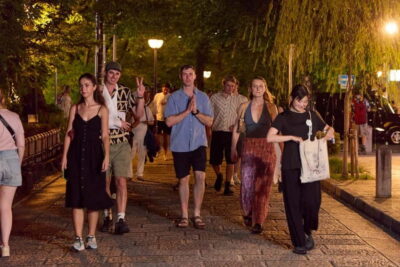
Gion Geisha District Walking Tour – Stories of Geisha
Read our review →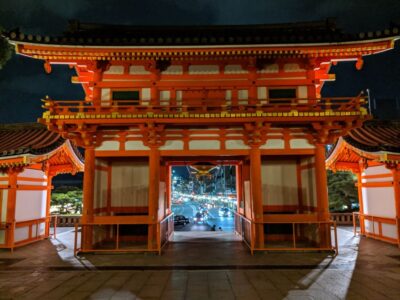
Best of Kyoto: Gion, Geisha, Pagodas & Cobblestones
Read our review →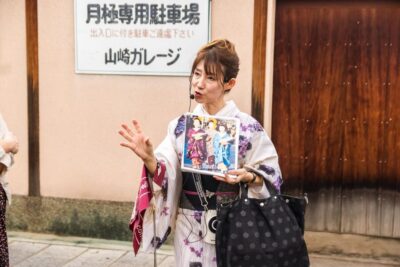
Kyoto Night Foodie Tour in Gion (9+ dishes + 6 Sake tastings)
Read our review →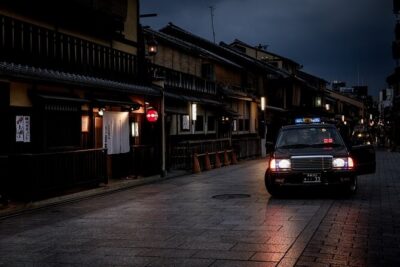
Kyoto Gion Geisha District Walking Tour – The Stories of Geisha
Read our review →
Kyoto Gion: 2-Hour Geisha Culture & History Walking Tour
Read our review →Also filed under