
Reviewed · TEMPLE & SHRINE VISITS
Kyoto: Philosopher’s Path and Hidden Temple Walking Tour
Kyoto quiet and temple gates with meaning. This Philosopher’s Path and hidden temple walking tour connects the canal-side calm of Kyoto with three very different Zen spaces, so the day feels reflective instead of rushed. I like the slow, mindful pace and the way the guide ties what you see to the spiritual mood behind it. I also like that admission fees are handled, which means less fiddling and more time walking and looking. One thing to weigh, though, is that you do cover a lot of ground in a half-day style outing, so if you want super long temple stays, you might feel a bit time-tight.
You’ll start near Ginkakuji Bridge and follow the Philosopher’s Path, a famous canal walk known for its seasonal charm and contemplative vibe. The route then slips off the main flow for Hōnen-in, climbs into Eikan-dō Zenrinji’s hillside temple halls, and lands at Nanzen-ji for the huge Sanmon gate and the red-brick Suirokaku aqueduct. I love how the itinerary balances soft garden quiet with big architectural moments.
At least one guide-led highlight sticks in my mind: the tour review mentioned Megumi as a standout, with the kind of explanations that make a Kyoto temple feel personal, not just impressive. The main drawback I’d flag is that the day still includes multiple short stops, so you’ll get breadth and atmosphere more than deep, hour-plus immersion in a single site.
In This Review
- Key things to know before you go
- Finding the right rhythm on Kyoto’s Philosopher’s Path
- Hōnen-in: moss, sand, and a side door into Zen calm
- Eikan-dō Zenrinji: hillside halls and autumn-maple timing
- Nanzen-ji in layers: Sanmon gate, temple grounds, and Suirokaku aqueduct
- Your guide Megumi, and why the commentary changes everything
- What the included admissions and route planning buy you
- Price and duration: is $147.33 worth it?
- Logistics: start near Ginkakuji, end at Nanzen-ji
- Who should book this Philosopher’s Path and hidden temple walk
- Should you book this Kyoto walking tour?
- FAQ
- How much does the Kyoto Philosopher’s Path and hidden temple walking tour cost?
- How long is the tour?
- What temples and sights are included?
- Are admission fees included?
- Where does the tour start and end?
- Is this tour private?
- Can I cancel for a full refund?
Key things to know before you go
- Philosopher’s Path first, then three temples so you get a full arc from canal calm to major Zen landmarks
- Hōnen-in for moss, sand, and a quieter feel right off the main Philosopher’s Path route
- Eikan-dō Zenrinji’s hillside halls where maples and pines shape the views, especially in autumn
- Nanzen-ji in layers with Sanmon gate, temple grounds, and the Suirokaku aqueduct all included in one flow
- A guide like Megumi matters because the commentary is part of the experience, not an add-on
- You’ll cover a lot in about half a day planning-wise, even though walking time is listed as around 3 hours
Finding the right rhythm on Kyoto’s Philosopher’s Path
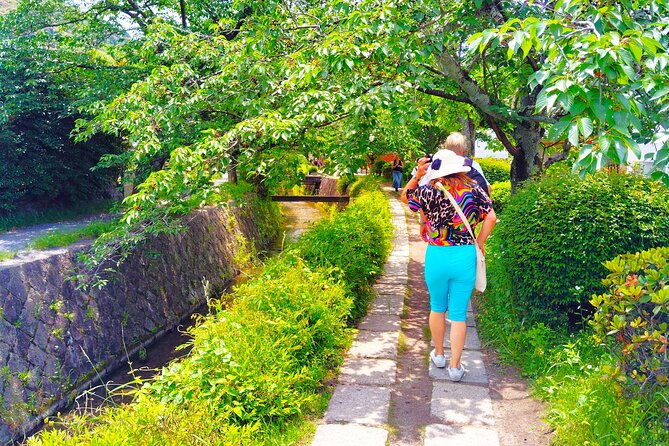
The experience starts where many people build their Kyoto dayplans, near Ginkakuji Bridge, then moves along the Philosopher’s Path with a paced, unhurried feel. This matters because the path is famous for a reason, but that fame can also mean distractions if you wander on your own. With a guide setting the tempo, you get time to look at details like the canal edge, the seasonal feel of the route, and the gradual shift from street views into temple territory.
The biggest value here is the mental shift. The Philosopher’s Path works best when you treat it like a walk for thinking, not a list to check. The tour’s slow pace and thoughtful commentary are designed for that. If you like stopping for a moment to notice a garden wall, a quiet bend in the water, or how the scenery changes as you approach temple grounds, you’ll probably enjoy the rhythm.
Practical tip: wear comfortable shoes. The itinerary is time-efficient, and the path plus temple approaches add up. Also, plan to arrive with enough buffer to meet at the start point without stress. Even a 10-minute delay can compress your temple time later.
Hōnen-in: moss, sand, and a side door into Zen calm
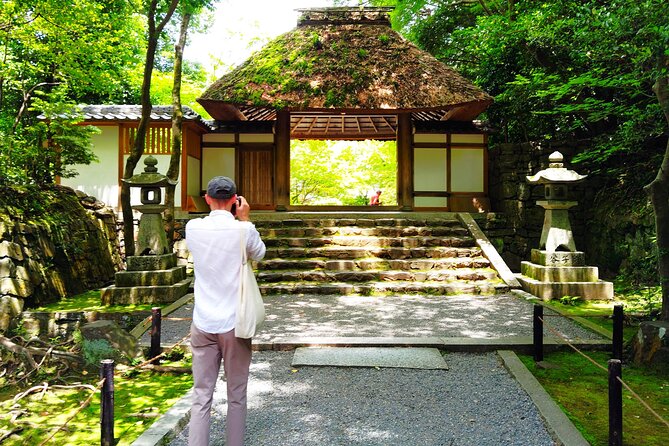
Hōnen-in is where the tour turns down the volume. It’s tucked just off the Philosopher’s Path, and the mood shift is part of the payoff. You get about 40 minutes here, and the stop is listed as having free admission, which is always a nice bonus.
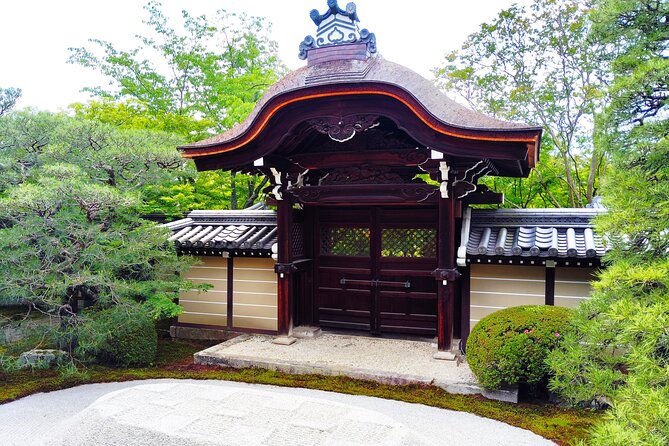
What I like about Hōnen-in for visitors is how visual it is without needing you to hunt for a single “must-see” photo. A moss-covered stone gate sets the tone immediately, and the quiet, forested setting makes it feel like you stepped into a calmer pocket of Kyoto. The raked sand garden also gives you a chance to slow down, look, and absorb the geometry of Zen garden design.
The main consideration at this stop is attention span. Because the tour is moving forward to other major sites, you might not get the deep linger time you would if Hōnen-in were your only destination. If you’re the type who could sit with a garden for an hour, you’ll want to treat this as a guided introduction. Then, if you fall in love with it, you can always come back later on your own day.
More rooftops worth a detour
- Kyoto: Tea Ceremony Ju-An at Jotokuji Temple
★ 4.9 · 3,207 reviews - Arashiyama Bamboo, Temple, Monkeys, or Secret Sake Brewery
★ 4.8 · 886 reviews - Kyoto: Arashiyama Bamboo Forest, Monkeys, Matcha & Temple Tour
★ 5.0 · 759 reviews - Osaka/Kyoto: Arashiyama, Nara & Fushimi Inari Shrine w/Lunch
★ 4.4 · 754 reviews
Eikan-dō Zenrinji: hillside halls and autumn-maple timing
Next is Eikan-dō Zenrinji Temple, with about 1 hour on the schedule and admission listed as included. This stop is a classic Kyoto contrast: if Hōnen-in gives you quiet enclosure, Eikan-dō gives you architectural elegance shaped by terrain.
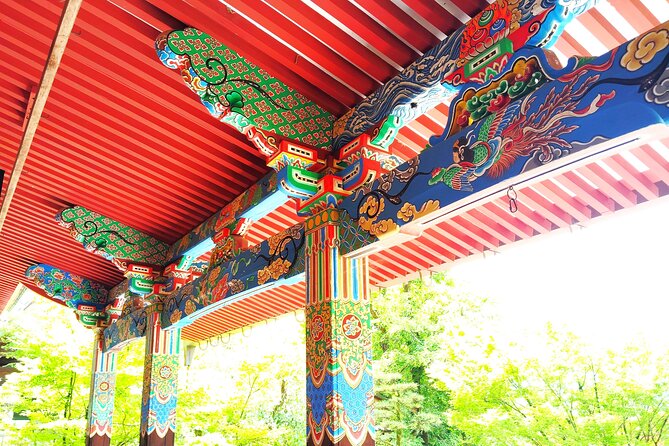
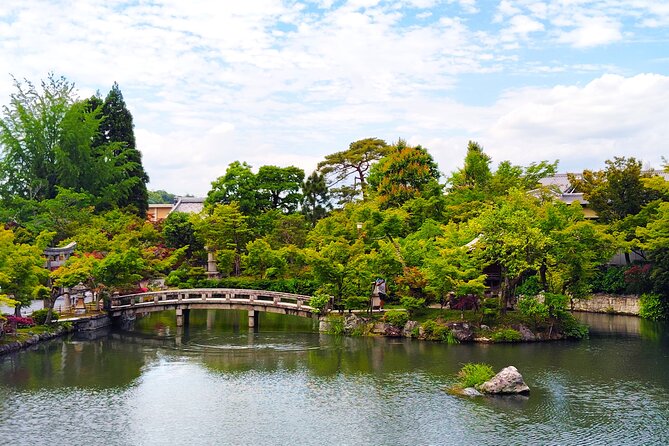
The temple is known for its elegant wooden halls scattered across a hillside covered in maples and pines. Autumn foliage is the big reputation, but the tranquil atmosphere is present year-round, which is great if you’re visiting outside peak leaf season. You’re not just seeing buildings here. You’re seeing how Kyoto’s landscape planning works, placing structures so the views and seasonal tones change as you move.
A small practical thing: for photos, you’ll want to be ready to angle your camera often. With halls spread across a slope, your best views come from shifting positions, not just one perfect spot. The guide’s pacing helps here. When someone is telling you where to look and what to notice, you spend less time wandering and more time actually seeing.
Potential drawback: if you specifically came for autumn color and your timing is off, you may not get the full leaf effect. Still, the temple setting is described as tranquil year-round, so it’s not dependent on one season.
Nanzen-ji in layers: Sanmon gate, temple grounds, and Suirokaku aqueduct
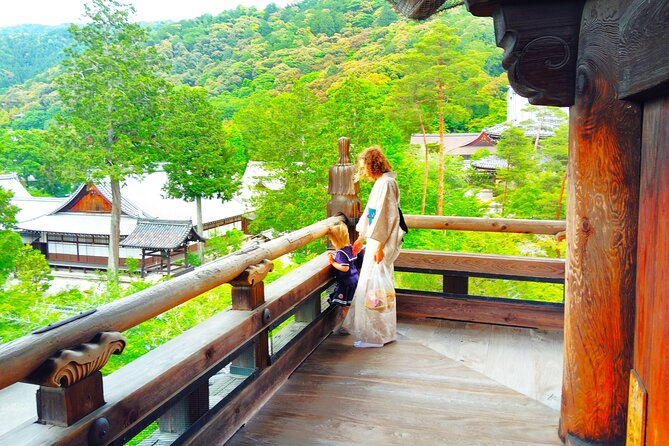
Nanzen-ji is the big finale, and it’s built into the itinerary in three connected parts, each with a different “Kyoto wow” style.
First is the Nanzen-ji Sanmon gate, with about 30 minutes and admission listed as included. This gate is massive, and the historical gravitas comes right away. It was built in the early 1600s, and the gate offers a panoramic view of the temple grounds and surrounding hills from its upper level. Even if you only catch the view from the ground, the scale is designed to make you slow down and look up.
Then comes the main temple grounds area, with about 20 minutes and admission listed as free. Nanzen-ji is described as one of Kyoto’s most important Zen temples, and the grounds are spacious and contemplative. You’ll find sub-temples, rock gardens, and shaded paths that naturally invite slow walking. This portion is the mental settle point of the tour. You started with a canal walk for reflection, and you end with temple grounds that keep asking you to keep your pace slow.
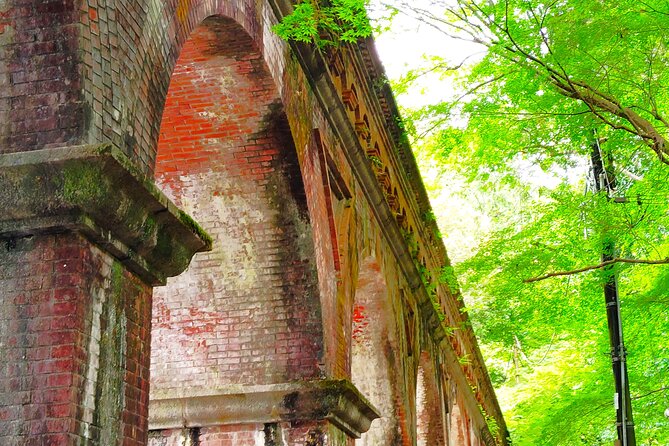
Finally, you get the Suirokaku aqueduct, about 30 minutes and listed as free admission. This is the red-brick aqueduct running through the grounds, built during the Meiji period to carry water from Lake Biwa to Kyoto. The Western-style arches create a strong contrast with the traditional temple setting, and that contrast is exactly why this stop feels memorable. It’s not just a pretty structure, it’s a moment where Kyoto’s past and modern engineering meet in one view.
One consideration: because Nanzen-ji is large and you’re only there for a short window, you may not see every corner. The tour gives you the major anchors, plus enough space to feel the atmosphere. If you want a longer wander through rock gardens and smaller paths, you’ll likely want to return after the tour ends, especially if you’re the kind of person who wants to keep walking until your legs feel like part of your sightseeing.
Your guide Megumi, and why the commentary changes everything
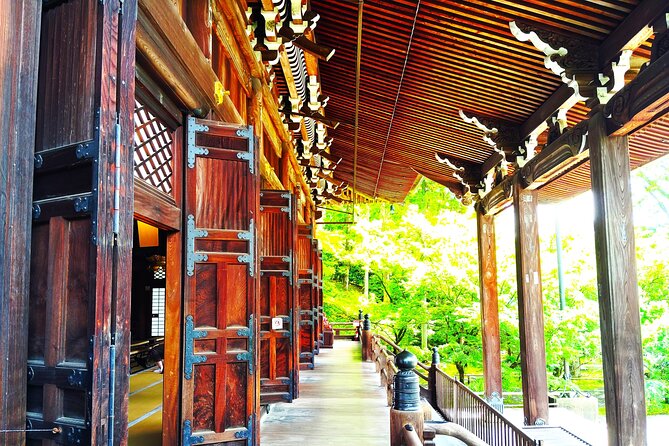
The strongest praise tied to this tour is about the guide. The review highlighted Megumi as a wonderful guide, with exactly the kind of insights you want when you’re trying to understand Kyoto, not just photograph it. That kind of guidance matters because Zen temples can feel abstract if you only know the basics. Good explanation turns your attention on.
Here’s what you can expect from that style of guiding based on the tour description: you’ll get thoughtful commentary that connects what you’re seeing to the spiritual history and Zen spirit behind it. The pace stays slow on purpose, so you can actually absorb the meanings, not just rush past them.
I also like that this tour is private, meaning only your group participates. That’s a quiet luxury in Kyoto. You’re less likely to feel like you’re being herded, and the guide can adjust how long you stop to look at something interesting.
If you prefer to move fast, read signage on your own, and keep conversation minimal, this may feel a bit too guided. But if you want your temples to land emotionally, not just visually, this is the kind of tour that helps.
What the included admissions and route planning buy you
A lot of walking tours look good on paper and then quietly add up costs. Here, admission fees are described as included, and the schedule also lists which stops are free on-site. Hōnen-in is listed as free admission, Eikan-dō is listed as included, Nanzen-ji Sanmon gate is listed as included, and both the Nanzen-ji temple portion and the Suirokaku aqueduct are listed as free.
That matters because the tour isn’t only about watching. It’s about making sure you can go into the right places without pausing your day for tickets and extra research. It also helps if your itinerary planning time is limited, which is common in Kyoto.
Value also comes from the fact that the route is efficient. You’re not jumping across town randomly. You walk Philosopher’s Path and then link that experience to Nanzen-ji, one of Kyoto’s major temple zones. That saves time and makes the day feel like one connected story.
A quieter way to spend a day in Kyoto


Price and duration: is $147.33 worth it?
The price is listed at $147.33 per person for the experience. For Kyoto, that’s not pocket change, so you want to know what you’re paying for. You’re paying for a guided route with a local expert, private group time, and admission fees handled for the parts that aren’t free.
Duration gets a little confusing on the written info. You’ll see a duration of around 3 hours listed, but the tour overview also talks about a 5.5-hour outing. Rather than treat that like a math problem, I’d plan for a half-day commitment in real life. The stops themselves add up to a chunk of time, and you’ll likely spend extra minutes at each site listening and moving between viewpoints.
If you’re a solo traveler, the private element can make the price feel heavier, but it also removes hassle. If you’re a small group, it can start feeling more reasonable because you’re sharing the cost while still getting a guide who can focus on your questions.
Bottom line: I think it’s good value if you want meaning and comfort, not just a photo walk. If your goal is maximum independence and minimum cost, you might prefer a self-guided route. But if you want the sites connected by context, the price can make sense quickly.
Logistics: start near Ginkakuji, end at Nanzen-ji
This tour has clear start and end points. You begin at Ginkakuji Bridge in Sakyo Ward, and the tour ends at Nanzen-ji, with an address listed as 86 Nanzenji Fukuchichō, Sakyo Ward. The tour also notes it’s near public transportation, and that the end point gives you easy access back to central Kyoto.
Why this matters: Kyoto can feel like a puzzle of neighborhoods. When the tour ends at a major hub like Nanzen-ji, it’s easier to continue your day rather than backtrack.
You also get a mobile ticket, which is practical. In Kyoto, that can mean less time dealing with printed confirmations and more time starting your walk. I’d still plan to have your phone charged, since you’ll rely on it to access your ticket.
Who should book this Philosopher’s Path and hidden temple walk
This tour is a strong fit if you:
- Want a guided Kyoto day that mixes nature, temples, and Zen atmosphere without planning every turn
- Like the idea of walking a famous route (Philosopher’s Path) and then seeing how the day can get quieter at smaller temple spaces like Hōnen-in
- Appreciate architecture and contrasts, especially at Nanzen-ji and the Suirokaku aqueduct
- Are visiting in autumn or shoulder season and want Eikan-dō’s maples and pine setting explained through a slow-paced visit
- Value a private experience where the guide can respond to your pace and questions
It might be less ideal if you hate walking, want long unstructured temple time at one site, or prefer to spend your days completely independent with no guided context. The tour is built for balance, not for deep single-location immersion.
Should you book this Kyoto walking tour?
I’d book it if you want Kyoto to feel like one coherent mood, from the canal calm of the Philosopher’s Path to the major Zen weight of Nanzen-ji. The highest praise point, the guide quality, especially Megumi’s kind of explanation, is the kind of upgrade that can turn impressive sights into something you actually remember.
If you can handle a half-day pacing and you like thoughtful, not frantic sightseeing, this tour is a solid way to see three meaningful temple stops in a way that feels intentional. If you only want the cheapest route or you want hours and hours alone in temple spaces, you may prefer going independently. But for many first-timers and context-seekers, this strikes a rare sweet spot between structure and calm.
FAQ
How much does the Kyoto Philosopher’s Path and hidden temple walking tour cost?
The price is listed as $147.33 per person.
How long is the tour?
The duration is listed as about 3 hours, and the tour overview also describes it as about a 5.5-hour experience, so you should plan for a half-day time window.
What temples and sights are included?
You’ll visit Hōnen-in, Eikan-dō Zenrinji, Nanzen-ji (including the Sanmon gate and temple grounds), and you’ll also see the Nanzenji Suirokaku red-brick aqueduct.
Are admission fees included?
Admission is described as included. The schedule lists some stops as free admission and others as admission included.
Where does the tour start and end?
It starts at Ginkakuji Bridge in Sakyo Ward and ends at Nanzen-ji at 86 Nanzenji Fukuchichō, Sakyo Ward.
Is this tour private?
Yes, it’s described as a private tour/activity, meaning only your group participates.
Can I cancel for a full refund?
Yes. Free cancellation is offered if you cancel up to 24 hours in advance for a full refund.
New This Season
- Koyasan Day Trip by Private Car from Kyoto
- Old Port Town and Ultimate Sake Tasting Private Tour From Kyoto
- Kyoto’s Timeless Charm: 3hr Exploration of History and Peace
- Kyoto: 5 Types of Sushi Making
- Sacred Peak & Ancient Paths: Kurama-Kibune Hiking Experience
- Kyoto: Exclusive ZEN practice at Manpukuji temple in Uji
- Traversing Kyoto’s Scenic West – Arashiyama to Kinkakuji
- Kyoto: Private Seasonal Aroma Yoga Class
Temple & Shrine Visits, compared.
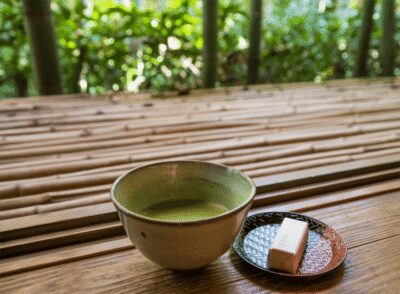
Arashiyama Bamboo, Temple, Monkeys, or Secret Sake Brewery
Read our review →
Arashiyama Bamboo Forest, Monkeys, Matcha & Temple Tour
Read our review →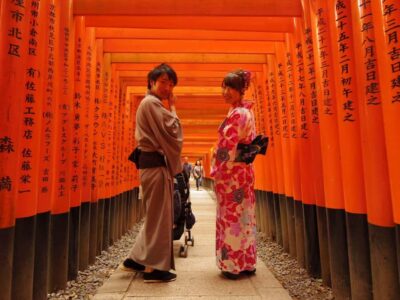
Arashiyama, Nara & Fushimi Inari Shrine w/Lunch
Read our review →
Kyoto Zen Meditation & Garden Tour at a Zen Temple with Lunch
Read our review →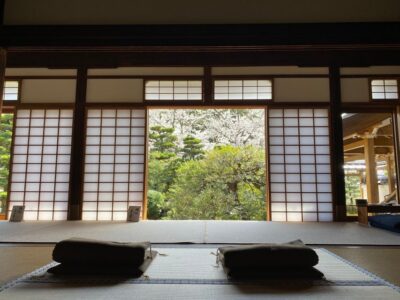
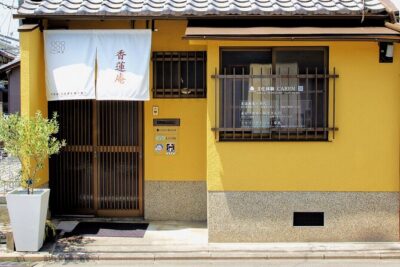
KYOTO Tea Ceremony with kimono near by Imamiya Jinjya Shrine
Read our review →Arashiyama Bamboo, Matcha, Monkeys & Temple Tour
Read our review →Also filed under