
Reviewed · WORKSHOPS
Kyoto: Stone Seal Carving Workshop with Calligrapher
Kyoto can be surprisingly hands-on when you slow down. In this workshop, you create a stone seal from scratch, guided by a calligrapher as you carve Japanese characters with care.
I especially love the focus on making your own design, not copying a sample. You choose the character for your seal, learn carving technique as you go, and end with a postcard stamped in the style your instructor helps you finalize.
One possible drawback is that the carving takes real patience. The work can feel challenging in a good way, but if you hate slow precision, you may find it more effort than you expected.
In This Review
- Key things to know before you carve
- Why a Kyoto stone seal is a souvenir with meaning
- First, you pick your character, then you start designing
- Carving the stone: the hands-on part is where the magic happens
- The calligraphy coaching that keeps your seal readable
- Stamping your seal onto a postcard
- Price and value: is $77 worth it?
- Logistics that affect your experience (so you can enjoy it more)
- Who should book this workshop, and who might skip it
- Should you book this Kyoto stone seal workshop?
- FAQ
- What is included in the Kyoto stone seal workshop?
- How long does the workshop take?
- Is it beginner-friendly?
- What language is the instruction in?
- How many people are in the group?
- Where is the meeting point?
Key things to know before you carve
- Small group, maximum 8 people, so you get hands-on help instead of standing in line
- English instruction, led by a Japanese calligrapher and high school calligraphy teacher
- You choose the character (your name or a favorite word, using Japanese script)
- Carving is real work, so plan for focus and steady hands for about 90 minutes to 2 hours
- A stamped postcard souvenir, with your name written in Japanese and the date added
- A special box for your stone, so you can carry it home safely
Why a Kyoto stone seal is a souvenir with meaning
A magnet is easy. A photo is quick. A stone seal takes time, and that is exactly why it lands with people. In Japan, seals are more than decoration. They are personal identifiers, and the act of carving turns your choice of character into something you made with your hands.
Here, you are not just watching someone else do the work. You select your character, carve it, and then stamp it onto a postcard. That gives you a finished, usable memory, not just a keepsake object.
I also like how the session blends two skills: calligraphy thinking and carving technique. Even if you have never touched a chisel, you get guidance that keeps the process calm, step-by-step, and doable.
First, you pick your character, then you start designing
The workshop starts with a design decision. You can carve your own character, or you can ask your instructor to help you plan the design. This matters because Japanese seals are not just letters on stone. The shape has to read correctly and still work when carved into raised and recessed areas.
You can choose a character for your seal, whether it is your name or a favorite word. The group is also designed for beginners, so you do not need pre-existing calligraphy experience. The instructor will walk you through what you are aiming for, and then you translate that plan into carving.
In some sessions, the instructor helps with how to write names in Japanese, including translating names into the right script. One key detail to know: you can often choose a kanji style to match what you prefer. That flexibility turns the seal from a generic souvenir into something that feels more like you.
A quieter way to spend a day in Kyoto
- Kyoto: 45-Minute Tea Ceremony Lesson Experience
★ 4.3 · 2,378 reviews - Ramen Cooking Class at Ramen Factory in Kyoto
★ 5.0 · 1,937 reviews - Kyoto : Chopsticks Making Workshop in Gion with Engraving Option
★ 5.0 · 958 reviews - Kyoto: Samurai Sword Class by Experts in Traditional Arts
★ 4.9 · 657 reviews
Carving the stone: the hands-on part is where the magic happens
Once your design is set, the carving begins. This is not a “pretend you made it” kind of activity. You are physically carving into a stone seal blank, learning how to handle the cutting tools and how to create clean, readable lines.
Expect a learning curve. Many people find the process demanding because you have to think in reverse and stay steady while creating crisp strokes. The upside is that the guidance is patient and detailed, and the small group size helps the instructor correct technique as you work.
A practical tip for enjoying this: treat it like a slow craft session, not a speed contest. If you rush, lines get rough. If you go steady, your seal starts to look more like the character you planned.
Also, plan for effort. Reviews highlight that it can be hard work, but the result feels earned. You will likely leave with the kind of satisfaction you only get from making something yourself.
The calligraphy coaching that keeps your seal readable
This workshop is led by a Japanese calligrapher and a high school calligraphy teacher. That combination shows in the way the session is paced. Calligraphy is about stroke order, balance, and intention. Carving is about turning those ideas into physical marks you can stamp later.
You get coaching on Japanese characters as you carve, with help that is clear enough for beginners. You are not thrown into technique with no support. The instructor guides you through the process and helps you make sure your design stays true.
If you are carving your name, you may also get help properly translating and writing it in Japanese. That is a big deal for a seal, since spelling and script matter for how it will stamp onto paper.
One more nice detail: after you finish carving, your instructor writes the date and your name in Japanese beside your stamped seal on the postcard. That turns the final product into a finished memory, with context right there on the card.
Stamping your seal onto a postcard
After the stone seal is complete, you stamp it onto a postcard. This is the moment where you see whether your carving decisions were right. Your character becomes a printed image, and it is also what you can take home and share.
The postcard gets special treatment: the calligrapher writes the date and your name in Japanese beside the seal. So even if you are not a calligraphy person, you still leave with a meaningful document tied to the day you made it.
This step also makes the workshop feel complete. You do not just carve a rock and hope it works. You watch your work transform into a stamped result right away, which helps you understand what your seal is for.
Price and value: is $77 worth it?
At about $77 per person, this is not a bargain craft, but it can still be good value for Kyoto. The key reasons are the instructor-led format and the finished souvenir.
You get:
- a stone seal carving workshop,
- guidance from a Japanese calligrapher,
- a postcard with your seal stamp plus your name written in Japanese,
- the stone itself and a special box to take it home.
The value equation is simple: you are paying for a guided, skill-based experience plus an end product that looks intentional. If you have ever bought a souvenir in Kyoto that felt like generic tourist retail, this is the opposite. You leave with something personal, made with your own chosen character.
Time matters too. The workshop runs 90 minutes to 2 hours, which is long enough for real carving, and short enough that you can still keep your sightseeing day flexible.
Also, there is some practical peace of mind in how it is offered. You can usually reserve first and pay later, and plans can change without full loss in many cases.
A day of temples goes further with something to break it up.

Logistics that affect your experience (so you can enjoy it more)
This is a small-group workshop with a maximum of 8 participants, and instruction is in English. That small size helps you get corrections and clarity, especially when your carving lines start to look different than you expected.
The meeting point is straightforward: a sign board in front of the entrance. If you are the type who hates hunting down locations while hungry and jet-lagged, I recommend arriving a few minutes early and taking a second to confirm you are at the right doorway.
The session is wheelchair accessible, which is a real plus if you need an easier, seated-friendly activity. Carving does require hand control and attention, but the workshop itself is set up to be accessible.
Finally, plan to bring a calm attitude. Reviews repeatedly point to patience in teaching. You are learning a craft technique, and that is easiest when you do not treat every line like a test.
Who should book this workshop, and who might skip it
This workshop is a great fit if you:
- want an authentic Kyoto memory that is made by hand,
- like crafts that require focus,
- enjoy learning about Japanese characters in a practical way,
- want a souvenir that feels personal, not mass-produced.
It is also ideal if you are traveling with a friend and want something quiet and satisfying. Several people describe the experience as calm and soothing, which makes sense. Once you lock in on your strokes, the workshop has a natural rhythm.
I would be more cautious if you:
- dislike slow precision activities,
- feel frustrated by fine motor tasks,
- expect something purely decorative with no challenge.
If you come in expecting easy doodling, you may underestimate the carving difficulty. But if you accept that it takes work, the finished seal tends to feel rewarding.
Should you book this Kyoto stone seal workshop?
I think this is a strong booking when you want a hands-on Kyoto experience with a meaningful payoff. The biggest wins for me are the combination of a guided learning experience and a souvenir you genuinely made, plus the postcard keepsake with your name written in Japanese and the date.
If you are the type who values personal crafts and you are okay with steady focus for 90 minutes to 2 hours, go for it. It is one of those activities where the process matters as much as the final object.
FAQ
What is included in the Kyoto stone seal workshop?
The workshop includes stone seal carving guidance, help from a Japanese calligrapher, a postcard featuring your seal stamp and name in Japanese, and the stone plus a special box to take the stone home.
How long does the workshop take?
The duration is about 90 minutes to 2 hours, depending on the session time.
Is it beginner-friendly?
Yes. Beginners are welcome, and the process is taught carefully and kindly.
What language is the instruction in?
The instructor provides guidance in English.
How many people are in the group?
The group is small, limited to 8 participants.
Where is the meeting point?
You meet at a sign board in front of the entrance.
New This Season
- Koyasan Day Trip by Private Car from Kyoto
- Old Port Town and Ultimate Sake Tasting Private Tour From Kyoto
- Kyoto’s Timeless Charm: 3hr Exploration of History and Peace
- Kyoto: 5 Types of Sushi Making
- Sacred Peak & Ancient Paths: Kurama-Kibune Hiking Experience
- Kyoto: Exclusive ZEN practice at Manpukuji temple in Uji
- Kyoto: Private Seasonal Aroma Yoga Class
- Traversing Kyoto’s Scenic West – Arashiyama to Kinkakuji
Workshops, compared.

Ramen Cooking Class at Ramen Factory in Kyoto
Read our review →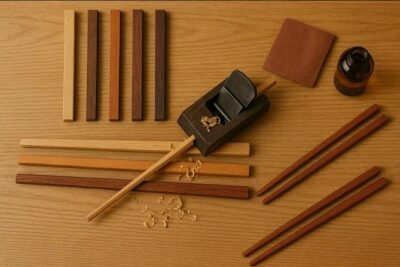
Chopsticks Making Workshop in Gion with Engraving Option
Read our review →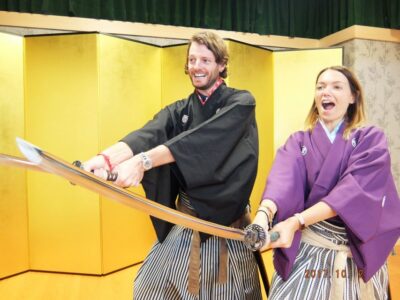
Samurai Sword Class by Experts in Traditional Arts
Read our review →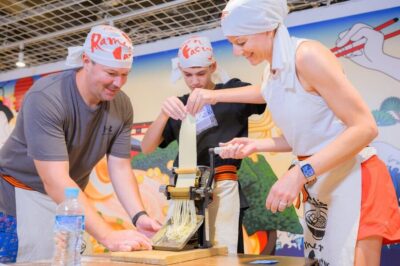
Ramen Cooking Class at a Ramen Factory with Souvenir
Read our review →
Ninja 1-hour Hands-on Lesson by Japanese master in Kyoto -Entry
Read our review →
The Original Small-Group Sushi Making Class in Kyoto
Read our review →Also filed under