
Reviewed · SUSHI-MAKING WORKSHOPS
Kyoto Style Sushi Making
Kyoto sushi is more than nigiri. This 2-hour workshop in Kyoto pairs vinegar tasting with the history behind sushi, then guides you through making your own Kyoto-style plate at Kikyo SushiJapan. You start with context, but you do not just sit there listening.
I love how hands-on it is, especially the part where you learn to grate fresh wasabi and connect that punchy flavor to the rice and vinegar balance. You also get to make a proper meal for yourself, choosing between Chirashi-zushi or Oshi-zushi, then eat it while everything is still fresh and warm.
One thing to consider: the class focuses on Kyoto styles like chirashi and pressed sushi, so if you are expecting to spend the whole session on classic nigiri and rolls, you might feel slightly under-fulfilled. You get one sushi, not a full platter of endless variations.
In This Review
- Key things I’d plan for
- Kyoto-Style Sushi, Not Just Nigiri and Rolls
- The 2-Hour Flow, From Sushi Story to Your Own Meal
- Start with a welcome drink and quick orientation
- Learn the cultural background of sushi
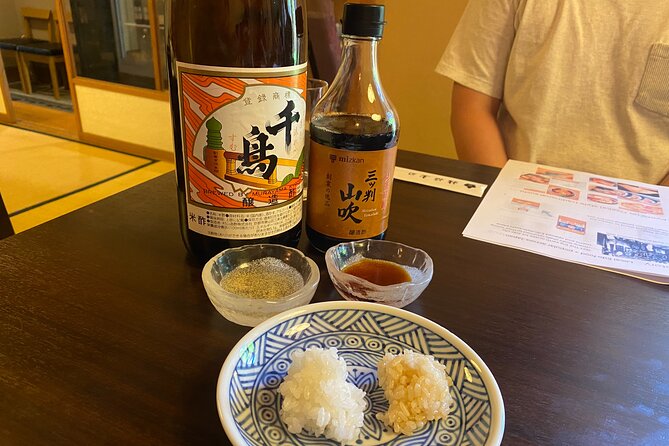
- Taste vinegar types and sushi rice
- Grate fresh wasabi
- Make your Kyoto-style sushi and eat it
- Vinegar and Sushi Rice Tasting, Where You Learn to Think Like a Cook
- Fresh Wasabi, The One Skill That Feels Different Immediately
- Chirashi-zushi vs Oshi-zushi, Two Kyoto Methods With Different Strengths
- Chirashi-zushi, topped and easy to share
- Oshi-zushi, pressed Kyoto-style sushi
- Food requests, handled in advance
- Price and Value, What You Really Get for 11,000 JPY
- Timing and Practicalities in Kyoto, Why 10:30 am Works
- Who This Kyoto Sushi Making Workshop Is For
- Should You Book It?
- FAQ
- Where does the Kyoto sushi making workshop start?
- What is included in the price?
- How long is the experience, and what time does it begin?
- Can I request vegetarian or gluten-free options?
- Is it suitable for children?
- Can I get a full refund if I cancel?
Key things I’d plan for
- Vinegar and sushi rice tasting so you learn what changes flavor, not just what to do
- Fresh wasabi grating for a flavor skill you can actually repeat at home
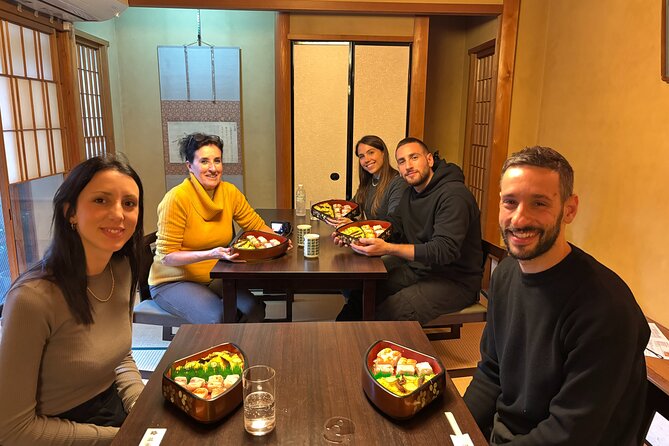
- Chirashi-zushi or Oshi-zushi in a small group, max 6 people
- Vegetarian-friendly options with chirashi-zushi
- Gluten-free possibility with oshi-zushi
- A welcome drink plus the sushi you make, keeping the lesson practical
Kyoto-Style Sushi, Not Just Nigiri and Rolls
Most people picture sushi as nigiri or rolls. Kyoto adds a different angle, and this workshop is built around that idea. Instead of treating sushi like a single style, you learn how Kyoto has its own versions with deeper local roots, and how those styles shape the way the rice is seasoned and topped.
What I like is that the workshop does not only cover technique. It starts with the cultural background and history of sushi, which matters because it helps you understand why the small choices matter. For example, you are not just told to season rice, you taste different vinegars and see how flavor shifts.
The setting also sounds like the kind you want in Kyoto: Kikyo SushiJapan, run as a family operation with a long presence in the city. That combination, local know-how plus a small-group format, is exactly what makes food lessons feel less like a show and more like a craft you can learn.
The 2-Hour Flow, From Sushi Story to Your Own Meal
This is a tight, well-paced lesson, about 2 hours, starting at 10:30 am. It is a mobile ticket experience, and the tour returns you to the meeting point at Kikyo SushiJapan. With a maximum of 6 participants, it is set up so you can ask questions without feeling rushed.
Here is the practical sequence you should expect:
Learn to roll your own sushi
- Sushi Making in Kyoto! Same-day bookings welcome!
★ 5.0 · 713 reviews - The Original Small-Group Sushi Making Class in Kyoto
★ 5.0 · 436 reviews - Kyoto: Small-Group Authentic Sushi Making Workshop
★ 5.0 · 137 reviews - Sushi – Authentic Japanese Cooking Class – the best souvenir from Kyoto!
★ 5.0 · 93 reviews
Start with a welcome drink and quick orientation
You begin at Kikyo SushiJapan with a welcome drink. That small touch matters in a cooking class because it helps you settle in before the knives, bowls, and sticky rice start taking over.
Learn the cultural background of sushi
Before you touch ingredients, you get the story side: the history and cultural background of sushi. This is not trivia for trivia’s sake. It sets up what you will taste and make, so the technique feels purposeful rather than random steps.
Taste vinegar types and sushi rice
Then comes one of the most useful parts: you taste different types of vinegar and sushi rice. Sushi rice is where many people stumble at home, because they think the rice itself is the secret. In reality, the vinegar you use and how you balance it changes everything.
Even if you already cook, this tasting component is what upgrades your intuition. You get to notice differences, not just follow one method blindly.
Grate fresh wasabi
Next, you learn how to grate fresh wasabi. This is the kind of skill that sounds small until you try it. Fresh wasabi changes the whole experience, and grating it correctly helps you understand texture and aroma, not just heat.
A day of temples goes further with something to break it up.


Make your Kyoto-style sushi and eat it
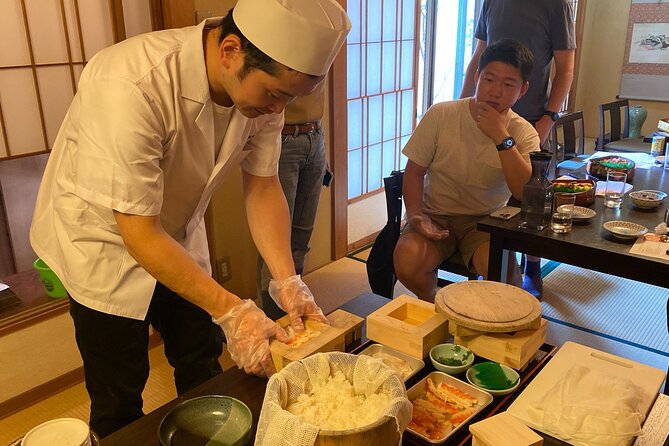
Finally, you make the meal yourself with expert guidance from the host. Your class includes one sushi, either Chirashi-zushi or Oshi-zushi. After you finish, you enjoy what you made.
Since the workshop is only about 2 hours, your goal is not to become a sushi chef. It is to walk out with a repeatable method and a clearer sense of how Kyoto-style sushi is built.
Vinegar and Sushi Rice Tasting, Where You Learn to Think Like a Cook
The tasting portion is the heart of this workshop. Even if you love sushi already, tasting vinegar types and sushi rice is where you start to understand why sushi tastes the way it does.
Here is what you can take from this lesson and apply right away:
- Vinegar balance is flavor balance. When you taste multiple vinegars, you learn that sushi rice can end up tasting too sharp, too sweet, or just right depending on the vinegar profile.
- Rice seasoning is more than a drizzle. You are effectively learning how seasoning turns cooked rice into sushi rice, and that changes texture and aroma.
- You start noticing what matters. After tasting, you will be better at evaluating sushi rice at restaurants, not just praising it blindly.
This is also why the workshop feels practical for travelers. You are not only collecting photos. You are collecting sensory benchmarks you can reuse when you try to make sushi at home.
Fresh Wasabi, The One Skill That Feels Different Immediately
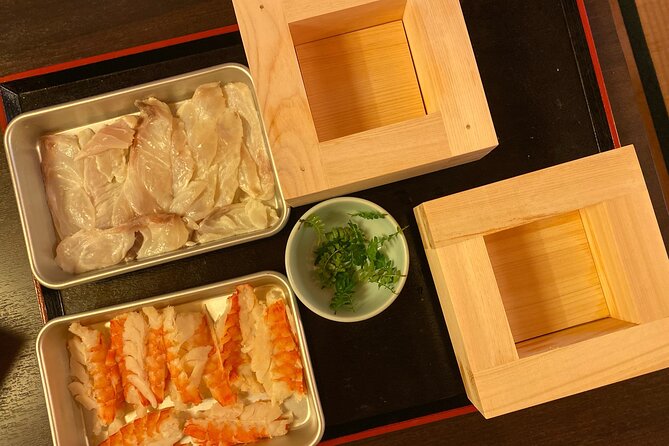
The workshop includes grating fresh wasabi, which is one of those techniques that feels personal fast. Pre-made wasabi paste is convenient, but it does not give you the same experience.
By grating fresh wasabi, you learn a hands-on texture skill and you experience how aroma and heat can feel different when the wasabi is fresh and processed in the moment. You also get a deeper understanding of why wasabi is used the way it is in sushi culture.
If you have never worked with fresh wasabi before, do not worry. A class like this is designed to teach you how, not just to let you watch. Also, since this is a small group with expert guidance, you can ask questions as you go.
Chirashi-zushi vs Oshi-zushi, Two Kyoto Methods With Different Strengths
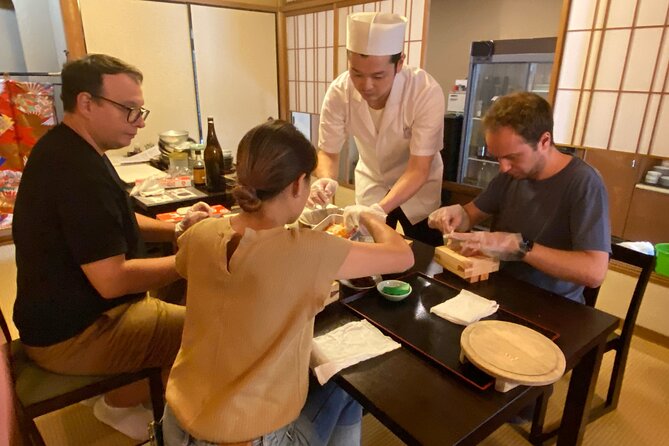
You choose one style for your included sushi: Chirashi-zushi or Oshi-zushi. This choice is not just about preference. The two styles train you in different ways.
Chirashi-zushi, topped and easy to share
Chirashi-zushi is seasoned rice topped with ingredients such as prawn and thin sliced egg. The important detail for families is that the ingredients are cooked. The workshop notes that it is easy to make even for small children, and it can be vegetarian.
That makes chirashi-zushi a great option if you want something that feels approachable and flexible. If you are traveling with kids or you simply prefer a less pressurized cooking process, this is usually the more straightforward lane.
Oshi-zushi, pressed Kyoto-style sushi
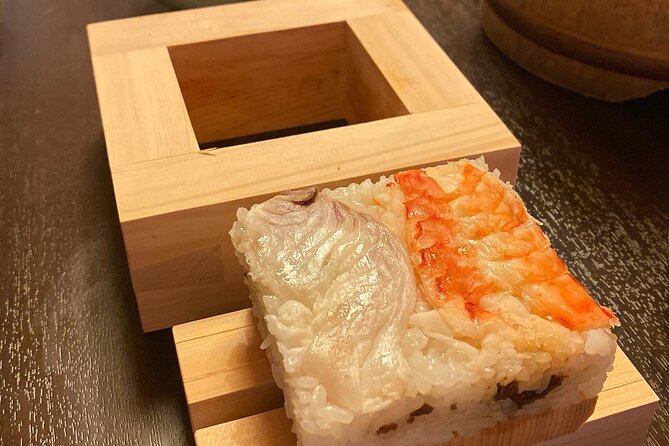
Oshi-zushi is pressed sushi rice with fish on top, described as a traditional Kyoto style. The workshop notes that it can be gluten free.
Pressed sushi is the style that rewards attention to process. Instead of assembling by instinct, you learn a method where structure matters. It can be a strong pick if you like food that has a clean shape and a more deliberate build.
Food requests, handled in advance
If you have requests such as vegetarian or gluten free options, the workshop asks you to let them know. That is a big deal for sushi lessons, where one wrong ingredient can wreck the whole experience. It is also a reminder to communicate clearly when booking so the kitchen can prepare the right version.
Price and Value, What You Really Get for 11,000 JPY
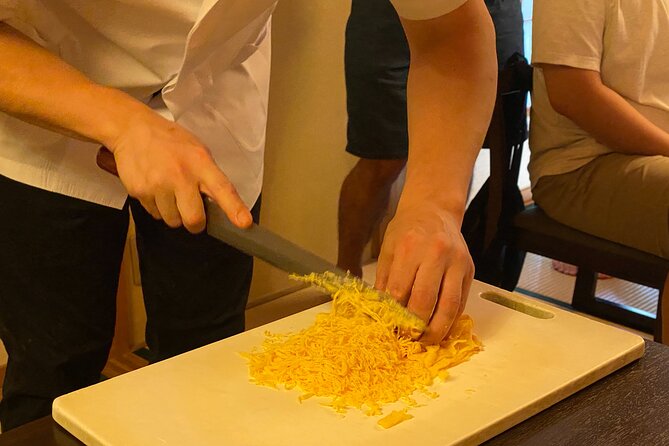
The price is listed as $72.28 per person, and the participation fee is 11,000 JPY per person for ages 7 and older. Preschoolers under 7 are free, with an option to prepare sushi for them if you include them in the participant count.
So is it good value? For me, the strongest value signals are:
- You get instruction plus a meal. The workshop includes a welcome drink and one sushi (chirashi-zushi or oshi-zushi) that you make.
- It is designed for a small group with a maximum of 6 travelers. Smaller group sizes usually mean more hands-on time.
- The class includes multiple technique and sensory skills: vinegar and sushi rice tasting, and fresh wasabi grating.
Where the math might not feel perfect is in expectations. You are not paying for a full tasting menu of many sushi types. You are paying for a focused lesson that ends with one crafted sushi plate.
If you are hungry, plan a second meal after. If you are the kind of traveler who wants a skill you can repeat, this is the sort of class that tends to feel worth it.
Timing and Practicalities in Kyoto, Why 10:30 am Works
The start time is 10:30 am, and the workshop ends back at the meeting point. That makes it easier to build into a Kyoto day, especially if you want to do more walking later.
The meeting point is Kikyo SushiJapan, located at:
〒604-0071 Kyoto, Nakagyo Ward, Daimonjichō, 油小路通丸太町下る−43−2 大文字町43
It is also near public transportation, which matters because Kyoto can involve lots of walking between neighborhoods. A lesson like this is one of the best uses of the morning, when you can be fresh, focused, and ready for sensory tasting.
Also, the experience tends to be booked ahead on average, so if Kyoto is your trip focus, I would plan to reserve earlier rather than waiting for last minute.
Who This Kyoto Sushi Making Workshop Is For
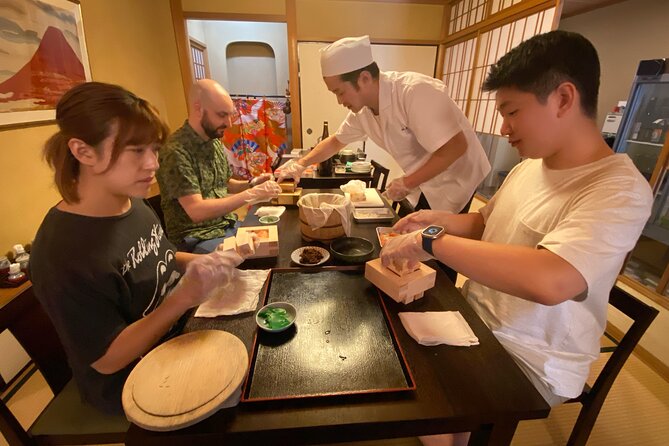
This workshop is a strong fit if you are a food traveler who likes learning, not just eating. It is also a good match for cooks who want to improve specific skills you can practice later.
I would especially recommend it if you:
- Want to understand Kyoto-style sushi beyond the standard international menu
- Care about flavor fundamentals like vinegar balance and proper sushi rice
- Want to learn to work with fresh wasabi
- Are traveling with family members who can handle a guided cooking session
It is also family-friendly. Chirashi-zushi is described as easy to make even for small children, and the pricing structure supports that. If you are bringing a younger child, remember preschoolers under 7 are free, but you need to include them if you want sushi prepared for them.
Should You Book It?
If you want a hands-on Kyoto food experience that teaches real flavor skills, this is an easy yes. The lesson covers practical technique, including vinegar tasting, sushi rice tasting, and fresh wasabi grating, and then you leave with a sushi meal you made yourself.
Book it if you enjoy structured learning with a small group and you are curious about Kyoto’s take on sushi, not just the most famous global versions. Skip it only if your main goal is to learn classic nigiri and rolls above all else, because this class is centered on Kyoto styles like Chirashi-zushi and Oshi-zushi.
FAQ
Where does the Kyoto sushi making workshop start?
It starts at Kikyo SushiJapan at 〒604-0071 Kyoto, Nakagyo Ward, Daimonjichō, 油小路通丸太町下る−43−2 大文字町43. The experience ends back at the meeting point.
What is included in the price?
The workshop includes 1 welcome drink and 1 sushi, either Chirashi-zushi or Oshi-zushi. You also get expert guidance while you make your meal.
How long is the experience, and what time does it begin?
It lasts about 2 hours and starts at 10:30 am.
Can I request vegetarian or gluten-free options?
Yes. The workshop specifically notes that Chirashi-zushi can be vegetarian, and Oshi-zushi can be gluten free. You should tell the provider about your needs when booking.
Is it suitable for children?
It is priced for ages 7 and older (11,000 JPY per person). Preschoolers under 7 are free. Chirashi-zushi is described as easy to make even for small children, and you can request sushi preparation for younger kids if you include them in the participant count.
Can I get a full refund if I cancel?
Yes. You can cancel up to 24 hours in advance of the experience start time for a full refund. If you cancel less than 24 hours before, the amount paid is not refunded.
New This Season
- Koyasan Day Trip by Private Car from Kyoto
- Old Port Town and Ultimate Sake Tasting Private Tour From Kyoto
- Kyoto’s Timeless Charm: 3hr Exploration of History and Peace
- Kyoto: 5 Types of Sushi Making
- Sacred Peak & Ancient Paths: Kurama-Kibune Hiking Experience
- Kyoto: Exclusive ZEN practice at Manpukuji temple in Uji
- Kyoto: Private Seasonal Aroma Yoga Class
- Traversing Kyoto’s Scenic West – Arashiyama to Kinkakuji
Sushi-Making Workshops, compared.
Sushi Making in Kyoto! Same-day bookings welcome!
Read our review →
The Original Small-Group Sushi Making Class in Kyoto
Read our review →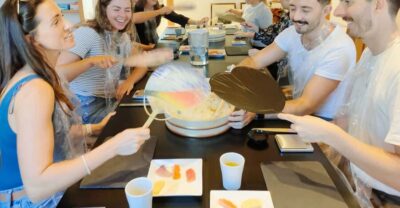
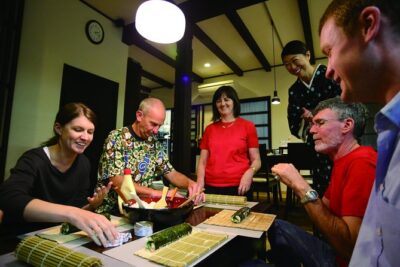
Sushi – Authentic Japanese Cooking Class – the best souvenir from Kyoto!
Read our review →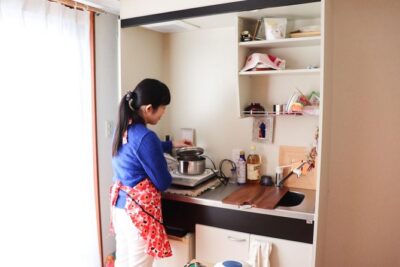
Private Kyoto Sushi Cooking Class & Tea Ceremony with Emika
Read our review →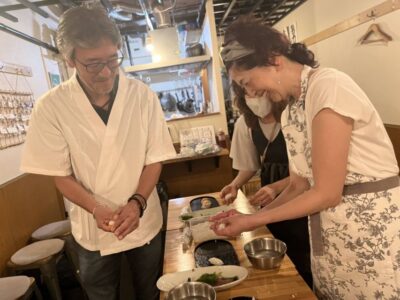
Enjoy Sushi & Market Tour! Best for Family & Couple!
Read our review →
Sushi or Traditional Japanese Cuisine in a Kyoto Home with Emika
Read our review →Also filed under