
Reviewed · GION GEISHA QUARTER WALKS
Maiko Happy Hour !
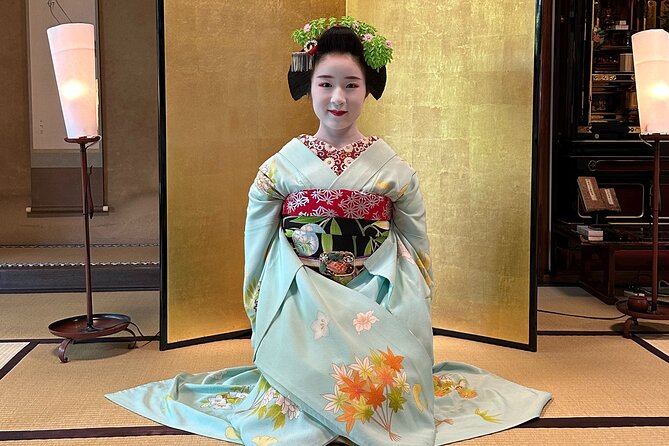
Maiko Happy Hour is Kyoto on a short clock. You get a real evening in a traditional townhouse setting, with a maiko dance and music performance, plus games and conversation that help the whole hour feel personal. The setting is Tondaya – Nishijin Japanese Cultural Experience Museum, a historic merchant home, and the schedule is built for a relaxed late afternoon start.
I especially like two things: the maiko performance itself, and the chance to see it in the 140-year-old townhouse environment. In the feedback I’m using to shape my expectations, the maiko performer and interpreter Sai came across as welcoming and patient, especially when questions came up. That kind of two-way tone is what turns a performance into an actual cultural chat.
One note to keep in mind: some people felt parts of the experience did not match what they expected and described it as running a bit like an assembly line. For a tour at $311.48 per person, that matters, because you want the hour to feel like it’s about the culture, not just the transaction.
In This Review
- Key things that make this Kyoto maiko hour worth your attention
- Tondaya – Nishijin: showing up at 4:00 pm for a small-group evening
- Maiko dance and music inside a 140-year-old townhouse setting
- The happy hour part: games, conversation, and interpreter Sai
- Your photo moment with the maiko, plus how to make it go smoothly
- Price and value: $311.48 for a compact, close-access hour
- Timing and planning: fitting this into Kyoto without stress
- What to watch out for, based on real feedback themes
- Who this maiko Happy Hour fits best
- Should you book Maiko Happy Hour in Kyoto?
- FAQ
- What is the meeting point for Maiko Happy Hour?
- What time does the experience start?
- How long is the Maiko Happy Hour experience?
- Is there a mobile ticket?
- How many people are in the group?
- Is the location near public transportation?
- When will I receive confirmation after booking?
- Is the experience refundable if I cancel?
- Can most travelers participate?
- What do you do during the experience?
Key things that make this Kyoto maiko hour worth your attention
- A one-hour happy hour format, starting at 4:00 pm, designed to fit into a normal Kyoto evening
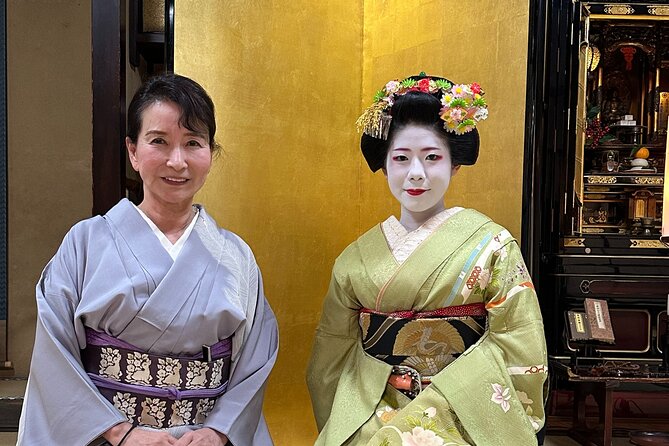
- Performance in a 140-year-old traditional townhouse, at Tondaya – Nishijin
- Maiko dance and music, with an experience space you’re welcomed into
- Customary party games and time to talk about Kyoto
- Interpreter Sai, noted as friendly and patient with questions
- Photo time with the maiko with the townhouse as a backdrop
Tondaya – Nishijin: showing up at 4:00 pm for a small-group evening
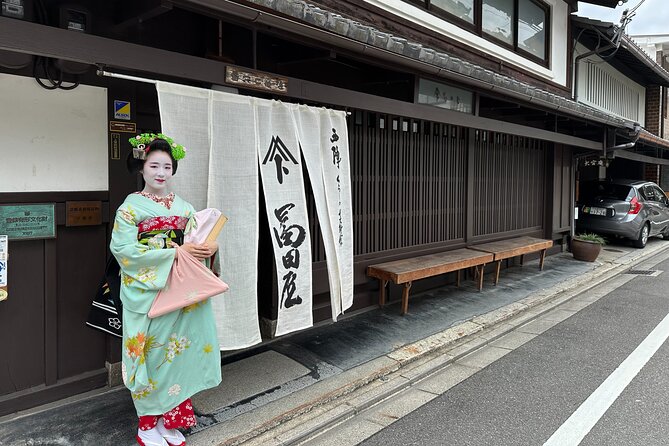
This experience meets at Tondaya – Nishijin Japanese Cultural Experience Museum, 697 Ishiyakushichō, Kamigyo Ward, Kyoto. It starts at 4:00 pm, and it runs for about 1 hour, then ends back at the same meeting point. If you’re planning your day, think of it as a planned “early evening anchor,” not a late-night event.
The group size is capped at 20 travelers, which is a big deal for this kind of cultural performance. Smaller groups tend to make it easier to hear and follow along, especially when you’re invited into the performance space and joined for games. Also, you get a mobile ticket, so you do not need to hunt for paper paperwork.
The location is described as near public transportation, so you’re not stuck with a long walk if you’re coming from central Kyoto. Still, with a 4:00 pm start, I’d give yourself a little buffer. Kyoto schedules run on time, and you want to arrive calm, not rushed.
Maiko dance and music inside a 140-year-old townhouse setting
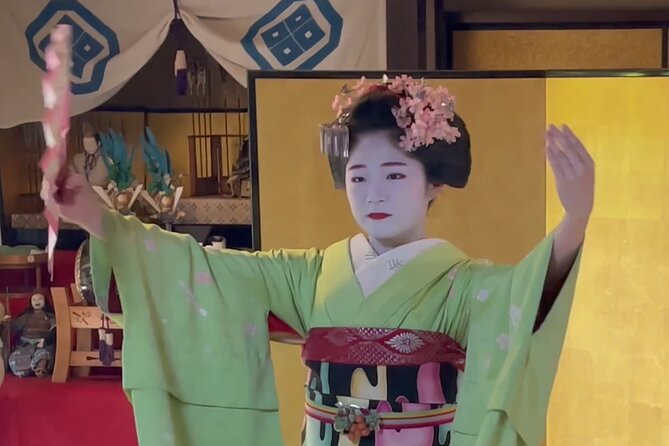
The core of this hour is the maiko performance, with Japanese dance and music presented in a traditional Kyoto townhouse. The experience description also frames Tondaya as a site tied to Japan’s cultural heritage, and you’re welcomed into the performance area as part of the evening.
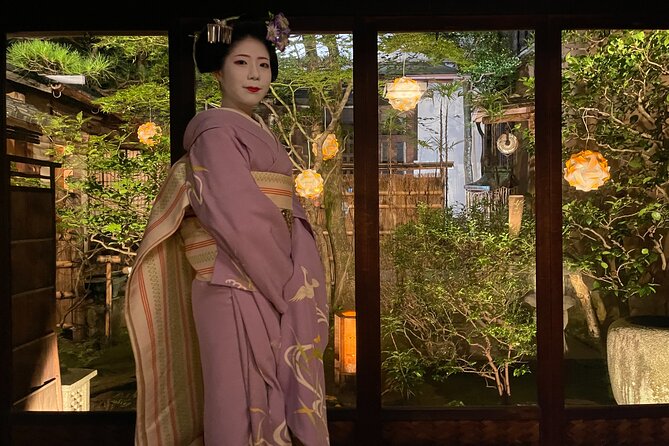
Why I think this matters: watching a maiko in a purpose-built or culturally authentic space is different from seeing a stage show in a generic venue. The whole point here is the atmosphere. The townhouse is 140 years old, and you feel that age in the way the space is used and presented for guests.
You’ll also get a sense of Kyoto’s cultural rhythm before the dance starts. There’s time for conversation about the wonders of Kyoto, and that helps the performance land better. Without that short context, you can still enjoy the dance and music, but the hour can feel like a standalone show.
This is also the moment where your expectations should be clear. You are not buying a multi-hour deep lecture. You are buying a concentrated, cultural performance hour with guided context and a structured finale.
Lantern-lit streets of the geisha quarter
- Kyoto Geisha Walking Tour: Gion District & Hidden Gems
★ 4.7 · 3,273 reviews - Kyoto: Gion Magical Night Walking Tour with Geisha Trivia
★ 4.9 · 2,393 reviews - Kyoto: Gion Geisha District Walking Tour – Stories of Geisha
★ 4.7 · 2,187 reviews - Best of Kyoto: Gion, Geisha, Pagodas & Cobblestones
★ 4.9 · 2,058 reviews
The happy hour part: games, conversation, and interpreter Sai
After you settle in, the program includes customary party games with the maiko. This is one of those features that can either feel gimmicky or genuinely fun, depending on how it’s guided. Here, the format is small-group, and the plan is to keep you involved instead of just watching.
Conversation is part of the experience too. You’ll have time to talk about Kyoto, and the topic includes traditional Maiko/Geiko culture. That matters because it turns the hour into more than just a performance with a beginning and an end. You get a chance to ask questions and connect the cultural references you see with what they mean in Kyoto.
In the feedback used to guide my advice, the interpreter named Sai stood out as welcoming and friendly, and also patient while answering questions. That is a practical point for you: if you like to ask questions, a patient interpreter improves the experience a lot. If you hate Q and A, you still get a clear structure, because the games and performance keep the flow moving.
One more detail I’d plan around: you’re doing games and photos, so be ready to switch modes quickly. This is not a slow tea ceremony kind of pace. It’s an organized, social evening.
Your photo moment with the maiko, plus how to make it go smoothly
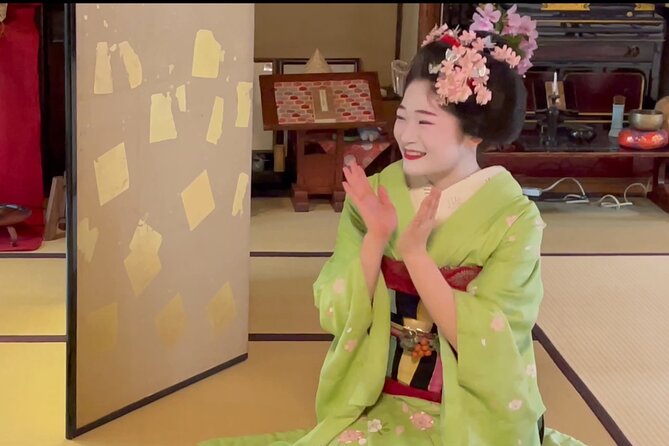
The experience ends with photos with the maiko, with the 140-year-old merchant townhouse as the backdrop. This is a major attraction for many people, and it’s also where you can make or break the memory. If you treat the photo time like an afterthought, it can turn stressful.
Instead, arrive with your phone fully charged and camera ready. Keep your space in line with instructions from the staff, and do not rush the moment. The photo time is a shared moment with other guests, so a calm pace helps everyone.
If you’re the type who wants a specific shot (close-up, group photo, or a couple-style photo), think about it quickly in your head. Too much fuss during the photo window can slow things down for the whole group, and the hour only lasts about an hour total.
The townhouse backdrop is a real advantage here. A historic setting gives the photos context, not just a face and a costume. If you want a Kyoto souvenir that looks like Kyoto, this is the part that delivers.
Price and value: $311.48 for a compact, close-access hour
At $311.48 per person for about 1 hour, this is not a budget add-on. So you should ask a simple value question: what are you paying for, specifically?
You’re paying for several things bundled together:
- A maiko dance and music performance in a traditional 140-year-old townhouse
- Guided conversation about Kyoto and Maiko/Geiko culture
- Participating in customary party games
- Photo time with the maiko
- A small group cap of 20 travelers, which helps with attention and flow
Also, this type of experience is typically easier to manage than trying to assemble similar cultural access on your own. You do not have to figure out venue coordination, timing, or interpretation. The program runs from 4:00 pm for about an hour, and it ends where it starts.
That said, the price makes the program quality more noticeable. One caution from the overall feedback is that some guests felt parts of the experience were not as advertised and could feel like an assembly line aimed at extracting money from tourists. Whether you interpret that as overly scripted or simply structured, it still affects perceived value.
So my practical advice is this: if you want a short, well-timed cultural performance with social elements and a photo at the end, the price can make sense. If you’re hoping for a long, flexible, lesson-like experience with lots of room to wander, you may feel constrained.
Timing and planning: fitting this into Kyoto without stress
Starting at 4:00 pm is a smart choice for many travelers. It gives you time in the morning or early afternoon for temples, neighborhoods, or a museum, and then transitions you into evening culture while Kyoto is alive but not yet fully late-night.
Because the experience lasts about 1 hour, plan a quick buffer before and after. If you stack it tightly with another reservation, you risk stress if you arrive late or need a short transit adjustment. The experience description says it is near public transportation, which helps, but it doesn’t eliminate walking time.
If you’re sensitive to schedule changes, take the program as fixed. The activity is non-refundable and cannot be changed for any reason, so you’ll want to be confident in your dates before you book.
Also, the tour includes a mobile ticket, so make sure you can access your ticket on arrival. Kyoto can be a phone-data day for many people, so have it accessible without last-minute troubleshooting.
A day of temples goes further with something to break it up.

What to watch out for, based on real feedback themes
The overall rating is 4 out of 5, but it’s based on 2 assessments, so you should not treat it as a guaranteed win every time. One recurring theme is that the maiko and the interpreter were highlighted as welcoming, friendly, and patient. That’s the heart of the experience, and it sounds like the human part lands well.
The other theme is dissatisfaction with how some parts were delivered. People described aspects as not matching what they expected and using language like assembly line to capture the feeling that the experience might be too run-through. That doesn’t mean the maiko performance will be bad, but it may affect how much you enjoy the games, the pacing, or the cultural explanation.
Here’s how to protect yourself:
- Go in expecting a structured one-hour program with set moments
- Focus on the maiko performance and the townhouse atmosphere, not on an open-ended museum-style experience
- If you care a lot about pacing, arrive early so you feel in control from the start
- Bring questions, since the interpreter Sai is described as patient, but understand your time is limited
If your definition of value is maximum autonomy, this might feel less like your pace. If your definition of value is great cultural access with a tight schedule, it can work.
Who this maiko Happy Hour fits best
I think this experience is a good match for you if you want:
- A short Kyoto culture evening that doesn’t eat your whole night
- A live maiko performance in a traditional 140-year-old townhouse
- A chance to join games and have guided conversation
- Photo time with a maiko in a clearly Kyoto setting
- A small-group feel, since the cap is 20 travelers
It may be less ideal if:
- You want lots of flexibility or a slower, unstructured pace
- You dislike feeling guided through a set program
- You are price-sensitive and need the experience to exceed a high expectation bar
Also, the experience notes that most travelers can participate, which suggests it’s not designed as a specialized physical activity. Still, you should expect to follow instructions and move with the group since the program includes games and photos.
Should you book Maiko Happy Hour in Kyoto?
If your goal is to spend one hour on a guided Kyoto evening focused on maiko dance, townhouse atmosphere, games, and photos, I’d say it’s worth serious consideration. The biggest reasons are straightforward: the performance and the historic setting are the headline features, and the interpreter Sai is described as welcoming and patient.
Before you book, be honest about what you’re paying for. This is a high-price, short-format experience. If you want a more flexible or deeply explanatory cultural journey, your money might feel better spent on something with more time and less structure.
My call: book it if you want a compact, memorable cultural evening with guaranteed photo time, and you’re comfortable with a set schedule.
FAQ
What is the meeting point for Maiko Happy Hour?
The meeting point is Tondaya – Nishijin Japanese Cultural Experience Museum, 697 Ishiyakushichō, Kamigyo Ward, Kyoto, 602-8226, Japan.
What time does the experience start?
The start time is 4:00 pm.
How long is the Maiko Happy Hour experience?
It lasts about 1 hour.
Is there a mobile ticket?
Yes, the experience uses a mobile ticket.
How many people are in the group?
The tour has a maximum of 20 travelers.
Is the location near public transportation?
Yes, it is described as near public transportation.
When will I receive confirmation after booking?
You will receive confirmation at booking time unless you book within 3 days of travel, in which case confirmation comes within 48 hours, subject to availability.
Is the experience refundable if I cancel?
No. It is non-refundable and cannot be changed for any reason.
Can most travelers participate?
Yes. The experience says most travelers can participate.
What do you do during the experience?
You watch a maiko dance and musical performance, play customary party games, have conversations about Kyoto and traditional Maiko/Geiko culture, and end with photos with the maiko.
New This Season
- Koyasan Day Trip by Private Car from Kyoto
- Old Port Town and Ultimate Sake Tasting Private Tour From Kyoto
- Kyoto’s Timeless Charm: 3hr Exploration of History and Peace
- Kyoto: 5 Types of Sushi Making
- Sacred Peak & Ancient Paths: Kurama-Kibune Hiking Experience
- Kyoto: Exclusive ZEN practice at Manpukuji temple in Uji
- Traversing Kyoto’s Scenic West – Arashiyama to Kinkakuji
- Kyoto: Private Seasonal Aroma Yoga Class
Gion Geisha Quarter Walks, compared.
Kyoto Geisha Walking Tour: Gion District & Hidden Gems
Read our review →
Gion Magical Night Walking Tour with Geisha Trivia
Read our review →
Gion Geisha District Walking Tour – Stories of Geisha
Read our review →
Best of Kyoto: Gion, Geisha, Pagodas & Cobblestones
Read our review →

Kyoto Night Foodie Tour in Gion (9+ dishes + 6 Sake tastings)
Read our review →
Kyoto Gion Geisha District Walking Tour – The Stories of Geisha
Read our review →
Kyoto Gion: 2-Hour Geisha Culture & History Walking Tour
Read our review →Also filed under