
Reviewed · NARA & DEER PARK DAY TRIPS
Osaka & Nara in 1-Day by Private Van with Local Expert Guide
Nara and Osaka in one day sounds intense, and this tour makes it workable. You get door-to-door pickup and a private van plus a local English-speaking guide who can steer you around crowds and help with photos. The big payoff is seeing both cities’ must-dos without juggling trains, but the main tradeoff is that with a 6.5 to 7.5 hour schedule, each stop is short and you will not linger for long.
What I like most is the flexibility. You can choose a pickup and drop-off point (even if they differ) across Kyoto, Osaka, or Nara, and the guide adjusts the day based on season and conditions. My other favorite part is the “inside the city” feel, from deer-park chaos to Osaka’s shopping arcades and street-food zones, all guided in a way that helps you understand what you’re actually looking at. The one consideration: if you want a slow, museum-style pace, this schedule will feel like a fast walk.
You ride in an air-conditioned private vehicle, either a Nissan Serena (for 2 to 6 people) or a mini convertible (for 1 person). Start time is 1:00 pm, and you’re back later the same day with dinner guidance built in.
In This Review
- Key points to know before you go
- Why this private van day trip works from Kyoto
- Nara Park deer and the Todai-ji complex in one stretch
- Osaka Castle, Yoshikien garden, and the street-level contrast
- Dotonbori neon, Tsutenkaku snacks, and Shinsaibashi flow
- Electronics streets and the red-line district, plus why your guide matters
- Timing, dinner guidance, and what “included” really means
- Duration and what you can realistically see in 6.5 to 7.5 hours
- Price value: what $300.61 buys for a private tour
- Who should book this tour, and who should skip it
- Should you book Osaka and Nara in 1-Day with WadaF Tours?
- FAQ
- What time does the tour start?
- Where can the tour pick you up and drop you off?
- How long does the tour take?
- What vehicle do I ride in?
- Is there a guide included?
- Are meals included?
- Is Todaiji admission included?
- Are mobile tickets provided?
- Can I bring a service animal?
Key points to know before you go
- Private, door-to-door transport keeps the Osaka and Nara day from turning into train-timing math
- Nara Park deer + Todai-ji gives you the classic Nara combo in a tight window
- Osaka Castle and Yoshikien balance big landmarks with a calmer garden break
- Dotonbori, Shinsaibashi, Tsutenkaku hit the city’s most famous streets for neon and snacks
- A local guide who helps with photos means fewer missed photo spots and smoother transitions
Why this private van day trip works from Kyoto
Osaka and Nara are close enough to pair in one day, but close does not mean easy. The real challenge is logistics: crowds, station transfers, and trying to time museum hours while you’re also chasing iconic spots.
This tour solves that with roundtrip transportation in a private car. You can pick your starting point in Kyoto, Osaka, or Nara, and you can also choose a different drop-off location. You are not waiting on group shuttles, and the guide can shift the day when streets are jammed or timing is tight.
Another practical win is that the itinerary is built for a real rhythm. Your day is designed around short, high-impact stops: one hour at Nara Park, then a mix of Osaka landmarks and street areas, plus dinner-time guidance. You still get variety, but you do not waste hours commuting.
Nara Park deer and the Todai-ji complex in one stretch
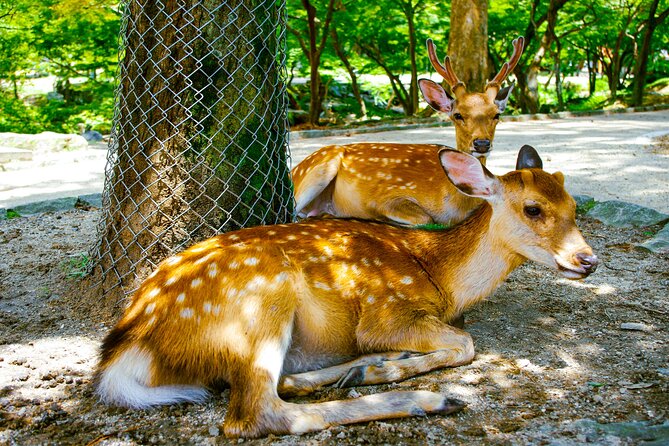
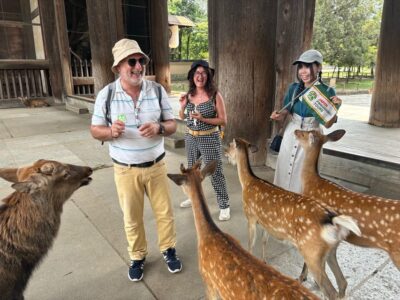
If you do one thing in Nara, make it Nara Park. You’ll get an hour here, which is enough time to find a good viewpoint, watch deer move through the paths, and understand why this park is such a signature experience. The deer are wild but unusually comfortable around people, so it feels lively rather than tense.
This is also where you can easily burn time if you let the deer-dogpile moments take over. The trick is to use the guide’s pacing. I like that the format gives you a block of time, then moves you on before you lose your whole afternoon.
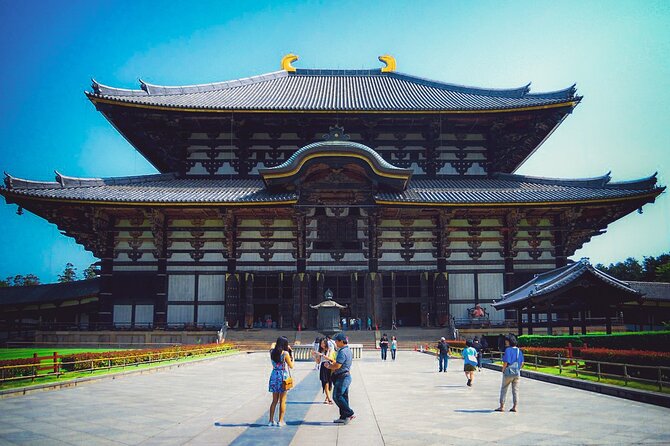
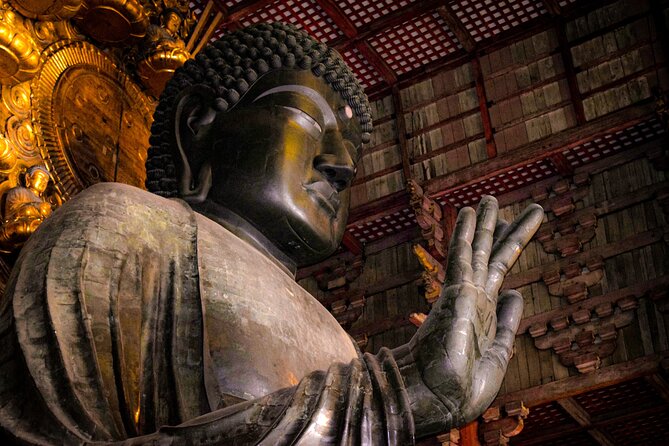
Next comes Todai-ji Temple, the big one in Nara. Expect about an hour here and note that Todai-ji admission is not included (it’s listed as ¥800 per person). The draw is scale: it’s famous for the massive wooden architecture and the huge Buddha statue inside. Even if you’re not a temple-nerd, it’s one of those spaces where the building itself does the talking.
Finally, you may also catch Todai-ji Shoro (Bell Tower) for around 10 minutes. This bell is described as one of Japan’s great bells, and the routine is said to be rung every night at 8 pm. It’s also described as sounding for three days after each ring, with monks handling the bell timing. If you’re at the site near the right time, it’s a neat cultural detail that most standard “quick stops” skip.
Consideration: Nara Park can be crowded. If you want the deer experience with the least chaos, do not expect a calm, empty park. Let the guide help you choose where to stand and when to walk.
Deer that bow back, a short ride away
- Osaka/Kyoto:Kinkakuji,Arashiyama,FushimiInariShrine,NaraPark
★ 4.1 · 1,596 reviews - Kyoto/Osaka: Nara, Fushimi Inari Taisha, Arashiyama Bus Tour
★ 4.7 · 1,275 reviews - Osaka/Kyoto: Arashiyama, Nara & Fushimi Inari Shrine w/Lunch
★ 4.4 · 754 reviews - Kyoto and Nara Day Trip from Kyoto
★ 4.5 · 445 reviews
Osaka Castle, Yoshikien garden, and the street-level contrast
Osaka Castle is one of the city’s main symbols, and you get about 20 minutes here. That’s not long, but it can be the right amount if your goal is to see the landmark, soak up the setting, and move on. If you want deep museum time or multiple viewing angles, you may wish you had more hours.
That said, the rest of the day helps you get the Osaka “feel” beyond the castle grounds. You’ll also stop at Yoshikien, a Japanese garden with seasonal flowers and moss areas that are said to look great all year. The time listed is about 15 minutes, so treat it as a reset button between busier city zones.
Then the tour shifts back to Osaka’s modern energy with a stop called American Village. The description frames it as more about Osaka’s younger crowd than a strictly American theme. The vibe is compared to Shibuya and Harajuku in Tokyo, with a nightlife and street-scene feel. If you like seeing how Osaka youth culture looks in a real neighborhood, this stop makes sense.
Consideration: Some Osaka stops are more about atmosphere than structured sightseeing. If you prefer strict temple and museum time, you’ll probably enjoy Yoshikien more than the shopping-and-nightlife streets.
Dotonbori neon, Tsutenkaku snacks, and Shinsaibashi flow
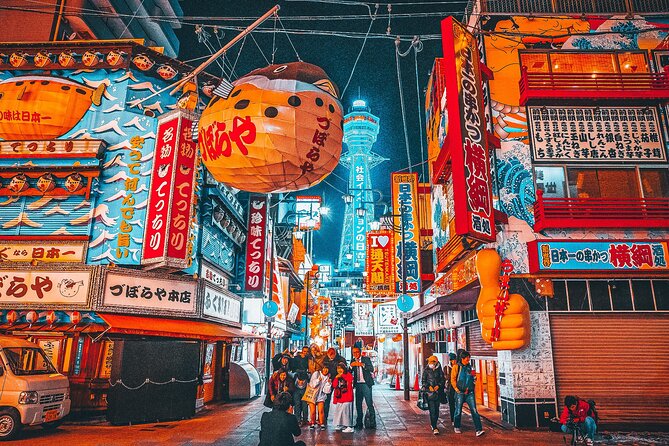
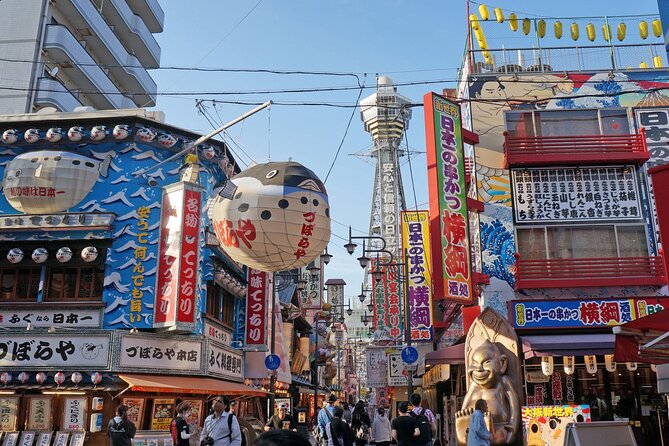
After Nara, Osaka can feel like a different planet, and the tour leans into that. The big “wow” zone is Dotombori (Dotonbori). You get about 15 minutes here, which is short, but it’s timed like a hit of energy: you’ll see the famous river-side neon area and the signs people recognize instantly once they see them.
This is where I recommend keeping your expectations grounded. You’re not here for a slow photo essay. You’re here to walk the pulse, grab a snack, and let your senses do the rest.
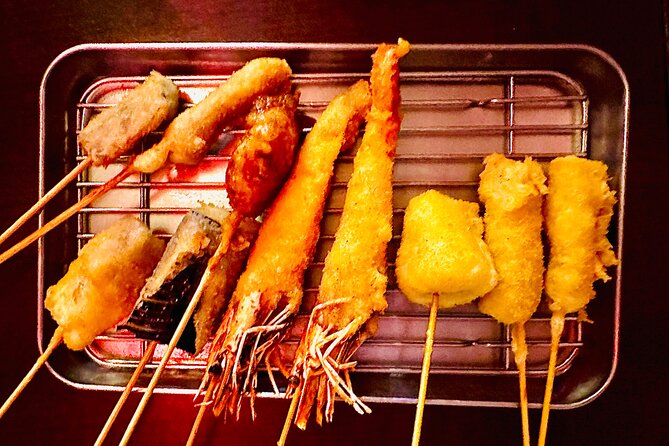
Then you’ll move to Tsutenkaku Hondori Shopping Street, also about 15 minutes. This area is described as symbolic for Osaka, with unique shops and lively street scenes, including an invitation to try famous Osaka street foods. The note on takoyaki (octopus balls) is especially useful here. If you only eat one Osaka snack that feels like it belongs in Osaka, this is the kind of stop where it fits.
Next is Shinsaibashisuji Kita Shotengai, a shopping arcade. It’s described as the most crowded arcade in Japan, compared to Shibuya Crossing for the sheer flow of people. You get about 5 minutes, so think of it as a quick taste of city density rather than a shopping spree.
Consideration: These areas are crowded by nature. If you’re visiting on a weekend or during a peak season, plan to move with the crowd and use the guide to find easier walking lines.
Electronics streets and the red-line district, plus why your guide matters
Osaka isn’t only castles and shopping arcades. The itinerary includes a stop described as the Akihabara of Osaka, a compact electronics and anime area. The note is that it’s more concentrated than Akiba. Even if you don’t buy anything, it’s fun to see how fan culture and retail layout work in this part of town.
There is also a stop described as the deepest red-line district area, with notes about school-uniform costumes and people waving from traditional houses. This is a sensitive kind of neighborhood. If this topic is not your thing, you should tell your guide early, so they can adjust how long you spend in the area and how you move through it.
What makes a difference on days like this is how well your guide reads the street. The tour description emphasizes that your guide can provide local recommendations and help you take photos. And from the guide style mentioned in the details, the pacing is part of the value, not just the driving.
Practical tip: If you want photos, ask the guide where the best angles are before you stop moving. In Dotonbori and Shinsaibashi, the best shot can vanish once the crowd shifts.
Timing, dinner guidance, and what “included” really means
Your tour includes dinner time and a local restaurant guide, but it also states that the dinner fee is not included. That matters. You’re not getting a free dinner meal, you’re getting help choosing and navigating where to eat, which can be a bigger win than you’d think after a long day.
This format is good when you want real food without the awkward “menu translation lottery.” The guide can recommend places that match your tastes and manage the flow so you’re not stuck waiting too long.
One more thing: parking fees are included, along with fuel and highway fees. That means you avoid the hidden “how much will this cost us later” surprise that can happen on private car days.
Consideration: Lunch is not listed as included. If you start at 1:00 pm, consider eating earlier before pickup, or plan a light snack so dinner feels like a reward rather than a rushed stop.
A quieter way to spend a day in Kyoto

Duration and what you can realistically see in 6.5 to 7.5 hours
The tour runs about 6 hours 30 minutes to 7 hours 30 minutes. That time includes pickup movement, driving, short walking periods, and transitions between city areas.
So yes, the day covers a lot, but it does so with a smart tradeoff: quick, guided highlights instead of deep time at any single attraction. Nara Park gets the most time at 1 hour, Todai-ji gets 1 hour, and the rest is a mix of shorter stops.
If you’re the type who wants to:
- see iconic landmarks,
- walk through key neighborhoods,
- and eat at least a couple Osaka snacks,
this schedule fits well.
If you’re more into:
- long temple study sessions,
- multiple museums,
- or slow wandering without a plan,
then you might prefer splitting into separate Osaka and Nara days.
Price value: what $300.61 buys for a private tour
The price is listed as $300.61 per group (up to 1), and the car type depends on your group size, from a Nissan Serena (2 to 6 pax) to a mini convertible (1 pax). That structure can look confusing, but the value is clearer when you think about what you’re avoiding.
You’re paying for:
- private transport and parking,
- a full English guide,
- fuel and highway fees,
- and photo help plus restaurant guidance.
For a day that includes multiple neighborhoods and two major destinations, the cost makes sense if you want convenience and a guided route. It’s especially good if you’re traveling with someone else and you’d otherwise buy multiple tickets, pay for taxis, and still risk wasting time figuring out transit connections.
Simple way to judge value: If you can picture spending half your day hopping between stations and walking long distances, this private format usually feels like the cheaper option in time and stress.
Who should book this tour, and who should skip it
This is a great fit for you if you want:
- one-day coverage of both Nara and Osaka,
- a private, comfortable ride in air-conditioning,
- and a guide who can explain what you’re seeing as you go.
It’s also a smart choice if you’re visiting for a short window and you don’t want to gamble with timing. The guide can also adjust the day seasonally and by conditions, and the description notes that not every small listed site is guaranteed.
I’d also recommend it to families or pairs who don’t want to manage public transit while keeping a packed itinerary. Your day is built to move at a steady pace without feeling like you’re constantly sprinting.
You might skip it if you:
- want a calm pace with long stays,
- have a strong interest in just one attraction (for example, only temples in Nara),
- or feel uncomfortable with neighborhood scenes like the red-line district area described in the route.
Should you book Osaka and Nara in 1-Day with WadaF Tours?
If you want Osaka and Nara highlights without transit headaches, I think this tour is a strong booking. The private van format, the English local guide, and the combination of Nara deer and Todai-ji with Osaka neon streets makes it a “do it right now” day.
Before you book, do two quick reality checks. First, confirm you’re okay with short stop times and moving on rather than lingering. Second, decide how you feel about the tour’s inclusion of nightlife-adjacent neighborhood areas, since that part is part of the experience.
If you match that vibe, you’ll likely come away with a full, varied day that feels like both cities, not just two lists you tick off.
FAQ
What time does the tour start?
The start time is listed as 1:00 pm.
Where can the tour pick you up and drop you off?
Pickup and drop-off are offered anywhere in Kyoto, Osaka, and Nara cities, and the pickup and drop-off can be different.
How long does the tour take?
The duration is approximately 6 hours 30 minutes to 7 hours 30 minutes.
What vehicle do I ride in?
You’ll ride in an air-conditioned private car. The options listed are a Nissan Serena for 2 to 6 people, or a mini convertible for 1 person.
Is there a guide included?
Yes. The tour includes a full English guide & driver from a local provider (WadaF Tours).
Are meals included?
Dinner time and a local restaurant guide are included, but the dinner fee is not included. Lunch time is also not listed as included.
Is Todaiji admission included?
No. Todai-ji admission is not included, and it is listed as ¥800 per person.
Are mobile tickets provided?
Yes. Mobile tickets are listed as part of the experience.
Can I bring a service animal?
Service animals are allowed.
New This Season
- Koyasan Day Trip by Private Car from Kyoto
- Old Port Town and Ultimate Sake Tasting Private Tour From Kyoto
- Kyoto’s Timeless Charm: 3hr Exploration of History and Peace
- Kyoto: 5 Types of Sushi Making
- Sacred Peak & Ancient Paths: Kurama-Kibune Hiking Experience
- Kyoto: Exclusive ZEN practice at Manpukuji temple in Uji
- Kyoto: Private Seasonal Aroma Yoga Class
- Traversing Kyoto’s Scenic West – Arashiyama to Kinkakuji
Nara & Deer Park Day Trips, compared.
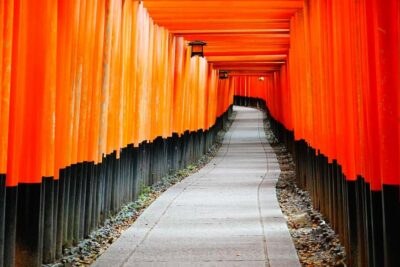
Kinkakuji,Arashiyama,FushimiInariShrine,NaraPark
Read our review →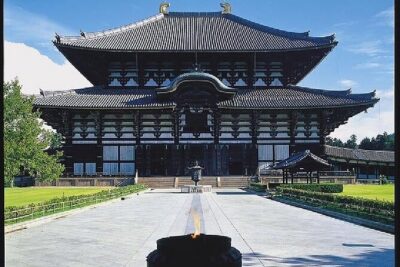
Nara, Fushimi Inari Taisha, Arashiyama Bus Tour
Read our review →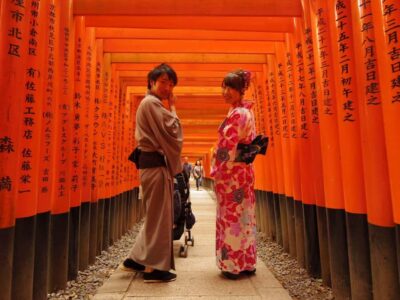
Arashiyama, Nara & Fushimi Inari Shrine w/Lunch
Read our review →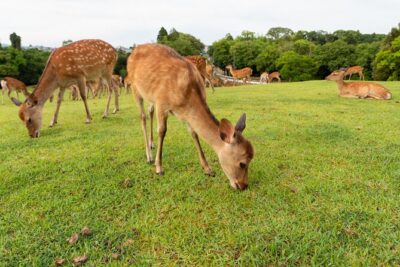
Full Day Guided Tour to Kyoto and Nara from Osaka by Van
Read our review →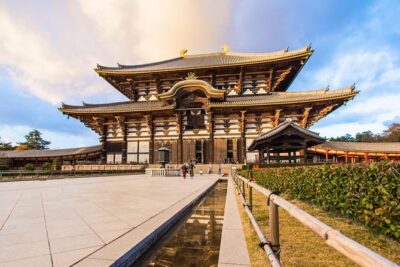
Also filed under