
Reviewed · COOKING CLASSES
Private Cooking Class Udon in Kyoto Japan
Kyoto has a way of slowing you down, especially here. This private udon cooking class puts you in a 130-year-old traditional house with antique furniture and local instructors, where you make handmade noodles and then eat the results.
I love that you get real hands-on technique, not just a quick demo, and the step-by-step process is laid out clearly (saltwater, rinsing, kneading, stretching, and knife cutting). I also like that it’s built for the meal part, with a separate tempura set provided so you are not stuck making everything.
The one thing to consider is the timing: it starts at 12:00 pm and the session is about an hour, so if you’re trying to cram a packed morning tour, you’ll want to leave some breathing room.
In This Review
- Key highlights
- A Private Udon Class in a 130-Year Kyoto House
- Finding the Place Fast, Getting Comfortable in Shimogyo
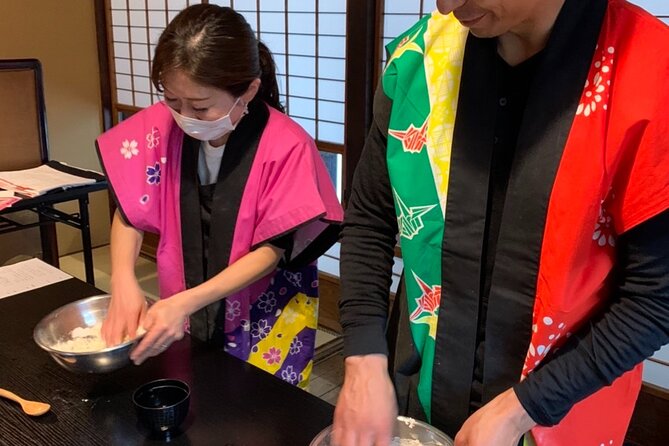
- The Udon Lesson: From Saltwater to Knife Cutting
- What Happens While Teachers Boil (And Why It’s Smart)
- The Meal: Tempura Plus the Udon You Made
- Teaching Style That Makes It Click, Tanaka San and Hisayu
- Price and Value: When $60.43 Makes Sense
- Best Time to Go and How to Plan Your Kyoto Day
- Who This Private Udon Class Is For
- Small Tips That Help You Enjoy It More
- Should You Book the Private Cooking Class Udon in Kyoto?
- FAQ
- Where is the meeting point for the udon cooking class?
- What time does the class start?
- How long is the experience?
- Is this a private experience?
- What will I make during the class?
- Do I boil the udon myself?
- Is tempura included, and do I make it?
- What language is the class taught in?
- Is the location near public transportation?
- What is the cancellation policy?
Key highlights
- Kyomachiya classroom in a 120-year-old house near Nishi Honganji
- Handmade udon from scratch, with instructors guiding you step by step
- You do the noodle work, teachers handle the boiling, keeping it doable
- Meal included, with tempura and traditional dipping-style udon set-up
- English instruction with friendly, patient teaching (including Tanaka San and Hisayu)
- Private experience, only your group, in a small traditional setting
A Private Udon Class in a 130-Year Kyoto House
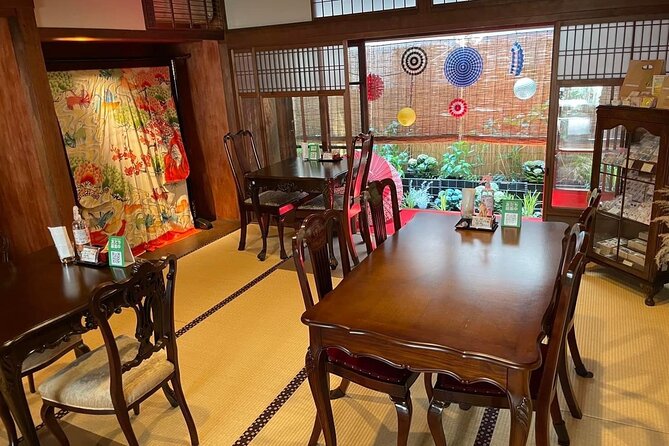
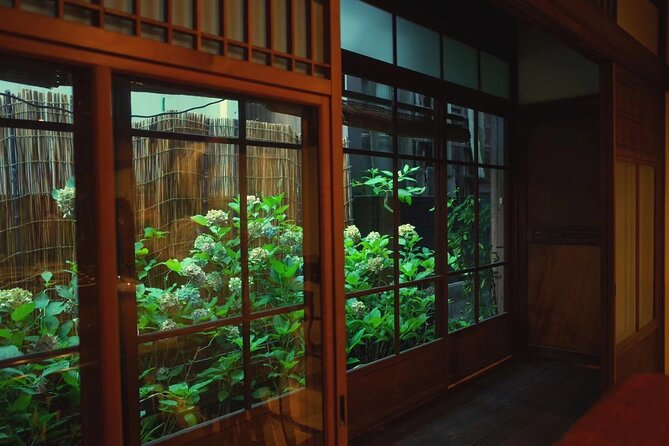
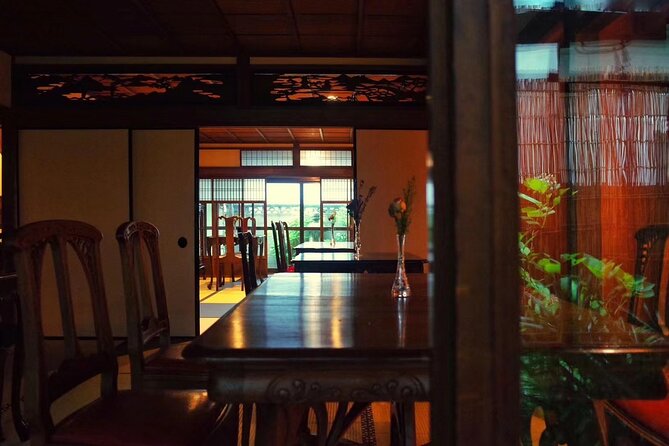
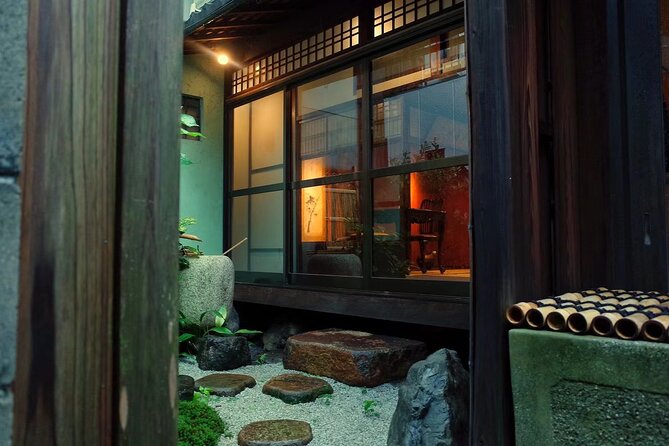
If you want Kyoto food culture without the usual tourist-food routine, this class is a smart choice. You meet in Shimogyo Ward, in a beautifully renovated kyomachiya that dates back around 130 years, with a classroom setup inside a historic wooden home.
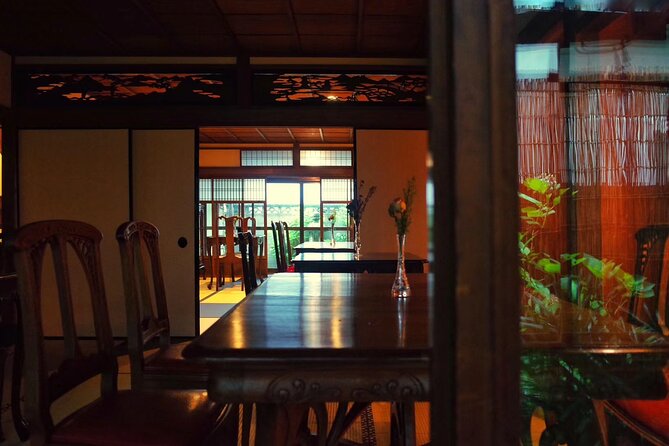
The vibe matters here. There’s something different about learning cooking techniques when the room itself feels like it belongs to another time. You are surrounded by old furniture and artifacts, and traditional music helps keep the mood calm and focused.
You will also appreciate the practical side. Your teachers are local to Kyoto, and that local knowledge shows up in how they explain the process and the basics of udon.
Finding the Place Fast, Getting Comfortable in Shimogyo
You start at 364 Momijichō, Shimogyo Ward, Kyoto, 600-8345, Japan. The location is easy to reach on foot, roughly a 12-minute walk from Kyoto Station and about a 2-minute walk from Nishi Honganji Temple.
For me, that’s a real advantage. You can build this around lunch and still see major sights nearby before or after. It also reduces stress on a travel day, since you are not fighting complicated transit to a far neighborhood.
You’ll receive a mobile ticket, and the experience is set up as a private activity, so only your group participates. Service animals are allowed, and it’s near public transportation.
A quieter way to spend a day in Kyoto
- Ramen Cooking Class at Ramen Factory in Kyoto
★ 5.0 · 1,937 reviews - Kyoto: Ramen Cooking Class at a Ramen Factory with Souvenir
★ 4.9 · 532 reviews - Kyoto: Ramen, Gyoza, and Onigiri Cooking Class
★ 5.0 · 445 reviews - Kyoto: Japanese Washoku Bento Small Group Cooking Class
★ 5.0 · 380 reviews
The Udon Lesson: From Saltwater to Knife Cutting
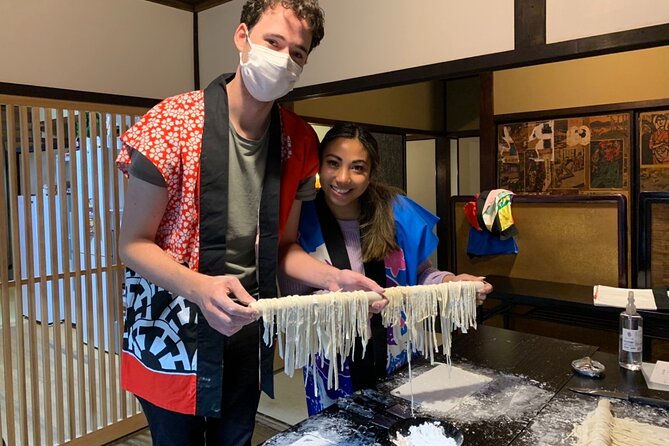
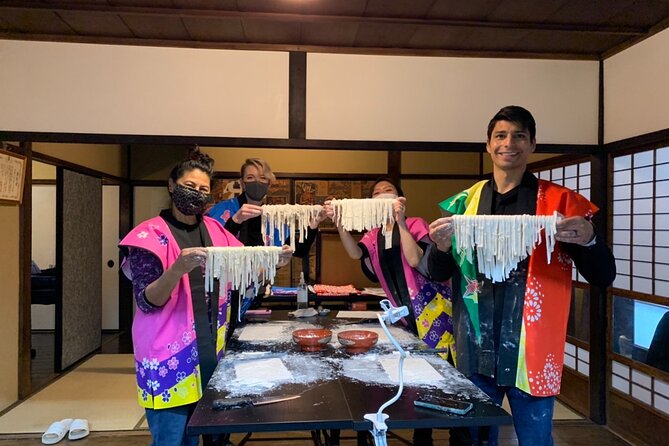
This is a true noodle-making class. The main work is creating the dough and shaping the noodles using a clear sequence of steps, while your instructors guide you through the technique.
Here’s the flow you can expect, using the exact stages taught during the session:
- Making saltwater
- Rinse the water
- Footsteps
- Mature
- Stretch the fabric
- Knife cut
- It’s boiling
That “footsteps” and “mature” part sounds playful, but it’s really about how you work the dough. Kneading and resting are what give udon its familiar texture, and the class uses a staged approach so you’re not just guessing.
You also get a key time-saving benefit: you create the noodles, but you do not boil them. Teachers handle the boiling so your group stays safe and keeps the energy on shaping and learning.
From the way the class is described and taught, it’s also designed to be family-friendly. You can participate without needing advanced cooking skills, and the instructions are paced so you can follow along at a comfortable speed.
What Happens While Teachers Boil (And Why It’s Smart)
Once your noodles are shaped, your role shifts to watching and waiting a bit, while your teachers manage the boiling. This matters more than you might think.
First, boiling is where small mistakes can throw off texture. By having the instructors take over, you still get the satisfaction of making the noodles, without leaving the outcome to chance.
Second, it keeps the class experience relaxed. Instead of turning it into a chaotic kitchen sprint, you get time to settle in, learn the next part of the meal routine, and enjoy the atmosphere inside the old house.
And because the class is private, your group can ask questions without feeling like you’re competing for attention. If you are curious about why udon behaves the way it does, this is the moment to ask.
The Meal: Tempura Plus the Udon You Made
After the noodle work, you relax and eat what you made. The structure is simple: your udon is ready, and the rest of the meal is handled for you.
You do not make tempura yourself. A separate tempura set is added for the meal, so you can focus on noodle technique instead of adding extra cooking steps.
In the meal set-up, you can expect traditional udon finishing elements like dipping-style broth and toppings. Some groups are served with items such as grated ginger and minced green onion, and the tempura is typically vegetables paired with sauce and a warm dipping style udon arrangement.
For me, this is the best kind of included meal. It’s directly connected to your work, but it doesn’t ask you to be a full-time chef for the entire session.
Also, since the class happens around lunchtime, it functions like a hands-on lunch plan. You get a meal without needing to hunt for something afterwards, which is a big win in Kyoto.
Teaching Style That Makes It Click, Tanaka San and Hisayu
What really pushes this class into the top tier is how the instruction lands. Many cooking classes teach technique. This one teaches technique and makes you feel capable doing it.
A recurring name in the teaching experience is Tanaka San, described as friendly, helpful, and patient. In other instances, Hisayu is mentioned as well. What’s consistent is encouragement, clear guidance, and a willingness to slow down when someone needs it.
You’ll likely notice how materials are handled. Ingredients appear to be pre-measured and laid out on work tables, and you’ll put on aprons before you begin. That setup matters because it reduces friction. You spend your energy learning the dough and shaping, not searching for tools.
Some people also pick up playful bits along the way, like learning a fun udon-related dance. Even if you’re not into performances, it helps break the formality and makes the session feel more human.
A day of temples goes further with something to break it up.


Price and Value: When $60.43 Makes Sense
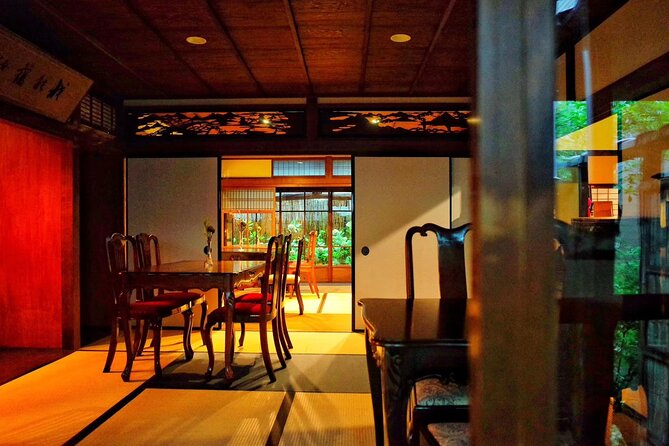
At $60.43 per person, the price isn’t “cheap,” but it also isn’t trying to be. For a private experience in a historic space, with instruction, ingredients, and a full included meal component, you’re paying for more than just food.
Here’s where the value shows up for me:
- Private format means your time is not shared with other groups, and questions don’t get swallowed.
- You get hands-on noodle making, including shaping and cutting, not just tasting.
- The session includes a meal with tempura, so you’re not adding cost later for lunch.
You’ll also see that bookings happen ahead, on average about 16 days in advance. That’s a hint the experience is popular, so planning a little earlier can help you get the time you want.
If you come to Kyoto expecting food to be a central part of the trip, this price starts to feel fair fast.
Best Time to Go and How to Plan Your Kyoto Day
The start time is 12:00 pm, and the class is about 1 hour. In practice, you should plan for a slightly longer block when you include eating and settling in.
Since you are near Kyoto Station and Nishi Honganji Temple, you can design your day in a clean way. You might do a short temple walk before class, then enjoy lunch in the old-house setting, and head out for your next sight after.
If you are traveling with kids, this timing tends to work well because it’s food-focused and interactive. If you are traveling as a couple or solo, it’s also a strong choice because you get a skill you can repeat later, instead of only bringing back photos.
Who This Private Udon Class Is For
This experience fits especially well if you want:
- A practical cooking skill you can recreate at home
- A Kyoto activity that feels local, with a real kyomachiya setting
- A lunch plan with included tempura and udon you helped make
- A family-friendly activity where you can participate without needing special equipment
It’s also a great option if you are food-curious but not confident in the kitchen. The steps are broken down, and the instructors take over the parts that could be stressful, like boiling.
If you are only looking for sightseeing photos and you want zero time in a classroom kitchen, you might prefer a different type of Kyoto tour. But if you want to leave with both a memory and a recipe, this fits.
Small Tips That Help You Enjoy It More
A few practical pointers can make the experience smoother:
- Arrive a few minutes early, so you can settle in and follow the flow without rushing.
- Wear comfortable clothes. You’ll be working with dough, and aprons help, but you’ll still want easy sleeves and movement.
- Come ready to ask questions, especially if you want to understand how udon texture changes with dough handling.
- If you plan to reproduce the udon at home, pay attention to the dough feel and the shaping steps, since that’s where results usually change.
And if you want to make the most of the location, build in a short walk around Nishi Honganji either before or after. The area is convenient and easy to navigate on foot.
Should You Book the Private Cooking Class Udon in Kyoto?
Yes, if you want a hands-on Kyoto experience that combines a real local setting with a meal you can connect to your effort. The private format, the historic house setting, and the clear noodle-making process are the big reasons to book.
I would especially recommend it if you:
- are traveling with family, including kids
- want a cooking class that ends with lunch, not just a souvenir
- care about doing the work yourself, not watching from the sidelines
If your schedule is extremely tight and you cannot spare a focused lunch hour, you may find the 12:00 start time inconvenient. Otherwise, this is one of those Kyoto activities where you go in expecting noodles, and come out with a skill plus a satisfying meal.
FAQ
Where is the meeting point for the udon cooking class?
The meeting point is at 364 Momijichō, Shimogyo Ward, Kyoto, 600-8345, Japan.
What time does the class start?
The start time is 12:00 pm.
How long is the experience?
The duration is listed as about 1 hour.
Is this a private experience?
Yes. Only your group will participate.
What will I make during the class?
You will make handmade udon noodles from scratch.
Do I boil the udon myself?
No. The steps you do include making and shaping the noodles, while teachers handle the boiling.
Is tempura included, and do I make it?
Tempura is included as a separate set for the meal, and you do not need to make the tempura.
What language is the class taught in?
Instructions are described as being delivered in English by the teacher.
Is the location near public transportation?
Yes, it is near public transportation, and it is also close to major landmarks like Kyoto Station and Nishi Honganji Temple.
What is the cancellation policy?
Free cancellation is available. You can cancel up to 24 hours in advance for a full refund. If you cancel less than 24 hours before the start time, the amount paid is not refunded. Confirmation is received within 48 hours of booking, subject to availability.
New This Season
- Koyasan Day Trip by Private Car from Kyoto
- Old Port Town and Ultimate Sake Tasting Private Tour From Kyoto
- Kyoto’s Timeless Charm: 3hr Exploration of History and Peace
- Kyoto: 5 Types of Sushi Making
- Sacred Peak & Ancient Paths: Kurama-Kibune Hiking Experience
- Kyoto: Exclusive ZEN practice at Manpukuji temple in Uji
- Kyoto: Private Seasonal Aroma Yoga Class
- Traversing Kyoto’s Scenic West – Arashiyama to Kinkakuji
Cooking Classes, compared.
Ramen Cooking Class at Ramen Factory in Kyoto
Read our review →
Ramen Cooking Class at a Ramen Factory with Souvenir
Read our review →
Japanese Washoku Bento Small Group Cooking Class
Read our review →
Japanese Traditional Sweets Making and Tea Ceremony
Read our review →
Kyoto Ramen and Gyoza Cooking Class with Professional Chefs
Read our review →
Also filed under