
Reviewed · WORKSHOPS
Pure Silver Spoon Making Workshop in Kyoto
Silver plus handwork is a rare combo. In Kyoto, you can design and shape a pure silver spoon in a private workshop setting near Shugakuin Imperial Villa. It’s a hands-on break from the usual sightseeing loop, and the finished spoon comes in a paulownia box you can keep or gift.
I particularly like that the process is broken into clear steps, from stamping or chiseling your pattern to filing and burnishing, so you actually understand what you are doing. I also love the human touch reported by past participants, including tea and snacks plus patient English support when language gets in the way.
One thing to consider: this isn’t a quick souvenir stop. You’ll spend about 2.5 hours making the spoon yourself, and you’ll want to be comfortable focusing during the whole session.
In This Review
- Key Points to Know Before You Go
- Pure Silver Spoons In Kyoto, Not Just A Craft Photo-Op
- Where The Workshop Fits Near Shugakuin Imperial Villa
- Your 2.5-Hour Workshop Flow, Step By Step
- 1) Start With A Blank Silver Canvas
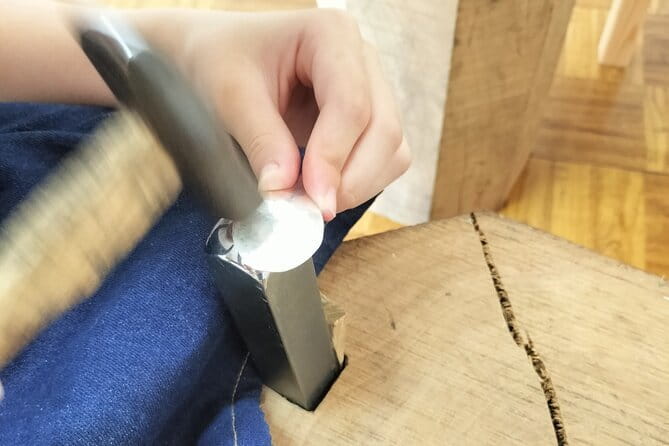
- 2) Shape It Into A Real Spoon With Hammer Work
- 3) File And Burnish For Smooth Sides
- 4) Machine Polishing For Safety, Then Your Final Polish
- What’s Included, And Why That Changes The Value
- The Hosts, Language Help, And The Comfort Factor
- Your Spoon As A Gift, With The Symbol Behind It
- Price And Logistics: When It’s Worth The Spend
- Who Should Book This Workshop, And Who Should Skip It
- Should You Book The Pure Silver Spoon Workshop In Kyoto?
- FAQ
- How long is the Pure Silver Spoon Making Workshop?
- Where is the workshop meeting point in Kyoto?
- Is the workshop near public transportation?
- What is included in the price?
- Is private transportation included?
- Is it a private experience?
- What is the cancellation policy?
- Can service animals attend?
Key Points to Know Before You Go
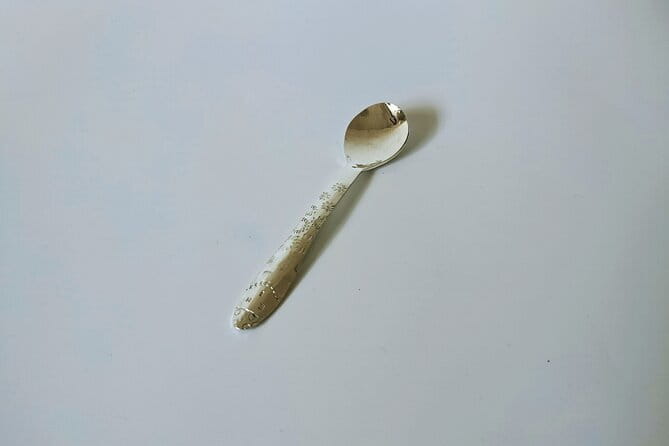
- Pure silver cutlery, made by you: You shape a spoon from silver, not a plated charm or replica.
- Your pattern, your stamp or chisel: You add a personal design to the silver before it becomes a spoon.
- Safe polishing method: A craftsman handles machine polishing, and you do the final abrasive polishing yourself.
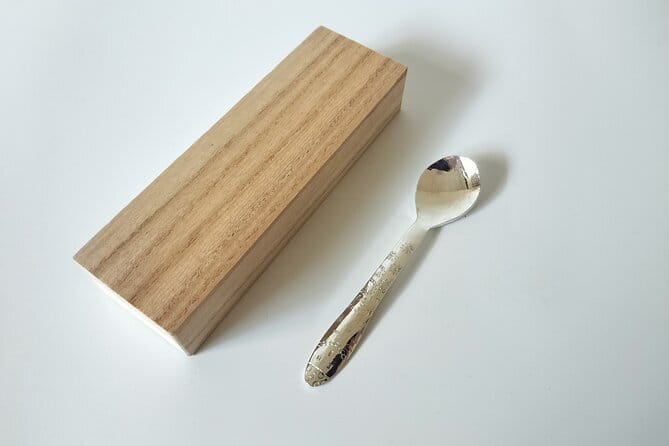
- A keepsake gift box is included: You get the paulownia box with your finished spoon.
- English instructions and warm hosting: Tea and snacks, plus patient guidance, help if your Japanese is limited.
Pure Silver Spoons In Kyoto, Not Just A Craft Photo-Op
Kyoto is packed with workshops, but silver spoons are not your everyday offering. This one feels special because you are working with real silver, and you end up with something practical, small enough to carry, and meaningful enough to keep.
There’s also a cultural layer that makes the whole thing more than a craft class. Silver has long been viewed as a talisman in Japan, linked to warding off misfortune and evil spirits. There’s even a custom of giving a silver spoon to a baby to wish happiness, so when you make one for yourself, it lands with extra symbolism.
I’ll be honest: if you mainly want a big-ticket shopping experience, this may feel too hands-on and quiet. If you want a calm afternoon where you learn a real technique, it’s a strong fit.
Where The Workshop Fits Near Shugakuin Imperial Villa
The workshop is about an 8-minute walk from Shugakuin Imperial Villa. The meeting point is at 1-15 Shūgakuin Yamanohanachō, Sakyo Ward, Kyoto, 606-8025, Japan, and the activity ends back at the meeting point.
That location matters. You can build a day that mixes a classic Kyoto landmark area with a craft experience that is closer to local rhythms than the busiest tourist streets. It also means your workshop stop is easy to pair with something else in the same part of town, without major backtracking.
You’re also not stuck figuring out private logistics. The workshop is listed as near public transportation, and there’s no mention of needing a car or taxi for the class itself.
A quieter way to spend a day in Kyoto
- Kyoto: 45-Minute Tea Ceremony Lesson Experience
★ 4.3 · 2,378 reviews - Ramen Cooking Class at Ramen Factory in Kyoto
★ 5.0 · 1,937 reviews - Kyoto : Chopsticks Making Workshop in Gion with Engraving Option
★ 5.0 · 958 reviews - Kyoto: Samurai Sword Class by Experts in Traditional Arts
★ 4.9 · 657 reviews
Your 2.5-Hour Workshop Flow, Step By Step
This is roughly a 2 hours 30 minutes experience, focused on producing a finished spoon that you can take home. You’ll work through the spoonmaking process in stages, with guidance and safety-focused moments built in.
Here’s what your time looks like in plain terms.
1) Start With A Blank Silver Canvas
You begin with a spoon-shaped-making plan, but the early step is about design and control. Your spoon starts with silver fabric already prepared for the workshop.
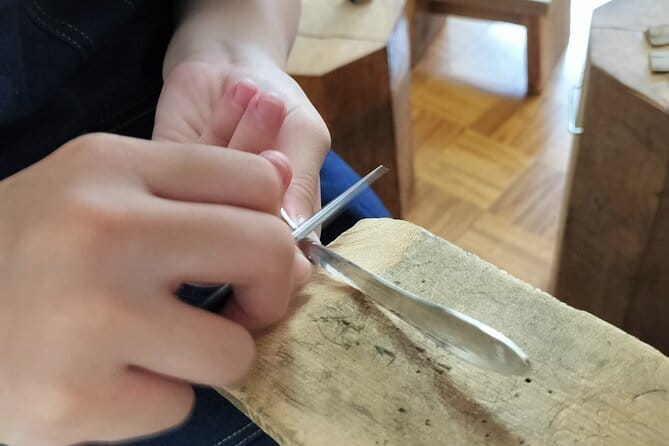
Then comes the part you can make personal. You add your favorite pattern to the silver using a chisel or a stamp of your choice. That means you are not limited to pre-made designs, and you are not just tracing someone else’s work.
Practical tip: think about what pattern will transfer cleanly into metal. Simple shapes often read well at small size, especially on a spoon you’ll later see from close range.
2) Shape It Into A Real Spoon With Hammer Work
After your pattern is set, you use a hammer to shape the silver into a spoon form. This is the “now it becomes real” moment.
Hammer shaping is one of those activities where the learning comes from doing. You feel the difference between flat metal and a form that actually holds a tiny portion like a teaspoon would.
If you’ve never done metalwork, don’t overthink it. The point here is guided practice, not perfection. Past participants highlighted that the hosts are extremely patient, and that matters when you are trying something genuinely new.
3) File And Burnish For Smooth Sides
Once the shape is formed, you smooth the sides with a file and a burnisher. This stage is about comfort and finish, not decoration.
This is also where your spoon stops looking like a hand-shaped object and starts looking like something you’d actually use. A smoother surface is more pleasant in the hand, and it helps your final polishing go evenly.
A day of temples goes further with something to break it up.


4) Machine Polishing For Safety, Then Your Final Polish
The craftsman polishes the spoon using a machine for safety. That detail is important because it means you get the best finish while the process that could involve more risk is handled by the expert portion.
After that, it becomes your turn again. You polish the spoon yourself with an abrasive. That final step is satisfying because you control the last visual change and you feel the finish improving under your hands.
The finished spoon size is about 12cm long and 2.7cm wide. It’s recommended for use as teaspoons and similar small-serving purposes, which makes it more usable than a purely decorative souvenir.
What’s Included, And Why That Changes The Value
At $141.22 per person, it is not the cheapest activity in Kyoto. But you’re not paying for a short demo. You’re paying for real material, tool use, finishing work, and a finished keepsake that is genuinely made from pure silver.
Here’s what’s included:
- Material (the pure silver you work with)
- Rental of tools
- A paulownia box
- A metal polishing cloth
What’s not included:
- Private transportation
Included items are the big story here. If you were to buy silver cutlery and then pay for custom engraving or restoration later, you’d spend far more than a workshop price. You are also learning the steps, not just buying an end product.
And the paulownia box is more than packaging. It gives you a proper way to store the spoon safely and a ready-to-gift presentation if you want to pass it to someone you care about.
The Hosts, Language Help, And The Comfort Factor
This is the part that makes people return to talk about the experience. The workshop is run by OKUMURA, and the hosting style comes through clearly in participant feedback.
You can expect tea and snacks when you arrive. That turns the class from purely mechanical into a relaxed session where you can ask questions without feeling rushed. Even better, the workshop is set up with English instructions, and the hosts are described as patient.
Language can be a real barrier in crafts. Here, the guidance is designed to work. If you do not speak Japanese, you still can follow the steps because the structure and instructions are there, and the people running it will slow down when you need it.
One more practical comfort point: this is marked as a private tour/activity, meaning only your group participates. That usually translates into more personal pacing and fewer distractions while you learn hammering, filing, and polishing.
Your Spoon As A Gift, With The Symbol Behind It
Once you finish, you’re taking home a small piece of metalwork you made with your own pattern. That personal connection matters, especially if you’re choosing a gift.
Silver has symbolism in Japan tied to protection from misfortune and evil spirits. There’s also the baby silver spoon custom, which is essentially a wish for happiness and good fortune. Whether or not you buy into the superstition side, the idea gives the spoon a story you can explain.
And you’ll have an easy way to personalize it beyond the silver itself. You selected the pattern using a chisel or stamp. That means the spoon isn’t just handmade, it is visibly yours.
If you plan to gift it, the paulownia box makes it effortless to present. If you’re keeping it, the box also helps you protect a small silver object from everyday scuffs.
Price And Logistics: When It’s Worth The Spend
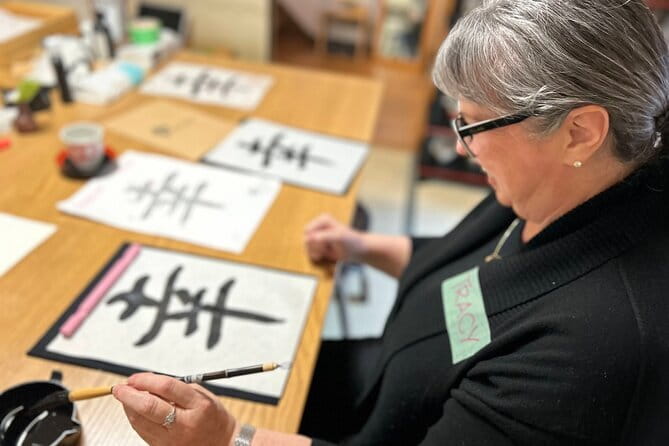
Let’s talk value honestly. At $141.22, this isn’t a low-cost “try it once” craft if you compare it to paper crafts or simple calligraphy sessions. But the materials and outcome are more substantial.
You get:
- Pure silver material that you shape into a functional spoon form
- Tools included via rental
- Finishing done with both machine safety and your own final polish
- Storage and presentation in a paulownia box
That package is why the price feels reasonable. You are not just paying for labor. You are paying for a process that ends with a real item made of real silver, with a finish that is guided and then refined.
Also consider timing. Because this is on average booked about 30 days in advance, you’ll want to reserve sooner rather than later if your Kyoto dates are fixed.
Transport is light on your side. The listing says it is near public transportation, and the tour excludes only private transportation. So you should be able to reach it without adding a dedicated car day to your schedule.
Who Should Book This Workshop, And Who Should Skip It
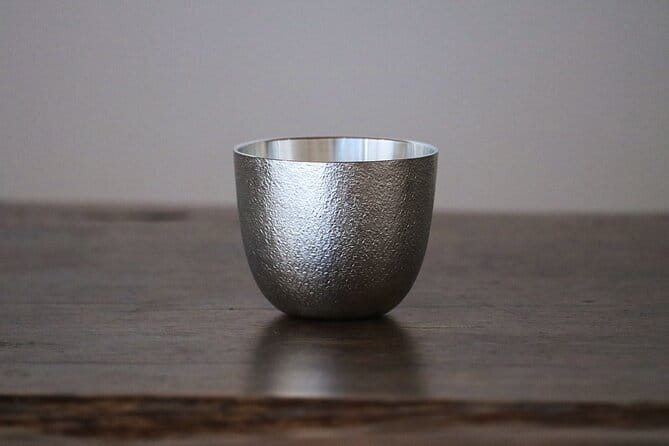
This workshop is a good match if:
- You like crafts where you make something tangible and take it home
- You enjoy learning through hands-on steps, not watching from the sidelines
- You want a calmer Kyoto experience near Shugakuin Imperial Villa rather than more crowded areas
- You appreciate thoughtful presentation, since the paulownia box is included
You might think twice if:
- You want a fast stop. This takes about 2 hours 30 minutes.
- You’re expecting a broad tour with multiple locations. This is centered on the workshop itself, with the activity ending back at the meeting point.
- You are not comfortable with active participation. You will shape and polish your own spoon.
Should You Book The Pure Silver Spoon Workshop In Kyoto?
I think you should book it if you want a Kyoto souvenir that is actually usable, not just decorative, and if you like the idea of doing a skill with real material. The combination of pure silver spoonmaking, personal pattern design, and a finished polish with safety support is a rare mix.
If you’re traveling with someone who enjoys crafts and thoughtful gifts, this is the kind of experience that becomes a story you can tell later. And if language is a concern, the setup includes English instructions and patient guidance, plus tea and snacks to keep things comfortable.
If your goal is maximum city coverage and quick hits, choose something shorter. But if you want a meaningful afternoon, close to Shugakuin, with a spoon you truly made, this one is worth the reservation.
FAQ
How long is the Pure Silver Spoon Making Workshop?
The workshop lasts about 2 hours 30 minutes.
Where is the workshop meeting point in Kyoto?
The meeting point is at 1-15 Shūgakuin Yamanohanachō, Sakyo Ward, Kyoto, 606-8025, Japan. The activity ends back at the meeting point.
Is the workshop near public transportation?
Yes, it is listed as near public transportation.
What is included in the price?
Included are the material, tool rental, a paulownia box, and a metal polishing cloth.
Is private transportation included?
No, private transportation is not included.
Is it a private experience?
Yes. It is listed as a private tour or activity, with only your group participating.
What is the cancellation policy?
You can cancel for a full refund up to 24 hours in advance of the experience’s start time. After that, refunds are not available.
Can service animals attend?
Service animals are allowed.
New This Season
- Koyasan Day Trip by Private Car from Kyoto
- Old Port Town and Ultimate Sake Tasting Private Tour From Kyoto
- Kyoto’s Timeless Charm: 3hr Exploration of History and Peace
- Kyoto: 5 Types of Sushi Making
- Sacred Peak & Ancient Paths: Kurama-Kibune Hiking Experience
- Kyoto: Exclusive ZEN practice at Manpukuji temple in Uji
- Kyoto: Private Seasonal Aroma Yoga Class
- Traversing Kyoto’s Scenic West – Arashiyama to Kinkakuji
Workshops, compared.

Ramen Cooking Class at Ramen Factory in Kyoto
Read our review →
Chopsticks Making Workshop in Gion with Engraving Option
Read our review →
Samurai Sword Class by Experts in Traditional Arts
Read our review →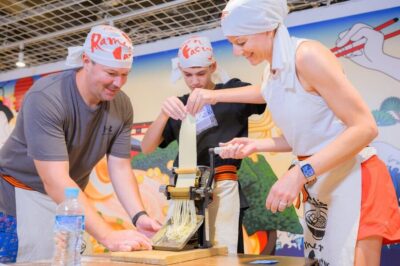
Ramen Cooking Class at a Ramen Factory with Souvenir
Read our review →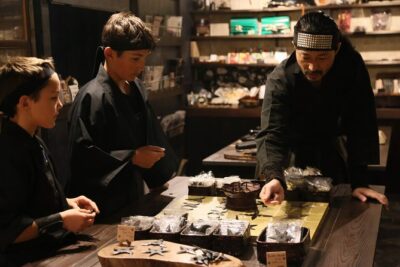
Ninja 1-hour Hands-on Lesson by Japanese master in Kyoto -Entry
Read our review →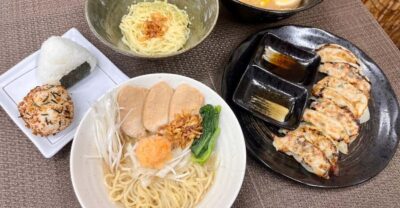
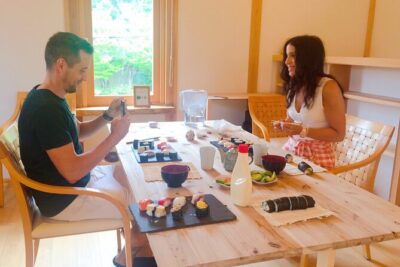
The Original Small-Group Sushi Making Class in Kyoto
Read our review →Also filed under